INTERLINING AND
INTERFACING
By,
Jogi Swapna
Abishek Kshrotriiya
Amala Sukumar
Suhitha RamBabu
Vishwok San Sanyasi
CONTENTS
 Introduction
 Definitions
 Types
 Materials required
 Properties
 Applications
 Conclusion.
INTRODUTION
Interlining and Interfacing is a very important in
apparel manufacturing.
Stiffness
Support
Shapes
DEFINITIONS
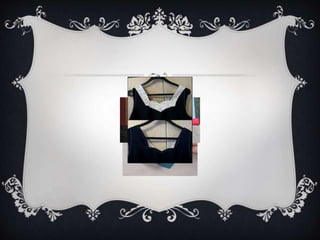
 INTERLINING:
An interlining is an additional layer of fabric
between the lining and the outer shell of the garment.
 INTERFACING:
An interfacing is a woven or non-woven material
used between the facing and outer shell of the garment.
Ex: collar,cuff.
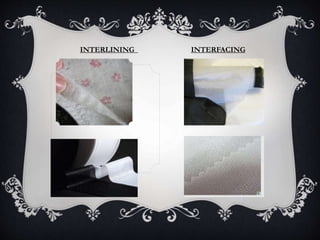
INTERLINING INTERFACING
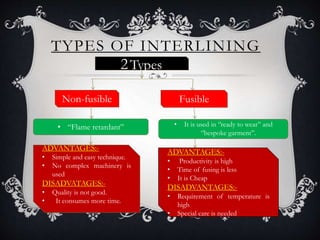
TYPES OF INTERLINING
2Types
Non-fusible Fusible
• “Flame retardant” • It is used in ‘’ready to wear’’ and
‘’bespoke garment’’.
ADVANTAGES:-
• Simple and easy technique.
• No complex machinery is
used
DISADVATAGES:-
• Quality is not good.
• It consumes more time.
ADVANTAGES:-
• Productivity is high
• Time of fusing is less
• It is Cheap
DISADVANTAGES:-
• Requirement of temperature is
high
• Special care is needed
MATERIALS REQUIRED
INTERLINNING:-
 It is a kind of lining.
 It depends on the fabric.
 Used materials like cotton fabric and synthetic fabrics.
INTERFACING:-
 It is a kind of underlining.
 It gives stiffness.
 Types like woven , non woven ,and knitted.
PROPERTIES OF
INTERLINIG
 To support the garment.
 To control the shape of the garment.
 To control the area of the apparel.
 To reinforce the components of the garment.
 To ensure the anticipated look, quality and effect of the fabric.
 To improve garment performance ,Dwell time
 Roller pressure
 Fuse line temperature
 Fusing Condition like thermostat setting
 Bond Strength
 Surface appearance
 Dimensional change
PROPERTIES OF
INTERFACING
 High pressure .
 To support the garment.
 To control the shape of the garment.
 To control the area of the apparel.
 To reinforce the components of the garment.
 To improve garment performance
 Fuse line temperature
 Addind stiffness and shape to the garment.
APPLICATIONS OF INTER
FACING
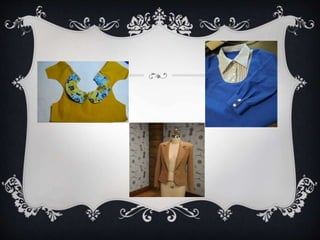
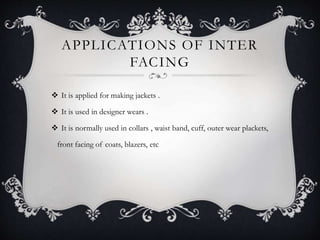
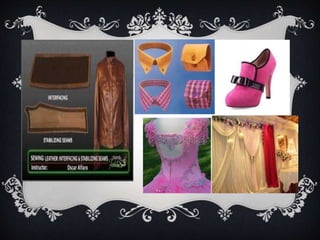
 It is applied for making jackets .
 It is used in designer wears .
 It is normally used in collars , waist band, cuff, outer wear plackets,
front facing of coats, blazers, etc
APPLICATION OF
INTERLINING
 It is used on the unseen “ wrong side” of the facbric , to make an
area of a garment more rigid.
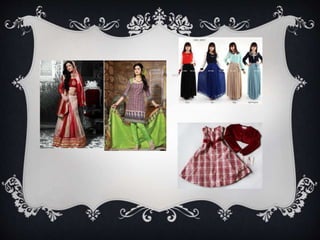
 Stiffen or add boby to fabric such as the inter linings is used in
kameez, kurthas, Lehangas, Cholis.
INTERLINING AND AND INTERFACING

INTERLINING AND AND INTERFACING

  • 1.
    INTERLINING AND INTERFACING By, Jogi Swapna AbishekKshrotriiya Amala Sukumar Suhitha RamBabu Vishwok San Sanyasi
  • 2.
    CONTENTS  Introduction  Definitions Types  Materials required  Properties  Applications  Conclusion.
  • 4.
    INTRODUTION Interlining and Interfacingis a very important in apparel manufacturing. Stiffness Support Shapes
  • 5.
    DEFINITIONS  INTERLINING: An interliningis an additional layer of fabric between the lining and the outer shell of the garment.  INTERFACING: An interfacing is a woven or non-woven material used between the facing and outer shell of the garment. Ex: collar,cuff.
  • 6.
  • 7.
    TYPES OF INTERLINING 2Types Non-fusibleFusible • “Flame retardant” • It is used in ‘’ready to wear’’ and ‘’bespoke garment’’. ADVANTAGES:- • Simple and easy technique. • No complex machinery is used DISADVATAGES:- • Quality is not good. • It consumes more time. ADVANTAGES:- • Productivity is high • Time of fusing is less • It is Cheap DISADVANTAGES:- • Requirement of temperature is high • Special care is needed
  • 9.
    MATERIALS REQUIRED INTERLINNING:-  Itis a kind of lining.  It depends on the fabric.  Used materials like cotton fabric and synthetic fabrics. INTERFACING:-  It is a kind of underlining.  It gives stiffness.  Types like woven , non woven ,and knitted.
  • 11.
    PROPERTIES OF INTERLINIG  Tosupport the garment.  To control the shape of the garment.  To control the area of the apparel.  To reinforce the components of the garment.  To ensure the anticipated look, quality and effect of the fabric.  To improve garment performance ,Dwell time  Roller pressure  Fuse line temperature  Fusing Condition like thermostat setting  Bond Strength  Surface appearance  Dimensional change
  • 12.
    PROPERTIES OF INTERFACING  Highpressure .  To support the garment.  To control the shape of the garment.  To control the area of the apparel.  To reinforce the components of the garment.  To improve garment performance  Fuse line temperature  Addind stiffness and shape to the garment.
  • 14.
    APPLICATIONS OF INTER FACING It is applied for making jackets .  It is used in designer wears .  It is normally used in collars , waist band, cuff, outer wear plackets, front facing of coats, blazers, etc
  • 16.
    APPLICATION OF INTERLINING  Itis used on the unseen “ wrong side” of the facbric , to make an area of a garment more rigid.  Stiffen or add boby to fabric such as the inter linings is used in kameez, kurthas, Lehangas, Cholis.