Types of Pocket
By: ROCHELLE S NATO
HOMAPON HIGH SCHOOL
Homapon, Legazpi City
Objective:
1. Define Pocket.
2. Identify the kinds of pockets.
3. Choose and apply a pocket for
your blouse and polo.
• Flat Pockets
“flat” types meaning they are not expandable. These pockets can be
made to any height and width needed. They can be sewn to the
exterior of the garment as well as to a lining inside the garment. These
pockets are useful for slim items such as a notepad, business cards, ID,
badges, and cell phones. Most of the pockets have alternate stitching
lines for rounded or mitered corners. Flat pockets can be stacked on
top of each other to create multiple storage areas. Smaller pockets can
also be sewn to the inside of larger ones to create storage for money,
credit cards, or cell phones.
• Expandable Pockets
• Expandable pockets are useful for storing bulkier items such as eye glasses,
keys, wallets, and larger cell phones
• The bellows pocket has a large center pleat and can accommodate eye glasses
and be lined with a cleaning cloth. The baseball pocket has pleats on each side
at the bottom of the pocket and the top gathers to a band. The gathered
pocket is gathered to a top band. The tucked pocket has a large center tuck.
The accordion pocket has accordion pleats for expansion. The box pocket has
lower corners stitched to form the box and creates a roomy pocket. The
gusset pocket has a gusset stitched around the entire perimeter of the pocket
to allow for expansion.
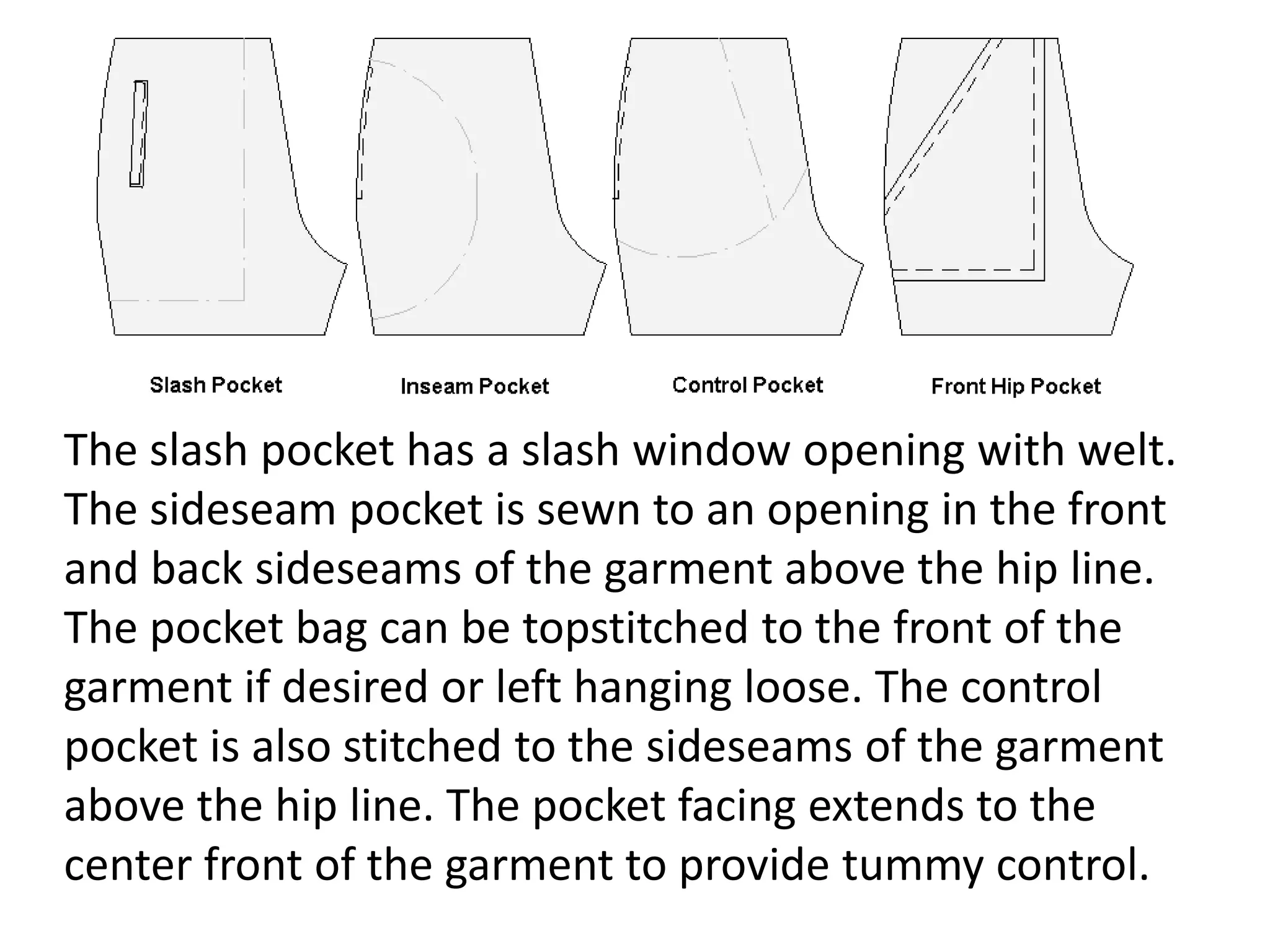
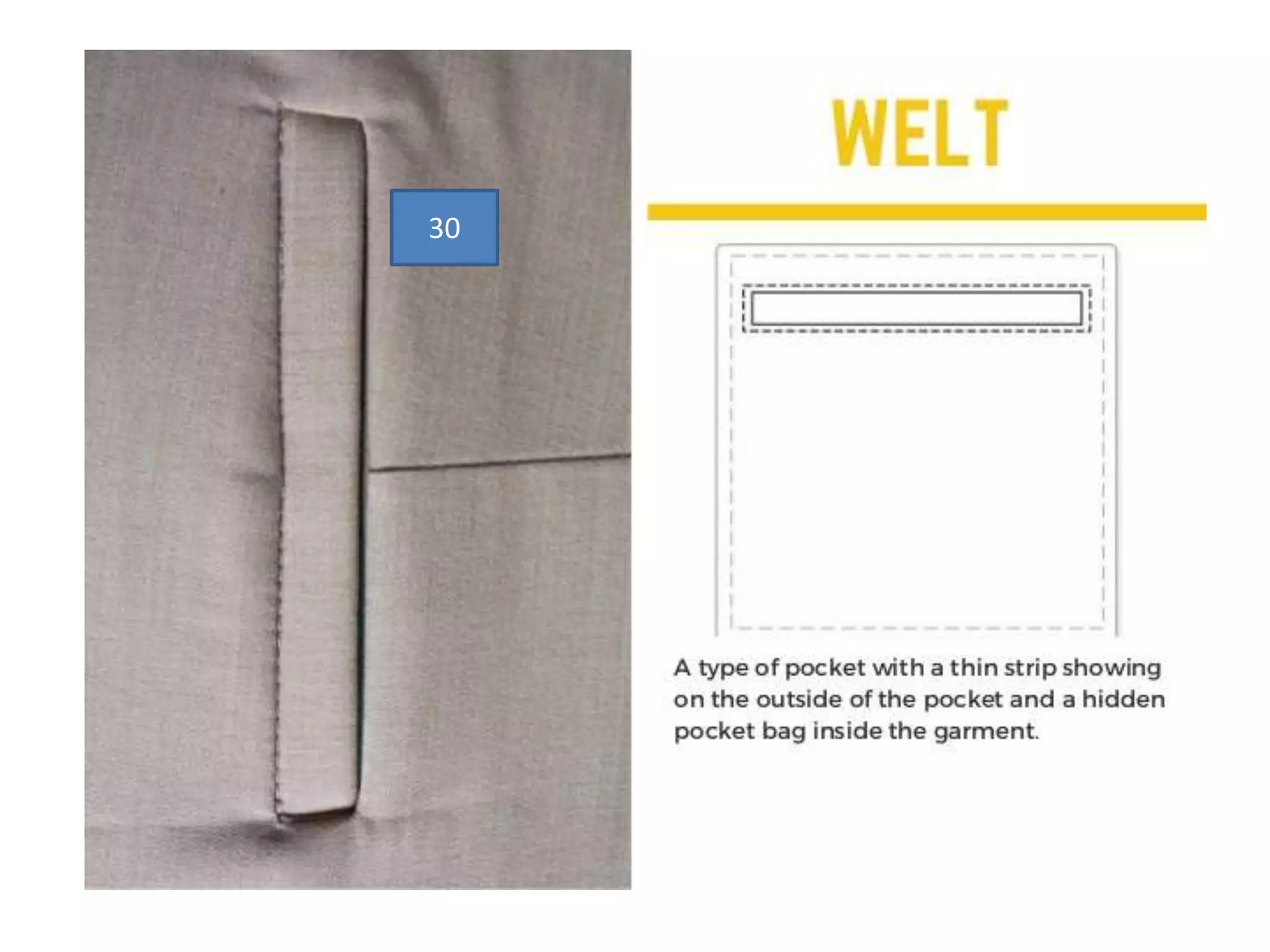
The slash pocket has a slash window opening with welt.
The sideseam pocket is sewn to an opening in the front
and back sideseams of the garment above the hip line.
The pocket bag can be topstitched to the front of the
garment if desired or left hanging loose. The control
pocket is also stitched to the sideseams of the garment
above the hip line. The pocket facing extends to the
center front of the garment to provide tummy control.
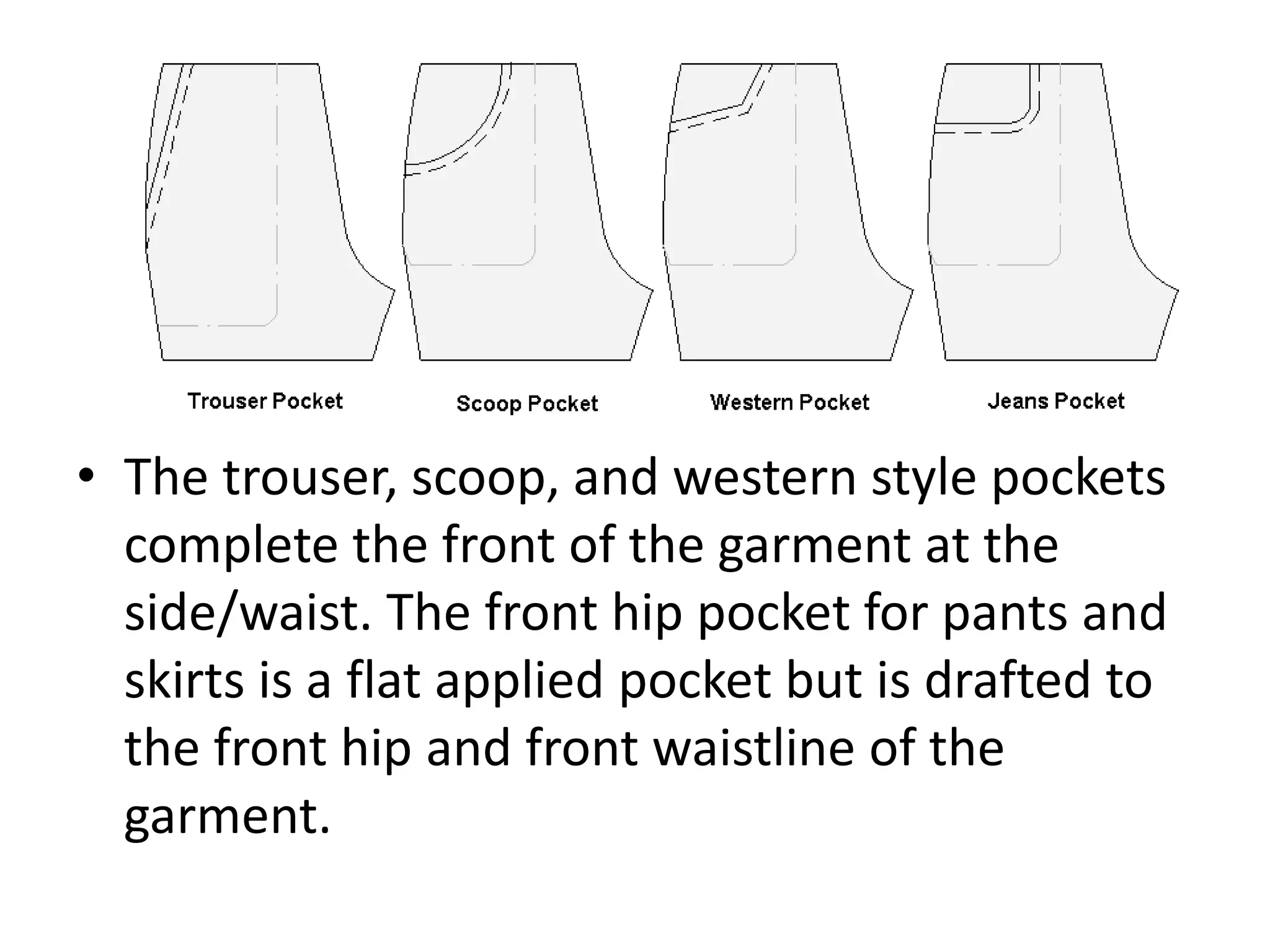
• The trouser, scoop, and western style pockets
complete the front of the garment at the
side/waist. The front hip pocket for pants and
skirts is a flat applied pocket but is drafted to
the front hip and front waistline of the
garment.
25
26
27
28
29
30
Types of pockets

Types of pockets

  • 1.
    Types of Pocket By:ROCHELLE S NATO HOMAPON HIGH SCHOOL Homapon, Legazpi City
  • 2.
    Objective: 1. Define Pocket. 2.Identify the kinds of pockets. 3. Choose and apply a pocket for your blouse and polo.
  • 3.
    • Flat Pockets “flat”types meaning they are not expandable. These pockets can be made to any height and width needed. They can be sewn to the exterior of the garment as well as to a lining inside the garment. These pockets are useful for slim items such as a notepad, business cards, ID, badges, and cell phones. Most of the pockets have alternate stitching lines for rounded or mitered corners. Flat pockets can be stacked on top of each other to create multiple storage areas. Smaller pockets can also be sewn to the inside of larger ones to create storage for money, credit cards, or cell phones.
  • 4.
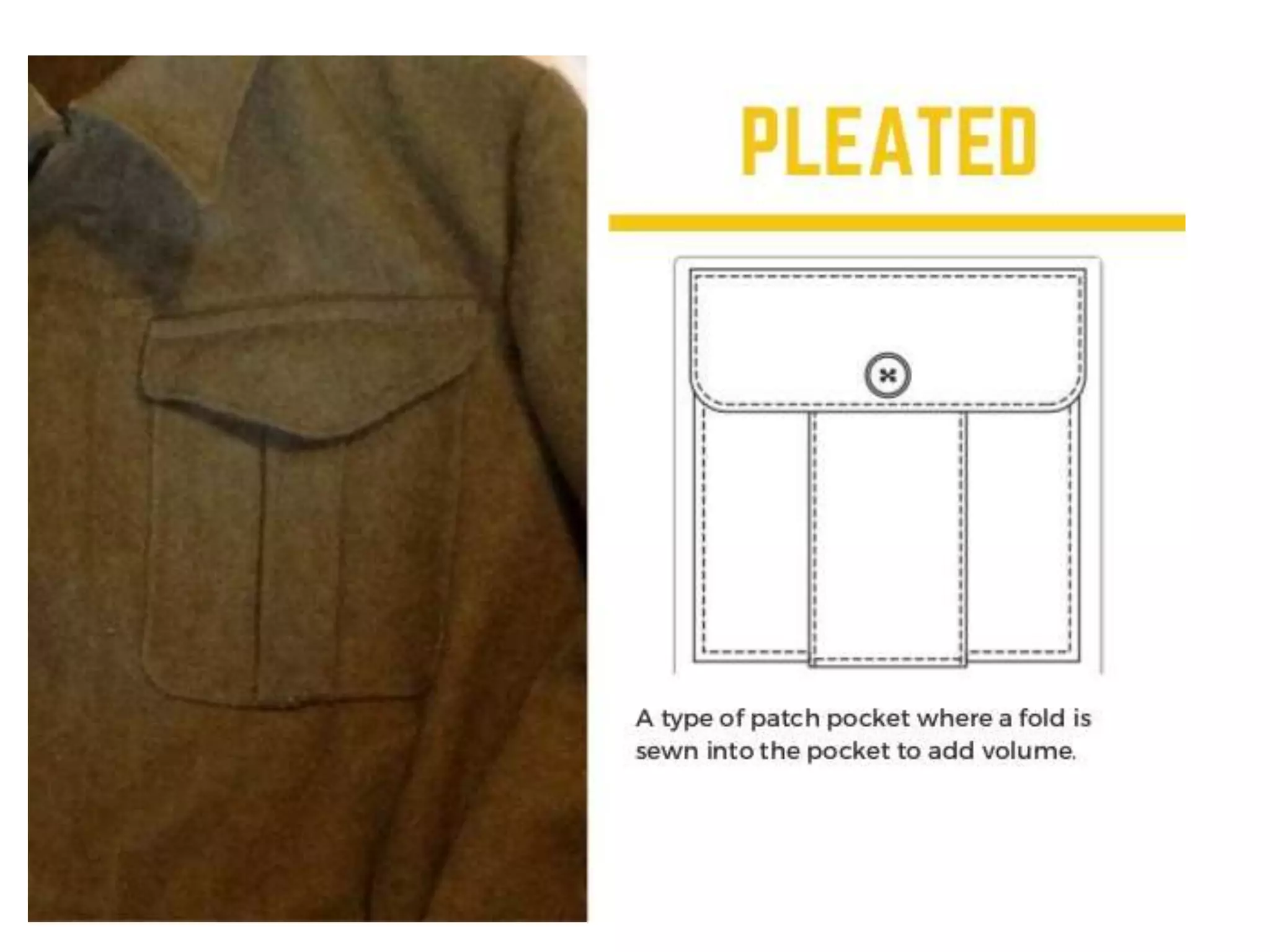
    • Expandable Pockets •Expandable pockets are useful for storing bulkier items such as eye glasses, keys, wallets, and larger cell phones • The bellows pocket has a large center pleat and can accommodate eye glasses and be lined with a cleaning cloth. The baseball pocket has pleats on each side at the bottom of the pocket and the top gathers to a band. The gathered pocket is gathered to a top band. The tucked pocket has a large center tuck. The accordion pocket has accordion pleats for expansion. The box pocket has lower corners stitched to form the box and creates a roomy pocket. The gusset pocket has a gusset stitched around the entire perimeter of the pocket to allow for expansion.
  • 5.
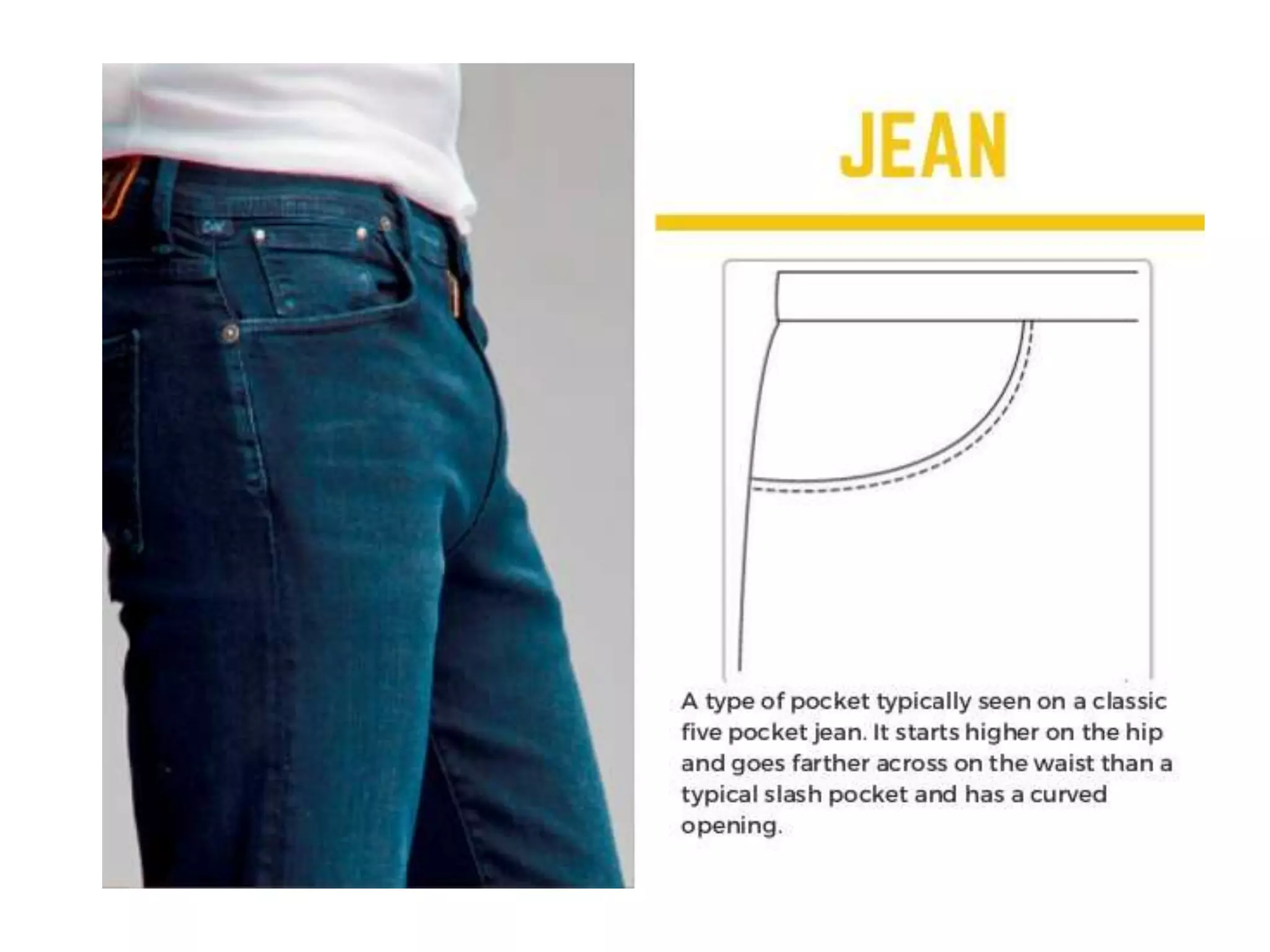
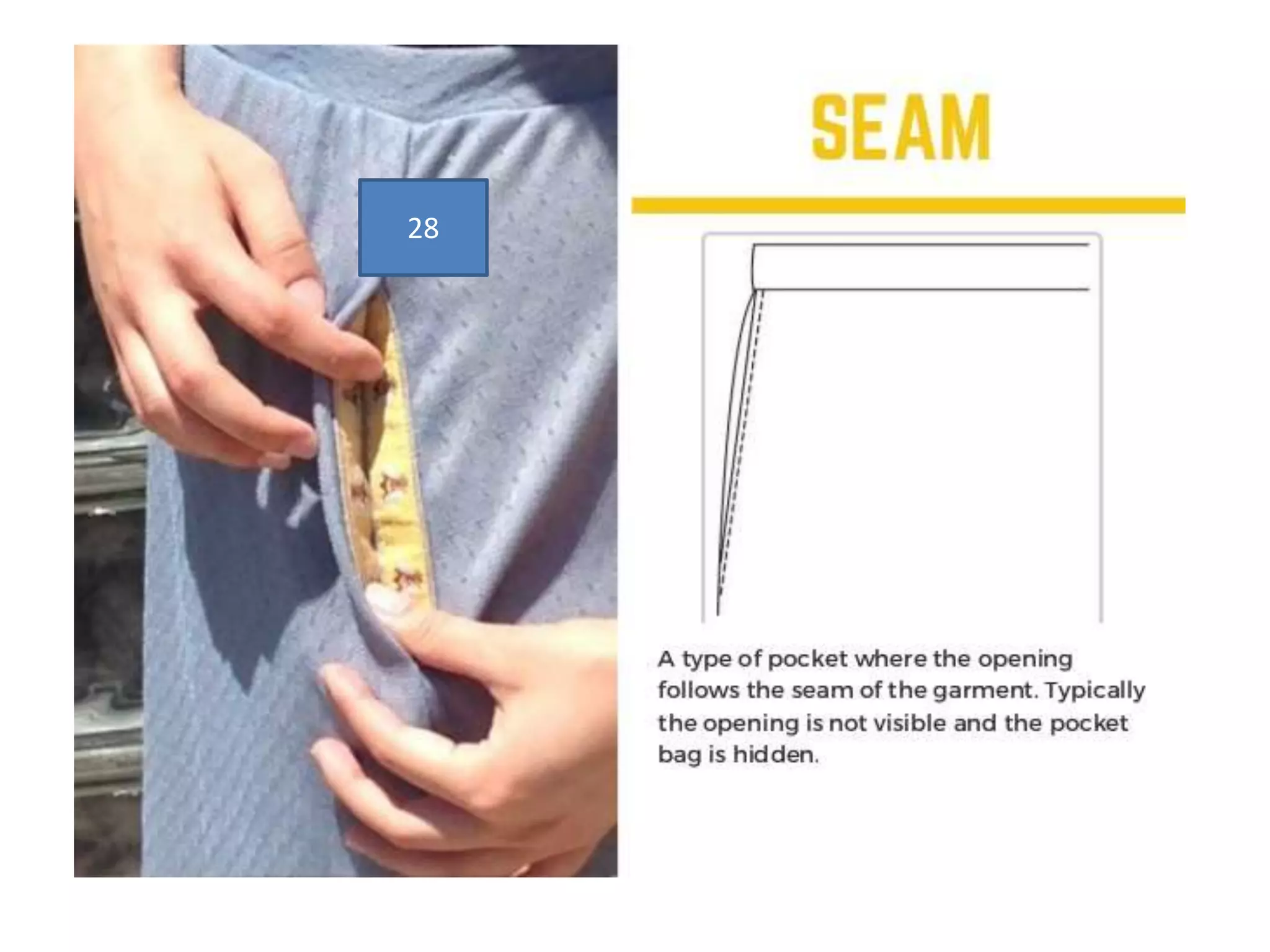
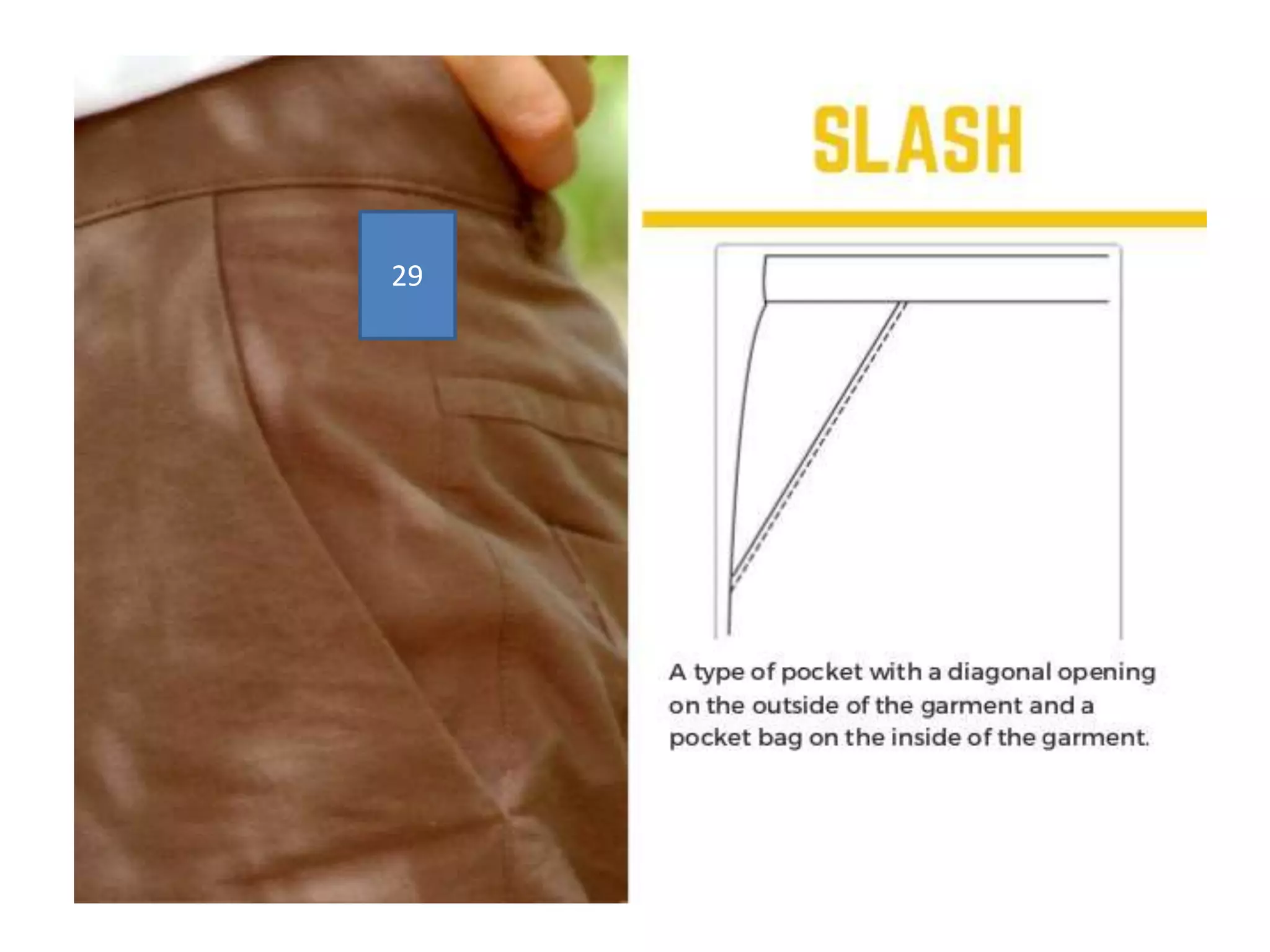
    The slash pockethas a slash window opening with welt. The sideseam pocket is sewn to an opening in the front and back sideseams of the garment above the hip line. The pocket bag can be topstitched to the front of the garment if desired or left hanging loose. The control pocket is also stitched to the sideseams of the garment above the hip line. The pocket facing extends to the center front of the garment to provide tummy control.
  • 6.
    • The trouser,scoop, and western style pockets complete the front of the garment at the side/waist. The front hip pocket for pants and skirts is a flat applied pocket but is drafted to the front hip and front waistline of the garment.
  • 7.
  • 9.
  • 11.
  • 14.
  • 15.
  • 16.