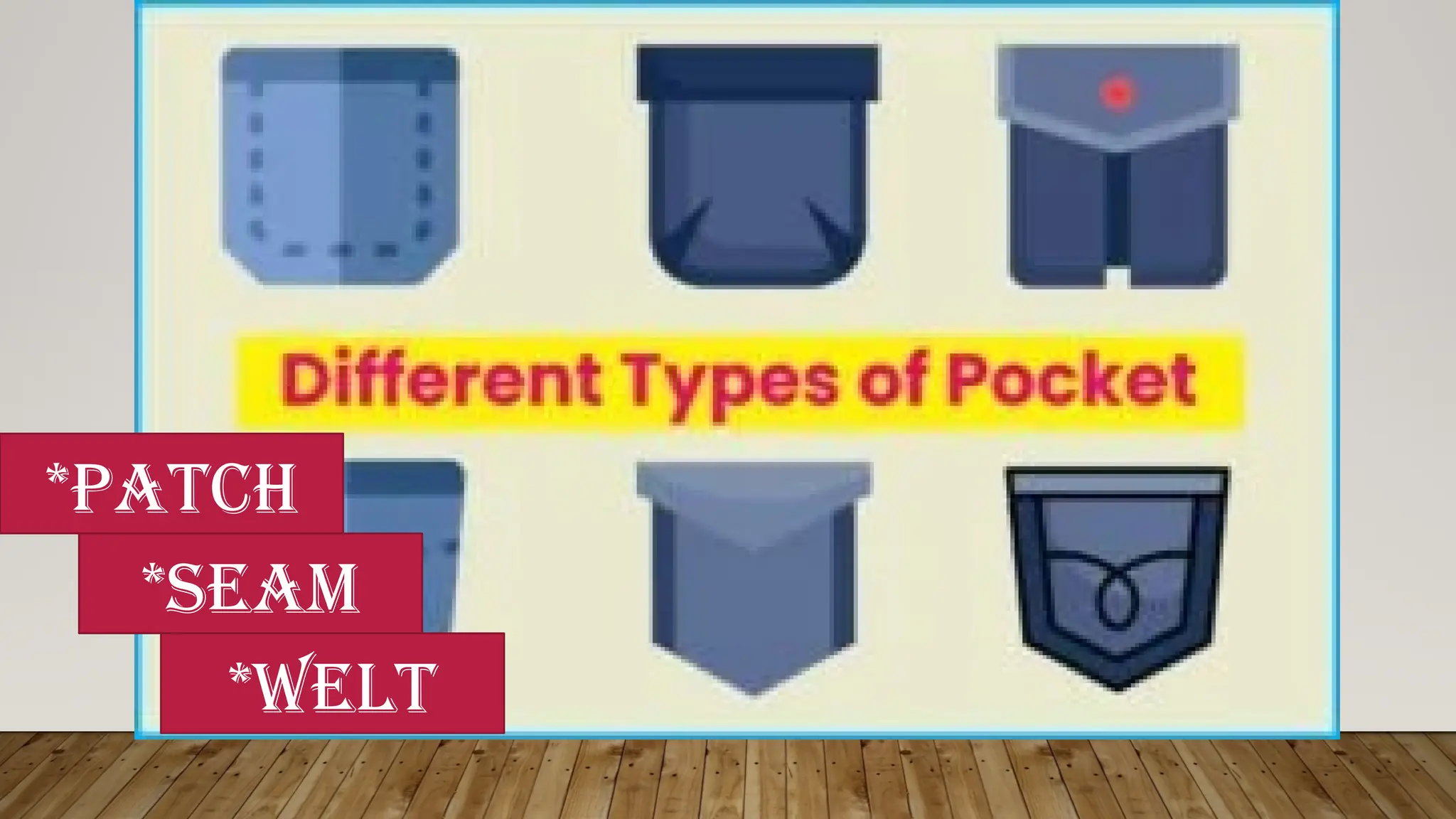
*PATCH
*SEAM
*WELT
DIFFERENT TYPES OF
PATCH POCKETS
PREPARED BY: FLORENCE GAYLE S. BANDAO
DEFINITION OF PATCH
POCKETS
A patch pocket is an external pocket
created by sewing a piece of fabric onto the
outer layer of a garment.They can vary in
shape, size, and style, making them versatile
for various clothing types.
HISTORY AND EVOLUTION
Patch pockets have been used since the 18th century,
originally designed for utility in workwear. Over time,
their design has evolved into a fashionable statement,
often featured in modern apparel.
IMPORTANCE IN FASHION
Patch pockets blend functionality with style, enhancing
garments with added texture and visual interest.Their
practicality and adaptability make them essential in
various fashion trends and designs.
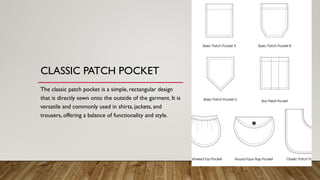
CLASSIC PATCH POCKET
The classic patch pocket is a simple, rectangular design
that is directly sewn onto the outside of the garment. It is
versatile and commonly used in shirts, jackets, and
trousers, offering a balance of functionality and style.
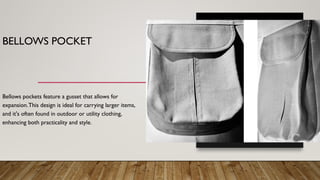
BELLOWS POCKET
Bellows pockets feature a gusset that allows for
expansion.This design is ideal for carrying larger items,
and it's often found in outdoor or utility clothing,
enhancing both practicality and style.
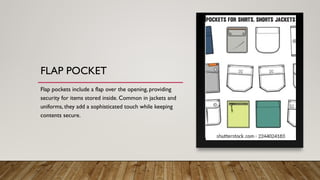
FLAP POCKET
Flap pockets include a flap over the opening, providing
security for items stored inside. Common in jackets and
uniforms, they add a sophisticated touch while keeping
contents secure.
EXTERNAL PATCH POCKET
External patch pockets are sewn on the outside of
garments, offering easy access to items.These pockets
are popular in casual wear, contributing to a relaxed
aesthetic while providing practicality.
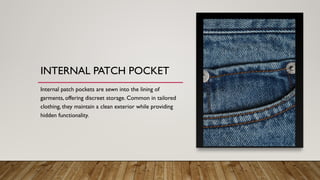
INTERNAL PATCH POCKET
Internal patch pockets are sewn into the lining of
garments, offering discreet storage. Common in tailored
clothing, they maintain a clean exterior while providing
hidden functionality.
STORAGE SOLUTIONS
Patch pockets provide convenient storage for small items
like keys, wallets, or phones, allowing for hands-free use.
This accessibility makes them practical for everyday wear,
especially in casual and work attire.
AESTHETIC APPEAL
Patch pockets enhance the visual interest of a garment by
adding depth and texture.They can be designed in
various shapes and sizes, allowing for creative expression
and personal style in fashion.
PRACTICALITY IN DESIGN
Patch pockets offer a practical solution for both
designers and wearers, facilitating easy access to
essentials while maintaining a sleek appearance.They
contribute to the overall functionality of outfits without
compromising style.
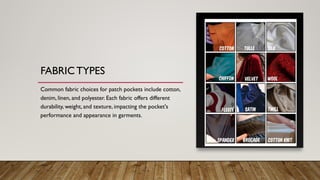
FABRIC TYPES
Common fabric choices for patch pockets include cotton,
denim, linen, and polyester. Each fabric offers different
durability, weight, and texture, impacting the pocket's
performance and appearance in garments.
THREAD AND FASTENERS
Selecting the right thread is essential, typically cotton or
polyester, depending on fabric choice. Fasteners like
buttons, snaps, and zippers can enhance functionality,
ensuring pockets securely hold contents while matching
the garment style.
SEWING TOOLS
Essential sewing tools include scissors, pins, needles, and
sewing machines.These tools streamline the pocket-
making process, ensuring precision and quality in the final
product, which is vital for both durability and aesthetics.
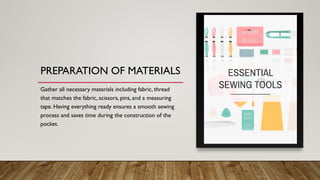
PREPARATION OF MATERIALS
Gather all necessary materials including fabric, thread
that matches the fabric, scissors, pins, and a measuring
tape. Having everything ready ensures a smooth sewing
process and saves time during the construction of the
pocket.
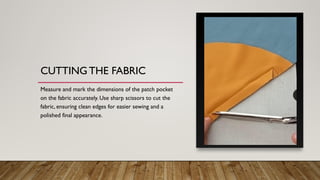
CUTTING THE FABRIC
Measure and mark the dimensions of the patch pocket
on the fabric accurately. Use sharp scissors to cut the
fabric, ensuring clean edges for easier sewing and a
polished final appearance.
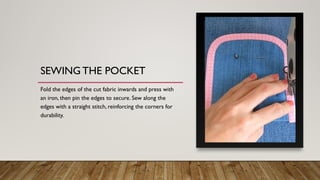
SEWING THE POCKET
Fold the edges of the cut fabric inwards and press with
an iron, then pin the edges to secure. Sew along the
edges with a straight stitch, reinforcing the corners for
durability.
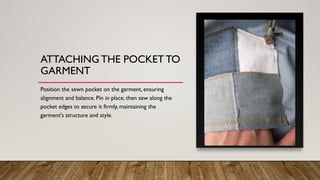
ATTACHING THE POCKET TO
GARMENT
Position the sewn pocket on the garment, ensuring
alignment and balance. Pin in place, then sew along the
pocket edges to secure it firmly, maintaining the
garment's structure and style.
FINISHING TOUCHES
After sewing the pocket onto the garment, trim any
excess threads and check for any loose edges. Press the
pocket flat with an iron for a crisp, professional finish that
enhances the overall look of the garment.
PREPARE A FABRIC PIECE
FOR THE NEXT LESSON

Different Types of Patch Pockets in garments.pptx

  • 1.
  • 2.
    DIFFERENT TYPES OF PATCHPOCKETS PREPARED BY: FLORENCE GAYLE S. BANDAO
  • 3.
    DEFINITION OF PATCH POCKETS Apatch pocket is an external pocket created by sewing a piece of fabric onto the outer layer of a garment.They can vary in shape, size, and style, making them versatile for various clothing types.
  • 4.
    HISTORY AND EVOLUTION Patchpockets have been used since the 18th century, originally designed for utility in workwear. Over time, their design has evolved into a fashionable statement, often featured in modern apparel.
  • 5.
    IMPORTANCE IN FASHION Patchpockets blend functionality with style, enhancing garments with added texture and visual interest.Their practicality and adaptability make them essential in various fashion trends and designs.
  • 6.
    CLASSIC PATCH POCKET Theclassic patch pocket is a simple, rectangular design that is directly sewn onto the outside of the garment. It is versatile and commonly used in shirts, jackets, and trousers, offering a balance of functionality and style.
  • 7.
    BELLOWS POCKET Bellows pocketsfeature a gusset that allows for expansion.This design is ideal for carrying larger items, and it's often found in outdoor or utility clothing, enhancing both practicality and style.
  • 8.
    FLAP POCKET Flap pocketsinclude a flap over the opening, providing security for items stored inside. Common in jackets and uniforms, they add a sophisticated touch while keeping contents secure.
  • 9.
    EXTERNAL PATCH POCKET Externalpatch pockets are sewn on the outside of garments, offering easy access to items.These pockets are popular in casual wear, contributing to a relaxed aesthetic while providing practicality.
  • 10.
    INTERNAL PATCH POCKET Internalpatch pockets are sewn into the lining of garments, offering discreet storage. Common in tailored clothing, they maintain a clean exterior while providing hidden functionality.
  • 11.
    STORAGE SOLUTIONS Patch pocketsprovide convenient storage for small items like keys, wallets, or phones, allowing for hands-free use. This accessibility makes them practical for everyday wear, especially in casual and work attire.
  • 12.
    AESTHETIC APPEAL Patch pocketsenhance the visual interest of a garment by adding depth and texture.They can be designed in various shapes and sizes, allowing for creative expression and personal style in fashion.
  • 13.
    PRACTICALITY IN DESIGN Patchpockets offer a practical solution for both designers and wearers, facilitating easy access to essentials while maintaining a sleek appearance.They contribute to the overall functionality of outfits without compromising style.
  • 14.
    FABRIC TYPES Common fabricchoices for patch pockets include cotton, denim, linen, and polyester. Each fabric offers different durability, weight, and texture, impacting the pocket's performance and appearance in garments.
  • 15.
    THREAD AND FASTENERS Selectingthe right thread is essential, typically cotton or polyester, depending on fabric choice. Fasteners like buttons, snaps, and zippers can enhance functionality, ensuring pockets securely hold contents while matching the garment style.
  • 16.
    SEWING TOOLS Essential sewingtools include scissors, pins, needles, and sewing machines.These tools streamline the pocket- making process, ensuring precision and quality in the final product, which is vital for both durability and aesthetics.
  • 17.
    PREPARATION OF MATERIALS Gatherall necessary materials including fabric, thread that matches the fabric, scissors, pins, and a measuring tape. Having everything ready ensures a smooth sewing process and saves time during the construction of the pocket.
  • 18.
    CUTTING THE FABRIC Measureand mark the dimensions of the patch pocket on the fabric accurately. Use sharp scissors to cut the fabric, ensuring clean edges for easier sewing and a polished final appearance.
  • 19.
    SEWING THE POCKET Foldthe edges of the cut fabric inwards and press with an iron, then pin the edges to secure. Sew along the edges with a straight stitch, reinforcing the corners for durability.
  • 20.
    ATTACHING THE POCKETTO GARMENT Position the sewn pocket on the garment, ensuring alignment and balance. Pin in place, then sew along the pocket edges to secure it firmly, maintaining the garment's structure and style.
  • 21.
    FINISHING TOUCHES After sewingthe pocket onto the garment, trim any excess threads and check for any loose edges. Press the pocket flat with an iron for a crisp, professional finish that enhances the overall look of the garment.
  • 22.
    PREPARE A FABRICPIECE FOR THE NEXT LESSON