Turtles
By Connor
Turtles
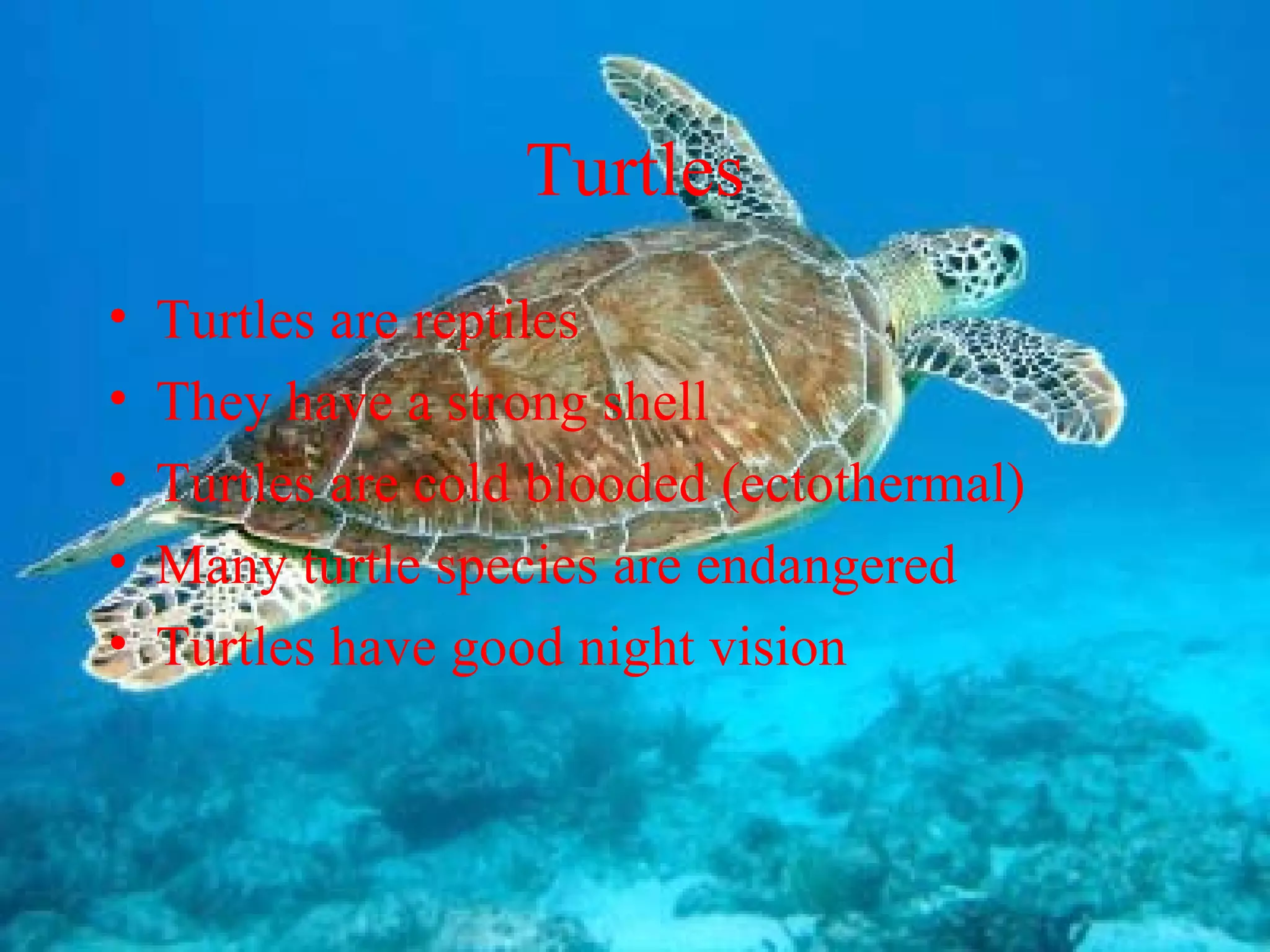
• Turtles are reptiles
• They have a strong shell
• Turtles are cold blooded (ectothermal)
• Many turtle species are endangered
• Turtles have good night vision
Turtles
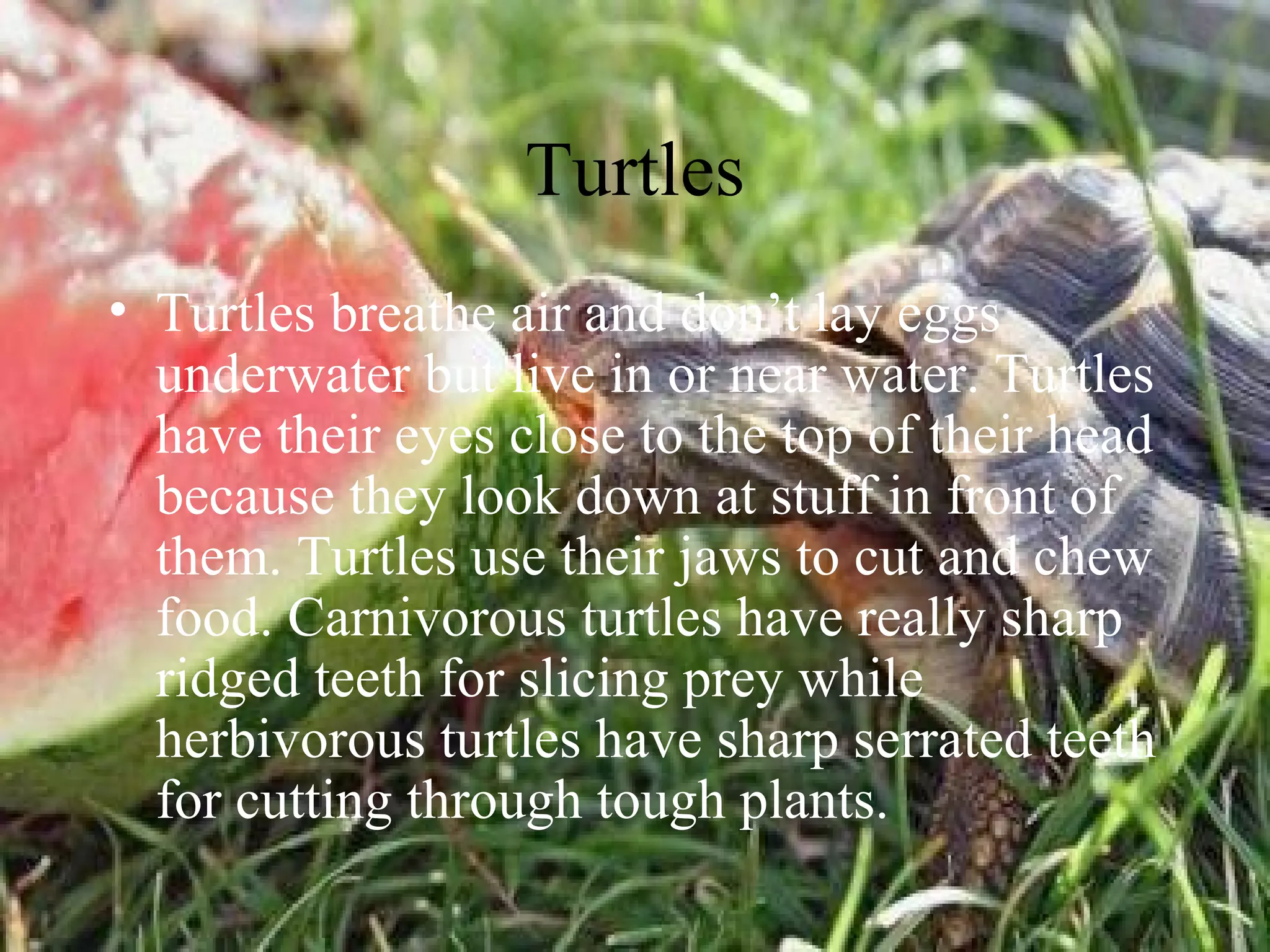
• Turtles breathe air and don’t lay eggs
underwater but live in or near water. Turtles
have their eyes close to the top of their head
because they look down at stuff in front of
them. Turtles use their jaws to cut and chew
food. Carnivorous turtles have really sharp
ridged teeth for slicing prey while
herbivorous turtles have sharp serrated teeth
for cutting through tough plants.
The Shell of a Turtle
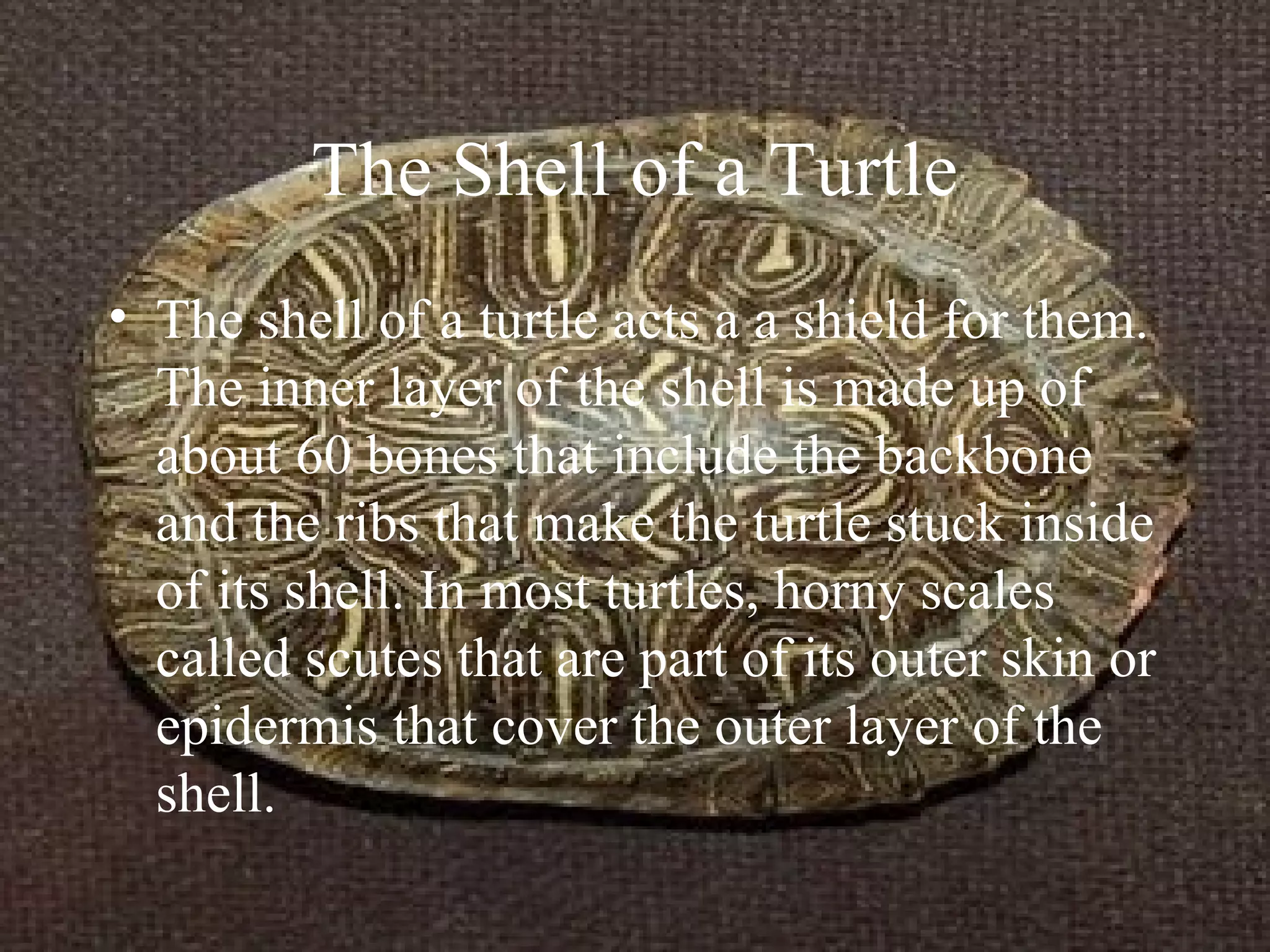
• The shell of a turtle acts a a shield for them.
The inner layer of the shell is made up of
about 60 bones that include the backbone
and the ribs that make the turtle stuck inside
of its shell. In most turtles, horny scales
called scutes that are part of its outer skin or
epidermis that cover the outer layer of the
shell.
Shell continued and breathing
• Scutes overlap the seams between the shell
bones of a turtle and add strength to the
shell. The shell makes the turtles breathe
differently from other reptiles Instead, they
pull air into their mouth then push it into
their lungs and then into the oscillations of
the floor of their throat.
Shell Continued and breathing
• Then, by contraction the abdominal
muscles, that cover the posterior opening of
the shell, the internal size of the shell
increases, drawing air onto the lungs,
allowing the muscles to function. Some
turtles don’t have scutes but have leathery
skin overlapping their shell bone instead.
This is called buccal pumping.
Shell continued…
• The turtle’s shell makes it difficult for
predators to crush the shell between their
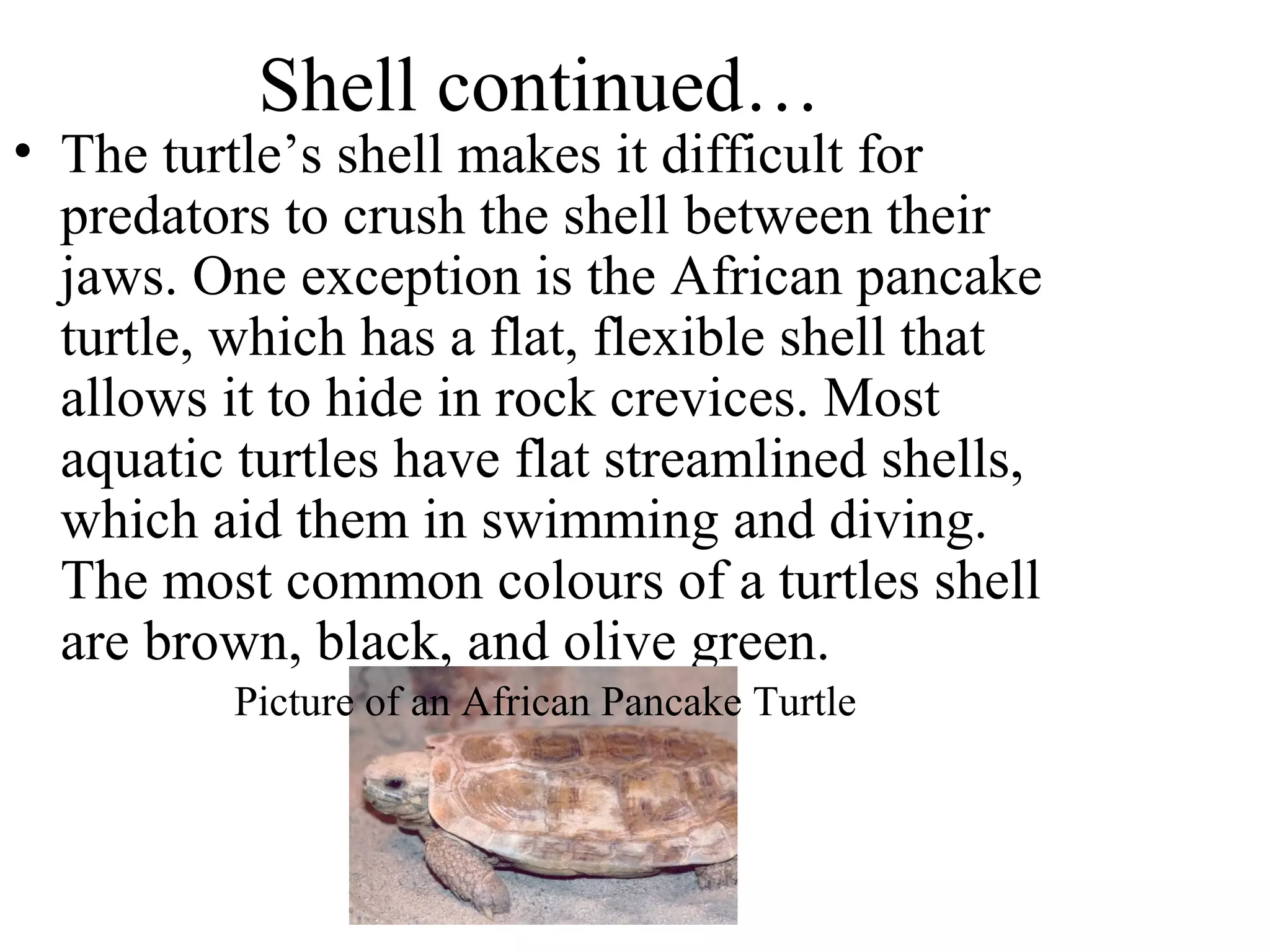
jaws. One exception is the African pancake
turtle, which has a flat, flexible shell that
allows it to hide in rock crevices. Most
aquatic turtles have flat streamlined shells,
which aid them in swimming and diving.
The most common colours of a turtles shell
are brown, black, and olive green.
Picture of an African Pancake Turtle
Tortoises and turtles
• The difference between a turtle and a tortoise is that a
turtle is either aquatic or spends most of its time in water
while tortoises live mostly on land. Tortoises have short
sturdy feet. Tortoises move very slowly because of their
extremely heavy shell. Aquatic turtles have webbed feet
with long claws. These aquatic turtles swim in a motion
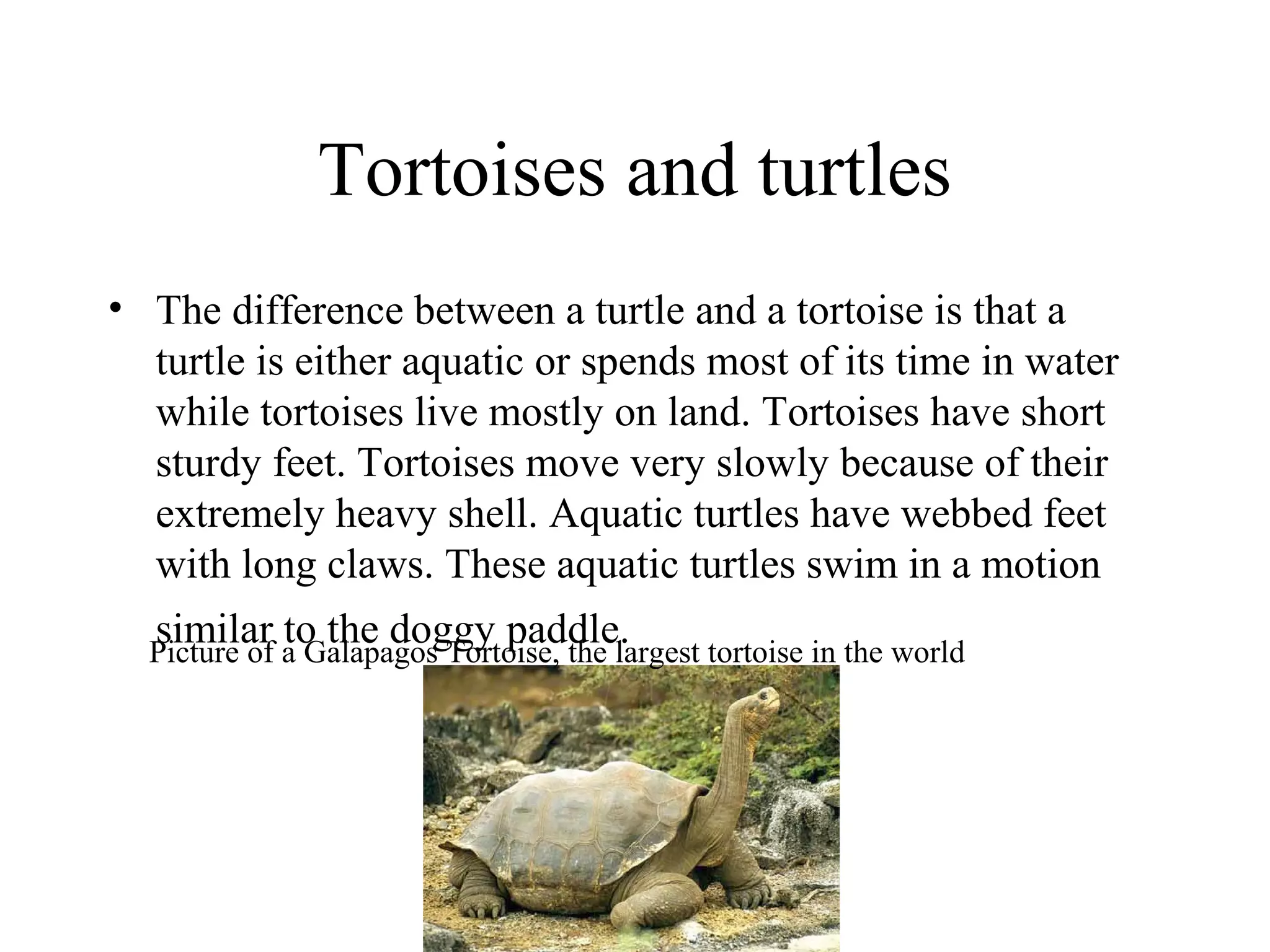
similar to the doggy paddle.Picture of a Galapagos Tortoise, the largest tortoise in the world
Turtles
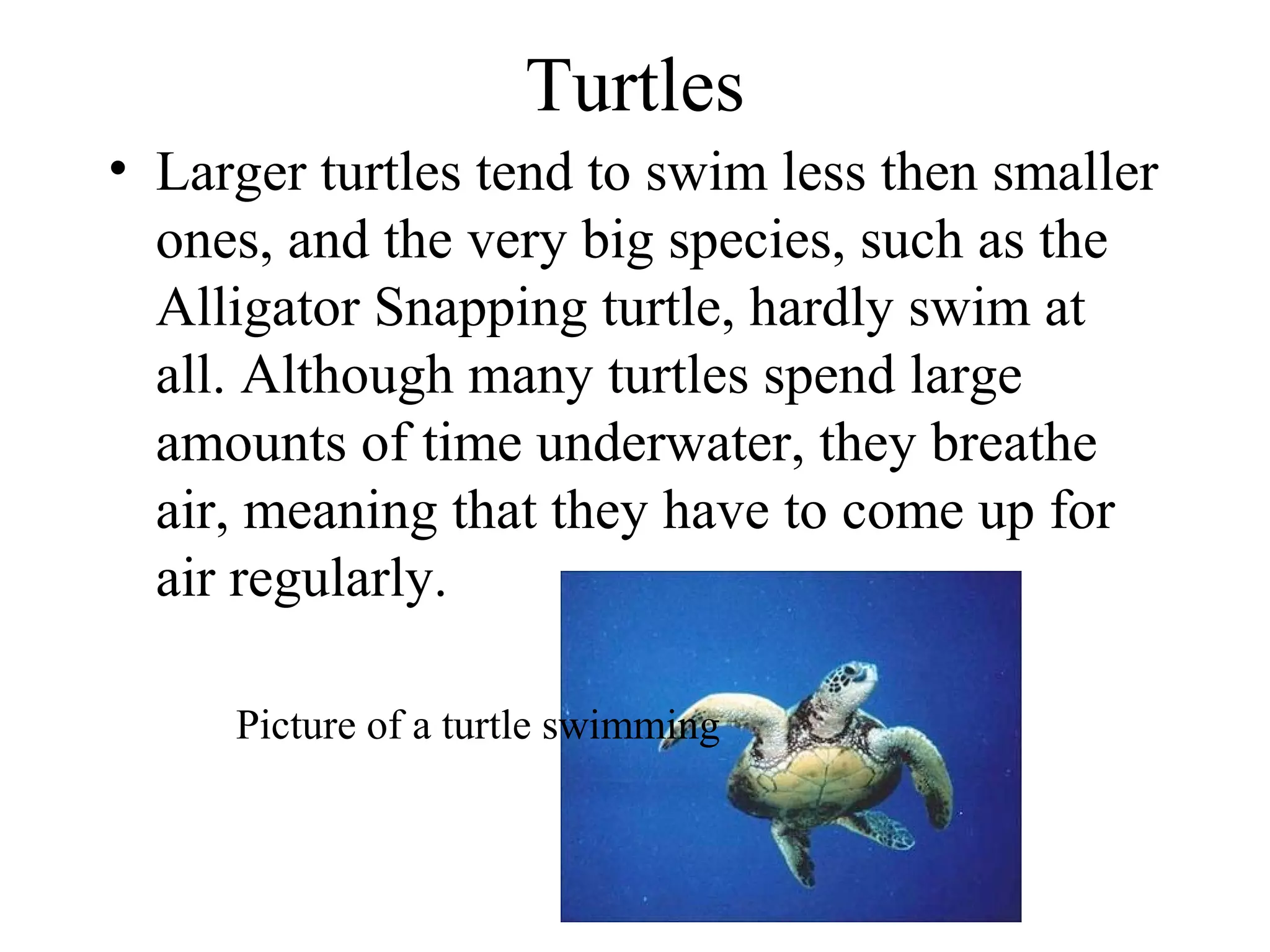
• Larger turtles tend to swim less then smaller
ones, and the very big species, such as the
Alligator Snapping turtle, hardly swim at
all. Although many turtles spend large
amounts of time underwater, they breathe
air, meaning that they have to come up for
air regularly.
Picture of a turtle swimming
Turtles
• Turtles lay eggs that are slightly soft and leathery. In some
species of turtles, the temperature decides the chances that
it will be a male of female. The warmer it is, the more
likely it will be a female, while the cooler it is the more
likely it will be a male. The eggs are laid in large numbers
in holes made by the mother ins sand, dirt, or mud then left
to fend for themselves when they are born. When they are
born, they race to the water for safety from predators like
birds. No known species of turtles takes care of their
young.
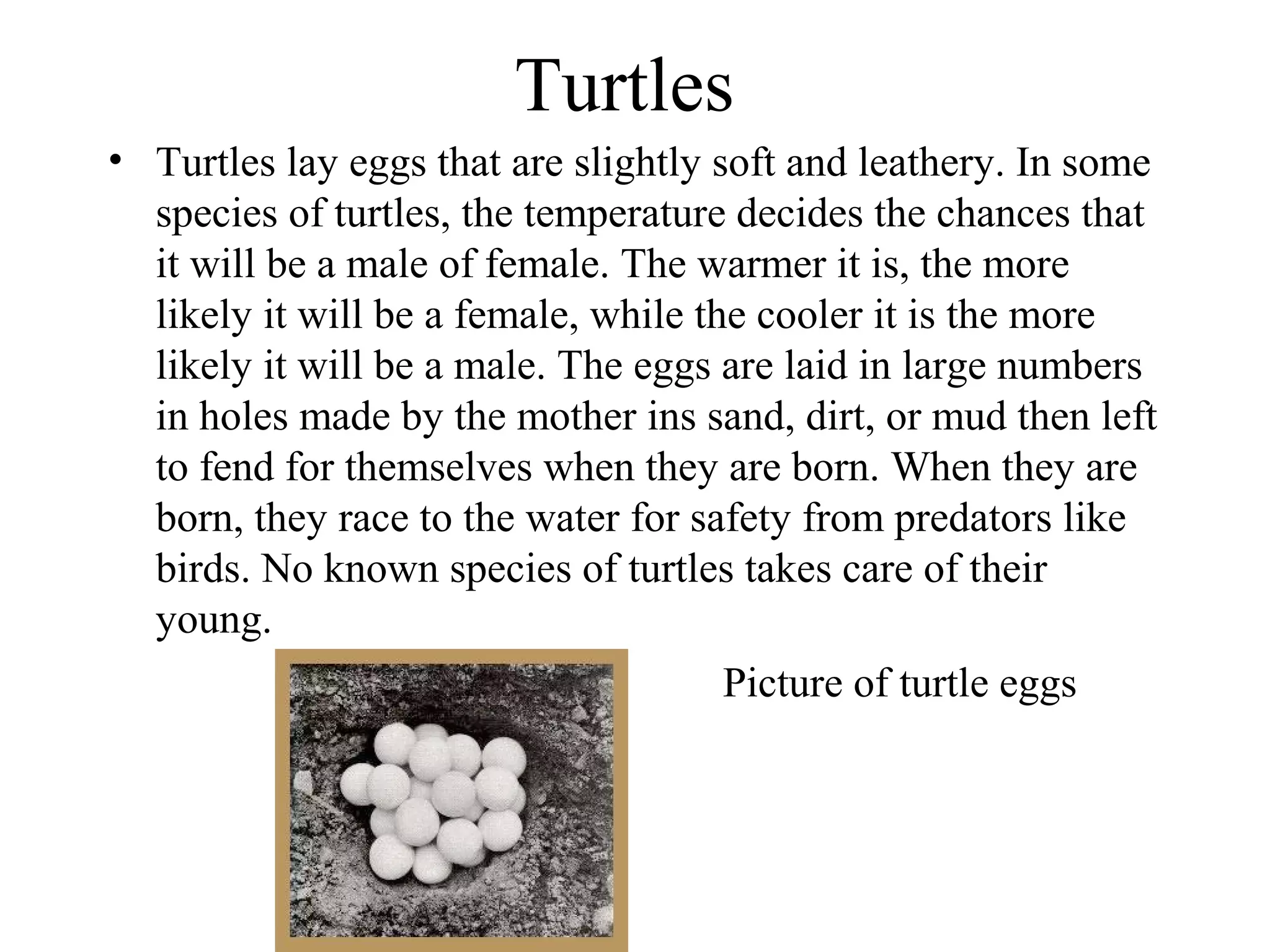
Picture of turtle eggs
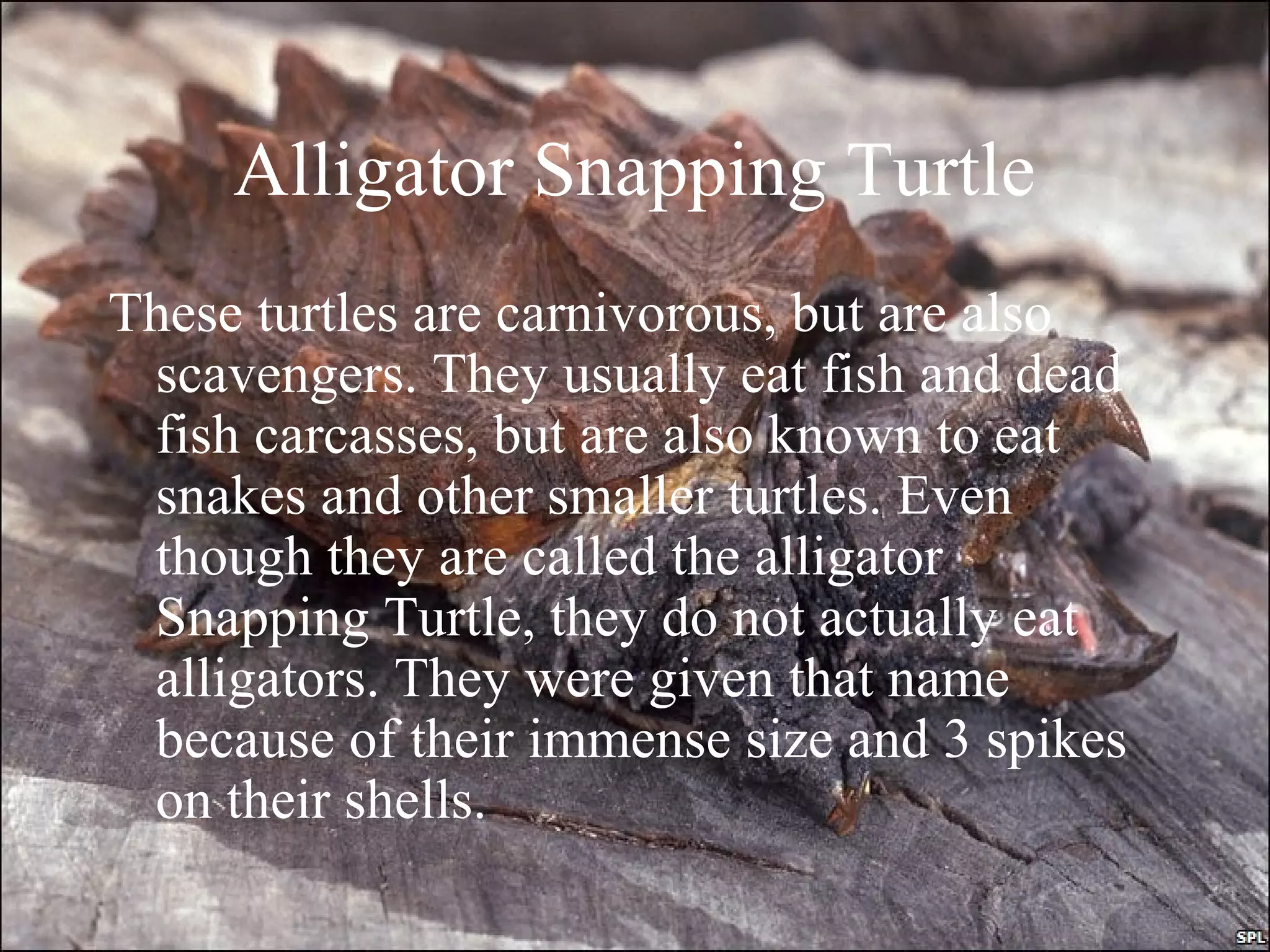
The Alligator Snapping Turtle
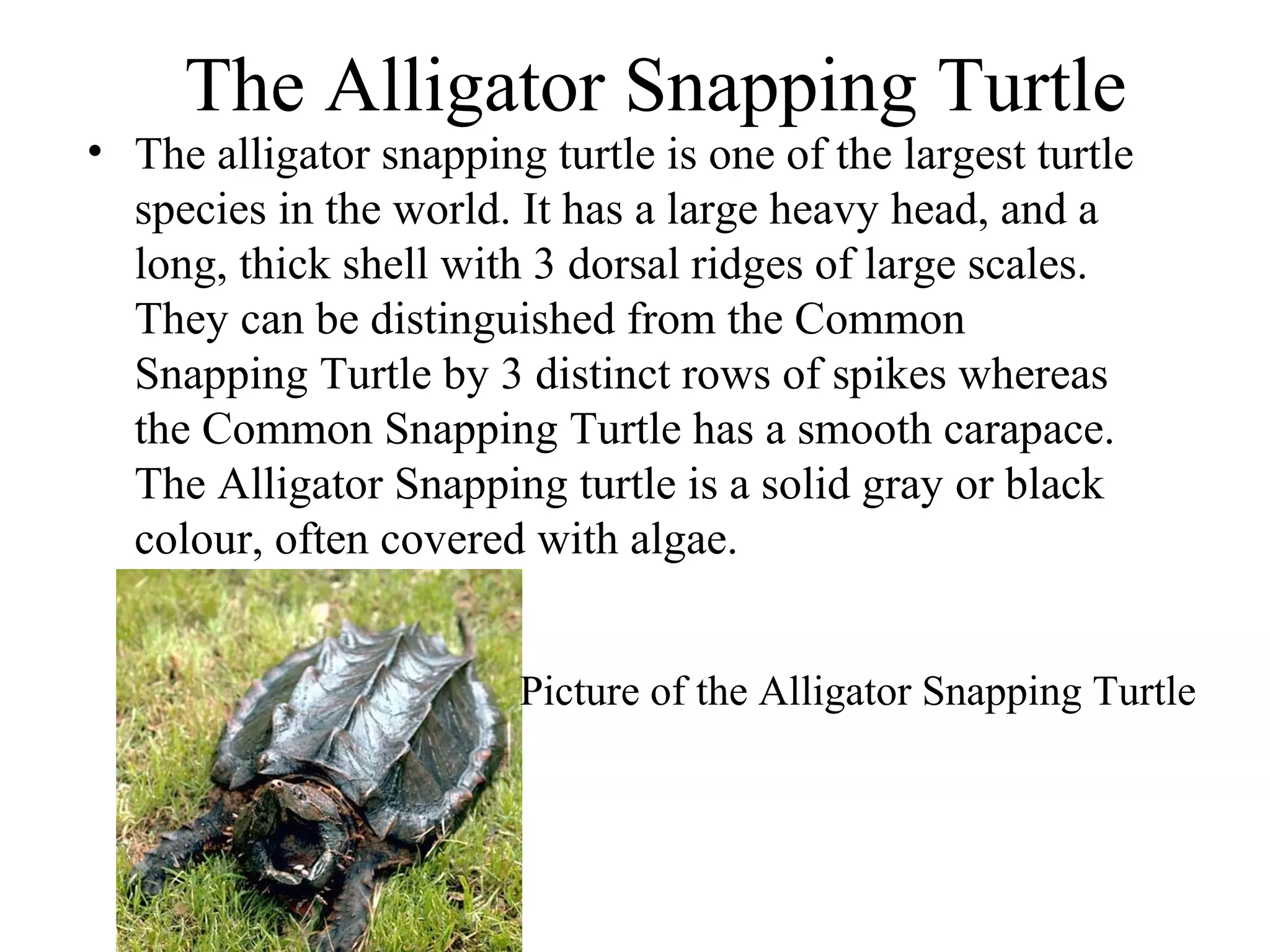
• The alligator snapping turtle is one of the largest turtle
species in the world. It has a large heavy head, and a
long, thick shell with 3 dorsal ridges of large scales.
They can be distinguished from the Common
Snapping Turtle by 3 distinct rows of spikes whereas
the Common Snapping Turtle has a smooth carapace.
The Alligator Snapping turtle is a solid gray or black
colour, often covered with algae.
Picture of the Alligator Snapping Turtle
Alligator Snapping Turtle vs. the
Common Snapping Turtle
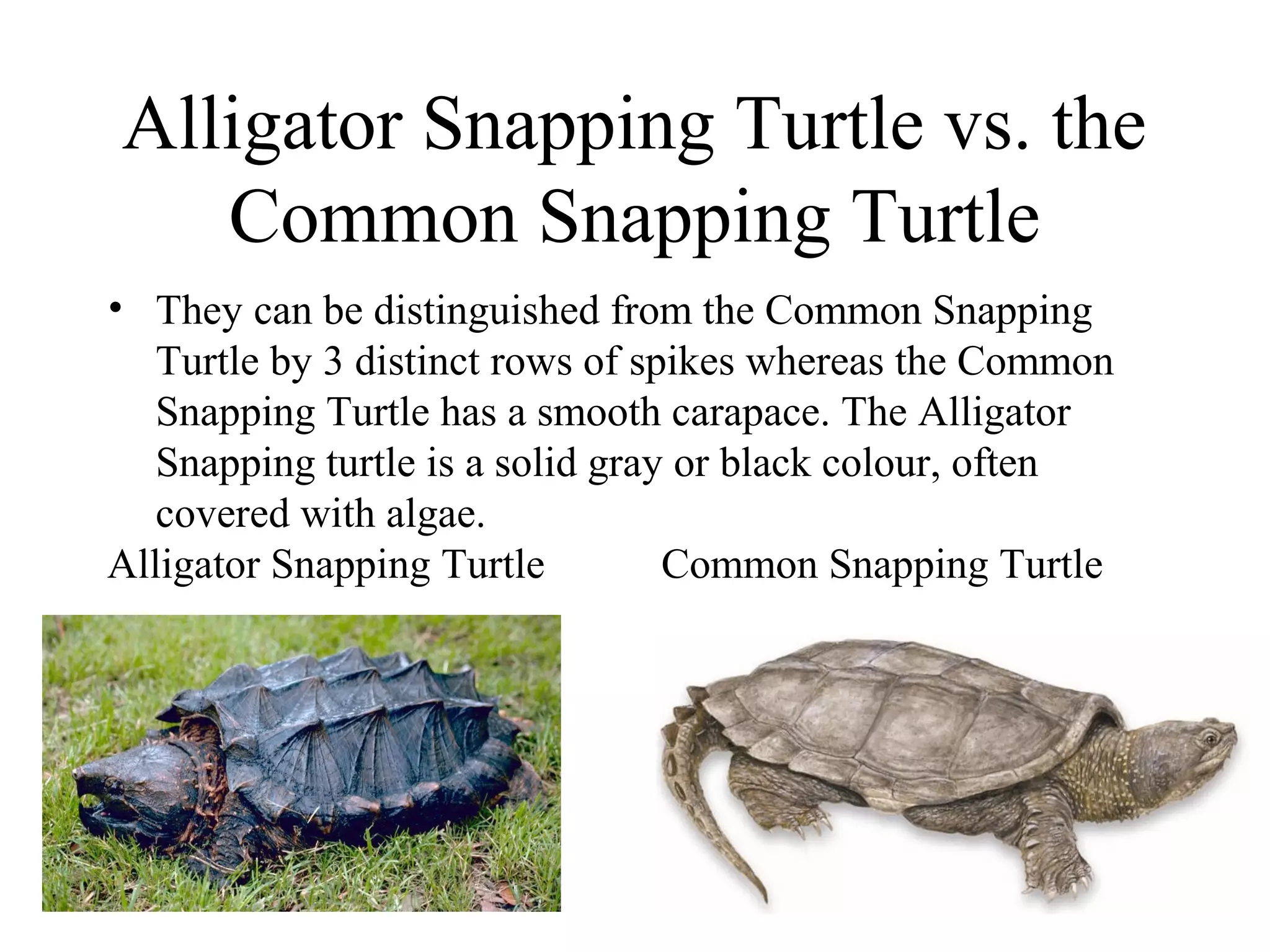
• They can be distinguished from the Common Snapping
Turtle by 3 distinct rows of spikes whereas the Common
Snapping Turtle has a smooth carapace. The Alligator
Snapping turtle is a solid gray or black colour, often
covered with algae.
Alligator Snapping Turtle Common Snapping Turtle
Alligator Snapping Turtle
These turtles are carnivorous, but are also
scavengers. They usually eat fish and dead
fish carcasses, but are also known to eat
snakes and other smaller turtles. Even
though they are called the alligator
Snapping Turtle, they do not actually eat
alligators. They were given that name
because of their immense size and 3 spikes
on their shells.
The End

Connorp finishedp3

  • 1.
  • 2.
    Turtles • Turtles arereptiles • They have a strong shell • Turtles are cold blooded (ectothermal) • Many turtle species are endangered • Turtles have good night vision
  • 3.
    Turtles • Turtles breatheair and don’t lay eggs underwater but live in or near water. Turtles have their eyes close to the top of their head because they look down at stuff in front of them. Turtles use their jaws to cut and chew food. Carnivorous turtles have really sharp ridged teeth for slicing prey while herbivorous turtles have sharp serrated teeth for cutting through tough plants.
  • 4.
    The Shell ofa Turtle • The shell of a turtle acts a a shield for them. The inner layer of the shell is made up of about 60 bones that include the backbone and the ribs that make the turtle stuck inside of its shell. In most turtles, horny scales called scutes that are part of its outer skin or epidermis that cover the outer layer of the shell.
  • 5.
    Shell continued andbreathing • Scutes overlap the seams between the shell bones of a turtle and add strength to the shell. The shell makes the turtles breathe differently from other reptiles Instead, they pull air into their mouth then push it into their lungs and then into the oscillations of the floor of their throat.
  • 6.
    Shell Continued andbreathing • Then, by contraction the abdominal muscles, that cover the posterior opening of the shell, the internal size of the shell increases, drawing air onto the lungs, allowing the muscles to function. Some turtles don’t have scutes but have leathery skin overlapping their shell bone instead. This is called buccal pumping.
  • 7.
    Shell continued… • Theturtle’s shell makes it difficult for predators to crush the shell between their jaws. One exception is the African pancake turtle, which has a flat, flexible shell that allows it to hide in rock crevices. Most aquatic turtles have flat streamlined shells, which aid them in swimming and diving. The most common colours of a turtles shell are brown, black, and olive green. Picture of an African Pancake Turtle
  • 8.
    Tortoises and turtles •The difference between a turtle and a tortoise is that a turtle is either aquatic or spends most of its time in water while tortoises live mostly on land. Tortoises have short sturdy feet. Tortoises move very slowly because of their extremely heavy shell. Aquatic turtles have webbed feet with long claws. These aquatic turtles swim in a motion similar to the doggy paddle.Picture of a Galapagos Tortoise, the largest tortoise in the world
  • 9.
    Turtles • Larger turtlestend to swim less then smaller ones, and the very big species, such as the Alligator Snapping turtle, hardly swim at all. Although many turtles spend large amounts of time underwater, they breathe air, meaning that they have to come up for air regularly. Picture of a turtle swimming
  • 10.
    Turtles • Turtles layeggs that are slightly soft and leathery. In some species of turtles, the temperature decides the chances that it will be a male of female. The warmer it is, the more likely it will be a female, while the cooler it is the more likely it will be a male. The eggs are laid in large numbers in holes made by the mother ins sand, dirt, or mud then left to fend for themselves when they are born. When they are born, they race to the water for safety from predators like birds. No known species of turtles takes care of their young. Picture of turtle eggs
  • 11.
    The Alligator SnappingTurtle • The alligator snapping turtle is one of the largest turtle species in the world. It has a large heavy head, and a long, thick shell with 3 dorsal ridges of large scales. They can be distinguished from the Common Snapping Turtle by 3 distinct rows of spikes whereas the Common Snapping Turtle has a smooth carapace. The Alligator Snapping turtle is a solid gray or black colour, often covered with algae. Picture of the Alligator Snapping Turtle
  • 12.
    Alligator Snapping Turtlevs. the Common Snapping Turtle • They can be distinguished from the Common Snapping Turtle by 3 distinct rows of spikes whereas the Common Snapping Turtle has a smooth carapace. The Alligator Snapping turtle is a solid gray or black colour, often covered with algae. Alligator Snapping Turtle Common Snapping Turtle
  • 13.
    Alligator Snapping Turtle Theseturtles are carnivorous, but are also scavengers. They usually eat fish and dead fish carcasses, but are also known to eat snakes and other smaller turtles. Even though they are called the alligator Snapping Turtle, they do not actually eat alligators. They were given that name because of their immense size and 3 spikes on their shells.
  • 14.