Turtles   Becky Ziebart ED 205-06 Quit
Turtles What is a turtle? The Shell Anatomy Habitat Lifestyle Different Types of Turtles Fun Facts Author’s Page Resources Concept Map
What is a turtle? All turtles are reptiles. Some characteristics of reptiles are that they have scaly skin, they lay eggs, and they are cold-blooded. Other things that all reptiles have in common are that their young look like small versions of adults and that they are vertebrates, meaning they have a backbone. All turtles have shells that enclose all their internal organs. There are over 250 different species of turtles. Quit Click here to view a video  about turtles
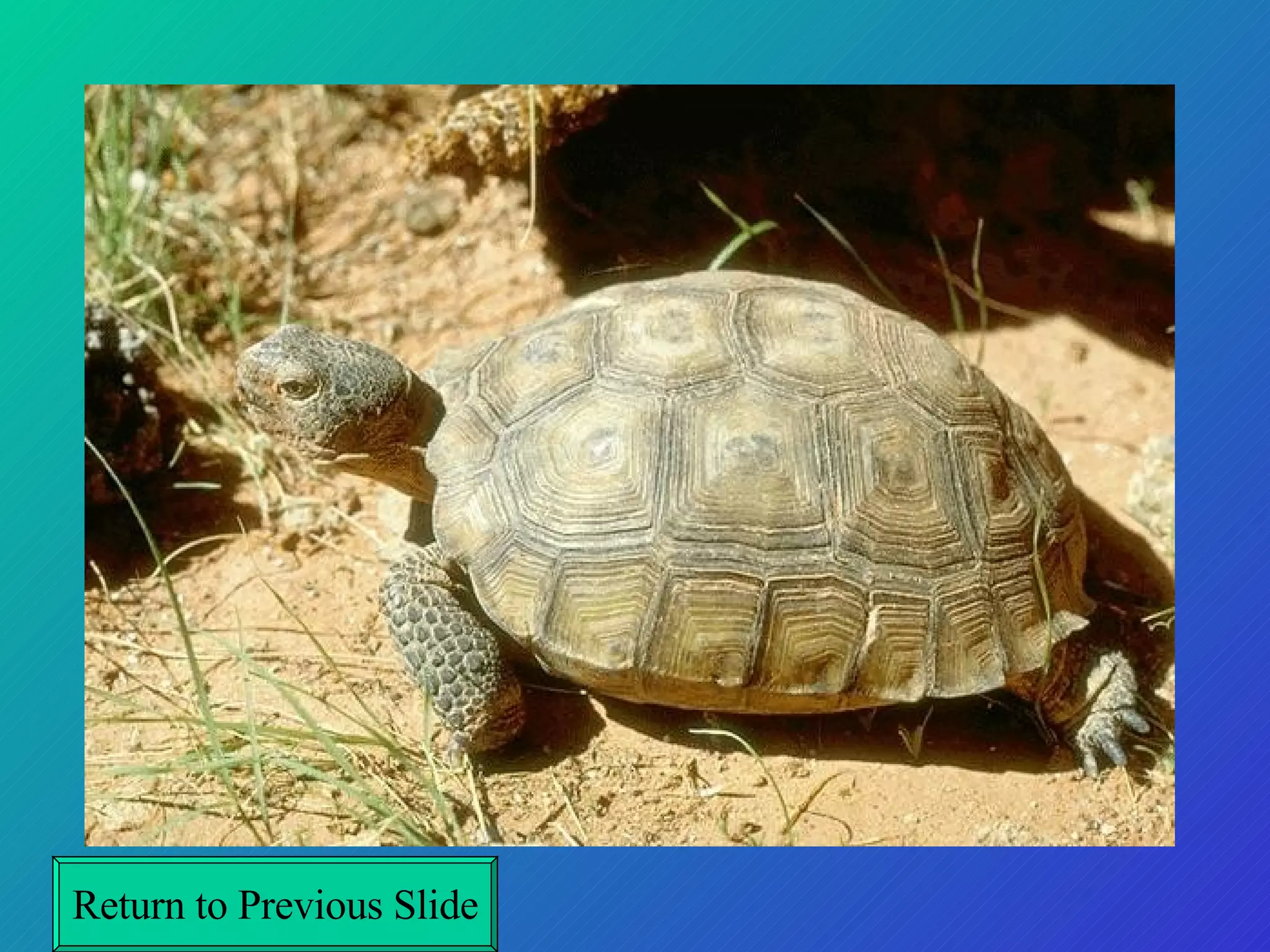
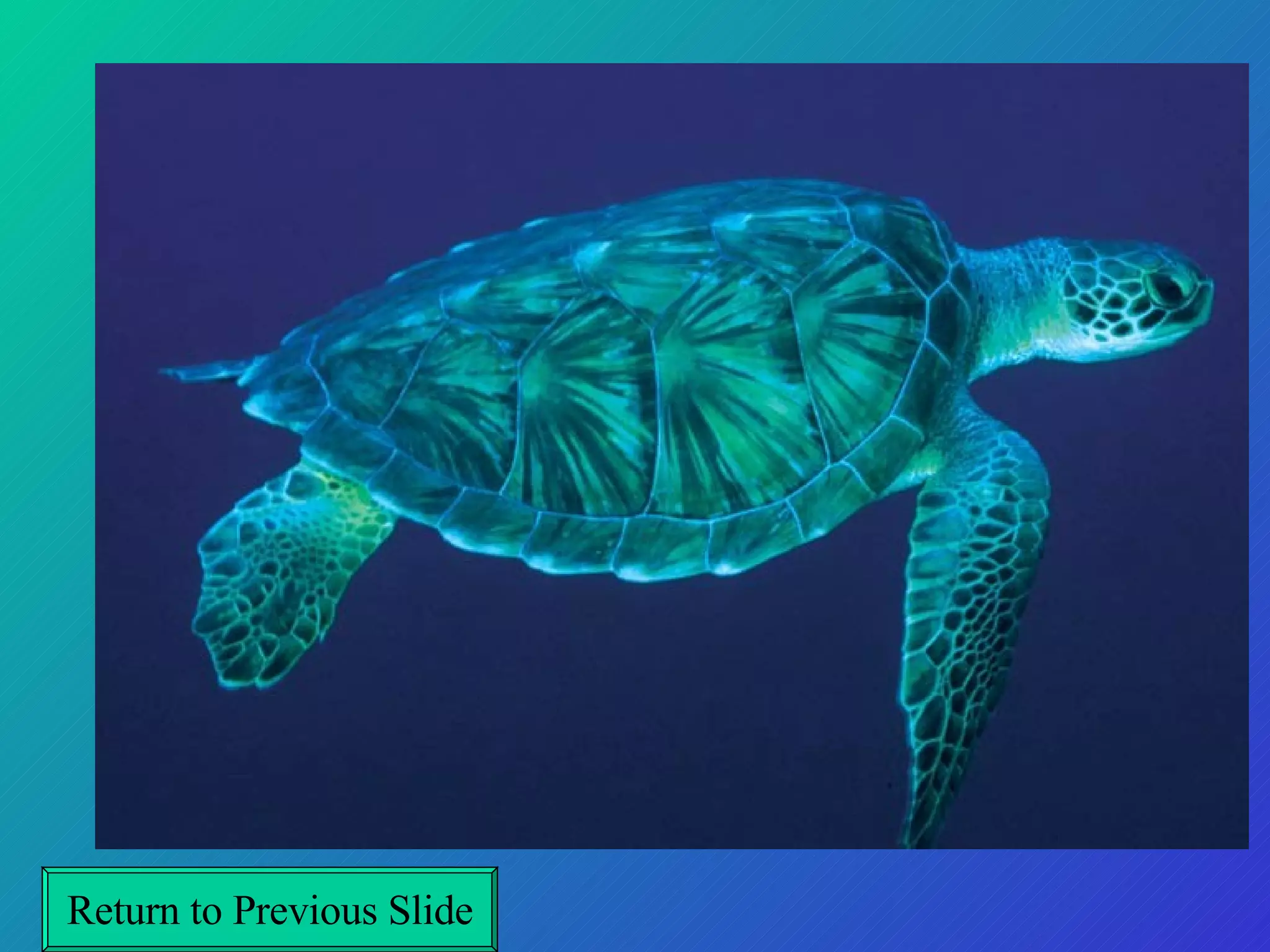
The Shell Turtles have a large shell that protects their soft body. The top shell is called carapace and the bottom shell is called plastron. All shells are different, depending on the lifestyles of the turtle. Land turtles have hard, high-domed shells, which make it difficult for predators to penetrate. Water turtles have streamlined, smoother shells, which allow for easier mobility. The shell does not come off, as it is attached to the spine and rib cage. A turtle’s shell is like a person’s fingernails: they protect the turtle but can still feel pain and pressure through the shell. Image of Land Turtle Image of Water Turtle Quit
Return to Previous Slide
Anatomy Turtles have webbed feet for swimming, as they spend most of their time in the water. Sea turtles are especially adapted for aquatic life because they have long feet that form flippers. Their skin looks leathery and tough but it is actually very sensitive. They don’t have ears but they can feel vibrations and changes in pressure, especially when in the water.  Turtles have a very good sense of smell. They also don’t have any teeth; instead, their mouths have a hard, sharpened edge that they use to bite their food. Quit
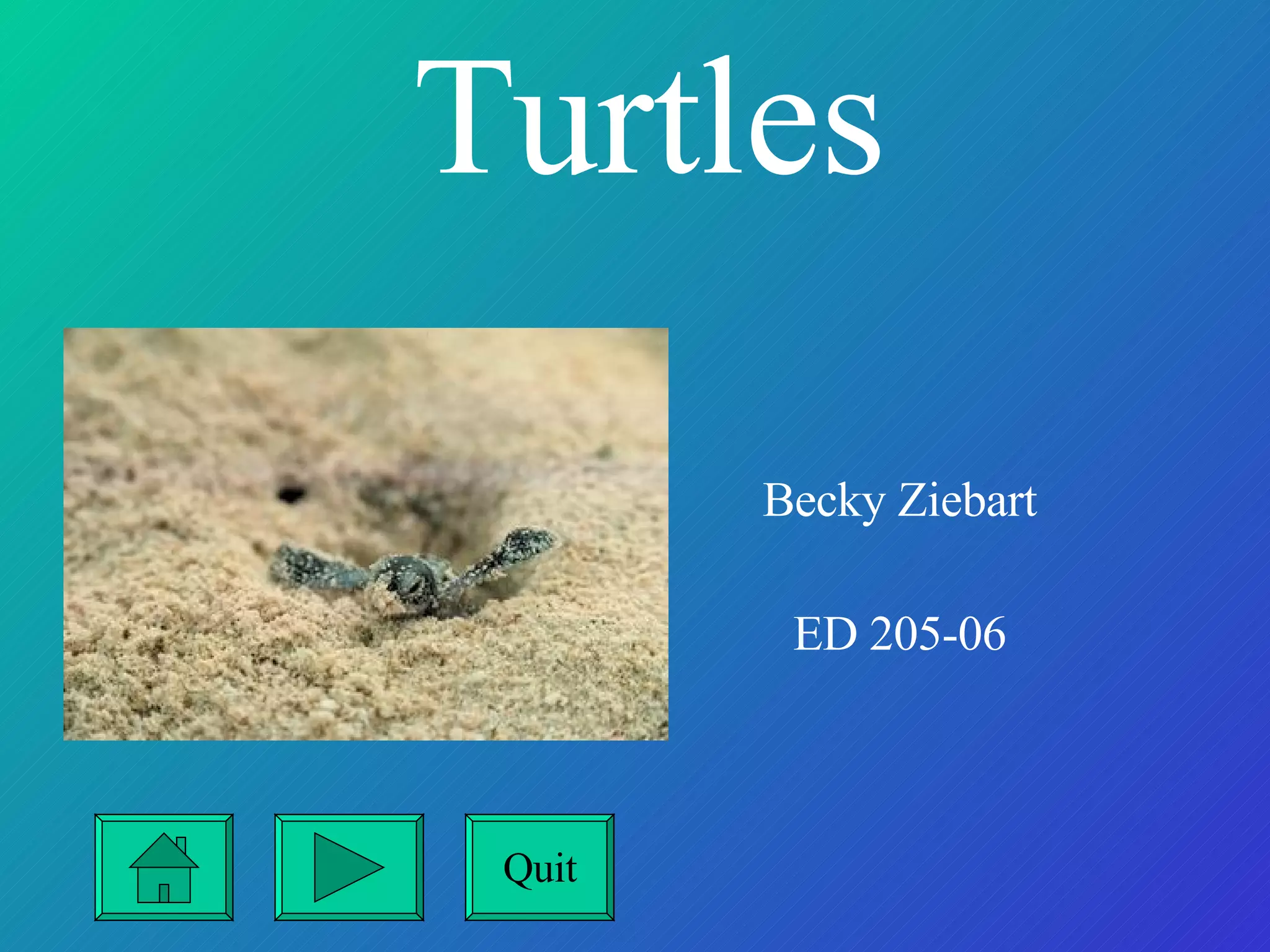
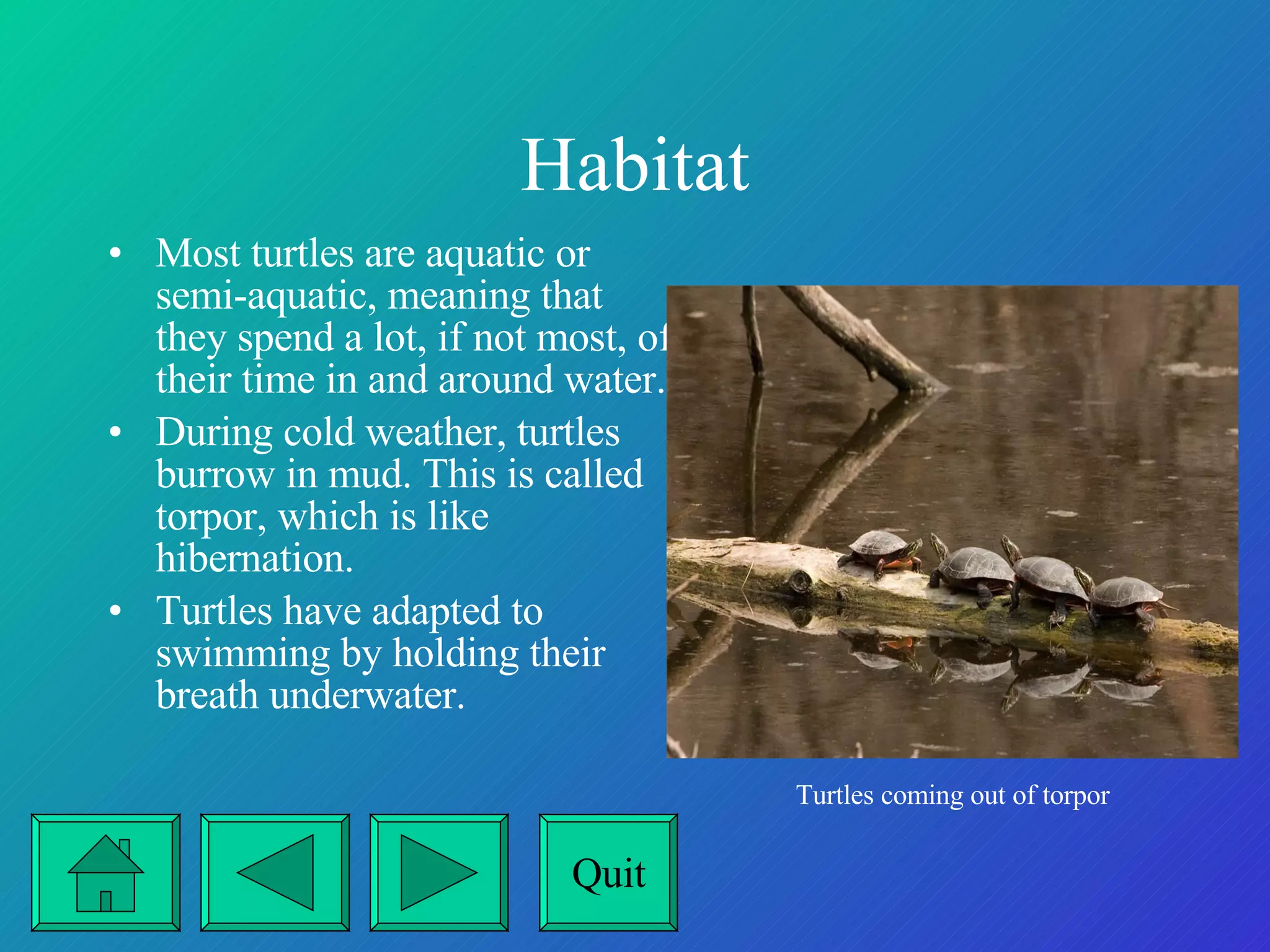
Habitat Most turtles are aquatic or semi-aquatic, meaning that they spend a lot, if not most, of their time in and around water. During cold weather, turtles burrow in mud. This is called torpor, which is like hibernation. Turtles have adapted to swimming by holding their breath underwater. Turtles coming out of torpor Quit
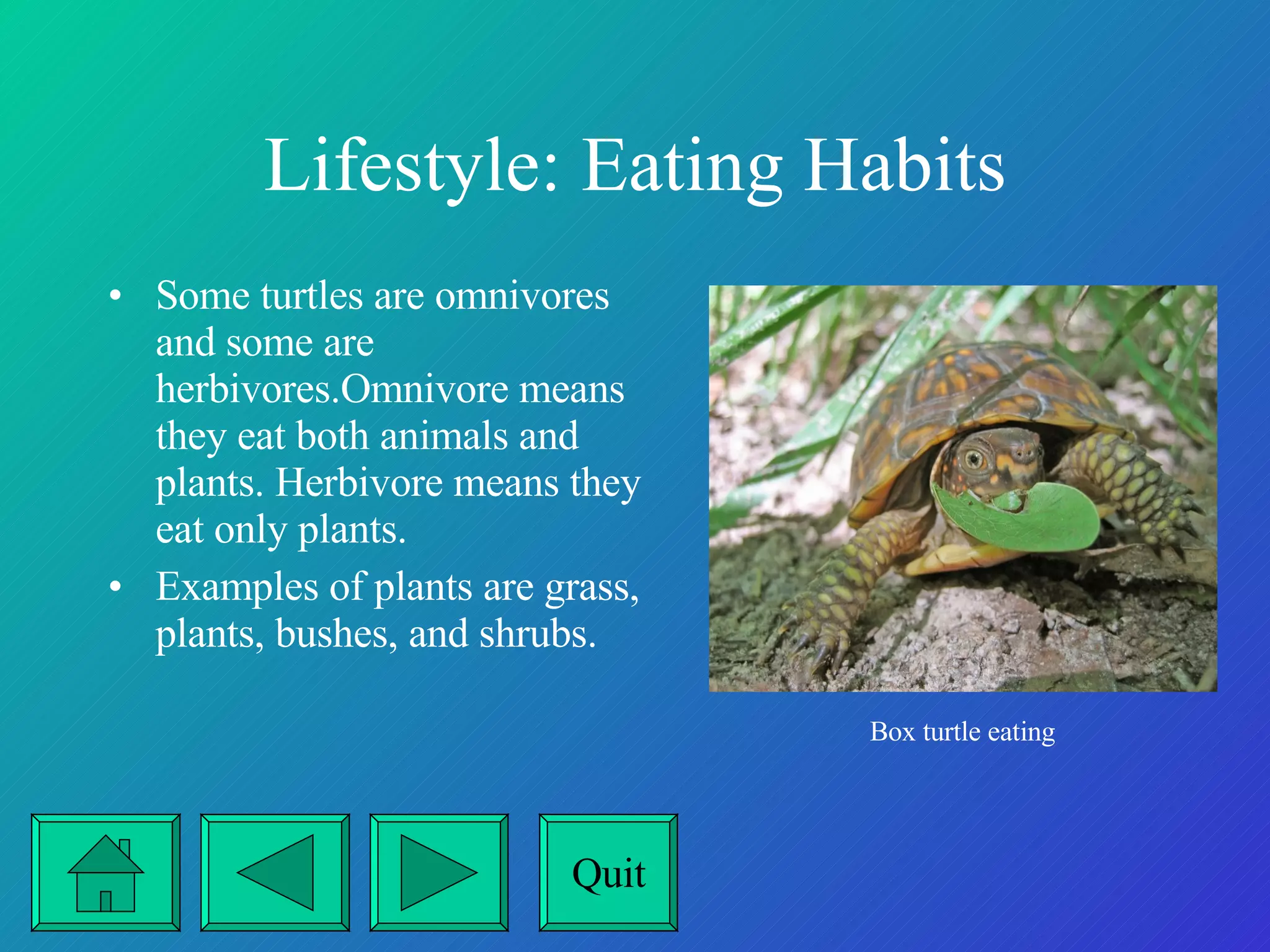
Lifestyle: Eating Habits Some turtles are omnivores and some are herbivores.Omnivore means they eat both animals and plants. Herbivore means they eat only plants.  Examples of plants are grass, plants, bushes, and shrubs. Box turtle eating Quit
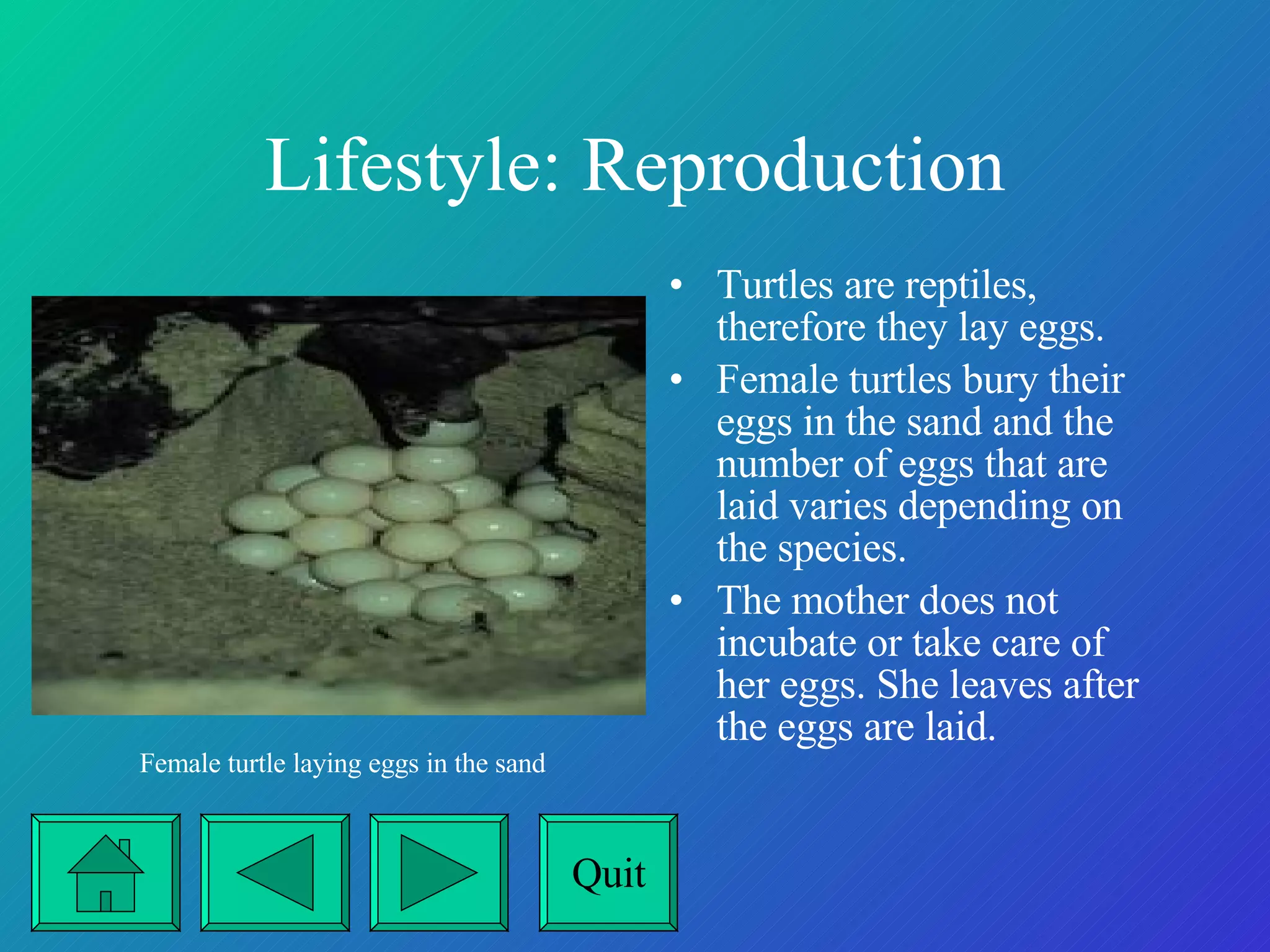
Lifestyle: Reproduction Turtles are reptiles, therefore they lay eggs. Female turtles bury their eggs in the sand and the number of eggs that are laid varies depending on the species. The mother does not incubate or take care of her eggs. She leaves after the eggs are laid. Female turtle laying eggs in the sand Quit
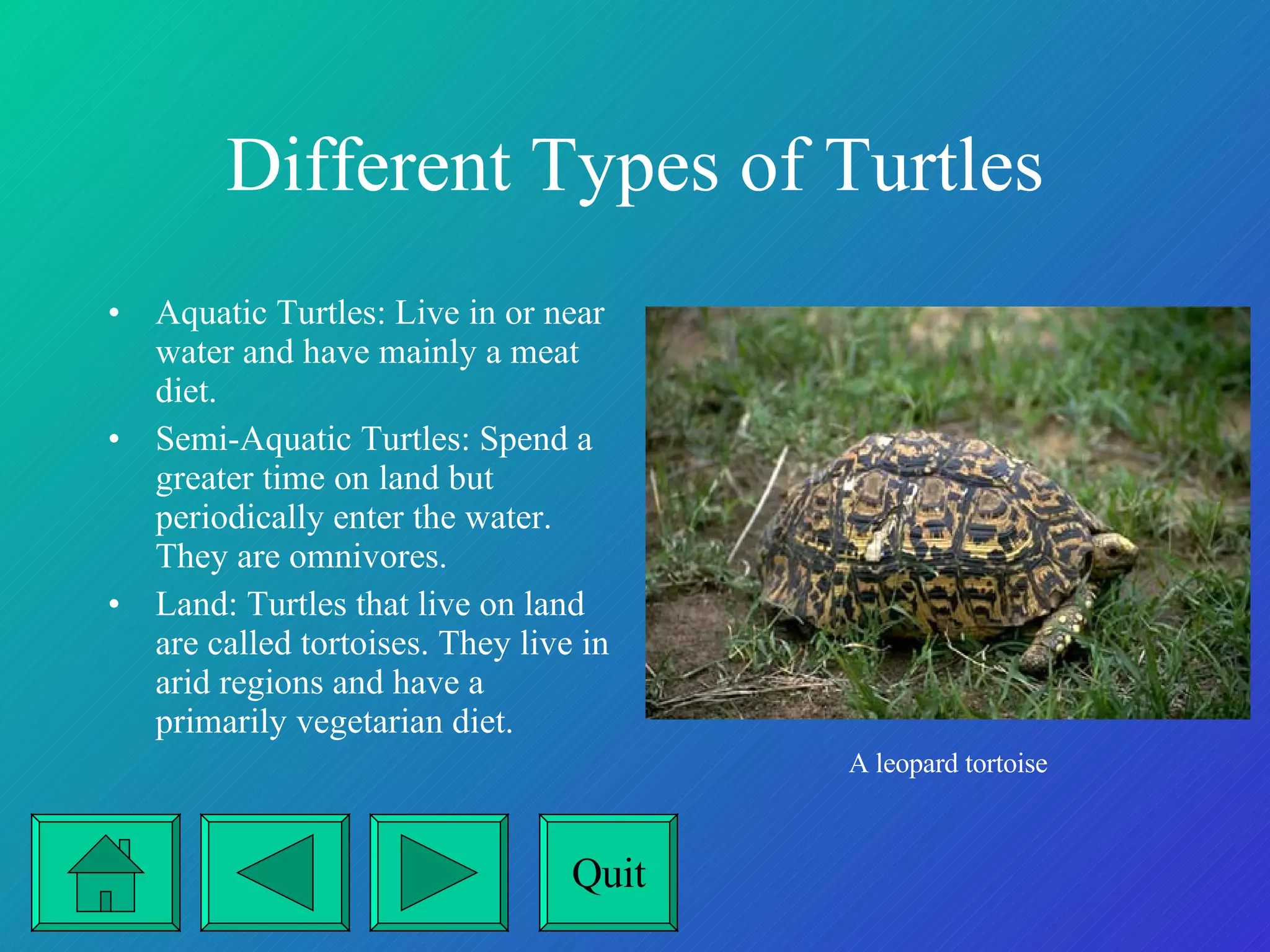
Different Types of Turtles Aquatic Turtles: Live in or near water and have mainly a meat diet. Semi-Aquatic Turtles: Spend a greater time on land but periodically enter the water. They are omnivores. Land: Turtles that live on land are called tortoises. They live in arid regions and have a primarily vegetarian diet. A leopard tortoise Quit
Fun Facts   Largest: Leatherback Turtle: Shell length up to 8 feet Smallest: Bog Turtle: Shell length 3-4.5 inches Heaviest: Leatherback Turtle: Up to 1800 pounds Lightest: Speckled Cape Tortoise: Up to 5 ounces Average Life Span: Land: Up to 150 years   Aquatic: About 70 years Fastest: Leatherback Turtle: One was once clocked at swimming 22 miles per hour Slowest: Land tortoises: Walk at about 0.5 miles per hour Quit
Author’s Page My name is Becky Ziebart. I am a sophomore at Grand Valley State University. I am majoring in Mathematics. I plan on teaching in an elementary school someday. My e-mail address is:  beckyziebart @ comcast .net . Quit
Quit
Resources http://www.chelydra.org/turtle_what_is_turtle.html http://www.sandiegozoo.org/animalbytes/a-reptiles.html http://www.sandiegozoo.org/animalbytes/t-turtle.html http://animal.discovery.com/reptiles/turtle/ http://animal.discovery.com/guides/reptiles/turtles/which.html http://www.wisegeek.com/what-is-the-difference-between-a-turtle-and-a-tortoise. htm http://streaming.discoveryeducation.com/ http://www.frontier.ac.uk/_library/images/PROUruguayTurtles/uruguay%20sea%20turtles1. jpg http://www.desertgold.com/park/pics/turtle. jpg http://www.blairsociety.com/Blair/Reptiles/SpeciesAccounts/Chrysemyspictabellii/BaskingTurtles. jpg http://k53.pbase.com/g3/23/624723/2/66952724.82jJR7JW.jpg Quit
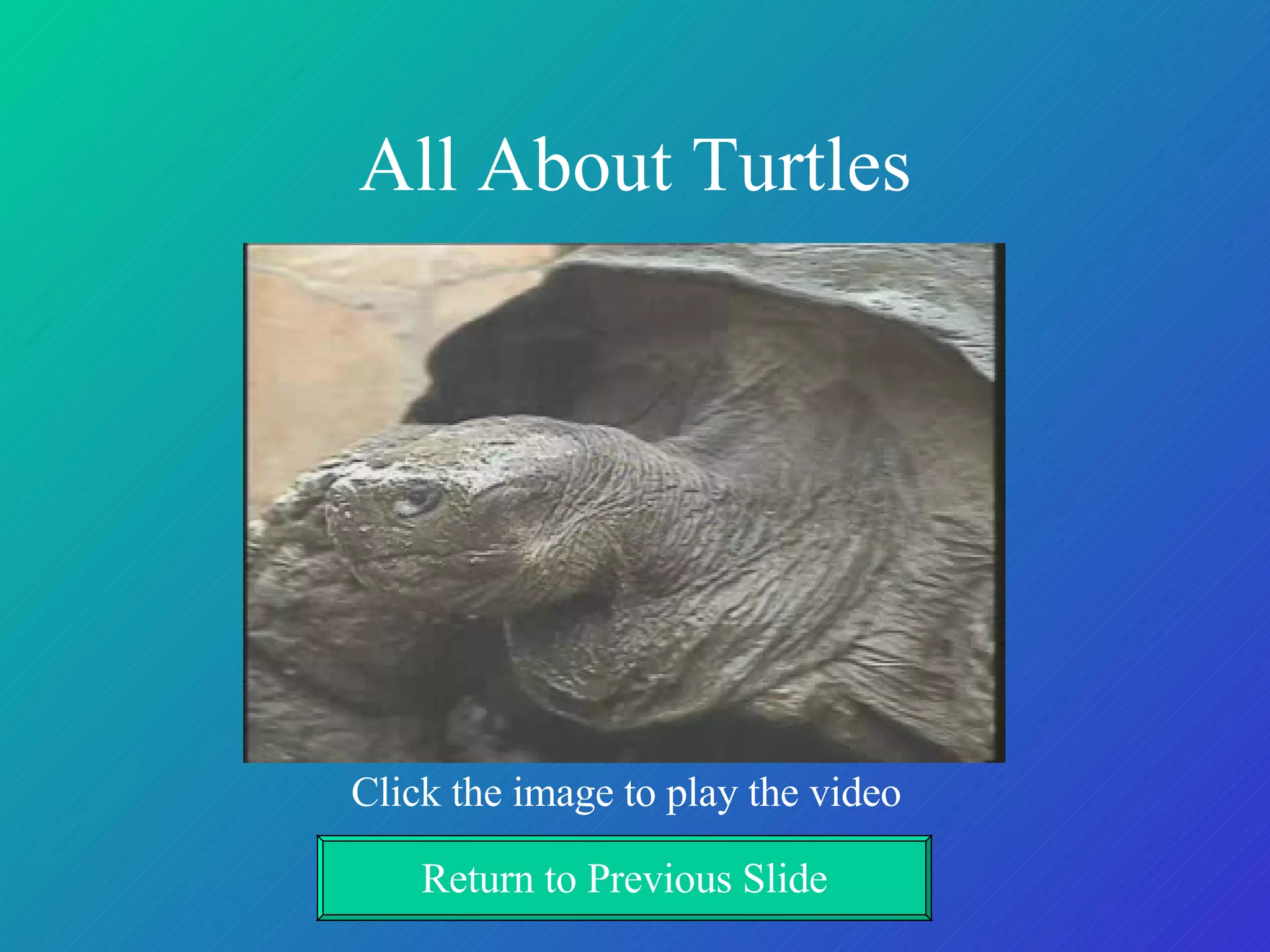
All About Turtles Click the image to play the video Return to Previous Slide

Turtles ED 205 IPP

  • 1.
    Turtles Becky Ziebart ED 205-06 Quit
  • 2.
    Turtles What isa turtle? The Shell Anatomy Habitat Lifestyle Different Types of Turtles Fun Facts Author’s Page Resources Concept Map
  • 3.
    What is aturtle? All turtles are reptiles. Some characteristics of reptiles are that they have scaly skin, they lay eggs, and they are cold-blooded. Other things that all reptiles have in common are that their young look like small versions of adults and that they are vertebrates, meaning they have a backbone. All turtles have shells that enclose all their internal organs. There are over 250 different species of turtles. Quit Click here to view a video about turtles
  • 4.
    The Shell Turtleshave a large shell that protects their soft body. The top shell is called carapace and the bottom shell is called plastron. All shells are different, depending on the lifestyles of the turtle. Land turtles have hard, high-domed shells, which make it difficult for predators to penetrate. Water turtles have streamlined, smoother shells, which allow for easier mobility. The shell does not come off, as it is attached to the spine and rib cage. A turtle’s shell is like a person’s fingernails: they protect the turtle but can still feel pain and pressure through the shell. Image of Land Turtle Image of Water Turtle Quit
  • 5.
  • 6.
  • 7.
    Anatomy Turtles havewebbed feet for swimming, as they spend most of their time in the water. Sea turtles are especially adapted for aquatic life because they have long feet that form flippers. Their skin looks leathery and tough but it is actually very sensitive. They don’t have ears but they can feel vibrations and changes in pressure, especially when in the water. Turtles have a very good sense of smell. They also don’t have any teeth; instead, their mouths have a hard, sharpened edge that they use to bite their food. Quit
  • 8.
    Habitat Most turtlesare aquatic or semi-aquatic, meaning that they spend a lot, if not most, of their time in and around water. During cold weather, turtles burrow in mud. This is called torpor, which is like hibernation. Turtles have adapted to swimming by holding their breath underwater. Turtles coming out of torpor Quit
  • 9.
    Lifestyle: Eating HabitsSome turtles are omnivores and some are herbivores.Omnivore means they eat both animals and plants. Herbivore means they eat only plants. Examples of plants are grass, plants, bushes, and shrubs. Box turtle eating Quit
  • 10.
    Lifestyle: Reproduction Turtlesare reptiles, therefore they lay eggs. Female turtles bury their eggs in the sand and the number of eggs that are laid varies depending on the species. The mother does not incubate or take care of her eggs. She leaves after the eggs are laid. Female turtle laying eggs in the sand Quit
  • 11.
    Different Types ofTurtles Aquatic Turtles: Live in or near water and have mainly a meat diet. Semi-Aquatic Turtles: Spend a greater time on land but periodically enter the water. They are omnivores. Land: Turtles that live on land are called tortoises. They live in arid regions and have a primarily vegetarian diet. A leopard tortoise Quit
  • 12.
    Fun Facts Largest: Leatherback Turtle: Shell length up to 8 feet Smallest: Bog Turtle: Shell length 3-4.5 inches Heaviest: Leatherback Turtle: Up to 1800 pounds Lightest: Speckled Cape Tortoise: Up to 5 ounces Average Life Span: Land: Up to 150 years Aquatic: About 70 years Fastest: Leatherback Turtle: One was once clocked at swimming 22 miles per hour Slowest: Land tortoises: Walk at about 0.5 miles per hour Quit
  • 13.
    Author’s Page Myname is Becky Ziebart. I am a sophomore at Grand Valley State University. I am majoring in Mathematics. I plan on teaching in an elementary school someday. My e-mail address is: beckyziebart @ comcast .net . Quit
  • 14.
  • 15.
    Resources http://www.chelydra.org/turtle_what_is_turtle.html http://www.sandiegozoo.org/animalbytes/a-reptiles.htmlhttp://www.sandiegozoo.org/animalbytes/t-turtle.html http://animal.discovery.com/reptiles/turtle/ http://animal.discovery.com/guides/reptiles/turtles/which.html http://www.wisegeek.com/what-is-the-difference-between-a-turtle-and-a-tortoise. htm http://streaming.discoveryeducation.com/ http://www.frontier.ac.uk/_library/images/PROUruguayTurtles/uruguay%20sea%20turtles1. jpg http://www.desertgold.com/park/pics/turtle. jpg http://www.blairsociety.com/Blair/Reptiles/SpeciesAccounts/Chrysemyspictabellii/BaskingTurtles. jpg http://k53.pbase.com/g3/23/624723/2/66952724.82jJR7JW.jpg Quit
  • 16.
    All About TurtlesClick the image to play the video Return to Previous Slide