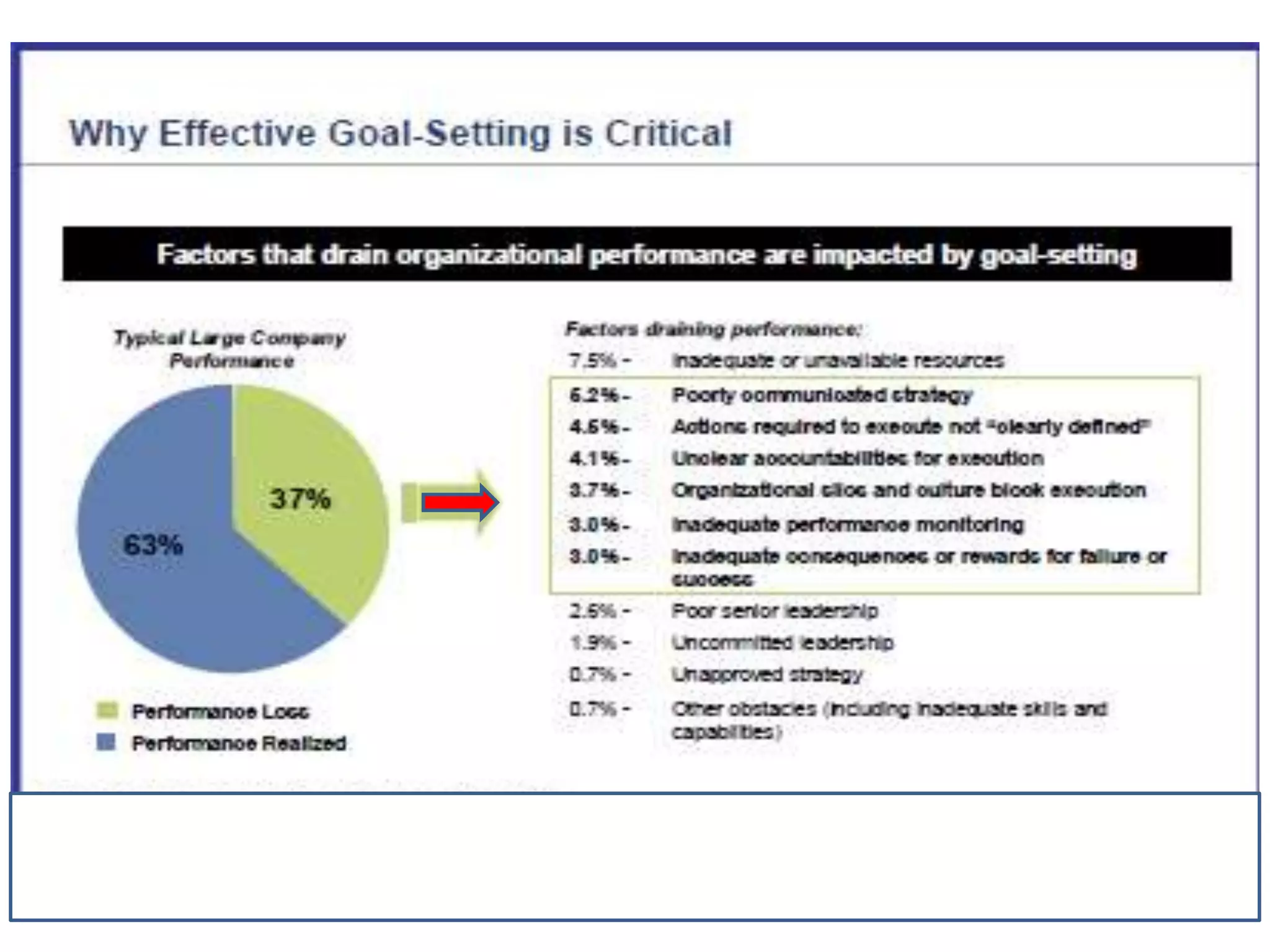
Turning  Great Strategy into Great PerformanceCrux of the article:Most companies strategies deliver only 63% of their promised financial value. Why? Leaders press for better execution when they really need a sounder strategy. Or they craft a new strategy when execution is the true weak pointHow to avoid these errors? View strategic planning and execution as inextricably linked – then raise  the bar for both simultaneously. Start by applying seven deceptively straightforward rules, including keeping your strategy simple and concrete, making resources-allocation decision early in the planning process, and continuously monitoringperformance as you roll out your strategic plan  By following these rules, you reduce the likelihood of performance shortfalls. And even if your strategy still stumbles, you quickly determine whether the fault lies with the strategy itself, you plan for pursuing it, or the execution process. The payoff? You make the right midcourse corrections-promptly. Presented by: TarunAggarwal
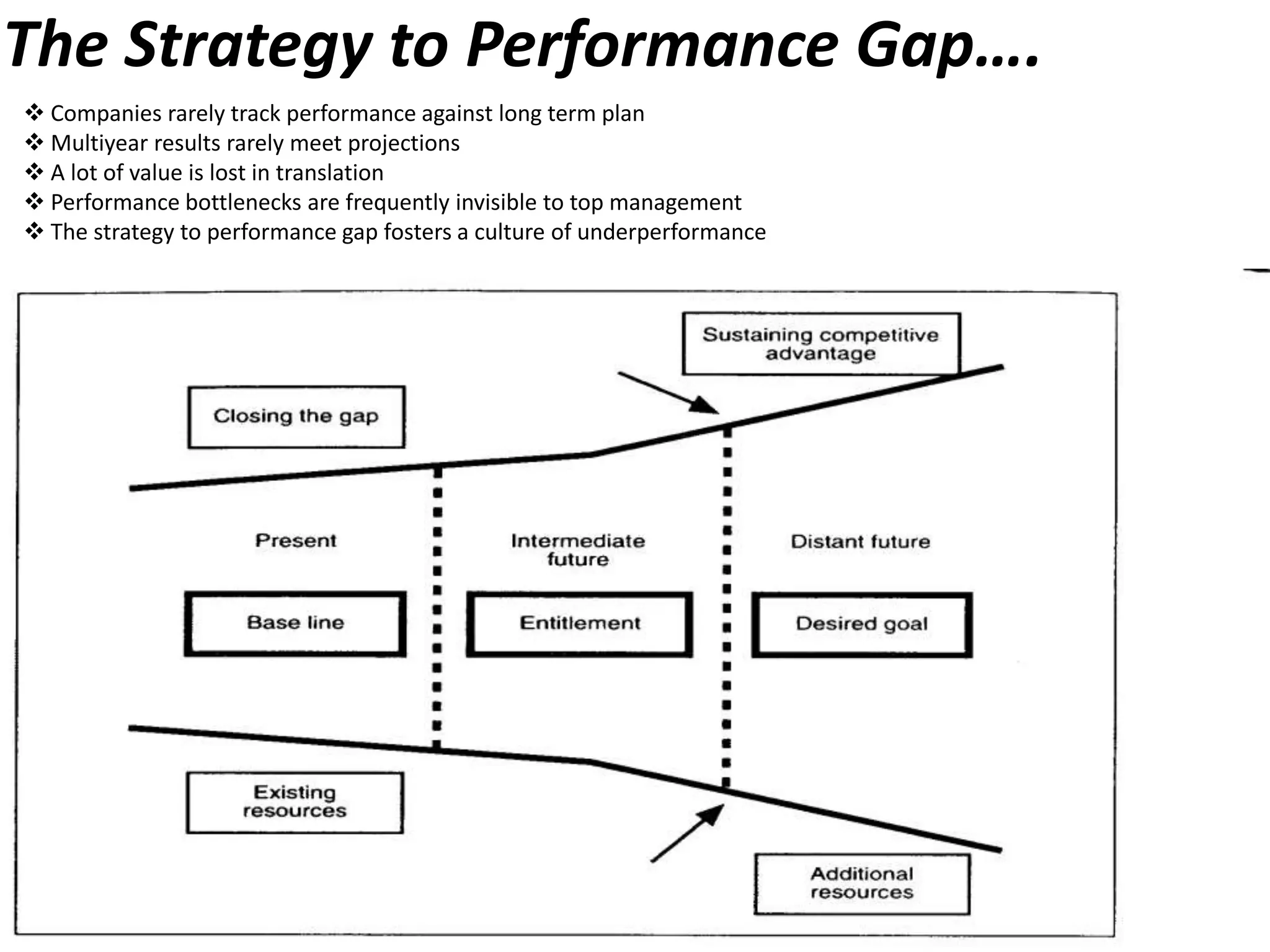
The Strategy to Performance Gap…. Companies rarely track performance against long term plan
 Multiyear results rarely meet projections
 A lot of value is lost in translation
 Performance bottlenecks are frequently invisible to top management
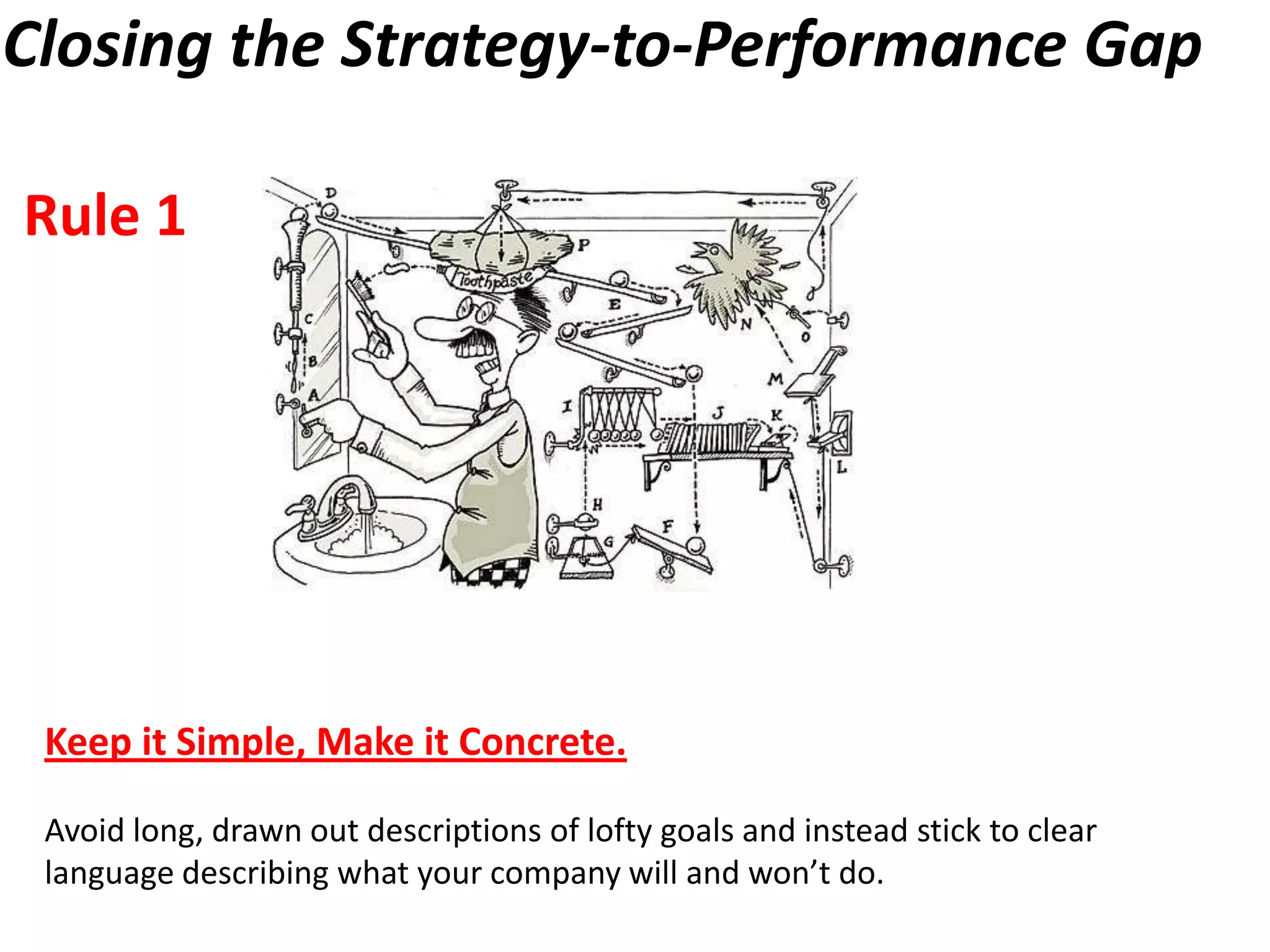
 The strategy to performance gap fosters a culture of underperformanceClosing the Strategy-to-Performance GapRule 1  Keep it Simple, Make it Concrete.Avoid long, drawn out descriptions of lofty goals and instead stick to clear language describing what your company will and won’t do.
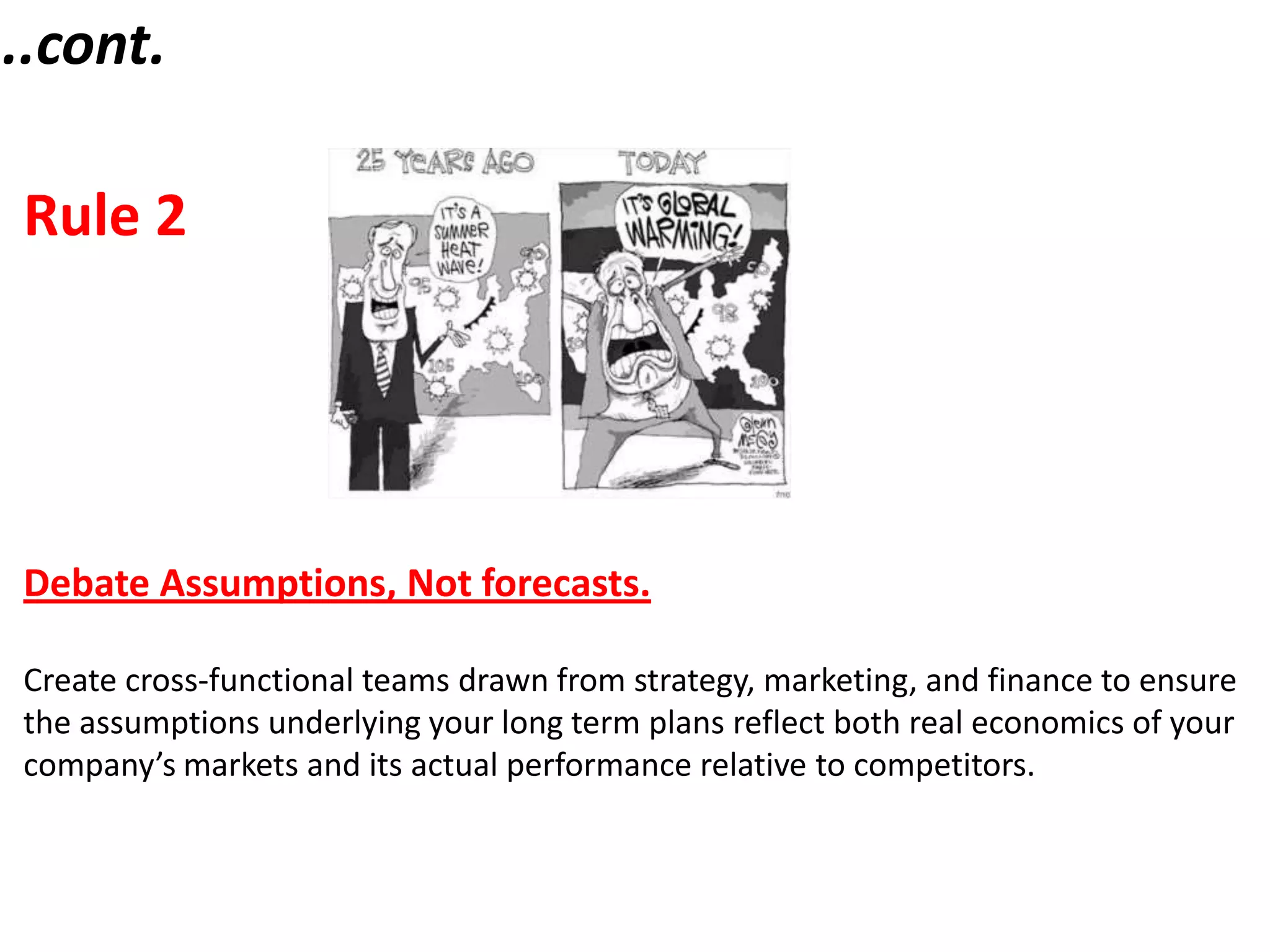
..cont.Rule 2  Debate Assumptions, Not forecasts.Create cross-functional teams drawn from strategy, marketing, and finance to ensure the assumptions underlying your long term plans reflect both real economics of your company’s markets and its actual performance relative to competitors.
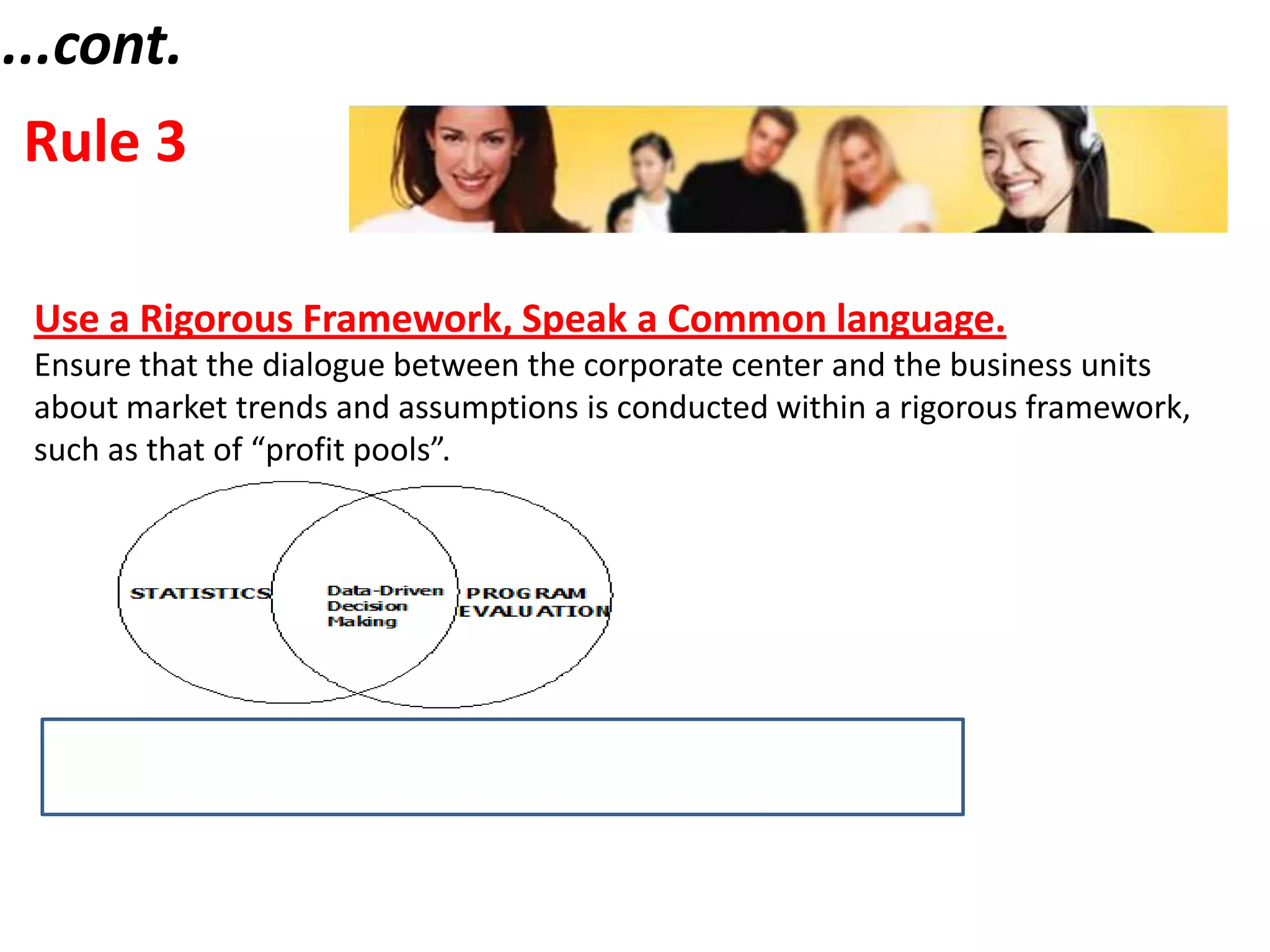
...cont.Rule 3  Use a Rigorous Framework, Speak a Common language.Ensure that the dialogue between the corporate center and the business units about market trends and assumptions is conducted within a rigorous framework, such as that of “profit pools”.
..cont.Rule 4  Discuss Resource Deployments early.Create more realistic forecasts and more executable plans by discussing up front the level and timing of critical deploymentsRule 5  Clearly Identify Priorities.Prioritize tactics so that employees have a clear sense of where to direct their efforts.
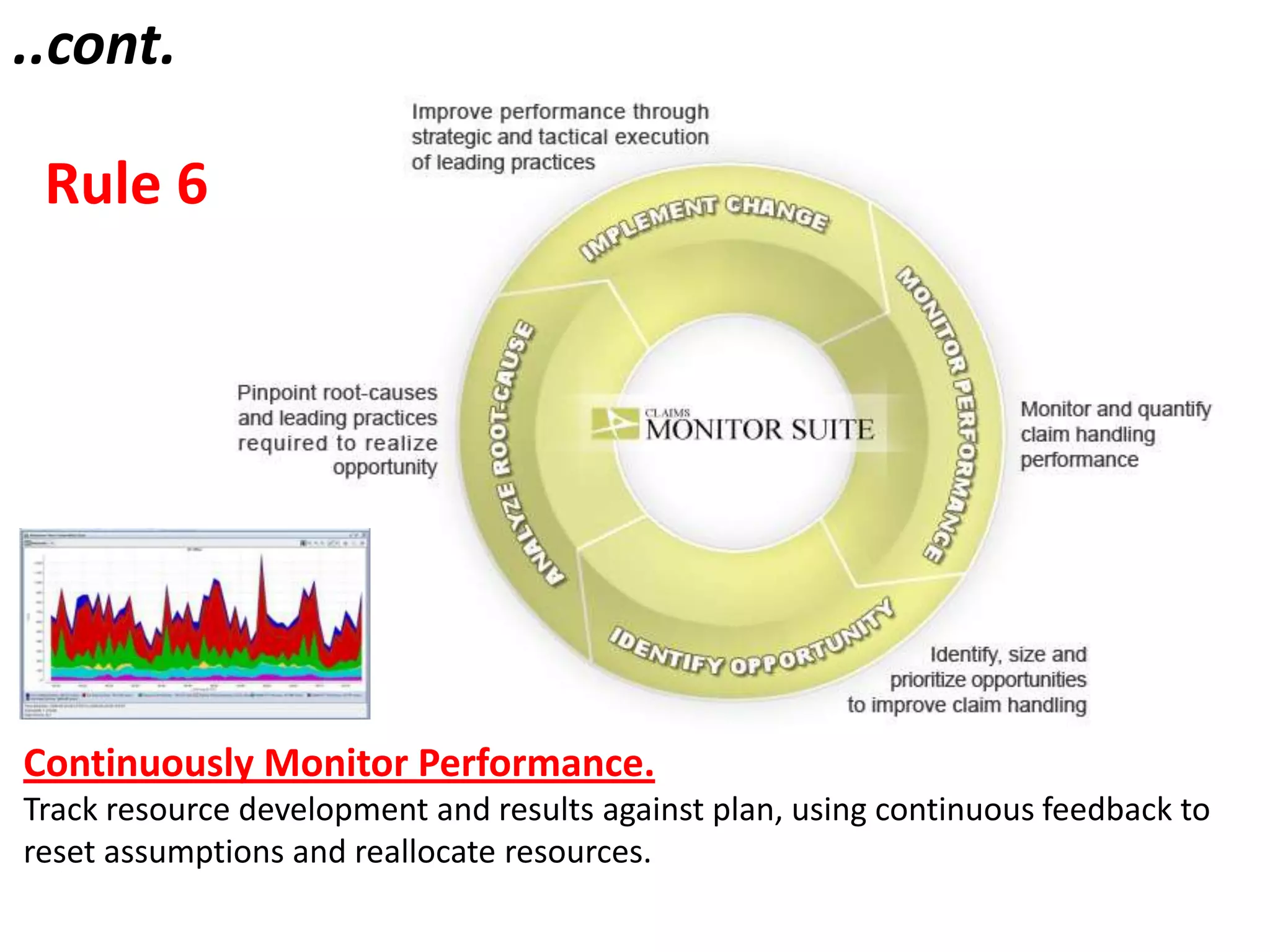
..cont.Rule 6  Continuously Monitor Performance. Track resource development and results against plan, using continuous feedback to reset assumptions and reallocate resources.
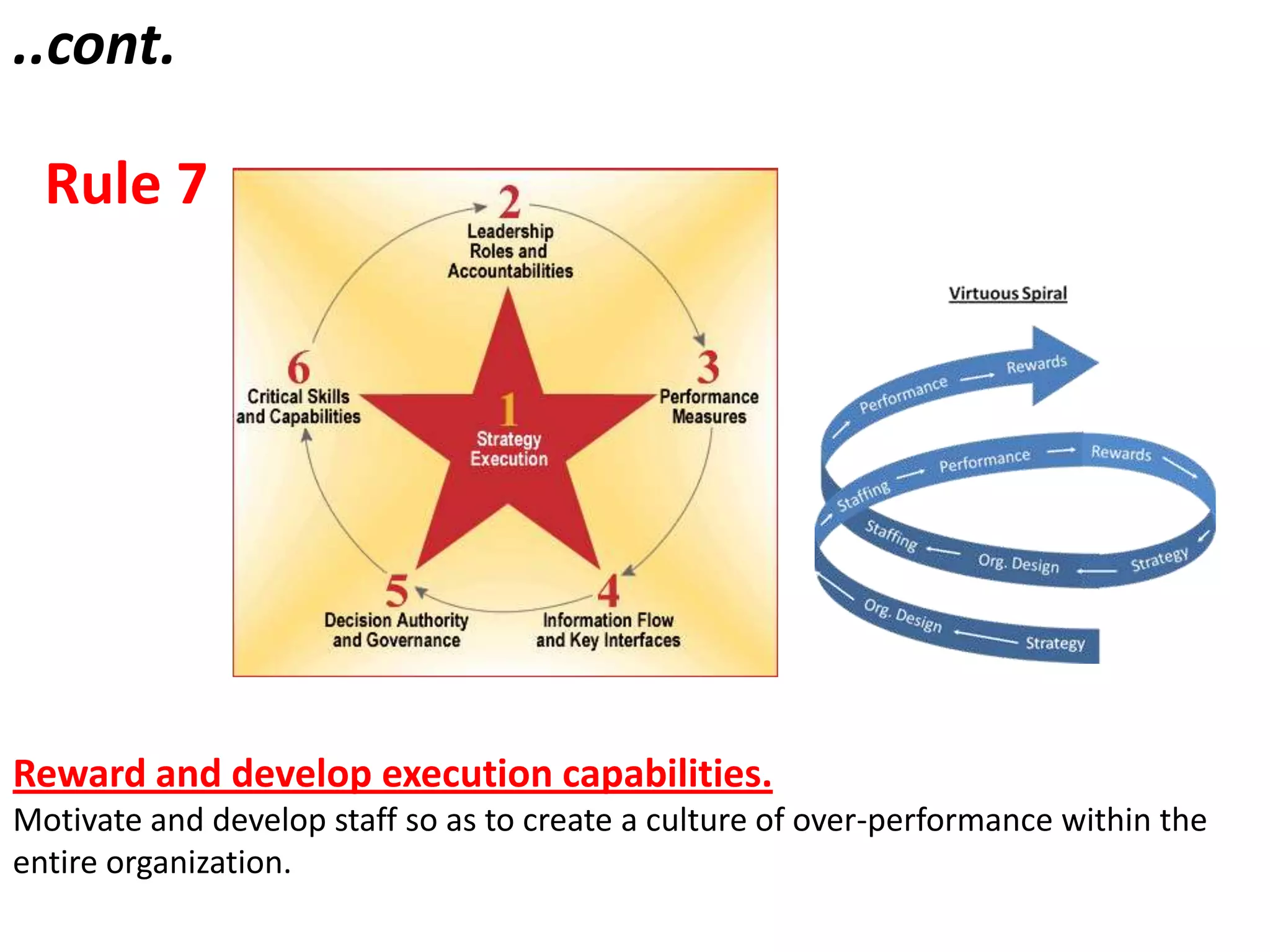
..cont.Rule 7  Reward and develop execution capabilities.Motivate and develop staff so as to create a culture of over-performance within the entire organization.
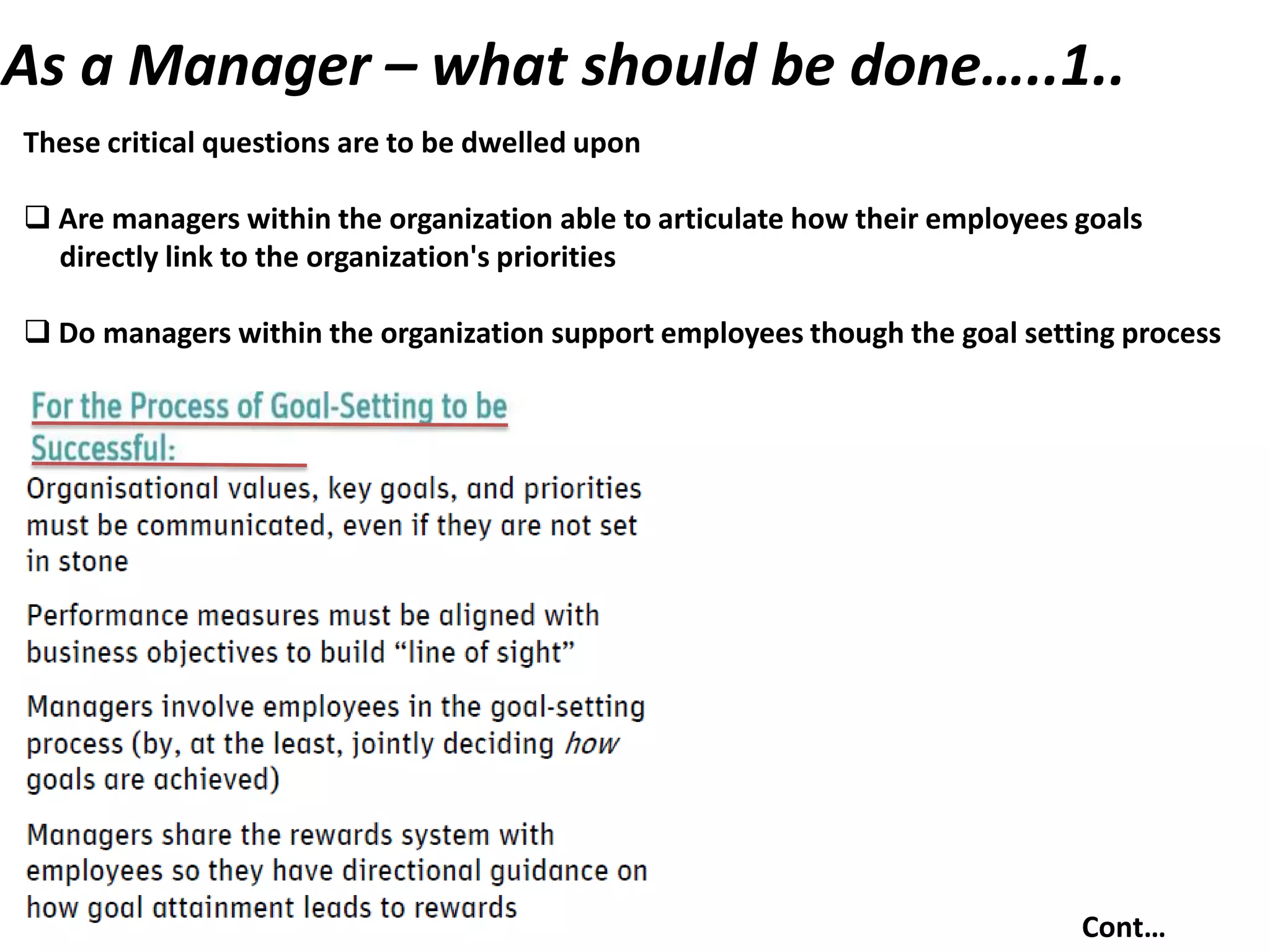
As a Manager – what should be done…..1..These critical questions are to be dwelled upon Are managers within the organization able to articulate how their employees goals     directly link to the organization's priorities  Do managers within the organization support employees though the goal setting processCont…
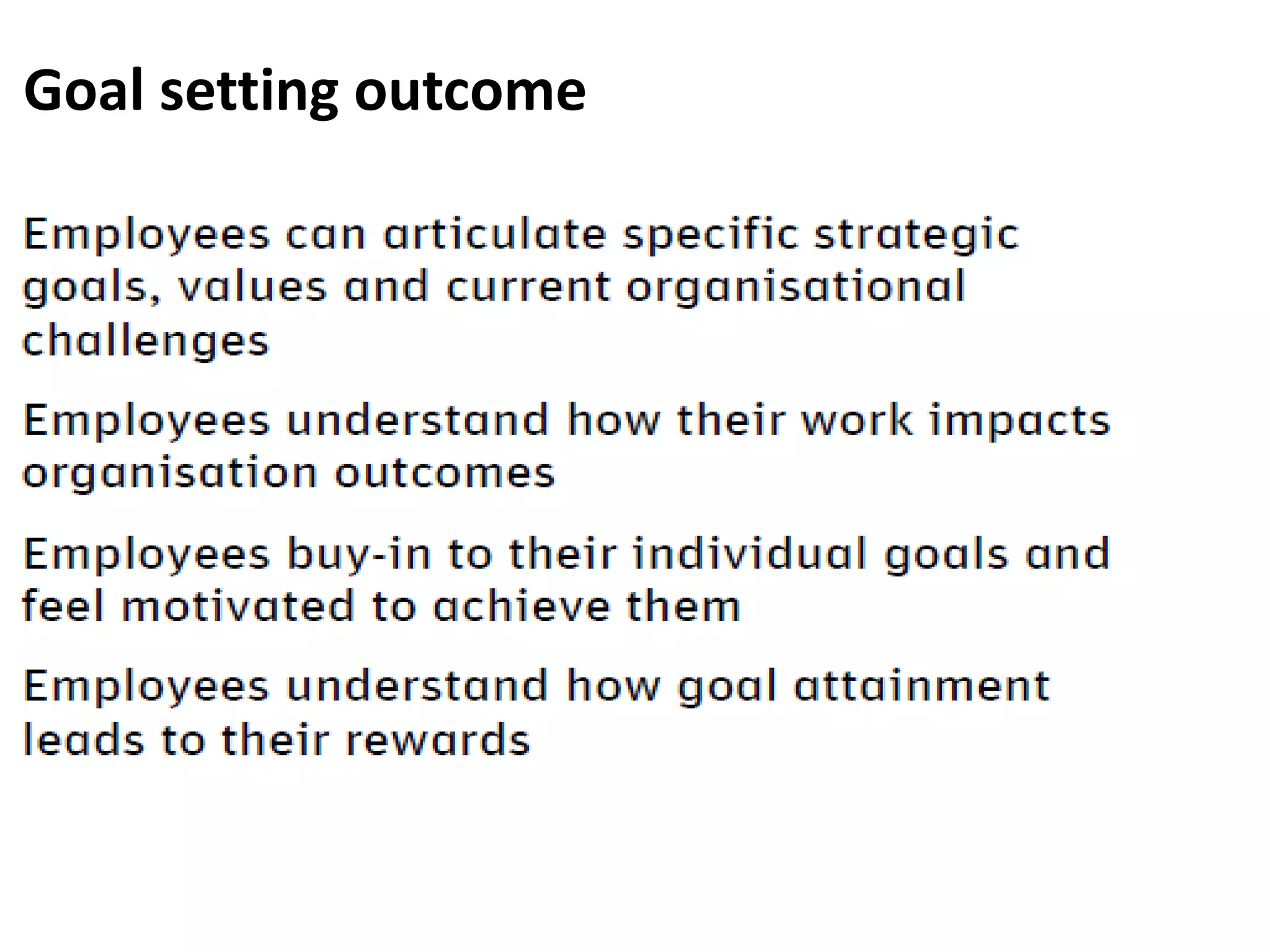
Goal setting outcome

Turning Great Strategy Into Great Performance

  • 1.
    Turning GreatStrategy into Great PerformanceCrux of the article:Most companies strategies deliver only 63% of their promised financial value. Why? Leaders press for better execution when they really need a sounder strategy. Or they craft a new strategy when execution is the true weak pointHow to avoid these errors? View strategic planning and execution as inextricably linked – then raise the bar for both simultaneously. Start by applying seven deceptively straightforward rules, including keeping your strategy simple and concrete, making resources-allocation decision early in the planning process, and continuously monitoringperformance as you roll out your strategic plan By following these rules, you reduce the likelihood of performance shortfalls. And even if your strategy still stumbles, you quickly determine whether the fault lies with the strategy itself, you plan for pursuing it, or the execution process. The payoff? You make the right midcourse corrections-promptly. Presented by: TarunAggarwal
  • 2.
    The Strategy toPerformance Gap…. Companies rarely track performance against long term plan
  • 3.
    Multiyear resultsrarely meet projections
  • 4.
    A lotof value is lost in translation
  • 5.
    Performance bottlenecksare frequently invisible to top management
  • 6.
    The strategyto performance gap fosters a culture of underperformanceClosing the Strategy-to-Performance GapRule 1 Keep it Simple, Make it Concrete.Avoid long, drawn out descriptions of lofty goals and instead stick to clear language describing what your company will and won’t do.
  • 7.
    ..cont.Rule 2 Debate Assumptions, Not forecasts.Create cross-functional teams drawn from strategy, marketing, and finance to ensure the assumptions underlying your long term plans reflect both real economics of your company’s markets and its actual performance relative to competitors.
  • 8.
    ...cont.Rule 3 Use a Rigorous Framework, Speak a Common language.Ensure that the dialogue between the corporate center and the business units about market trends and assumptions is conducted within a rigorous framework, such as that of “profit pools”.
  • 9.
    ..cont.Rule 4 Discuss Resource Deployments early.Create more realistic forecasts and more executable plans by discussing up front the level and timing of critical deploymentsRule 5 Clearly Identify Priorities.Prioritize tactics so that employees have a clear sense of where to direct their efforts.
  • 10.
    ..cont.Rule 6 Continuously Monitor Performance. Track resource development and results against plan, using continuous feedback to reset assumptions and reallocate resources.
  • 11.
    ..cont.Rule 7 Reward and develop execution capabilities.Motivate and develop staff so as to create a culture of over-performance within the entire organization.
  • 12.
    As a Manager– what should be done…..1..These critical questions are to be dwelled upon Are managers within the organization able to articulate how their employees goals directly link to the organization's priorities Do managers within the organization support employees though the goal setting processCont…
  • 13.
  • 15.
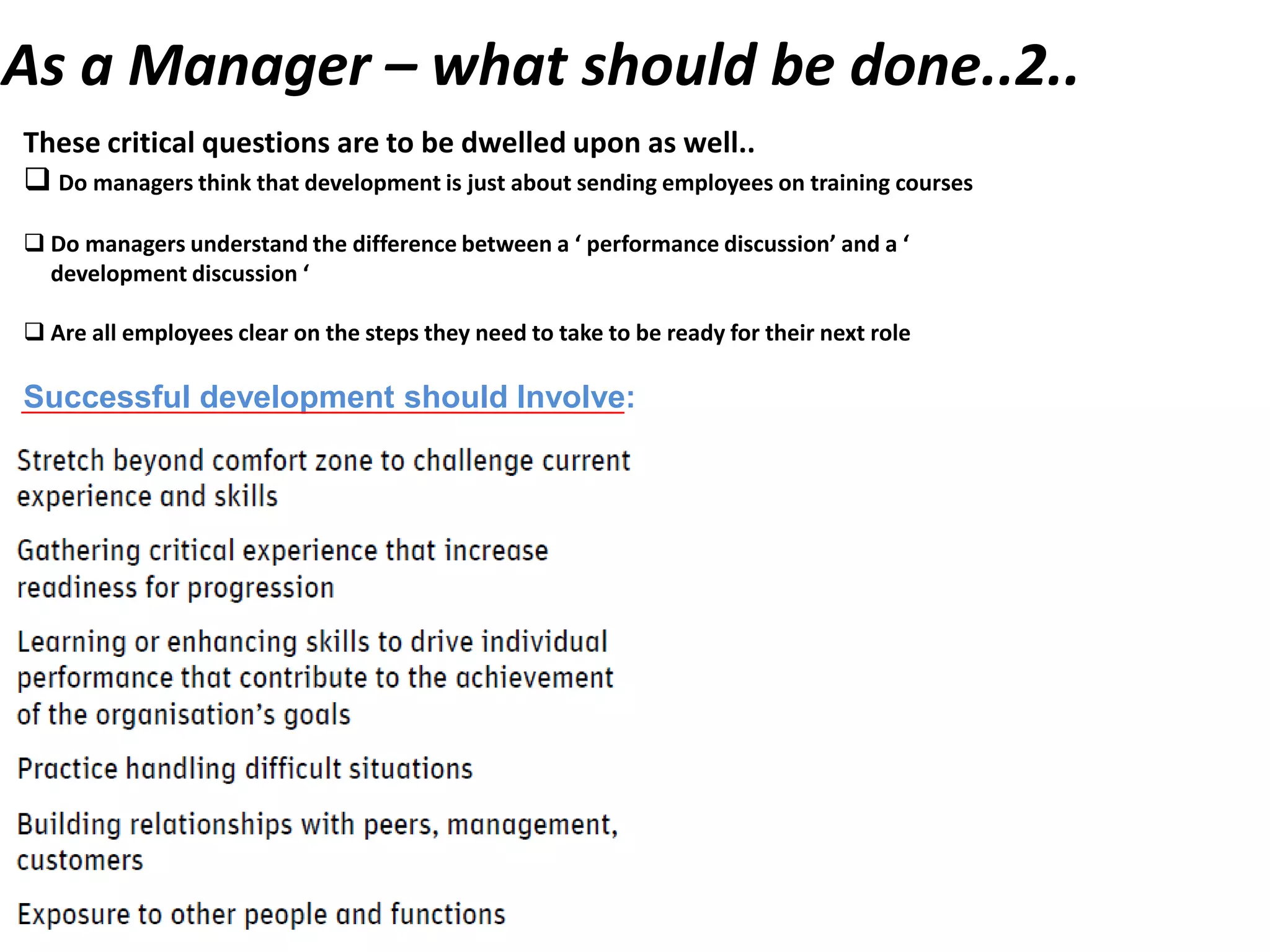
    As a Manager– what should be done..2..These critical questions are to be dwelled upon as well..Do managers think that development is just about sending employees on training courses
  • 16.
    Do managersunderstand the difference between a ‘ performance discussion’ and a ‘ development discussion ‘ Are all employees clear on the steps they need to take to be ready for their next roleSuccessful development should Involve:
  • 17.
    ConclusionThe prize forclosing the strategy to performance gap is huge- an increase in performance of anywhere from 60% to 100% for most companies.Companies that create tight link between their strategies, their plans, and ultimately, their performance often experience a cultural multiplier effect. Over time as they turn their strategies into great performance, leaders in these organizations become: Much more confident in their own capabilities and
  • 18.
    Much morewilling to make the stretch commitments that inspire and transform large companiesIndividual Managers: Who keep their commitments are rewarded with faster progression and fatter paychecks