Strategic management Creating competitive advantage
Who cares? Why should anyone care about the strategic direction of firms? Understand direction of  your company, competitors, other companies
Who cares? Integration and coordination Across time and across organization Assess the organization’s performance and adjust to a changing environment
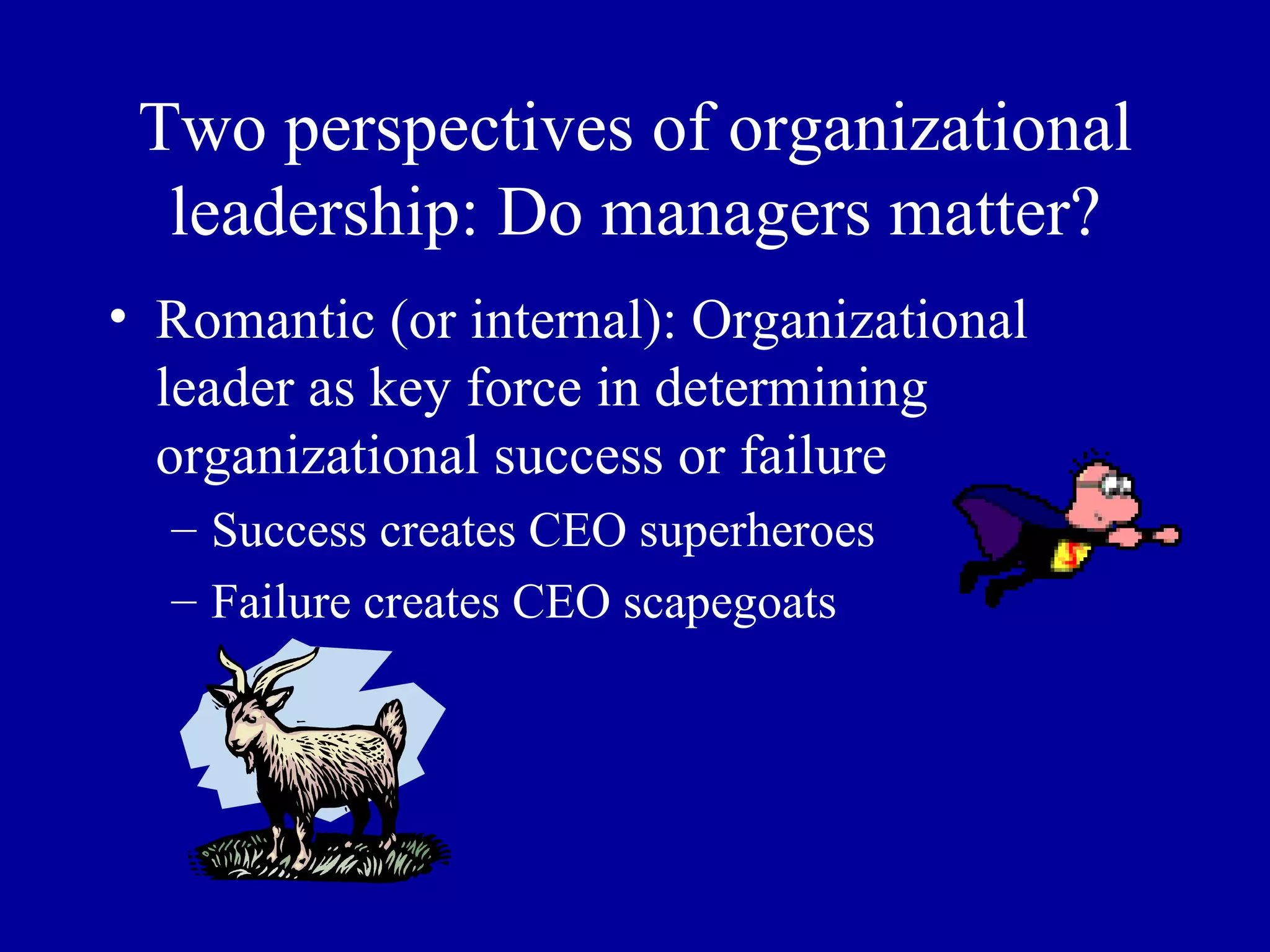
Two perspectives of organizational leadership: Do managers matter? Romantic (or internal): Organizational leader as key force in determining organizational success or failure Success creates CEO superheroes Failure creates CEO scapegoats
Two perspectives of organizational leadership External factors: changes in external factors Shifts in customer tastes, preferences International competition Rising material costs Price erosion External conditions determine contexts in which organizational leaders create or lose organizational value
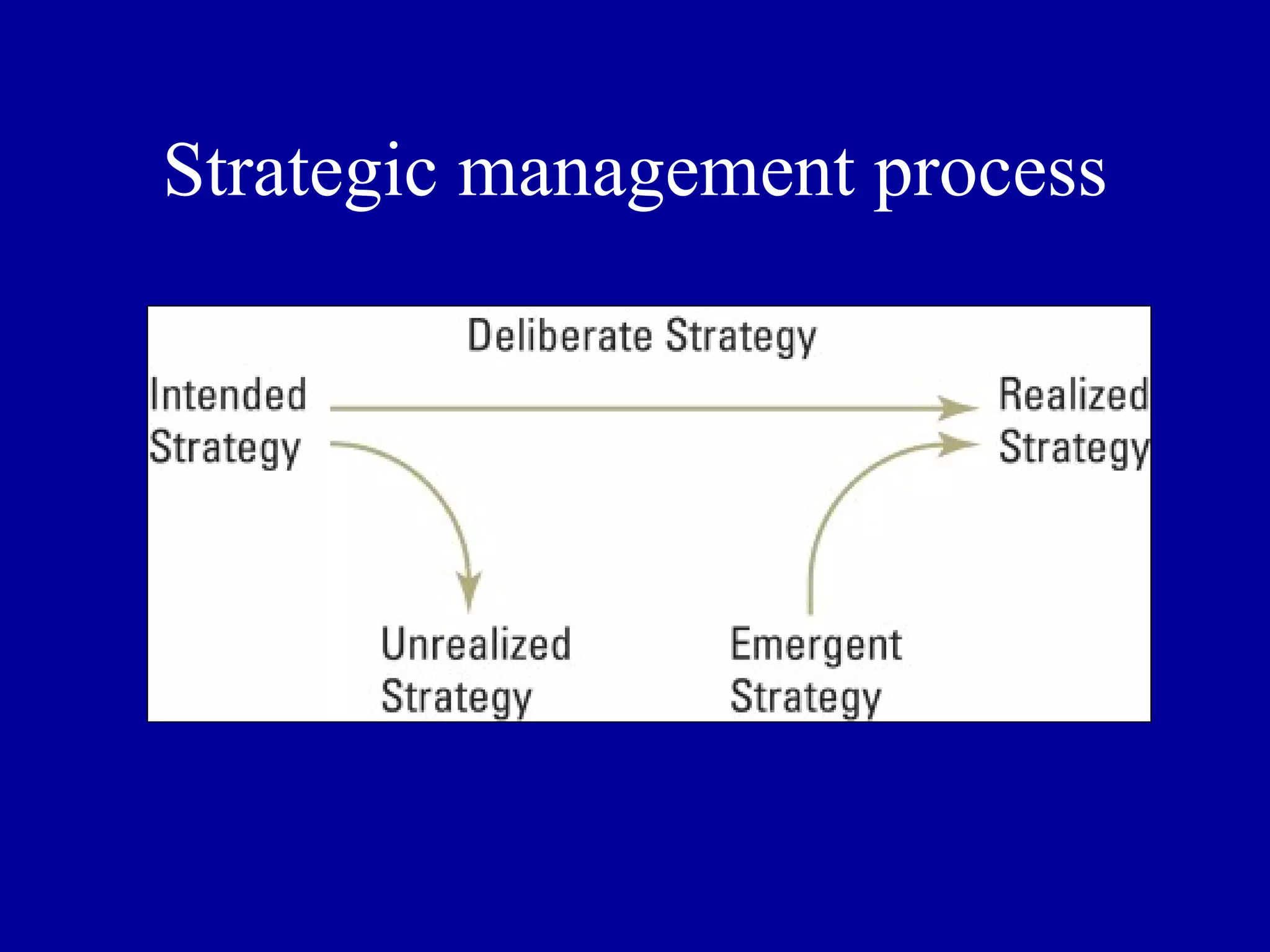
Strategic management process
Strategic management Analyses, decisions, and actions for creating and sustaining competitive advantage
Analysis Analysis of strategic inputs Internal and external environment Strategic goals: vision, mission, objectives
Decisions Two broad decisions of strategic management Industries in which to compete How to compete in those industries Encompasses both domestic and international operations
Actions Resource allocation: where to focus resources Organizational design: how to group people and tasks
Competitive advantage Some firms outperform others over a long period Competitive advantage with respect to the marketplace Meeting present and future demand Doing so in ways that customers regard as  unique  and  valuable  and that competitors find  difficult to im itate or  substitute
4 key attributes of strategic management Directed at overall organizational goals Includes multiple stakeholders Incorporates short-term and long-term perspectives Recognizes trade-offs between effectiveness and efficiency
Three major steps of the strategic management processes  Strategy analysis Strategy formulation (decisions) Strategy implementation (actions)
Strategy analysis Understanding conditions in external environment Opportunities for creating value Threats to competitive advantage Understand firm strengths and weaknesses Activities in  value chain  (click on the link) Firm’s resource base
Strategy formulation (decisions) Competing in specific product markets Cost leadership or differentiation Maintain advantage through different stages of industry life cycle Business portfolio Choosing the business(es) in which to compete Creating synergies among businesses
International strategy Modes of entry Creating and sustaining competitive advantage internationally
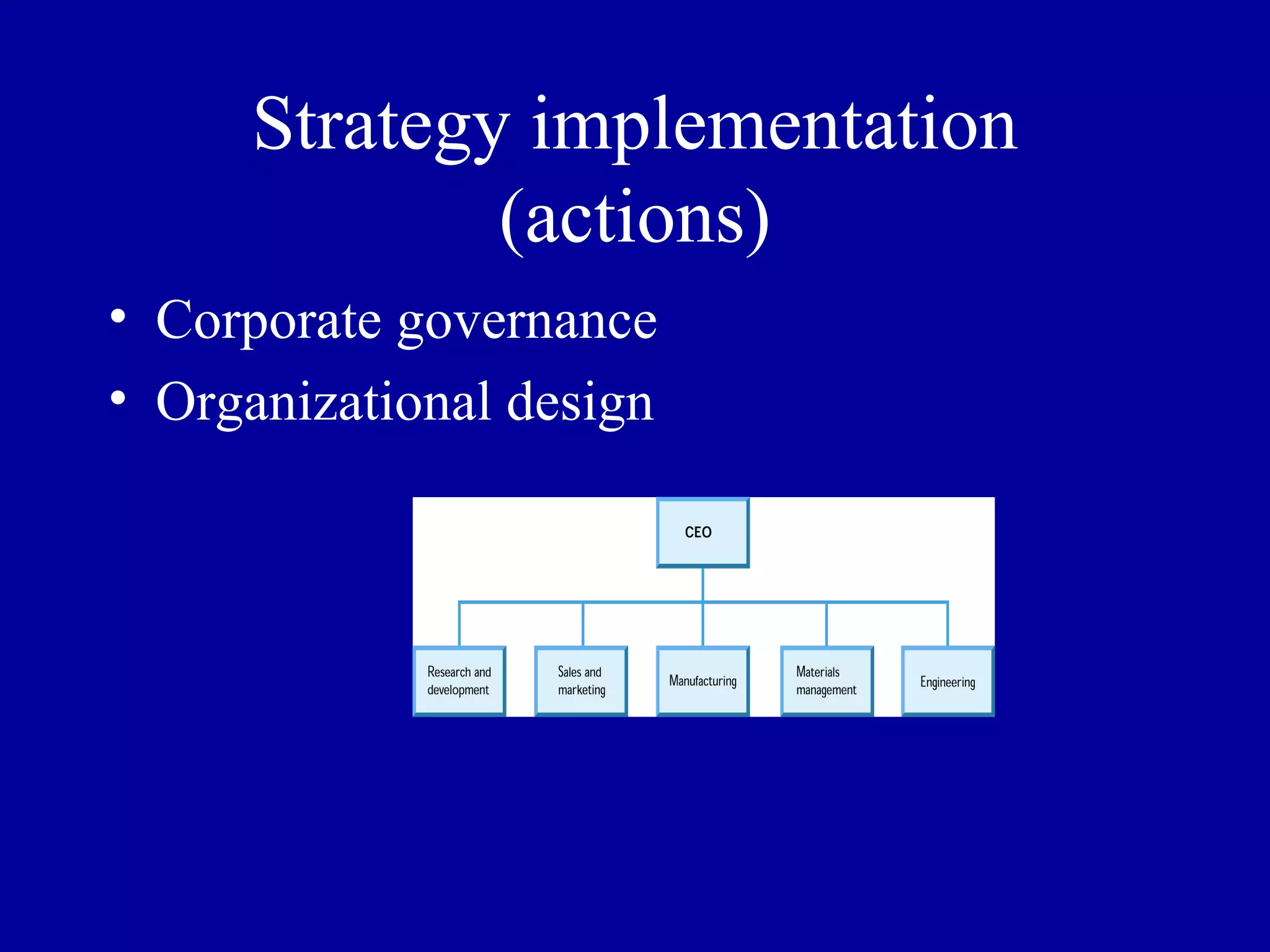
Strategy implementation (actions) Corporate governance Organizational design
Corporate governance Systems that ensure managers operate in shareholders’ interests Internal control: Primary participants Shareholders Strategic managers Board of directors External control: financial markets, regulators, press
Organizational stakeholders Capital markets Owners (shareholders) Lenders Product markets Suppliers (goods, services, capital, labor) Customers Community Organization: Employees and managers
Corporate social responsibility Firm as citizen Customers evaluate both a firm’s products/services and its practices in producing those products Business involves environmental and social considerations in addition to economic ones Social innovation: society’s needs may create business opportunities
Organizational design Structures consistent with strategy Organizational forms
Key drivers of strategy Globalization: flow of goods, services, capital, people, information, knowledge across borders Technology: new knowledge about products and production and distribution Intellectual capital: human knowledge as source of competitive advantage
Coherence in strategic direction Goal hierarchy Vision: destination driven by passion  Mission Statement purpose and basis of competition Communicates to stakeholders Value-focused Objectives: yardstick for measuring goal attainment Each must be consistent with one another
Summary Strategic management Firm direction for creating and sustaining competitive advantage Encompasses entire organization and its internal and external participants Three major steps: analysis, decisions, actions
Summary (cont’d) Forms of external control Corporate governance systems Stakeholders Key drivers of strategy: globalization, technology, intellectual capital Consistency among goal hierarchy

Creating competitive advantage

  • 1.
    Strategic management Creatingcompetitive advantage
  • 2.
    Who cares? Whyshould anyone care about the strategic direction of firms? Understand direction of your company, competitors, other companies
  • 3.
    Who cares? Integrationand coordination Across time and across organization Assess the organization’s performance and adjust to a changing environment
  • 4.
    Two perspectives oforganizational leadership: Do managers matter? Romantic (or internal): Organizational leader as key force in determining organizational success or failure Success creates CEO superheroes Failure creates CEO scapegoats
  • 5.
    Two perspectives oforganizational leadership External factors: changes in external factors Shifts in customer tastes, preferences International competition Rising material costs Price erosion External conditions determine contexts in which organizational leaders create or lose organizational value
  • 6.
  • 7.
    Strategic management Analyses,decisions, and actions for creating and sustaining competitive advantage
  • 8.
    Analysis Analysis ofstrategic inputs Internal and external environment Strategic goals: vision, mission, objectives
  • 9.
    Decisions Two broaddecisions of strategic management Industries in which to compete How to compete in those industries Encompasses both domestic and international operations
  • 10.
    Actions Resource allocation:where to focus resources Organizational design: how to group people and tasks
  • 11.
    Competitive advantage Somefirms outperform others over a long period Competitive advantage with respect to the marketplace Meeting present and future demand Doing so in ways that customers regard as unique and valuable and that competitors find difficult to im itate or substitute
  • 12.
    4 key attributesof strategic management Directed at overall organizational goals Includes multiple stakeholders Incorporates short-term and long-term perspectives Recognizes trade-offs between effectiveness and efficiency
  • 13.
    Three major stepsof the strategic management processes Strategy analysis Strategy formulation (decisions) Strategy implementation (actions)
  • 14.
    Strategy analysis Understandingconditions in external environment Opportunities for creating value Threats to competitive advantage Understand firm strengths and weaknesses Activities in value chain (click on the link) Firm’s resource base
  • 15.
    Strategy formulation (decisions)Competing in specific product markets Cost leadership or differentiation Maintain advantage through different stages of industry life cycle Business portfolio Choosing the business(es) in which to compete Creating synergies among businesses
  • 16.
    International strategy Modesof entry Creating and sustaining competitive advantage internationally
  • 17.
    Strategy implementation (actions)Corporate governance Organizational design
  • 18.
    Corporate governance Systemsthat ensure managers operate in shareholders’ interests Internal control: Primary participants Shareholders Strategic managers Board of directors External control: financial markets, regulators, press
  • 19.
    Organizational stakeholders Capitalmarkets Owners (shareholders) Lenders Product markets Suppliers (goods, services, capital, labor) Customers Community Organization: Employees and managers
  • 20.
    Corporate social responsibilityFirm as citizen Customers evaluate both a firm’s products/services and its practices in producing those products Business involves environmental and social considerations in addition to economic ones Social innovation: society’s needs may create business opportunities
  • 21.
    Organizational design Structuresconsistent with strategy Organizational forms
  • 22.
    Key drivers ofstrategy Globalization: flow of goods, services, capital, people, information, knowledge across borders Technology: new knowledge about products and production and distribution Intellectual capital: human knowledge as source of competitive advantage
  • 23.
    Coherence in strategicdirection Goal hierarchy Vision: destination driven by passion Mission Statement purpose and basis of competition Communicates to stakeholders Value-focused Objectives: yardstick for measuring goal attainment Each must be consistent with one another
  • 24.
    Summary Strategic managementFirm direction for creating and sustaining competitive advantage Encompasses entire organization and its internal and external participants Three major steps: analysis, decisions, actions
  • 25.
    Summary (cont’d) Formsof external control Corporate governance systems Stakeholders Key drivers of strategy: globalization, technology, intellectual capital Consistency among goal hierarchy