Secrets to Successful
Strategy Execution
Md Rezaul Akhlak (ZR11)
Anika Rahman (RQ 53)
Batch 52D
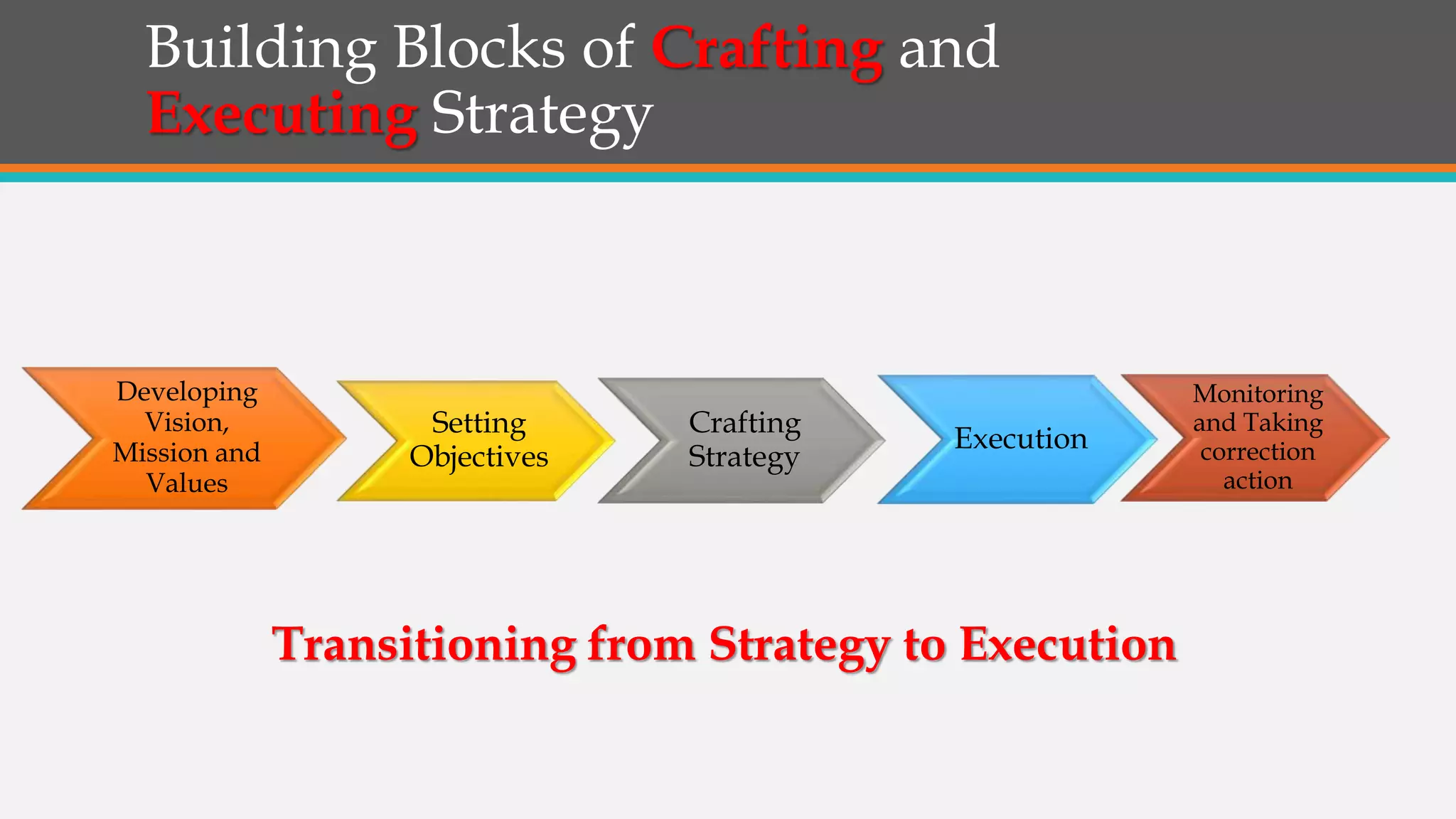
Building Blocks of Crafting and
Executing Strategy
Developing
Vision,
Mission and
Values
Setting
Objectives
Crafting
Strategy
Execution
Monitoring
and Taking
correction
action
Transitioning from Strategy to Execution
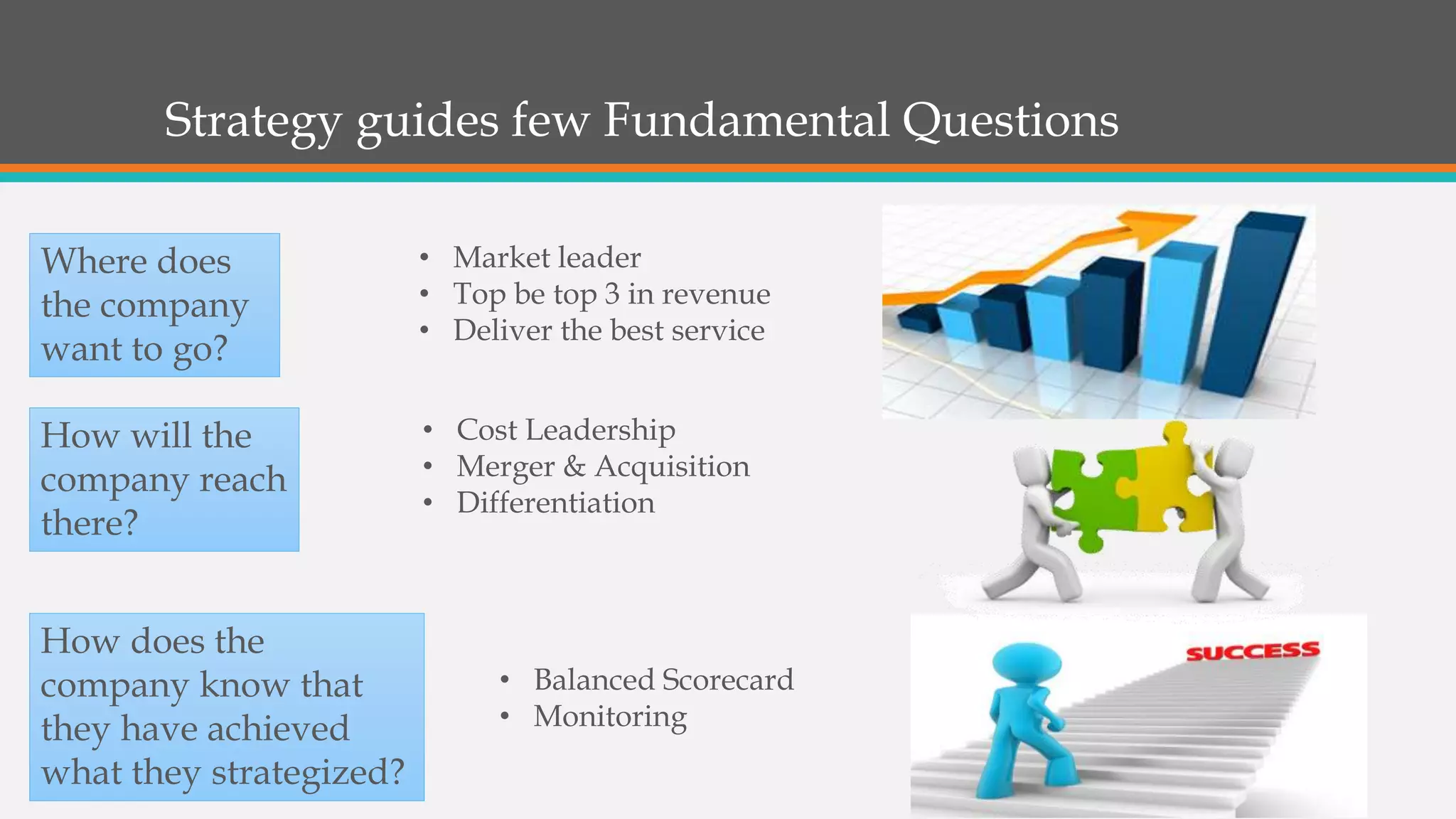
Strategy guides few Fundamental Questions
How will the
company reach
there?
Where does
the company
want to go?
How does the
company know that
they have achieved
what they strategized?
• Market leader
• Top be top 3 in revenue
• Deliver the best service
• Cost Leadership
• Merger & Acquisition
• Differentiation
• Balanced Scorecard
• Monitoring
Facts outlined from HBR
Assessment of Organizational Capabilities
• 1,25,000 profiles representing executives
• 3 out of every 5 rated company as weak in execution
Why Strategy Fails to Execute?
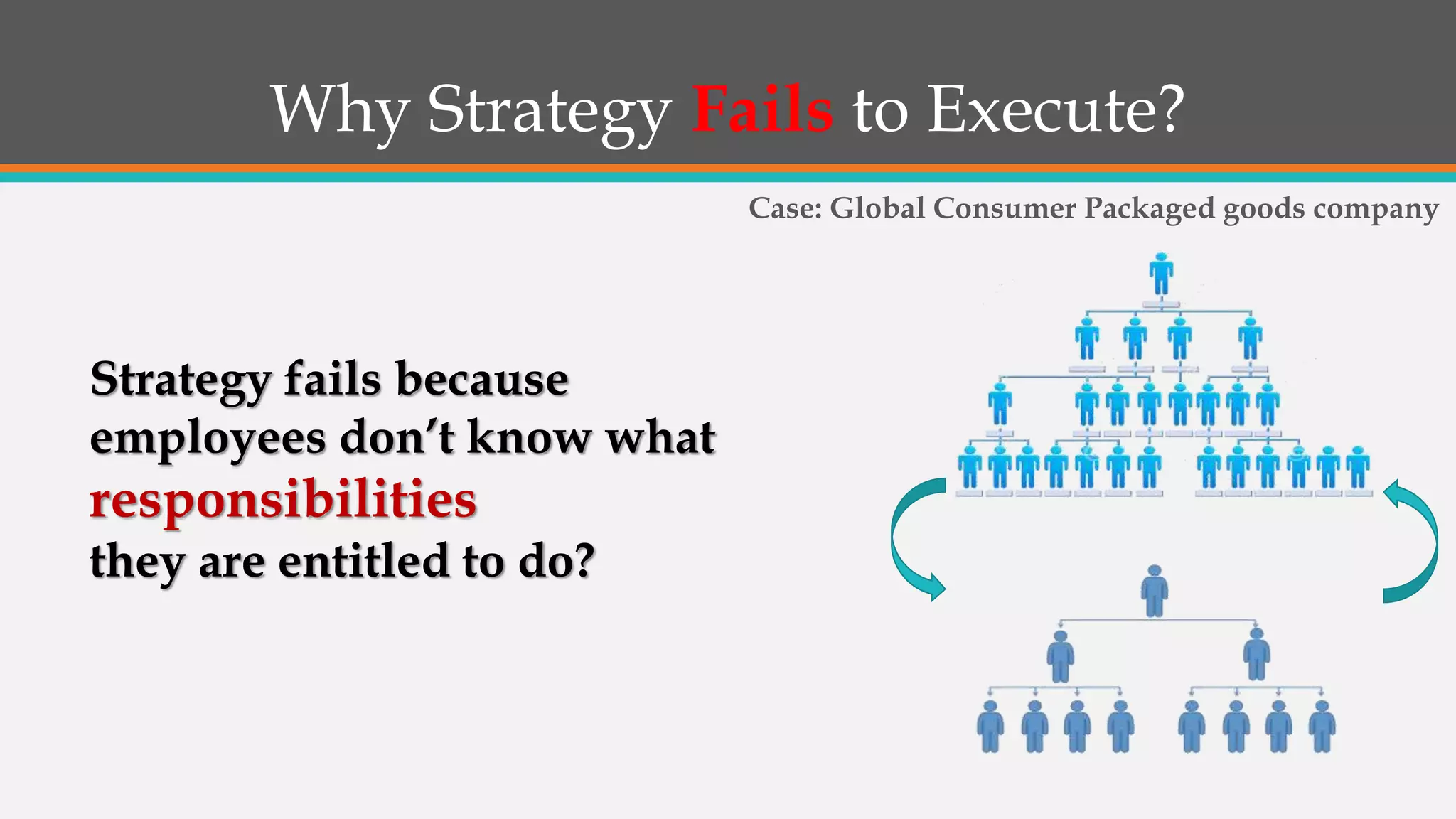
Strategy fails because
employees don’t know what
responsibilities
they are entitled to do?
Case: Global Consumer Packaged goods company
Why Strategy Fails to Execute?
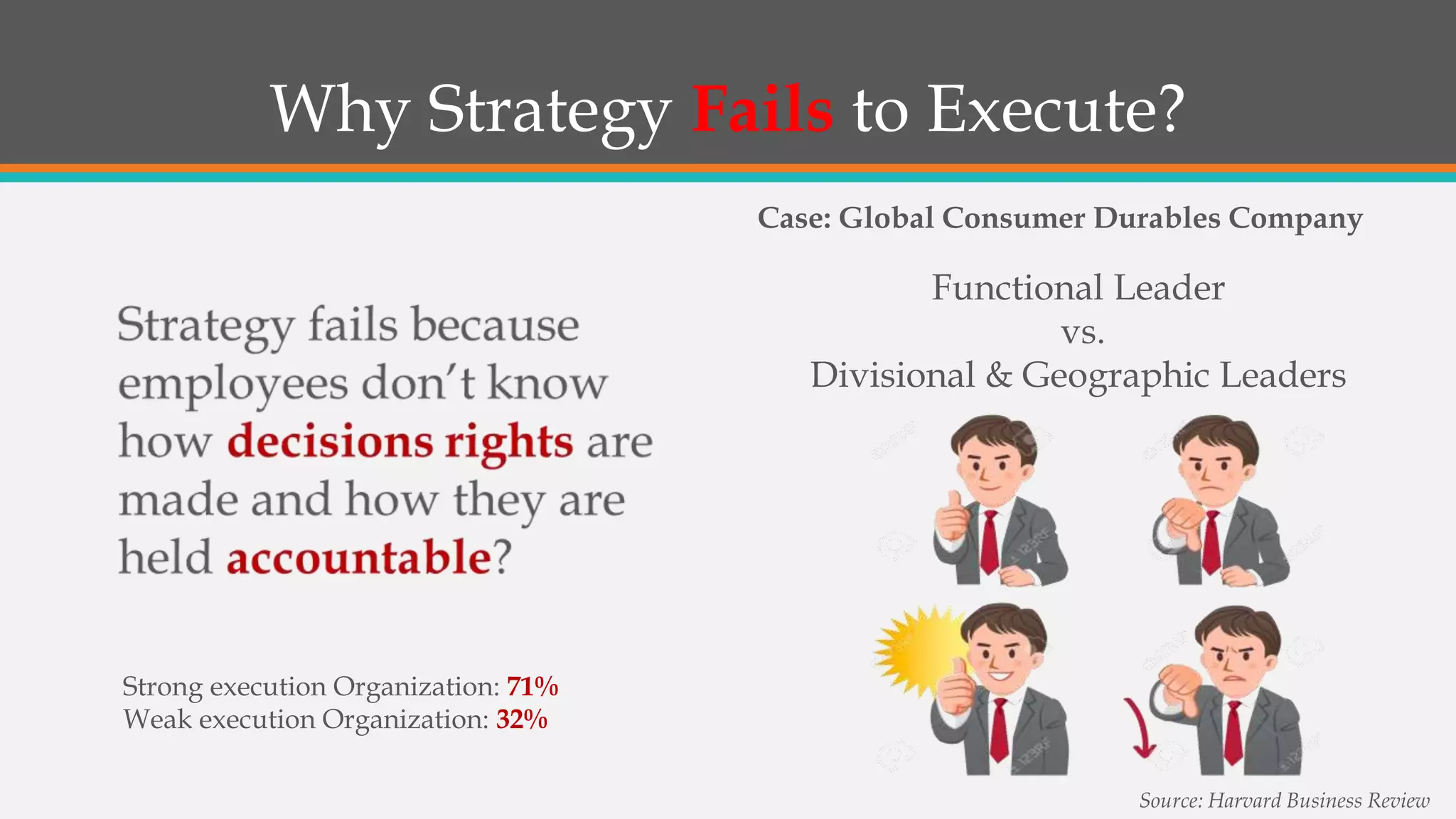
Functional Leader
vs.
Divisional & Geographic Leaders
Strong execution Organization: 71%
Weak execution Organization: 32%
Source: Harvard Business Review
Case: Global Consumer Durables Company
Why Strategy Fails to Execute?
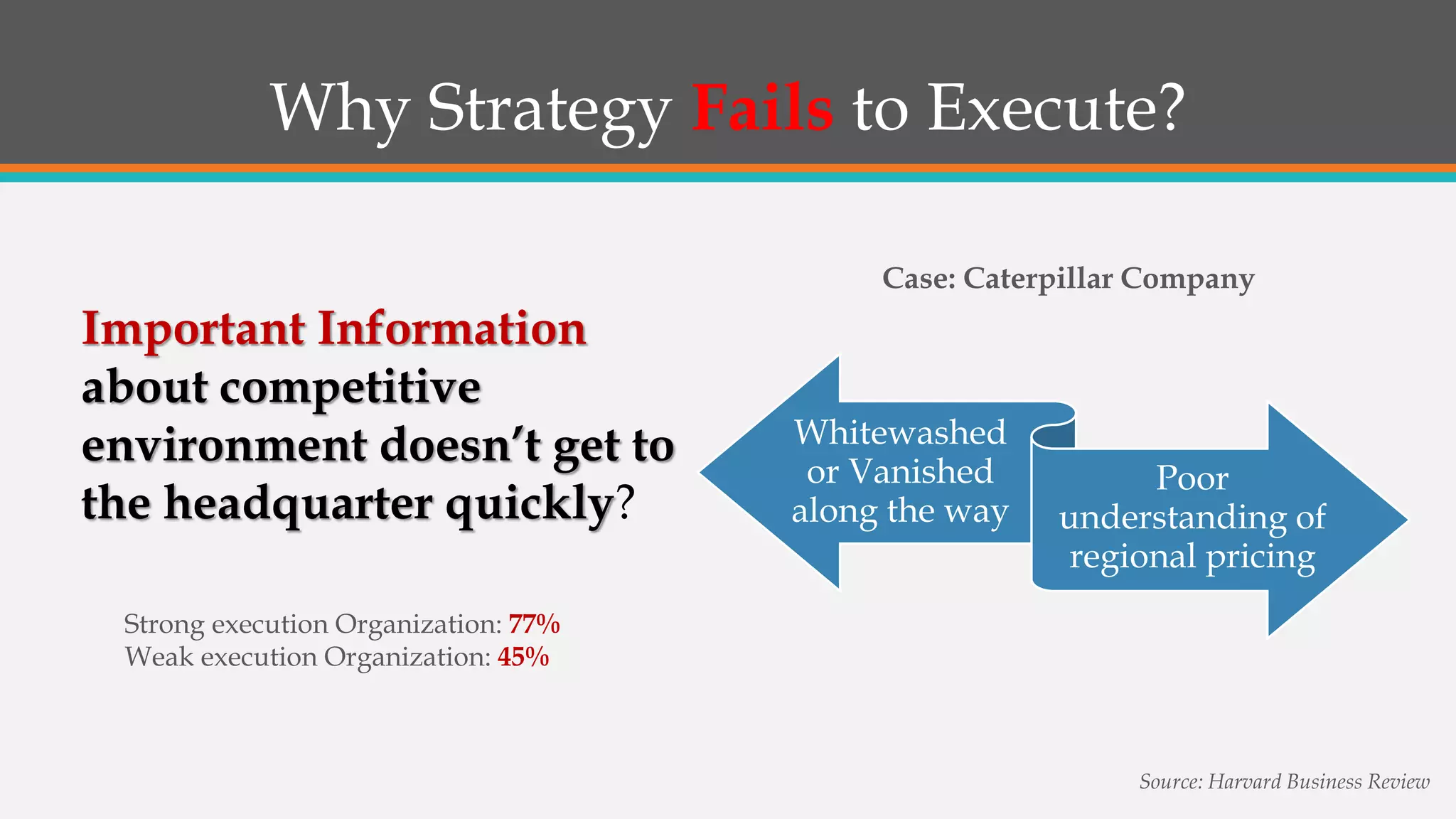
Important Information
about competitive
environment doesn’t get to
the headquarter quickly?
Strong execution Organization: 77%
Weak execution Organization: 45%
Source: Harvard Business Review
Whitewashed
or Vanished
along the way
Poor
understanding of
regional pricing
Case: Caterpillar Company
Why Strategy Fails to Execute?
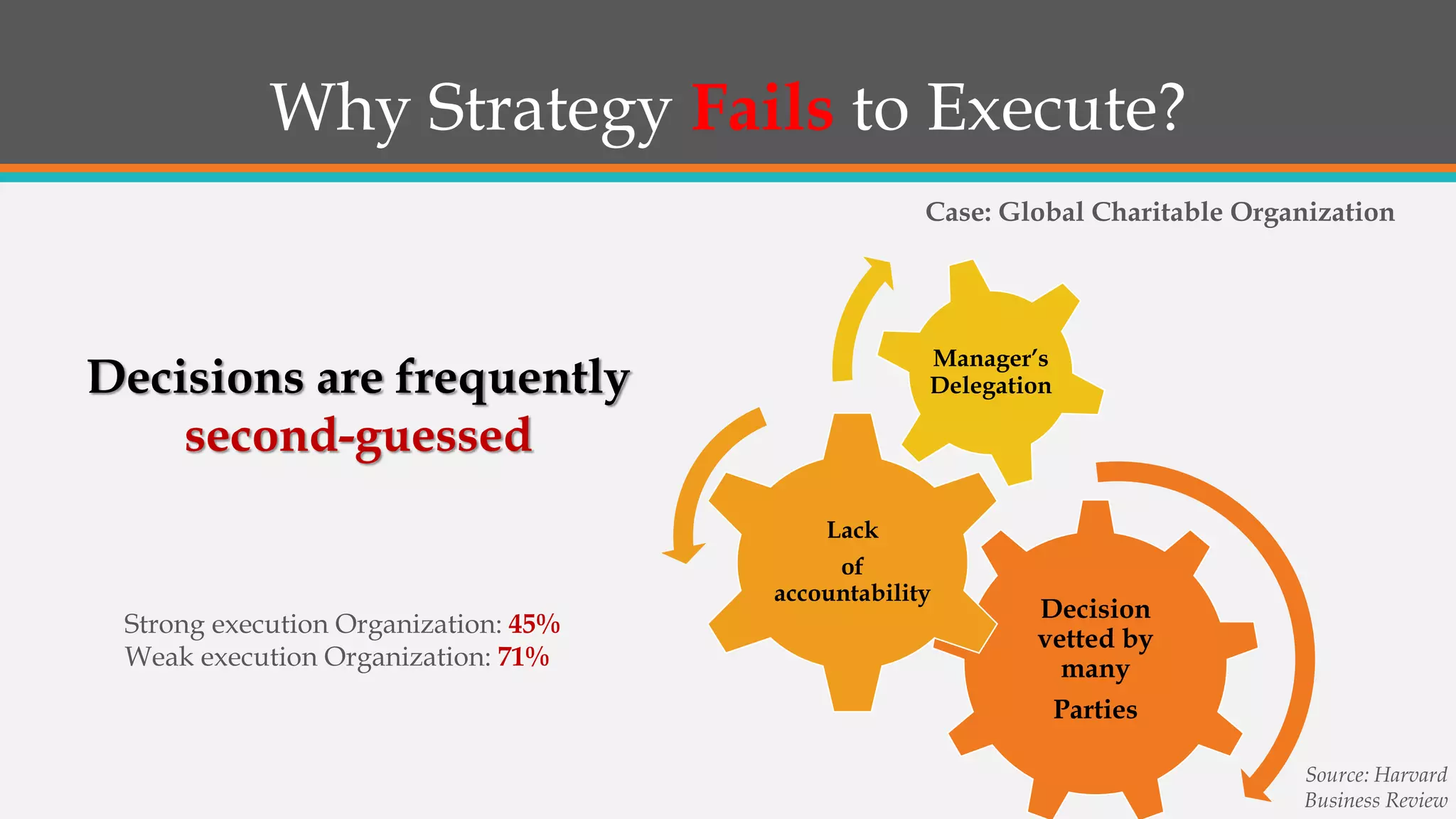
Decisions are frequently
second-guessed
Strong execution Organization: 45%
Weak execution Organization: 71%
Case: Global Charitable Organization
Decision
vetted by
many
Parties
Lack
of
accountability
Manager’s
Delegation
Source: Harvard
Business Review
Why Strategy Fails to Execute?
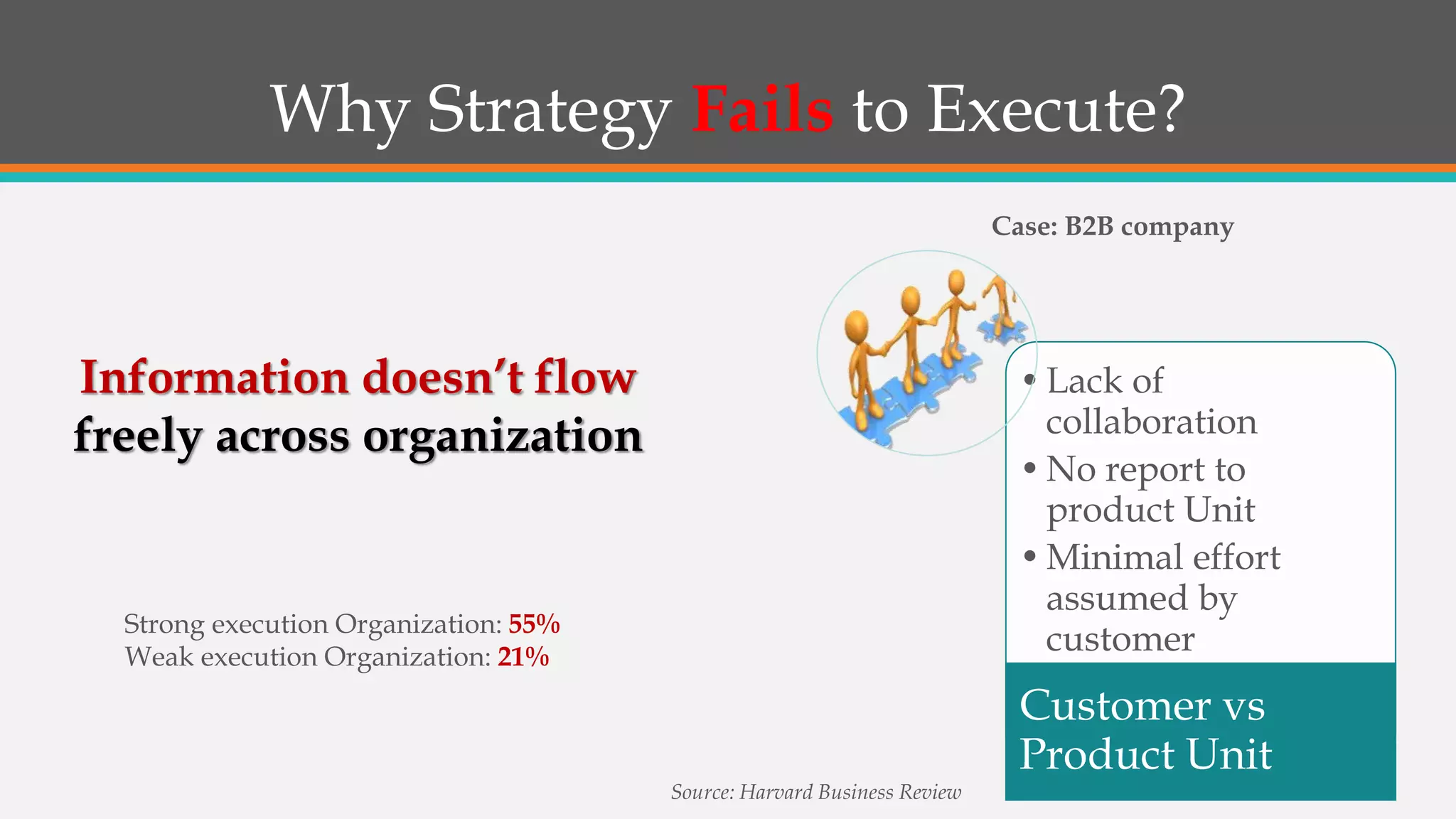
Information doesn’t flow
freely across organization
Strong execution Organization: 55%
Weak execution Organization: 21%
Source: Harvard Business Review
Case: B2B company
•Lack of
collaboration
•No report to
product Unit
•Minimal effort
assumed by
customer
Customer vs
Product Unit
Why Strategy Fails to Execute?
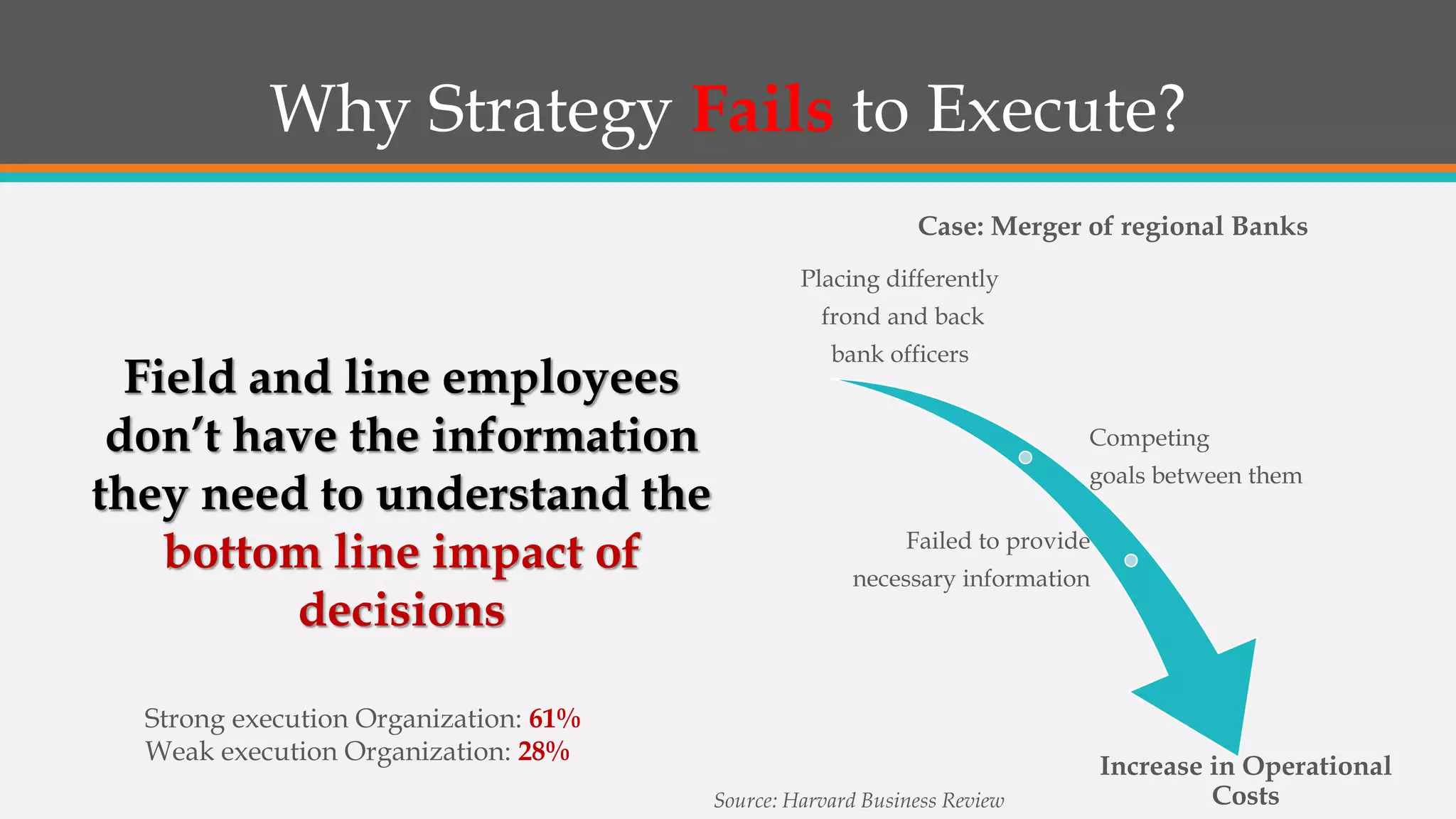
Field and line employees
don’t have the information
they need to understand the
bottom line impact of
decisions
Strong execution Organization: 61%
Weak execution Organization: 28%
Placing differently
frond and back
bank officers
Competing
goals between them
Failed to provide
necessary information
Increase in Operational
Costs
Case: Merger of regional Banks
Source: Harvard Business Review
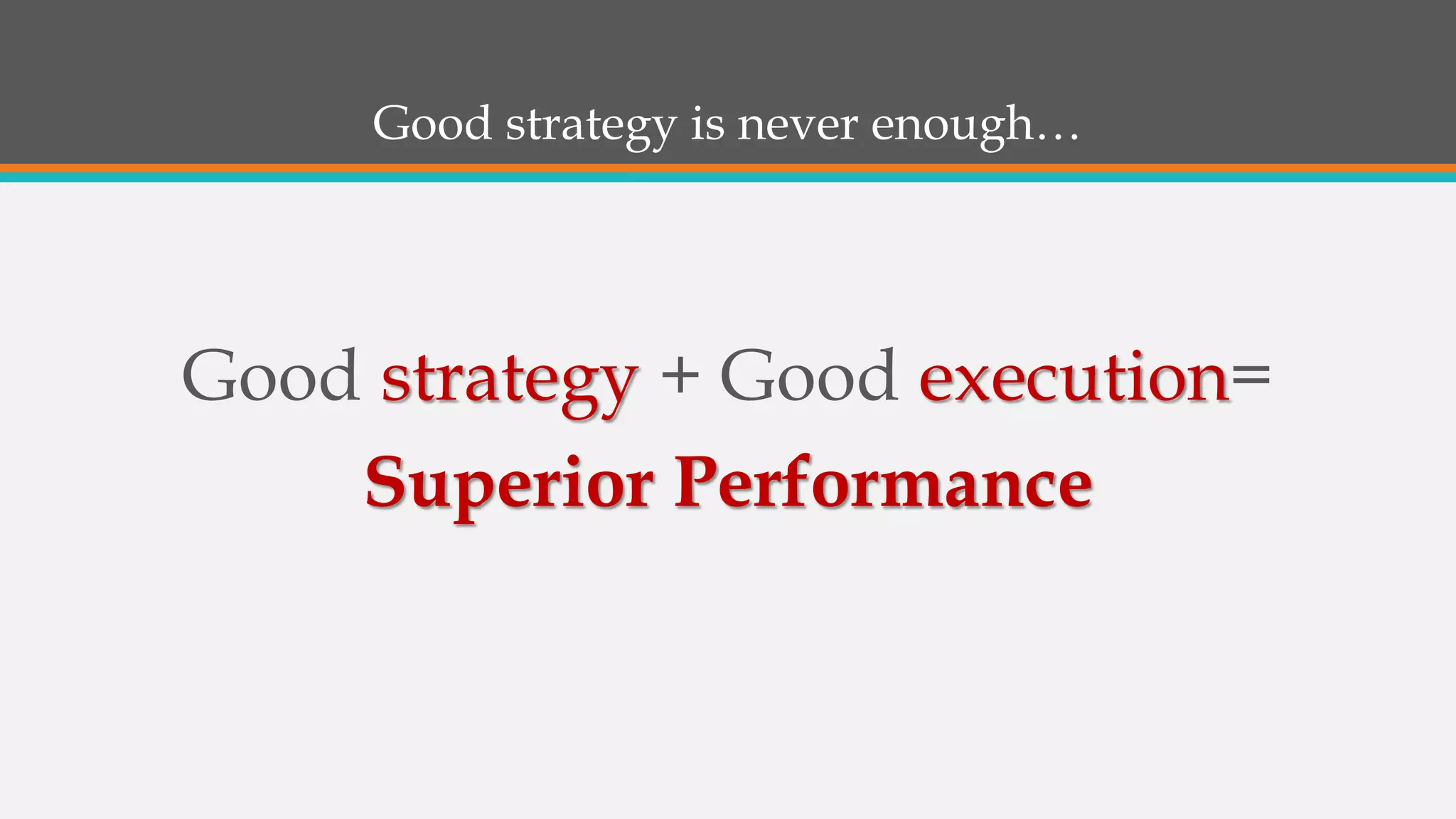
Good strategy is never enough…
Good strategy + Good execution=
Superior Performance
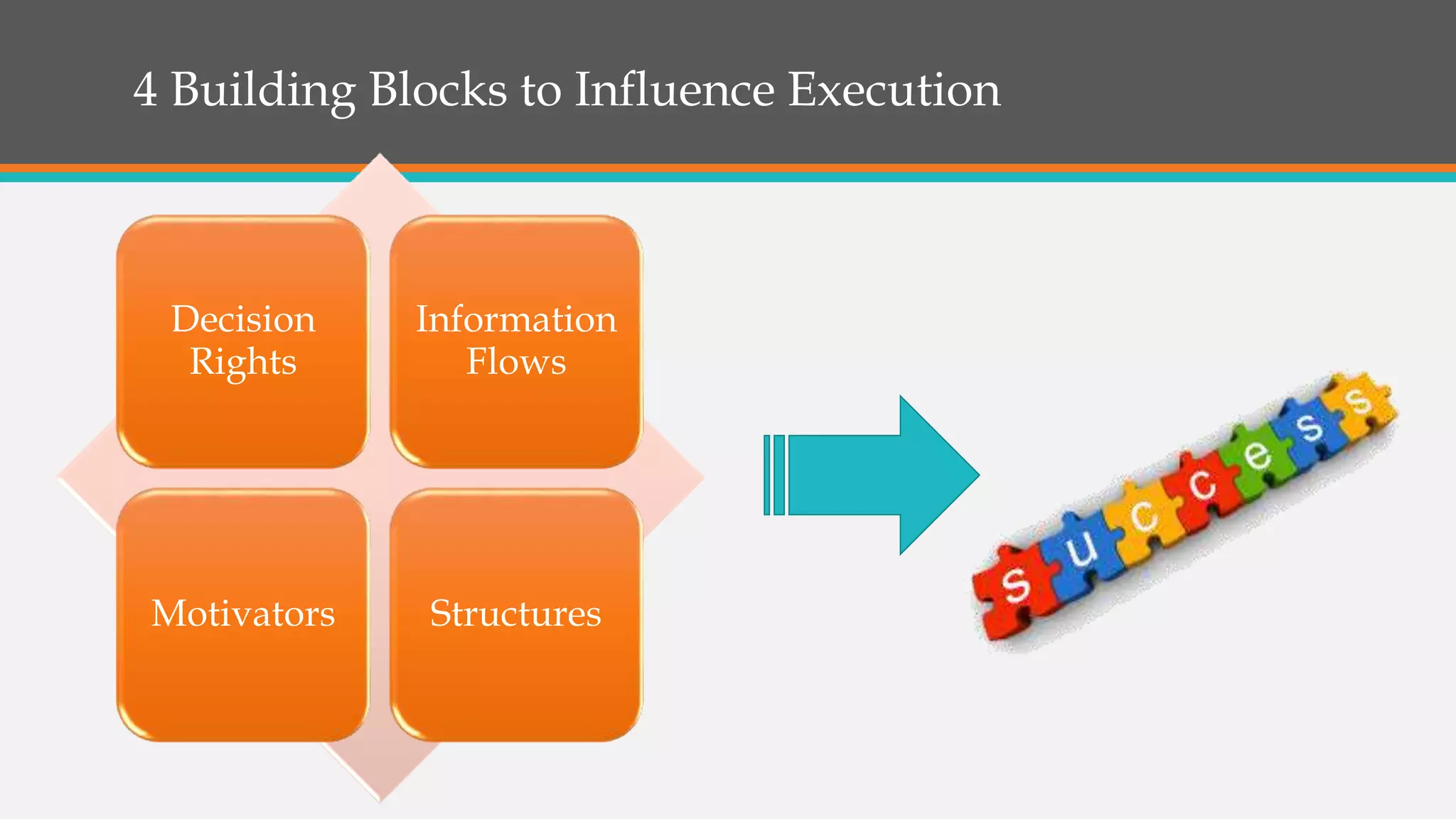
4 Building Blocks to Influence Execution
Decision
Rights
Information
Flows
Motivators Structures
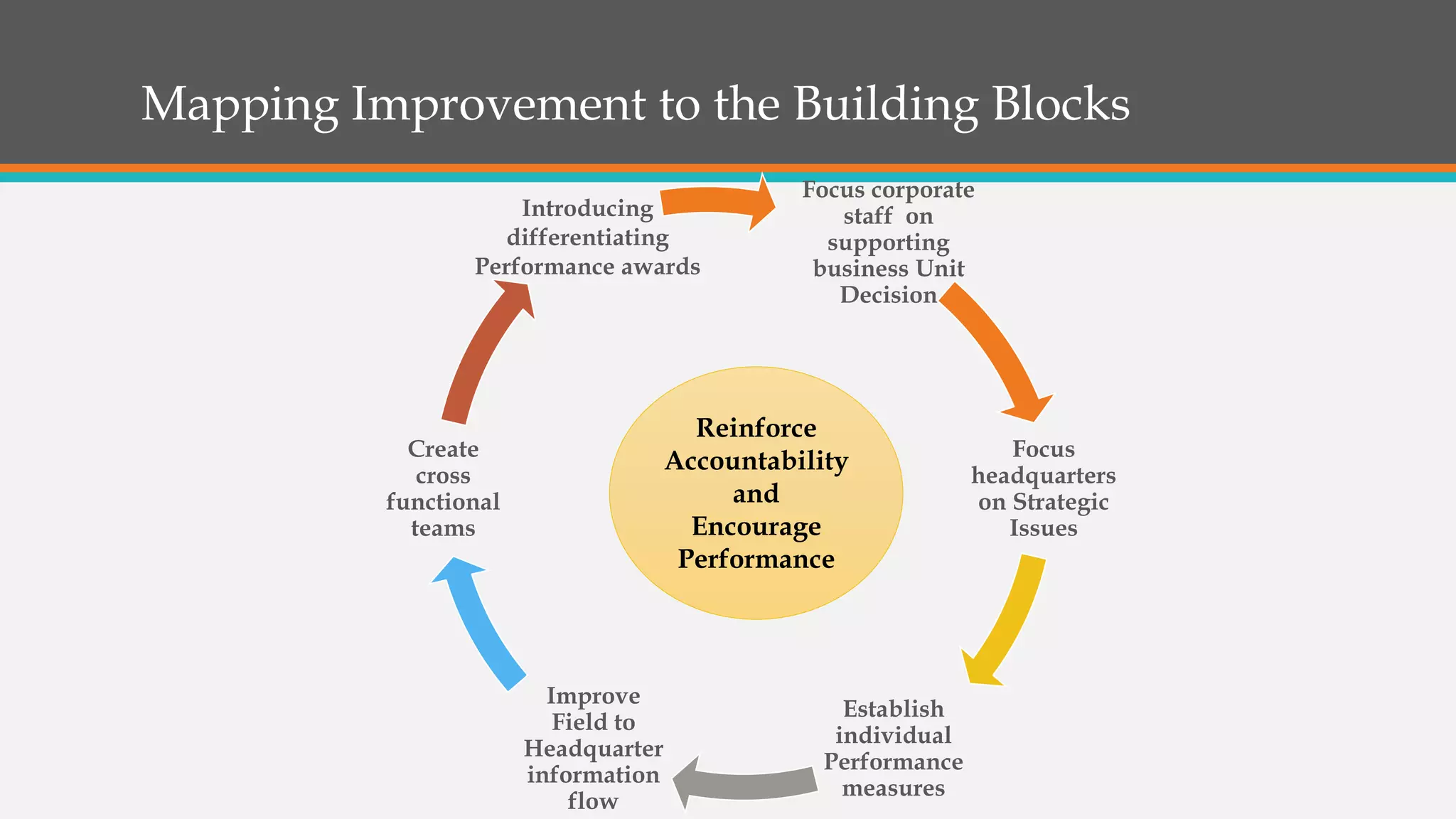
Mapping Improvement to the Building Blocks
Focus corporate
staff on
supporting
business Unit
Decision
Focus
headquarters
on Strategic
Issues
Establish
individual
Performance
measures
Improve
Field to
Headquarter
information
flow
Create
cross
functional
teams
Introducing
differentiating
Performance awards
Reinforce
Accountability
and
Encourage
Performance
STARTEGY EXECUTION
A COMPETENCY THAT CREATES COMPETITIVE
ADVANTAGE
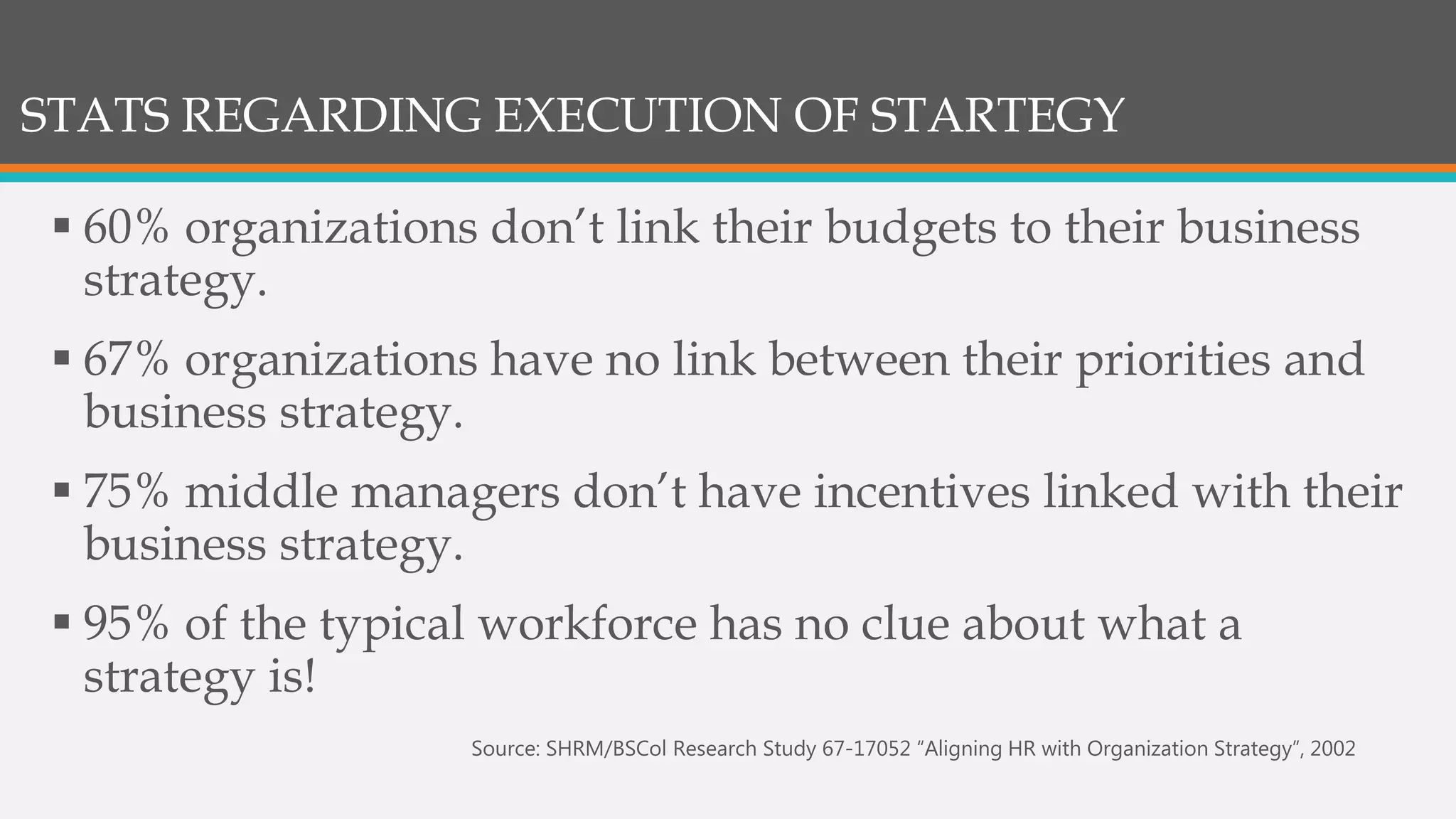
STATS REGARDING EXECUTION OF STARTEGY
 60% organizations don’t link their budgets to their business
strategy.
 67% organizations have no link between their priorities and
business strategy.
 75% middle managers don’t have incentives linked with their
business strategy.
 95% of the typical workforce has no clue about what a
strategy is!
Source: SHRM/BSCol Research Study 67-17052 “Aligning HR with Organization Strategy”, 2002
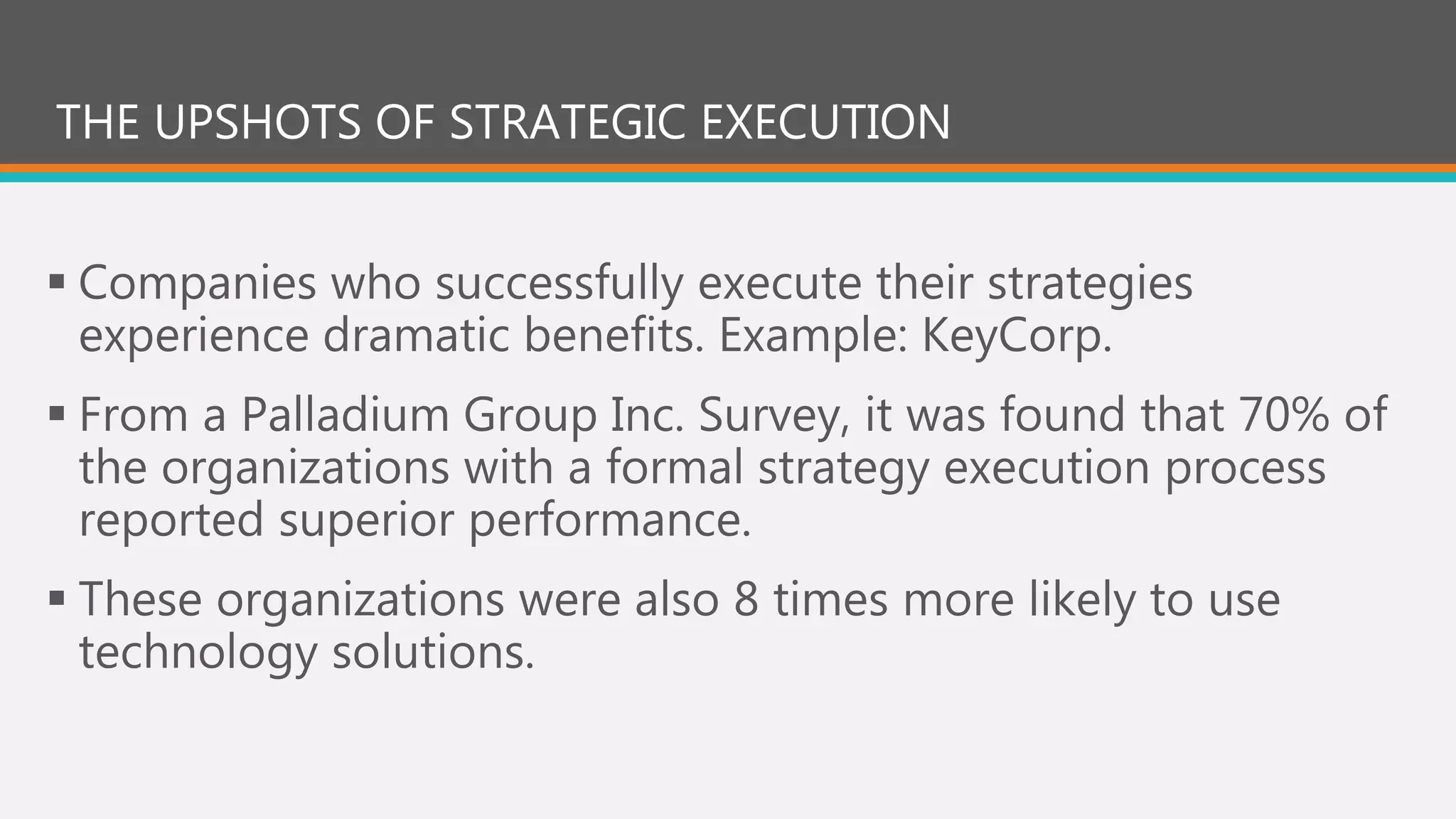
THE UPSHOTS OF STRATEGIC EXECUTION
 Companies who successfully execute their strategies
experience dramatic benefits. Example: KeyCorp.
 From a Palladium Group Inc. Survey, it was found that 70% of
the organizations with a formal strategy execution process
reported superior performance.
 These organizations were also 8 times more likely to use
technology solutions.
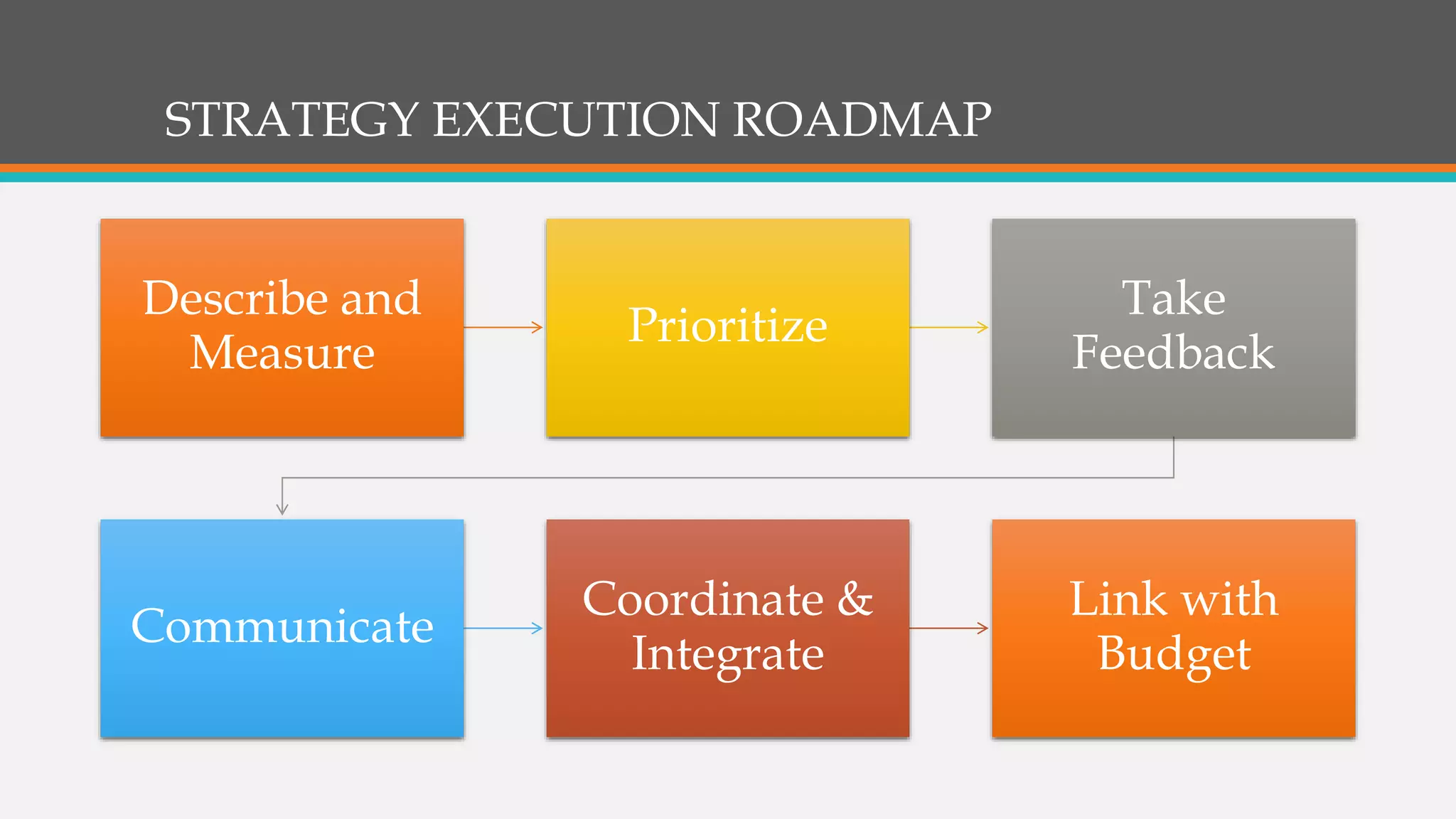
STRATEGY EXECUTION ROADMAP
Describe and
Measure
Prioritize
Take
Feedback
Communicate
Coordinate &
Integrate
Link with
Budget
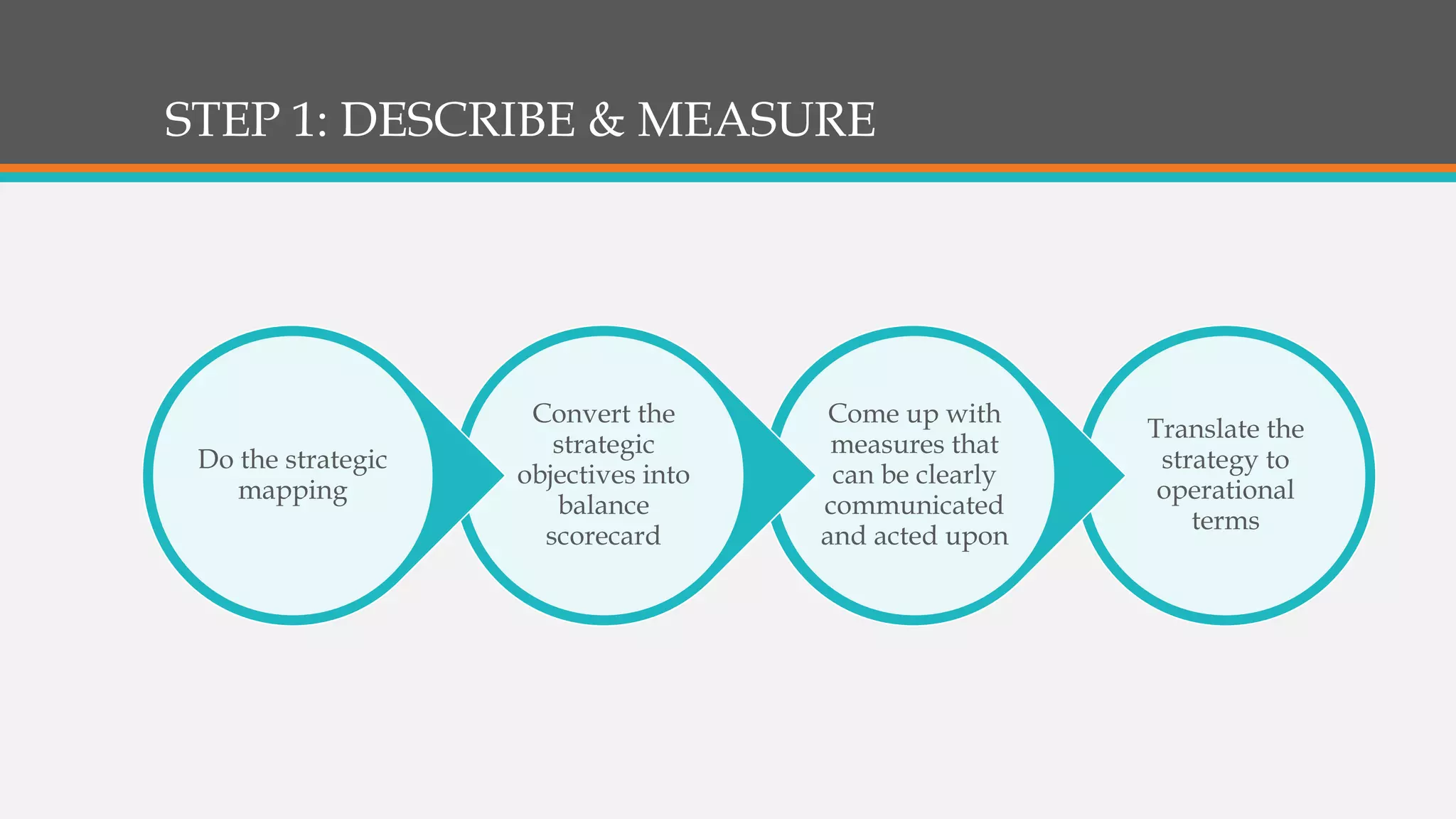
STEP 1: DESCRIBE & MEASURE
Translate the
strategy to
operational
terms
Come up with
measures that
can be clearly
communicated
and acted upon
Convert the
strategic
objectives into
balance
scorecard
Do the strategic
mapping
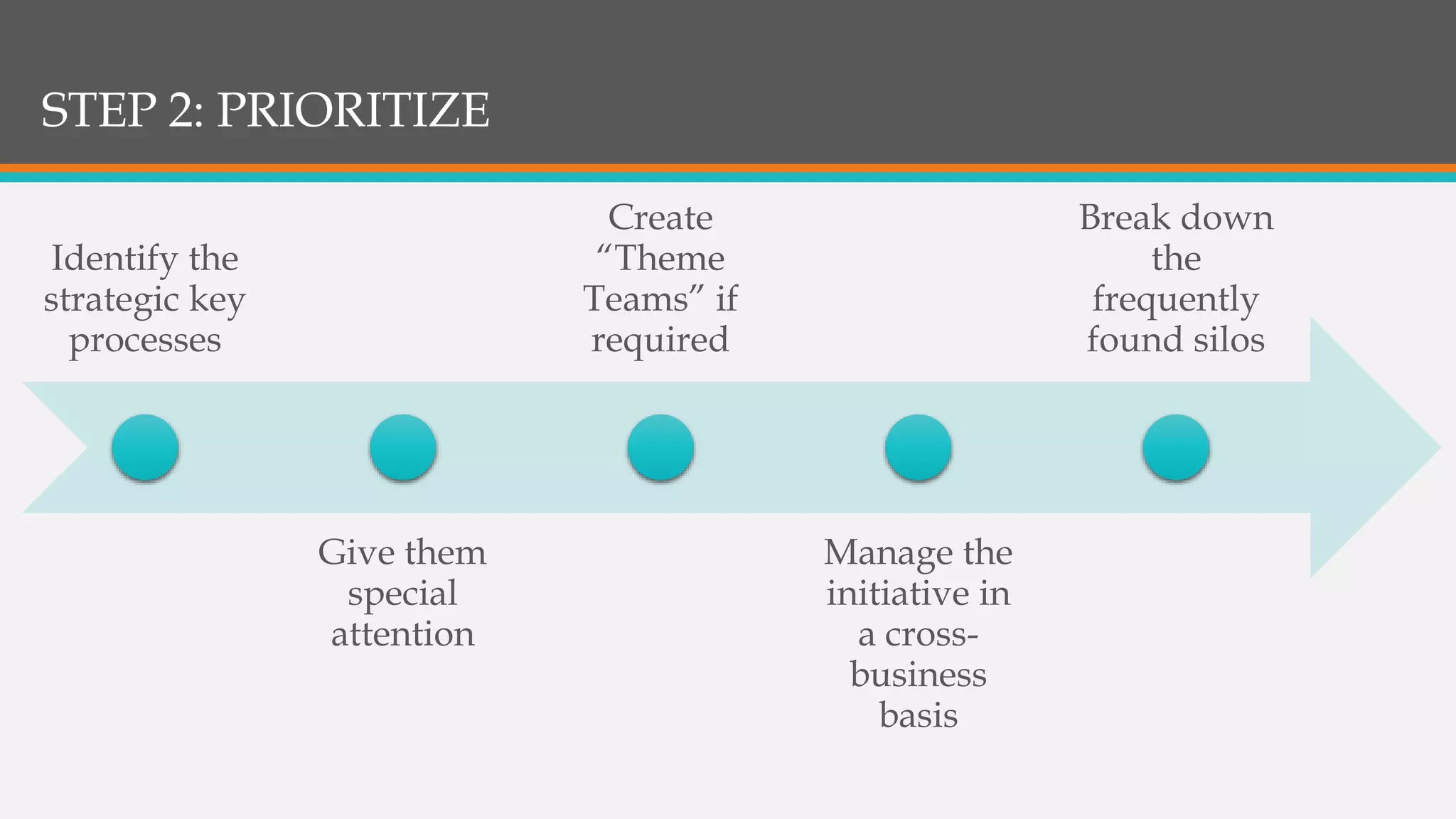
STEP 2: PRIORITIZE
Identify the
strategic key
processes
Give them
special
attention
Create
“Theme
Teams” if
required
Manage the
initiative in
a cross-
business
basis
Break down
the
frequently
found silos
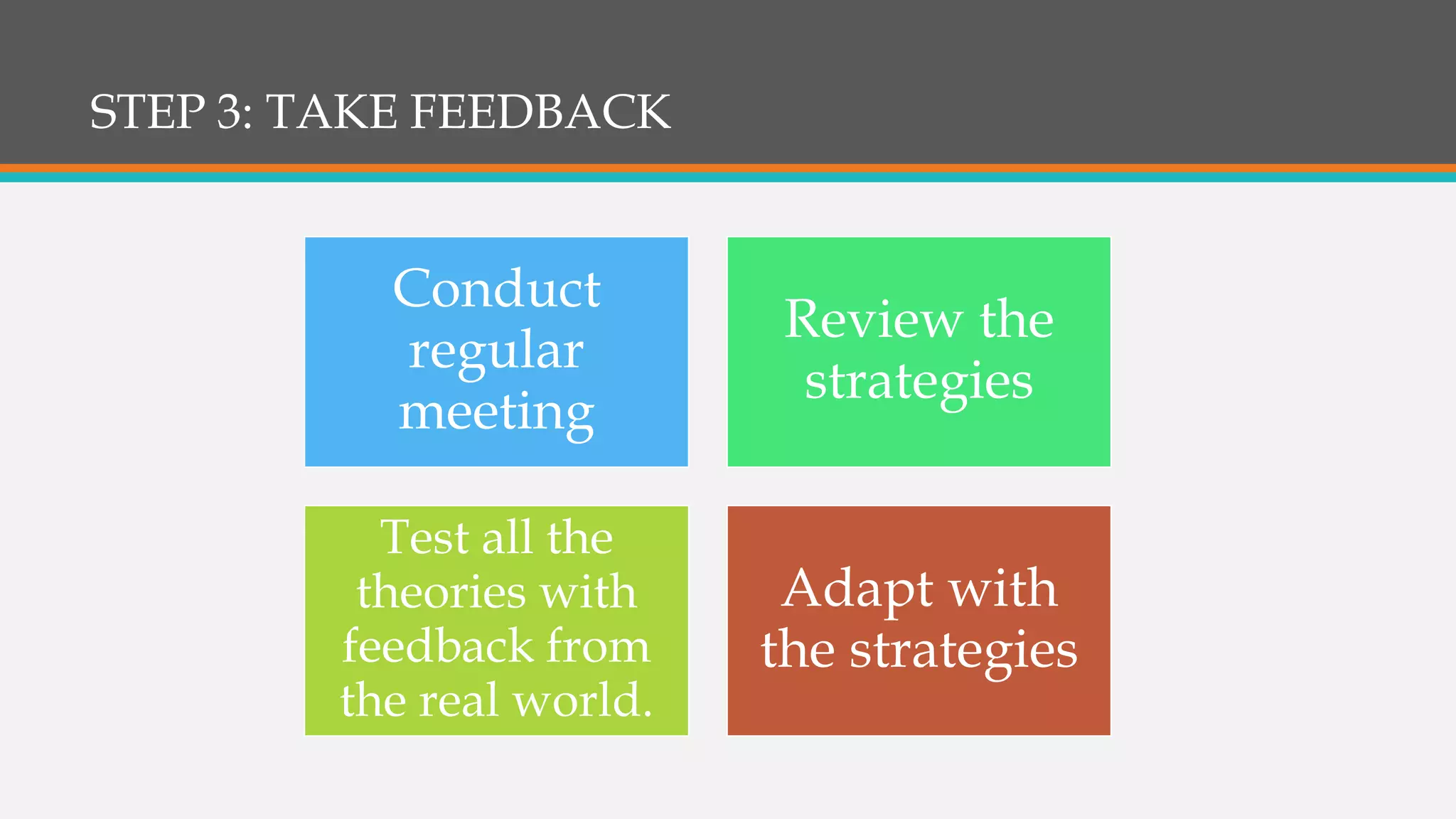
STEP 3: TAKE FEEDBACK
Conduct
regular
meeting
Review the
strategies
Test all the
theories with
feedback from
the real world.
Adapt with
the strategies
STEP 4: COMMUNICATE
 Got to communicate the strategies to all levels of employees.
 Knowledge workers make decisions on a routine basis.
 Newsletters and brochures can be good ways to maintain
communication.
 Include strategic awareness in the formal training program
 Walk the talk.
 Use quarterly meeting, the email Q & A etc. as a medium to
communicate directly with the frontline workers
STEP 5: COORDINATE & INTEGRATE
 Align all the business units and support units to the
strategy.
 Create an organized process to achieve the synergies of a
better strategic alignment.
 Take help from strategy Maps and Balance Scorecards.
 Enable the support units to focus their initiatives on the
strategic priorities.
STEP 6: LINK WITH BUDGET
 Create structural consistency between planning and budgeting
process.
 Come up with creative new approaches if possible
 Elcoteq created Stratex (Strategic Expenditure) to differentiate
certain expenses from the conventional Opex (Operating
Expense) and Capex (Capital Expense)
 Create a separate process that removes strategic investments
from the system used to manage routine operations.
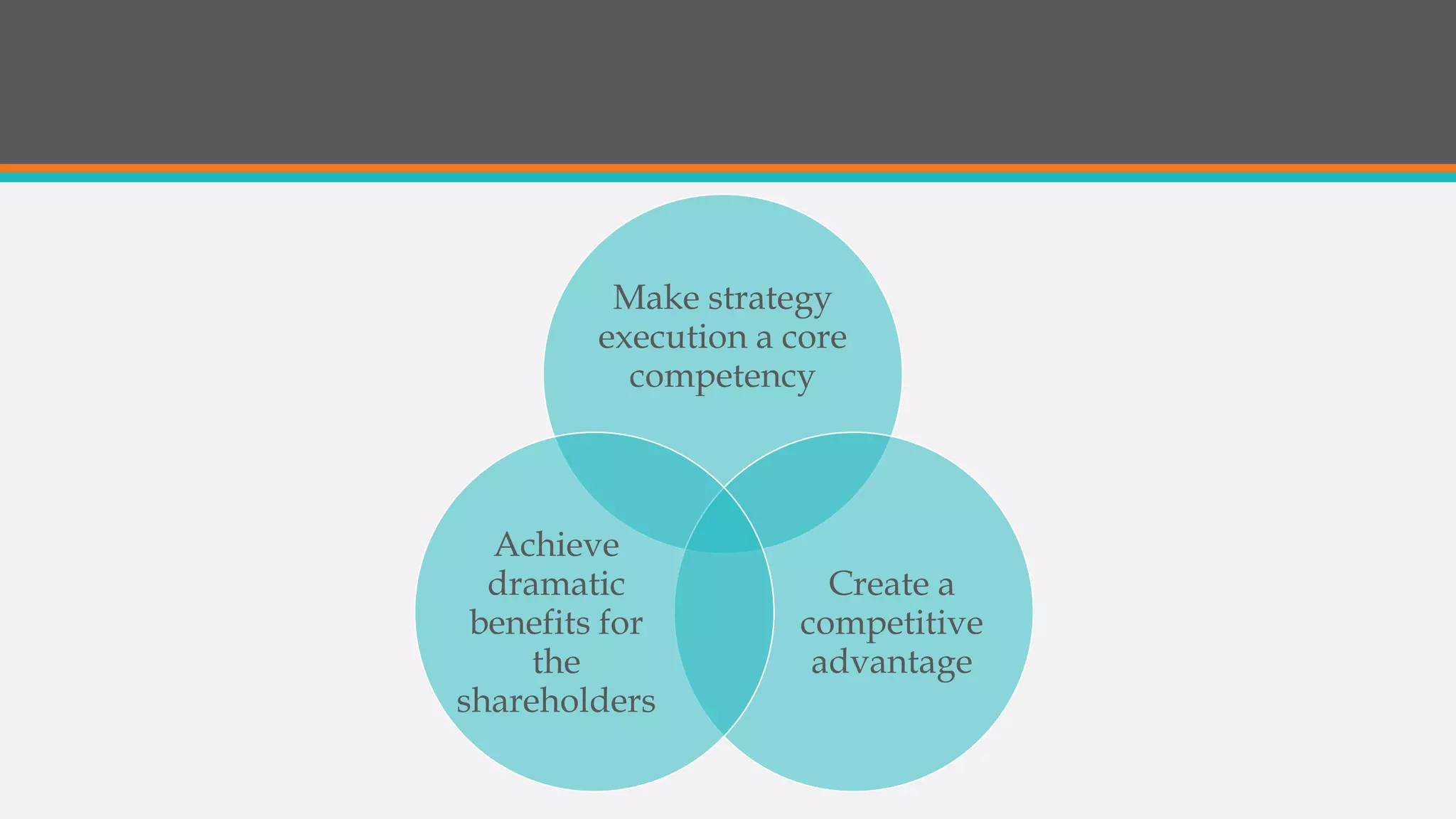
Make strategy
execution a core
competency
Create a
competitive
advantage
Achieve
dramatic
benefits for
the
shareholders
Thank You!

Secrets to successful strategy execution

  • 1.
    Secrets to Successful StrategyExecution Md Rezaul Akhlak (ZR11) Anika Rahman (RQ 53) Batch 52D
  • 2.
    Building Blocks ofCrafting and Executing Strategy Developing Vision, Mission and Values Setting Objectives Crafting Strategy Execution Monitoring and Taking correction action Transitioning from Strategy to Execution
  • 3.
    Strategy guides fewFundamental Questions How will the company reach there? Where does the company want to go? How does the company know that they have achieved what they strategized? • Market leader • Top be top 3 in revenue • Deliver the best service • Cost Leadership • Merger & Acquisition • Differentiation • Balanced Scorecard • Monitoring
  • 4.
    Facts outlined fromHBR Assessment of Organizational Capabilities • 1,25,000 profiles representing executives • 3 out of every 5 rated company as weak in execution
  • 5.
    Why Strategy Failsto Execute? Strategy fails because employees don’t know what responsibilities they are entitled to do? Case: Global Consumer Packaged goods company
  • 6.
    Why Strategy Failsto Execute? Functional Leader vs. Divisional & Geographic Leaders Strong execution Organization: 71% Weak execution Organization: 32% Source: Harvard Business Review Case: Global Consumer Durables Company
  • 7.
    Why Strategy Failsto Execute? Important Information about competitive environment doesn’t get to the headquarter quickly? Strong execution Organization: 77% Weak execution Organization: 45% Source: Harvard Business Review Whitewashed or Vanished along the way Poor understanding of regional pricing Case: Caterpillar Company
  • 8.
    Why Strategy Failsto Execute? Decisions are frequently second-guessed Strong execution Organization: 45% Weak execution Organization: 71% Case: Global Charitable Organization Decision vetted by many Parties Lack of accountability Manager’s Delegation Source: Harvard Business Review
  • 9.
    Why Strategy Failsto Execute? Information doesn’t flow freely across organization Strong execution Organization: 55% Weak execution Organization: 21% Source: Harvard Business Review Case: B2B company •Lack of collaboration •No report to product Unit •Minimal effort assumed by customer Customer vs Product Unit
  • 10.
    Why Strategy Failsto Execute? Field and line employees don’t have the information they need to understand the bottom line impact of decisions Strong execution Organization: 61% Weak execution Organization: 28% Placing differently frond and back bank officers Competing goals between them Failed to provide necessary information Increase in Operational Costs Case: Merger of regional Banks Source: Harvard Business Review
  • 11.
    Good strategy isnever enough… Good strategy + Good execution= Superior Performance
  • 12.
    4 Building Blocksto Influence Execution Decision Rights Information Flows Motivators Structures
  • 13.
    Mapping Improvement tothe Building Blocks Focus corporate staff on supporting business Unit Decision Focus headquarters on Strategic Issues Establish individual Performance measures Improve Field to Headquarter information flow Create cross functional teams Introducing differentiating Performance awards Reinforce Accountability and Encourage Performance
  • 14.
    STARTEGY EXECUTION A COMPETENCYTHAT CREATES COMPETITIVE ADVANTAGE
  • 15.
    STATS REGARDING EXECUTIONOF STARTEGY  60% organizations don’t link their budgets to their business strategy.  67% organizations have no link between their priorities and business strategy.  75% middle managers don’t have incentives linked with their business strategy.  95% of the typical workforce has no clue about what a strategy is! Source: SHRM/BSCol Research Study 67-17052 “Aligning HR with Organization Strategy”, 2002
  • 16.
    THE UPSHOTS OFSTRATEGIC EXECUTION  Companies who successfully execute their strategies experience dramatic benefits. Example: KeyCorp.  From a Palladium Group Inc. Survey, it was found that 70% of the organizations with a formal strategy execution process reported superior performance.  These organizations were also 8 times more likely to use technology solutions.
  • 17.
    STRATEGY EXECUTION ROADMAP Describeand Measure Prioritize Take Feedback Communicate Coordinate & Integrate Link with Budget
  • 18.
    STEP 1: DESCRIBE& MEASURE Translate the strategy to operational terms Come up with measures that can be clearly communicated and acted upon Convert the strategic objectives into balance scorecard Do the strategic mapping
  • 19.
    STEP 2: PRIORITIZE Identifythe strategic key processes Give them special attention Create “Theme Teams” if required Manage the initiative in a cross- business basis Break down the frequently found silos
  • 20.
    STEP 3: TAKEFEEDBACK Conduct regular meeting Review the strategies Test all the theories with feedback from the real world. Adapt with the strategies
  • 21.
    STEP 4: COMMUNICATE Got to communicate the strategies to all levels of employees.  Knowledge workers make decisions on a routine basis.  Newsletters and brochures can be good ways to maintain communication.  Include strategic awareness in the formal training program  Walk the talk.  Use quarterly meeting, the email Q & A etc. as a medium to communicate directly with the frontline workers
  • 22.
    STEP 5: COORDINATE& INTEGRATE  Align all the business units and support units to the strategy.  Create an organized process to achieve the synergies of a better strategic alignment.  Take help from strategy Maps and Balance Scorecards.  Enable the support units to focus their initiatives on the strategic priorities.
  • 23.
    STEP 6: LINKWITH BUDGET  Create structural consistency between planning and budgeting process.  Come up with creative new approaches if possible  Elcoteq created Stratex (Strategic Expenditure) to differentiate certain expenses from the conventional Opex (Operating Expense) and Capex (Capital Expense)  Create a separate process that removes strategic investments from the system used to manage routine operations.
  • 25.
    Make strategy execution acore competency Create a competitive advantage Achieve dramatic benefits for the shareholders
  • 26.