In the Tundra the
weather is normally
extremely cold. The
winter temperatures
Normally average
between -20 to -30
degrees C. In the
summer the
temperature
averages between 3
to 12 degrees C.
The climate in the
tundra is a cold and
dry climate. There
are strong, drying
winds in the tundra
along with
cold, desert like
conditions. There is
an average of 6 to
10 inches of rain a
year.
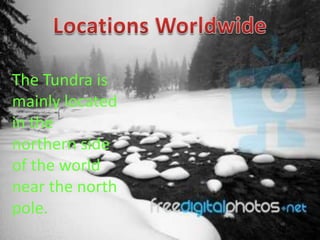
The Tundra is
mainly located
in the
northern side
of the world
near the north
pole.
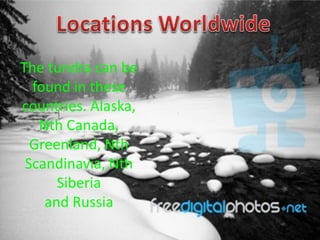
The tundra can be
  found in these
countries. Alaska,
   Nth Canada,
  Greenland, Nth
 Scandinavia, Nth
      Siberia
    and Russia
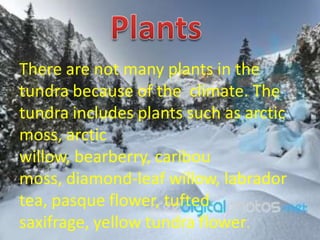
There are not many plants in the
tundra because of the climate. The
tundra includes plants such as arctic
moss, arctic
willow, bearberry, caribou
moss, diamond-leaf willow, labrador
tea, pasque flower, tufted
saxifrage, yellow tundra flower.
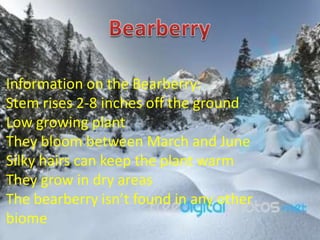
Information on the Bearberry:
Stem rises 2-8 inches off the ground
Low growing plant
They bloom between March and June
Silky hairs can keep the plant warm
They grow in dry areas
The bearberry isn’t found in any other
biome
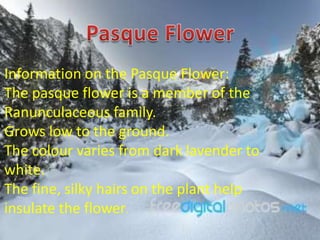
Information on the Pasque Flower:
The pasque flower is a member of the
Ranunculaceous family.
Grows low to the ground.
The colour varies from dark lavender to
white.
The fine, silky hairs on the plant help
insulate the flower.
There are quite a few
animals in the Tundra. Some
animals include Polar
Bear, Caribou, Arctic
fox, Arctic hare, Snowy
Owl, Musk Ox, Rock
Ptarmigan, Ermine, Grizzly
Bear, wolves, Pikas, Ravens,
Shrew, Squirrel, Bald
Eagle, Penguin.
Basic Information:
Mammal.
Omnivore.
Weighs 3-7 kg.
Scientific name: Lupus arcticus.

Other information:
Skin changes each season. Brown and/or
grey in summer, white in winter.
A female can have a maximum of 8
babies.
The baby hare is called a leveret.
Basic information:
Mammal
Herbivore
Lives for 12-20 years

More information:
Has enemies such as the arctic fox,
arctic wolf, polar bears etc.
Scientific name of
Ovibos Moschatus
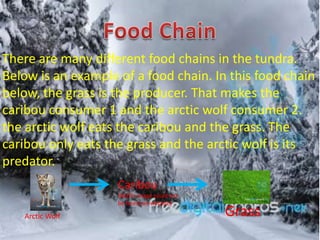
There are many different food chains in the tundra.
Below is an example of a food chain. In this food chain
below, the grass is the producer. That makes the
caribou consumer 1 and the arctic wolf consumer 2.
the arctic wolf eats the caribou and the grass. The
caribou only eats the grass and the arctic wolf is its
predator.
                    Caribou
                    (NOTE: image could not
                    be found on website)

   Arctic Wolf                               Grass
A food web is basically all the food chains
connected together. This is an example of a
food web.
A polar bear eats the arctic fox which eats the
snowy owl and an ermine, it also eats a snowy
goose and a snow buntling. It also eats
pika, arctic hare and lemming.
   The word Tundra means land of no trees
   The tundra has six weeks of summer
   Earth’s coldest and harshest biome
    summer lasts 50-60 days where the sun
    shines 24 hours a day
 Believed to have formed 10,000 years
  ago
 covers one tenth of the world
 permanently covered in a layer of
  permafrost
two types of tundra, polar tundra and
 arctic tundra
Bibliography
 Wikipedia
 www.ucmp.berkely.edu
 www.animals.nationalgeographic.com
 www.library.thinkquest.org
 www.blueplanetbiomes.org
 www.tundrabiomeproject.blogspot.com.au
 www.environment.nationalgeographic.com
 www.bioexpedition.com
 www.t00beyond.tripod.com
 Images from www.freedigitalphotos.net
Just Joking
     Click here for next slide
Tundra Lachie

Tundra Lachie

  • 2.
    In the Tundrathe weather is normally extremely cold. The winter temperatures Normally average between -20 to -30 degrees C. In the summer the temperature averages between 3 to 12 degrees C.
  • 3.
    The climate inthe tundra is a cold and dry climate. There are strong, drying winds in the tundra along with cold, desert like conditions. There is an average of 6 to 10 inches of rain a year.
  • 4.
    The Tundra is mainlylocated in the northern side of the world near the north pole.
  • 5.
    The tundra canbe found in these countries. Alaska, Nth Canada, Greenland, Nth Scandinavia, Nth Siberia and Russia
  • 6.
    There are notmany plants in the tundra because of the climate. The tundra includes plants such as arctic moss, arctic willow, bearberry, caribou moss, diamond-leaf willow, labrador tea, pasque flower, tufted saxifrage, yellow tundra flower.
  • 7.
    Information on theBearberry: Stem rises 2-8 inches off the ground Low growing plant They bloom between March and June Silky hairs can keep the plant warm They grow in dry areas The bearberry isn’t found in any other biome
  • 8.
    Information on thePasque Flower: The pasque flower is a member of the Ranunculaceous family. Grows low to the ground. The colour varies from dark lavender to white. The fine, silky hairs on the plant help insulate the flower.
  • 9.
    There are quitea few animals in the Tundra. Some animals include Polar Bear, Caribou, Arctic fox, Arctic hare, Snowy Owl, Musk Ox, Rock Ptarmigan, Ermine, Grizzly Bear, wolves, Pikas, Ravens, Shrew, Squirrel, Bald Eagle, Penguin.
  • 10.
    Basic Information: Mammal. Omnivore. Weighs 3-7kg. Scientific name: Lupus arcticus. Other information: Skin changes each season. Brown and/or grey in summer, white in winter. A female can have a maximum of 8 babies. The baby hare is called a leveret.
  • 11.
    Basic information: Mammal Herbivore Lives for12-20 years More information: Has enemies such as the arctic fox, arctic wolf, polar bears etc. Scientific name of Ovibos Moschatus
  • 12.
    There are manydifferent food chains in the tundra. Below is an example of a food chain. In this food chain below, the grass is the producer. That makes the caribou consumer 1 and the arctic wolf consumer 2. the arctic wolf eats the caribou and the grass. The caribou only eats the grass and the arctic wolf is its predator. Caribou (NOTE: image could not be found on website) Arctic Wolf Grass
  • 13.
    A food webis basically all the food chains connected together. This is an example of a food web. A polar bear eats the arctic fox which eats the snowy owl and an ermine, it also eats a snowy goose and a snow buntling. It also eats pika, arctic hare and lemming.
  • 14.
    The word Tundra means land of no trees  The tundra has six weeks of summer  Earth’s coldest and harshest biome  summer lasts 50-60 days where the sun shines 24 hours a day
  • 15.
     Believed tohave formed 10,000 years ago  covers one tenth of the world  permanently covered in a layer of permafrost two types of tundra, polar tundra and arctic tundra
  • 16.
    Bibliography  Wikipedia  www.ucmp.berkely.edu www.animals.nationalgeographic.com  www.library.thinkquest.org  www.blueplanetbiomes.org  www.tundrabiomeproject.blogspot.com.au  www.environment.nationalgeographic.com  www.bioexpedition.com  www.t00beyond.tripod.com  Images from www.freedigitalphotos.net
  • 17.
    Just Joking Click here for next slide