www.freeimages.co.uk/   www.freeimages.co.uk/


www.freeimages.co.uk/   www.freeimages.co.uk/
www.freeimages.co.uk/                      www.freeimages.co.uk/


                The average weather in the
                Marine is 12 to 28 degrees.
                Areas of heavy snow can
                form downwind of warm
                water bodies otherwise it is
                cold air mass.


www.freeimages.co.uk/                     www.freeimages.co.uk/
www.freeimages.co.uk/                        www.freeimages.co.uk/


                        The climate in the
                        Marine is monsoon
                        which is windy and used
                        to describe seasonal
                        changes. Warm sea
                        surface temperatures are
                        known to be caused over
                        the Earth’s oceans.
www.freeimages.co.uk/                        www.freeimages.co.uk/
www.freeimages.co.uk/                          www.freeimages.co.uk/


                        The locations of the
                        Marine are the
                         Atlantic Ocean
                         Mediterranean Sea
                         Baltic Sea
                         Arctic Ocean


www.freedigitalphotos.net/                     www.freeimages.co.uk/
www.freeimages.co.uk/                          www.freeimages.co.uk/


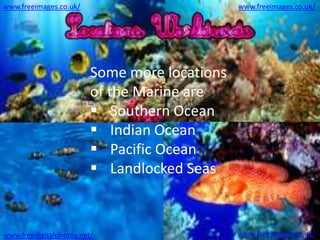
                         Some more locations
                         of the Marine are
                          Southern Ocean
                          Indian Ocean
                          Pacific Ocean
                          Landlocked Seas


www.freedigitalphotos.net/                     www.freeimages.co.uk/
www.freeimages.co.uk/                          www.freeimages.co.uk/


                        Plants in the Marine
                        can include
                         Plankton
                         Algae
                         Sea grasses
                         Seaweed
                         Mangroves
                         Sea cabbage
www.freeimages.co.uk/                          www.freeimages.co.uk/
www.freedigitalphotos.net/            www.freedigitalphotos.net/


          Seagrasses are flowering plants that
          grow in Marine environments. There
          are 60 species of seagrasses globally.
          They grow under sea ice and live in
          shallow water. Over 1 billion people live
          within 50 km of seagrass. For many
          years seagrass has been used to
          insulate houses, stuff furniture, thatch
          roofs and in early car seats.
www.freedigitalphotos.net/             www.freedigitalphotos.net/
www.freeimages.co.uk/                      www.freeimages.co.uk/


                   The Grey Mangrove is the
                   largest spread mangrove in
                   the world, that likes to
                   grow in saltwater unlike
                   River Mangrove. It is a
                   medium size tree with
                   green and greyish leaves.
                   The tree grows fruit that
                   falls in Summer.
www.freeimages.co.uk/                      www.freeimages.co.uk/
www.freeimages.co.uk/                     www.freeimages.co.uk/


       Animals in the       Some more animals
       Marine can include   in the Marine are
        Fish                Seals
        Crabs               Sea lions
        Octopuses           Sharks
        Dolphins            Whales
        Jellyfish           Stingrays
        Penguins            Puffer fish
        Seahorses
www.freeimages.co.uk/
                             Starfishwww.freeimages.co.uk/
www.freeimages.co.uk/                     www.freeimages.co.uk/


The Box Jellyfish is in the invertebrate species and
their diet is carnivore. They are also called Sea Wasps
and Marine Stingers. In the wild they can reach 1 year
old. They are 3m long, 25cm wide and weigh 2kg.
They are pale blue and transparent in colour. Their
venom is almost the worst in the world. If you get
stung it can affect your heart, nerve system and skin
cells. Sea turtles usually eat them because they aren’t
affected by their sting. They live in Northern Australia
and have 15 tentacles from each corner of their bell.
Each tentacle is 3m and has up to 5000 stinging cells.
www.freeimages.co.uk/                  www.freeimages.co.uk/
www.freeimages.co.uk/                   www.freeimages.co.uk/


Seahorses are a type of fish and they are carnivores.
Their are 35 species of seahorses. In the wild they can
live from 1 - 5 years old. They grow from 1.5cm - 35cm.
Their group name is herd. Seahorses have no teeth and
no stomach. Food goes through their body so fast, they
need to eat nearly all the time, eating 3000 brine
shrimp a day. They swim using small fins on their back
and head. Their tail is used to grip seagrass and coral.
Their long snout sucks in plankton and other food. They
are found in shallow tropical waters through out the
world. Male seahorses carry baby seahorses in a pouch
until they hatch.
www.freedigitalphotos.net/              www.freeimages.co.uk/
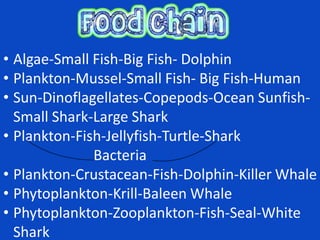
• Algae-Small Fish-Big Fish- Dolphin
• Plankton-Mussel-Small Fish- Big Fish-Human
• Sun-Dinoflagellates-Copepods-Ocean Sunfish-
  Small Shark-Large Shark
• Plankton-Fish-Jellyfish-Turtle-Shark
              Bacteria
• Plankton-Crustacean-Fish-Dolphin-Killer Whale
• Phytoplankton-Krill-Baleen Whale
• Phytoplankton-Zooplankton-Fish-Seal-White
  Shark
Moray Eel


 Killer Whale
                            Scorpion fish      Hawkfish

 Sea Otter      Snowflake Eel
                                Fin Whale               Barnacles
                                               Blenny

        Sea Star
                Crab         Brime Shrimp
                                             Mullet Zooplankton
Sea Urchins                             Squid


     Kelp           Algae         Diatom     Phytoplankton
www.freeimages.co.uk/                   www.freeimages.co.uk/


• The Marine is the largest biome in the world.
• The sea otter has approximately 1 million hairs
  per square inch.
• Marine plants make about 70 to 80% of our
  oxygen.
• 20 people can stand on a Blue Whale’s tongue.
• There is one cup of salt per gallon of water.
• The Mariana Trench is 36200 feet deep.
• About 70% of the Earth is ocean. www.freeimages.co.uk/
www.freeimages.co.uk/
www.freeimages.co.uk/                     www.freeimages.co.uk/


• The largest ocean is the Pacific Ocean. It covers
  30% of the Earth.
• The Pacific has about 25000 different islands.
• The second largest ocean is the Atlantic Ocean.
  It covers 21% of the Earth.
• The third largest ocean is the Indian Ocean. It
  covers 14% of the Earth.
• A jellyfish is 95% water.
• Starfish don’t have any brains or blood.
www.freeimages.co.uk/                 www.freeimages.co.uk/
www.freeimages.co.uk/                     www.freeimages.co.uk/


   •   www.kids.nceas.ucsb.edu
   •   rrms-biomes.tripod.com/id12.html
   •   www.sciencekids.co.nz/
   •   ultimatehubber.hubpages.com/
   •   www.neok12.com
   •   marinelife.about.com
   •   www.animalcorner.co.uk
   •   en.wikipedia.org
   •   www.nationalgeographic.com

www.freeimages.co.uk/   • glowtxt.com     www.freeimages.co.uk/

Marine Larissa

  • 1.
    www.freeimages.co.uk/ www.freeimages.co.uk/ www.freeimages.co.uk/ www.freeimages.co.uk/
  • 2.
    www.freeimages.co.uk/ www.freeimages.co.uk/ The average weather in the Marine is 12 to 28 degrees. Areas of heavy snow can form downwind of warm water bodies otherwise it is cold air mass. www.freeimages.co.uk/ www.freeimages.co.uk/
  • 3.
    www.freeimages.co.uk/ www.freeimages.co.uk/ The climate in the Marine is monsoon which is windy and used to describe seasonal changes. Warm sea surface temperatures are known to be caused over the Earth’s oceans. www.freeimages.co.uk/ www.freeimages.co.uk/
  • 4.
    www.freeimages.co.uk/ www.freeimages.co.uk/ The locations of the Marine are the  Atlantic Ocean  Mediterranean Sea  Baltic Sea  Arctic Ocean www.freedigitalphotos.net/ www.freeimages.co.uk/
  • 5.
    www.freeimages.co.uk/ www.freeimages.co.uk/ Some more locations of the Marine are  Southern Ocean  Indian Ocean  Pacific Ocean  Landlocked Seas www.freedigitalphotos.net/ www.freeimages.co.uk/
  • 6.
    www.freeimages.co.uk/ www.freeimages.co.uk/ Plants in the Marine can include  Plankton  Algae  Sea grasses  Seaweed  Mangroves  Sea cabbage www.freeimages.co.uk/ www.freeimages.co.uk/
  • 7.
    www.freedigitalphotos.net/ www.freedigitalphotos.net/ Seagrasses are flowering plants that grow in Marine environments. There are 60 species of seagrasses globally. They grow under sea ice and live in shallow water. Over 1 billion people live within 50 km of seagrass. For many years seagrass has been used to insulate houses, stuff furniture, thatch roofs and in early car seats. www.freedigitalphotos.net/ www.freedigitalphotos.net/
  • 8.
    www.freeimages.co.uk/ www.freeimages.co.uk/ The Grey Mangrove is the largest spread mangrove in the world, that likes to grow in saltwater unlike River Mangrove. It is a medium size tree with green and greyish leaves. The tree grows fruit that falls in Summer. www.freeimages.co.uk/ www.freeimages.co.uk/
  • 9.
    www.freeimages.co.uk/ www.freeimages.co.uk/ Animals in the Some more animals Marine can include in the Marine are  Fish  Seals  Crabs  Sea lions  Octopuses  Sharks  Dolphins  Whales  Jellyfish  Stingrays  Penguins  Puffer fish  Seahorses www.freeimages.co.uk/  Starfishwww.freeimages.co.uk/
  • 10.
    www.freeimages.co.uk/ www.freeimages.co.uk/ The Box Jellyfish is in the invertebrate species and their diet is carnivore. They are also called Sea Wasps and Marine Stingers. In the wild they can reach 1 year old. They are 3m long, 25cm wide and weigh 2kg. They are pale blue and transparent in colour. Their venom is almost the worst in the world. If you get stung it can affect your heart, nerve system and skin cells. Sea turtles usually eat them because they aren’t affected by their sting. They live in Northern Australia and have 15 tentacles from each corner of their bell. Each tentacle is 3m and has up to 5000 stinging cells. www.freeimages.co.uk/ www.freeimages.co.uk/
  • 11.
    www.freeimages.co.uk/ www.freeimages.co.uk/ Seahorses are a type of fish and they are carnivores. Their are 35 species of seahorses. In the wild they can live from 1 - 5 years old. They grow from 1.5cm - 35cm. Their group name is herd. Seahorses have no teeth and no stomach. Food goes through their body so fast, they need to eat nearly all the time, eating 3000 brine shrimp a day. They swim using small fins on their back and head. Their tail is used to grip seagrass and coral. Their long snout sucks in plankton and other food. They are found in shallow tropical waters through out the world. Male seahorses carry baby seahorses in a pouch until they hatch. www.freedigitalphotos.net/ www.freeimages.co.uk/
  • 12.
    • Algae-Small Fish-BigFish- Dolphin • Plankton-Mussel-Small Fish- Big Fish-Human • Sun-Dinoflagellates-Copepods-Ocean Sunfish- Small Shark-Large Shark • Plankton-Fish-Jellyfish-Turtle-Shark Bacteria • Plankton-Crustacean-Fish-Dolphin-Killer Whale • Phytoplankton-Krill-Baleen Whale • Phytoplankton-Zooplankton-Fish-Seal-White Shark
  • 13.
    Moray Eel KillerWhale Scorpion fish Hawkfish Sea Otter Snowflake Eel Fin Whale Barnacles Blenny Sea Star Crab Brime Shrimp Mullet Zooplankton Sea Urchins Squid Kelp Algae Diatom Phytoplankton
  • 14.
    www.freeimages.co.uk/ www.freeimages.co.uk/ • The Marine is the largest biome in the world. • The sea otter has approximately 1 million hairs per square inch. • Marine plants make about 70 to 80% of our oxygen. • 20 people can stand on a Blue Whale’s tongue. • There is one cup of salt per gallon of water. • The Mariana Trench is 36200 feet deep. • About 70% of the Earth is ocean. www.freeimages.co.uk/ www.freeimages.co.uk/
  • 15.
    www.freeimages.co.uk/ www.freeimages.co.uk/ • The largest ocean is the Pacific Ocean. It covers 30% of the Earth. • The Pacific has about 25000 different islands. • The second largest ocean is the Atlantic Ocean. It covers 21% of the Earth. • The third largest ocean is the Indian Ocean. It covers 14% of the Earth. • A jellyfish is 95% water. • Starfish don’t have any brains or blood. www.freeimages.co.uk/ www.freeimages.co.uk/
  • 16.
    www.freeimages.co.uk/ www.freeimages.co.uk/ • www.kids.nceas.ucsb.edu • rrms-biomes.tripod.com/id12.html • www.sciencekids.co.nz/ • ultimatehubber.hubpages.com/ • www.neok12.com • marinelife.about.com • www.animalcorner.co.uk • en.wikipedia.org • www.nationalgeographic.com www.freeimages.co.uk/ • glowtxt.com www.freeimages.co.uk/