Tuberculosis Jiang Lihong Tianjin Medical University
tuberculosis Etiology Epidemiology Pathogenesis Clinical manifestation Diagnostic tests and procedures the tuberculin test Treatment
INTRODUCTION Chronic infectious disease characterized by an extremely variable clinical course pathogen: mycobacterium tuberculosis ; mycobacterium bovis
Both the incidence and death rate of tuberculosis have decreased dramatically since 1970.  Unfortunately, the number of new active cases has not decreased as rapidly as the death rate, and the incidence has increased during recent years.(?)
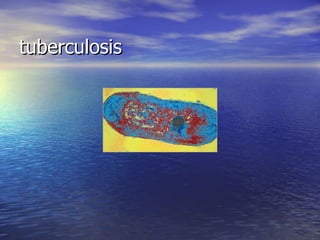
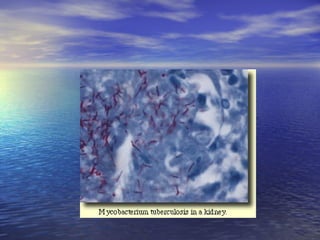
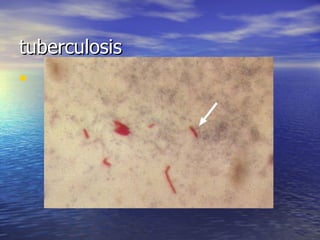
Etiology Non-spore forming, nonmotile, pleiomorphic, weakly gram-positive, curved rods about 2-4um long Appear beaded or clumped in stained clinical specimens or culture media Grow best at 37-41 grow slowly, their generation time being 12-24 hr
tuberculosis
tuberculosis
 
tuberculosis
Epidemiology WHO estimates that one third of the world’s population are infected with M. tuberculosis. Tuberculosis is especially prevalent in populations undergoing the stresses of poor nutrition, over-crowding, inadequate health care, and displacement.
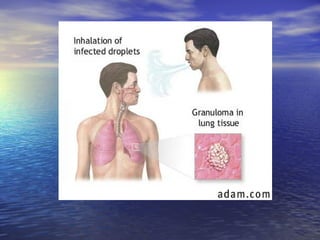
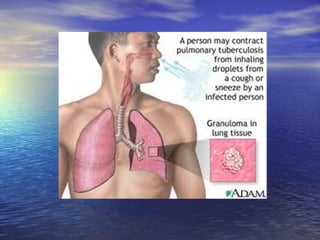
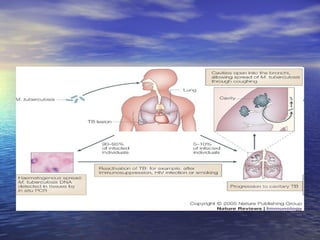
Infectious route Pulmonary route: cough, sneeze, speak digestive route: milk others: skin, placenta et al.
 
 
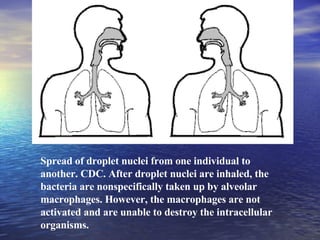
Spread of droplet nuclei from one individual to another. CDC. After droplet nuclei are inhaled, the bacteria are nonspecifically taken up by alveolar macrophages. However, the macrophages are not activated and are unable to destroy the intracellular organisms.    
 
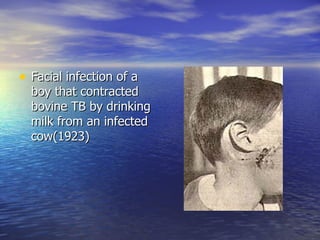
Facial infection of a boy that contracted bovine TB by drinking milk from an infected cow(1923)
Evidence suggests that differences in tuberculosis attack rates result from differences in socioeconomic status and living conditions rather than racial factors.
 
age Infant: develop  progressive extension of the initial lesion in the lung, miliary tuberculosis, tuberculosis meningitis(?) puberty and adult: chronic pulmonary tuberculosis adolescence girls develop chronic pulmonary TB more commonly than boys
Pathogenesis
 
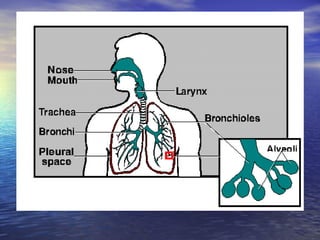
In the initial infection, tubercle bacilli enter the lungs and establish a site. Although host defenses in the lung respond to the initial infection, some organisms reach regional lymph nodes through the lymphatics, and others reach distant organs via the hematogenous route.
Primary complex Pulmonary parenchymal lesion (initial focus) lymphangitis hilar adenopathy
progress Blood vessels or lymphatics: massive hematogenous dissemination bronchial lumen and bronchogenic dissemination: tuberculous bronchopneumonia
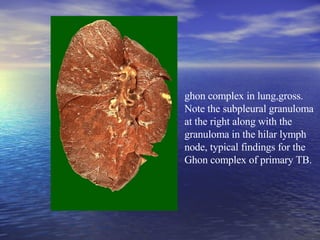
ghon complex in lung,gross.  Note the subpleural granuloma at the right along with the granuloma in the hilar lymph node, typical findings for the Ghon complex of primary TB.
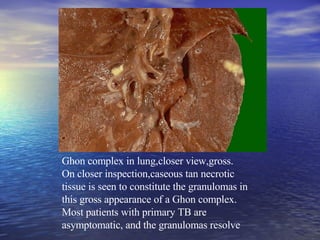
Ghon complex in lung,closer view,gross.  On closer inspection,caseous tan necrotic tissue is seen to constitute the granulomas in this gross appearance of a Ghon complex. Most patients with primary TB are asymptomatic, and the granulomas resolve
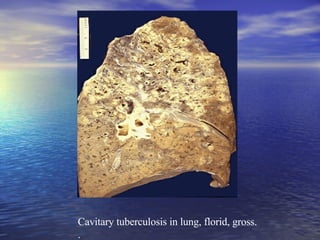
Cavitary tuberculosis in lung, florid, gross.  .
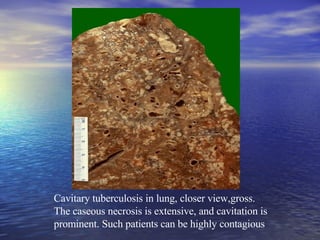
Cavitary tuberculosis in lung, closer view,gross.  The caseous necrosis is extensive, and cavitation is prominent. Such patients can be highly contagious
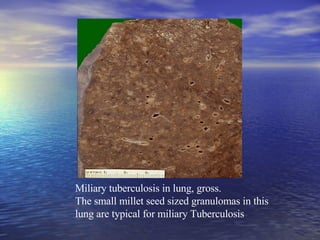
Miliary tuberculosis in lung, gross.  The small millet seed sized granulomas in this lung are typical for miliary Tuberculosis
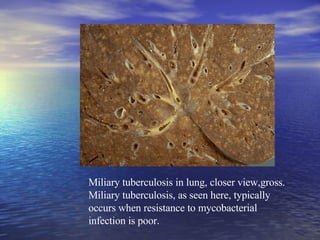
Miliary tuberculosis in lung, closer view,gross.  Miliary tuberculosis, as seen here, typically occurs when resistance to mycobacterial infection is poor.
Clinical manifestations Without clinical manifestation ranging over a broad spectrum of intensity
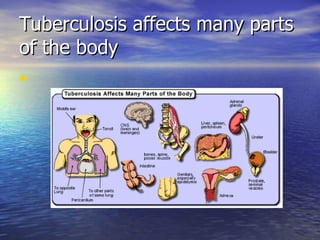
Tuberculosis affects many parts of the body
Common findings Fever malaise anorexia weight loss night sweats cough


Initial (primary) tuberculosis In the initial pulmonary infection host defenses are usually able to limit the infection after it has caused a small parenchymal lesion, lymphangitis, hilar adenopathy, and subsequent minimal hematogenous dissemination. In the 2-10 weeks required for development of tuberculin hypersensitivity, the child may not appear ill.
Initial (primary) tuberculosis With development of tuberculin hypersensitivity, there may be fever and positive tuberculin test. X-ray: infant: infiltrative lesion and enlargement of hilar nodes; old children: often normal
Initial (primary ) tuberculosis The child, usually an infant, who is unable to limit spread of the parenchymal lesion develops a progressive initial focus.  There may be persistent fever, malaise, anorexia, pallor, anemia,weakness,weight loss However, extensive tuberculosis lesion often produce minimal abnormal physical findings.
Initial (primary ) tuberculosis In initial tuberculosis, hilar glandular involvement is constant. With the passage of time the nodes generally decrease in size, residual calcification being the only permanent evidence of involvement.
Initial (primary ) tuberculosis Clinical manifestation of bronchial involvement depend on the degree to which air exchange is embarrassed. Expiratory wheezing, emphysema, atelectasis, bronchiectasis
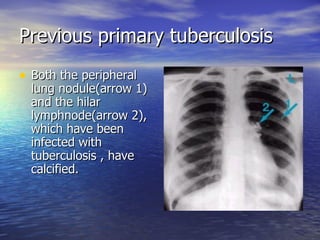
Previous primary tuberculosis Both the peripheral lung nodule(arrow 1) and the hilar lymphnode(arrow 2), which have been infected with tuberculosis , have calcified.
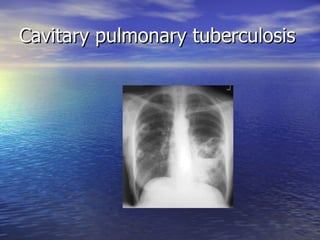
Cavitary pulmonary tuberculosis
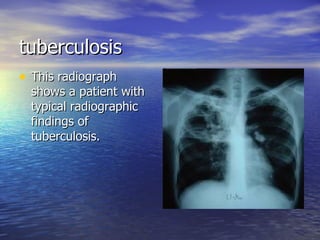
tuberculosis This radiograph shows a patient with typical radiographic findings of tuberculosis.
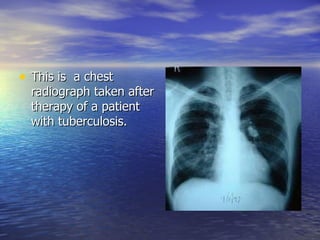
This is  a chest radiograph taken after therapy of a patient with tuberculosis.
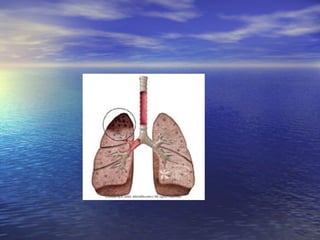
Reinfetion(chronic) pulmonary Endogenous/exogenous differs from initial form: apex of the lung, cavitation, little or no hilar glandular enlargement fever, malaise, anorexia, weight loss, anemia, cough, chest pain Hemoptysis does not occur as commonly in children as in adults.
 
Tuberculous pleurisy Cultures of the pleural fluid are often negative for tubercle bacilli tuberculin test is important X-ray/pleural biopsy Clinical manifestation vary according to extent of the effusion and nature of the underlying pulmonary lesion. The effusion often develops about a year or so after the primary infection
Tuberculous pleurisy Low to high fever, shortness of breath, chest pain on deep inspiration, and diminished breath sound Tuberculin skin test is positive in only 70-80% of case Prognosis is excellent but radiographic resolution often takes months
Pleural fluid Yellow, only occasionally tinged with blood Specific gravity is usually 1.012-1.025, the protein is usually 2-4g/dl, and the glucose may be low Several hundred to several thousand white blood cells/mm ³
Miliary tuberculosis A massive hematogenous dissemination produce miliary tuberculosis. Infant and young children 6 to 12 months after the primary tuberculosis Often develops without antecedent evidence of tuberculous disease ;less commonly it follows  a known infection.
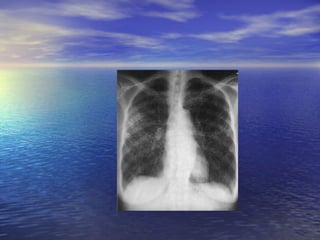
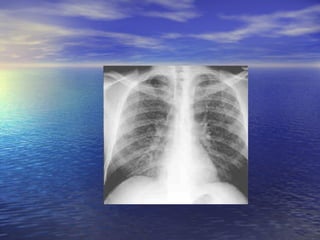
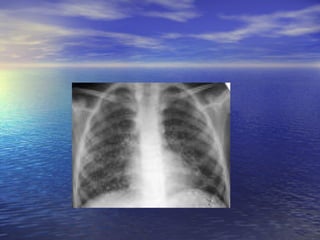
Miliary tuberculosis clinical manifestation: early: irritability, anorexia, fever, malaise; developing: fever, prostration, weight loss, spleen, liver,peripheral lymphnodes enlarge diagnosis: tuberculin test, X-ray(snowstorm appearance)


Tuberculous meningitis Tuberculous meningitis is one of the most serious complications of tuberculosis. It usually develops within a year after initial infection. Meningitis may occur as a complication of miliary tuberculosis.
Tuberculous meningitis Three stages: The prodromal stage of invasion with nonspecific symptoms the stage of clear-cut meningeal manifestations the terminal stage of paralysis, coma, and death
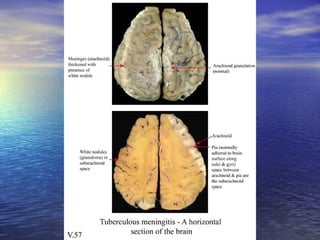
Tuberculous meningitis The brain stem is often the site of greatest involvement, which accounts for the frequently associated dysfunction of cranial nerves III,VI,VII. The exudate also interferes with the normal flow of CSF in and out of the venticular system, leading to a communicating hydrocephalus.
First (prodromal) stage Diagnosis remains in doubt for 1 to 2 weeks nonspecific symptoms: irritable  disposition, drowsiness, restless sleep, loss of appetite, constipation, abdominal pain, low-grade fever, headache, vomiting
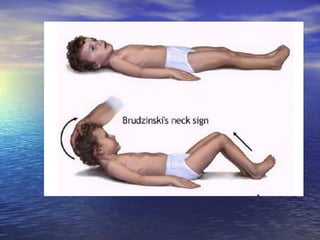
Secondary(meningeal ) stage Signs of meningeal irritation: stiff neck and back, positive Kerning and Bruzinski signs, bulging of the anterior fontanel, exaggeration of deep tendon reflexes sensorium is clouded, temperature increases,vomiting becomes more frequent
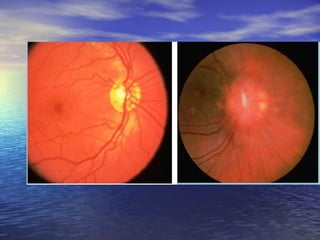
Second(meningeal) stage Eye-grounds: papilledema, peripherally located choroidal tubercles cranial nerve palsies lasts 7 to 10 days
 
 
irregular respiration develops
Third (terminal) stage Stupor progresses to coma. Pupils become dilated and fixed corneal reflex is absent deep tendon reflexes disappear emaciation and scaphoid abdomen are notable Irregular respiration develops
CT OR MRI may be normal during early stages of the disease . As disease progresses, basilar enhancement, and communicating hydrocephalus with signs of cerebral edema or early focal ischemia are the most common findings.
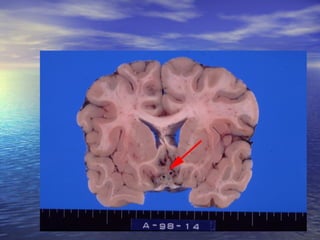
Some small children with tuberculous meningitis may have one or several clinically silent tuberculomas, occuring most often in the cerebral cortex or thalamic regions.
 
 
CSF Leukocyte count usually ranges from 10 to 500 cells/mm ³ ,  glucose is typically less than 40mg/dl but rarely goes below 20mg/dl, protein level is elevated and may be markedly high secondary to hydrocephalus and spinal block.
Tuberculous lymphadenitis Cervical glandular involvement is the most common form diagnosis involves differentiation from disorders a positive tuberculin test points toward,but does not prove biopsy and culture
18 year-old woman presented with a several month history of  progressive swelling of the left side of her neck. Biopsy of the neck  node was positive for acid-fast bacilli
Skeletal tuberculosis Tuberculosis osteomyelitis involves mainly the thoracic and lumbar vertebrae followed by knee and hip. There is extensive necrosis and bony destruction with compressed fractures and extension to soft tissues, including psoas “cold”abscess.
Gastrointestinal tuberculosis This is uncommon today because routine pasteurisation of milk has elimated M. bovis infections. However, M. Tuberculosis organisms coughed up in sputum may be swallowed into GI tract. The classic lesions are circumferential ulcerations with stricture of small intestine.
Questions Pathogen of TB what is primary complex? Clinical manifestations especially tuberculous meningitis When the patient has miliary tuberculosis, what is the typical chest x-ray manifestation?
Quiz( fifteen minutes) Definition: 1. Immunologic system  2.Brudzinski sign  Fill the blanks:1. ____ is the most abundant Ig of the body. 2.Causative organism of acute bacterial meningitis are ______, ________ and _____. Questions:1. Classification of PID 2. Principals of antimicrobial therapy for acute bacterial meningitis
Thank you!

Tuberculosis1

  • 1.
    Tuberculosis Jiang LihongTianjin Medical University
  • 2.
    tuberculosis Etiology EpidemiologyPathogenesis Clinical manifestation Diagnostic tests and procedures the tuberculin test Treatment
  • 3.
    INTRODUCTION Chronic infectiousdisease characterized by an extremely variable clinical course pathogen: mycobacterium tuberculosis ; mycobacterium bovis
  • 4.
    Both the incidenceand death rate of tuberculosis have decreased dramatically since 1970. Unfortunately, the number of new active cases has not decreased as rapidly as the death rate, and the incidence has increased during recent years.(?)
  • 5.
    Etiology Non-spore forming,nonmotile, pleiomorphic, weakly gram-positive, curved rods about 2-4um long Appear beaded or clumped in stained clinical specimens or culture media Grow best at 37-41 grow slowly, their generation time being 12-24 hr
  • 6.
  • 7.
  • 8.
  • 9.
  • 10.
    Epidemiology WHO estimatesthat one third of the world’s population are infected with M. tuberculosis. Tuberculosis is especially prevalent in populations undergoing the stresses of poor nutrition, over-crowding, inadequate health care, and displacement.
  • 11.
    Infectious route Pulmonaryroute: cough, sneeze, speak digestive route: milk others: skin, placenta et al.
  • 12.
  • 13.
  • 14.
    Spread of dropletnuclei from one individual to another. CDC. After droplet nuclei are inhaled, the bacteria are nonspecifically taken up by alveolar macrophages. However, the macrophages are not activated and are unable to destroy the intracellular organisms.  
  • 15.
  • 16.
    Facial infection ofa boy that contracted bovine TB by drinking milk from an infected cow(1923)
  • 17.
    Evidence suggests thatdifferences in tuberculosis attack rates result from differences in socioeconomic status and living conditions rather than racial factors.
  • 18.
  • 19.
    age Infant: develop progressive extension of the initial lesion in the lung, miliary tuberculosis, tuberculosis meningitis(?) puberty and adult: chronic pulmonary tuberculosis adolescence girls develop chronic pulmonary TB more commonly than boys
  • 20.
  • 21.
  • 22.
    In the initialinfection, tubercle bacilli enter the lungs and establish a site. Although host defenses in the lung respond to the initial infection, some organisms reach regional lymph nodes through the lymphatics, and others reach distant organs via the hematogenous route.
  • 23.
    Primary complex Pulmonaryparenchymal lesion (initial focus) lymphangitis hilar adenopathy
  • 24.
    progress Blood vesselsor lymphatics: massive hematogenous dissemination bronchial lumen and bronchogenic dissemination: tuberculous bronchopneumonia
  • 25.
    ghon complex inlung,gross. Note the subpleural granuloma at the right along with the granuloma in the hilar lymph node, typical findings for the Ghon complex of primary TB.
  • 26.
    Ghon complex inlung,closer view,gross. On closer inspection,caseous tan necrotic tissue is seen to constitute the granulomas in this gross appearance of a Ghon complex. Most patients with primary TB are asymptomatic, and the granulomas resolve
  • 27.
    Cavitary tuberculosis inlung, florid, gross. .
  • 28.
    Cavitary tuberculosis inlung, closer view,gross. The caseous necrosis is extensive, and cavitation is prominent. Such patients can be highly contagious
  • 29.
    Miliary tuberculosis inlung, gross. The small millet seed sized granulomas in this lung are typical for miliary Tuberculosis
  • 30.
    Miliary tuberculosis inlung, closer view,gross. Miliary tuberculosis, as seen here, typically occurs when resistance to mycobacterial infection is poor.
  • 31.
    Clinical manifestations Withoutclinical manifestation ranging over a broad spectrum of intensity
  • 32.
    Tuberculosis affects manyparts of the body
  • 33.
    Common findings Fevermalaise anorexia weight loss night sweats cough
  • 34.
  • 35.
  • 36.
  • 37.
    Initial (primary) tuberculosisIn the initial pulmonary infection host defenses are usually able to limit the infection after it has caused a small parenchymal lesion, lymphangitis, hilar adenopathy, and subsequent minimal hematogenous dissemination. In the 2-10 weeks required for development of tuberculin hypersensitivity, the child may not appear ill.
  • 38.
    Initial (primary) tuberculosisWith development of tuberculin hypersensitivity, there may be fever and positive tuberculin test. X-ray: infant: infiltrative lesion and enlargement of hilar nodes; old children: often normal
  • 39.
    Initial (primary )tuberculosis The child, usually an infant, who is unable to limit spread of the parenchymal lesion develops a progressive initial focus. There may be persistent fever, malaise, anorexia, pallor, anemia,weakness,weight loss However, extensive tuberculosis lesion often produce minimal abnormal physical findings.
  • 40.
    Initial (primary )tuberculosis In initial tuberculosis, hilar glandular involvement is constant. With the passage of time the nodes generally decrease in size, residual calcification being the only permanent evidence of involvement.
  • 41.
    Initial (primary )tuberculosis Clinical manifestation of bronchial involvement depend on the degree to which air exchange is embarrassed. Expiratory wheezing, emphysema, atelectasis, bronchiectasis
  • 42.
    Previous primary tuberculosisBoth the peripheral lung nodule(arrow 1) and the hilar lymphnode(arrow 2), which have been infected with tuberculosis , have calcified.
  • 43.
  • 44.
    tuberculosis This radiographshows a patient with typical radiographic findings of tuberculosis.
  • 45.
    This is a chest radiograph taken after therapy of a patient with tuberculosis.
  • 46.
    Reinfetion(chronic) pulmonary Endogenous/exogenousdiffers from initial form: apex of the lung, cavitation, little or no hilar glandular enlargement fever, malaise, anorexia, weight loss, anemia, cough, chest pain Hemoptysis does not occur as commonly in children as in adults.
  • 47.
  • 48.
    Tuberculous pleurisy Culturesof the pleural fluid are often negative for tubercle bacilli tuberculin test is important X-ray/pleural biopsy Clinical manifestation vary according to extent of the effusion and nature of the underlying pulmonary lesion. The effusion often develops about a year or so after the primary infection
  • 49.
    Tuberculous pleurisy Lowto high fever, shortness of breath, chest pain on deep inspiration, and diminished breath sound Tuberculin skin test is positive in only 70-80% of case Prognosis is excellent but radiographic resolution often takes months
  • 50.
    Pleural fluid Yellow,only occasionally tinged with blood Specific gravity is usually 1.012-1.025, the protein is usually 2-4g/dl, and the glucose may be low Several hundred to several thousand white blood cells/mm ³
  • 51.
    Miliary tuberculosis Amassive hematogenous dissemination produce miliary tuberculosis. Infant and young children 6 to 12 months after the primary tuberculosis Often develops without antecedent evidence of tuberculous disease ;less commonly it follows a known infection.
  • 52.
    Miliary tuberculosis clinicalmanifestation: early: irritability, anorexia, fever, malaise; developing: fever, prostration, weight loss, spleen, liver,peripheral lymphnodes enlarge diagnosis: tuberculin test, X-ray(snowstorm appearance)
  • 53.
  • 54.
  • 55.
  • 56.
    Tuberculous meningitis Tuberculousmeningitis is one of the most serious complications of tuberculosis. It usually develops within a year after initial infection. Meningitis may occur as a complication of miliary tuberculosis.
  • 57.
    Tuberculous meningitis Threestages: The prodromal stage of invasion with nonspecific symptoms the stage of clear-cut meningeal manifestations the terminal stage of paralysis, coma, and death
  • 58.
    Tuberculous meningitis Thebrain stem is often the site of greatest involvement, which accounts for the frequently associated dysfunction of cranial nerves III,VI,VII. The exudate also interferes with the normal flow of CSF in and out of the venticular system, leading to a communicating hydrocephalus.
  • 59.
    First (prodromal) stageDiagnosis remains in doubt for 1 to 2 weeks nonspecific symptoms: irritable disposition, drowsiness, restless sleep, loss of appetite, constipation, abdominal pain, low-grade fever, headache, vomiting
  • 60.
    Secondary(meningeal ) stageSigns of meningeal irritation: stiff neck and back, positive Kerning and Bruzinski signs, bulging of the anterior fontanel, exaggeration of deep tendon reflexes sensorium is clouded, temperature increases,vomiting becomes more frequent
  • 61.
    Second(meningeal) stage Eye-grounds:papilledema, peripherally located choroidal tubercles cranial nerve palsies lasts 7 to 10 days
  • 62.
  • 63.
  • 64.
  • 65.
    Third (terminal) stageStupor progresses to coma. Pupils become dilated and fixed corneal reflex is absent deep tendon reflexes disappear emaciation and scaphoid abdomen are notable Irregular respiration develops
  • 66.
    CT OR MRImay be normal during early stages of the disease . As disease progresses, basilar enhancement, and communicating hydrocephalus with signs of cerebral edema or early focal ischemia are the most common findings.
  • 67.
    Some small childrenwith tuberculous meningitis may have one or several clinically silent tuberculomas, occuring most often in the cerebral cortex or thalamic regions.
  • 68.
  • 69.
  • 70.
    CSF Leukocyte countusually ranges from 10 to 500 cells/mm ³ , glucose is typically less than 40mg/dl but rarely goes below 20mg/dl, protein level is elevated and may be markedly high secondary to hydrocephalus and spinal block.
  • 71.
    Tuberculous lymphadenitis Cervicalglandular involvement is the most common form diagnosis involves differentiation from disorders a positive tuberculin test points toward,but does not prove biopsy and culture
  • 72.
    18 year-old womanpresented with a several month history of progressive swelling of the left side of her neck. Biopsy of the neck node was positive for acid-fast bacilli
  • 73.
    Skeletal tuberculosis Tuberculosisosteomyelitis involves mainly the thoracic and lumbar vertebrae followed by knee and hip. There is extensive necrosis and bony destruction with compressed fractures and extension to soft tissues, including psoas “cold”abscess.
  • 74.
    Gastrointestinal tuberculosis Thisis uncommon today because routine pasteurisation of milk has elimated M. bovis infections. However, M. Tuberculosis organisms coughed up in sputum may be swallowed into GI tract. The classic lesions are circumferential ulcerations with stricture of small intestine.
  • 75.
    Questions Pathogen ofTB what is primary complex? Clinical manifestations especially tuberculous meningitis When the patient has miliary tuberculosis, what is the typical chest x-ray manifestation?
  • 76.
    Quiz( fifteen minutes)Definition: 1. Immunologic system 2.Brudzinski sign Fill the blanks:1. ____ is the most abundant Ig of the body. 2.Causative organism of acute bacterial meningitis are ______, ________ and _____. Questions:1. Classification of PID 2. Principals of antimicrobial therapy for acute bacterial meningitis
  • 77.