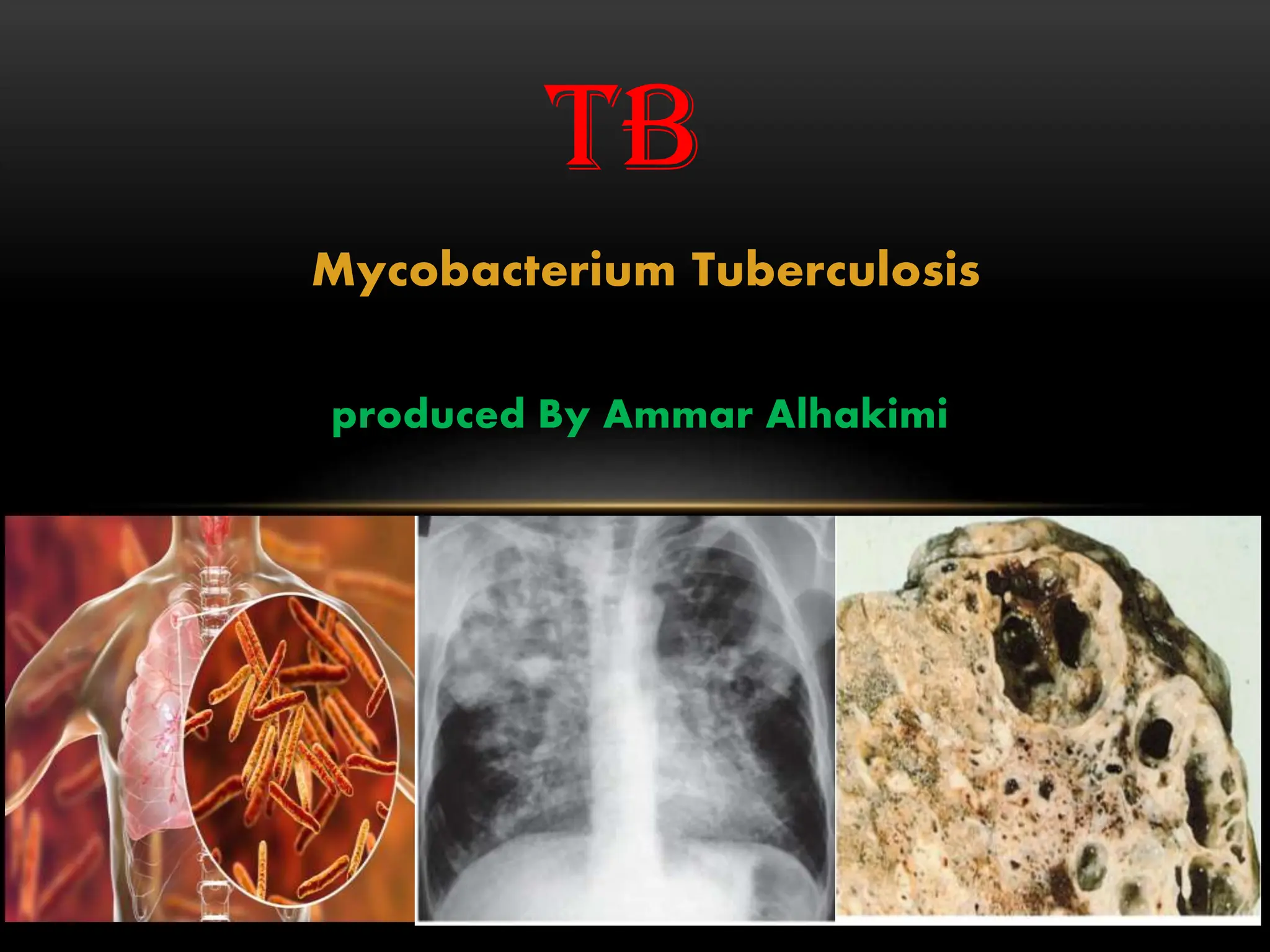
produced By Ammar Alhakimi
TB
Mycobacterium Tuberculosis
DEFINITION
• Chronic granulomatous multi-systemic infection mostly affect the
lung and caused by infection with complex of micro-organism
(Mycobacteria).
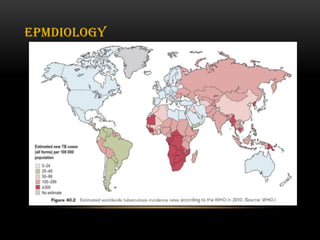
• Tuberculosis continues to be a major global health problem.
• The World Health Organization estimates that 2billion people (one-
third of the world’s population) have latent infection with
Mycobacterium tuberculosis, 8.6million people develop active
disease and 1.3million die each year from tuberculosis.
• physicians in ancient (Greece) called this illness as (phthisis)
reflecting it's wasting character.
• The classical and most common example of chronic infection of
the lungs.
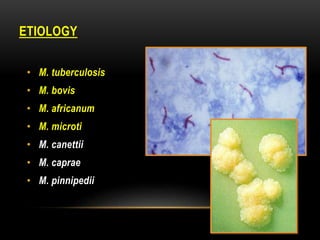
• M. tuberculosis
• M. bovis
• M. africanum
• M. microti
• M. canettii
• M. caprae
• M. pinnipedii
ETIOLOGY
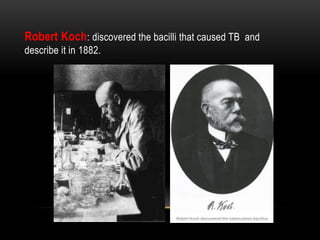
Robert Koch: discovered the bacilli that caused TB and
describe it in 1882.
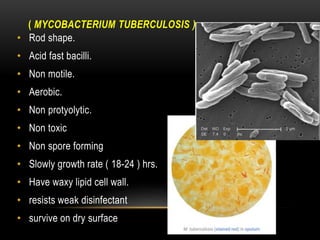
( MYCOBACTERIUM TUBERCULOSIS )
• Rod shape.
• Acid fast bacilli.
• Non motile.
• Aerobic.
• Non protyolytic.
• Non toxic
• Non spore forming
• Slowly growth rate ( 18-24 ) hrs.
• Have waxy lipid cell wall.
• resists weak disinfectant
• survive on dry surface
• Infectious dose: less than 10 bacilli.
• TB highly contiguous in active stage.
• Third of population in the world infected by latent TB.
 Myco = mold like ( on the surface of liquid media, the growth
appears mold-like)
 Tubercle = lump, knob ( isolated of microbe in a wall-off lesion
called (tubercle)
TRANSMATION
MODE OF
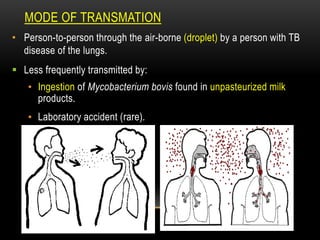
• Person-to-person through the air-borne (droplet) by a person with TB
disease of the lungs.
 Less frequently transmitted by:
• Ingestion of Mycobacterium bovis found in unpasteurized milk
products.
• Laboratory accident (rare).
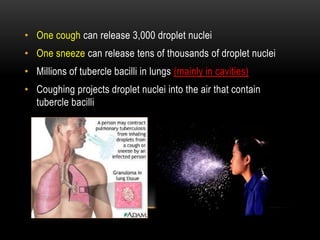
• One cough can release 3,000 droplet nuclei
• One sneeze can release tens of thousands of droplet nuclei
• Millions of tubercle bacilli in lungs (mainly in cavities)
• Coughing projects droplet nuclei into the air that contain
tubercle bacilli
PREDISPOSING FACTORS
• Age: most common in extremes of age.
• Race : most common in black races.
• Malnutrition, poverty.
• Over crowding un-hygienic condition ( TB endemic in low socio-
economic status).
• Associated disease: - Immuno-comprmissed pts.
- Malignancy : especially ( lymphoma – leukemia )
- T1DM.
- chronic renal failure.
- Silicosis.
Resion for increase incidence: Drug resistance, appeare new disease
(HIV), immigration from high prevslence area, ineffective control program.
EPMDIOLOGY
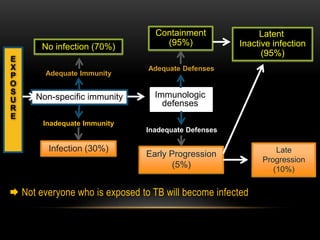
 Not everyone who is exposed to TB will become infected
No infection (70%)
Adequate Immunity
Non-specific immunity
Inadequate Immunity
Infection (30%)
E
X
P
O
S
U
R
E
Immunologic
defenses
Inadequate Defenses
Early Progression
(5%)
Adequate Defenses
Containment
(95%)
Late
Progression
(10%)
Latent
Inactive infection
(95%)
DISEASE DIVIDED INTO TWO MAIN PATTERNS, PRIMARY
AND POST-PRIMARY ( SECONDARY TB ).
• Primary tuberculosis (TB childhood):
is the pattern of disease seen with first infection in a patient (often
a child) without specific immunity to tuberculosis.
• Infection is acquired by inhalation of organisms from an infected
individual, and the initial lesion typically develops in the
peripheral sub-pleural region of the lung.
PRIMARY TB
• The initial infection with M. tuberculosis is known as primary
tuberculosis and usually occurs in the upper region of the lung
producing a subpleural lesion called the Ghon focus. The primary lesion
may also occur in the gastrointestinal tract, particularly the ileo-caecal
region. The primary focus is characterized by exudation and infiltration
with neutrophil granulocytes. These are replaced by macrophages
which engulf the bacilli and result in the typical granulomatous lesions,
which consist of central areas of caseation surrounded by epithelioid
cells and Langhans’ giant cells (both derived from the macrophage).
• The primary focus is almost always accompanied by caseous
lesions in the regional lymph nodes (mediastinal and cervical) –
together these constitute the Ghon complex. In most people the
primary infection and the lymph nodes heal completely and
become calcified.
• TB bacilli can be avoid mucus traps ( physical barrier) and pass
to deep air way in alveoli..
• The macrophage in the alveoli can not lysis the bacteria after
phagocytic it ,due to waxy cell wall also organism can inhibit the
fusion between the phagosome and lysosome, inside the
macrophage
• hence the organism survive and replicate..
• After a few weeks, disease symptoms appear as many of the
macrophages die, releasing tubercle bacilli and forming a caseous center
in the tubercle.
• The aerobic tubercle bacilli do not grow well in this location. However
many remain dormant (latent TB) and serve as a basis for later reactivation
of the disease. The disease may be arrested at this stage, and the lesions
become calcified.
• the LPS (lipopolysaccharide ) in the bacterial cell wall induce
macrophage to secrete TNF alpha which response for many symptoms
of TB: low grade fever - weight loss - night sweating...
• organism contain heat shock protein that stimulates T-lymphocyte
autoimmine reaction which causes further tissue damage.
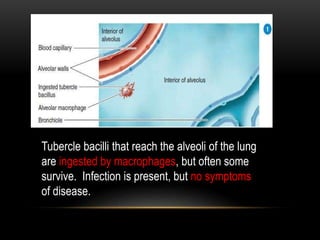
Tubercle bacilli that reach the alveoli of the lung
are ingested by macrophages, but often some
survive. Infection is present, but no symptoms
of disease.
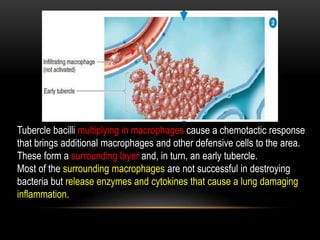
Tubercle bacilli multiplying in macrophages cause a chemotactic response
that brings additional macrophages and other defensive cells to the area.
These form a surrounding layer and, in turn, an early tubercle.
Most of the surrounding macrophages are not successful in destroying
bacteria but release enzymes and cytokines that cause a lung damaging
inflammation.
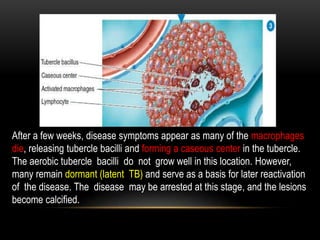
After a few weeks, disease symptoms appear as many of the macrophages
die, releasing tubercle bacilli and forming a caseous center in the tubercle.
The aerobic tubercle bacilli do not grow well in this location. However,
many remain dormant (latent TB) and serve as a basis for later reactivation
of the disease. The disease may be arrested at this stage, and the lesions
become calcified.
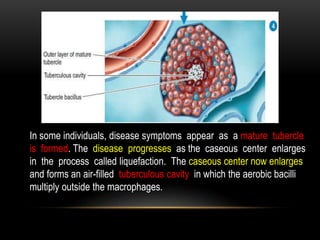
In some individuals, disease symptoms appear as a mature tubercle
is formed. The disease progresses as the caseous center enlarges
in the process called liquefaction. The caseous center now enlarges
and forms an air-filled tuberculous cavity in which the aerobic bacilli
multiply outside the macrophages.
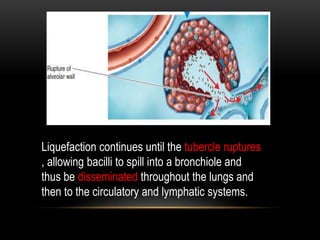
Liquefaction continues until the tubercle ruptures
, allowing bacilli to spill into a bronchiole and
thus be disseminated throughout the lungs and
then to the circulatory and lymphatic systems.
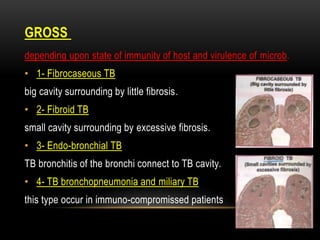
GROSS
depending upon state of immunity of host and virulence of microb.
• 1- Fibrocaseous TB
big cavity surrounding by little fibrosis.
• 2- Fibroid TB
small cavity surrounding by excessive fibrosis.
• 3- Endo-bronchial TB
TB bronchitis of the bronchi connect to TB cavity.
• 4- TB bronchopneumonia and miliary TB
this type occur in immuno-compromissed patients
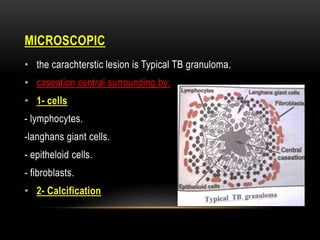
MICROSCOPIC
• the carachterstic lesion is Typical TB granuloma.
• caseation central surrounding by:
• 1- cells
- lymphocytes.
-langhans giant cells.
- epitheloid cells.
- fibroblasts.
• 2- Calcification
TUBERCULOSIS
CLINICAL FEATURES OF PRIMARY
• I. Symptoms and signs of infection, i.e. fever, influenza like illness ,
primary complex, skin test conversion.
• II. Symptoms and signs of the disease, i.e. lymphadenopathy (hilar,
paratracheal, mediastinal), collapse or consolidation (right middle
lobe), obstructive emphysema, pleural effusion, endo-bronchial
tuberculosis, miliary tuberculosis or, meningitis and pericarditis.
• III. Symptoms and signs of hypersensitivity, e.g. erythema nodosum,
phylectenular conjunctivitis, dactylitis.
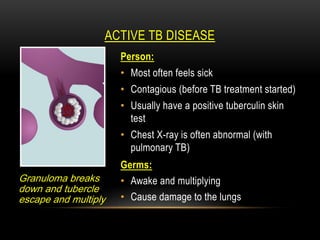
ACTIVE TB DISEASE
Granuloma breaks
down and tubercle
escape and multiply
Person:
• Most often feels sick
• Contagious (before TB treatment started)
• Usually have a positive tuberculin skin
test
• Chest X-ray is often abnormal (with
pulmonary TB)
Germs:
• Awake and multiplying
• Cause damage to the lungs
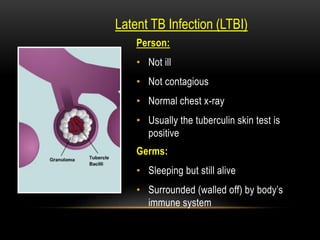
Latent TB Infection (LTBI)
Person:
• Not ill
• Not contagious
• Normal chest x-ray
• Usually the tuberculin skin test is
positive
Germs:
• Sleeping but still alive
• Surrounded (walled off) by body’s
immune system
MANIFESTATIONS
OF MAJOR
CLINICAL PRESENTATIONS
• 1. cavity
• 2. Consolidation or collapse
• 3. Pleural effusion/empyema
• 4. Miliary tuberculosis
• 5. Hydropneumothorax or branchopleural fistula
• 6. Hilar lymphadenopathy
• 7. Bronchiectasis.
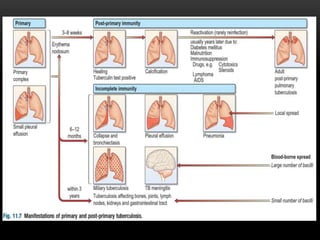
THE FATE OF THE PRIMARY COMPLEX IS AS FOLLOWS:
• 1. It may heal spontaneously within 1-2 months and tuberculin skin
test becomes positive.
• 2. Spread of the primary focus to hilar and mediastinal lymph nodes
to form primary complex which in most cases heals spontaneously.
• 3. It may remain dormant, becomes reactivated when the body
defenses are lowered.
• 4. Direct extension of primary focus – called progressive pulmonary
tuberculosis merging with post-primary TB.
• 5. Hematogenous spread leading to miliary tuberculosis, or
tubercular meningitis.
OF TB
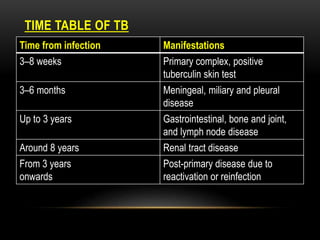
TIME TABLE
Manifestations
Time from infection
Primary complex, positive
tuberculin skin test
3–8 weeks
Meningeal, miliary and pleural
disease
3–6 months
Gastrointestinal, bone and joint,
and lymph node disease
Up to 3 years
Renal tract disease
Around 8 years
Post-primary disease due to
reactivation or reinfection
From 3 years
onwards
TB
MILIARY
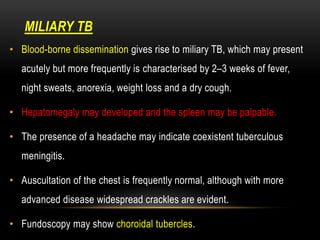
• Blood-borne dissemination gives rise to miliary TB, which may present
acutely but more frequently is characterised by 2–3 weeks of fever,
night sweats, anorexia, weight loss and a dry cough.
• Hepatomegaly may developed and the spleen may be palpable.
• The presence of a headache may indicate coexistent tuberculous
meningitis.
• Auscultation of the chest is frequently normal, although with more
advanced disease widespread crackles are evident.
• Fundoscopy may show choroidal tubercles.
MILIARY TB
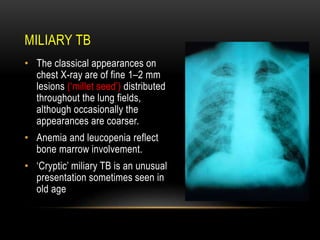
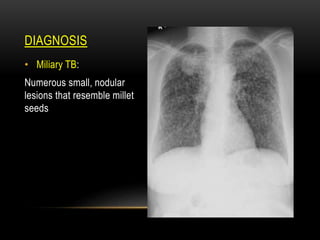
• The classical appearances on
chest X-ray are of fine 1–2 mm
lesions (‘millet seed’) distributed
throughout the lung fields,
although occasionally the
appearances are coarser.
• Anemia and leucopenia reflect
bone marrow involvement.
• ‘Cryptic’ miliary TB is an unusual
presentation sometimes seen in
old age
CRYPTIC TUBERCULOSIS
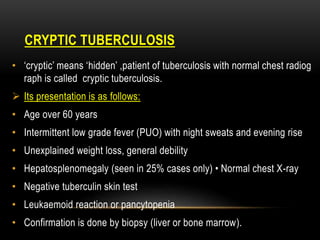
• ‘cryptic’ means ‘hidden’ ,patient of tuberculosis with normal chest radiog
raph is called cryptic tuberculosis.
 Its presentation is as follows:
• Age over 60 years
• Intermittent low grade fever (PUO) with night sweats and evening rise
• Unexplained weight loss, general debility
• Hepatosplenomegaly (seen in 25% cases only) • Normal chest X-ray
• Negative tuberculin skin test
• Leukaemoid reaction or pancytopenia
• Confirmation is done by biopsy (liver or bone marrow).
SECONDARY TB
• Most commonly clinical tuberculosis represents delayed reactivation.
this term used to describe lung disease, Post-primary disease refers to
exogenous (‘new’ infection) or endogenous (reactivation of a dormant
primary lesion) infection in a person who has been sensitised by earlier
exposure.
• The onset is usually insidious, developing slowly over several weeks.
• It is most frequently pulmonary and characteristically occurs in the
apex of an upper lobe where the oxygen tension favours survival of
the strictly aerobic organism.
• Systemic symptoms include fever, night sweats, malaise, and loss of
appetite
• tuberculus cavity, or granuloma discharged into the bronchus.
• massive pulmonary involvement, and may be produces
(tuberculus pneumonia)
• common site: localized in one or both upper lobes, superior
segments of lower lobes usually involved due to high oxygen
concentration. that favors mycobacterium growth.
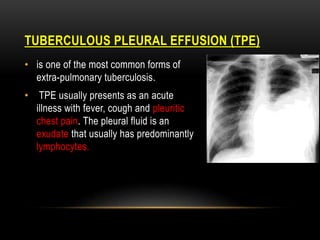
PLEURAL EFFUSION (TPE)
TUBERCULOUS
• is one of the most common forms of
extra-pulmonary tuberculosis.
• TPE usually presents as an acute
illness with fever, cough and pleuritic
chest pain. The pleural fluid is an
exudate that usually has predominantly
lymphocytes.
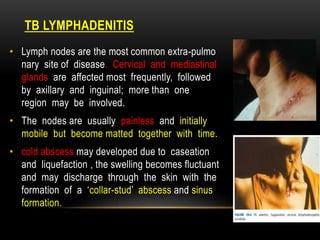
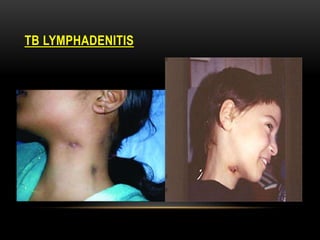
TB LYMPHADENITIS
• Lymph nodes are the most common extra-pulmo
nary site of disease. Cervical and mediastinal
glands are affected most frequently, followed
by axillary and inguinal; more than one
region may be involved.
• The nodes are usually painless and initially
mobile but become matted together with time.
• cold abscess may developed due to caseation
and liquefaction , the swelling becomes fluctuant
and may discharge through the skin with the
formation of a ‘collar-stud’ abscess and sinus
formation.
TB LYMPHADENITIS
DISEASE
GASTROINTESTINAL
• Upper gastrointestinal tract involvement is rare and is usually an
unexpected histological finding in an endoscopic or laparotomy
specimen.
• swallowing of the infected sputum , hematological spread or ingestion
of cow milk which infected with bovine strain are important
pathological mechanisms of GIT involved.
• terminal ileum and cecum are most common involved.
• abdominal pain, chronic diarrhea, malabsorption and intestinal
obstruction and right iliac fossa mass may be palpable.
Up to 30% of cases present with an acute abdomen. Ultrasound or
CT may reveal thickened bowel wall, abdominal lymphadenopathy,
mesenteric thickening or ascites.
• The main differential diagnosis is Crohn’s disease.
• Tuberculous peritonitis may developed from direct spread of
lymphatic ruptured or by hematogenous spread.
• lymph nodes is characterized by abdominal distension, pain
and constitutional symptoms. The ascitic fluid is exudative
and cellular with a predominance of lymphocytes.
• Low-grade hepatic dysfunction is common in miliary disease
when biopsy reveals granulomas.
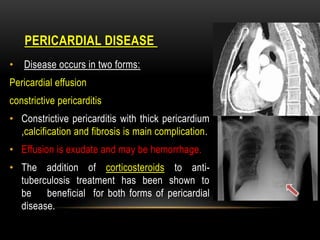
PERICARDIAL DISEASE
• Disease occurs in two forms:
Pericardial effusion
constrictive pericarditis
• Constrictive pericarditis with thick pericardium
,calcification and fibrosis is main complication.
• Effusion is exudate and may be hemorrhage.
• The addition of corticosteroids to anti-
tuberculosis treatment has been shown to
be beneficial for both forms of pericardial
disease.
MENINGEAL DISEASE
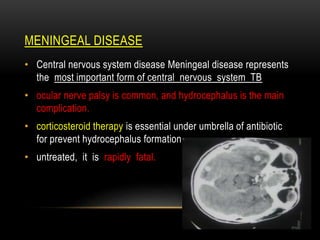
• Central nervous system disease Meningeal disease represents
the most important form of central nervous system TB
• ocular nerve palsy is common, and hydrocephalus is the main
complication.
• corticosteroid therapy is essential under umbrella of antibiotic
for prevent hydrocephalus formation.
• untreated, it is rapidly fatal.
DISEASE
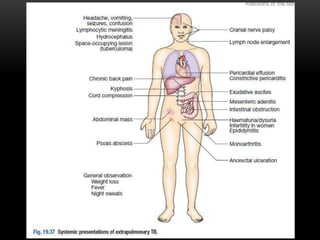
BONE AND JOINT
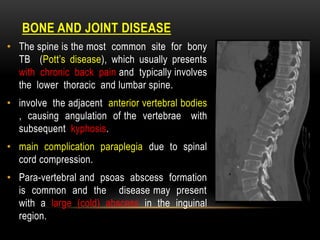
• The spine is the most common site for bony
TB (Pott’s disease), which usually presents
with chronic back pain and typically involves
the lower thoracic and lumbar spine.
• involve the adjacent anterior vertebral bodies
, causing angulation of the vertebrae with
subsequent kyphosis.
• main complication paraplegia due to spinal
cord compression.
• Para-vertebral and psoas abscess formation
is common and the disease may present
with a large (cold) abscess in the inguinal
region.
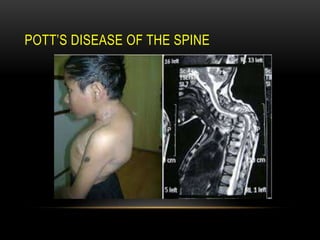
POTT’S DISEASE OF THE SPINE
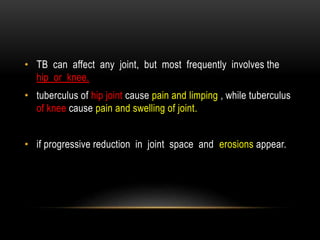
• TB can affect any joint, but most frequently involves the
hip or knee.
• tuberculus of hip joint cause pain and limping , while tuberculus
of knee cause pain and swelling of joint.
• if progressive reduction in joint space and erosions appear.
DISEASE
GENITOURINARY
• Fever and night sweats are rare with renal tract TB and
patients are often only mildly symptomatic for many years
• hematuria , dysuria, increase frequency of maturation and flank
pain may be the symptoms.
• Patient may present first with complication:
- sterile pyuria ( pus cells but no bacteria in the urine).
- In women, infertility from endometritis, or pelvic pain and swelling
from salpingitis or a tubo- ovarian abscess occur occasionally.
- In men, genitourinary TB may present as epididymitis or prostatitis.
SYMPTOMS
 Classic clinical features associated with active pulmonary TB are as
follows (elderly individuals with TB may not display typical signs and
symptoms):
• Cough
• Weight loss/anorexia
• Fever
• Night sweats
• Hemoptysis
• Chest pain (can also result from tuberculous acute pericarditis)
• Fatigue
SYMPTOMS
 Symptoms of tuberculous meningitis may include the following:
• Headache that has been either intermittent or persistent for 2-3
weeks.
• Subtle mental status changes that may progress to coma over
a period of days to weeks.
• Low-grade or absent fever.
SYMPTOMS
 Symptoms of skeletal TB may include the following:
• Back pain or stiffness.
• Lower-extremity paralysis, in as many as half of patients with
undiagnosed Pott’s disease.
• Tuberculous arthritis, usually involving only 1 joint (most often
the hip or knee, followed by the ankle, elbow, wrist, and
shoulder)
SYMPTOMS
 Symptoms of genitourinary TB may include the following:
• Flank pain
• Dysuria
• Frequent urination
• In men, a painful scrotal mass, prostatitis, orchitis, or epididymitis
• In women, symptoms mimicking pelvic inflammatory disease
SYMPTOMS
 Symptoms of gastrointestinal TB are referable to the infected
site and may include the following:
• Non-healing ulcers of the mouth or anus.
• Difficulty swallowing (with esophageal disease).
• Abdominal pain mimicking peptic ulcer disease (with gastric or
duodenal infection).
• Mal-absorption (with infection of the small intestine).
• Pain, diarrhea, or hematochezia (with infection of the colon)
PHYSICAL EXAMINATION
 Physical examination findings associated with TB depend on the
organs involved. Patients with pulmonary TB may have the
following:
• Right iliac fossa mass.
• Abnormal breath sounds, especially over the upper lobes or
involved areas
• Rales or bronchial breath signs, indicating lung consolidation
PHYSICAL EXAMINATION
 Signs of extra-pulmonary TB differ according to the tissues
involved and may include the following:
• Confusion.
• Coma.
• Neurologic deficit.
• Lymphadenopathy.
• Cutaneous lesions.
TUBERCLES
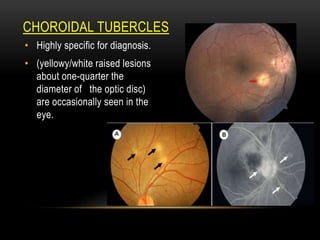
CHOROIDAL
• Highly specific for diagnosis.
• (yellowy/white raised lesions
about one-quarter the
diameter of the optic disc)
are occasionally seen in the
eye.
PHYSICAL EXAMINATION
• The absence of any significant physical findings does not
exclude active TB.
• Classic symptoms are often absent in high-risk patients,
particularly those who are immuno-compromised or elderly.
CHRONIC COMPLICATION OF PULMONARY TUBERCULOSIS
1. Pulmonary complications
• pleurisy
with or without pleural effusion, Lung/pleural calcification
• pneumothorax
may follow rupture of tuberculous lesion into the pleural space.
• empyema or pyopneumothorax
serious complication of rupture of tuberculous lesion into the pleura
l space.
• fungal colonization of cavity
cavity which persist after anti-TB treatment may be colonized with
aspergillus fumigatus and a ball of fungus may develop.
• Massive hemoptysis.
• Bronchiectasis
• Broncho-pleural fistula
2. Non-pulmonary complications
• tuberculous laryngitis
usually only occur in advanced pulmonary disease
• tuberculous enteritis
follows swallowing heavily infected sputum in some patient with exc
essive pulmonary disease
• Ischiorectal abscess
consider TB in all cases, Tubercle bacilli can pass through rectal mu
cosa.
• blood borne dissemination
uncommon complication of post primary pulmonary disease ,except
in immuno-comprmissed patients.
• Respiratory failure and right ventricular failure
late complication when disease has caused extensive pulmonary di
struction and fibrosis.
DIAGNOSIS
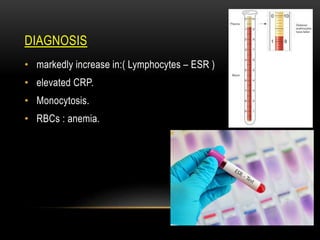
• markedly increase in:( Lymphocytes – ESR )
• elevated CRP.
• Monocytosis.
• RBCs : anemia.
DIAGNOSIS
 Screening methods for TB include the following:
• Mantoux tuberculin skin .
• chest radiograph to evaluate for possible associated pulmonary
findings.
• In vitro blood test based on interferon gamma release assay
(IGRA)
• Acid-fast bacilli (AFB) smear and culture.
• HIV serology in all patients with TB and unknown HIV status.
DIAGNOSIS
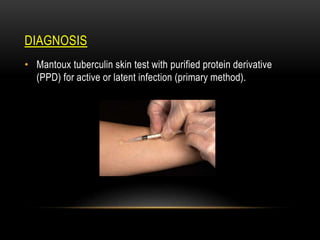
• Mantoux tuberculin skin test with purified protein derivative
(PPD) for active or latent infection (primary method).
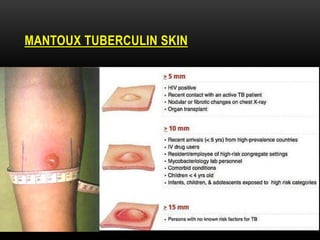
TUBERCULIN SKIN
MANTOUX
MICROSCOPIC
• 3 consecutive morning specimens in 3 consecutive days.
• - specimens should by obtained from lung secretions not saliva.
• - If sputum not avalible :
• laryngeal swab or trans-tracheal aspiration.
DIAGNOSIS
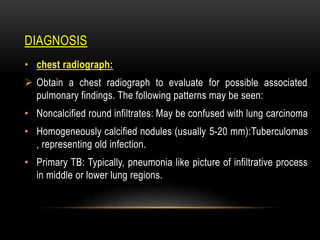
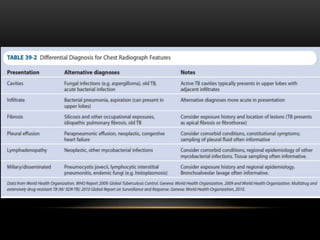
• chest radiograph:
 Obtain a chest radiograph to evaluate for possible associated
pulmonary findings. The following patterns may be seen:
• Noncalcified round infiltrates: May be confused with lung carcinoma
• Homogeneously calcified nodules (usually 5-20 mm):Tuberculomas
, representing old infection.
• Primary TB: Typically, pneumonia like picture of infiltrative process
in middle or lower lung regions.
DIAGNOSIS
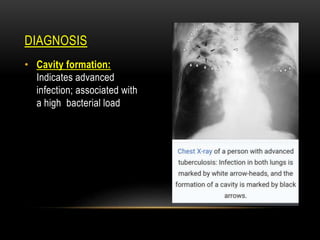
• Cavity formation:
Indicates advanced
infection; associated with
a high bacterial load
DIAGNOSIS
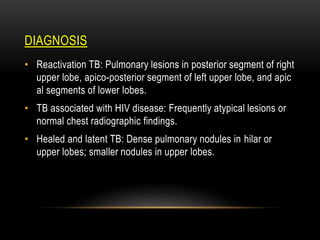
• Reactivation TB: Pulmonary lesions in posterior segment of right
upper lobe, apico-posterior segment of left upper lobe, and apic
al segments of lower lobes.
• TB associated with HIV disease: Frequently atypical lesions or
normal chest radiographic findings.
• Healed and latent TB: Dense pulmonary nodules in hilar or
upper lobes; smaller nodules in upper lobes.
DIAGNOSIS
• Miliary TB:
Numerous small, nodular
lesions that resemble millet
seeds
DIAGNOSIS
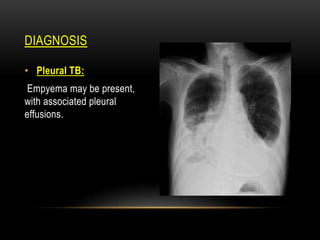
• Pleural TB:
Empyema may be present,
with associated pleural
effusions.
.
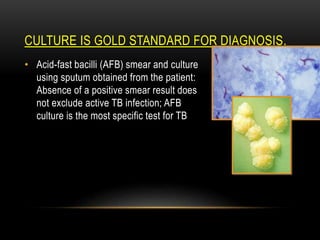
CULTURE IS GOLD STANDARD FOR DIAGNOSIS
• Acid-fast bacilli (AFB) smear and culture
using sputum obtained from the patient:
Absence of a positive smear result does
not exclude active TB infection; AFB
culture is the most specific test for TB
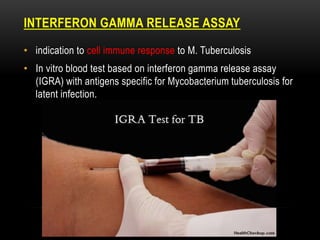
INTERFERON GAMMA RELEASE ASSAY
• indication to cell immune response to M. Tuberculosis
• In vitro blood test based on interferon gamma release assay
(IGRA) with antigens specific for Mycobacterium tuberculosis for
latent infection.
)
ACID
MYCOLIC
DETECTIONS OF LIPID (
• thin layer chromotography (TLC).
• High performance liquid chromotography.
DIAGNOSIS
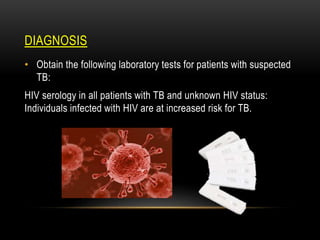
• Obtain the following laboratory tests for patients with suspected
TB:
HIV serology in all patients with TB and unknown HIV status:
Individuals infected with HIV are at increased risk for TB.
DIAGNOSIS
 Other diagnostic testing may warrant consideration, including
the following:
• Specific enzyme-linked immunospot (ELISpot)
• Nucleic acid amplification tests
• Blood culture
DIAGNOSIS
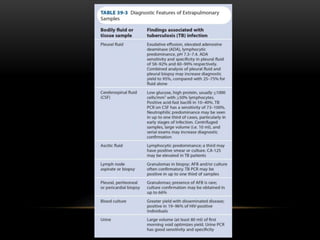
 Workup considerations for extra-pulmonary TB include the
following:
• Biopsy of bone marrow, liver, or blood cultures
• If tuberculous meningitis or tuberculoma is suspected, perform
lumbar puncture
• If vertebral (Pott’s disease) or brain involvement is suspected,
CT or MRI is necessary
• If genitourinary complaints are reported, urinalysis and urine
cultures can be obtained
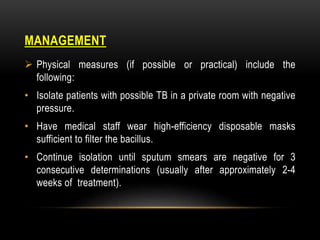
MANAGEMENT
 Physical measures (if possible or practical) include the
following:
• Isolate patients with possible TB in a private room with negative
pressure.
• Have medical staff wear high-efficiency disposable masks
sufficient to filter the bacillus.
• Continue isolation until sputum smears are negative for 3
consecutive determinations (usually after approximately 2-4
weeks of treatment).
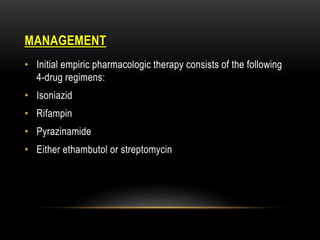
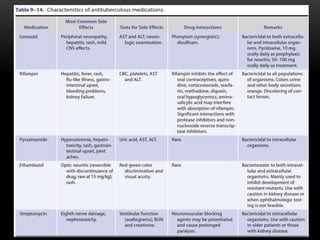
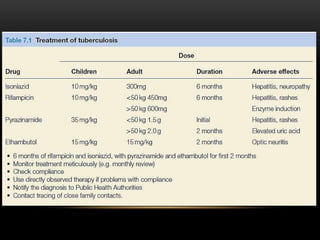
MANAGEMENT
• Initial empiric pharmacologic therapy consists of the following
4-drug regimens:
• Isoniazid
• Rifampin
• Pyrazinamide
• Either ethambutol or streptomycin
Prevention and chemoprophylaxis
 Close contacts of a case are screened for evidence of disease with a
chest X-ray and a Mantoux test (positive if area of induration10 mm 72
hours after intradermal injection of purified protein derivative of
Mycobacterium TB) or whole blood interferon-γ assay.
 Vaccination with BCG (bacille Calmette–Guerin) reduces the risk of
developing tuberculosis
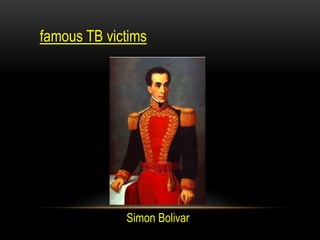
famous TB victims
Simon Bolivar
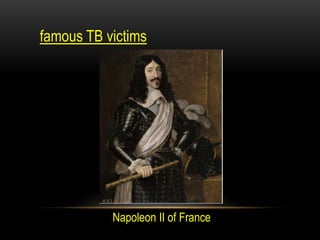
famous TB victims
Napoleon II of France
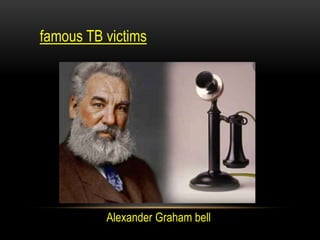
famous TB victims
Alexander Graham bell
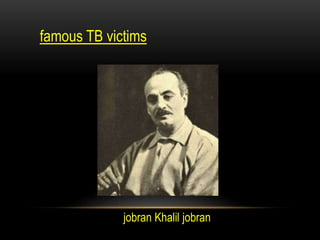
famous TB victims
jobran Khalil jobran
THANKS

TB infection mycobacterium tuberculosis.pdf

  • 1.
    produced By AmmarAlhakimi TB Mycobacterium Tuberculosis
  • 2.
    DEFINITION • Chronic granulomatousmulti-systemic infection mostly affect the lung and caused by infection with complex of micro-organism (Mycobacteria). • Tuberculosis continues to be a major global health problem. • The World Health Organization estimates that 2billion people (one- third of the world’s population) have latent infection with Mycobacterium tuberculosis, 8.6million people develop active disease and 1.3million die each year from tuberculosis.
  • 3.
    • physicians inancient (Greece) called this illness as (phthisis) reflecting it's wasting character. • The classical and most common example of chronic infection of the lungs.
  • 4.
    • M. tuberculosis •M. bovis • M. africanum • M. microti • M. canettii • M. caprae • M. pinnipedii ETIOLOGY
  • 5.
    Robert Koch: discoveredthe bacilli that caused TB and describe it in 1882.
  • 6.
    ( MYCOBACTERIUM TUBERCULOSIS) • Rod shape. • Acid fast bacilli. • Non motile. • Aerobic. • Non protyolytic. • Non toxic • Non spore forming • Slowly growth rate ( 18-24 ) hrs. • Have waxy lipid cell wall. • resists weak disinfectant • survive on dry surface
  • 7.
    • Infectious dose:less than 10 bacilli. • TB highly contiguous in active stage. • Third of population in the world infected by latent TB.  Myco = mold like ( on the surface of liquid media, the growth appears mold-like)  Tubercle = lump, knob ( isolated of microbe in a wall-off lesion called (tubercle)
  • 8.
    TRANSMATION MODE OF • Person-to-personthrough the air-borne (droplet) by a person with TB disease of the lungs.  Less frequently transmitted by: • Ingestion of Mycobacterium bovis found in unpasteurized milk products. • Laboratory accident (rare).
  • 9.
    • One coughcan release 3,000 droplet nuclei • One sneeze can release tens of thousands of droplet nuclei • Millions of tubercle bacilli in lungs (mainly in cavities) • Coughing projects droplet nuclei into the air that contain tubercle bacilli
  • 10.
    PREDISPOSING FACTORS • Age:most common in extremes of age. • Race : most common in black races. • Malnutrition, poverty. • Over crowding un-hygienic condition ( TB endemic in low socio- economic status). • Associated disease: - Immuno-comprmissed pts. - Malignancy : especially ( lymphoma – leukemia ) - T1DM. - chronic renal failure. - Silicosis. Resion for increase incidence: Drug resistance, appeare new disease (HIV), immigration from high prevslence area, ineffective control program.
  • 11.
  • 12.
     Not everyonewho is exposed to TB will become infected No infection (70%) Adequate Immunity Non-specific immunity Inadequate Immunity Infection (30%) E X P O S U R E Immunologic defenses Inadequate Defenses Early Progression (5%) Adequate Defenses Containment (95%) Late Progression (10%) Latent Inactive infection (95%)
  • 13.
    DISEASE DIVIDED INTOTWO MAIN PATTERNS, PRIMARY AND POST-PRIMARY ( SECONDARY TB ). • Primary tuberculosis (TB childhood): is the pattern of disease seen with first infection in a patient (often a child) without specific immunity to tuberculosis. • Infection is acquired by inhalation of organisms from an infected individual, and the initial lesion typically develops in the peripheral sub-pleural region of the lung.
  • 14.
    PRIMARY TB • Theinitial infection with M. tuberculosis is known as primary tuberculosis and usually occurs in the upper region of the lung producing a subpleural lesion called the Ghon focus. The primary lesion may also occur in the gastrointestinal tract, particularly the ileo-caecal region. The primary focus is characterized by exudation and infiltration with neutrophil granulocytes. These are replaced by macrophages which engulf the bacilli and result in the typical granulomatous lesions, which consist of central areas of caseation surrounded by epithelioid cells and Langhans’ giant cells (both derived from the macrophage).
  • 15.
    • The primaryfocus is almost always accompanied by caseous lesions in the regional lymph nodes (mediastinal and cervical) – together these constitute the Ghon complex. In most people the primary infection and the lymph nodes heal completely and become calcified.
  • 16.
    • TB bacillican be avoid mucus traps ( physical barrier) and pass to deep air way in alveoli.. • The macrophage in the alveoli can not lysis the bacteria after phagocytic it ,due to waxy cell wall also organism can inhibit the fusion between the phagosome and lysosome, inside the macrophage • hence the organism survive and replicate..
  • 17.
    • After afew weeks, disease symptoms appear as many of the macrophages die, releasing tubercle bacilli and forming a caseous center in the tubercle. • The aerobic tubercle bacilli do not grow well in this location. However many remain dormant (latent TB) and serve as a basis for later reactivation of the disease. The disease may be arrested at this stage, and the lesions become calcified. • the LPS (lipopolysaccharide ) in the bacterial cell wall induce macrophage to secrete TNF alpha which response for many symptoms of TB: low grade fever - weight loss - night sweating... • organism contain heat shock protein that stimulates T-lymphocyte autoimmine reaction which causes further tissue damage.
  • 18.
    Tubercle bacilli thatreach the alveoli of the lung are ingested by macrophages, but often some survive. Infection is present, but no symptoms of disease.
  • 19.
    Tubercle bacilli multiplyingin macrophages cause a chemotactic response that brings additional macrophages and other defensive cells to the area. These form a surrounding layer and, in turn, an early tubercle. Most of the surrounding macrophages are not successful in destroying bacteria but release enzymes and cytokines that cause a lung damaging inflammation.
  • 20.
    After a fewweeks, disease symptoms appear as many of the macrophages die, releasing tubercle bacilli and forming a caseous center in the tubercle. The aerobic tubercle bacilli do not grow well in this location. However, many remain dormant (latent TB) and serve as a basis for later reactivation of the disease. The disease may be arrested at this stage, and the lesions become calcified.
  • 21.
    In some individuals,disease symptoms appear as a mature tubercle is formed. The disease progresses as the caseous center enlarges in the process called liquefaction. The caseous center now enlarges and forms an air-filled tuberculous cavity in which the aerobic bacilli multiply outside the macrophages.
  • 22.
    Liquefaction continues untilthe tubercle ruptures , allowing bacilli to spill into a bronchiole and thus be disseminated throughout the lungs and then to the circulatory and lymphatic systems.
  • 23.
    GROSS depending upon stateof immunity of host and virulence of microb. • 1- Fibrocaseous TB big cavity surrounding by little fibrosis. • 2- Fibroid TB small cavity surrounding by excessive fibrosis. • 3- Endo-bronchial TB TB bronchitis of the bronchi connect to TB cavity. • 4- TB bronchopneumonia and miliary TB this type occur in immuno-compromissed patients
  • 24.
    MICROSCOPIC • the carachtersticlesion is Typical TB granuloma. • caseation central surrounding by: • 1- cells - lymphocytes. -langhans giant cells. - epitheloid cells. - fibroblasts. • 2- Calcification
  • 25.
    TUBERCULOSIS CLINICAL FEATURES OFPRIMARY • I. Symptoms and signs of infection, i.e. fever, influenza like illness , primary complex, skin test conversion. • II. Symptoms and signs of the disease, i.e. lymphadenopathy (hilar, paratracheal, mediastinal), collapse or consolidation (right middle lobe), obstructive emphysema, pleural effusion, endo-bronchial tuberculosis, miliary tuberculosis or, meningitis and pericarditis. • III. Symptoms and signs of hypersensitivity, e.g. erythema nodosum, phylectenular conjunctivitis, dactylitis.
  • 26.
    ACTIVE TB DISEASE Granulomabreaks down and tubercle escape and multiply Person: • Most often feels sick • Contagious (before TB treatment started) • Usually have a positive tuberculin skin test • Chest X-ray is often abnormal (with pulmonary TB) Germs: • Awake and multiplying • Cause damage to the lungs
  • 27.
    Latent TB Infection(LTBI) Person: • Not ill • Not contagious • Normal chest x-ray • Usually the tuberculin skin test is positive Germs: • Sleeping but still alive • Surrounded (walled off) by body’s immune system
  • 29.
    MANIFESTATIONS OF MAJOR CLINICAL PRESENTATIONS •1. cavity • 2. Consolidation or collapse • 3. Pleural effusion/empyema • 4. Miliary tuberculosis • 5. Hydropneumothorax or branchopleural fistula • 6. Hilar lymphadenopathy • 7. Bronchiectasis.
  • 30.
    THE FATE OFTHE PRIMARY COMPLEX IS AS FOLLOWS: • 1. It may heal spontaneously within 1-2 months and tuberculin skin test becomes positive. • 2. Spread of the primary focus to hilar and mediastinal lymph nodes to form primary complex which in most cases heals spontaneously. • 3. It may remain dormant, becomes reactivated when the body defenses are lowered. • 4. Direct extension of primary focus – called progressive pulmonary tuberculosis merging with post-primary TB. • 5. Hematogenous spread leading to miliary tuberculosis, or tubercular meningitis.
  • 31.
    OF TB TIME TABLE Manifestations Timefrom infection Primary complex, positive tuberculin skin test 3–8 weeks Meningeal, miliary and pleural disease 3–6 months Gastrointestinal, bone and joint, and lymph node disease Up to 3 years Renal tract disease Around 8 years Post-primary disease due to reactivation or reinfection From 3 years onwards
  • 32.
    TB MILIARY • Blood-borne disseminationgives rise to miliary TB, which may present acutely but more frequently is characterised by 2–3 weeks of fever, night sweats, anorexia, weight loss and a dry cough. • Hepatomegaly may developed and the spleen may be palpable. • The presence of a headache may indicate coexistent tuberculous meningitis. • Auscultation of the chest is frequently normal, although with more advanced disease widespread crackles are evident. • Fundoscopy may show choroidal tubercles.
  • 33.
    MILIARY TB • Theclassical appearances on chest X-ray are of fine 1–2 mm lesions (‘millet seed’) distributed throughout the lung fields, although occasionally the appearances are coarser. • Anemia and leucopenia reflect bone marrow involvement. • ‘Cryptic’ miliary TB is an unusual presentation sometimes seen in old age
  • 34.
    CRYPTIC TUBERCULOSIS • ‘cryptic’means ‘hidden’ ,patient of tuberculosis with normal chest radiog raph is called cryptic tuberculosis.  Its presentation is as follows: • Age over 60 years • Intermittent low grade fever (PUO) with night sweats and evening rise • Unexplained weight loss, general debility • Hepatosplenomegaly (seen in 25% cases only) • Normal chest X-ray • Negative tuberculin skin test • Leukaemoid reaction or pancytopenia • Confirmation is done by biopsy (liver or bone marrow).
  • 35.
    SECONDARY TB • Mostcommonly clinical tuberculosis represents delayed reactivation. this term used to describe lung disease, Post-primary disease refers to exogenous (‘new’ infection) or endogenous (reactivation of a dormant primary lesion) infection in a person who has been sensitised by earlier exposure. • The onset is usually insidious, developing slowly over several weeks. • It is most frequently pulmonary and characteristically occurs in the apex of an upper lobe where the oxygen tension favours survival of the strictly aerobic organism. • Systemic symptoms include fever, night sweats, malaise, and loss of appetite
  • 36.
    • tuberculus cavity,or granuloma discharged into the bronchus. • massive pulmonary involvement, and may be produces (tuberculus pneumonia) • common site: localized in one or both upper lobes, superior segments of lower lobes usually involved due to high oxygen concentration. that favors mycobacterium growth.
  • 37.
    PLEURAL EFFUSION (TPE) TUBERCULOUS •is one of the most common forms of extra-pulmonary tuberculosis. • TPE usually presents as an acute illness with fever, cough and pleuritic chest pain. The pleural fluid is an exudate that usually has predominantly lymphocytes.
  • 38.
    TB LYMPHADENITIS • Lymphnodes are the most common extra-pulmo nary site of disease. Cervical and mediastinal glands are affected most frequently, followed by axillary and inguinal; more than one region may be involved. • The nodes are usually painless and initially mobile but become matted together with time. • cold abscess may developed due to caseation and liquefaction , the swelling becomes fluctuant and may discharge through the skin with the formation of a ‘collar-stud’ abscess and sinus formation.
  • 39.
  • 40.
    DISEASE GASTROINTESTINAL • Upper gastrointestinaltract involvement is rare and is usually an unexpected histological finding in an endoscopic or laparotomy specimen. • swallowing of the infected sputum , hematological spread or ingestion of cow milk which infected with bovine strain are important pathological mechanisms of GIT involved. • terminal ileum and cecum are most common involved. • abdominal pain, chronic diarrhea, malabsorption and intestinal obstruction and right iliac fossa mass may be palpable. Up to 30% of cases present with an acute abdomen. Ultrasound or CT may reveal thickened bowel wall, abdominal lymphadenopathy, mesenteric thickening or ascites.
  • 41.
    • The maindifferential diagnosis is Crohn’s disease. • Tuberculous peritonitis may developed from direct spread of lymphatic ruptured or by hematogenous spread. • lymph nodes is characterized by abdominal distension, pain and constitutional symptoms. The ascitic fluid is exudative and cellular with a predominance of lymphocytes. • Low-grade hepatic dysfunction is common in miliary disease when biopsy reveals granulomas.
  • 42.
    PERICARDIAL DISEASE • Diseaseoccurs in two forms: Pericardial effusion constrictive pericarditis • Constrictive pericarditis with thick pericardium ,calcification and fibrosis is main complication. • Effusion is exudate and may be hemorrhage. • The addition of corticosteroids to anti- tuberculosis treatment has been shown to be beneficial for both forms of pericardial disease.
  • 43.
    MENINGEAL DISEASE • Centralnervous system disease Meningeal disease represents the most important form of central nervous system TB • ocular nerve palsy is common, and hydrocephalus is the main complication. • corticosteroid therapy is essential under umbrella of antibiotic for prevent hydrocephalus formation. • untreated, it is rapidly fatal.
  • 44.
    DISEASE BONE AND JOINT •The spine is the most common site for bony TB (Pott’s disease), which usually presents with chronic back pain and typically involves the lower thoracic and lumbar spine. • involve the adjacent anterior vertebral bodies , causing angulation of the vertebrae with subsequent kyphosis. • main complication paraplegia due to spinal cord compression. • Para-vertebral and psoas abscess formation is common and the disease may present with a large (cold) abscess in the inguinal region.
  • 45.
  • 46.
    • TB canaffect any joint, but most frequently involves the hip or knee. • tuberculus of hip joint cause pain and limping , while tuberculus of knee cause pain and swelling of joint. • if progressive reduction in joint space and erosions appear.
  • 47.
    DISEASE GENITOURINARY • Fever andnight sweats are rare with renal tract TB and patients are often only mildly symptomatic for many years • hematuria , dysuria, increase frequency of maturation and flank pain may be the symptoms. • Patient may present first with complication: - sterile pyuria ( pus cells but no bacteria in the urine). - In women, infertility from endometritis, or pelvic pain and swelling from salpingitis or a tubo- ovarian abscess occur occasionally. - In men, genitourinary TB may present as epididymitis or prostatitis.
  • 49.
    SYMPTOMS  Classic clinicalfeatures associated with active pulmonary TB are as follows (elderly individuals with TB may not display typical signs and symptoms): • Cough • Weight loss/anorexia • Fever • Night sweats • Hemoptysis • Chest pain (can also result from tuberculous acute pericarditis) • Fatigue
  • 50.
    SYMPTOMS  Symptoms oftuberculous meningitis may include the following: • Headache that has been either intermittent or persistent for 2-3 weeks. • Subtle mental status changes that may progress to coma over a period of days to weeks. • Low-grade or absent fever.
  • 51.
    SYMPTOMS  Symptoms ofskeletal TB may include the following: • Back pain or stiffness. • Lower-extremity paralysis, in as many as half of patients with undiagnosed Pott’s disease. • Tuberculous arthritis, usually involving only 1 joint (most often the hip or knee, followed by the ankle, elbow, wrist, and shoulder)
  • 52.
    SYMPTOMS  Symptoms ofgenitourinary TB may include the following: • Flank pain • Dysuria • Frequent urination • In men, a painful scrotal mass, prostatitis, orchitis, or epididymitis • In women, symptoms mimicking pelvic inflammatory disease
  • 53.
    SYMPTOMS  Symptoms ofgastrointestinal TB are referable to the infected site and may include the following: • Non-healing ulcers of the mouth or anus. • Difficulty swallowing (with esophageal disease). • Abdominal pain mimicking peptic ulcer disease (with gastric or duodenal infection). • Mal-absorption (with infection of the small intestine). • Pain, diarrhea, or hematochezia (with infection of the colon)
  • 54.
    PHYSICAL EXAMINATION  Physicalexamination findings associated with TB depend on the organs involved. Patients with pulmonary TB may have the following: • Right iliac fossa mass. • Abnormal breath sounds, especially over the upper lobes or involved areas • Rales or bronchial breath signs, indicating lung consolidation
  • 55.
    PHYSICAL EXAMINATION  Signsof extra-pulmonary TB differ according to the tissues involved and may include the following: • Confusion. • Coma. • Neurologic deficit. • Lymphadenopathy. • Cutaneous lesions.
  • 56.
    TUBERCLES CHOROIDAL • Highly specificfor diagnosis. • (yellowy/white raised lesions about one-quarter the diameter of the optic disc) are occasionally seen in the eye.
  • 57.
    PHYSICAL EXAMINATION • Theabsence of any significant physical findings does not exclude active TB. • Classic symptoms are often absent in high-risk patients, particularly those who are immuno-compromised or elderly.
  • 58.
    CHRONIC COMPLICATION OFPULMONARY TUBERCULOSIS 1. Pulmonary complications • pleurisy with or without pleural effusion, Lung/pleural calcification • pneumothorax may follow rupture of tuberculous lesion into the pleural space. • empyema or pyopneumothorax serious complication of rupture of tuberculous lesion into the pleura l space.
  • 59.
    • fungal colonizationof cavity cavity which persist after anti-TB treatment may be colonized with aspergillus fumigatus and a ball of fungus may develop. • Massive hemoptysis. • Bronchiectasis • Broncho-pleural fistula
  • 60.
    2. Non-pulmonary complications •tuberculous laryngitis usually only occur in advanced pulmonary disease • tuberculous enteritis follows swallowing heavily infected sputum in some patient with exc essive pulmonary disease • Ischiorectal abscess consider TB in all cases, Tubercle bacilli can pass through rectal mu cosa.
  • 61.
    • blood bornedissemination uncommon complication of post primary pulmonary disease ,except in immuno-comprmissed patients. • Respiratory failure and right ventricular failure late complication when disease has caused extensive pulmonary di struction and fibrosis.
  • 62.
    DIAGNOSIS • markedly increasein:( Lymphocytes – ESR ) • elevated CRP. • Monocytosis. • RBCs : anemia.
  • 63.
    DIAGNOSIS  Screening methodsfor TB include the following: • Mantoux tuberculin skin . • chest radiograph to evaluate for possible associated pulmonary findings. • In vitro blood test based on interferon gamma release assay (IGRA) • Acid-fast bacilli (AFB) smear and culture. • HIV serology in all patients with TB and unknown HIV status.
  • 64.
    DIAGNOSIS • Mantoux tuberculinskin test with purified protein derivative (PPD) for active or latent infection (primary method).
  • 65.
  • 66.
    MICROSCOPIC • 3 consecutivemorning specimens in 3 consecutive days. • - specimens should by obtained from lung secretions not saliva. • - If sputum not avalible : • laryngeal swab or trans-tracheal aspiration.
  • 67.
    DIAGNOSIS • chest radiograph: Obtain a chest radiograph to evaluate for possible associated pulmonary findings. The following patterns may be seen: • Noncalcified round infiltrates: May be confused with lung carcinoma • Homogeneously calcified nodules (usually 5-20 mm):Tuberculomas , representing old infection. • Primary TB: Typically, pneumonia like picture of infiltrative process in middle or lower lung regions.
  • 68.
    DIAGNOSIS • Cavity formation: Indicatesadvanced infection; associated with a high bacterial load
  • 69.
    DIAGNOSIS • Reactivation TB:Pulmonary lesions in posterior segment of right upper lobe, apico-posterior segment of left upper lobe, and apic al segments of lower lobes. • TB associated with HIV disease: Frequently atypical lesions or normal chest radiographic findings. • Healed and latent TB: Dense pulmonary nodules in hilar or upper lobes; smaller nodules in upper lobes.
  • 70.
    DIAGNOSIS • Miliary TB: Numeroussmall, nodular lesions that resemble millet seeds
  • 71.
    DIAGNOSIS • Pleural TB: Empyemamay be present, with associated pleural effusions.
  • 73.
    . CULTURE IS GOLDSTANDARD FOR DIAGNOSIS • Acid-fast bacilli (AFB) smear and culture using sputum obtained from the patient: Absence of a positive smear result does not exclude active TB infection; AFB culture is the most specific test for TB
  • 74.
    INTERFERON GAMMA RELEASEASSAY • indication to cell immune response to M. Tuberculosis • In vitro blood test based on interferon gamma release assay (IGRA) with antigens specific for Mycobacterium tuberculosis for latent infection.
  • 75.
    ) ACID MYCOLIC DETECTIONS OF LIPID( • thin layer chromotography (TLC). • High performance liquid chromotography.
  • 76.
    DIAGNOSIS • Obtain thefollowing laboratory tests for patients with suspected TB: HIV serology in all patients with TB and unknown HIV status: Individuals infected with HIV are at increased risk for TB.
  • 77.
    DIAGNOSIS  Other diagnostictesting may warrant consideration, including the following: • Specific enzyme-linked immunospot (ELISpot) • Nucleic acid amplification tests • Blood culture
  • 78.
    DIAGNOSIS  Workup considerationsfor extra-pulmonary TB include the following: • Biopsy of bone marrow, liver, or blood cultures • If tuberculous meningitis or tuberculoma is suspected, perform lumbar puncture • If vertebral (Pott’s disease) or brain involvement is suspected, CT or MRI is necessary • If genitourinary complaints are reported, urinalysis and urine cultures can be obtained
  • 80.
    MANAGEMENT  Physical measures(if possible or practical) include the following: • Isolate patients with possible TB in a private room with negative pressure. • Have medical staff wear high-efficiency disposable masks sufficient to filter the bacillus. • Continue isolation until sputum smears are negative for 3 consecutive determinations (usually after approximately 2-4 weeks of treatment).
  • 81.
    MANAGEMENT • Initial empiricpharmacologic therapy consists of the following 4-drug regimens: • Isoniazid • Rifampin • Pyrazinamide • Either ethambutol or streptomycin
  • 84.
    Prevention and chemoprophylaxis Close contacts of a case are screened for evidence of disease with a chest X-ray and a Mantoux test (positive if area of induration10 mm 72 hours after intradermal injection of purified protein derivative of Mycobacterium TB) or whole blood interferon-γ assay.  Vaccination with BCG (bacille Calmette–Guerin) reduces the risk of developing tuberculosis
  • 85.
  • 86.
  • 87.
  • 88.
  • 89.