Downloaded 87 times
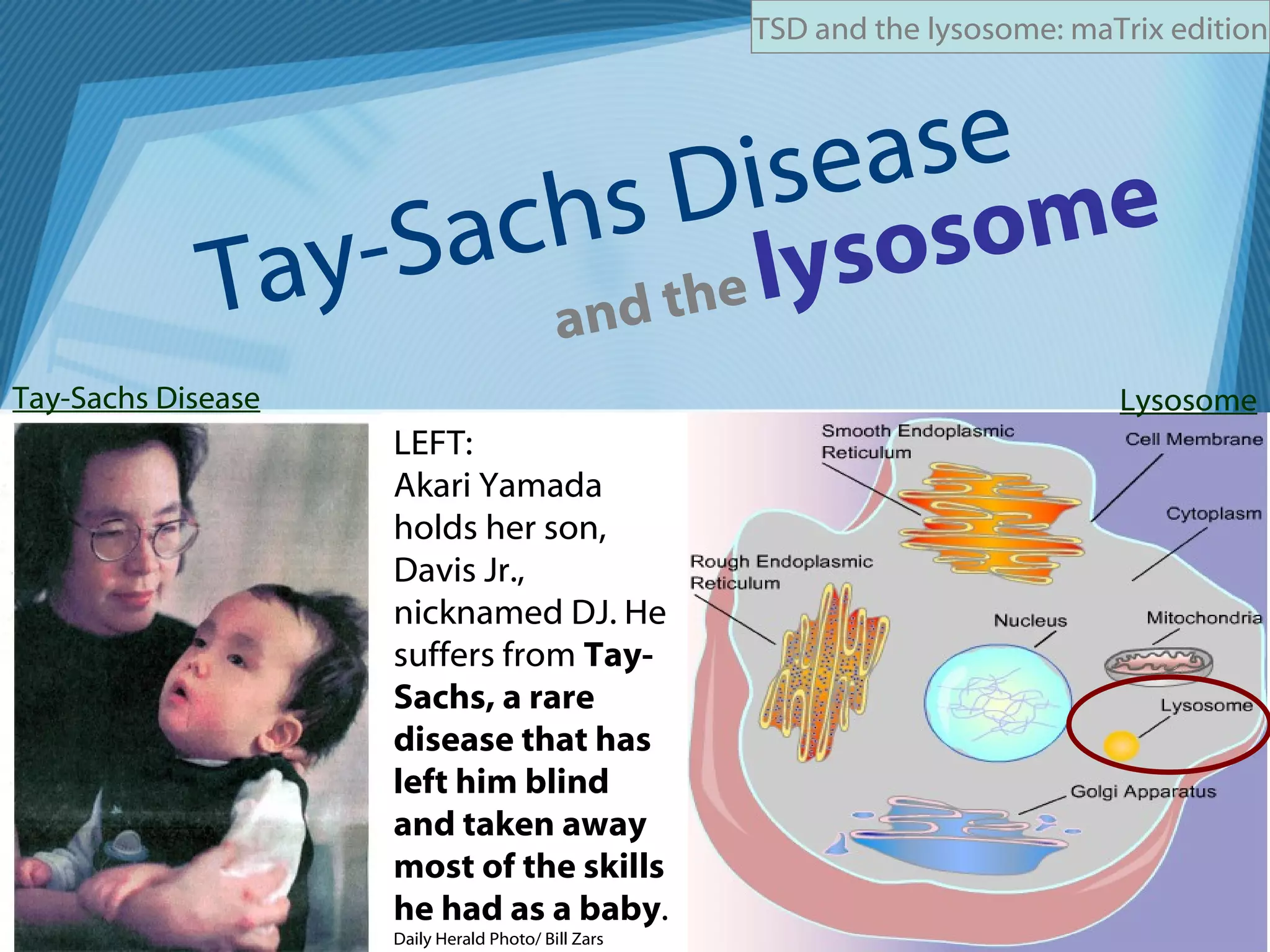
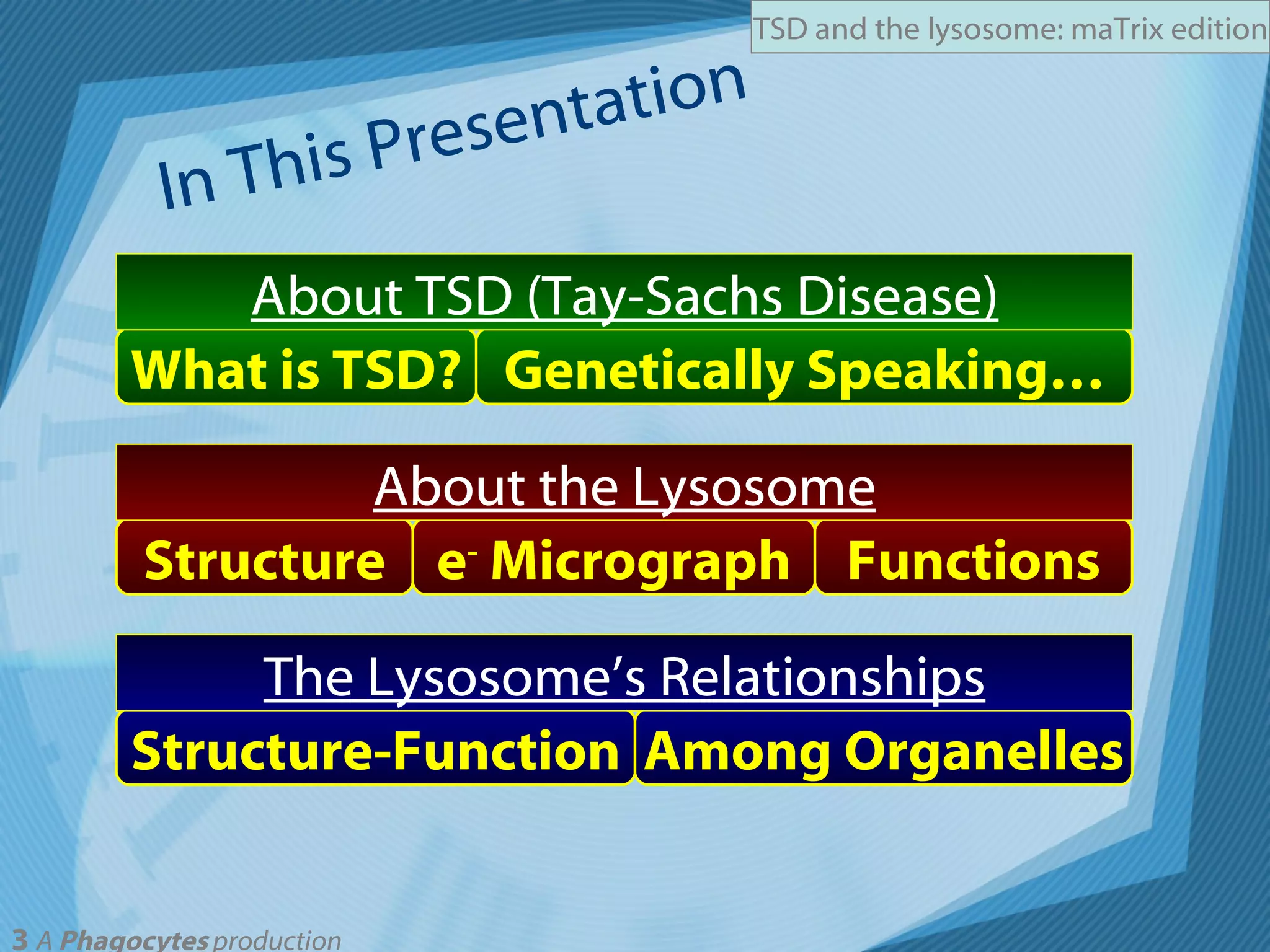
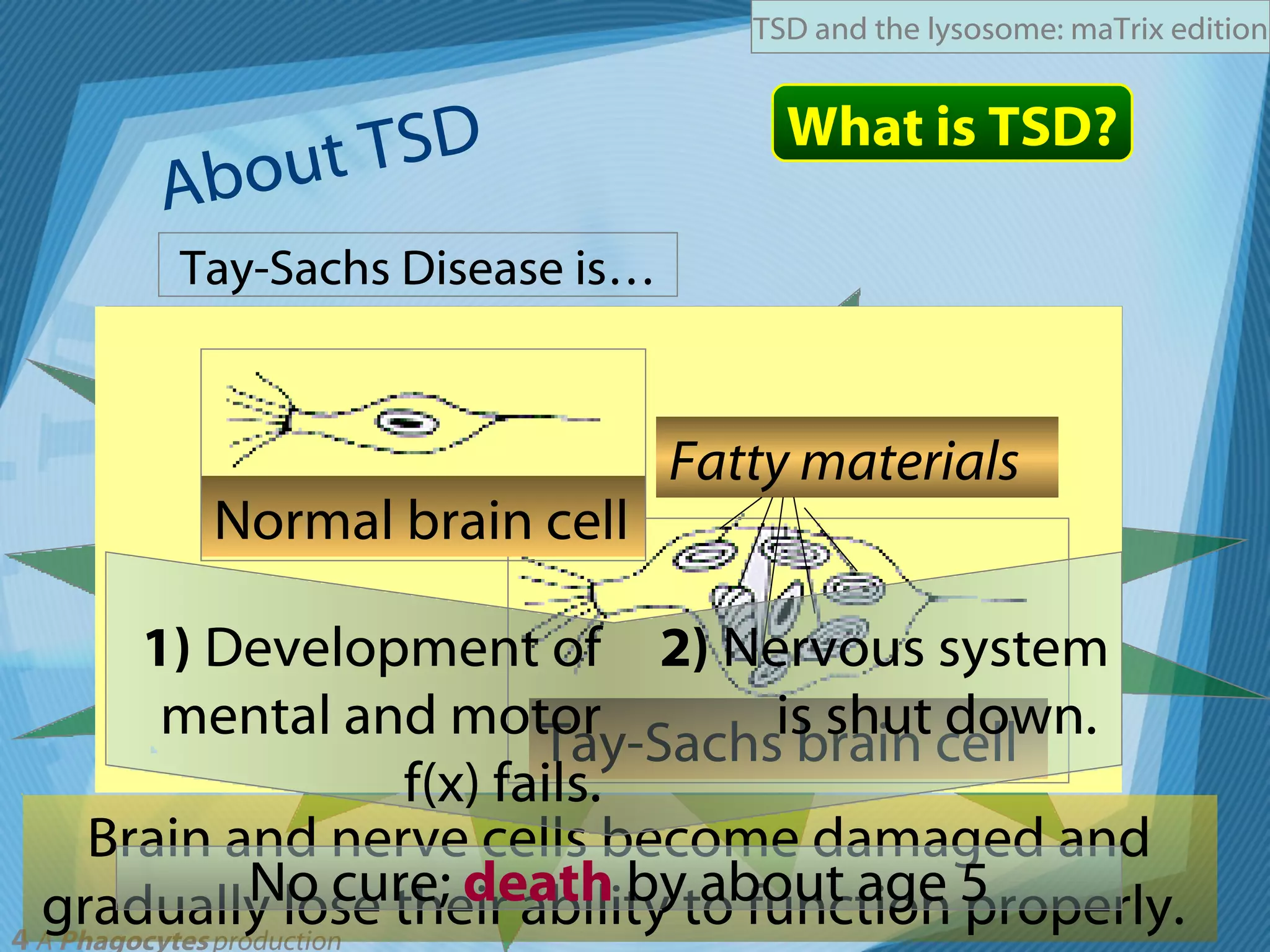
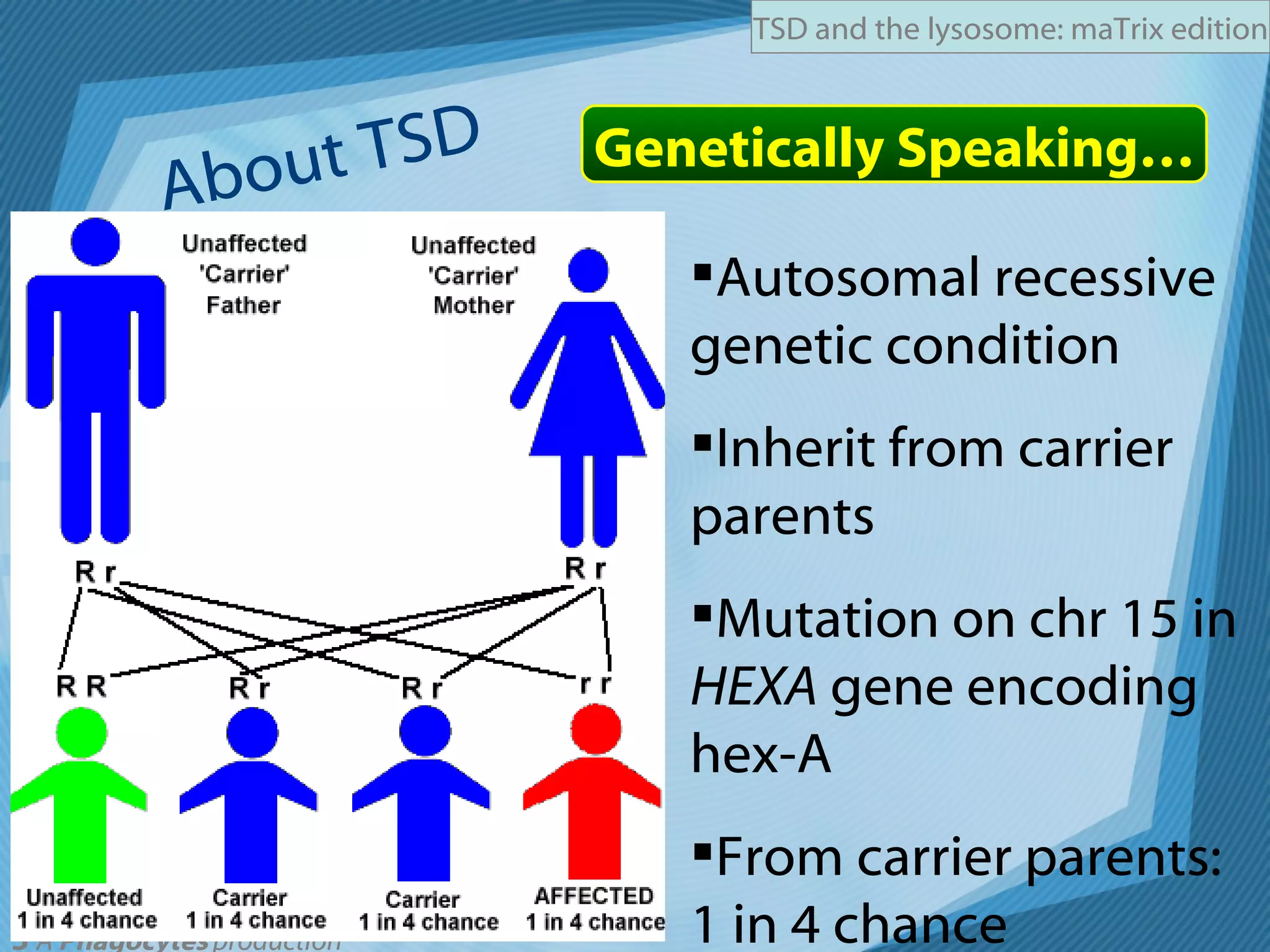
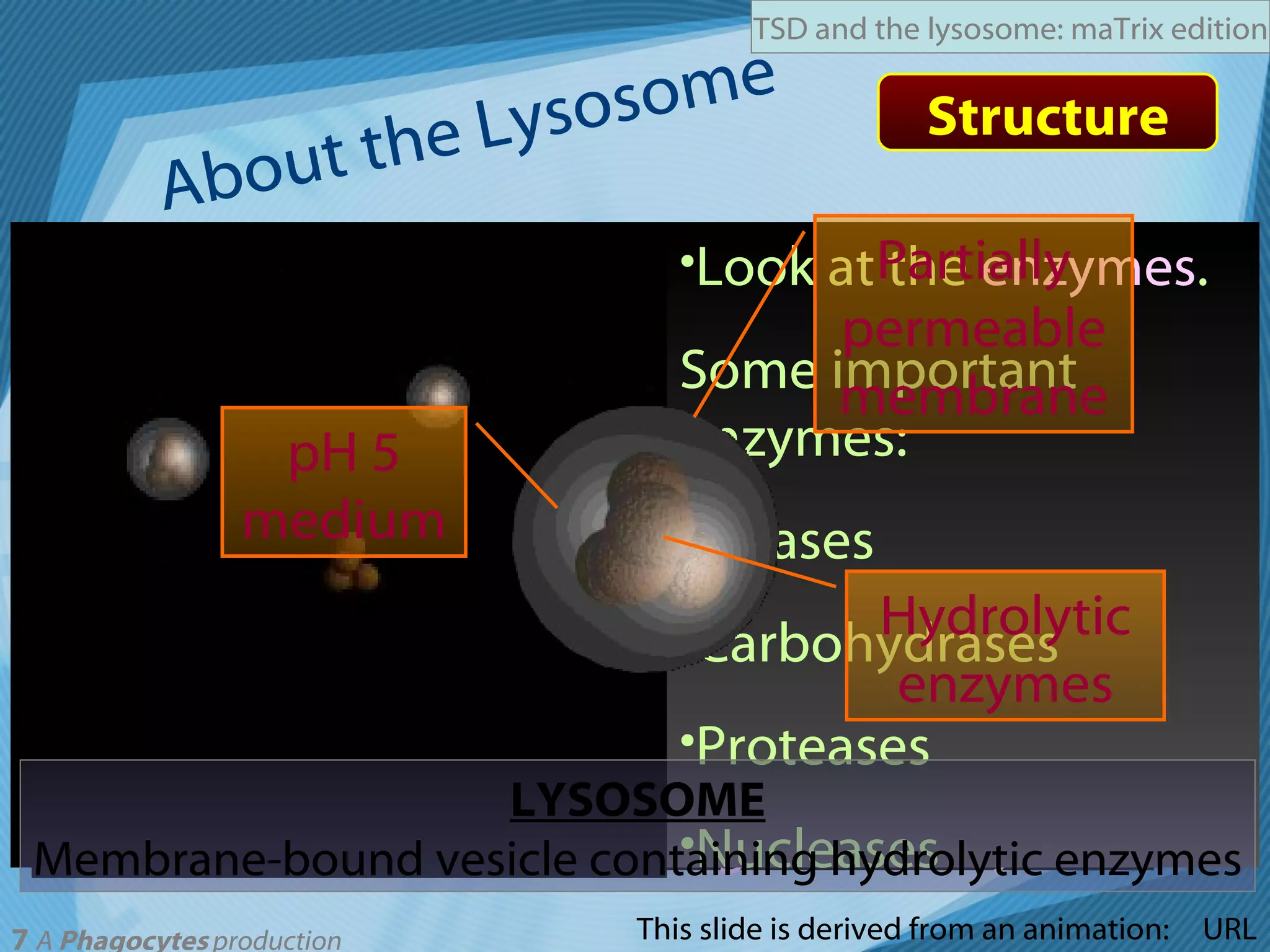
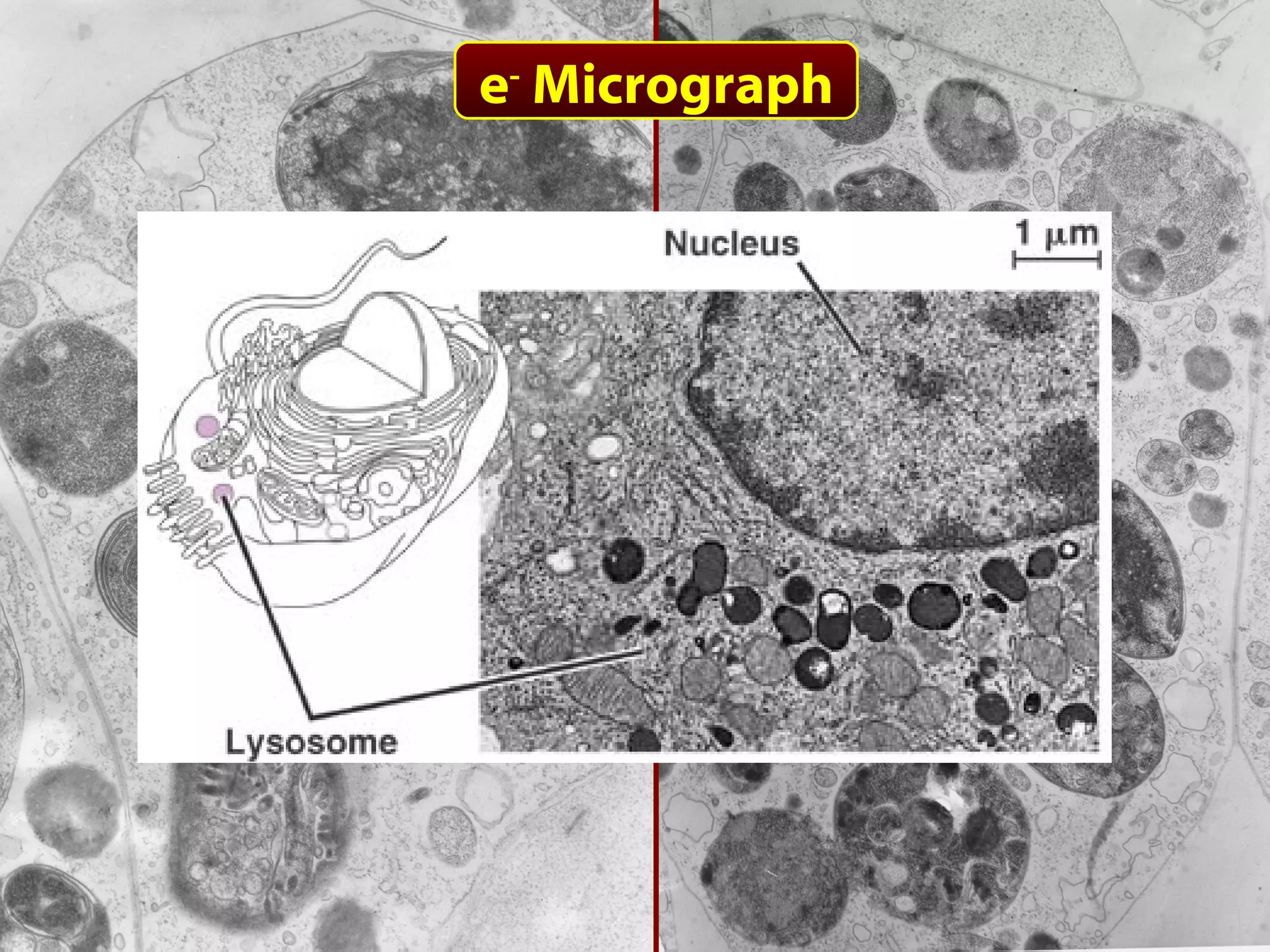
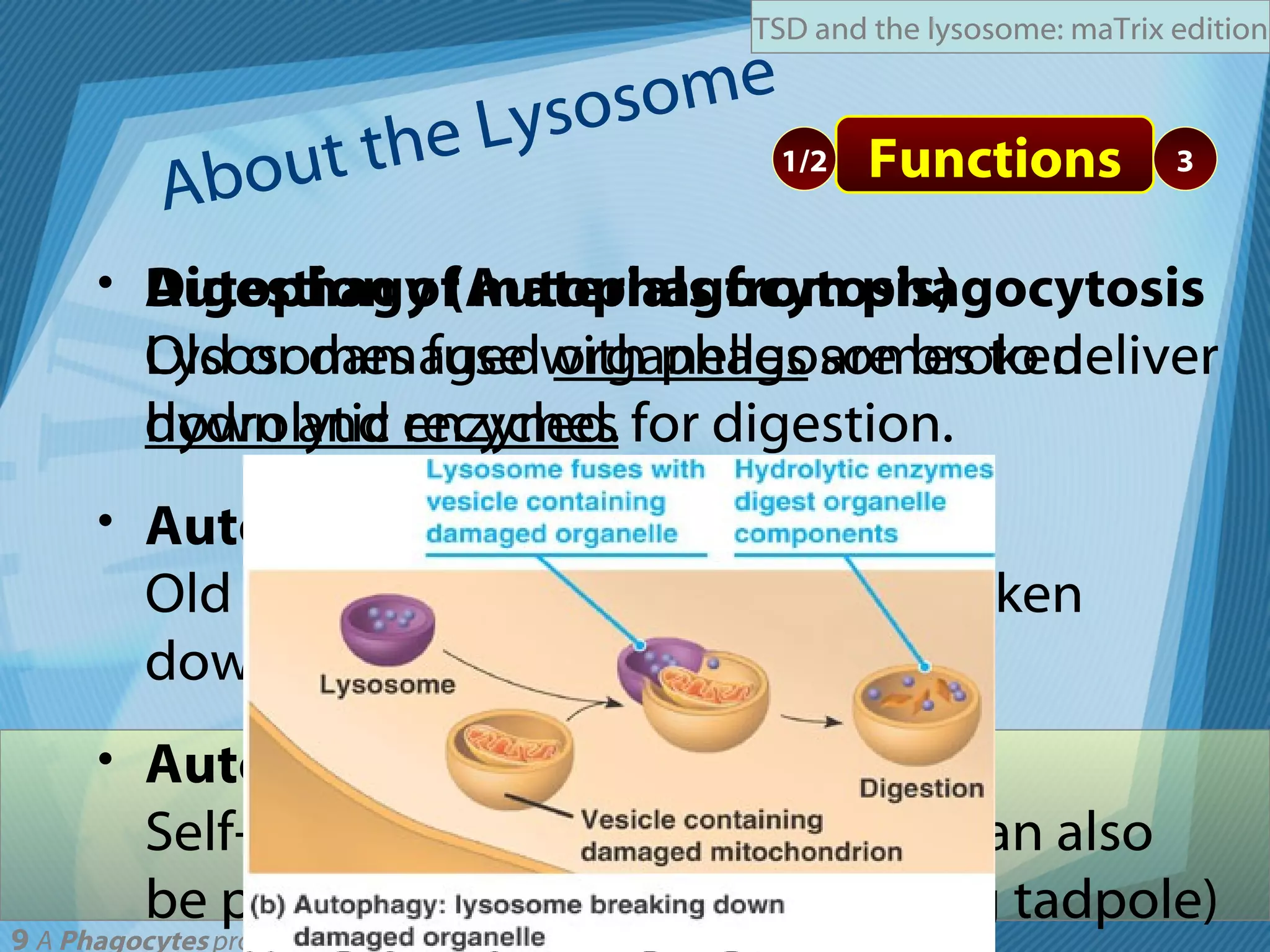
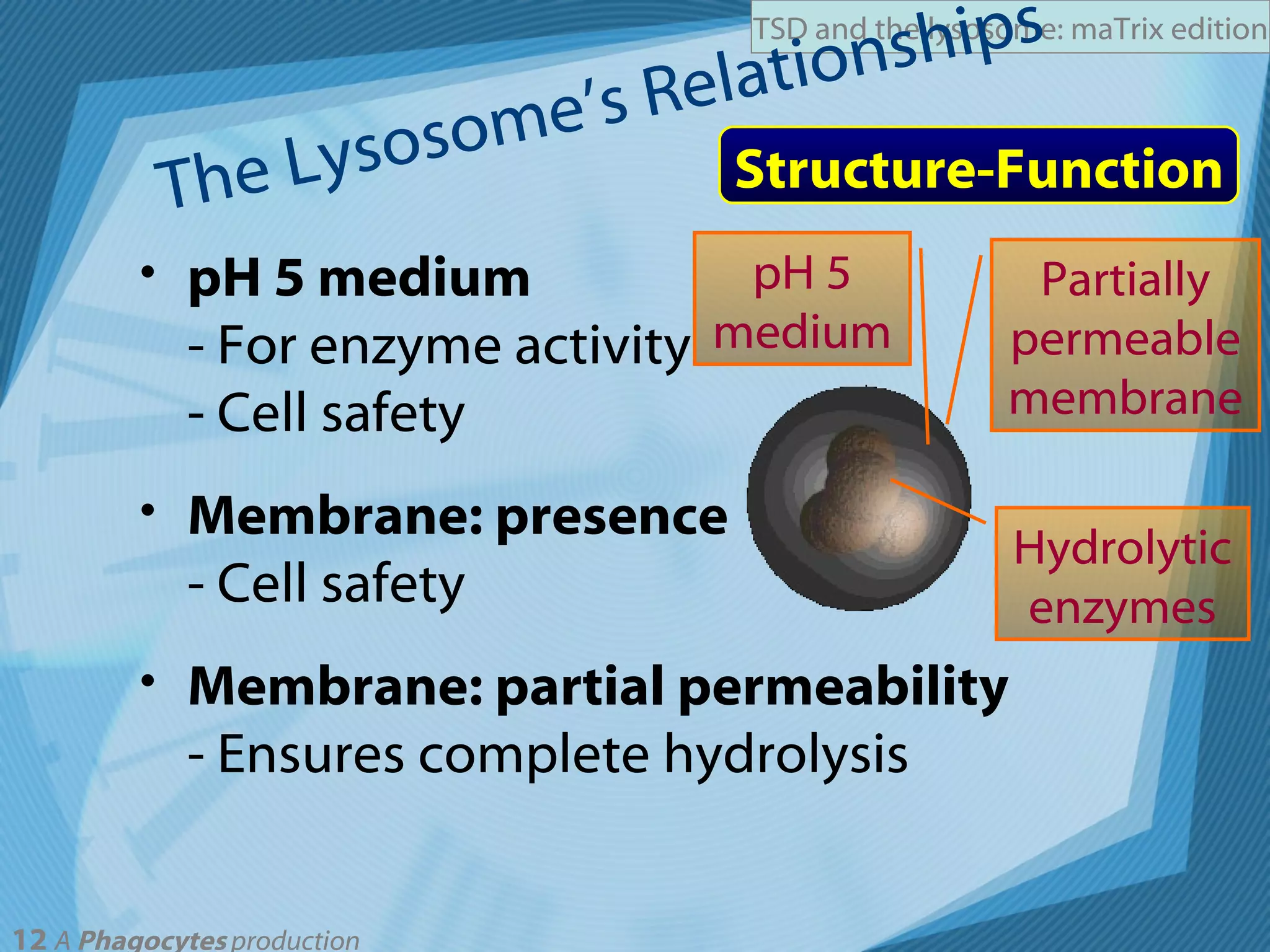
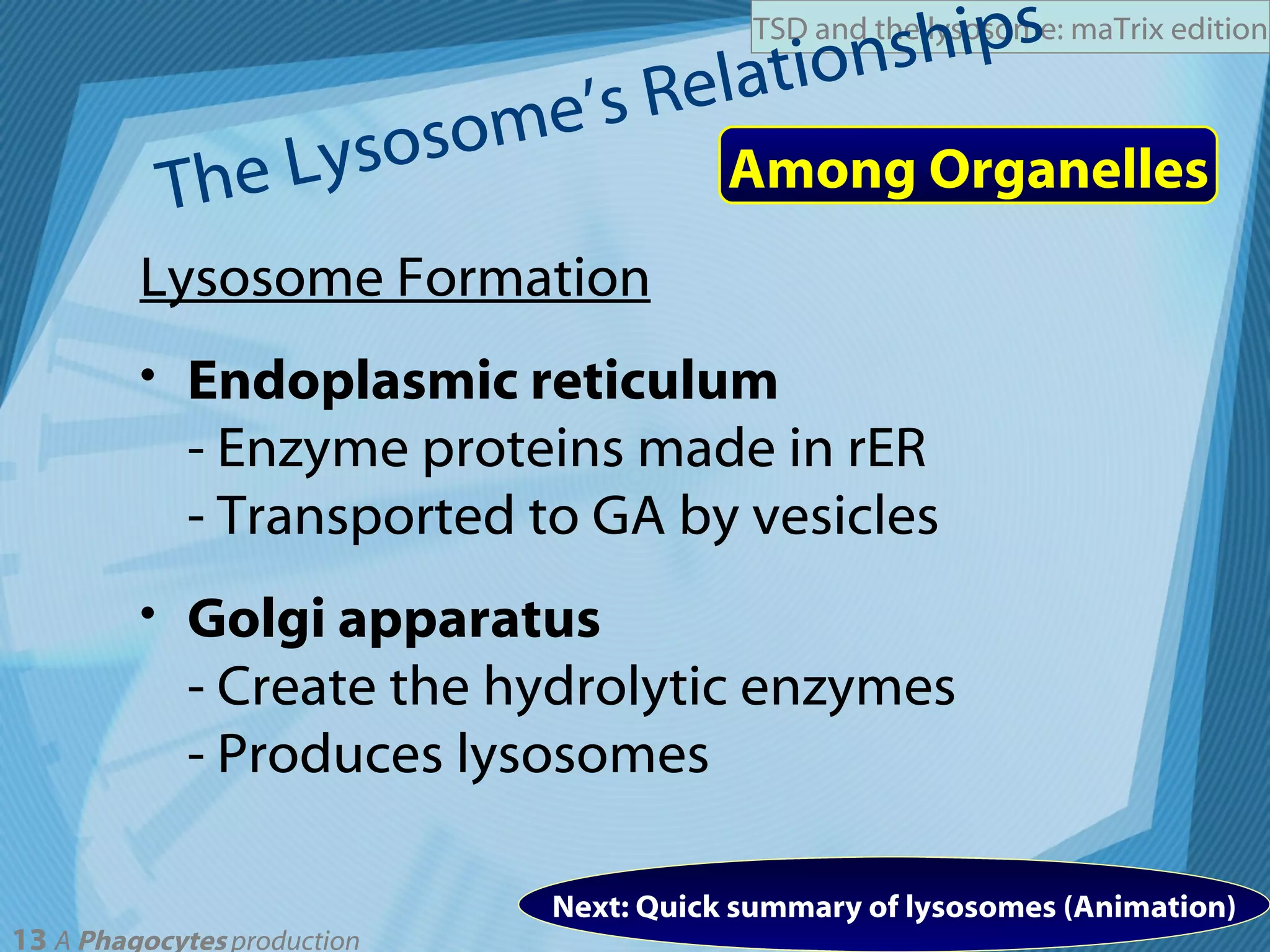

This document discusses Tay-Sachs disease, a genetic disorder caused by a deficiency in an enzyme leading to the accumulation of fatty substances in the nervous system, ultimately resulting in severe neurological decline and early death. It explains the structure and functions of lysosomes, including their roles in digestion, recycling damaged organelles, and facilitating the breakdown of materials through phagocytosis. The relationship between Tay-Sachs disease and lysosomal function is highlighted, emphasizing the critical role of lysosomes in cellular maintenance and development.


