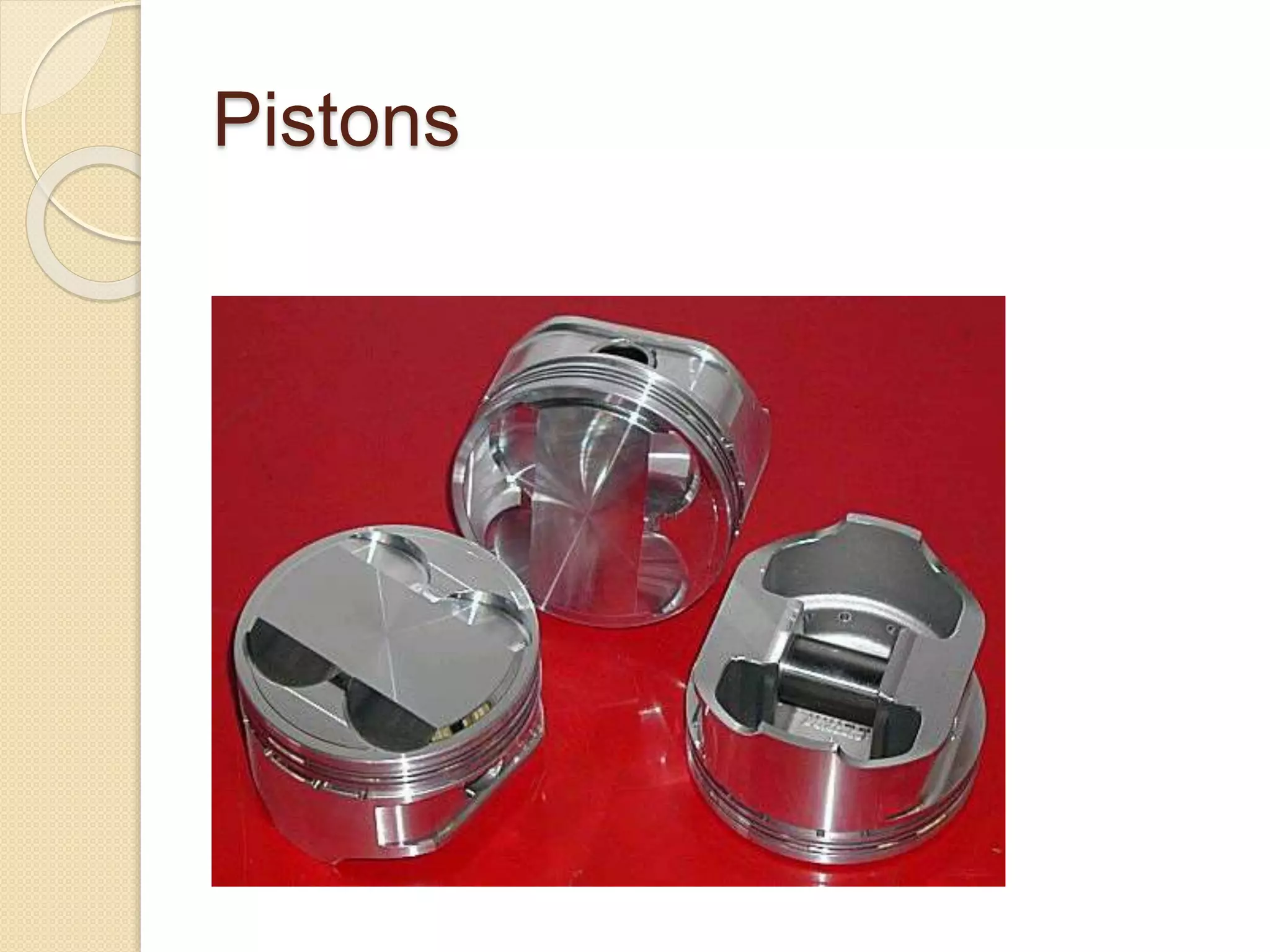
Pistons
Piston
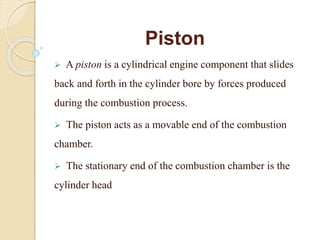
 A piston is a cylindrical engine component that slides
back and forth in the cylinder bore by forces produced
during the combustion process.
 The piston acts as a movable end of the combustion
chamber.
 The stationary end of the combustion chamber is the
cylinder head
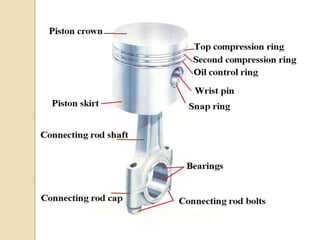
Piston features
 Piston head,
 Piston pin bore,
 Piston pin,
 Skirt,
 Ring grooves,
 Ring lands, and
 Piston rings
 The piston head is the top surface (closest to the cylinder
head) of the piston which is subjected to tremendous forces and
heat during normal engine operation.
 A piston pin bore is a through hole in the side of the piston
perpendicular to piston travel that receives the piston pin.
 A piston pin is a hollow shaft that connects the small end of
the connecting rod to the piston.
 The skirt of a piston is the portion of the piston closest to the
crankshaft that helps align the piston as it moves in the cylinder
bore.
 A ring groove is a recessed area located around the
perimeter of the piston that is used to retain a piston ring.
 Ring lands are the two parallel surfaces of the ring
groove which function as the sealing surface for the piston
ring.
 A piston ring is an expandable split ring used to
provide a seal between the piston an the cylinder wall.
Piston Design Considerations
 Pistons must:
◦ Contain cylinder pressure
◦ Transmit the pressure created by
combustion to force on the connecting rod
◦ Provide a place for oil control and
compression rings to be located
 Aluminum expands when heated, and
 proper clearance must be provided to maintain
free piston movement in the cylinder bore.
 Insufficient clearance can cause the piston to seize
in the cylinder.
 Excessive clearance can cause a loss of
compression and an increase in piston noise
Piston Design Considerations
 Pistons must:
◦ Be rigid enough to not deform under the
tremendous pressures and forces
encountered
◦ Be ductile enough to absorb pressure
peaks and not shatter
◦ Retain the proper shape under the
extreme temperatures encountered.
Piston Construction
 Materials
◦ Cast iron (used in very old engines)
◦ Cast aluminum (most common)
◦ Forged aluminum
◦ Hypereutectic alloys (high silicon content
aluminum)
◦ Carbon Graphite (being tested)
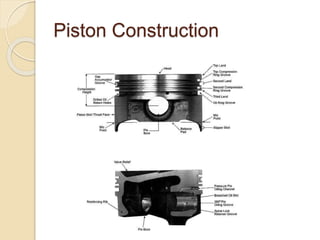
Piston Construction
Piston Construction
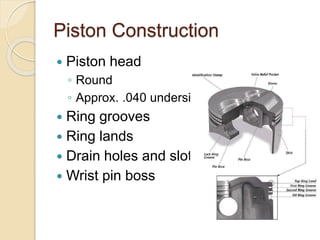
 Piston head
◦ Round
◦ Approx. .040 undersized
 Ring grooves
 Ring lands
 Drain holes and slots
 Wrist pin boss
Piston Construction
 Reinforcing struts – cast pistons
contain steel struts to control
expansion and aid in wrist pin support
 Lock ring grooves – for full-floating
piston pins
 Piston skirt
◦ Full skirt
◦ Partial skirt
Piston Construction
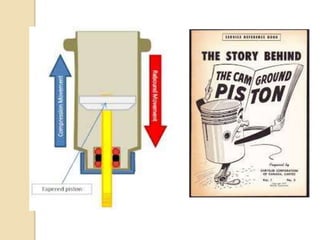
 Cam ground pistons.
◦ Most pistons are cam ground, this means
they are not perfectly round.
◦ The diameter is larger on the non-thrust
sides, because they tend to expand more
as the temperature of the piston
increases.
 Piston taper – pistons may be tapered
from top to bottom
Piston Construction
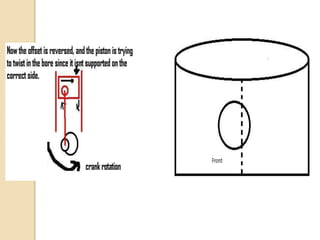
 Piston Pin Offset
◦ The piston pin is offset towards the major
thrust side of the piston to reduce piston
wear, and piston noise
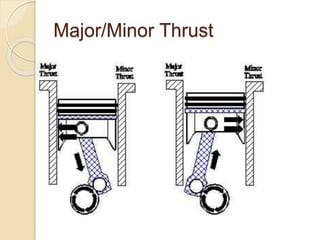
◦ The major thrust side is the side that is
loaded during the power event
◦ The minor thrust side is the side loaded
during the compression event
Major/Minor Thrust
Piston Direction
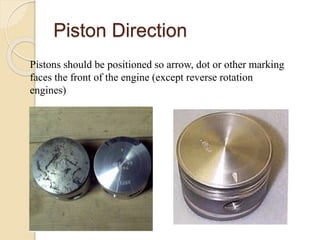
Pistons should be positioned so arrow, dot or other marking
faces the front of the engine (except reverse rotation
engines)
Piston Head Design
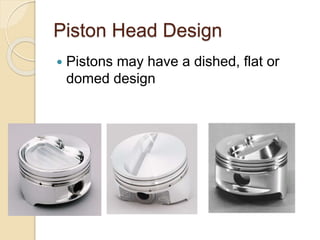
 Pistons may have a dished, flat or
domed design
Piston Inspection
 Abnormal skirt wear
 Scoring
 Melted aluminum or pits in the head –
indicates detonation
 Cracks – check ring lands, pin boss,
and skirt closely
 Pin bore – check for scoring and wear

Pistons

  • 1.
  • 2.
    Piston  A pistonis a cylindrical engine component that slides back and forth in the cylinder bore by forces produced during the combustion process.  The piston acts as a movable end of the combustion chamber.  The stationary end of the combustion chamber is the cylinder head
  • 3.
    Piston features  Pistonhead,  Piston pin bore,  Piston pin,  Skirt,  Ring grooves,  Ring lands, and  Piston rings
  • 5.
     The pistonhead is the top surface (closest to the cylinder head) of the piston which is subjected to tremendous forces and heat during normal engine operation.  A piston pin bore is a through hole in the side of the piston perpendicular to piston travel that receives the piston pin.  A piston pin is a hollow shaft that connects the small end of the connecting rod to the piston.  The skirt of a piston is the portion of the piston closest to the crankshaft that helps align the piston as it moves in the cylinder bore.
  • 6.
     A ringgroove is a recessed area located around the perimeter of the piston that is used to retain a piston ring.  Ring lands are the two parallel surfaces of the ring groove which function as the sealing surface for the piston ring.  A piston ring is an expandable split ring used to provide a seal between the piston an the cylinder wall.
  • 7.
    Piston Design Considerations Pistons must: ◦ Contain cylinder pressure ◦ Transmit the pressure created by combustion to force on the connecting rod ◦ Provide a place for oil control and compression rings to be located
  • 8.
     Aluminum expandswhen heated, and  proper clearance must be provided to maintain free piston movement in the cylinder bore.  Insufficient clearance can cause the piston to seize in the cylinder.  Excessive clearance can cause a loss of compression and an increase in piston noise
  • 9.
    Piston Design Considerations Pistons must: ◦ Be rigid enough to not deform under the tremendous pressures and forces encountered ◦ Be ductile enough to absorb pressure peaks and not shatter ◦ Retain the proper shape under the extreme temperatures encountered.
  • 10.
    Piston Construction  Materials ◦Cast iron (used in very old engines) ◦ Cast aluminum (most common) ◦ Forged aluminum ◦ Hypereutectic alloys (high silicon content aluminum) ◦ Carbon Graphite (being tested)
  • 11.
  • 12.
    Piston Construction  Pistonhead ◦ Round ◦ Approx. .040 undersized  Ring grooves  Ring lands  Drain holes and slots  Wrist pin boss
  • 13.
    Piston Construction  Reinforcingstruts – cast pistons contain steel struts to control expansion and aid in wrist pin support  Lock ring grooves – for full-floating piston pins  Piston skirt ◦ Full skirt ◦ Partial skirt
  • 14.
    Piston Construction  Camground pistons. ◦ Most pistons are cam ground, this means they are not perfectly round. ◦ The diameter is larger on the non-thrust sides, because they tend to expand more as the temperature of the piston increases.  Piston taper – pistons may be tapered from top to bottom
  • 16.
    Piston Construction  PistonPin Offset ◦ The piston pin is offset towards the major thrust side of the piston to reduce piston wear, and piston noise ◦ The major thrust side is the side that is loaded during the power event ◦ The minor thrust side is the side loaded during the compression event
  • 18.
  • 19.
    Piston Direction Pistons shouldbe positioned so arrow, dot or other marking faces the front of the engine (except reverse rotation engines)
  • 20.
    Piston Head Design Pistons may have a dished, flat or domed design
  • 21.
    Piston Inspection  Abnormalskirt wear  Scoring  Melted aluminum or pits in the head – indicates detonation  Cracks – check ring lands, pin boss, and skirt closely  Pin bore – check for scoring and wear