Pg 76 to 77
 Rainforests have a three-layer structure.
 Emergent layer (50m)
 Canopy layer (30m)
 Undergrowth layer (20m)
 What are they?
 50m to 80m tall trees
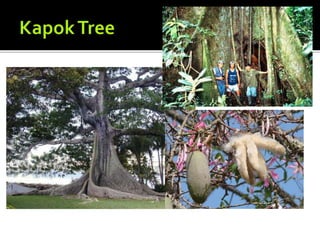
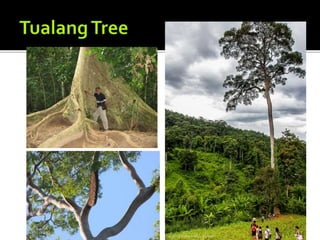
 Emergent trees rise above the canopy.
 They are the tallest trees in the rainforest.
 How do they look like?
 Straight and smooth trunks.
 Very few branches.
 What are some examples?
 Tualang tree, Kapok tree
 What are they?
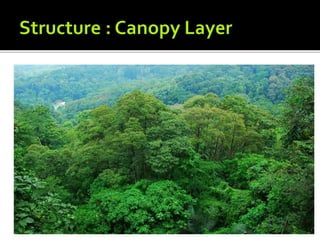
 20m to 30m tall trees
 They block 90% of the sunlight from reaching
the forest floor.
 They catch rain falling onto the rainforest.
 How do they look like?
 They form a continuous cover like an umbrella.
 They have large and waxy leaves.
 They grow very close to each other.
 What are some examples?
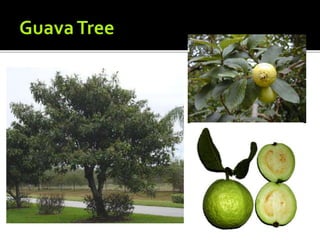
 GuavaTree, MangoTree
 Lianas and epiphytes
grow in the canopy.
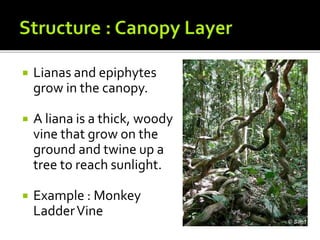
 A liana is a thick, woody
vine that grow on the
ground and twine up a
tree to reach sunlight.
 Example : Monkey
LadderVine
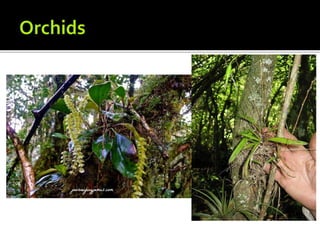
 An epiphyte is a plant that grows on trees to
get more sunlight.
 Being high up helps epiphytes spread their
seeds and spores easily.
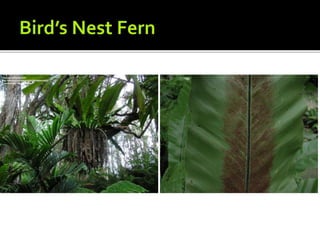
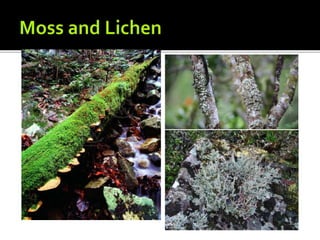
 Example : Orchids, ferns, mosses and lichens.
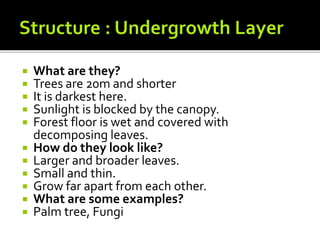
 What are they?
 Trees are 20m and shorter
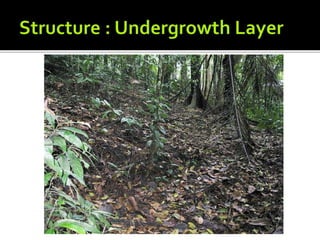
 It is darkest here.
 Sunlight is blocked by the canopy.
 Forest floor is wet and covered with
decomposing leaves.
 How do they look like?
 Larger and broader leaves.
 Small and thin.
 Grow far apart from each other.
 What are some examples?
 Palm tree, Fungi
Pg 78
 Tropical rainforests live in a hot and wet
climate.
 The temperature is high.
 The rainfall is heavy.
 The rainforest plants can grow all year round.
 Adaptation is a word that means :
 “being able to change in order to survive”
 The rainforest plants adapt their features to
survive in the hot and wet climate.
 Features are the different parts that make up
a plant.
 The features of a rainforest plant include :
 Bark and branches
 Leaves
 Fruit and flowers
 Roots
 Adaptation
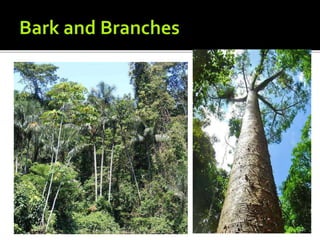
 Tall, straight trunks
 Branches are spread out.
 Reason :To help the trees obtain maximum
amount of sunlight.
 Adaptation
 Smooth bark
 Reason : Rainwater can flow easily from the
crown to the tree roots.
 Adaptation
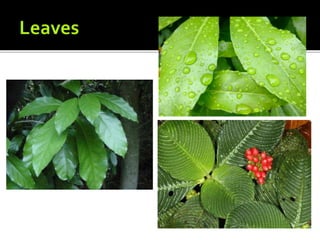
 Broad leaves
 Reason :To get more sunlight for
photosynthesis.
 Adaptation
 Waxy, leathery or hairy leaves.
 Reason : Minimise loss of water through
transpiration because of the high
temperature.
 Adaptation
 Leaves have drip tips.
 Reason :To allow rainwater to run off
easily.This stops fungi and bacteria from
growing on the leaves.
 Adaptation
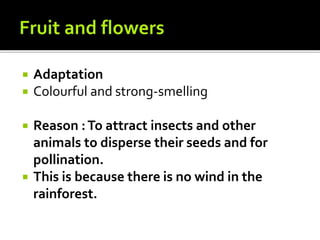
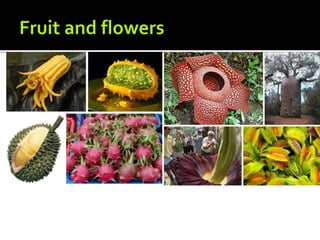
 Colourful and strong-smelling
 Reason :To attract insects and other
animals to disperse their seeds and for
pollination.
 This is because there is no wind in the
rainforest.
 Adaptation
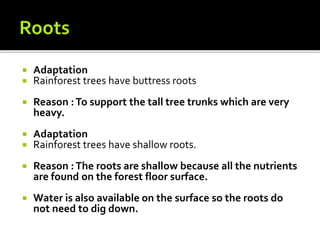
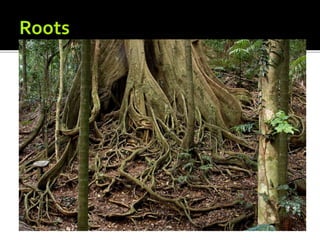
 Rainforest trees have buttress roots
 Reason :To support the tall tree trunks which are very
heavy.
 Adaptation
 Rainforest trees have shallow roots.
 Reason :The roots are shallow because all the nutrients
are found on the forest floor surface.
 Water is also available on the surface so the roots do
not need to dig down.
Tropical rainforests structure and adaptation

Tropical rainforests structure and adaptation

  • 1.
  • 3.
     Rainforests havea three-layer structure.  Emergent layer (50m)  Canopy layer (30m)  Undergrowth layer (20m)
  • 4.
     What arethey?  50m to 80m tall trees  Emergent trees rise above the canopy.  They are the tallest trees in the rainforest.  How do they look like?  Straight and smooth trunks.  Very few branches.  What are some examples?  Tualang tree, Kapok tree
  • 7.
     What arethey?  20m to 30m tall trees  They block 90% of the sunlight from reaching the forest floor.  They catch rain falling onto the rainforest.  How do they look like?  They form a continuous cover like an umbrella.  They have large and waxy leaves.  They grow very close to each other.  What are some examples?  GuavaTree, MangoTree
  • 10.
     Lianas andepiphytes grow in the canopy.  A liana is a thick, woody vine that grow on the ground and twine up a tree to reach sunlight.  Example : Monkey LadderVine
  • 11.
     An epiphyteis a plant that grows on trees to get more sunlight.  Being high up helps epiphytes spread their seeds and spores easily.  Example : Orchids, ferns, mosses and lichens.
  • 15.
     What arethey?  Trees are 20m and shorter  It is darkest here.  Sunlight is blocked by the canopy.  Forest floor is wet and covered with decomposing leaves.  How do they look like?  Larger and broader leaves.  Small and thin.  Grow far apart from each other.  What are some examples?  Palm tree, Fungi
  • 17.
  • 18.
     Tropical rainforestslive in a hot and wet climate.  The temperature is high.  The rainfall is heavy.  The rainforest plants can grow all year round.
  • 19.
     Adaptation isa word that means :  “being able to change in order to survive”  The rainforest plants adapt their features to survive in the hot and wet climate.
  • 20.
     Features arethe different parts that make up a plant.  The features of a rainforest plant include :  Bark and branches  Leaves  Fruit and flowers  Roots
  • 21.
     Adaptation  Tall,straight trunks  Branches are spread out.  Reason :To help the trees obtain maximum amount of sunlight.  Adaptation  Smooth bark  Reason : Rainwater can flow easily from the crown to the tree roots.
  • 23.
     Adaptation  Broadleaves  Reason :To get more sunlight for photosynthesis.  Adaptation  Waxy, leathery or hairy leaves.  Reason : Minimise loss of water through transpiration because of the high temperature.
  • 24.
     Adaptation  Leaveshave drip tips.  Reason :To allow rainwater to run off easily.This stops fungi and bacteria from growing on the leaves.
  • 26.
     Adaptation  Colourfuland strong-smelling  Reason :To attract insects and other animals to disperse their seeds and for pollination.  This is because there is no wind in the rainforest.
  • 28.
     Adaptation  Rainforesttrees have buttress roots  Reason :To support the tall tree trunks which are very heavy.  Adaptation  Rainforest trees have shallow roots.  Reason :The roots are shallow because all the nutrients are found on the forest floor surface.  Water is also available on the surface so the roots do not need to dig down.