Secondary Metabolites
Week 13
Dr. Sahena Ferdosh
Secondary metabolites
• Primary metabolite
– directly involved in normal growth, development,
and reproduction.
– eg: carbohydrates, amino acids, fatty acids,
cytochromes, chlorophylls, and metabolic
intermediates
• Secondary metabolites
– not directly involved in those processes, but
fulfill specific ecological functions in plants.
– eg: alkaloids, isoprenoids, and phenylpropanoids.
Plant protection by secondary metabolites
• Many plants protect themselves by producing toxic
proteins (e.g., amylase, proteinase inhibitors or
lectins), which impair the digestion of herbivores.
– eg. maize plants mobilize a protease that
destroys the caterpillar’s intestine.
• Secondary metabolites include natural pesticides
that protect plants against herbivores and
pathogenic microorganisms.
• Other defense components are only synthesized by
the plant after browsing damage (induced defense).
Phytoalexins
• Defense compounds against microorganisms
• Phytoalexins: isoprenoids, flavonoids, and stilbenes,
which act as antibiotics against pathogenic
microorganisms.
• Plant root exudates contain bacteriostatic compounds
such as cumaric acid, 3-indol propionic acid & methyl
p-hydroxybenzoate.
• Plants produce defense aggressive oxygen compounds
eg. (•O2
-) and H2 O2 , NO, and enzymes, eg. β-
glucanases, chitinases, and proteinases, which
damage the cell walls of bacteria and fungi.
• Elicitors are often proteins excreted by the pathogens to attack
plant cells (e.g., cell-degrading enzymes).
• Elicitors are bound to specific receptors on the outer surface of the
plasma membrane of the plant cell.
• The binding of the elicitor releases signal in which protein kinases
and signal substances such as salicylic acid and jasmonic acid
participate, and which finally induce the transcription of genes for
the synthesis of phytoalexins, reactive oxygen compounds, and
defense enzymes.
• Elicitors may also cause an infected cell to die and the surrounding
cells to die with it.
• This programmed cell death, called a hypersensitive response,
serves to protect the plant against further spreading of the
infection.
Elicitors
1. Alkaloids
• Alkaloids are secondary metabolites that synthesized from
amino acids and contain one or several N atoms as
constituents of heterocycles.
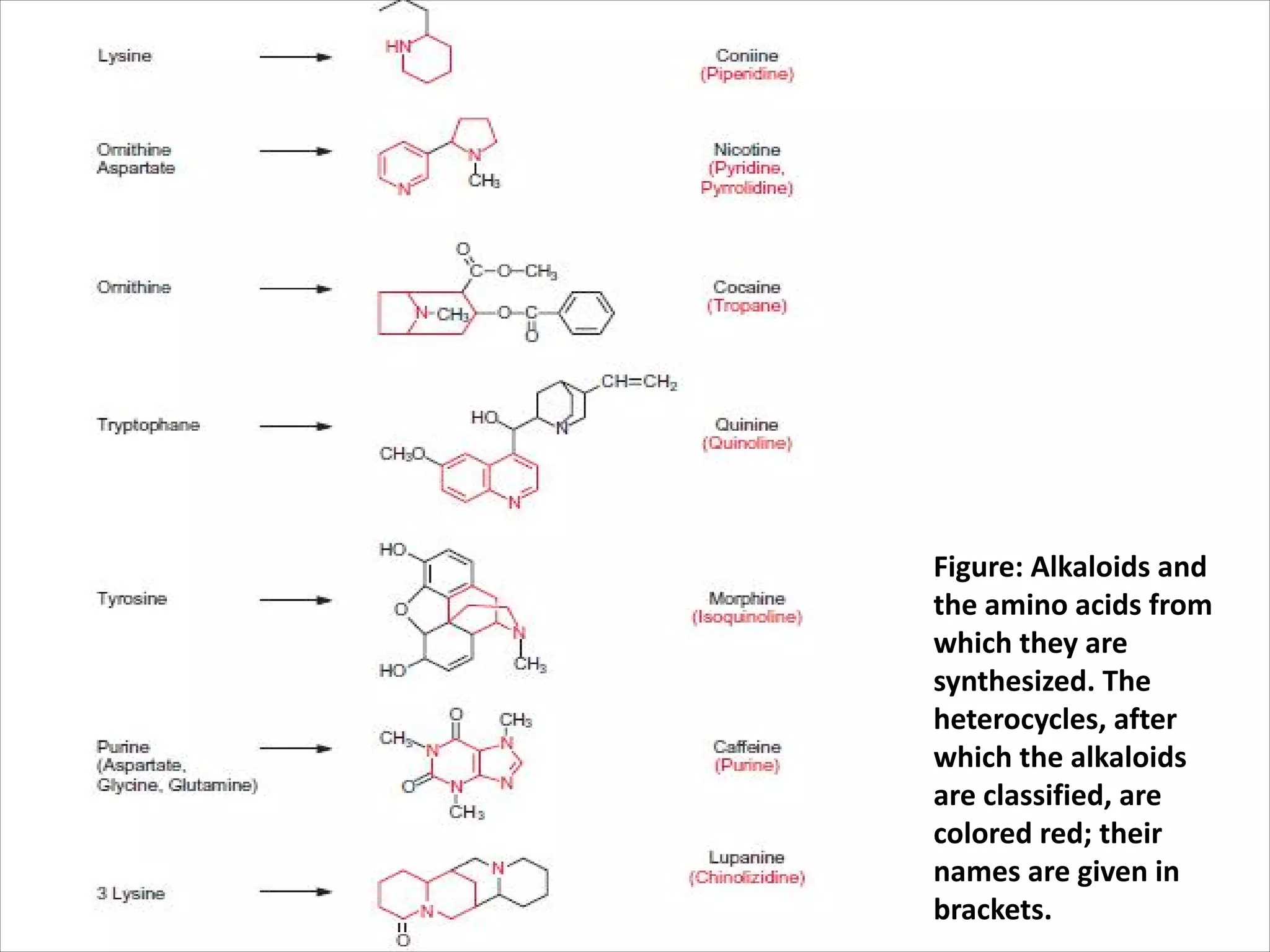
• Alkaloids are classified according to their heterocycles:
• Coniine, a piperidine alkaloid, is a very potent poison in
hemlock.
– Socrates died when he was forced to drink this poison.
• Nicotine, which also is very toxic, contains a pyridine and a
pyrrolidine ring.
– It is synthesized in the roots of tobacco plants.
– Nicotine sulfate, a by-product of the tobacco industry, is
used as a very potent insecticide (e.g., for fumigating
greenhouses).
• Cocaine, the well-known narcotic, contains tropane as a
heterocycle.
– Cleopatra allegedly used extracts containing atropine to dilate her
pupils to appear more attractive.
• Quinine, a quinoline heterocycle from the bark of Chinchuna
officinalis (South America), was known as antimalarial drug.
• Morphine an isoquinoline alkaloid is an important pain killer
and is also a precursor for the synthesis of heroin.
• Caffeine, the stimulant of coffee, has purine as the heterocycle.
• Chinolizidin alkaloids, such as lupinin and lupanin, are
synthesized from three lysine molecules.
– Due to the toxicity of these compounds sheep frequently die in the
autumn from eating too much lupine seed.
Alkaloids
Figure: Alkaloids and
the amino acids from
which they are
synthesized. The
heterocycles, after
which the alkaloids
are classified, are
colored red; their
names are given in
brackets.
2. Isoprenoid
• Isoprenoid, composed of two/more hydrocarbons, with
each unit consisting of 5C atoms arranged in a specific
pattern.
• Commercial importance: aroma substances for food,
beverages, and cosmetics, as vitamins (A, D, E), natural
insecticides (pyrethrin), solvents (turpentine), and as
rubber.
• Important natural compounds, which are utilized as
pharmaceuticals or their precursors.
• Some examples of terpenes.
– Limonene, an aromatic substance from lemon oil, is a terpene
with 10 C atoms and is called a monoterpene.
– Carotene, with 40 C atoms, is accordingly a tetraterpene.
– Rubber is a polyterpene with about 1,500 C atoms. It is obtained
from the latex of the rubber tree Hevea brasiliensis.
Various isoprenoids
Terpenes are a class of natural products consisting of compounds
with the formula (C5H8)n.
• Hemiterpenes consist of a single isoprene unit.
• Monoterpenes consist of two isoprene units and have the
molecular formula C10H16.
• Sesquiterpenes consist of three isoprene units and have the
molecular formula C15H24.
• Diterpenes are composed of four isoprene units and have the
molecular formula C20H32.
• Sesterterpenes, terpenes having 25 carbons and five isoprene
units, are rare relative to the other sizes.
• Triterpenes consist of six isoprene units and have the
molecular formula C30H48.
• Tetraterpenes contain eight isoprene units and have the
molecular formula C40H64.
• Polyterpenes consist of long chains of many isoprene units.
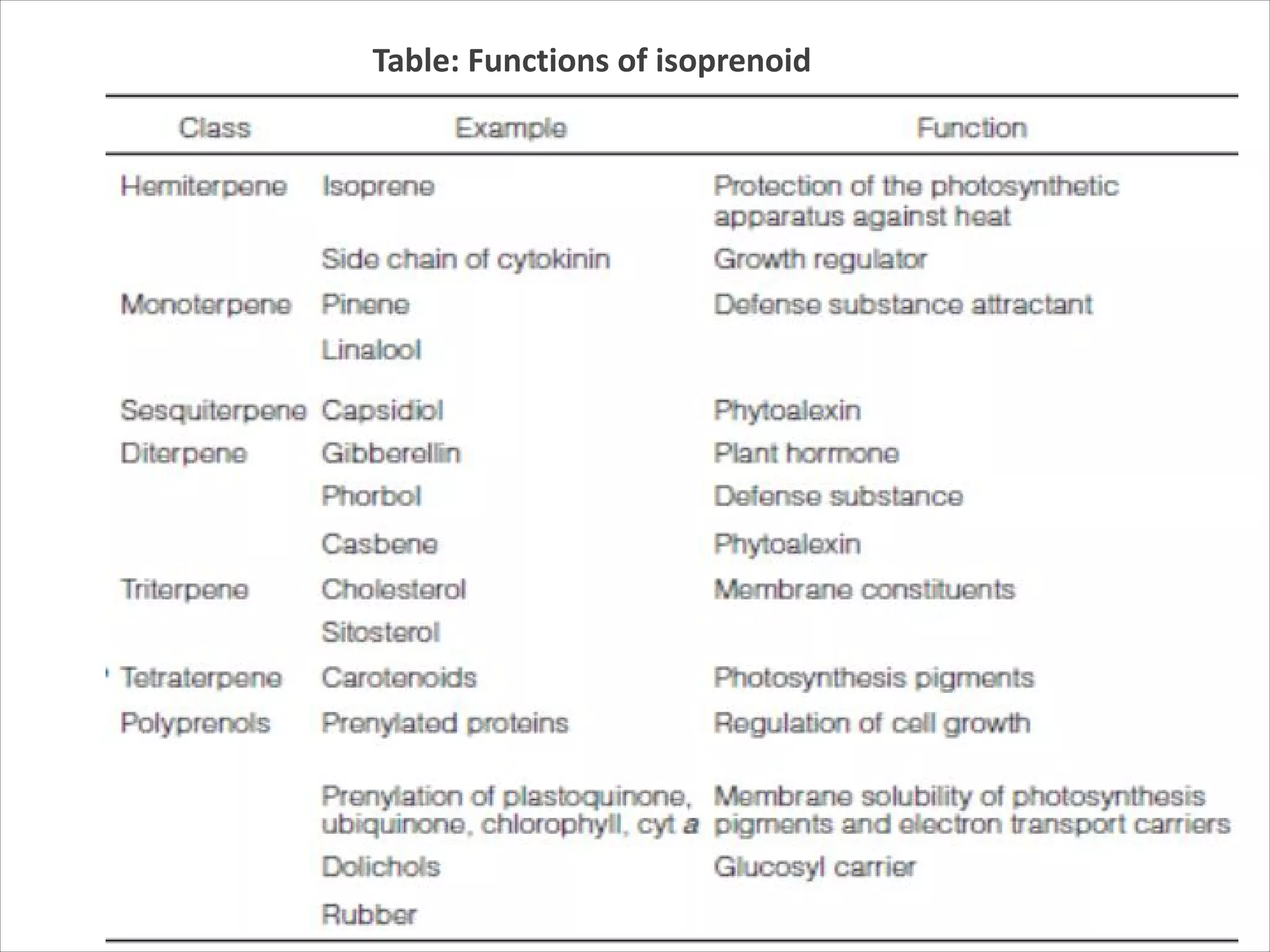
Table: Functions of isoprenoid
Synthesis of isoprenoids
• Higher plants have two different synthesis pathways for
isoprenoids, one located in the cytosol and the other in the
plastids.
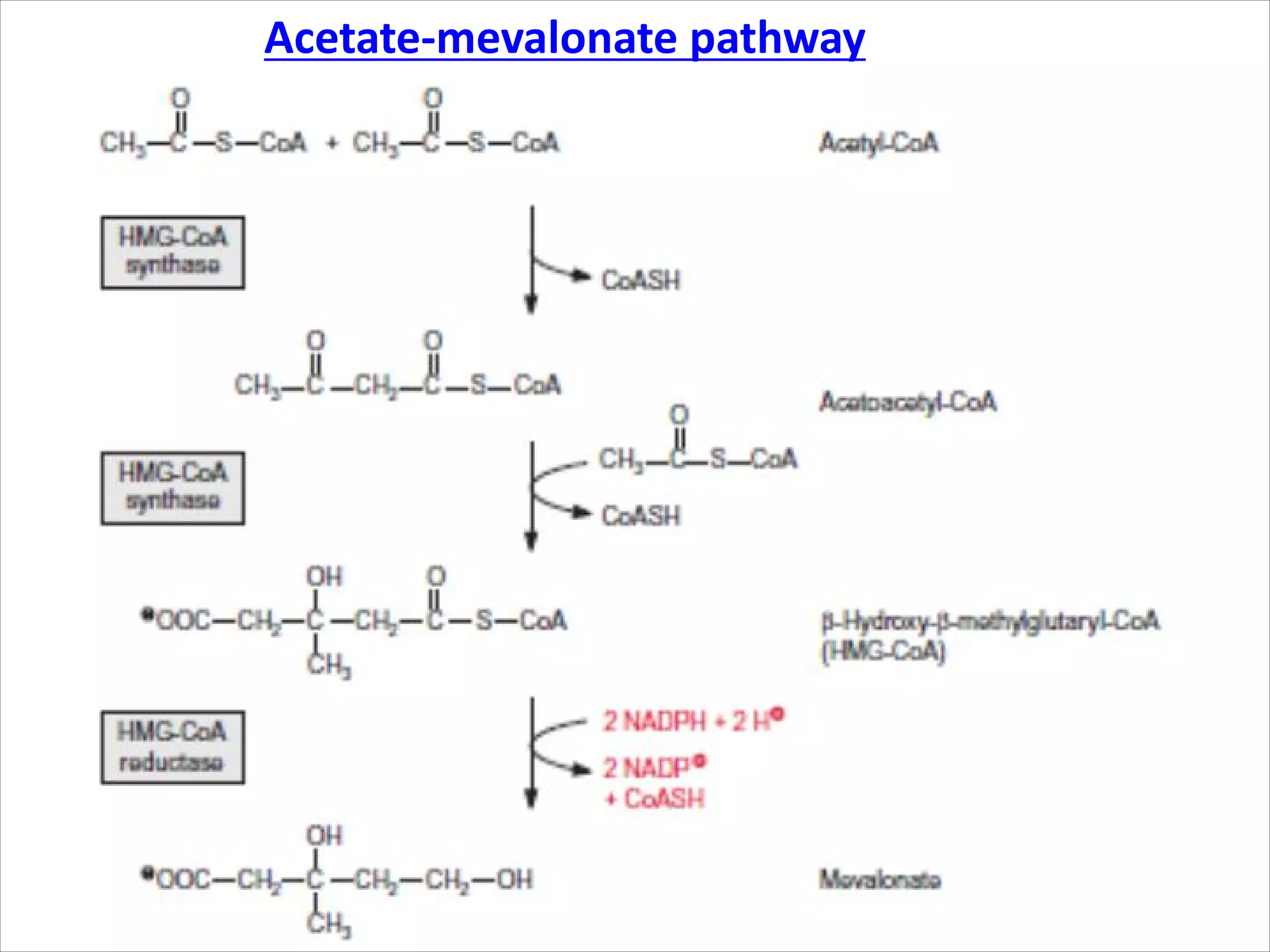
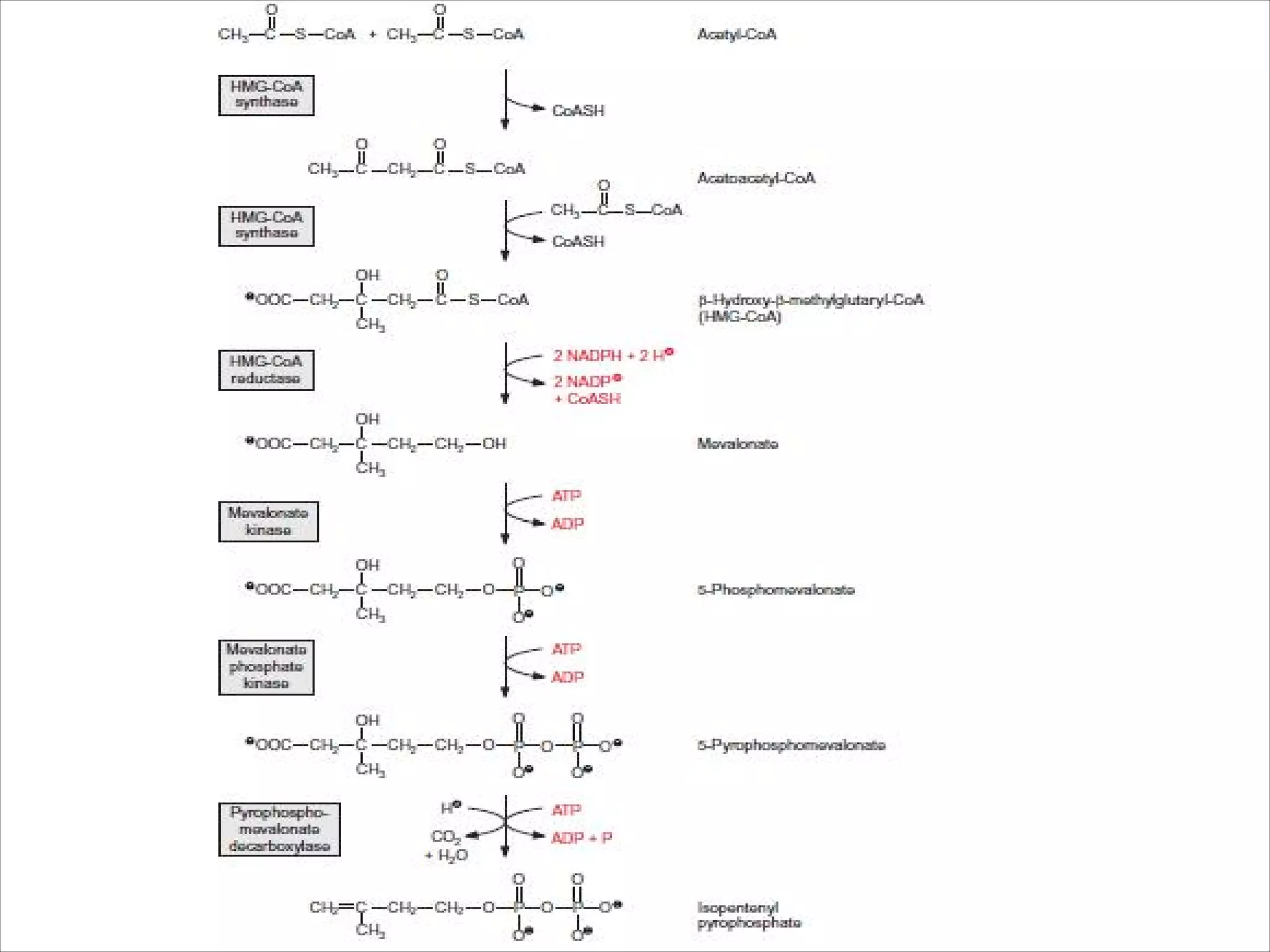
• 1. Acetate-mevalonate pathway: The synthesis of isopentenyl
pyrophosphate, termed the acetate-mevalonate pathway, is
located in the cytosol.
• Acetyl CoA is a precursor for the synthesis of isoprenoids in the
cytosol.
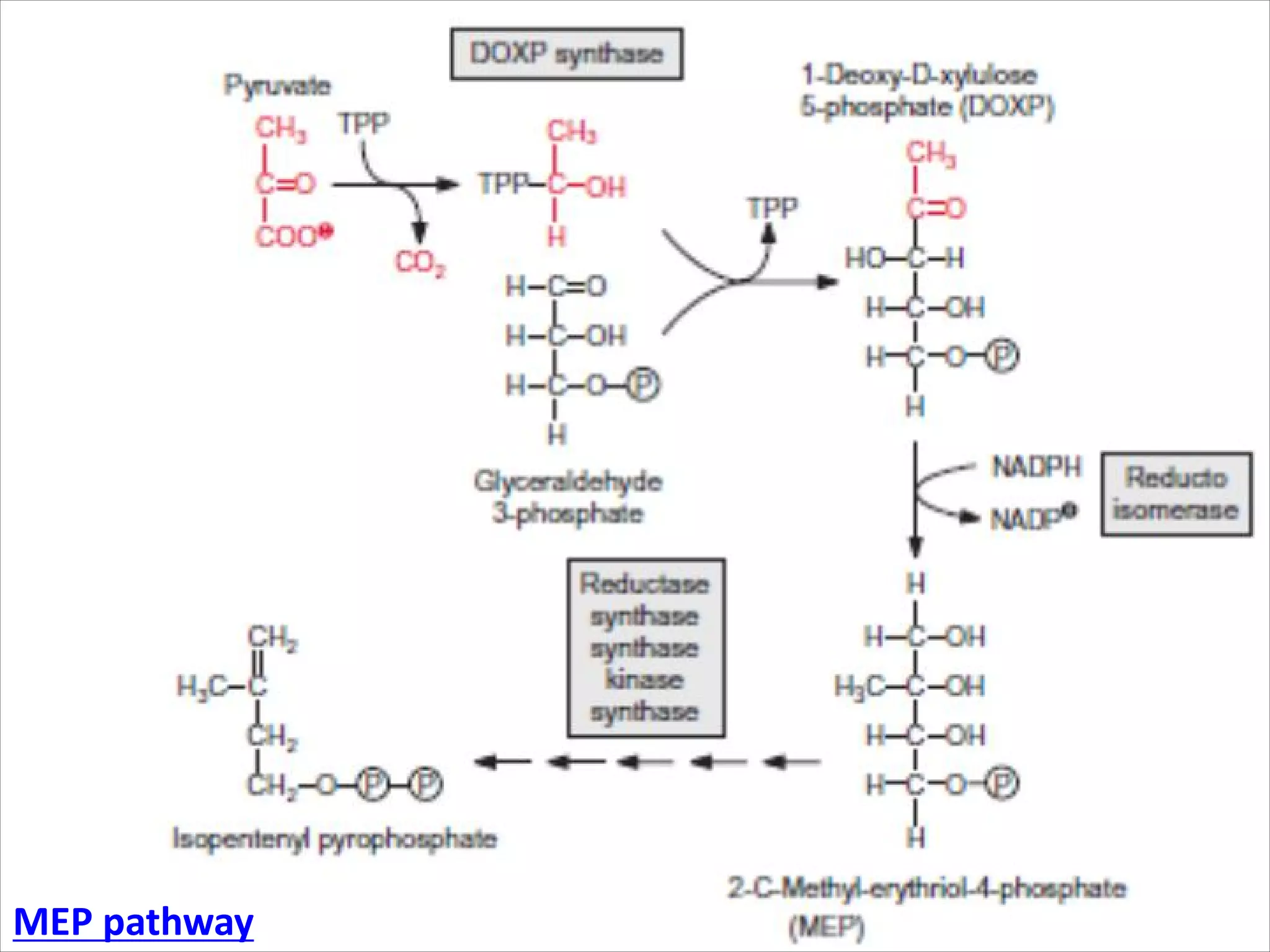
• 2. MEP(2-methyl erythriol 4-phosphate)-synthase pathway for
isoprenoids in plastids is present in bacteria, algae, and plants,
but not in animals
• Pyruvate and D-glyceraldehyde-3-phosphate are the precursors
for this synthesis
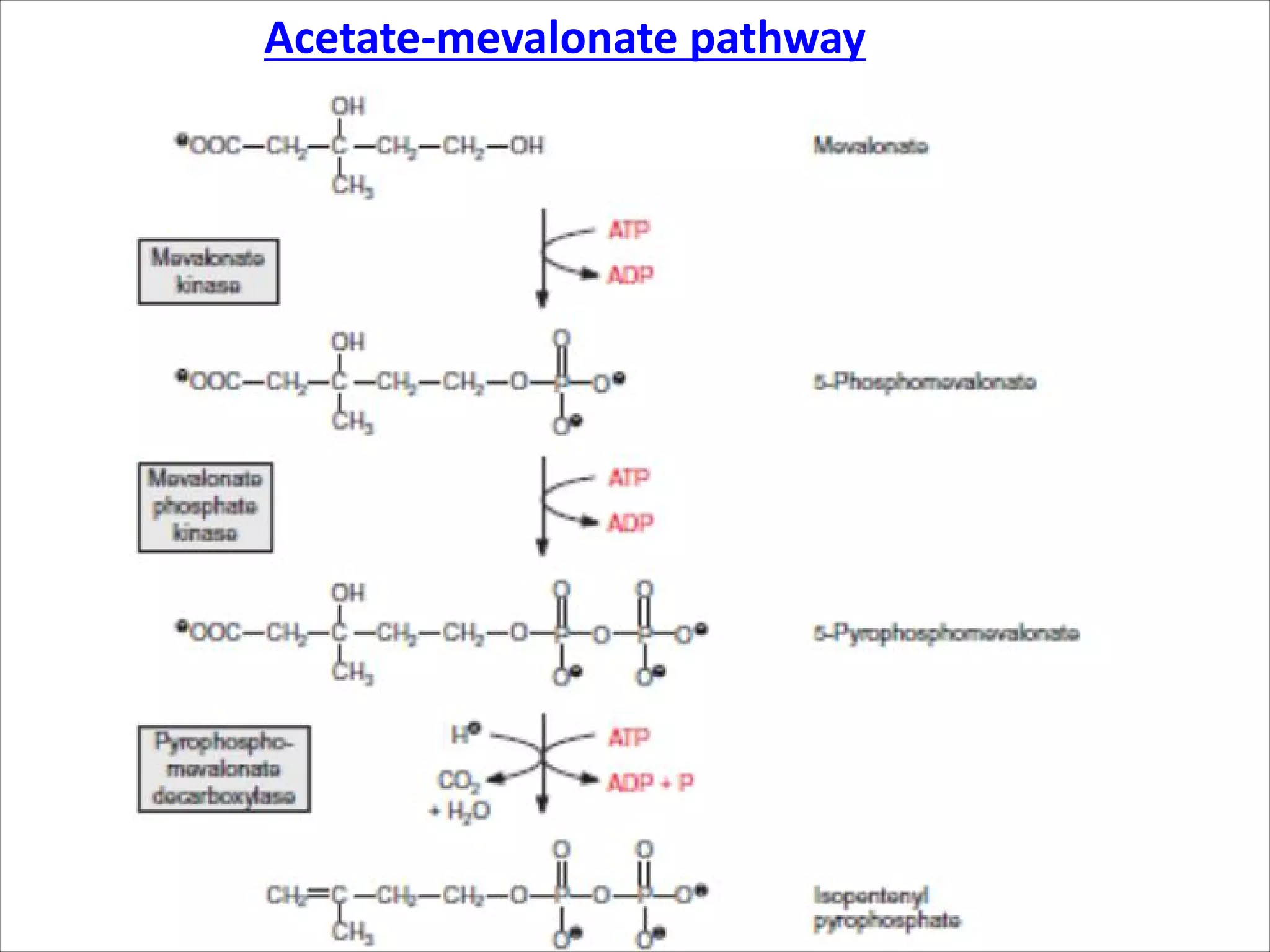
1. Acetate-mevalonate pathway
• Two molecules of acetyl CoA react to produce acetoacetyl CoA
and then with another acetyl CoA yielding β-hydroxy-β-
methylglutaryl CoA (HMG CoA).
• The esterified carboxyl group of HMG CoA is reduced by two
molecules of NADPH to a hydroxyl group, accompanied by
hydrolysis of the energy-rich thioester bond. Thus mevalonate is
formed in an irreversible reaction.
• A pyrophosphate ester is formed in two successive
phosphorylation steps, catalyzed by two different kinases.
• With consumption of a third molecule of ATP, a carbon-carbon
double bond is generated and the remaining carboxyl group is
removed.
• Isopentenyl pyrophosphate thus formed is the basic element for
the formation of an isoprenoid chain.
Acetate-mevalonate pathway
• Pyruvate and D-glyceraldehyde-3-phosphate are the
precursors for the synthesis of isopentyl
pyrophosphate
• Pyruvate is decarboxylated via thiamine
pyrophosphate (TPP), and then, react with
glyceraldehyde-3-phosphate to yield 1-deoxy-D-
xylulose-5-phosphate (DOXP).
• After isomerization and reduction by NADPH, 2-C-
methyl-Derythritol-4-phosphate (MEP) is synthesized.
• MEP is then activated by reacting with CTP to yield
CDP methyl erythriol.
• Two further reduction steps, followed by
dehydration and phosphorylation, finally yield
isopentenyl pyrophosphate.
2. MEP-synthase pathway
MEP pathway
The regulation of isoprenoid synthesis
• The rate of Isoprenoids synthesis can be efficiently
controlled via regulation of the corresponding enzyme
activities (e.g., terpene synthases) in the various cell
compartments.
• Results so far indicate that the synthesis of the different
isoprenoids is regulated primarily at the level of gene
expression.
• This is especially obvious when, after infections or
wounding, the isoprenoid metabolism is very rapidly
activated by elicitor-controlled gene expression.
• Competition may occur between isoprenoid synthesis for
maintenance and for defense.
• In tobacco, for instance, the fungal elicitor induced
phytoalexin synthesis blocks steroid synthesis.
3. Phenylpropanoids
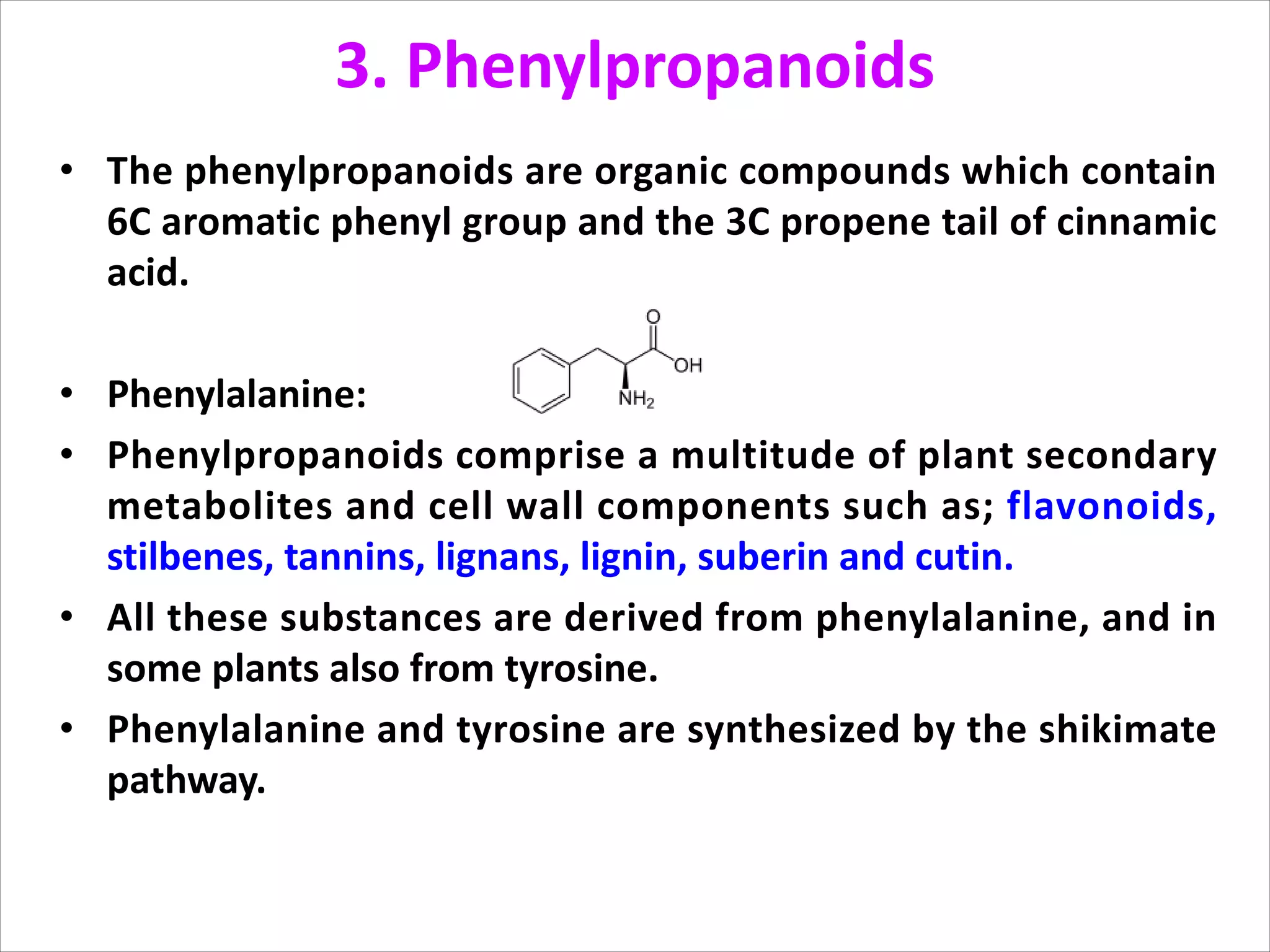
• The phenylpropanoids are organic compounds which contain
6C aromatic phenyl group and the 3C propene tail of cinnamic
acid.
• Phenylalanine:
• Phenylpropanoids comprise a multitude of plant secondary
metabolites and cell wall components such as; flavonoids,
stilbenes, tannins, lignans, lignin, suberin and cutin.
• All these substances are derived from phenylalanine, and in
some plants also from tyrosine.
• Phenylalanine and tyrosine are synthesized by the shikimate
pathway.
Table: Some functions of phenylpropanoids
Phenylpropanoids Functions
Coumarins Antibiotics, toxins against
browsing animals
Lignan Antibiotics, toxins against
browsing animals
Lignin Cell wall constituent
Suberin and cutin Formation of impermeable layers
Stilbenes Antibiotics, especially fungicides
Flavonoids Antibiotics, signal for interaction
with symbionts, flower pigments,
light protection substances
Tannin Tannins, fungicides, protection
against herbivores
4. Flavonoids
• Probably the largest group of phenylpropanoids is that
of the flavonoids, in which a second aromatic ring is
linked to the 9’-C atom of the phenylpropanoid moiety.
• Chalcone is a precursor for the synthesis of flavonoids
• Chalcone is converted to flavanone by chalcone
isomerase.
• The middle ring is formed by the addition of a phenolic
hydroxyl group to the double bond of the carbon chain
connecting the two phenolic rings.
• Flavanone is the precursor for a variety of flavonoids
such as; flavones, isoflavones, flavonol and
anthocyanidins.
Fig. Chalcone is the precursor for the synthesis of various flavonoids
Functions of Flavonoid
• Flavonoids are involved in
– UV filtration
– symbiotic nitrogen fixation
– floral pigmentation
– Act as chemical messengers
– physiological regulators, and
– cell cycle inhibitors
• Flavonoids have inhibitory activity against
organisms that cause plant diseases,
e.g. Fusarium oxysporum
Anthocyanins
• Anthocyanins are water-soluble vacuolar pigments that may
appear red, purple, or blue depending on the pH.
• T h e y b e l o n g t o a p a r e n t c l a s s o f m o l e c u l e s
called flavonoids synthesized via the phenylpropanoid pathway.
• Anthocyanins are derived from anthocyanidins by adding
pendant sugars.
Fig. Pelargonidin, an anthocyanidin is a flower pigment
• Functions of anthocyanin:
• In flowers, bright-reds and -purples are adaptive
for attracting pollinators.
• In fruits, the colorful skins also attract the
attention of animals, which may eat the fruits
and disperse the seeds.
• In photosynthetic tissues (such as leaves and
sometimes stems), anthocyanins have been
shown to act as a "sunscreen", protecting cells
from high-light damage by absorbing blue-green
and ultraviolet light, thereby protecting the
tissues from photoinhibition, or high-light stress.

Topic 14.pdf

  • 1.
  • 2.
    Secondary metabolites • Primarymetabolite – directly involved in normal growth, development, and reproduction. – eg: carbohydrates, amino acids, fatty acids, cytochromes, chlorophylls, and metabolic intermediates • Secondary metabolites – not directly involved in those processes, but fulfill specific ecological functions in plants. – eg: alkaloids, isoprenoids, and phenylpropanoids.
  • 3.
    Plant protection bysecondary metabolites • Many plants protect themselves by producing toxic proteins (e.g., amylase, proteinase inhibitors or lectins), which impair the digestion of herbivores. – eg. maize plants mobilize a protease that destroys the caterpillar’s intestine. • Secondary metabolites include natural pesticides that protect plants against herbivores and pathogenic microorganisms. • Other defense components are only synthesized by the plant after browsing damage (induced defense).
  • 4.
    Phytoalexins • Defense compoundsagainst microorganisms • Phytoalexins: isoprenoids, flavonoids, and stilbenes, which act as antibiotics against pathogenic microorganisms. • Plant root exudates contain bacteriostatic compounds such as cumaric acid, 3-indol propionic acid & methyl p-hydroxybenzoate. • Plants produce defense aggressive oxygen compounds eg. (•O2 -) and H2 O2 , NO, and enzymes, eg. β- glucanases, chitinases, and proteinases, which damage the cell walls of bacteria and fungi.
  • 5.
    • Elicitors areoften proteins excreted by the pathogens to attack plant cells (e.g., cell-degrading enzymes). • Elicitors are bound to specific receptors on the outer surface of the plasma membrane of the plant cell. • The binding of the elicitor releases signal in which protein kinases and signal substances such as salicylic acid and jasmonic acid participate, and which finally induce the transcription of genes for the synthesis of phytoalexins, reactive oxygen compounds, and defense enzymes. • Elicitors may also cause an infected cell to die and the surrounding cells to die with it. • This programmed cell death, called a hypersensitive response, serves to protect the plant against further spreading of the infection. Elicitors
  • 6.
    1. Alkaloids • Alkaloidsare secondary metabolites that synthesized from amino acids and contain one or several N atoms as constituents of heterocycles. • Alkaloids are classified according to their heterocycles: • Coniine, a piperidine alkaloid, is a very potent poison in hemlock. – Socrates died when he was forced to drink this poison. • Nicotine, which also is very toxic, contains a pyridine and a pyrrolidine ring. – It is synthesized in the roots of tobacco plants. – Nicotine sulfate, a by-product of the tobacco industry, is used as a very potent insecticide (e.g., for fumigating greenhouses).
  • 7.
    • Cocaine, thewell-known narcotic, contains tropane as a heterocycle. – Cleopatra allegedly used extracts containing atropine to dilate her pupils to appear more attractive. • Quinine, a quinoline heterocycle from the bark of Chinchuna officinalis (South America), was known as antimalarial drug. • Morphine an isoquinoline alkaloid is an important pain killer and is also a precursor for the synthesis of heroin. • Caffeine, the stimulant of coffee, has purine as the heterocycle. • Chinolizidin alkaloids, such as lupinin and lupanin, are synthesized from three lysine molecules. – Due to the toxicity of these compounds sheep frequently die in the autumn from eating too much lupine seed. Alkaloids
  • 8.
    Figure: Alkaloids and theamino acids from which they are synthesized. The heterocycles, after which the alkaloids are classified, are colored red; their names are given in brackets.
  • 9.
    2. Isoprenoid • Isoprenoid,composed of two/more hydrocarbons, with each unit consisting of 5C atoms arranged in a specific pattern. • Commercial importance: aroma substances for food, beverages, and cosmetics, as vitamins (A, D, E), natural insecticides (pyrethrin), solvents (turpentine), and as rubber. • Important natural compounds, which are utilized as pharmaceuticals or their precursors. • Some examples of terpenes. – Limonene, an aromatic substance from lemon oil, is a terpene with 10 C atoms and is called a monoterpene. – Carotene, with 40 C atoms, is accordingly a tetraterpene. – Rubber is a polyterpene with about 1,500 C atoms. It is obtained from the latex of the rubber tree Hevea brasiliensis.
  • 10.
  • 11.
    Terpenes are aclass of natural products consisting of compounds with the formula (C5H8)n. • Hemiterpenes consist of a single isoprene unit. • Monoterpenes consist of two isoprene units and have the molecular formula C10H16. • Sesquiterpenes consist of three isoprene units and have the molecular formula C15H24. • Diterpenes are composed of four isoprene units and have the molecular formula C20H32. • Sesterterpenes, terpenes having 25 carbons and five isoprene units, are rare relative to the other sizes. • Triterpenes consist of six isoprene units and have the molecular formula C30H48. • Tetraterpenes contain eight isoprene units and have the molecular formula C40H64. • Polyterpenes consist of long chains of many isoprene units.
  • 12.
  • 13.
    Synthesis of isoprenoids •Higher plants have two different synthesis pathways for isoprenoids, one located in the cytosol and the other in the plastids. • 1. Acetate-mevalonate pathway: The synthesis of isopentenyl pyrophosphate, termed the acetate-mevalonate pathway, is located in the cytosol. • Acetyl CoA is a precursor for the synthesis of isoprenoids in the cytosol. • 2. MEP(2-methyl erythriol 4-phosphate)-synthase pathway for isoprenoids in plastids is present in bacteria, algae, and plants, but not in animals • Pyruvate and D-glyceraldehyde-3-phosphate are the precursors for this synthesis
  • 14.
    1. Acetate-mevalonate pathway •Two molecules of acetyl CoA react to produce acetoacetyl CoA and then with another acetyl CoA yielding β-hydroxy-β- methylglutaryl CoA (HMG CoA). • The esterified carboxyl group of HMG CoA is reduced by two molecules of NADPH to a hydroxyl group, accompanied by hydrolysis of the energy-rich thioester bond. Thus mevalonate is formed in an irreversible reaction. • A pyrophosphate ester is formed in two successive phosphorylation steps, catalyzed by two different kinases. • With consumption of a third molecule of ATP, a carbon-carbon double bond is generated and the remaining carboxyl group is removed. • Isopentenyl pyrophosphate thus formed is the basic element for the formation of an isoprenoid chain.
  • 15.
  • 16.
  • 18.
    • Pyruvate andD-glyceraldehyde-3-phosphate are the precursors for the synthesis of isopentyl pyrophosphate • Pyruvate is decarboxylated via thiamine pyrophosphate (TPP), and then, react with glyceraldehyde-3-phosphate to yield 1-deoxy-D- xylulose-5-phosphate (DOXP). • After isomerization and reduction by NADPH, 2-C- methyl-Derythritol-4-phosphate (MEP) is synthesized. • MEP is then activated by reacting with CTP to yield CDP methyl erythriol. • Two further reduction steps, followed by dehydration and phosphorylation, finally yield isopentenyl pyrophosphate. 2. MEP-synthase pathway
  • 19.
  • 20.
    The regulation ofisoprenoid synthesis • The rate of Isoprenoids synthesis can be efficiently controlled via regulation of the corresponding enzyme activities (e.g., terpene synthases) in the various cell compartments. • Results so far indicate that the synthesis of the different isoprenoids is regulated primarily at the level of gene expression. • This is especially obvious when, after infections or wounding, the isoprenoid metabolism is very rapidly activated by elicitor-controlled gene expression. • Competition may occur between isoprenoid synthesis for maintenance and for defense. • In tobacco, for instance, the fungal elicitor induced phytoalexin synthesis blocks steroid synthesis.
  • 21.
    3. Phenylpropanoids • Thephenylpropanoids are organic compounds which contain 6C aromatic phenyl group and the 3C propene tail of cinnamic acid. • Phenylalanine: • Phenylpropanoids comprise a multitude of plant secondary metabolites and cell wall components such as; flavonoids, stilbenes, tannins, lignans, lignin, suberin and cutin. • All these substances are derived from phenylalanine, and in some plants also from tyrosine. • Phenylalanine and tyrosine are synthesized by the shikimate pathway.
  • 22.
    Table: Some functionsof phenylpropanoids Phenylpropanoids Functions Coumarins Antibiotics, toxins against browsing animals Lignan Antibiotics, toxins against browsing animals Lignin Cell wall constituent Suberin and cutin Formation of impermeable layers Stilbenes Antibiotics, especially fungicides Flavonoids Antibiotics, signal for interaction with symbionts, flower pigments, light protection substances Tannin Tannins, fungicides, protection against herbivores
  • 23.
    4. Flavonoids • Probablythe largest group of phenylpropanoids is that of the flavonoids, in which a second aromatic ring is linked to the 9’-C atom of the phenylpropanoid moiety. • Chalcone is a precursor for the synthesis of flavonoids • Chalcone is converted to flavanone by chalcone isomerase. • The middle ring is formed by the addition of a phenolic hydroxyl group to the double bond of the carbon chain connecting the two phenolic rings. • Flavanone is the precursor for a variety of flavonoids such as; flavones, isoflavones, flavonol and anthocyanidins.
  • 24.
    Fig. Chalcone isthe precursor for the synthesis of various flavonoids
  • 25.
    Functions of Flavonoid •Flavonoids are involved in – UV filtration – symbiotic nitrogen fixation – floral pigmentation – Act as chemical messengers – physiological regulators, and – cell cycle inhibitors • Flavonoids have inhibitory activity against organisms that cause plant diseases, e.g. Fusarium oxysporum
  • 26.
    Anthocyanins • Anthocyanins arewater-soluble vacuolar pigments that may appear red, purple, or blue depending on the pH. • T h e y b e l o n g t o a p a r e n t c l a s s o f m o l e c u l e s called flavonoids synthesized via the phenylpropanoid pathway. • Anthocyanins are derived from anthocyanidins by adding pendant sugars. Fig. Pelargonidin, an anthocyanidin is a flower pigment
  • 27.
    • Functions ofanthocyanin: • In flowers, bright-reds and -purples are adaptive for attracting pollinators. • In fruits, the colorful skins also attract the attention of animals, which may eat the fruits and disperse the seeds. • In photosynthetic tissues (such as leaves and sometimes stems), anthocyanins have been shown to act as a "sunscreen", protecting cells from high-light damage by absorbing blue-green and ultraviolet light, thereby protecting the tissues from photoinhibition, or high-light stress.