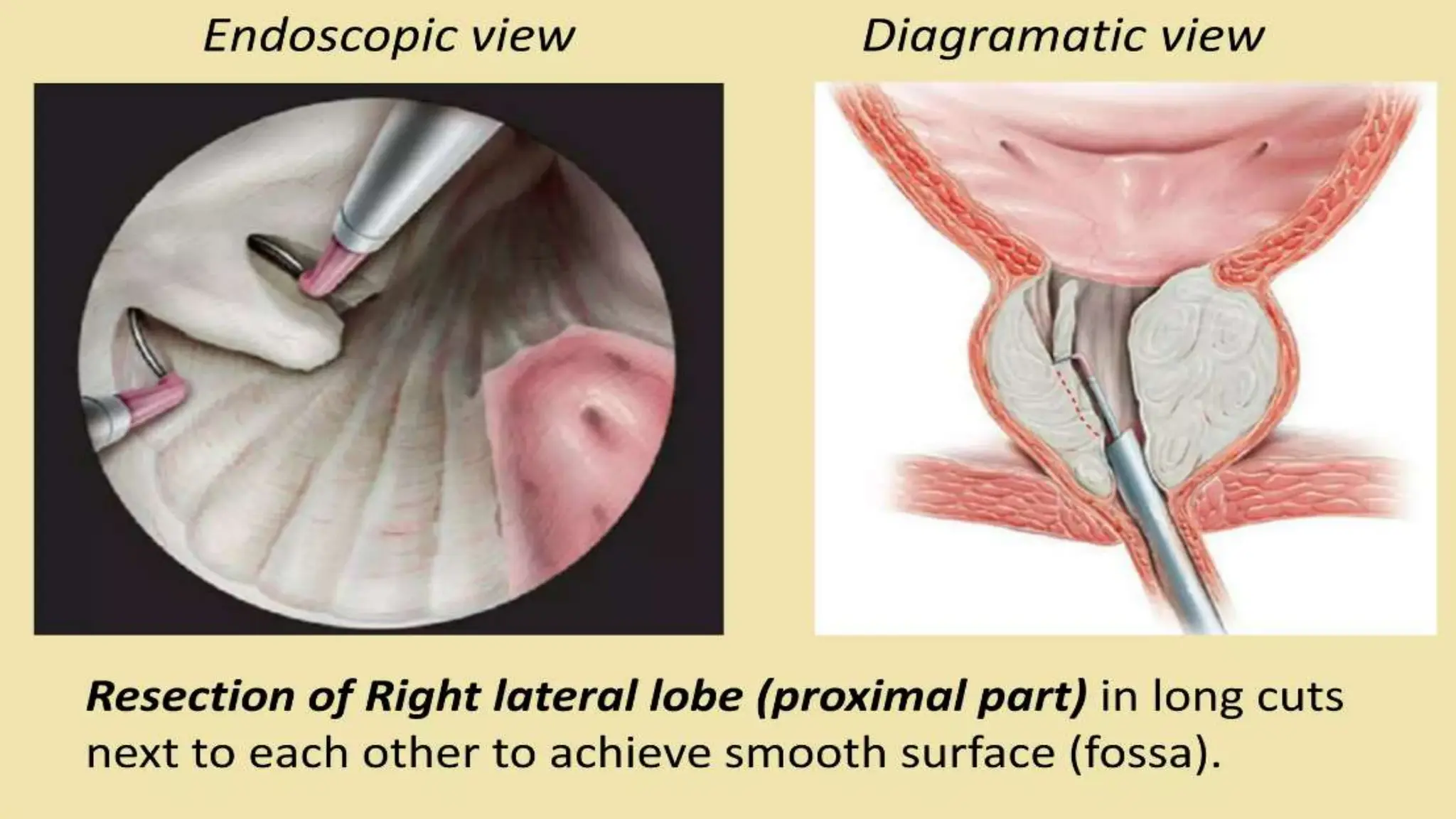
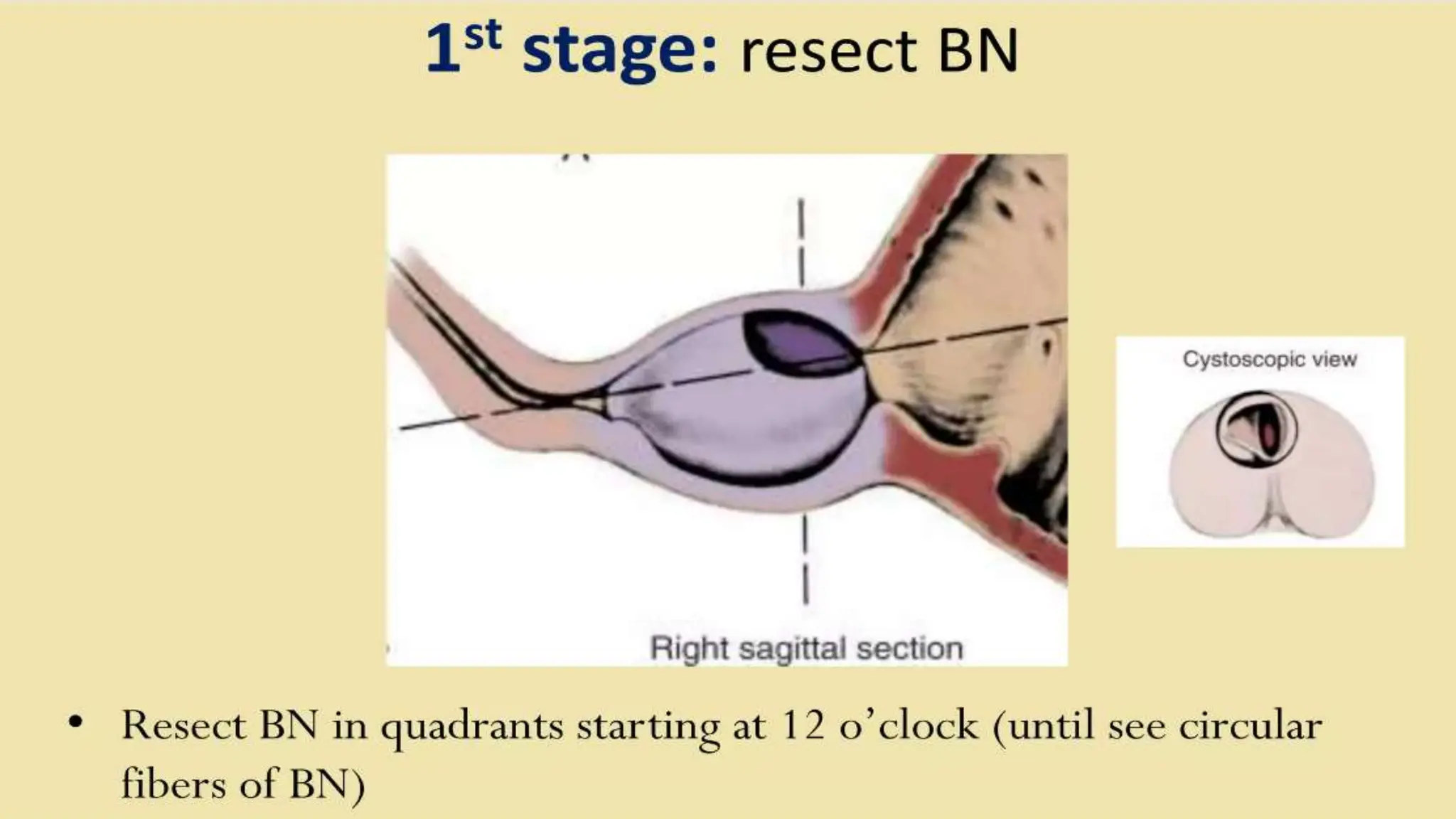
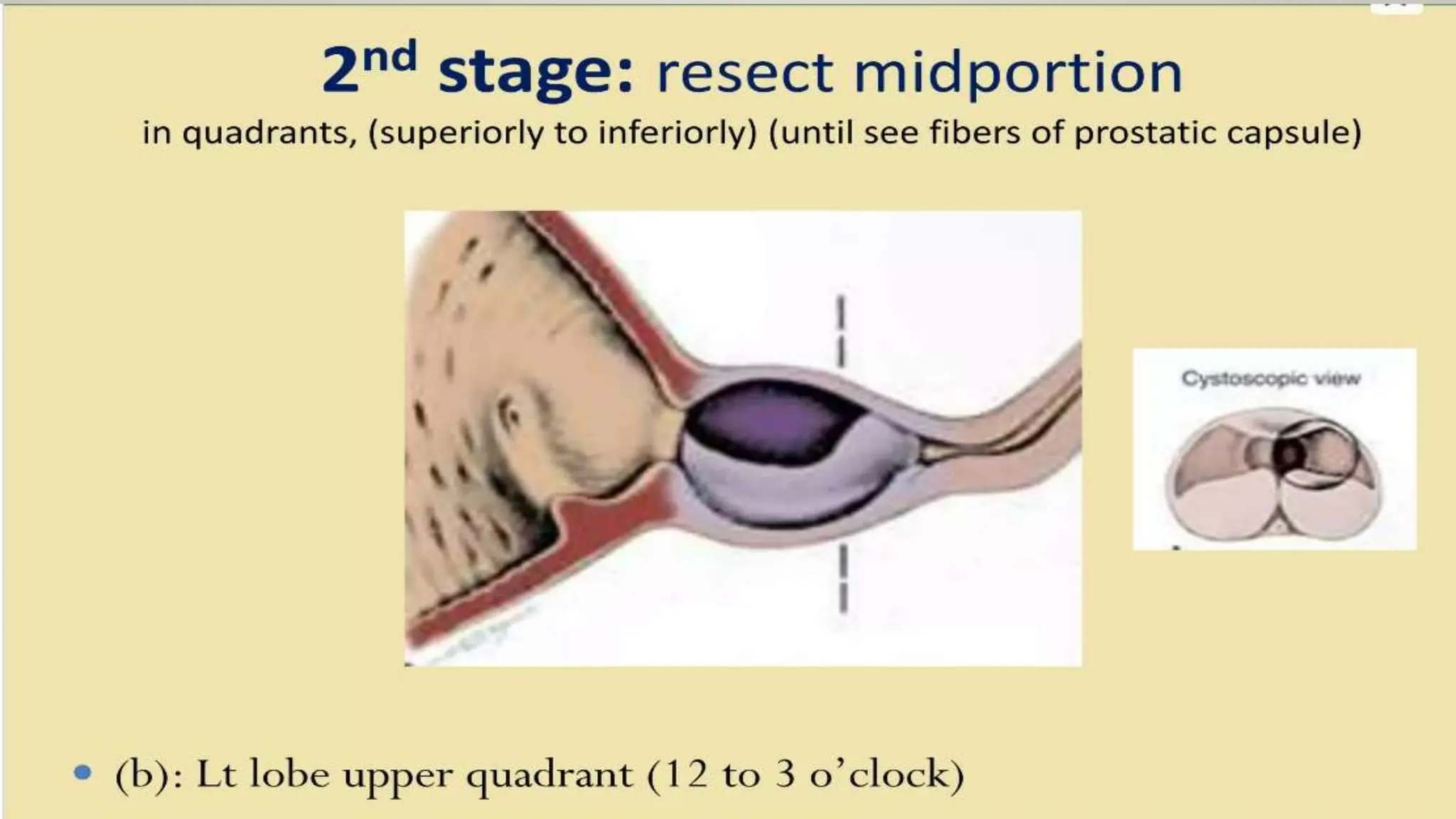
TRANSURETHRAL RESECTION OF PROSTATE
PRESENTER-DR LALTHLAMUANA
DNB RESIDENT GENERAL SURGERY
DATE:21/5/24
INTRODUCTION
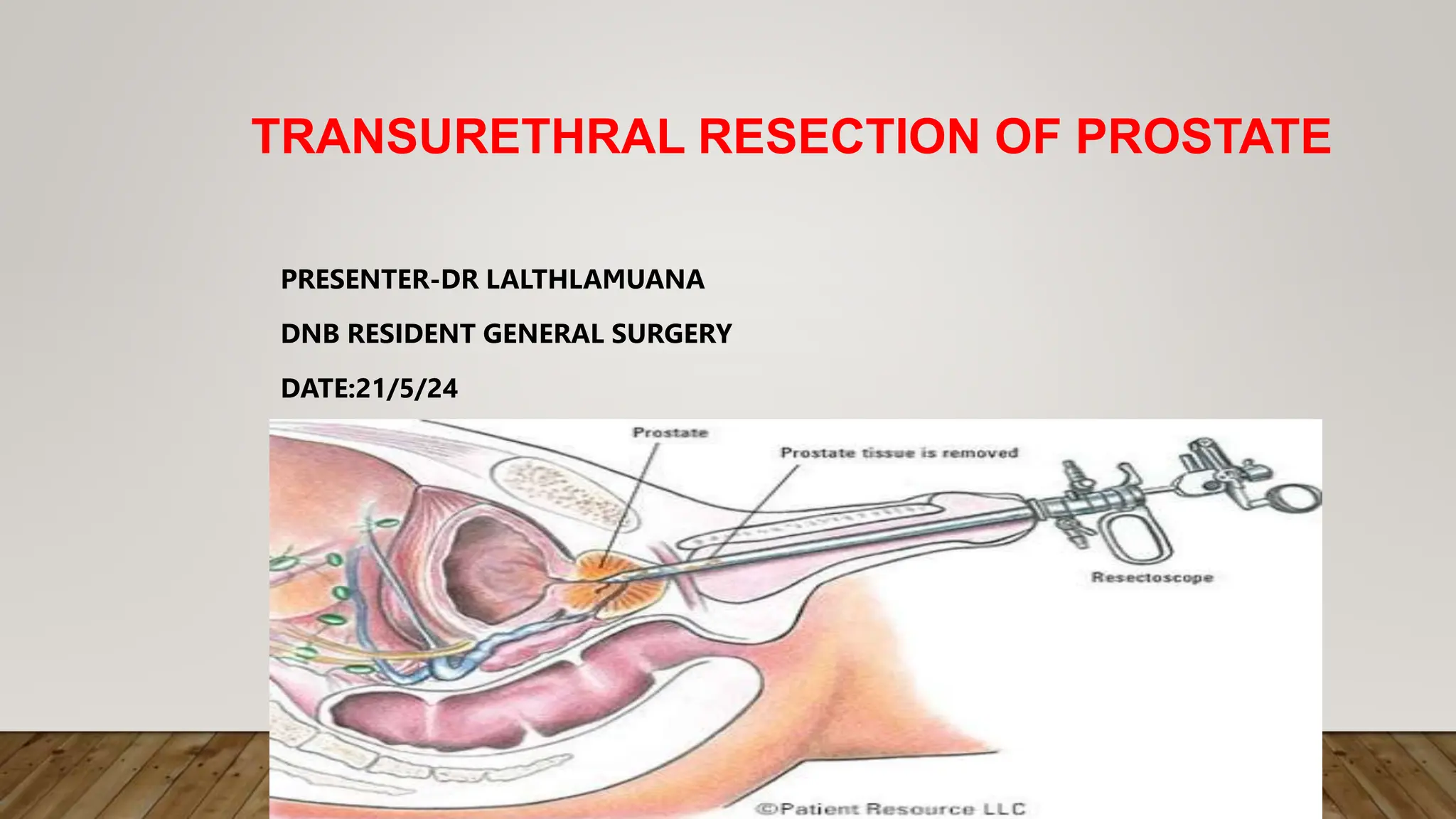
• A transurethral resection of the prostate (TURP) is surgery to remove parts of the prostate
gland through the penis.
• No incisions are needed.
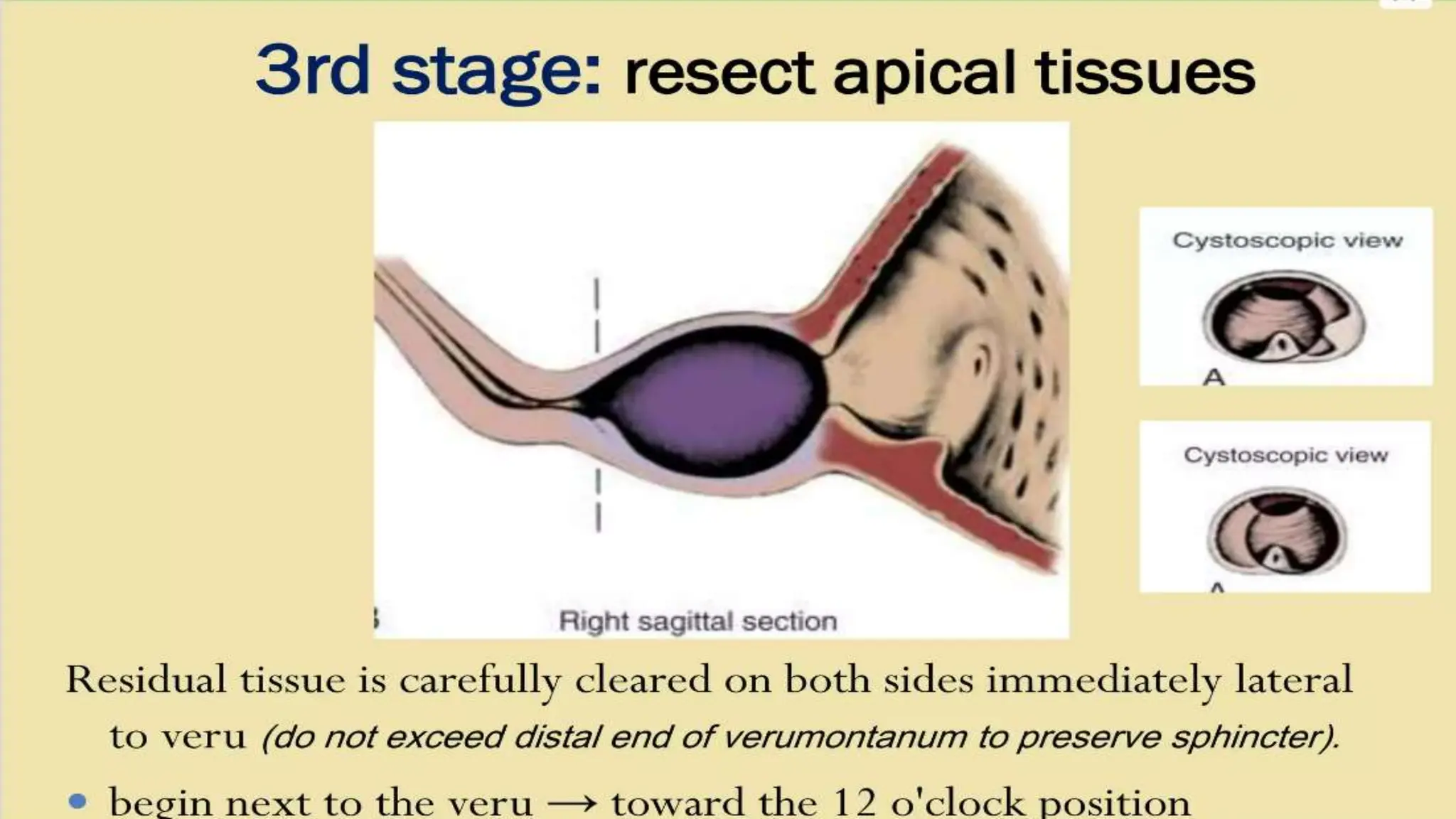
• The surgeon reaches the prostate by putting an instrument into the end of the penis and through
the urethra
• This instrument is called a resectoscope it contains a lighted camera and valves that control
irrigating fluid.
INDICATION FOR TURP
• Benign prostatic hyperplasia with symptoms should be treated with
medication, until complications make surgery necessary:
• Recurrent urinary retention
• Recurrent urinary tract infection
• Recurrent hematuria
• Bladder stones
• Chronic kidney disease due to insufficient bladder emptying
• Large diverticula of the bladder
ANATOMY OF PROSTATE GLAND
• Pyramidal shaped organ
• Lies below urinary bladder & located infront of the rectum, posterior to the pubic symphysis & superior
to the perineal membrane
• Normal weight- 20 g
• Encircles urethera as it emerges from base of bladder
• It Is enclosed within a capsule composed of collagen, elasten & large no. of smooth muscles
Microscopic anatomy
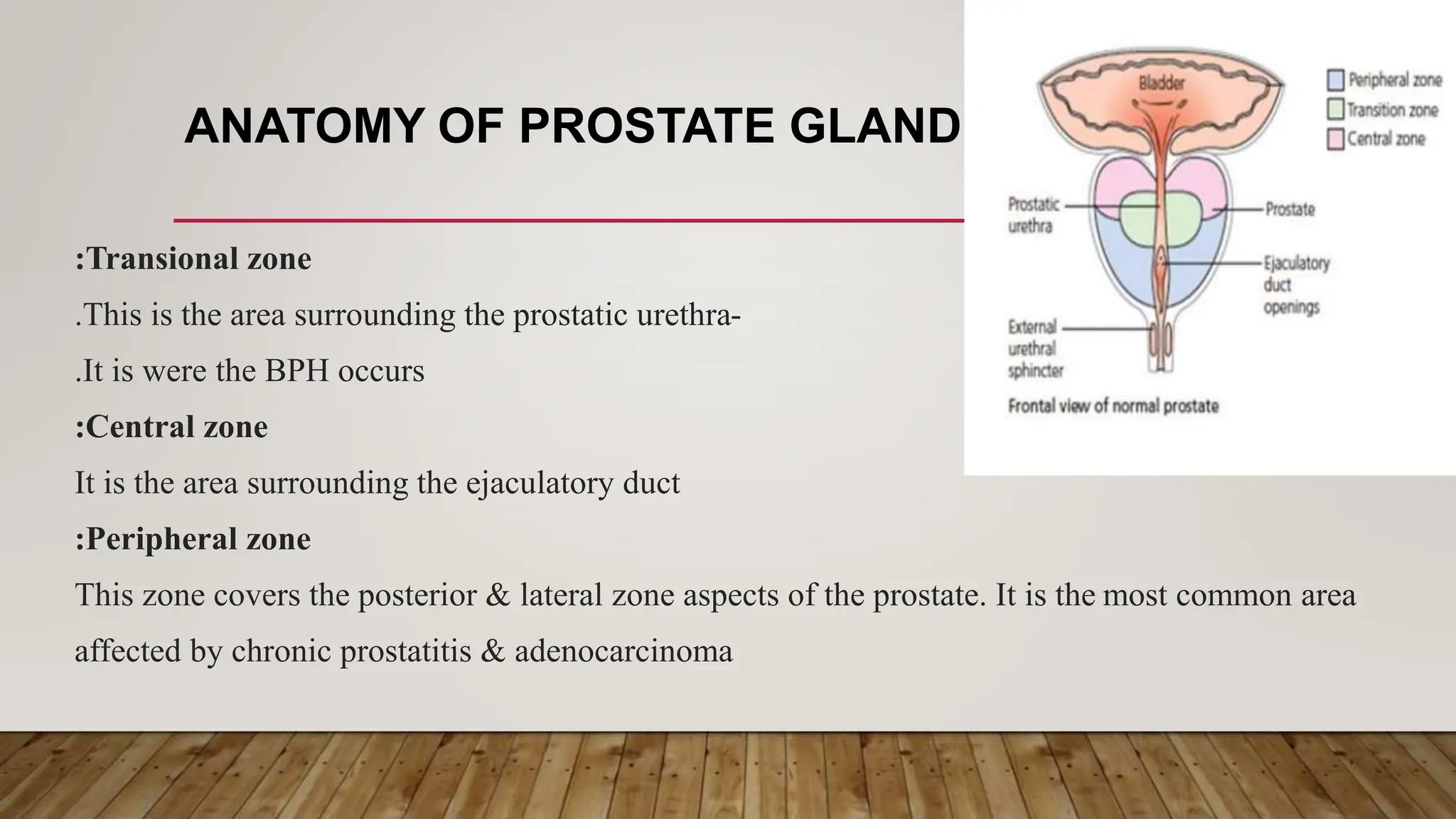
Transitional.1 -
Central.2 -
periphery zone. 3
ANATOMY OF PROSTATE GLAND
:Transional zone
.This is the area surrounding the prostatic urethra-
.It is were the BPH occurs
:Central zone
It is the area surrounding the ejaculatory duct
:Peripheral zone
This zone covers the posterior & lateral zone aspects of the prostate. It is the most common area
affected by chronic prostatitis & adenocarcinoma
ANATOMY OF PROSTATE GLAND
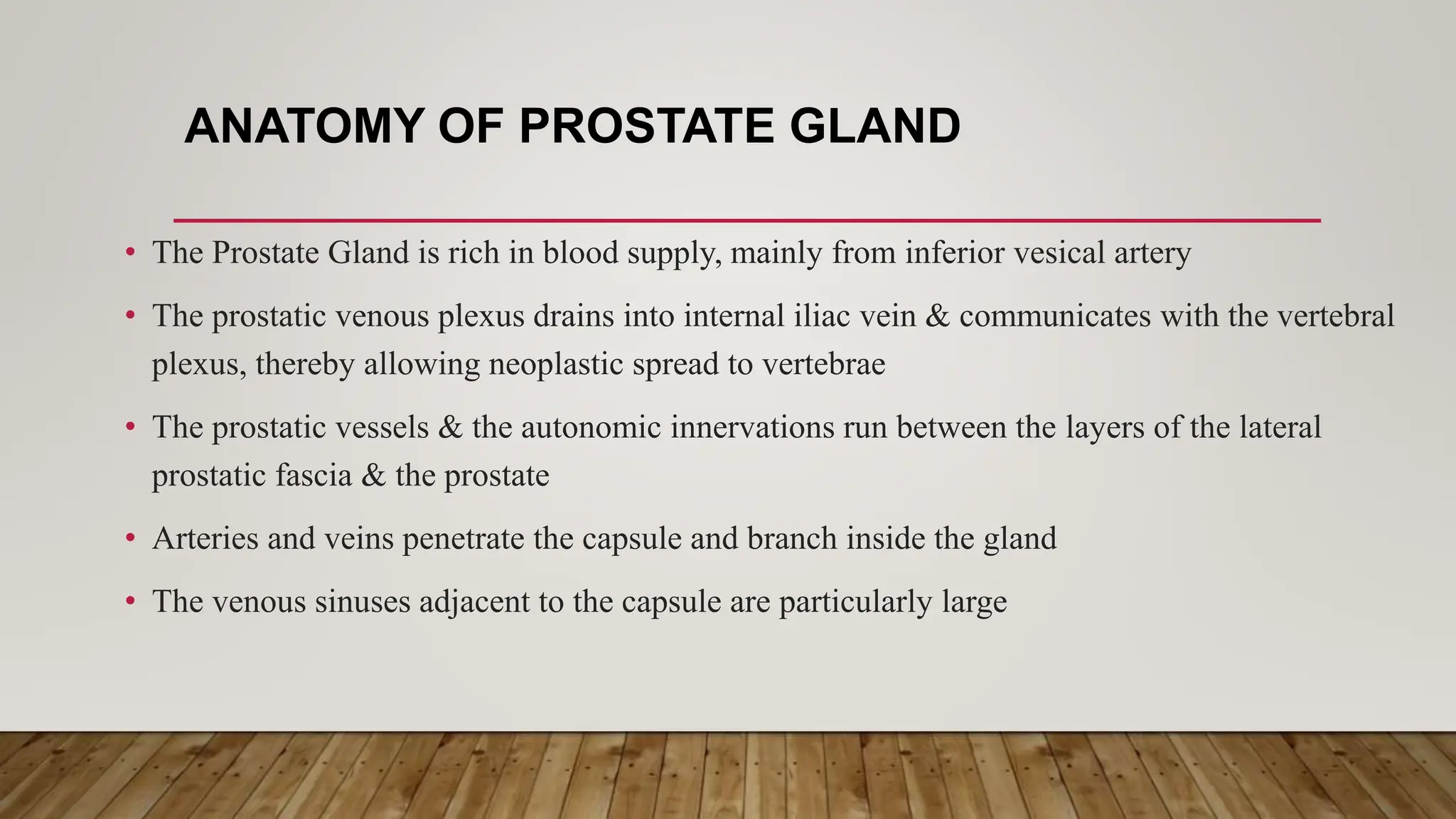
• The Prostate Gland is rich in blood supply, mainly from inferior vesical artery
• The prostatic venous plexus drains into internal iliac vein & communicates with the vertebral
plexus, thereby allowing neoplastic spread to vertebrae
• The prostatic vessels & the autonomic innervations run between the layers of the lateral
prostatic fascia & the prostate
• Arteries and veins penetrate the capsule and branch inside the gland
• The venous sinuses adjacent to the capsule are particularly large
ANATOMY OF PROSTATE GLAND
• Nerve Supply
Sympathetic(T12-L2) input via the hypogastric nerve and parasympathetic(S2-S4) input via the
pelvic nerve.
SURGICAL PROCEDURE
TURP - performed by inserting a-
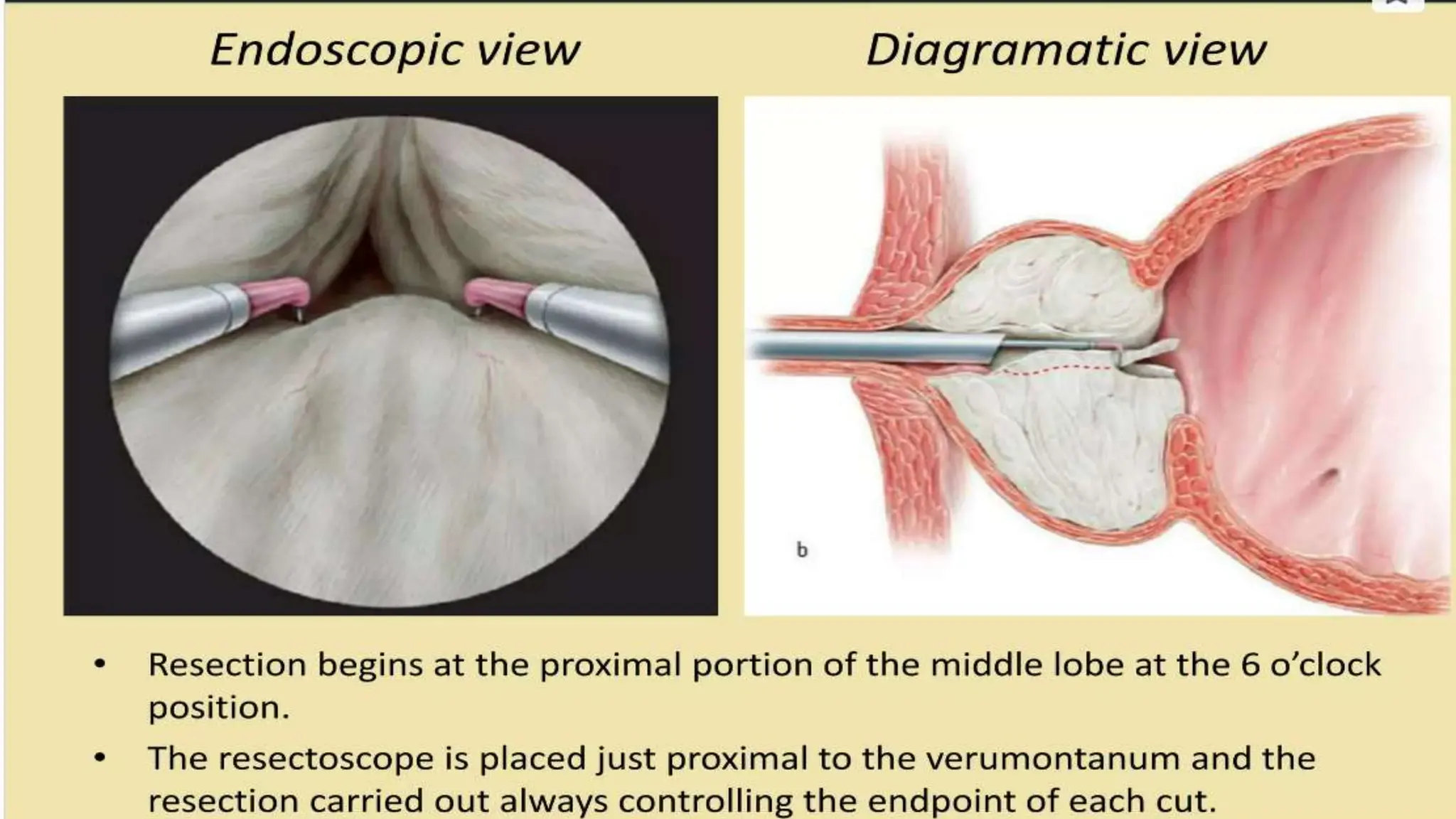
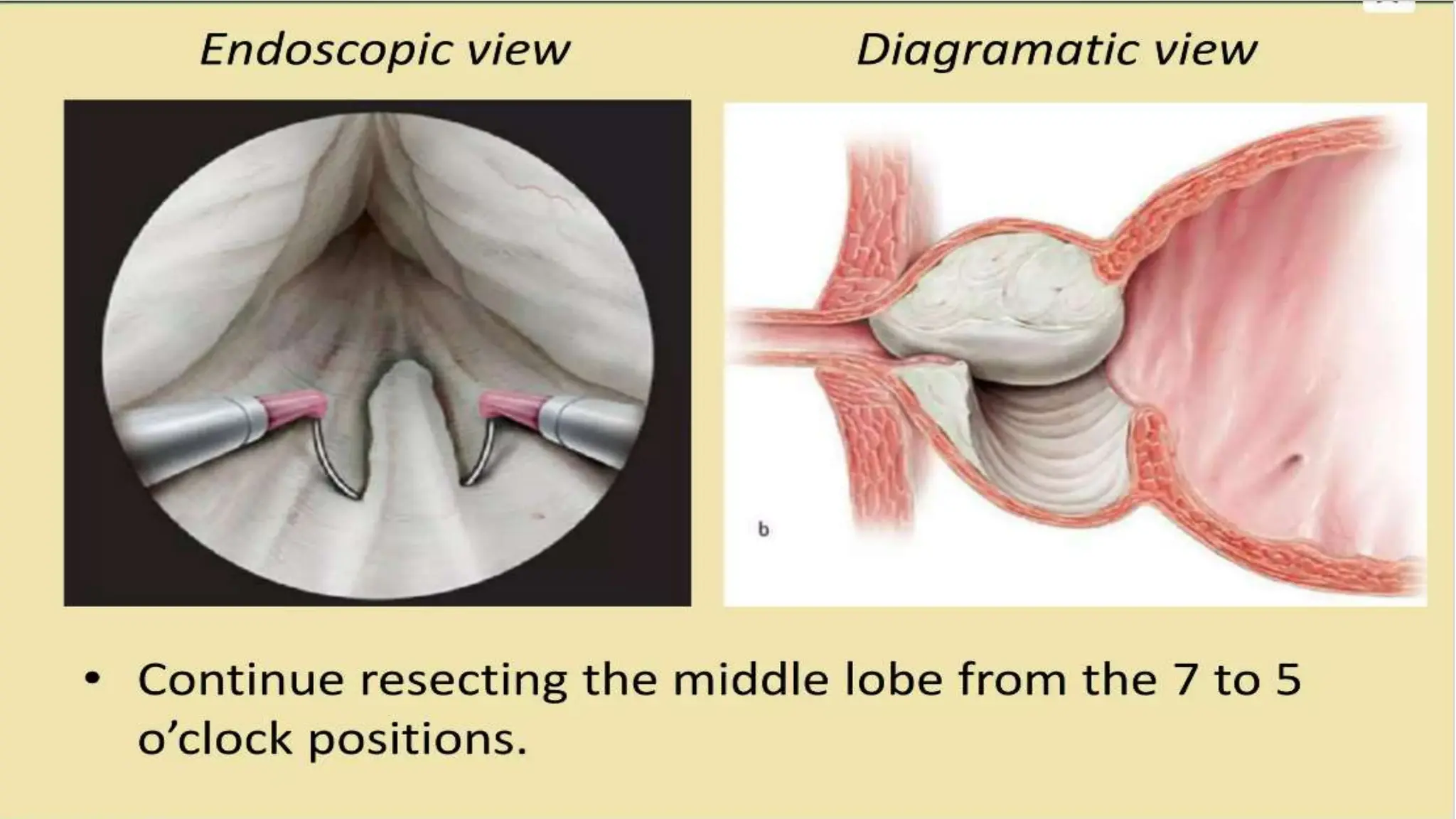
• Resectoscope through urethra
• Prostatic tissue is resected into pieces with an electrically powered cutting-
• Coagulating metal loop
• Pieces washed out by irrigating solution
• Prostatic capsule preserved-
• If violated,-
large amounts of irrigating fluid is absorbed into circulation, periprostatic
and retroperitoneal spaces
SURGICAL PROCEDURE
• Surgery normally takes 30-60 mins
• Depending on size of gland and experience of surgeon
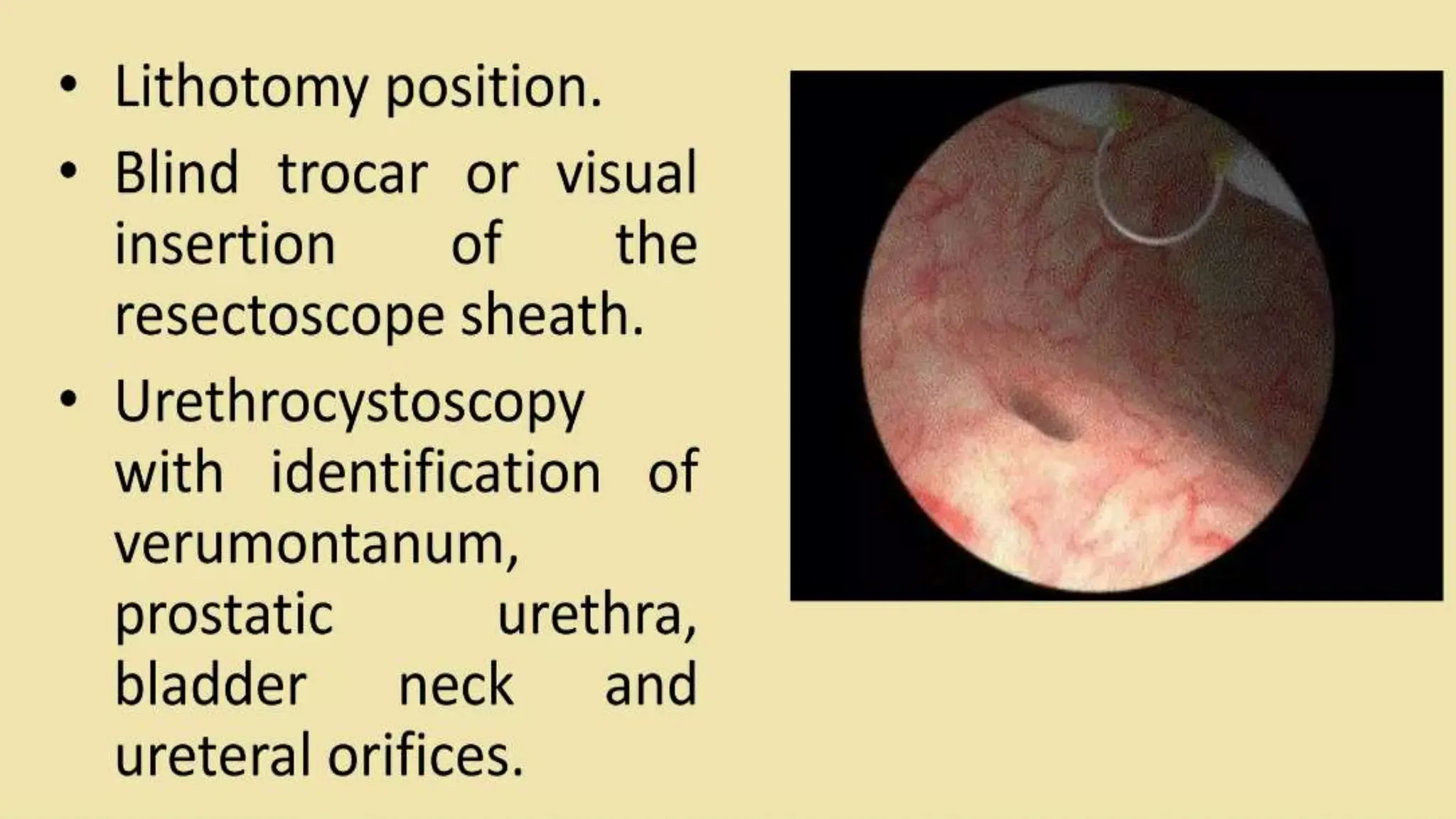
• Position- Lithotomy position
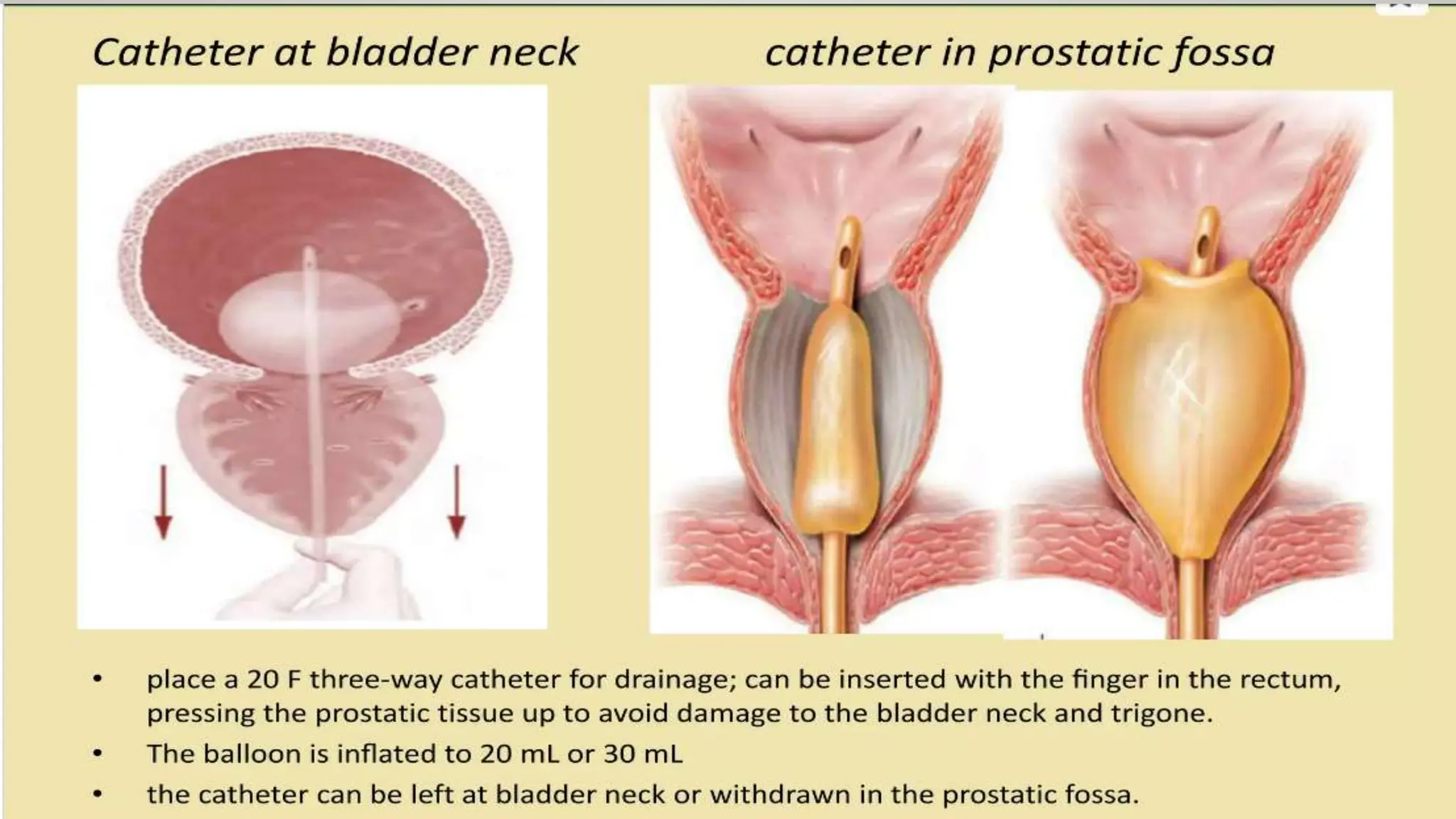
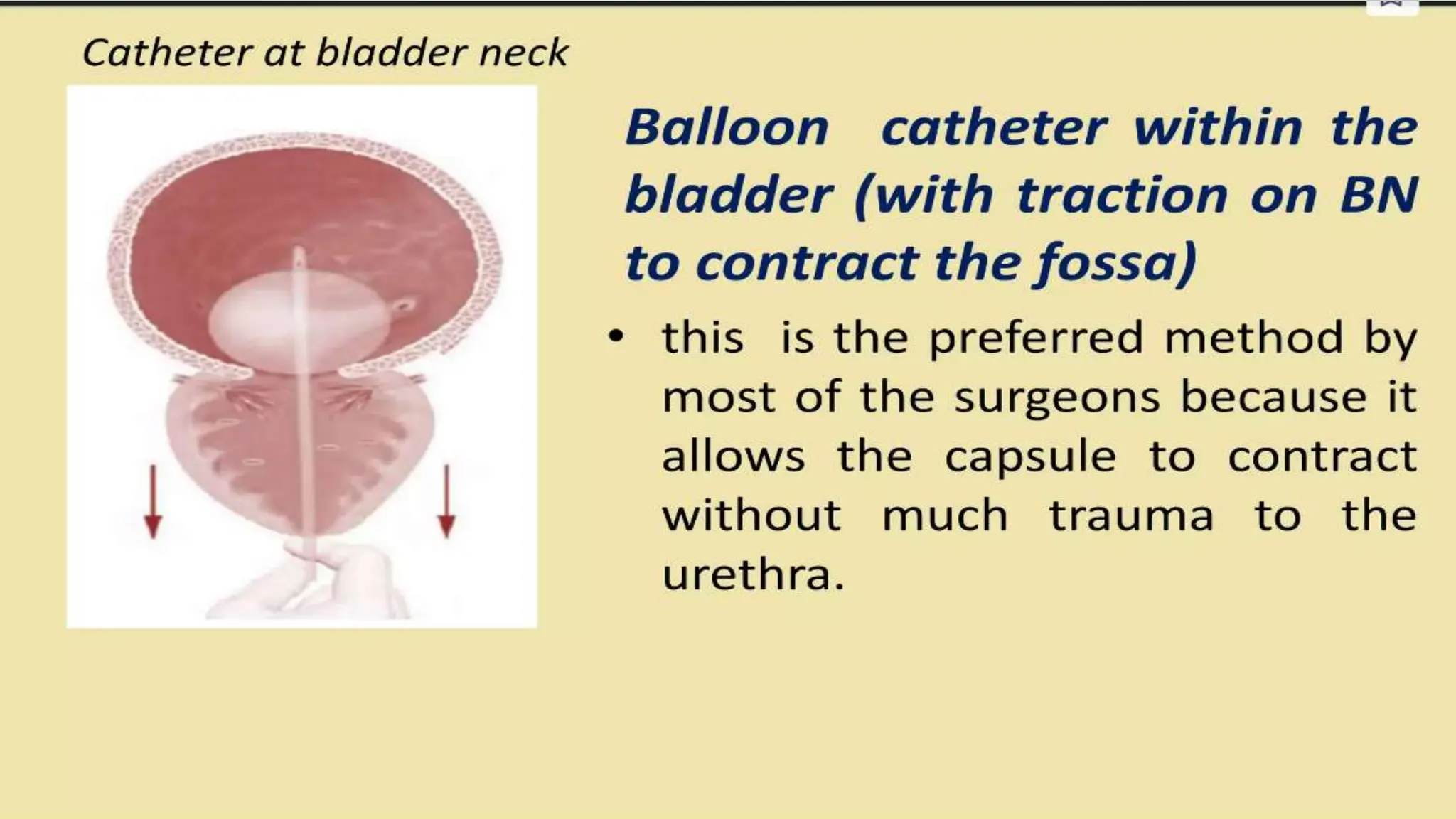
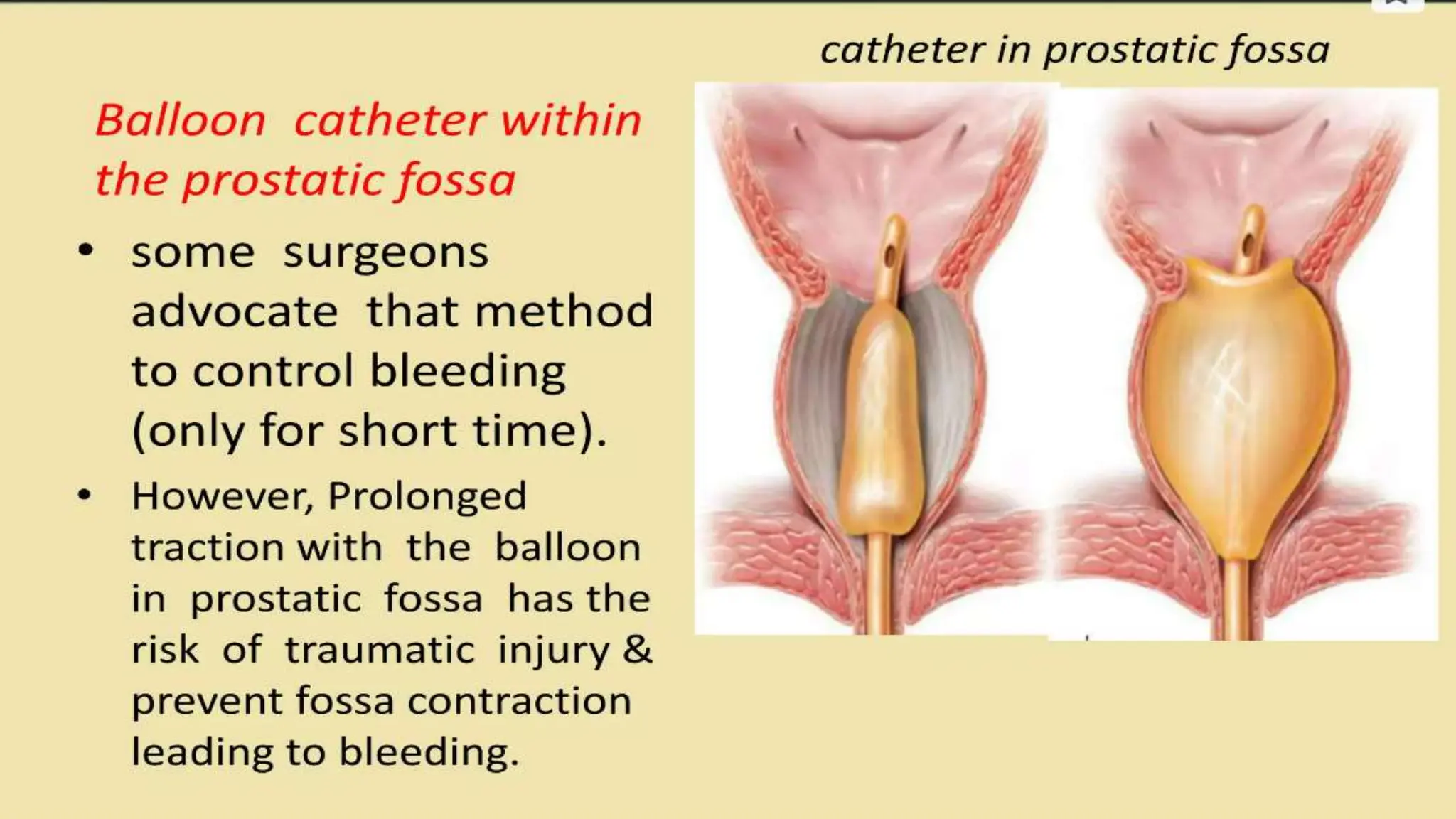
• At the end of surgery- a 3-lumencatheter placed to allow continuous
irrigation using normal saline for upto 24 hours after surgery
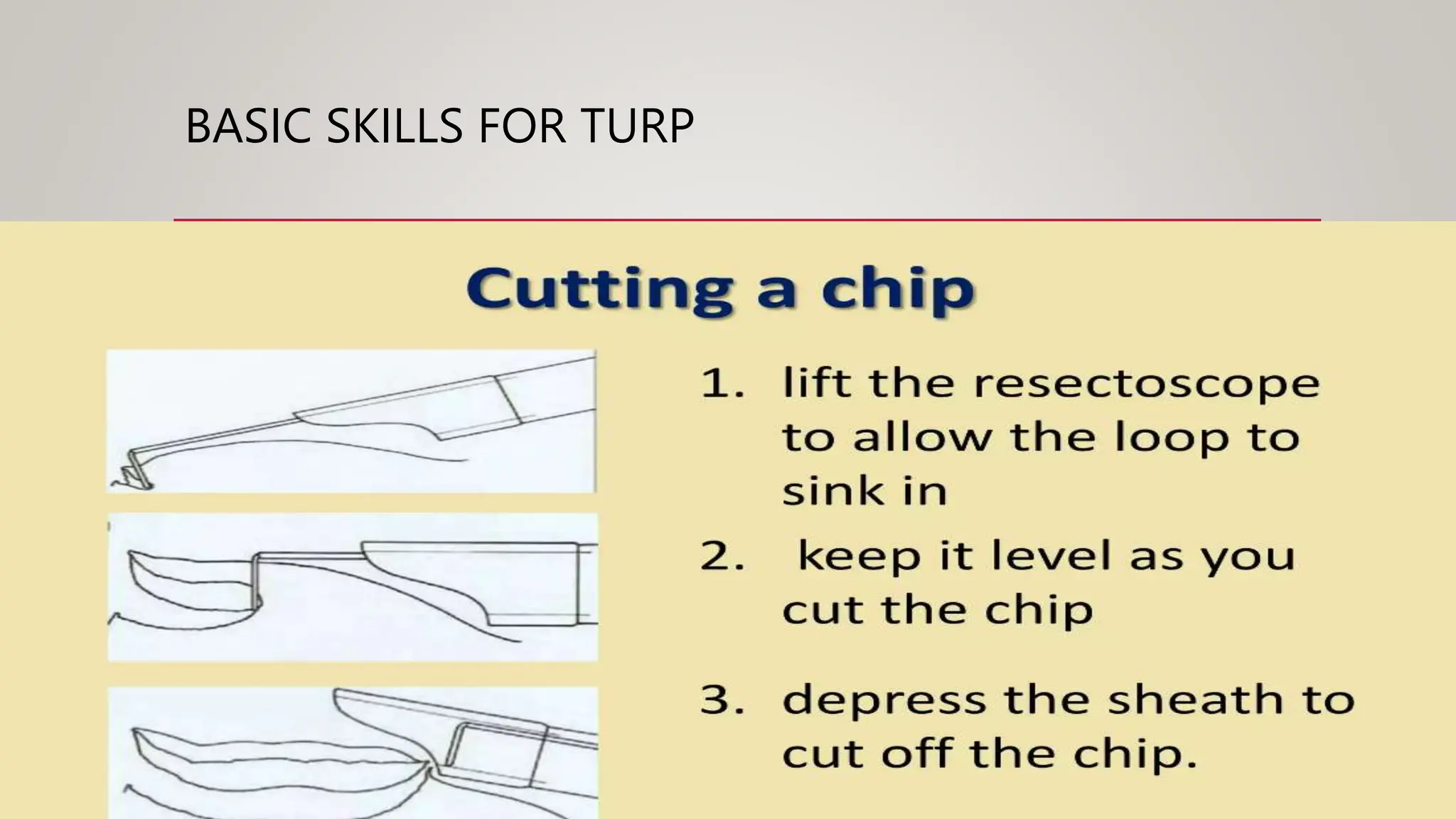
BASIC SKILLS FOR TURP
IRRIGATION FLUIDS
Properties of ideal Irrigation Solution Transparent-
• Allows visualization.
• Isotonic.
• Electrically non conductive- allows diathermy to work.
• Non-hemolytic.
• Non metabolised.
• Non-toxic.
• Inexpensive.
• Easy to sterilize
IRRIGATION SOLUTION
COMPLICATIONS OF IRRIGATION FLUIDS
Glycine
• Normal plasma glycine levels are 13 to 17 mg/L
• Transient blindness is attributed to glycine toxicity
• Glycine is a major inhibitory-transmitter acting in the spinal cord and brain—stem
• Glycine also has been implicated in the myocardial depression and hemodynamic changes associated
with TURP syndrome
• Ammonia Toxicity-Absorption of glycine can result in CNS toxicity because-of oxidative bio-
transformation of glycine to ammonia
COMPLICATIONS OF IRRIGATION FLUIDS
Mannitol
-Rapidly expands blood volume and causes pulmonary edema in cardiac-patients
-Glucose Causes severe hyperglycemia in diabetic patients
Distilled Water is electrically inert and inexpensive and has excellent optical properties.
-Extremely Hypotonic.
-When absorbed into the circulation in large amounts plain water causes Hemolysis, Shock, and Renal
failure.
-Thus Isotonic fluids are preferred- these solutions are kept slightly
hypotonic to preserve transparency.
ANESTHETIC TECHNIQUES
• Spinal anesthesia is the most frequently used anesthetic for TURP and is believed to be
the technique of choice by many.
• A spinal anesthetic provides adequate anesthesia for the patient and good relaxation of the
pelvic floor and the perineum for the surgeon.
• General anesthesia may be necessary in patients who require ventilatory or
hemodynamic support, have a contraindication to regional anesthesia, or refuse regional
anesthesia.
COMPLICATION OF TURP
TURP SYNDROME
• TURP syndrome is a term applied to a constellation of symptoms and signs
caused primarily by excessive absorption of irrigating fluid.
MANIFESTATIONS OF THE TURP
Syndrome:
• Acute hypo-osmolality
• Acute hyponatremia
• Congestive heart failure
• Pulmonary edema
• Hypertension
• Hypotension
• Solute toxicity:
Hyperglycinaemia (glycine)
Hyperammonaemia (glycine)
INVESTIGATIONS REQUIRED FOR DIAGNOSIS
• Serum Sodium- levels below 120mEq/l,symptomatic
• ECG – QRS widening, ST segment elevation, T wave inversion
( below sodium levels of 115 mEq/l)
• Hyperammonemia ( by-product of glycine metabolism) 100 micromol /L can lead
to changes in consciousness.
• A blood ammonia level of 200 micromol /L is associated with coma and
convulsions
MANAGEMENT OF TURP SYNDROME
• Initial management follows the airway, breathing and circulation-
(ABC-guidelines)
• Awake patients need to be sedated and ventilated
• Anesthetised patients with mask airways may need intubation
MANAGEMENT OF TURP SYNDROME
• Initial management of fluid overload and hyponatraemia involves stopping IV fluids
• .Inj frusemide 40mg IV to promote diuresis
• Patients should be closely monitored on an intensive care unit
• Hypertonic saline solutions ( 3% or 5%( should be used to increase the serum sodium level by
about 1 mmol/l/hour (not exceding an ncrease of 20mmol/l in the first 48 hours of therapy
• Sodium levels should be checked every few hours.
• Therapy with-hypertonic saline should be stopped when symptoms cease or the sodium level
reaches 124-132mmol/l
• Rapid correction has been implicated as a cause of central pontine(myelinolysis, which causes
irreversible brain damage
• Convulsions should be acutely treated with a benzodiazepine (e.g.- 9
(. diazepam 5-10mg( or small doses of thiopentone (25 - 100mg
In the presence of intractable seizures, the sodium level may be
corrected more rapidly at a rate of up to 8-10mmol/l/hour for the first
4 hours of therapy
SUMMARY
TURP is a procedure carried out on a predominantly elderly population with a higher incidence of coexisting disease • -
TURP is a common operation performed in an elderly population with many co-
morbidities.
• - 7% sustain major complications and about 1% die perioperatively.
• - The main challenges are blood loss and TURP - Syndrome due to excessive
absorption of irrigation solution.
• TURP syndrome is a rare but potentially fatal complication
• Early recognition- and prompt treatment are essential
• Blood loss is difficult to quantify and may be significant.

TRANSURETHRAL RESECTION OF PROSTATE.pptx

  • 1.
    TRANSURETHRAL RESECTION OFPROSTATE PRESENTER-DR LALTHLAMUANA DNB RESIDENT GENERAL SURGERY DATE:21/5/24
  • 2.
    INTRODUCTION • A transurethralresection of the prostate (TURP) is surgery to remove parts of the prostate gland through the penis. • No incisions are needed. • The surgeon reaches the prostate by putting an instrument into the end of the penis and through the urethra • This instrument is called a resectoscope it contains a lighted camera and valves that control irrigating fluid.
  • 3.
    INDICATION FOR TURP •Benign prostatic hyperplasia with symptoms should be treated with medication, until complications make surgery necessary: • Recurrent urinary retention • Recurrent urinary tract infection • Recurrent hematuria • Bladder stones • Chronic kidney disease due to insufficient bladder emptying • Large diverticula of the bladder
  • 4.
    ANATOMY OF PROSTATEGLAND • Pyramidal shaped organ • Lies below urinary bladder & located infront of the rectum, posterior to the pubic symphysis & superior to the perineal membrane • Normal weight- 20 g • Encircles urethera as it emerges from base of bladder • It Is enclosed within a capsule composed of collagen, elasten & large no. of smooth muscles Microscopic anatomy Transitional.1 - Central.2 - periphery zone. 3
  • 5.
    ANATOMY OF PROSTATEGLAND :Transional zone .This is the area surrounding the prostatic urethra- .It is were the BPH occurs :Central zone It is the area surrounding the ejaculatory duct :Peripheral zone This zone covers the posterior & lateral zone aspects of the prostate. It is the most common area affected by chronic prostatitis & adenocarcinoma
  • 6.
    ANATOMY OF PROSTATEGLAND • The Prostate Gland is rich in blood supply, mainly from inferior vesical artery • The prostatic venous plexus drains into internal iliac vein & communicates with the vertebral plexus, thereby allowing neoplastic spread to vertebrae • The prostatic vessels & the autonomic innervations run between the layers of the lateral prostatic fascia & the prostate • Arteries and veins penetrate the capsule and branch inside the gland • The venous sinuses adjacent to the capsule are particularly large
  • 7.
    ANATOMY OF PROSTATEGLAND • Nerve Supply Sympathetic(T12-L2) input via the hypogastric nerve and parasympathetic(S2-S4) input via the pelvic nerve.
  • 8.
    SURGICAL PROCEDURE TURP -performed by inserting a- • Resectoscope through urethra • Prostatic tissue is resected into pieces with an electrically powered cutting- • Coagulating metal loop • Pieces washed out by irrigating solution • Prostatic capsule preserved- • If violated,- large amounts of irrigating fluid is absorbed into circulation, periprostatic and retroperitoneal spaces
  • 9.
    SURGICAL PROCEDURE • Surgerynormally takes 30-60 mins • Depending on size of gland and experience of surgeon • Position- Lithotomy position • At the end of surgery- a 3-lumencatheter placed to allow continuous irrigation using normal saline for upto 24 hours after surgery
  • 10.
  • 35.
    IRRIGATION FLUIDS Properties ofideal Irrigation Solution Transparent- • Allows visualization. • Isotonic. • Electrically non conductive- allows diathermy to work. • Non-hemolytic. • Non metabolised. • Non-toxic. • Inexpensive. • Easy to sterilize
  • 36.
  • 37.
    COMPLICATIONS OF IRRIGATIONFLUIDS Glycine • Normal plasma glycine levels are 13 to 17 mg/L • Transient blindness is attributed to glycine toxicity • Glycine is a major inhibitory-transmitter acting in the spinal cord and brain—stem • Glycine also has been implicated in the myocardial depression and hemodynamic changes associated with TURP syndrome • Ammonia Toxicity-Absorption of glycine can result in CNS toxicity because-of oxidative bio- transformation of glycine to ammonia
  • 38.
    COMPLICATIONS OF IRRIGATIONFLUIDS Mannitol -Rapidly expands blood volume and causes pulmonary edema in cardiac-patients -Glucose Causes severe hyperglycemia in diabetic patients Distilled Water is electrically inert and inexpensive and has excellent optical properties. -Extremely Hypotonic. -When absorbed into the circulation in large amounts plain water causes Hemolysis, Shock, and Renal failure. -Thus Isotonic fluids are preferred- these solutions are kept slightly hypotonic to preserve transparency.
  • 39.
    ANESTHETIC TECHNIQUES • Spinalanesthesia is the most frequently used anesthetic for TURP and is believed to be the technique of choice by many. • A spinal anesthetic provides adequate anesthesia for the patient and good relaxation of the pelvic floor and the perineum for the surgeon. • General anesthesia may be necessary in patients who require ventilatory or hemodynamic support, have a contraindication to regional anesthesia, or refuse regional anesthesia.
  • 41.
  • 42.
    TURP SYNDROME • TURPsyndrome is a term applied to a constellation of symptoms and signs caused primarily by excessive absorption of irrigating fluid.
  • 43.
    MANIFESTATIONS OF THETURP Syndrome: • Acute hypo-osmolality • Acute hyponatremia • Congestive heart failure • Pulmonary edema • Hypertension • Hypotension • Solute toxicity: Hyperglycinaemia (glycine) Hyperammonaemia (glycine)
  • 44.
    INVESTIGATIONS REQUIRED FORDIAGNOSIS • Serum Sodium- levels below 120mEq/l,symptomatic • ECG – QRS widening, ST segment elevation, T wave inversion ( below sodium levels of 115 mEq/l) • Hyperammonemia ( by-product of glycine metabolism) 100 micromol /L can lead to changes in consciousness. • A blood ammonia level of 200 micromol /L is associated with coma and convulsions
  • 45.
    MANAGEMENT OF TURPSYNDROME • Initial management follows the airway, breathing and circulation- (ABC-guidelines) • Awake patients need to be sedated and ventilated • Anesthetised patients with mask airways may need intubation
  • 46.
    MANAGEMENT OF TURPSYNDROME • Initial management of fluid overload and hyponatraemia involves stopping IV fluids • .Inj frusemide 40mg IV to promote diuresis • Patients should be closely monitored on an intensive care unit • Hypertonic saline solutions ( 3% or 5%( should be used to increase the serum sodium level by about 1 mmol/l/hour (not exceding an ncrease of 20mmol/l in the first 48 hours of therapy • Sodium levels should be checked every few hours. • Therapy with-hypertonic saline should be stopped when symptoms cease or the sodium level reaches 124-132mmol/l • Rapid correction has been implicated as a cause of central pontine(myelinolysis, which causes irreversible brain damage
  • 47.
    • Convulsions shouldbe acutely treated with a benzodiazepine (e.g.- 9 (. diazepam 5-10mg( or small doses of thiopentone (25 - 100mg In the presence of intractable seizures, the sodium level may be corrected more rapidly at a rate of up to 8-10mmol/l/hour for the first 4 hours of therapy
  • 48.
    SUMMARY TURP is aprocedure carried out on a predominantly elderly population with a higher incidence of coexisting disease • - TURP is a common operation performed in an elderly population with many co- morbidities. • - 7% sustain major complications and about 1% die perioperatively. • - The main challenges are blood loss and TURP - Syndrome due to excessive absorption of irrigation solution. • TURP syndrome is a rare but potentially fatal complication • Early recognition- and prompt treatment are essential • Blood loss is difficult to quantify and may be significant.