Dr. Amir Shams
P.G Resident, Anaesthesiology,
NMCH
ANATOMY OF PROSTATE
 LOCATION: in the pelvis, below neck of
urinary bladder
 SHAPE : inverted cone
 SIZE : 4x3x2 cm
 Weight : 20 gm
 5 LOBES:
 BPH – median, anterior, 2 lateral
 Prostatic carcinoma – posterior, lateral
 Composed of glandular tissue in
fibromuscular stroma.
 2 capsules:
 True – formed by condensation of
prostatic tissue
 False – formed by visceral layers of pelvic
fascia.
Microscopic anatomy
 Transitional
 Central
 periphery zone
Transional zone-This is the area surrounding the prostatic
urethra- .It is were the BPH occurs
Central zone- It is the area surrounding the ejaculatory duct
Peripheral zone- This zone covers the posterior & lateral
zone aspects of the prostate. It is the .most common area
affected by chronic prostatitis & adenocarcinoma
 Sympathetic supply
 T11-L2
 Inferior hypogastric plexus
 Parasympathetic supply
 S2,3,4
 Pelvic splanchnic nerve
 Arterial supply
 Inferior vesical artery
 Middle rectal artery
 Internal pudendal
artery
 Venous drainage
 Vesical plexus
 Internal pudendal
veins
 Vertebral venous
plexus
NERVE SUPPLY BLOOD SUPPLY
BPH
 Non cancerous enlargement of the prostate gland
 Leads to symptoms of bladder outlet obstruction
 Disease of the old age , starts at ~ 40 but usually
presents between 50 – 70 years
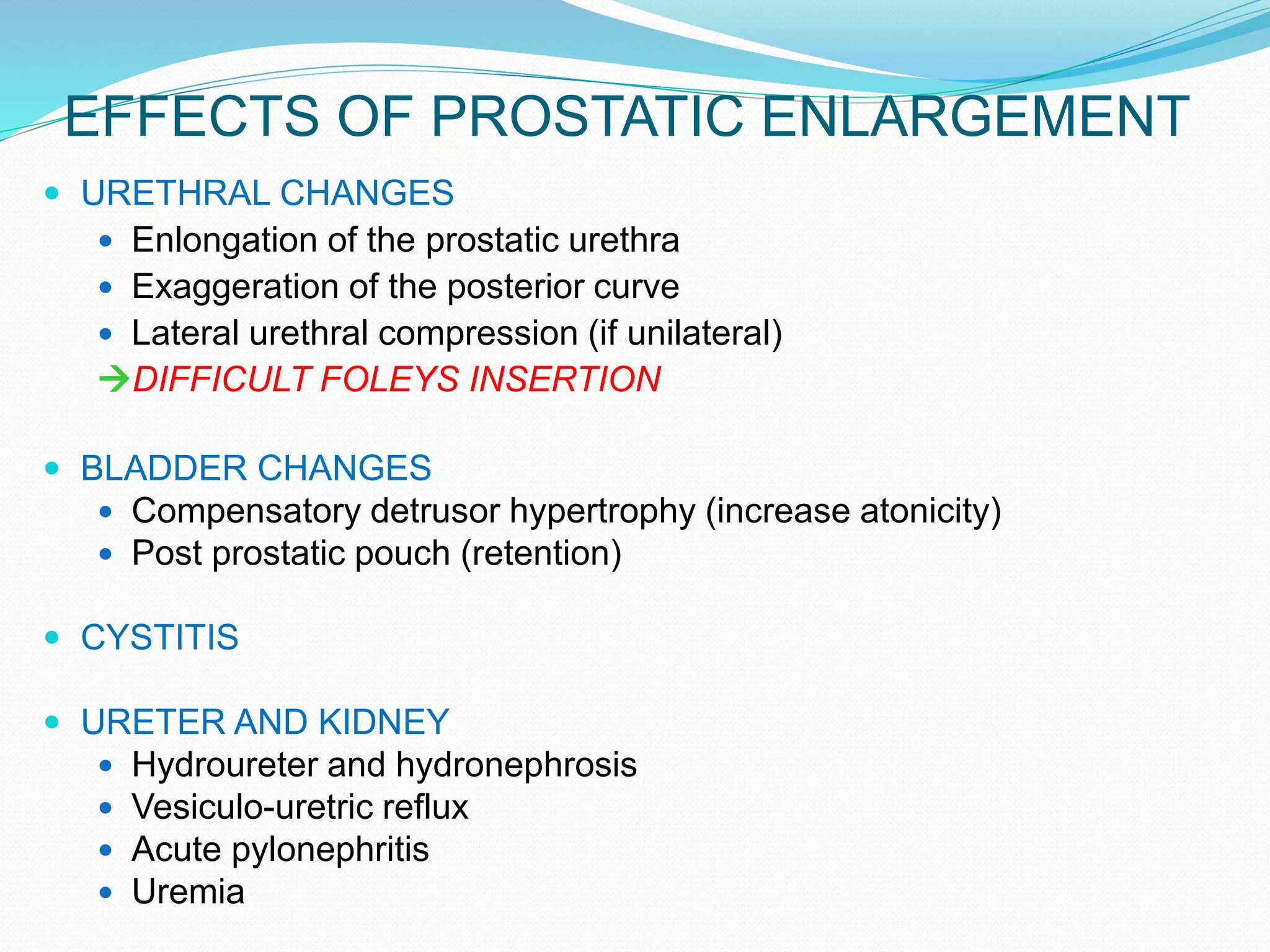
EFFECTS OF PROSTATIC ENLARGEMENT
 URETHRAL CHANGES
 Enlongation of the prostatic urethra
 Exaggeration of the posterior curve
 Lateral urethral compression (if unilateral)
DIFFICULT FOLEYS INSERTION
 BLADDER CHANGES
 Compensatory detrusor hypertrophy (increase atonicity)
 Post prostatic pouch (retention)
 CYSTITIS
 URETER AND KIDNEY
 Hydroureter and hydronephrosis
 Vesiculo-uretric reflux
 Acute pylonephritis
 Uremia
TRANSURETHRAL RESECTION OF THE
PROSTATE
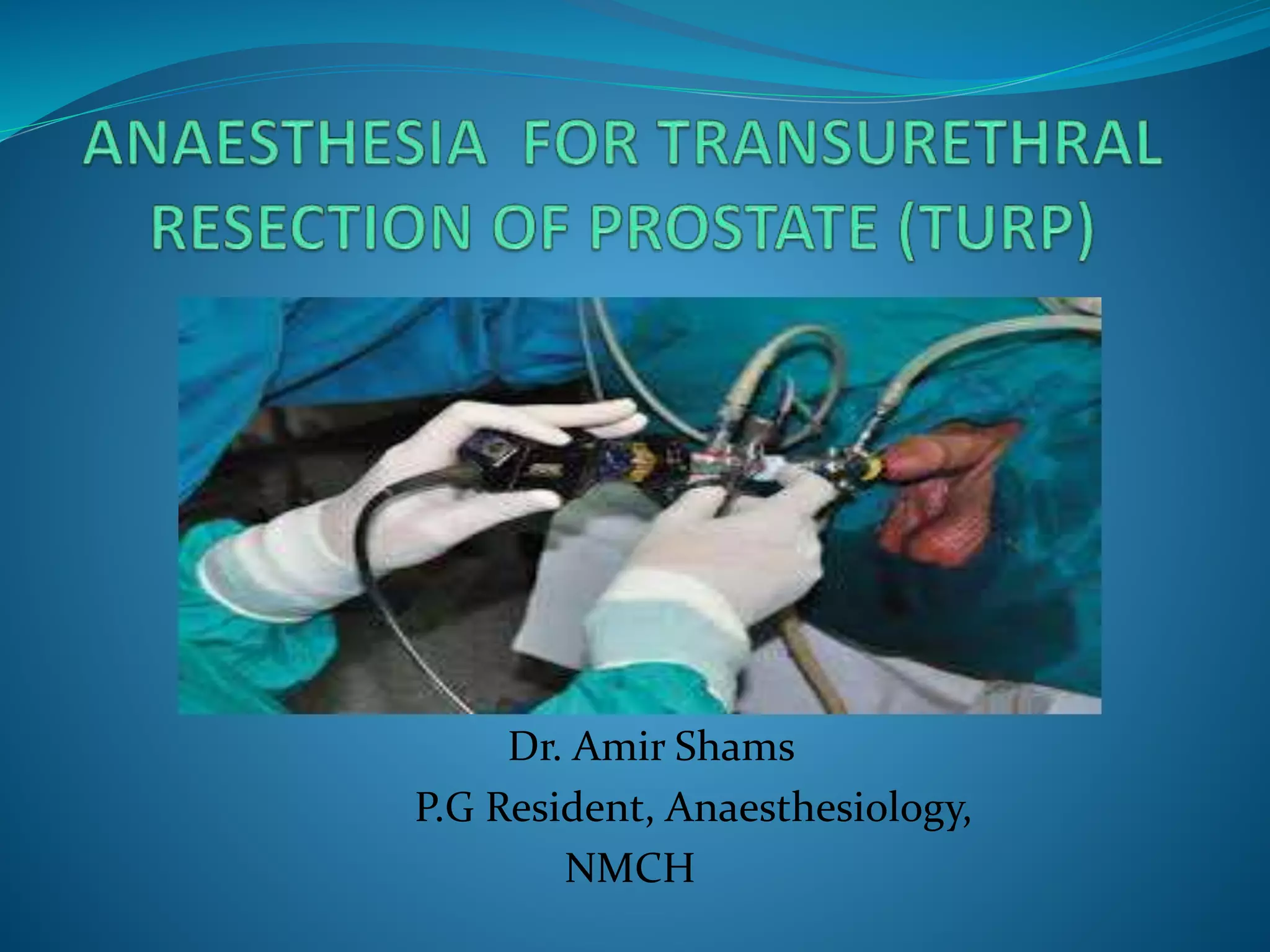
TURP - INTRODUCTION
 The current gold standard surgical treatment for benign
prostatic hyperplasia (BPH).
 BPH affects 50% of males at 60 years and 90% of males
at 85-years of age, so TURP is most commonly
performed on elderly patients, a population group with a
high incidence of cardiac, respiratory and renal disease.
 TURP carries unique complications because of the need
to use large volumes of irrigating fluid for the endoscopic
resection.
TURP - PROCEDURE
 Performed in the lithotomy position
using a resectoscope, through which a
diathermy loop is passed.
 The prostatic tissue is resected in small
strips under direct vision using the
diathermy loop.
 The bladder is continuously irrigated
with fluid.
 At end of the procedure, a three-lumen
catheter is inserted and irrigation is
continued for up to 24 h after operation.
 The procedure usually takes 30–90
min.
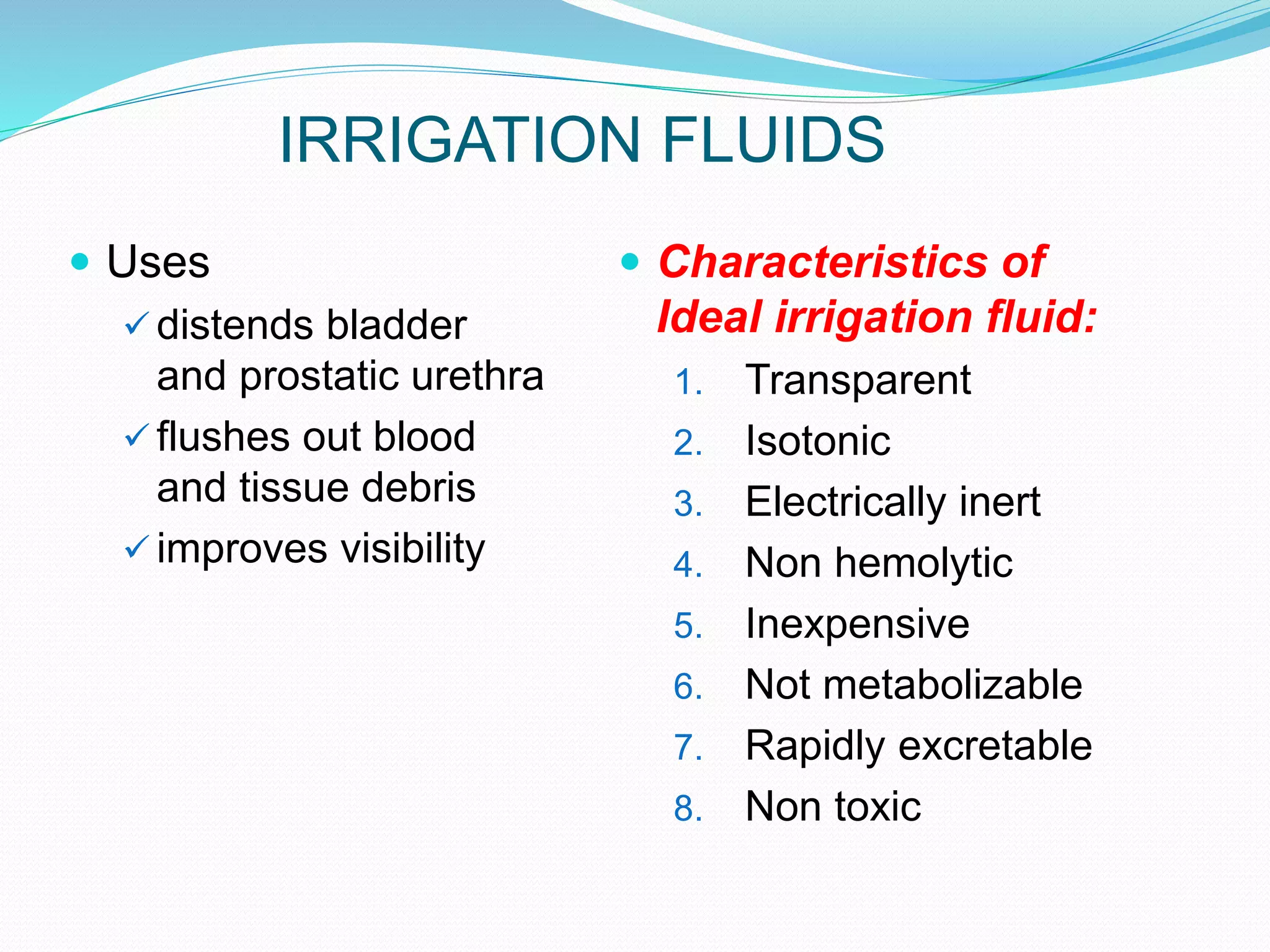
IRRIGATION FLUIDS
 Characteristics of
Ideal irrigation fluid:
1. Transparent
2. Isotonic
3. Electrically inert
4. Non hemolytic
5. Inexpensive
6. Not metabolizable
7. Rapidly excretable
8. Non toxic
 Uses
 distends bladder
and prostatic urethra
 flushes out blood
and tissue debris
 improves visibility
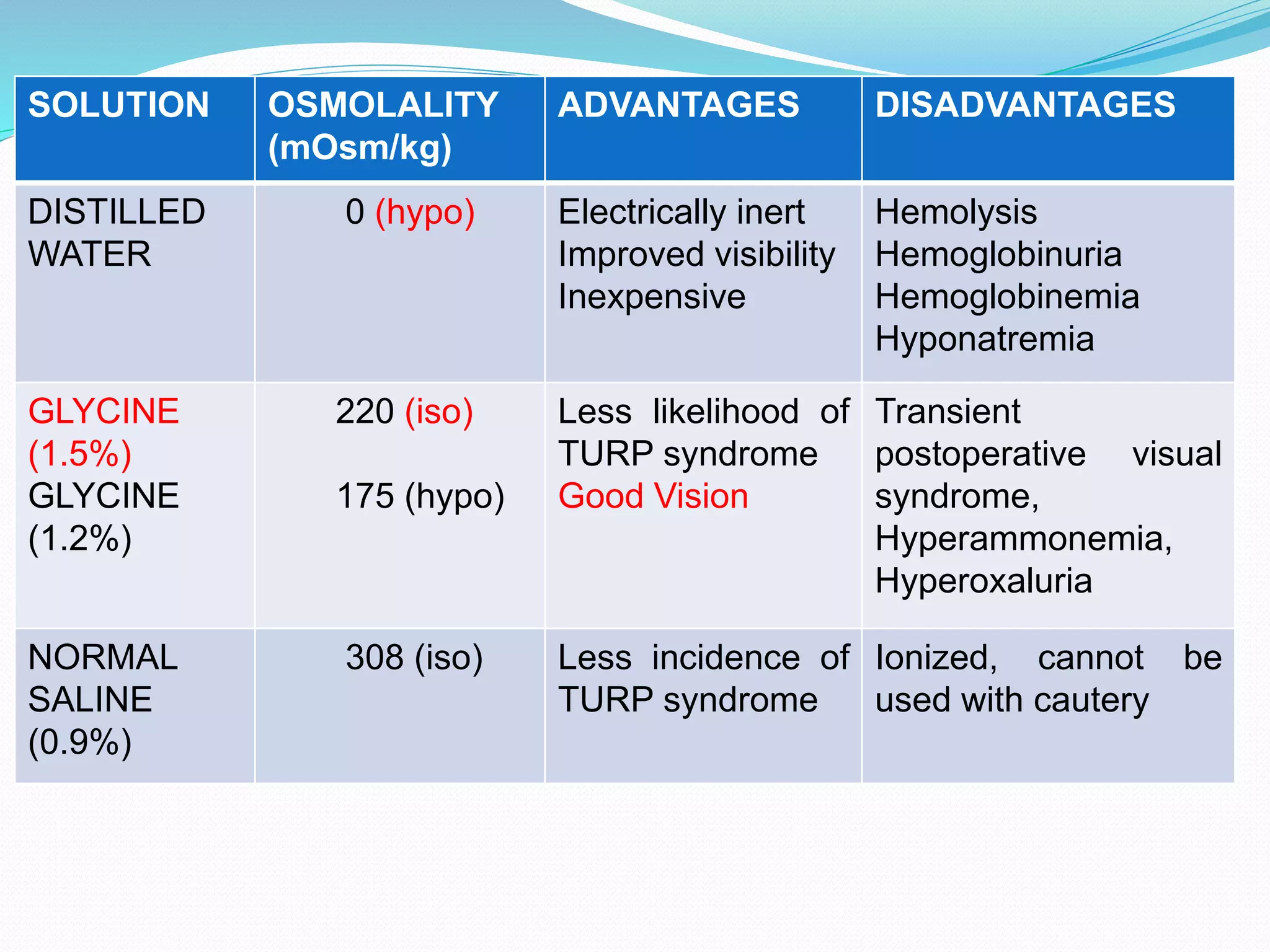
SOLUTION OSMOLALITY
(mOsm/kg)
ADVANTAGES DISADVANTAGES
DISTILLED
WATER
0 (hypo) Electrically inert
Improved visibility
Inexpensive
Hemolysis
Hemoglobinuria
Hemoglobinemia
Hyponatremia
GLYCINE
(1.5%)
GLYCINE
(1.2%)
220 (iso)
175 (hypo)
Less likelihood of
TURP syndrome
Good Vision
Transient
postoperative visual
syndrome,
Hyperammonemia,
Hyperoxaluria
NORMAL
SALINE
(0.9%)
308 (iso) Less incidence of
TURP syndrome
Ionized, cannot be
used with cautery
SOLUTION OSMOLALITY
(mOsm/kg)
ADVANTAGES DISADVANTAGES
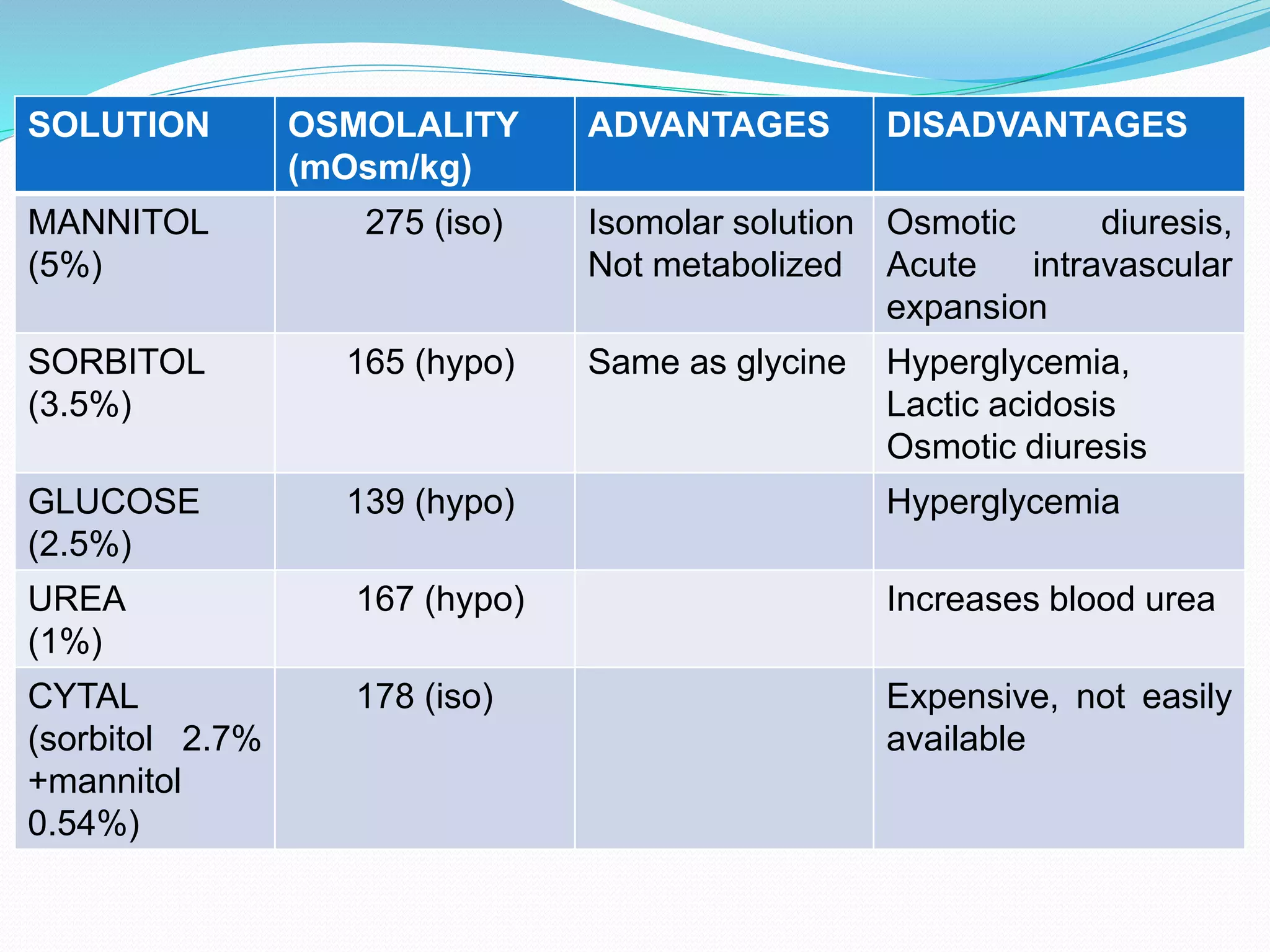
MANNITOL
(5%)
275 (iso) Isomolar solution
Not metabolized
Osmotic diuresis,
Acute intravascular
expansion
SORBITOL
(3.5%)
165 (hypo) Same as glycine Hyperglycemia,
Lactic acidosis
Osmotic diuresis
GLUCOSE
(2.5%)
139 (hypo) Hyperglycemia
UREA
(1%)
167 (hypo) Increases blood urea
CYTAL
(sorbitol 2.7%
+mannitol
0.54%)
178 (iso) Expensive, not easily
available
PREOPERATIVECONSIDERATIONS
 Patients for TURP are frequently elderly with coexistent diseases.
- cardiovascular disease
- abnormal electrocardiogram (ECG)
- chronic obstructive pulmonary disease
- diabetes mellitus
 Occasionally, patients are dehydrated and depleted of essential
electrolytes (long-term diuretic therapy and restricted fluid intake).
 Long standing urinary obstruction can lead to impaired renal function
and chronic urinary infection.
 About 30% of TURP patients have infected urine preoperatively
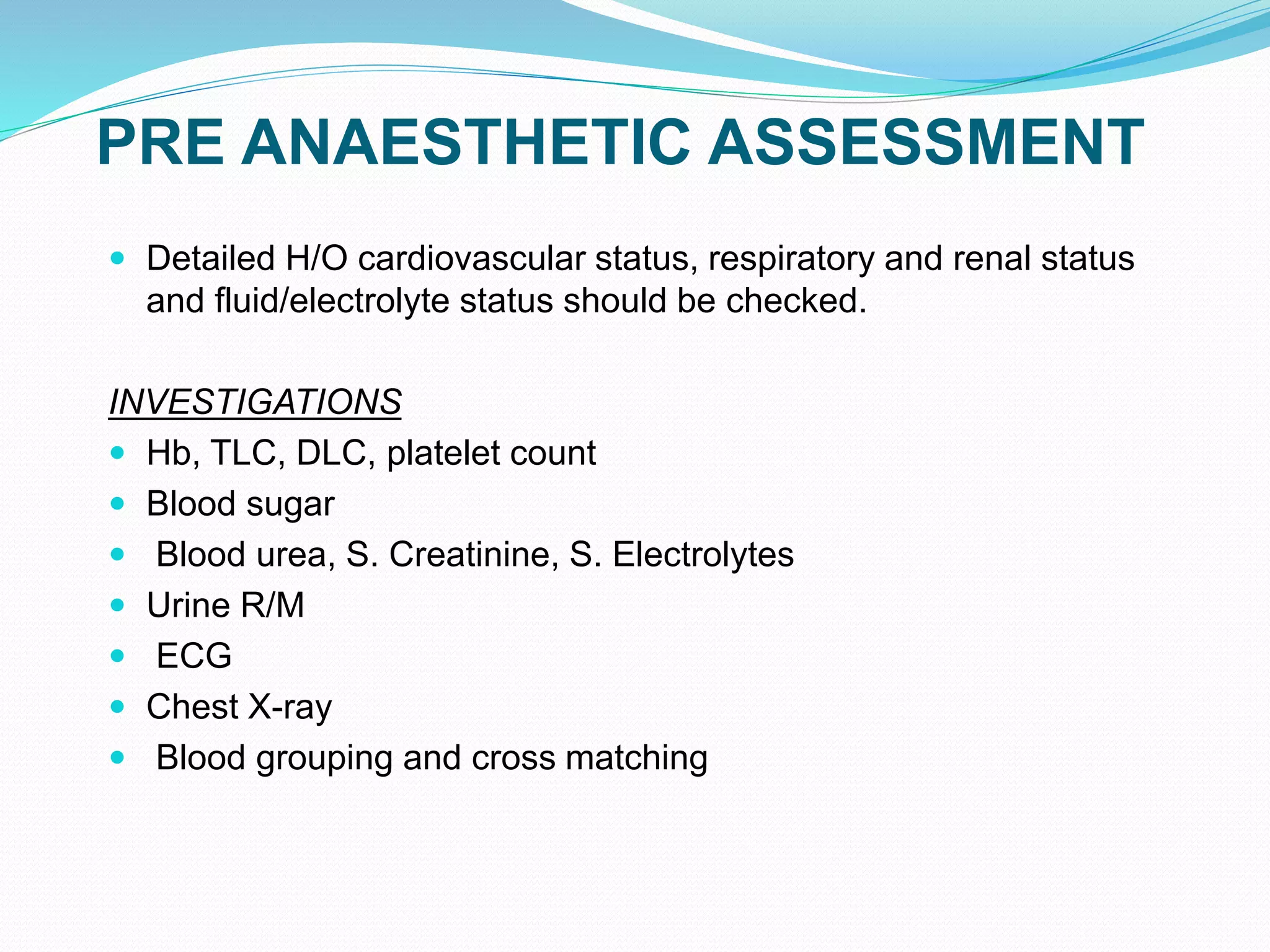
PRE ANAESTHETIC ASSESSMENT
 Detailed H/O cardiovascular status, respiratory and renal status
and fluid/electrolyte status should be checked.
INVESTIGATIONS
 Hb, TLC, DLC, platelet count
 Blood sugar
 Blood urea, S. Creatinine, S. Electrolytes
 Urine R/M
 ECG
 Chest X-ray
 Blood grouping and cross matching
PREOPERATIVE PREPARATION
 Optimization of pre-existing co-morbid conditions.
 Consideration of ongoing drug therapy.
 Antibiotic prophylaxis (in case of urinary tract infection or
urinary obstruction)
 Arrangement of blood.
CHOICE OF ANAESTHESIA
 Regional anaesthesia is the technique of choice for TURP.
 Advantages of regional over general anaesthesia
1. Allows monitoring of mentation and early signs of TURP syndrome
and bladder perforation
2. Promotes peripheral vasodilation , reducing circulatory overload
3. Reduces blood loss, requiring fewer transfusions
4. Avoids effects of general anaesthesia on pulmonary pathology
5. Good post-operative analgesia
6. Reduced incidence of post-operative DVT/PE
7. Neuroendocrine and immune response are better preserved
8. Lower cost.
 General anaesthesia preferred when regional is contraindicated.
SUB-ARACHANOID BLOCK
 Check for any contraindications of SAB
 A fluid preload of 500-1000 ml of warmed NS/RL Preloading assists
-compensation of spinal induced vasodilatation and - hypotension
provides a small sodium load to counter hyponatremia - often
occuring with TURP .
 A confirmed block till atleast T10, should be done to eliminate
discomfort caused by bladder distention
 Intraoperative sedation with IV Midazolam can be considered for
anxious or - confused patients. Early manifestations of TURP
syndrome should be kept in mind
 Thermometer,Warming blankets and Fluid warmer should be kept
available - .for detection and prevention of hypothermia due to cold
irrigation solutions
MONITORING
 ECG
 Blood pressure
 Pulse oximetry
 Temperature
 Mentation
 Blood loss
 S. electrolytes (serial)
 EtCO2 if GA is used
INTRAOPERATIVE CONSIDERATIONS
 Lithotomy position
 TURP syndrome
 Bladder perforation
 Hypothermia
 Transient bacterial septicemia
 Hemorrhage
 Coagulopathy
Main challenges: blood loss
and TURP syndrome
LITHOTOMY POSITIONING
 Both lower limbs raised
together, flexing the hips
and knees
simultaneously.
 Ensure proper padding at
edges and angulations.
 While lowering, legs
brought together at knees
and then lowered slowly
to prevent stress on spine
and sudden fall in BP.
LITHOTOMY POSITIONING
 Physiologic changes
with lithotomy
 Decreased FRC Respiratory
compromise in patients with pre-
existing lung disease
 Increased venous return
on elevation of legs
 Decreased venous
return following lowering
of legs
 Exaggeration of
hypotension with SAB
 Problems with lithotomy
position
 Injury to nerves, fingers
 Compression of major vessels
at joints
 Lower extremity Compartment
syndrome
 Aggravation of preexisting
lower back pain
TURP SYNDROME
 TURP syndrome is a term applied to a constellation of
symptoms and signs caused primarily by excessive
absorption of large volumes of isotonic irrigating fluids
through prostatic veins or breaches in the prostatic
capsule.
 Resection of prostatic tissue opens an extensive network
of venous sinuses, which allows the irrigation fluid to be
absorbed into the systemic circulation.
 Can occur 15 min after resection or upto 24 hrs postop.
 Incidence : 1 – 8%
 The syndrome is characterized by
 Hypervolemia,
• Hyponatremia
• Water intoxication.
• Hypo-osmolarity
• Hyperglycenemia
• Hyperammonemia
• Haemolysis
Classical triad of TURP syndrome
Hypertension
Bradycardia
Altered mental status
TURP SYNDROME – CLINICAL FEATURES
System Signs and Symptoms Cause
Neurologic Nausea, restlessness, visual
disturbances, confusion,
somnolence, seizures,coma,death
Hyponatremia and
hypoosmolality
Hyperglycinemia
Hyperammonemia
Cardiovascular Hypertension, reflex bradycardia,
pulmonary edema, CVS collapse
Hypotension
ECG changes(wide QRS, elevated
ST segments, vent arrhythmia)
Rapid fluid absorption
Third spacing
Hyponatremia
Respiratory Tachypnea, oxygen desaturation,
cheyne- stokes breathing
Pulmonary edema
Hematologic Disseminated intravascular
hemolysis
Hyponatremia and
hypoosmolality
Renal Renal failure Hypotension, hemolysis,
hyperoxaluria
TURP SYNDROME - PREVENTION
 Correction of fluid and electrolyte abnormalities
preoperatively.
 Cautious adminstration of IV fluids.
 Use vasopressors instead of large boluses of fluid in
case of hypotension during regional anesthesia.
 Most imp factor – preservation of prostatic capsule
(surgeon’s skills)
 Limitation of hydrostatic pressure of irrigation fluid to-
60cm of H2O.
 Restrict duration of TURP to 60 min.
 Bipolar resectoscope.
 Local vasoconstrictors.
TURP SYNDROME - MANAGEMENT
 Notify surgeon and terminate surgery.
 Ensure oxygenation
 Restrict fluids
 Pulmonary edema : intubate and IPPV
 Bradycardia, hypotension: atropine, adrenergic agents
 Seizures : BZD, thiopentone, phenytoin.
 Invasive monitoring of arterial and CVP
 Send blood sample for electrolytes, arterial blood gas
analysis.
Factors affecting amount and rate of fluid
absorption
 Size of gland (25ml/gm of prostate).
 Number and size of open sinuses.
 Hydrostatic pressure of irrigating fluid
Height of the irrigation fluid bag above the patient (increased height implies increased
hydrostatic pressure driving the fluid intravenously
 Duration of procedure (@ 20 ml/min).
 Integrity of capsule
 Vascularity of diseased prostate.
DIFFERENTIAL DIAGNOSIS
The differential diagnosis of hypotension following TURP should
always include
1. Hemorrhage
2. TURP syndrome
3. Bladder perforation
4. Myocardial infarction or ischemia
5. Septicemia
6. Disseminated intravascular coagulation (DIC).
7. Anaphylaxis
HYPERVOLEMIA
 Irrigation fluid enters circulation through open prostatic venous
sinuses
 Average rate – 20ml/min
 May reach upto 200 ml/min
 Literature suggests as much as 8 L fluid can be absorbed
 Average weight gain by end of surgery – 2 kg.
CALCULATION OF FLUID ABSORBED…
 Determine serum Na at beginning of the surgery.
 Again at the time of estimation of volume absorbed.
 Volume absorbed =
(preop Na / postop Na) Χ ECF – ECF
 ECF = 20% - 30% of total body water
HYPONATREMIA
 Cause : excessive absorption of Na free irrigation fluid
leading to dilutional hyponatremia.
 During TURP, Serum sodium falls by 3 to 10 meq/l.
 SIGNS AND SYMPTOMS OF ACUTE HYPONATREMIA
 Nausea
 Vomiting
 Irritability
 Mental confusion
 Cardiovascular collapse
 Pulmonay edema
 Seizures
Manifestations of hyponatremia
SERUM Na+
(mEq/l)
CNS changes CVS
changes
ECG Changes
120 Confusion
Restlessness
Hypotension
bradycardia
wide QRS complex
115 Somnolence
Nausea
Cardiac depression Bradycardia
Wide QRS complex
Elevated ST
segment
110 Seizures
Coma
CHF Ventricular
tachycardia or
fibrillation
TREATMENT
 Depends on the detection of hyponatremia – serial sodium
measurements must be done whenever unexplained changes
in BP or cerebral irritation is seen.
 Infusion of clear fluids should be suspended.
 Blood loss should be replaced by slow blood transfusion.
 Loop diuretic – furosemide can be given.
 In case of acute hyponatremia with neurological features,
rapid correction till neurological improvement is to be done.
Na deficit = (DESIRED [NA] - CURRENT [NA]) X 0.6 * Bd WT (KG)
(*use 0.6 for men and 0.5 for women).
 Rate of correction should be 0.6 – 1.0 mEq / L / hr until sodium
reaches 125 after that the rate is 1.5 mEq / L / hr.
 Sodium levels should be checked every few hours
 Hypertonic (3%) saline – Contains 514 mEq/L of NaCl.
 In general, increase of 4-6 mEq/L in serum sodium level is
sufficient to arrest progression of symptoms in severe
hyponatremia. Further rapid increase in serum sodium level not
indicated.
HYPERGLYCINEMIA
 Glycine, a non essential amino acid, is an inhibitory neurotransmitter
in spinal cord and retina.
 Metabolized in liver by oxidative deamination to ammonia and
glyoxylic and oxalic acid
 Normal plasma glycine levels are 13 to 17 mg/L
 When absorbed in large amounts, has direct toxic effects on heart
and retina.
 Manifestations of glycine toxcity: nausea, headache, malaise,
weakness, visual distubances ( transient blindness), seizures,
encephalopathy.
TRANSIENT BLINDNESS
 Transient blindness is likely caused by toxic effect of Glycine
inhibition of the visual pathways of the retina.
 Severity of this directly related to blood level of glycine.
 The patient complains of blurred vision and halos.
 Pupils dilated and unresponsive
 Vision improves as the Glycine level declines.
BLADDER PERFORATION
 Incidence – 1%
 Causes
 Trauma by surgical instrument
 Overdistention of bladder with irrigation fluid
 Manifestation
 Early sign : sudden decrease in return of irrigation solution from
bladder
 Extraperitoneal perforations : pain in periumbilical, inguinal or
suprapubic region
 Intraperitoneal : generalised abdominal pain, shoulder tip pain,
abdominal rigidity.
BLOOD LOSS
 Difficult to quantify blood loss.
 Visual estimation of haemorrhage may be difficult due to dilution with
irrigation fluid.
 Usual warning signs (tachycardia, hypotension) masked by
overhydration and effects of regional anaesthesia.
 Blood loss can be estimated on the basis of
 Resection time (2-5ml/min)
 Size of prostate (7-20ml/g)
 Intraoperative BT should be based on preop Hb, duration and
difficulty of resection and clinical assessment of pt condition.
COAGULOPATHY
 Causes of excessive bleeding
 Dilutional thrombocytopenia
 DIC as a result of release of prostatic particles rich in
thromboplastin into blood
 Local release of fibrinolytic agents (plasminogen and urokinase)
 Treatment – administration of FFP, platelets blood
transfusion
HYPOTHERMIA
 Continuous fluid irrigation causes loss of temp @1oC/hr.
 Elderly patients have reduced thermoregulatory capacity.
 Postoperative shivering associated with hypothermia may
dislodge clots and promote postoperative bleeding.
 Appropriate measures to reduce heat loss are: warming blankets,
heated irrigation solution and warm I/V fluids.
BACTEREMIA AND SEPTICEMIA
 INCIDENCE – 6-7%
 Causes
 Release of bacteria from prostatic tissue
 Preoperative indwelling urinary catheter
 Preoperative UTI
 C/F – chills, fever, tachycardia
 T/T – antibiotics, supportive care
POSTOPERATIVE COMPLICATIONS
 Hypothermia
 Hypotension
 Haemorrhage
 Septicaemia
 TURP syndrome
 Bladder spasm
 Clot retention
 Deep vein thrombosis
 Postoperative cognitive impairment
SUMMARY
 TURP is a procedure carried out on a predominantly elderly
population with a - . higher incidence of coexisting disease
 A thorough pre-operative assessment is important in detecting at-risk
patients, and helping to choose the anaesthetic technique
 SAB is widely considered the most suitable technique
 Subarachnoid block to T10 provides excellent anaesthesia without
notable – hypotension
 TURP syndrome is a rare but potentially fatal complication . Early
recognition and prompt treatment are essential.
 Blood loss is difficult to quantify and may be significant. Close
attention to the patient’s clinical state and communication with the
surgeon are vital
Anaesthesia for turp dr.amir

Anaesthesia for turp dr.amir

  • 1.
    Dr. Amir Shams P.GResident, Anaesthesiology, NMCH
  • 2.
    ANATOMY OF PROSTATE LOCATION: in the pelvis, below neck of urinary bladder  SHAPE : inverted cone  SIZE : 4x3x2 cm  Weight : 20 gm  5 LOBES:  BPH – median, anterior, 2 lateral  Prostatic carcinoma – posterior, lateral  Composed of glandular tissue in fibromuscular stroma.  2 capsules:  True – formed by condensation of prostatic tissue  False – formed by visceral layers of pelvic fascia.
  • 3.
    Microscopic anatomy  Transitional Central  periphery zone Transional zone-This is the area surrounding the prostatic urethra- .It is were the BPH occurs Central zone- It is the area surrounding the ejaculatory duct Peripheral zone- This zone covers the posterior & lateral zone aspects of the prostate. It is the .most common area affected by chronic prostatitis & adenocarcinoma
  • 4.
     Sympathetic supply T11-L2  Inferior hypogastric plexus  Parasympathetic supply  S2,3,4  Pelvic splanchnic nerve  Arterial supply  Inferior vesical artery  Middle rectal artery  Internal pudendal artery  Venous drainage  Vesical plexus  Internal pudendal veins  Vertebral venous plexus NERVE SUPPLY BLOOD SUPPLY
  • 5.
    BPH  Non cancerousenlargement of the prostate gland  Leads to symptoms of bladder outlet obstruction  Disease of the old age , starts at ~ 40 but usually presents between 50 – 70 years
  • 6.
    EFFECTS OF PROSTATICENLARGEMENT  URETHRAL CHANGES  Enlongation of the prostatic urethra  Exaggeration of the posterior curve  Lateral urethral compression (if unilateral) DIFFICULT FOLEYS INSERTION  BLADDER CHANGES  Compensatory detrusor hypertrophy (increase atonicity)  Post prostatic pouch (retention)  CYSTITIS  URETER AND KIDNEY  Hydroureter and hydronephrosis  Vesiculo-uretric reflux  Acute pylonephritis  Uremia
  • 7.
  • 8.
    TURP - INTRODUCTION The current gold standard surgical treatment for benign prostatic hyperplasia (BPH).  BPH affects 50% of males at 60 years and 90% of males at 85-years of age, so TURP is most commonly performed on elderly patients, a population group with a high incidence of cardiac, respiratory and renal disease.  TURP carries unique complications because of the need to use large volumes of irrigating fluid for the endoscopic resection.
  • 9.
    TURP - PROCEDURE Performed in the lithotomy position using a resectoscope, through which a diathermy loop is passed.  The prostatic tissue is resected in small strips under direct vision using the diathermy loop.  The bladder is continuously irrigated with fluid.  At end of the procedure, a three-lumen catheter is inserted and irrigation is continued for up to 24 h after operation.  The procedure usually takes 30–90 min.
  • 10.
    IRRIGATION FLUIDS  Characteristicsof Ideal irrigation fluid: 1. Transparent 2. Isotonic 3. Electrically inert 4. Non hemolytic 5. Inexpensive 6. Not metabolizable 7. Rapidly excretable 8. Non toxic  Uses  distends bladder and prostatic urethra  flushes out blood and tissue debris  improves visibility
  • 11.
    SOLUTION OSMOLALITY (mOsm/kg) ADVANTAGES DISADVANTAGES DISTILLED WATER 0(hypo) Electrically inert Improved visibility Inexpensive Hemolysis Hemoglobinuria Hemoglobinemia Hyponatremia GLYCINE (1.5%) GLYCINE (1.2%) 220 (iso) 175 (hypo) Less likelihood of TURP syndrome Good Vision Transient postoperative visual syndrome, Hyperammonemia, Hyperoxaluria NORMAL SALINE (0.9%) 308 (iso) Less incidence of TURP syndrome Ionized, cannot be used with cautery
  • 12.
    SOLUTION OSMOLALITY (mOsm/kg) ADVANTAGES DISADVANTAGES MANNITOL (5%) 275(iso) Isomolar solution Not metabolized Osmotic diuresis, Acute intravascular expansion SORBITOL (3.5%) 165 (hypo) Same as glycine Hyperglycemia, Lactic acidosis Osmotic diuresis GLUCOSE (2.5%) 139 (hypo) Hyperglycemia UREA (1%) 167 (hypo) Increases blood urea CYTAL (sorbitol 2.7% +mannitol 0.54%) 178 (iso) Expensive, not easily available
  • 13.
    PREOPERATIVECONSIDERATIONS  Patients forTURP are frequently elderly with coexistent diseases. - cardiovascular disease - abnormal electrocardiogram (ECG) - chronic obstructive pulmonary disease - diabetes mellitus  Occasionally, patients are dehydrated and depleted of essential electrolytes (long-term diuretic therapy and restricted fluid intake).  Long standing urinary obstruction can lead to impaired renal function and chronic urinary infection.  About 30% of TURP patients have infected urine preoperatively
  • 14.
    PRE ANAESTHETIC ASSESSMENT Detailed H/O cardiovascular status, respiratory and renal status and fluid/electrolyte status should be checked. INVESTIGATIONS  Hb, TLC, DLC, platelet count  Blood sugar  Blood urea, S. Creatinine, S. Electrolytes  Urine R/M  ECG  Chest X-ray  Blood grouping and cross matching
  • 15.
    PREOPERATIVE PREPARATION  Optimizationof pre-existing co-morbid conditions.  Consideration of ongoing drug therapy.  Antibiotic prophylaxis (in case of urinary tract infection or urinary obstruction)  Arrangement of blood.
  • 16.
    CHOICE OF ANAESTHESIA Regional anaesthesia is the technique of choice for TURP.  Advantages of regional over general anaesthesia 1. Allows monitoring of mentation and early signs of TURP syndrome and bladder perforation 2. Promotes peripheral vasodilation , reducing circulatory overload 3. Reduces blood loss, requiring fewer transfusions 4. Avoids effects of general anaesthesia on pulmonary pathology 5. Good post-operative analgesia 6. Reduced incidence of post-operative DVT/PE 7. Neuroendocrine and immune response are better preserved 8. Lower cost.  General anaesthesia preferred when regional is contraindicated.
  • 17.
    SUB-ARACHANOID BLOCK  Checkfor any contraindications of SAB  A fluid preload of 500-1000 ml of warmed NS/RL Preloading assists -compensation of spinal induced vasodilatation and - hypotension provides a small sodium load to counter hyponatremia - often occuring with TURP .  A confirmed block till atleast T10, should be done to eliminate discomfort caused by bladder distention  Intraoperative sedation with IV Midazolam can be considered for anxious or - confused patients. Early manifestations of TURP syndrome should be kept in mind  Thermometer,Warming blankets and Fluid warmer should be kept available - .for detection and prevention of hypothermia due to cold irrigation solutions
  • 18.
    MONITORING  ECG  Bloodpressure  Pulse oximetry  Temperature  Mentation  Blood loss  S. electrolytes (serial)  EtCO2 if GA is used
  • 19.
    INTRAOPERATIVE CONSIDERATIONS  Lithotomyposition  TURP syndrome  Bladder perforation  Hypothermia  Transient bacterial septicemia  Hemorrhage  Coagulopathy Main challenges: blood loss and TURP syndrome
  • 20.
    LITHOTOMY POSITIONING  Bothlower limbs raised together, flexing the hips and knees simultaneously.  Ensure proper padding at edges and angulations.  While lowering, legs brought together at knees and then lowered slowly to prevent stress on spine and sudden fall in BP.
  • 21.
    LITHOTOMY POSITIONING  Physiologicchanges with lithotomy  Decreased FRC Respiratory compromise in patients with pre- existing lung disease  Increased venous return on elevation of legs  Decreased venous return following lowering of legs  Exaggeration of hypotension with SAB  Problems with lithotomy position  Injury to nerves, fingers  Compression of major vessels at joints  Lower extremity Compartment syndrome  Aggravation of preexisting lower back pain
  • 22.
    TURP SYNDROME  TURPsyndrome is a term applied to a constellation of symptoms and signs caused primarily by excessive absorption of large volumes of isotonic irrigating fluids through prostatic veins or breaches in the prostatic capsule.  Resection of prostatic tissue opens an extensive network of venous sinuses, which allows the irrigation fluid to be absorbed into the systemic circulation.  Can occur 15 min after resection or upto 24 hrs postop.  Incidence : 1 – 8%
  • 23.
     The syndromeis characterized by  Hypervolemia, • Hyponatremia • Water intoxication. • Hypo-osmolarity • Hyperglycenemia • Hyperammonemia • Haemolysis Classical triad of TURP syndrome Hypertension Bradycardia Altered mental status
  • 24.
    TURP SYNDROME –CLINICAL FEATURES System Signs and Symptoms Cause Neurologic Nausea, restlessness, visual disturbances, confusion, somnolence, seizures,coma,death Hyponatremia and hypoosmolality Hyperglycinemia Hyperammonemia Cardiovascular Hypertension, reflex bradycardia, pulmonary edema, CVS collapse Hypotension ECG changes(wide QRS, elevated ST segments, vent arrhythmia) Rapid fluid absorption Third spacing Hyponatremia Respiratory Tachypnea, oxygen desaturation, cheyne- stokes breathing Pulmonary edema Hematologic Disseminated intravascular hemolysis Hyponatremia and hypoosmolality Renal Renal failure Hypotension, hemolysis, hyperoxaluria
  • 25.
    TURP SYNDROME -PREVENTION  Correction of fluid and electrolyte abnormalities preoperatively.  Cautious adminstration of IV fluids.  Use vasopressors instead of large boluses of fluid in case of hypotension during regional anesthesia.  Most imp factor – preservation of prostatic capsule (surgeon’s skills)  Limitation of hydrostatic pressure of irrigation fluid to- 60cm of H2O.  Restrict duration of TURP to 60 min.  Bipolar resectoscope.  Local vasoconstrictors.
  • 26.
    TURP SYNDROME -MANAGEMENT  Notify surgeon and terminate surgery.  Ensure oxygenation  Restrict fluids  Pulmonary edema : intubate and IPPV  Bradycardia, hypotension: atropine, adrenergic agents  Seizures : BZD, thiopentone, phenytoin.  Invasive monitoring of arterial and CVP  Send blood sample for electrolytes, arterial blood gas analysis.
  • 28.
    Factors affecting amountand rate of fluid absorption  Size of gland (25ml/gm of prostate).  Number and size of open sinuses.  Hydrostatic pressure of irrigating fluid Height of the irrigation fluid bag above the patient (increased height implies increased hydrostatic pressure driving the fluid intravenously  Duration of procedure (@ 20 ml/min).  Integrity of capsule  Vascularity of diseased prostate.
  • 29.
    DIFFERENTIAL DIAGNOSIS The differentialdiagnosis of hypotension following TURP should always include 1. Hemorrhage 2. TURP syndrome 3. Bladder perforation 4. Myocardial infarction or ischemia 5. Septicemia 6. Disseminated intravascular coagulation (DIC). 7. Anaphylaxis
  • 30.
    HYPERVOLEMIA  Irrigation fluidenters circulation through open prostatic venous sinuses  Average rate – 20ml/min  May reach upto 200 ml/min  Literature suggests as much as 8 L fluid can be absorbed  Average weight gain by end of surgery – 2 kg.
  • 31.
    CALCULATION OF FLUIDABSORBED…  Determine serum Na at beginning of the surgery.  Again at the time of estimation of volume absorbed.  Volume absorbed = (preop Na / postop Na) Χ ECF – ECF  ECF = 20% - 30% of total body water
  • 32.
    HYPONATREMIA  Cause :excessive absorption of Na free irrigation fluid leading to dilutional hyponatremia.  During TURP, Serum sodium falls by 3 to 10 meq/l.  SIGNS AND SYMPTOMS OF ACUTE HYPONATREMIA  Nausea  Vomiting  Irritability  Mental confusion  Cardiovascular collapse  Pulmonay edema  Seizures
  • 33.
    Manifestations of hyponatremia SERUMNa+ (mEq/l) CNS changes CVS changes ECG Changes 120 Confusion Restlessness Hypotension bradycardia wide QRS complex 115 Somnolence Nausea Cardiac depression Bradycardia Wide QRS complex Elevated ST segment 110 Seizures Coma CHF Ventricular tachycardia or fibrillation
  • 34.
    TREATMENT  Depends onthe detection of hyponatremia – serial sodium measurements must be done whenever unexplained changes in BP or cerebral irritation is seen.  Infusion of clear fluids should be suspended.  Blood loss should be replaced by slow blood transfusion.  Loop diuretic – furosemide can be given.  In case of acute hyponatremia with neurological features, rapid correction till neurological improvement is to be done. Na deficit = (DESIRED [NA] - CURRENT [NA]) X 0.6 * Bd WT (KG) (*use 0.6 for men and 0.5 for women).
  • 35.
     Rate ofcorrection should be 0.6 – 1.0 mEq / L / hr until sodium reaches 125 after that the rate is 1.5 mEq / L / hr.  Sodium levels should be checked every few hours  Hypertonic (3%) saline – Contains 514 mEq/L of NaCl.  In general, increase of 4-6 mEq/L in serum sodium level is sufficient to arrest progression of symptoms in severe hyponatremia. Further rapid increase in serum sodium level not indicated.
  • 36.
    HYPERGLYCINEMIA  Glycine, anon essential amino acid, is an inhibitory neurotransmitter in spinal cord and retina.  Metabolized in liver by oxidative deamination to ammonia and glyoxylic and oxalic acid  Normal plasma glycine levels are 13 to 17 mg/L  When absorbed in large amounts, has direct toxic effects on heart and retina.  Manifestations of glycine toxcity: nausea, headache, malaise, weakness, visual distubances ( transient blindness), seizures, encephalopathy.
  • 37.
    TRANSIENT BLINDNESS  Transientblindness is likely caused by toxic effect of Glycine inhibition of the visual pathways of the retina.  Severity of this directly related to blood level of glycine.  The patient complains of blurred vision and halos.  Pupils dilated and unresponsive  Vision improves as the Glycine level declines.
  • 38.
    BLADDER PERFORATION  Incidence– 1%  Causes  Trauma by surgical instrument  Overdistention of bladder with irrigation fluid  Manifestation  Early sign : sudden decrease in return of irrigation solution from bladder  Extraperitoneal perforations : pain in periumbilical, inguinal or suprapubic region  Intraperitoneal : generalised abdominal pain, shoulder tip pain, abdominal rigidity.
  • 39.
    BLOOD LOSS  Difficultto quantify blood loss.  Visual estimation of haemorrhage may be difficult due to dilution with irrigation fluid.  Usual warning signs (tachycardia, hypotension) masked by overhydration and effects of regional anaesthesia.  Blood loss can be estimated on the basis of  Resection time (2-5ml/min)  Size of prostate (7-20ml/g)  Intraoperative BT should be based on preop Hb, duration and difficulty of resection and clinical assessment of pt condition.
  • 40.
    COAGULOPATHY  Causes ofexcessive bleeding  Dilutional thrombocytopenia  DIC as a result of release of prostatic particles rich in thromboplastin into blood  Local release of fibrinolytic agents (plasminogen and urokinase)  Treatment – administration of FFP, platelets blood transfusion
  • 41.
    HYPOTHERMIA  Continuous fluidirrigation causes loss of temp @1oC/hr.  Elderly patients have reduced thermoregulatory capacity.  Postoperative shivering associated with hypothermia may dislodge clots and promote postoperative bleeding.  Appropriate measures to reduce heat loss are: warming blankets, heated irrigation solution and warm I/V fluids.
  • 42.
    BACTEREMIA AND SEPTICEMIA INCIDENCE – 6-7%  Causes  Release of bacteria from prostatic tissue  Preoperative indwelling urinary catheter  Preoperative UTI  C/F – chills, fever, tachycardia  T/T – antibiotics, supportive care
  • 43.
    POSTOPERATIVE COMPLICATIONS  Hypothermia Hypotension  Haemorrhage  Septicaemia  TURP syndrome  Bladder spasm  Clot retention  Deep vein thrombosis  Postoperative cognitive impairment
  • 44.
    SUMMARY  TURP isa procedure carried out on a predominantly elderly population with a - . higher incidence of coexisting disease  A thorough pre-operative assessment is important in detecting at-risk patients, and helping to choose the anaesthetic technique  SAB is widely considered the most suitable technique  Subarachnoid block to T10 provides excellent anaesthesia without notable – hypotension  TURP syndrome is a rare but potentially fatal complication . Early recognition and prompt treatment are essential.  Blood loss is difficult to quantify and may be significant. Close attention to the patient’s clinical state and communication with the surgeon are vital