TURP
ANESTHETIC CONSIDERATION
Mohamed Hasan
TURP Vs Open prostatectomy
TURP is considered to be a simpler and safer procedure than open prostatectomy;
however, no differences have been reported in mortality rates between patients
who have undergone monopolar TURP and those who have undergone retropubic
or suprapubic prostatectomy. With recent advances in TURP, including bipolar and
laser, the overall mortality has declined to 0.10%
Comorbidities common in patients undergoing TURP
• TURP patients often are elderly and suffer from cardiac,
pulmonary, vascular, and endocrine disorders.
• The incidence of cardiac disease is 67%; cardiovascular
disease, 50%; abnormal electrocardiogram (ECG), 77%;
chronic obstructive pulmonary disease, 29%; and diabetes
mellitus, 8%.
• Occasionally, these patients are dehydrated and depleted of
essential electrolytes because of long-term diuretic therapy
and restricted fluid intake.
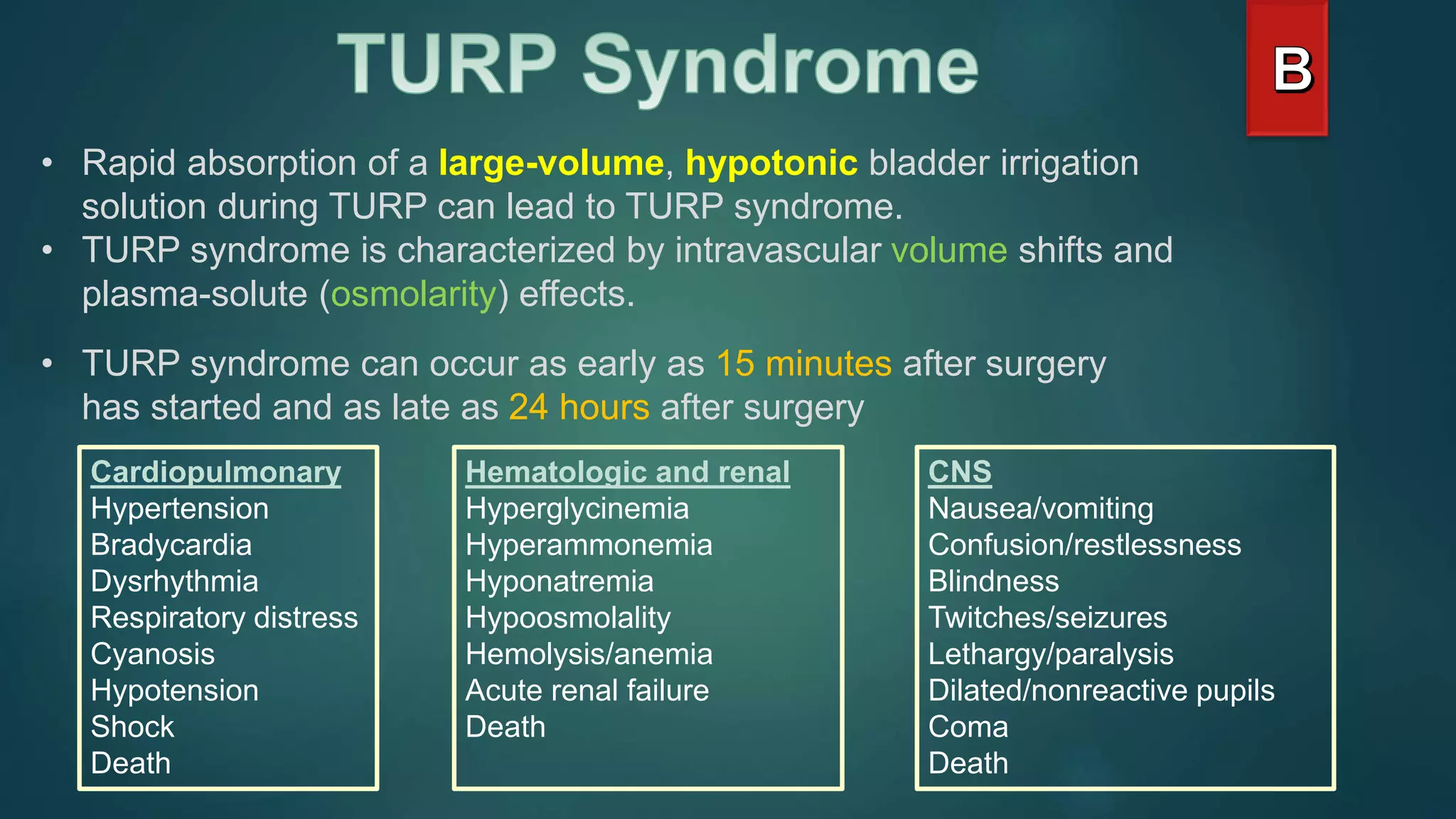
• Rapid absorption of a large-volume, hypotonic bladder irrigation
solution during TURP can lead to TURP syndrome.
• TURP syndrome is characterized by intravascular volume shifts and
plasma-solute (osmolarity) effects.
Cardiopulmonary
Hypertension
Bradycardia
Dysrhythmia
Respiratory distress
Cyanosis
Hypotension
Shock
Death
Hematologic and renal
Hyperglycinemia
Hyperammonemia
Hyponatremia
Hypoosmolality
Hemolysis/anemia
Acute renal failure
Death
CNS
Nausea/vomiting
Confusion/restlessness
Blindness
Twitches/seizures
Lethargy/paralysis
Dilated/nonreactive pupils
Coma
Death
• TURP syndrome can occur as early as 15 minutes after surgery
has started and as late as 24 hours after surgery
What causes CNS dysfunction ?
• The crucial physiologic derangement of CNS function is not hyponatremia but acute
hypoosmolality, which is predictable because the blood-brain barrier is essentially
impermeable to sodium but freely permeable to water.
• Cerebral edema caused by acute hypoosmolality can increase intracranial pressure, which
results in bradycardia and hypertension by the Cushing reflex.
• Furthermore, cerebral edema is not caused by decreased serum colloid oncotic pressure
but by decreased osmolality.
• The hypervolemia and hyponatremia that often accompany TURP promote cerebral edema
and this in turn raises intracranial pressure and induces neurologic symptoms.
TURP-related blindness
• Transient blindness is one of the more alarming complications of TURP. The patient complains of
blurred vision and of seeing halos around objects. This can occur either during surgery or later in
the recovery room.
• Although it is sometimes accompanied by other TURP-related complications, the blindness
usually occurs as an isolated symptom.
• Examination of the eyes reveals dilated and unresponsive pupils. Postoperatively, TURP-related
blindness gradually recedes and eyesight returns to normal within 8 to 48 hours of surgery.
disseminated intravascular coagulopathy
(DIC)
• DIC is triggered during TURP by prostatic particles rich in thromboplastin
that enters the bloodstream during surgery.
• The recommended treatment for DIC is replacement of blood loss and
administration of platelets, cryoprecipitates, and fresh frozen plasma.
Heparin administration is controversial.
prophylacticmeasuresmayreducetheincidenceof TURPsyndrome
• The incidence of TURP syndrome depends primarily on the surgeon's technical skills. However, if the
patient is properly prepared before surgery and closely monitored during surgery, the incidence and
severity of the syndrome can be reduced.
• Fluid and electrolyte imbalance should be corrected preoperatively, and special attention should be paid to
the serum sodium especially in traditional monopolar electrode TURP. Patients with preoperative CHF
should be treated vigorously with diuretics and fluid restriction.
• A conservative surgical approach should be considered for critically ill patients. A simple canalization or
balloon dilation of the urethra or a staged TURP is less likely to induce TURP syndrome.
• The most important preventive measure during surgery is preservation of the prostatic capsule.
• Another preventive measure is restriction of the hydrostatic pressure of the irrigation solution to 60 cm
H2O. This can be accomplished by maintaining the height of the irrigation pole to 60 cm (˜2 ft) above
patient level. Also, the bladder should not be allowed to overdistend and the duration of surgery should be
restricted.
• Serial serum sodium and osmolality are advisable in order to detect a decreasing trend.
• If clinical signs of TURP syndrome present, the surgeon should be informed and therapeutic measures
immediately instituted.
• If serum sodium level approaches 120 mEq per L, surgery should be terminated as soon as possible.
• Intravenous fluids should be cautiously administered during TURP.
• A microdrip is recommended particularly for patients with cardiac or renal disease.
• If regional anesthesia causes hypotension, a small dose of a vasoconstrictor is recommended to raise the
blood pressure rather than rapid infusion of intravenous fluids.
factorsincreasetheincidenceof TURPsyndrome
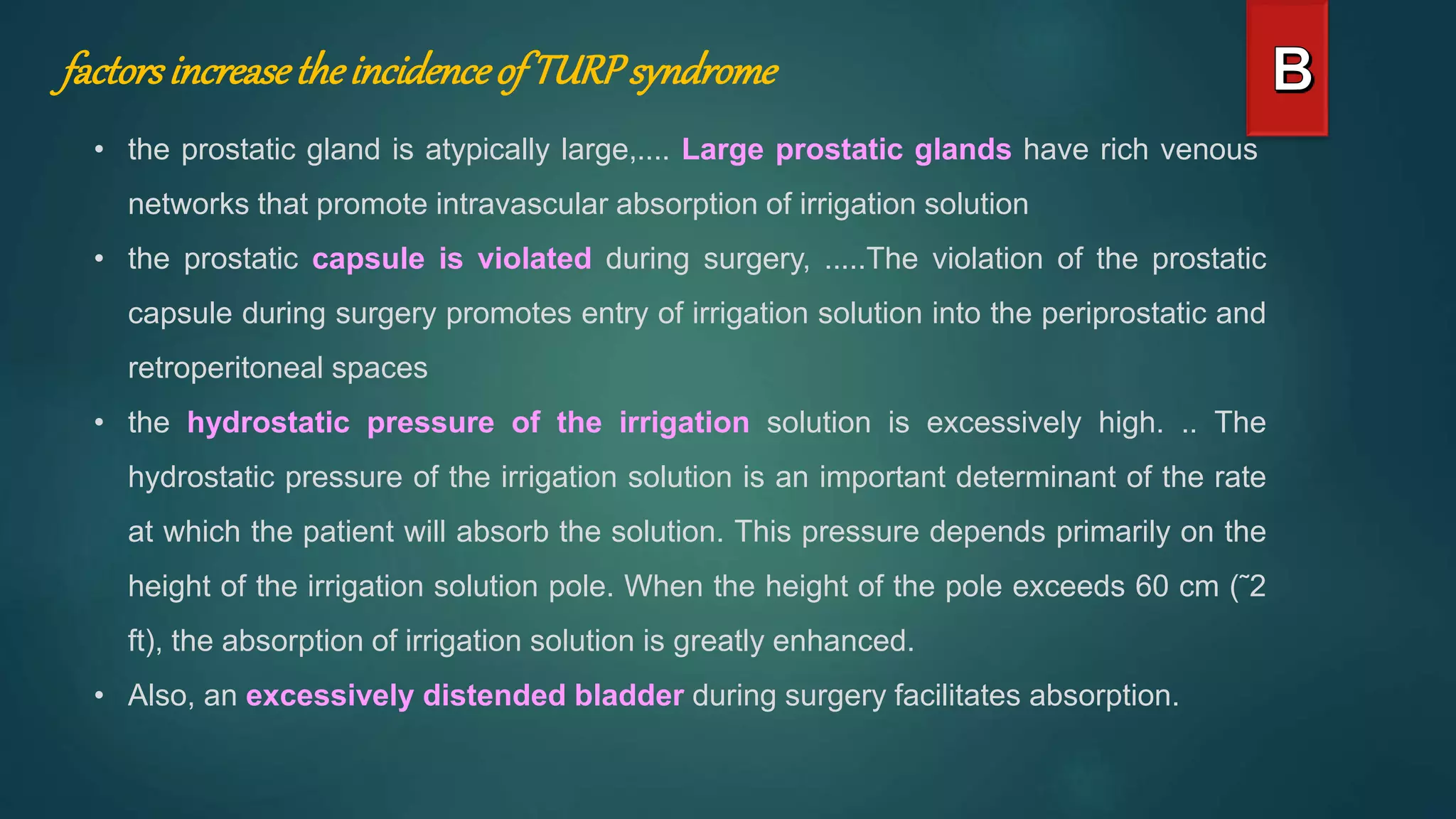
• the prostatic gland is atypically large,.... Large prostatic glands have rich venous
networks that promote intravascular absorption of irrigation solution
• the prostatic capsule is violated during surgery, .....The violation of the prostatic
capsule during surgery promotes entry of irrigation solution into the periprostatic and
retroperitoneal spaces
• the hydrostatic pressure of the irrigation solution is excessively high. .. The
hydrostatic pressure of the irrigation solution is an important determinant of the rate
at which the patient will absorb the solution. This pressure depends primarily on the
height of the irrigation solution pole. When the height of the pole exceeds 60 cm (˜2
ft), the absorption of irrigation solution is greatly enhanced.
• Also, an excessively distended bladder during surgery facilitates absorption.
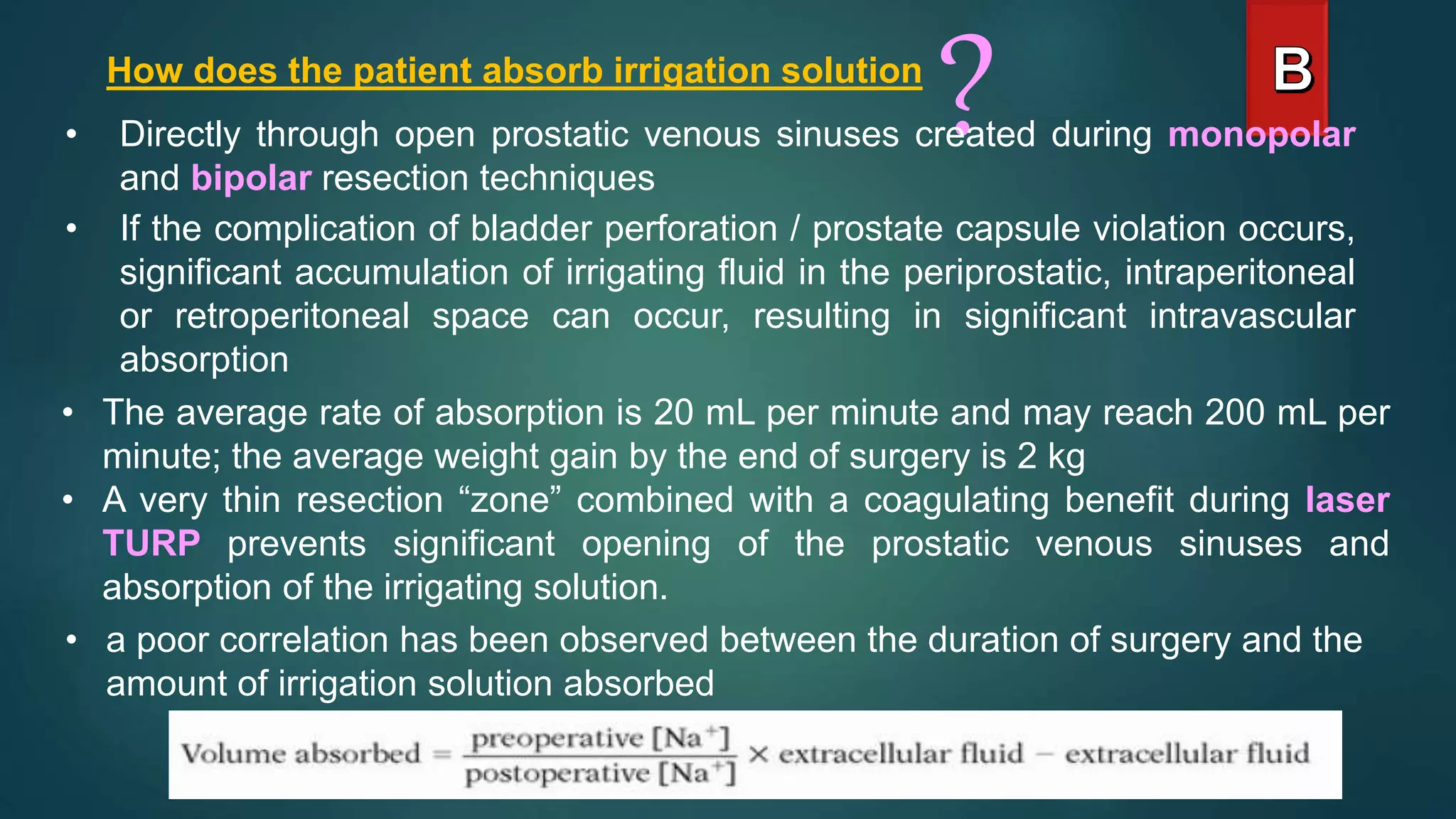
How does the patient absorb irrigation solution
?
• Directly through open prostatic venous sinuses created during monopolar
and bipolar resection techniques
• If the complication of bladder perforation / prostate capsule violation occurs,
significant accumulation of irrigating fluid in the periprostatic, intraperitoneal
or retroperitoneal space can occur, resulting in significant intravascular
absorption
• The average rate of absorption is 20 mL per minute and may reach 200 mL per
minute; the average weight gain by the end of surgery is 2 kg
• A very thin resection “zone” combined with a coagulating benefit during laser
TURP prevents significant opening of the prostatic venous sinuses and
absorption of the irrigating solution.
• a poor correlation has been observed between the duration of surgery and the
amount of irrigation solution absorbed
What differentiates monopolar from bipolar TURP
• Monopolar TURP uses high energy, which allows a fast cutting technique of prostatic
tissue with minimal coagulation in the process. The body is the conduit of the energy
dispersed from the monopolar electrode to complete the electrical circuit to a large-surface
skin grounding pad placed on the patient. It also requires the use of an electrolyte-free
bladder irrigating fluid.
• In bipolar TURP, the electrical circuit is completely contained within the resectoscope.
This prevents energy from traveling through the body. Instead, the energy remains confined
to the site of prostatic resection and is returned via the second limb of the bipolar
resectoscope. With the bipolar electrode, less bleeding occurs at the prostatic tissue site
and normal saline can be used as the bladder irrigating fluid.
Laser prostatectomy
create a coagulation zone during resection, which minimizes bleeding and irrigating fluid
absorption.
There are five advantages of laser TURP:
(1) It uses sterile water or normal saline as the irrigating bladder solution;
(2) it minimizes the absorption of irrigating fluid
(3) it minimizes or altogether eliminates TURP syndrome;
(4) it produces significantly less bleeding, which allows the procedure to be performed on
an anticoagulated patient; and
(5) it de-emphasizes regional anesthesia as the preferred anesthetic technique.
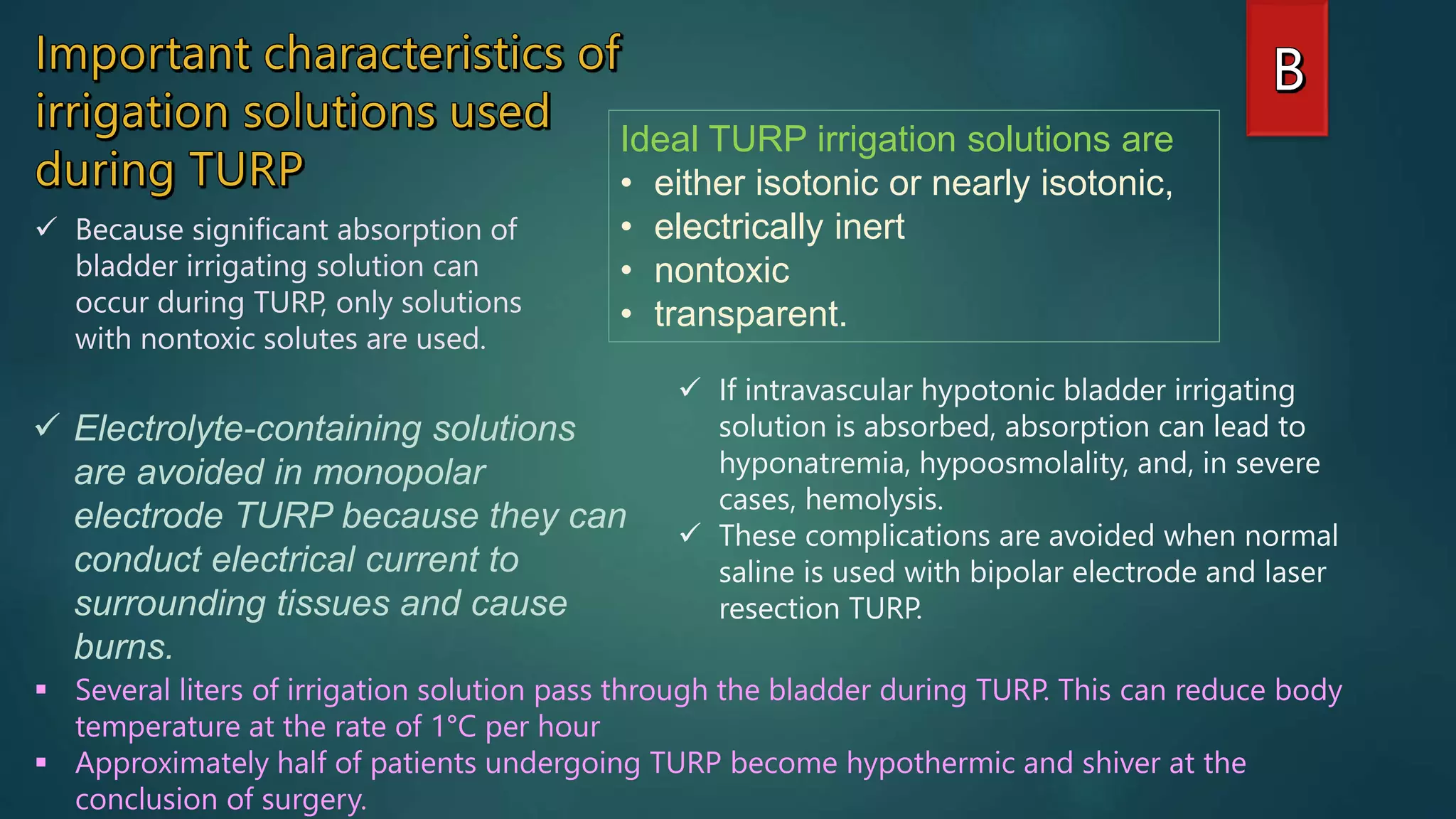
Ideal TURP irrigation solutions are
• either isotonic or nearly isotonic,
• electrically inert
• nontoxic
• transparent.
 Electrolyte-containing solutions
are avoided in monopolar
electrode TURP because they can
conduct electrical current to
surrounding tissues and cause
burns.
 Because significant absorption of
bladder irrigating solution can
occur during TURP, only solutions
with nontoxic solutes are used.
 If intravascular hypotonic bladder irrigating
solution is absorbed, absorption can lead to
hyponatremia, hypoosmolality, and, in severe
cases, hemolysis.
 These complications are avoided when normal
saline is used with bipolar electrode and laser
resection TURP.
 Several liters of irrigation solution pass through the bladder during TURP. This can reduce body
temperature at the rate of 1°C per hour
 Approximately half of patients undergoing TURP become hypothermic and shiver at the
conclusion of surgery.
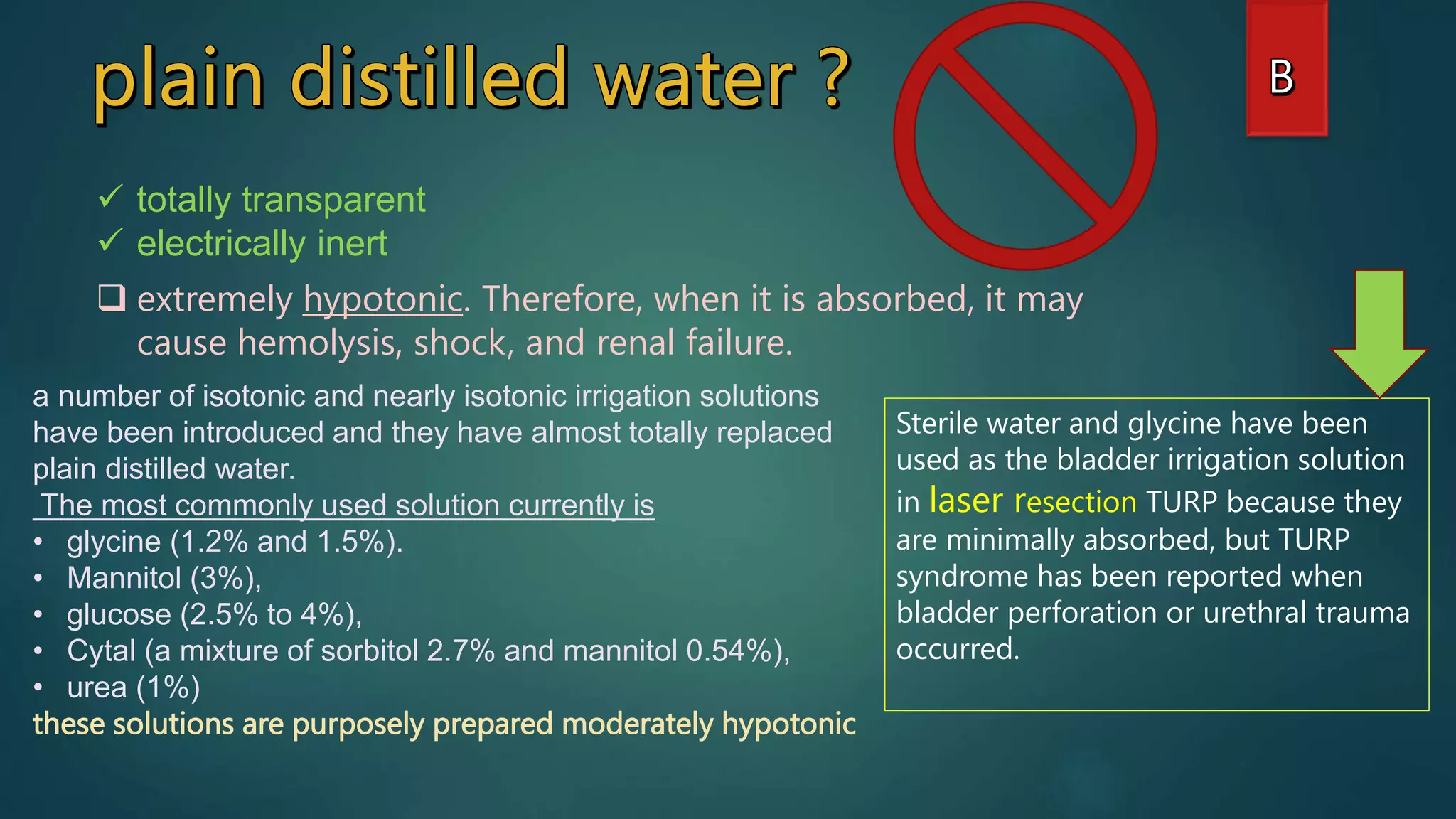
 totally transparent
 electrically inert
 extremely hypotonic. Therefore, when it is absorbed, it may
cause hemolysis, shock, and renal failure.
a number of isotonic and nearly isotonic irrigation solutions
have been introduced and they have almost totally replaced
plain distilled water.
The most commonly used solution currently is
• glycine (1.2% and 1.5%).
• Mannitol (3%),
• glucose (2.5% to 4%),
• Cytal (a mixture of sorbitol 2.7% and mannitol 0.54%),
• urea (1%)
these solutions are purposely prepared moderately hypotonic
Sterile water and glycine have been
used as the bladder irrigation solution
in laser resection TURP because they
are minimally absorbed, but TURP
syndrome has been reported when
bladder perforation or urethral trauma
occurred.
toxic effects of glycine
• Glycine is an inhibitory neurotransmitter similar to γ-aminobutyric acid in the spinal cord and brain. When
absorbed by the patient in large amounts, glycine has direct toxic effects on the heart and retina. In patients who
have undergone TURP with glycine absorption, it has been shown to cause an average decrease of 17.5% in
cardiac output. In animal studies, the administration of the amino acid arginine reversed the myocardial
depressing effect of glycine. The mechanism by which glycine depresses cardiac function and the mechanism by
which arginine protects the heart is unknown.
• Hyperglycinemia may cause transient visual disturbance (blindness) during TURP. However, glycine toxicity in
patients who have undergone TURP is uncommon, probably because most of the absorbed glycine is retained in
the periprostatic and retroperitoneal spaces, where access to the circulation is limited.
• The most common metabolites of glycine are ammonia and glyoxylic and oxalic acids (Fig. 24.5). In some
patients, excessive absorption of glycine during TURP leads to hyperammonemia. Hyperoxaluria could
compromise renal function in patients with coexisting renal disease, which is often present in elderly patients
undergoing TURP.
• Glycine may cause encephalopathy and seizures through its ability to potentiate the effects of N-methyl-D-
aspartate, an excitatory neurotransmitter. Magnesium exerts a negative control on the N-methyl-D-aspartate
receptor, and the susceptibility to seizures. For this reason, a trial of magnesium therapy may be indicated in
patients who develop seizures during TURP.
monitors
• American Society of Anesthesiologists standard monitors, including multiple-lead ST-
segment analysis
• Temperature
• Consider direct arterial blood pressure.
• Consider transthoracic echocardiography, if necessary.
Preferred anesthetic technique
 It allows monitoring of the patient's mentation, thereby facilitating early detection of signs of
TURP syndrome.
 It can allow for earlier detection of prostate capsular tears or bladder perforation via patient
reports of peritoneal or diaphragmatic (shoulder) pain, provided spinal level is below T10.
 It promotes vasodilation and peripheral pooling of blood, thereby reducing the severity of
circulatory overloading.
 It reduces blood loss by lowering arterial and venous blood pressure during surgery.
 It provides postoperative analgesia, thereby reducing the incidence of postoperative
hypertension and tachycardia, which often accompanies recovery from general anesthesia.
 Currently, less emphasis is placed on regional anesthesia (vs. general anesthesia) for TURP
because of the increased use of bipolar electrode and laser resection surgical techniques.
 Regional anesthesia may not be a safe option in an anticoagulated patient.
• Although spinal anesthesia offers distinct advantages over general
anesthesia for TURP surgery, mortality and many markers of patient
outcome have been similar for both
• The incidence of postoperative complications, specifically MI, pulmonary
embolism, cerebrovascular accidents, transient ischemic attacks, renal
failure, hepatic insufficiency, and the need for prolonged ventilation, is
similar in patients receiving regional anesthesia and those receiving general
anesthesia.
• More recently, with the use of laser TURP resection surgical techniques, less
emphasis has been placed on regional anesthesia as the preferred
anesthetic technique given minimal absorption of irrigating fluid.
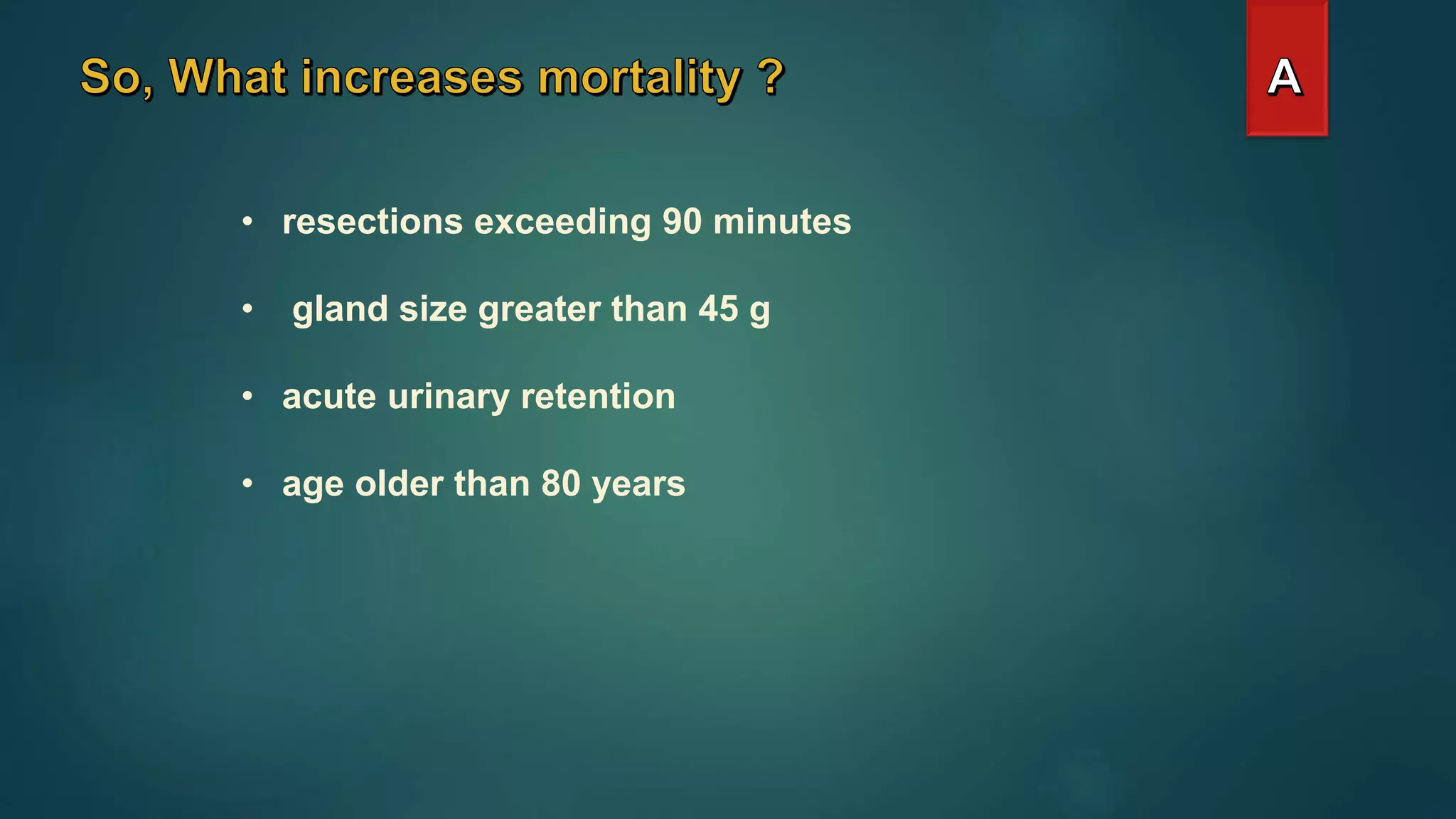
• resections exceeding 90 minutes
• gland size greater than 45 g
• acute urinary retention
• age older than 80 years
therapeutic measures
• Terminate surgery as soon as possible.
• Administer furosemide, 20 to 40 mg intravenously. Although furosemide results in natriuresis, this effect
is negligible relative to the desired acute diuresis and volume offloading of free water.
• Administer oxygen by nasal cannula or face mask to maintain oxygen saturation and consider
intubation.
• Obtain arterial blood gas, serum osmolality, and sodium analysis.
• If the serum sodium level is abnormally low and clinical signs of hyponatremia are evident, intravenous
administration of hypertonic saline (3% to 5%) may be recommended. The hypertonic solution should
be given at a rate no faster than 100 mL per hour. In most cases, no more than 300 mL of saline is
needed to correct the hyponatremia.
• If the patient develops seizures, a short-acting anticonvulsant such as diazepam (5 to 20 mg) or
midazolam (2 to 10 mg) can be administered intravenously. If these drugs do not arrest the seizures, a
barbiturate or phenytoin can be added. As a last resort, a muscle relaxant may also be used.
• If pulmonary edema or hypotension develops, invasive hemodynamic monitoring is recommended.
This will serve as a guide for pharmacologic support and fluid administration.
• If significant blood loss is suspected, the administration of packed red blood cells should be
considered. In general, intravenous fluids should be administered cautiously because of the propensity
of these patients to develop pulmonary edema.
TURP.pptx

TURP.pptx

  • 1.
  • 2.
    TURP Vs Openprostatectomy TURP is considered to be a simpler and safer procedure than open prostatectomy; however, no differences have been reported in mortality rates between patients who have undergone monopolar TURP and those who have undergone retropubic or suprapubic prostatectomy. With recent advances in TURP, including bipolar and laser, the overall mortality has declined to 0.10%
  • 3.
    Comorbidities common inpatients undergoing TURP • TURP patients often are elderly and suffer from cardiac, pulmonary, vascular, and endocrine disorders. • The incidence of cardiac disease is 67%; cardiovascular disease, 50%; abnormal electrocardiogram (ECG), 77%; chronic obstructive pulmonary disease, 29%; and diabetes mellitus, 8%. • Occasionally, these patients are dehydrated and depleted of essential electrolytes because of long-term diuretic therapy and restricted fluid intake.
  • 4.
    • Rapid absorptionof a large-volume, hypotonic bladder irrigation solution during TURP can lead to TURP syndrome. • TURP syndrome is characterized by intravascular volume shifts and plasma-solute (osmolarity) effects. Cardiopulmonary Hypertension Bradycardia Dysrhythmia Respiratory distress Cyanosis Hypotension Shock Death Hematologic and renal Hyperglycinemia Hyperammonemia Hyponatremia Hypoosmolality Hemolysis/anemia Acute renal failure Death CNS Nausea/vomiting Confusion/restlessness Blindness Twitches/seizures Lethargy/paralysis Dilated/nonreactive pupils Coma Death • TURP syndrome can occur as early as 15 minutes after surgery has started and as late as 24 hours after surgery
  • 5.
    What causes CNSdysfunction ? • The crucial physiologic derangement of CNS function is not hyponatremia but acute hypoosmolality, which is predictable because the blood-brain barrier is essentially impermeable to sodium but freely permeable to water. • Cerebral edema caused by acute hypoosmolality can increase intracranial pressure, which results in bradycardia and hypertension by the Cushing reflex. • Furthermore, cerebral edema is not caused by decreased serum colloid oncotic pressure but by decreased osmolality. • The hypervolemia and hyponatremia that often accompany TURP promote cerebral edema and this in turn raises intracranial pressure and induces neurologic symptoms.
  • 6.
    TURP-related blindness • Transientblindness is one of the more alarming complications of TURP. The patient complains of blurred vision and of seeing halos around objects. This can occur either during surgery or later in the recovery room. • Although it is sometimes accompanied by other TURP-related complications, the blindness usually occurs as an isolated symptom. • Examination of the eyes reveals dilated and unresponsive pupils. Postoperatively, TURP-related blindness gradually recedes and eyesight returns to normal within 8 to 48 hours of surgery.
  • 7.
    disseminated intravascular coagulopathy (DIC) •DIC is triggered during TURP by prostatic particles rich in thromboplastin that enters the bloodstream during surgery. • The recommended treatment for DIC is replacement of blood loss and administration of platelets, cryoprecipitates, and fresh frozen plasma. Heparin administration is controversial.
  • 8.
    prophylacticmeasuresmayreducetheincidenceof TURPsyndrome • Theincidence of TURP syndrome depends primarily on the surgeon's technical skills. However, if the patient is properly prepared before surgery and closely monitored during surgery, the incidence and severity of the syndrome can be reduced. • Fluid and electrolyte imbalance should be corrected preoperatively, and special attention should be paid to the serum sodium especially in traditional monopolar electrode TURP. Patients with preoperative CHF should be treated vigorously with diuretics and fluid restriction. • A conservative surgical approach should be considered for critically ill patients. A simple canalization or balloon dilation of the urethra or a staged TURP is less likely to induce TURP syndrome. • The most important preventive measure during surgery is preservation of the prostatic capsule. • Another preventive measure is restriction of the hydrostatic pressure of the irrigation solution to 60 cm H2O. This can be accomplished by maintaining the height of the irrigation pole to 60 cm (˜2 ft) above patient level. Also, the bladder should not be allowed to overdistend and the duration of surgery should be restricted. • Serial serum sodium and osmolality are advisable in order to detect a decreasing trend. • If clinical signs of TURP syndrome present, the surgeon should be informed and therapeutic measures immediately instituted. • If serum sodium level approaches 120 mEq per L, surgery should be terminated as soon as possible. • Intravenous fluids should be cautiously administered during TURP. • A microdrip is recommended particularly for patients with cardiac or renal disease. • If regional anesthesia causes hypotension, a small dose of a vasoconstrictor is recommended to raise the blood pressure rather than rapid infusion of intravenous fluids.
  • 9.
    factorsincreasetheincidenceof TURPsyndrome • theprostatic gland is atypically large,.... Large prostatic glands have rich venous networks that promote intravascular absorption of irrigation solution • the prostatic capsule is violated during surgery, .....The violation of the prostatic capsule during surgery promotes entry of irrigation solution into the periprostatic and retroperitoneal spaces • the hydrostatic pressure of the irrigation solution is excessively high. .. The hydrostatic pressure of the irrigation solution is an important determinant of the rate at which the patient will absorb the solution. This pressure depends primarily on the height of the irrigation solution pole. When the height of the pole exceeds 60 cm (˜2 ft), the absorption of irrigation solution is greatly enhanced. • Also, an excessively distended bladder during surgery facilitates absorption.
  • 10.
    How does thepatient absorb irrigation solution ? • Directly through open prostatic venous sinuses created during monopolar and bipolar resection techniques • If the complication of bladder perforation / prostate capsule violation occurs, significant accumulation of irrigating fluid in the periprostatic, intraperitoneal or retroperitoneal space can occur, resulting in significant intravascular absorption • The average rate of absorption is 20 mL per minute and may reach 200 mL per minute; the average weight gain by the end of surgery is 2 kg • A very thin resection “zone” combined with a coagulating benefit during laser TURP prevents significant opening of the prostatic venous sinuses and absorption of the irrigating solution. • a poor correlation has been observed between the duration of surgery and the amount of irrigation solution absorbed
  • 11.
    What differentiates monopolarfrom bipolar TURP • Monopolar TURP uses high energy, which allows a fast cutting technique of prostatic tissue with minimal coagulation in the process. The body is the conduit of the energy dispersed from the monopolar electrode to complete the electrical circuit to a large-surface skin grounding pad placed on the patient. It also requires the use of an electrolyte-free bladder irrigating fluid. • In bipolar TURP, the electrical circuit is completely contained within the resectoscope. This prevents energy from traveling through the body. Instead, the energy remains confined to the site of prostatic resection and is returned via the second limb of the bipolar resectoscope. With the bipolar electrode, less bleeding occurs at the prostatic tissue site and normal saline can be used as the bladder irrigating fluid.
  • 12.
    Laser prostatectomy create acoagulation zone during resection, which minimizes bleeding and irrigating fluid absorption. There are five advantages of laser TURP: (1) It uses sterile water or normal saline as the irrigating bladder solution; (2) it minimizes the absorption of irrigating fluid (3) it minimizes or altogether eliminates TURP syndrome; (4) it produces significantly less bleeding, which allows the procedure to be performed on an anticoagulated patient; and (5) it de-emphasizes regional anesthesia as the preferred anesthetic technique.
  • 13.
    Ideal TURP irrigationsolutions are • either isotonic or nearly isotonic, • electrically inert • nontoxic • transparent.  Electrolyte-containing solutions are avoided in monopolar electrode TURP because they can conduct electrical current to surrounding tissues and cause burns.  Because significant absorption of bladder irrigating solution can occur during TURP, only solutions with nontoxic solutes are used.  If intravascular hypotonic bladder irrigating solution is absorbed, absorption can lead to hyponatremia, hypoosmolality, and, in severe cases, hemolysis.  These complications are avoided when normal saline is used with bipolar electrode and laser resection TURP.  Several liters of irrigation solution pass through the bladder during TURP. This can reduce body temperature at the rate of 1°C per hour  Approximately half of patients undergoing TURP become hypothermic and shiver at the conclusion of surgery.
  • 14.
     totally transparent electrically inert  extremely hypotonic. Therefore, when it is absorbed, it may cause hemolysis, shock, and renal failure. a number of isotonic and nearly isotonic irrigation solutions have been introduced and they have almost totally replaced plain distilled water. The most commonly used solution currently is • glycine (1.2% and 1.5%). • Mannitol (3%), • glucose (2.5% to 4%), • Cytal (a mixture of sorbitol 2.7% and mannitol 0.54%), • urea (1%) these solutions are purposely prepared moderately hypotonic Sterile water and glycine have been used as the bladder irrigation solution in laser resection TURP because they are minimally absorbed, but TURP syndrome has been reported when bladder perforation or urethral trauma occurred.
  • 15.
    toxic effects ofglycine • Glycine is an inhibitory neurotransmitter similar to γ-aminobutyric acid in the spinal cord and brain. When absorbed by the patient in large amounts, glycine has direct toxic effects on the heart and retina. In patients who have undergone TURP with glycine absorption, it has been shown to cause an average decrease of 17.5% in cardiac output. In animal studies, the administration of the amino acid arginine reversed the myocardial depressing effect of glycine. The mechanism by which glycine depresses cardiac function and the mechanism by which arginine protects the heart is unknown. • Hyperglycinemia may cause transient visual disturbance (blindness) during TURP. However, glycine toxicity in patients who have undergone TURP is uncommon, probably because most of the absorbed glycine is retained in the periprostatic and retroperitoneal spaces, where access to the circulation is limited. • The most common metabolites of glycine are ammonia and glyoxylic and oxalic acids (Fig. 24.5). In some patients, excessive absorption of glycine during TURP leads to hyperammonemia. Hyperoxaluria could compromise renal function in patients with coexisting renal disease, which is often present in elderly patients undergoing TURP. • Glycine may cause encephalopathy and seizures through its ability to potentiate the effects of N-methyl-D- aspartate, an excitatory neurotransmitter. Magnesium exerts a negative control on the N-methyl-D-aspartate receptor, and the susceptibility to seizures. For this reason, a trial of magnesium therapy may be indicated in patients who develop seizures during TURP.
  • 16.
    monitors • American Societyof Anesthesiologists standard monitors, including multiple-lead ST- segment analysis • Temperature • Consider direct arterial blood pressure. • Consider transthoracic echocardiography, if necessary.
  • 17.
    Preferred anesthetic technique It allows monitoring of the patient's mentation, thereby facilitating early detection of signs of TURP syndrome.  It can allow for earlier detection of prostate capsular tears or bladder perforation via patient reports of peritoneal or diaphragmatic (shoulder) pain, provided spinal level is below T10.  It promotes vasodilation and peripheral pooling of blood, thereby reducing the severity of circulatory overloading.  It reduces blood loss by lowering arterial and venous blood pressure during surgery.  It provides postoperative analgesia, thereby reducing the incidence of postoperative hypertension and tachycardia, which often accompanies recovery from general anesthesia.  Currently, less emphasis is placed on regional anesthesia (vs. general anesthesia) for TURP because of the increased use of bipolar electrode and laser resection surgical techniques.  Regional anesthesia may not be a safe option in an anticoagulated patient.
  • 18.
    • Although spinalanesthesia offers distinct advantages over general anesthesia for TURP surgery, mortality and many markers of patient outcome have been similar for both • The incidence of postoperative complications, specifically MI, pulmonary embolism, cerebrovascular accidents, transient ischemic attacks, renal failure, hepatic insufficiency, and the need for prolonged ventilation, is similar in patients receiving regional anesthesia and those receiving general anesthesia. • More recently, with the use of laser TURP resection surgical techniques, less emphasis has been placed on regional anesthesia as the preferred anesthetic technique given minimal absorption of irrigating fluid.
  • 19.
    • resections exceeding90 minutes • gland size greater than 45 g • acute urinary retention • age older than 80 years
  • 20.
    therapeutic measures • Terminatesurgery as soon as possible. • Administer furosemide, 20 to 40 mg intravenously. Although furosemide results in natriuresis, this effect is negligible relative to the desired acute diuresis and volume offloading of free water. • Administer oxygen by nasal cannula or face mask to maintain oxygen saturation and consider intubation. • Obtain arterial blood gas, serum osmolality, and sodium analysis. • If the serum sodium level is abnormally low and clinical signs of hyponatremia are evident, intravenous administration of hypertonic saline (3% to 5%) may be recommended. The hypertonic solution should be given at a rate no faster than 100 mL per hour. In most cases, no more than 300 mL of saline is needed to correct the hyponatremia. • If the patient develops seizures, a short-acting anticonvulsant such as diazepam (5 to 20 mg) or midazolam (2 to 10 mg) can be administered intravenously. If these drugs do not arrest the seizures, a barbiturate or phenytoin can be added. As a last resort, a muscle relaxant may also be used. • If pulmonary edema or hypotension develops, invasive hemodynamic monitoring is recommended. This will serve as a guide for pharmacologic support and fluid administration. • If significant blood loss is suspected, the administration of packed red blood cells should be considered. In general, intravenous fluids should be administered cautiously because of the propensity of these patients to develop pulmonary edema.