WOUND DEBRIDERMENT,
HOW FAR WE KNOW IT?
DR. KHADIJAH NORDIN
Coordinator Unit Penjagaan Luka HEBHK
CCWC(Malaysia)
PGWM (on going)
Wound debridement
a procedure to remove dead, devitalized, or
contaminated tissue as well as necrotic tissue,
eschar, slough, pus, hematomas, hyperkeratosis,
foreign bodies, debries, biofilm, bone fragments,
or another bioburden from a wound bed.
Wound cleansing
“The use of fluids to remove loosely
adherent debris and necrotic tissue from
the wound surface.”
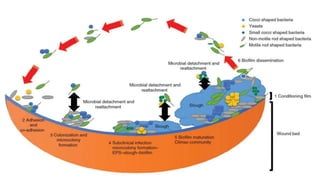
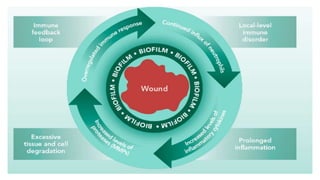
BIOFILM
• “a structured community of bacterial cells enclosed in a self-produced
polymeric matrix (extracellular polymeric substance-EPS) and
adherent to an inert (non-living thing) or living surface”
• Has 3 functional layer
• present in most chronic wounds and are likely to be located both on
the surface and in deeper wound layers, but may not be present
uniformly across or within the wound
Aim Of Debridement
Remove
• Slough, pus, necrotic tissues
• Devitalized tissue
• Foreign body
• hematomas, hyperkeratosis, foreign bodies, debries, bone fragments
Reduce
• Excessive exudate
• Order
• Bioburden/ biofilm
Enhance
• epithelization
• Advancing the wound edge
• Wound closure
Ultrasonic Assisted Debridement
Surgical Debridement
METHOD OF WOUND DEBRIDEMENT
Enzymatic Debridement
Autolytic Debridement
Biological Debridement
Mechanical Debridement
Hydrostatic Debridement
Combination Debridement
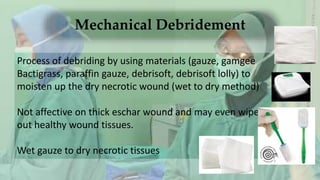
Mechanical Debridement
Process of debriding by using materials (gauze, gamgee
Bactigrass, paraffin gauze, debrisoft, debrisoft lolly) to
moisten up the dry necrotic wound (wet to dry method)
Not affective on thick eschar wound and may even wipe
out healthy wound tissues.
Wet gauze to dry necrotic tissues
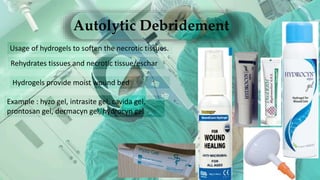
Autolytic Debridement
Usage of hydrogels to soften the necrotic tissues.
Rehydrates tissues and necrotic tissue/eschar
Hydrogels provide moist wound bed
Example : hyzo gel, intrasite gel, cavida gel,
prontosan gel, dermacyn gel, hydrocyn gel
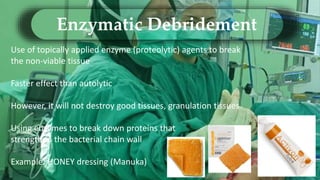
Enzymatic Debridement
Use of topically applied enzyme (proteolytic) agents to break
the non-viable tissue
Faster effect than autolytic
However, it will not destroy good tissues, granulation tissues
Using enzymes to break down proteins that
strengthen the bacterial chain wall
Example: HONEY dressing (Manuka)
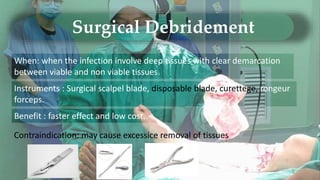
Surgical Debridement
When: when the infection involve deep tissues with clear demarcation
between viable and non viable tissues.
Instruments : Surgical scalpel blade, disposable blade, curettege, rongeur
forceps.
Benefit : faster effect and low cost.
Contraindication: may cause excessice removal of tissues
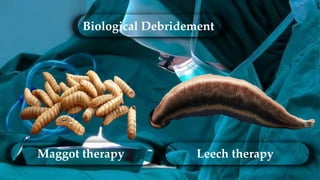
Biological Debridement
Maggot therapy Leech therapy
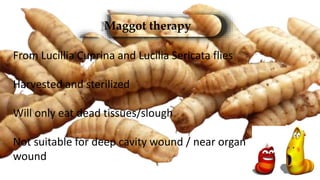
From Lucillia Cuprina and Lucilia Sericata flies
Harvested and sterilized
Will only eat dead tissues/slough
Not suitable for deep cavity wound / near organ
wound
Maggot therapy
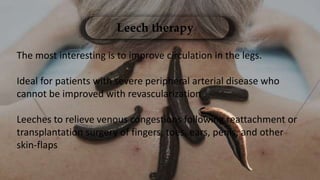
Leech therapy
The most interesting is to improve circulation in the legs.
Ideal for patients with severe peripheral arterial disease who
cannot be improved with revascularization
Leeches to relieve venous congestions following reattachment or
transplantation surgery of fingers, toes, ears, penis, and other
skin-flaps
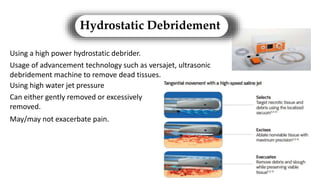
Hydrostatic Debridement
Using a high power hydrostatic debrider.
Usage of advancement technology such as versajet, ultrasonic
debridement machine to remove dead tissues.
Using high water jet pressure
Can either gently removed or excessively
removed.
May/may not exacerbate pain.
UAW is a lesser-known debridement method that uses low-frequency ultrasound waves.
There is evidence to show that the three clinical effects of atraumatic selective tissue debridement,
wound stimulatory effects, and antibacterial activity facilitate early healing of wounds, reducing the
cost to the healthcare system and improving the patient’s quality of life
effective removal of devitalized tissue
preservation of healthy tissue
creation of a clean, viable wound bed
disrupting of biofilms
prevention of biofilm reformation
Ultrasonic Assisted Debridement (UAW)
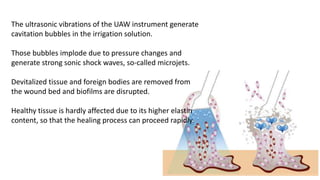
The ultrasonic vibrations of the UAW instrument generate
cavitation bubbles in the irrigation solution.
Those bubbles implode due to pressure changes and
generate strong sonic shock waves, so-called microjets.
Devitalized tissue and foreign bodies are removed from
the wound bed and biofilms are disrupted.
Healthy tissue is hardly affected due to its higher elastin
content, so that the healing process can proceed rapidly.
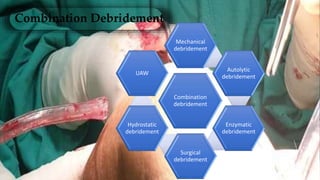
Combination Debridement
Combination
debridement
Mechanical
debridement
Autolytic
debridement
Enzymatic
debridement
Surgical
debridement
Hydrostatic
debridement
UAW
wound debriderment.pptx

wound debriderment.pptx

  • 1.
    WOUND DEBRIDERMENT, HOW FARWE KNOW IT? DR. KHADIJAH NORDIN Coordinator Unit Penjagaan Luka HEBHK CCWC(Malaysia) PGWM (on going)
  • 2.
    Wound debridement a procedureto remove dead, devitalized, or contaminated tissue as well as necrotic tissue, eschar, slough, pus, hematomas, hyperkeratosis, foreign bodies, debries, biofilm, bone fragments, or another bioburden from a wound bed.
  • 3.
    Wound cleansing “The useof fluids to remove loosely adherent debris and necrotic tissue from the wound surface.”
  • 4.
    BIOFILM • “a structuredcommunity of bacterial cells enclosed in a self-produced polymeric matrix (extracellular polymeric substance-EPS) and adherent to an inert (non-living thing) or living surface” • Has 3 functional layer • present in most chronic wounds and are likely to be located both on the surface and in deeper wound layers, but may not be present uniformly across or within the wound
  • 7.
    Aim Of Debridement Remove •Slough, pus, necrotic tissues • Devitalized tissue • Foreign body • hematomas, hyperkeratosis, foreign bodies, debries, bone fragments Reduce • Excessive exudate • Order • Bioburden/ biofilm Enhance • epithelization • Advancing the wound edge • Wound closure
  • 8.
    Ultrasonic Assisted Debridement SurgicalDebridement METHOD OF WOUND DEBRIDEMENT Enzymatic Debridement Autolytic Debridement Biological Debridement Mechanical Debridement Hydrostatic Debridement Combination Debridement
  • 9.
    Mechanical Debridement Process ofdebriding by using materials (gauze, gamgee Bactigrass, paraffin gauze, debrisoft, debrisoft lolly) to moisten up the dry necrotic wound (wet to dry method) Not affective on thick eschar wound and may even wipe out healthy wound tissues. Wet gauze to dry necrotic tissues
  • 10.
    Autolytic Debridement Usage ofhydrogels to soften the necrotic tissues. Rehydrates tissues and necrotic tissue/eschar Hydrogels provide moist wound bed Example : hyzo gel, intrasite gel, cavida gel, prontosan gel, dermacyn gel, hydrocyn gel
  • 11.
    Enzymatic Debridement Use oftopically applied enzyme (proteolytic) agents to break the non-viable tissue Faster effect than autolytic However, it will not destroy good tissues, granulation tissues Using enzymes to break down proteins that strengthen the bacterial chain wall Example: HONEY dressing (Manuka)
  • 12.
    Surgical Debridement When: whenthe infection involve deep tissues with clear demarcation between viable and non viable tissues. Instruments : Surgical scalpel blade, disposable blade, curettege, rongeur forceps. Benefit : faster effect and low cost. Contraindication: may cause excessice removal of tissues
  • 13.
  • 14.
    From Lucillia Cuprinaand Lucilia Sericata flies Harvested and sterilized Will only eat dead tissues/slough Not suitable for deep cavity wound / near organ wound Maggot therapy
  • 15.
    Leech therapy The mostinteresting is to improve circulation in the legs. Ideal for patients with severe peripheral arterial disease who cannot be improved with revascularization Leeches to relieve venous congestions following reattachment or transplantation surgery of fingers, toes, ears, penis, and other skin-flaps
  • 16.
    Hydrostatic Debridement Using ahigh power hydrostatic debrider. Usage of advancement technology such as versajet, ultrasonic debridement machine to remove dead tissues. Using high water jet pressure Can either gently removed or excessively removed. May/may not exacerbate pain.
  • 17.
    UAW is alesser-known debridement method that uses low-frequency ultrasound waves. There is evidence to show that the three clinical effects of atraumatic selective tissue debridement, wound stimulatory effects, and antibacterial activity facilitate early healing of wounds, reducing the cost to the healthcare system and improving the patient’s quality of life effective removal of devitalized tissue preservation of healthy tissue creation of a clean, viable wound bed disrupting of biofilms prevention of biofilm reformation Ultrasonic Assisted Debridement (UAW)
  • 18.
    The ultrasonic vibrationsof the UAW instrument generate cavitation bubbles in the irrigation solution. Those bubbles implode due to pressure changes and generate strong sonic shock waves, so-called microjets. Devitalized tissue and foreign bodies are removed from the wound bed and biofilms are disrupted. Healthy tissue is hardly affected due to its higher elastin content, so that the healing process can proceed rapidly.
  • 19.