‫ا‬                     ‫وأ ه‬             ‫ا‬


Translating Poetry and Its Impact on The
       Culture of The Community
            By:                http://sbanjar.kau.edu.sa/
  Dr. Shadia Yousef Banjar     http://wwwdrshadiabanjar.blogspot.com

      2nd Semi-Symposium in The Department of English
                  King Abdulaziz University – Al-Faisaliah
             Linguistic and Literary Societal Role
                          Sunday 19th Muharram, 14332
                              26th December, 2010
12/23/2010                    Dr. Shadia Yousef Banjar           1
In this study, the researcher will argue that translating poetry
seems to be directly or indirectly connected with art and culture.
Three different translations of Lewis Carroll's ‘Jabberwocky’ , the
well formed nonsense poem in terms of grammar and syntax ,
conducted by three different translators, and three others by
different translation software are introduced. By comparing the
different output with the original input, it is concluded that
poetic translation depends on transferring the form and the
spirit of the origin in order to have the optimal effect as in a
painting. Thus the translator is a mediator transferring culture,
and the translation may represent a double-edged weapon. On
one hand, it may play a gulf-bridging role in cultural mediation;
on the other, it can be used as a means intended for ripping the
culture of a community to pieces.

 12/23/2010                 Dr. Shadia Yousef Banjar                  2
‫ا را‬
                ‫ا‬          ‫را ي ل ن‬               ‫ا‬     ‫ُا‬      ‫َ‬     ‫ه ا را‬
               ‫م‬      ‫ه اا‬        ‫.و‬          ‫َ وا‬                ‫أو‬
‫ة ه اء ذات‬
      ‫ِ‬      ‫َ‬          ‫وآ "، وه‬       ‫آ رول "‬                ‫ِ‬    ‫ت‬
                               ‫ِ ِ‬                ‫ا ا ِ وا ،‬                  ‫ء‬
   ‫ِ . و ُ َ رَ‬
    ‫َ‬                  ‫ِ‬      ‫ا ِ‬           ‫ا‬        ‫تأ ىأ‬                      ‫إ‬
            ‫َِ ُ‬           ‫ِا‬      ‫أن ا‬
                                     ‫ّ‬         ‫،‬     ‫ا‬                 ‫تا‬       ‫ا‬
‫ا .‬              ‫آ ه ا ل ا‬                ‫ا‬       ‫ثا‬       ‫آ‬       ‫وا وح‬        ‫ا‬
‫ذا‬                  ‫ا‬         ‫ا تو‬                     ‫دور ا‬        ‫ا‬       ‫وه ا‬
‫ف‬                ‫مآ‬          ‫؛و‬                  ‫ا ةا‬       ‫دورا‬
                                                            ‫ً‬             ‫،‬
                                               ‫أ ى.‬


   ‫0102/32/21‬                    ‫‪Dr. Shadia Yousef Banjar‬‬                    ‫3‬
Walter Benjamin thinks that translation with no doubt breaks the
limits of language and literary traditions and this is a very good
thing for a language and literature and what really makes it
interesting and worth the effort.


  12/23/2010                Dr. Shadia Yousef Banjar            4
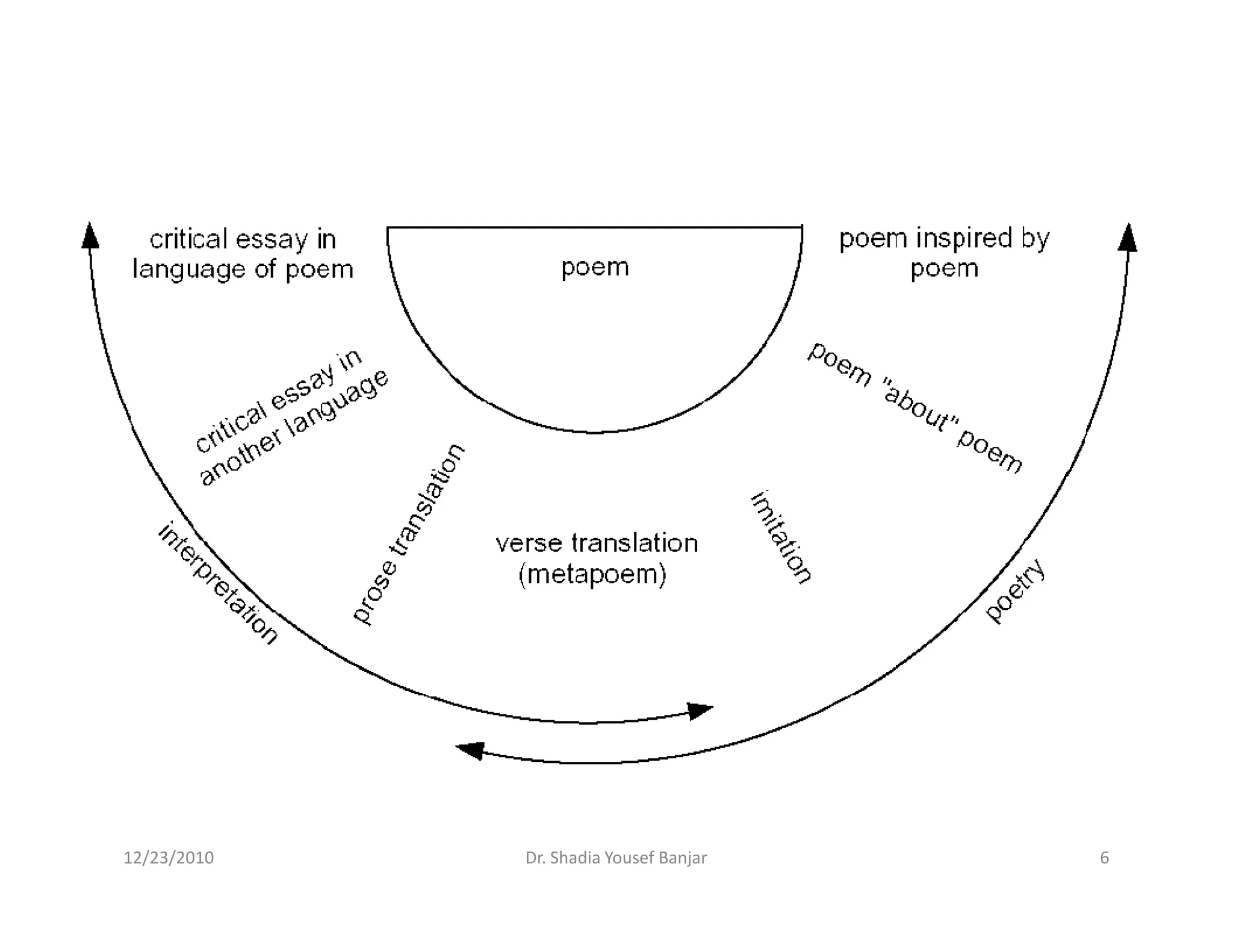
Holmes stated that translation of verse is seen
as a spectrum of different forms of meta-
literature, from interpretative works in prose to
a poem inspired by the original which is called ‘
metapoem’. This metapoem is both translation
i. e. meta- literature and primary literature as
it is poetry in itself.
The verse of this METAPOEM has five forms:
1.A mimetic,
2.Analogical,
3.Derivative,
4.Organic, or
5.Extraneous.
 12/23/2010         Dr. Shadia Yousef Banjar   5
12/23/2010   Dr. Shadia Yousef Banjar   6
Translating poetry as a form and a spirit:
A poem, a certain number of words in a certain order on the
page, is a form, where all relation to what is other and finite -to
what is true- has been suspended. […] The poem is a means, a
spiritual statement, which is not, however, an end.
(Bonnefoy, 1992: 187-188)


12/23/2010                 Dr. Shadia Yousef Banjar              7
12/23/2010   Dr. Shadia Yousef Banjar   8
And, as in uffish thought he stood,
                                                The Jabberwock, with eyes of flame,
   Twas brillig, and the slithy toves         Came whiffling through the tulgey wood,
   Did gyre and gimble in the wabe:                   And burbled as it came!
    All mimsy were the borogoves,
    And the mome raths outgrabe.        One, two! One, two! And through and through
                                            The vorpal blade went snicker-snack!
  "Beware the Jabberwock, my son!              He left it dead, and with its head
.
The jaws that bite, the claws that catch!         He went galumphing back.
  Beware the Jubjub bird, and shun
    The frumious Bandersnatch!“                 "And, has thou slain the Jabberwock?
                                                 Come to my arms, my beamish boy!
  He took his vorpal sword in hand:               O frabjous day! Callooh! Callay!'
Long time the manxome foe he sought –                   He chortled in his joy.
  So rested he by the Tumtum tree,
     And stood awhile in thought                    `Twas brillig, and the slithy toves
                                                     Did gyre and gimble in the wabe;
                                                     All mimsy were the borogoves,
                                                      And the mome raths outgrabe.

 12/23/2010                        Dr. Shadia Yousef Banjar                               9
JABBERWOCKY

'Twas (noun/adjective), and the (adjective)       And as in (adverb) thought he stood,
                                                  The (noun “a” again), with eyes of flame,
( plural noun)
                                                  Came (adverb) through the (adjective) wood,
Did (verb) and (verb) in the (noun: place);       And (verb past-tense) as it came!
All (adjective) were the (( plural noun),
And the (adjective) (( plural noun)(verb).        One, two! One, two! And through and through
                                                  The (adjective “a” again) blade went (loud sound)!
“Beware the (noun “a”), my son!                   He left it dead, and with its head
The jaws that bite, the claws that catch!         He went (adverb) back.
Beware the (noun), and shun
The (adjective) (noun)!”                          “And hast thou slain the (noun “a” again)?
                                                  Come to my arms, my (adjective)
                                                  boy! O (adjective) day! (interjection)! (different
He took his (adjective “a”) sword in hand:        interjection)!”
Long time the (adjective) foe he sought--         He (verb past tense) in his joy.
So rested he by the (noun),
And stood awhile in thought.
Poetry – Lap book,
Language Arts Unit for
Grades 3-6 by Leslie
Cardwell               (repeating the first stanza here)
    12/23/2010                         Dr. Shadia Yousef Banjar                                  10
Theme
    “Jabberwocky” has a very an old vital theme. This
   theme is the heroic quest, in which a (usually) young
   male will strike through for parts unknown, run into
   some horrifying beast, and either triumph over this
   force of dark- ness or be consumed by it.


12/23/2010             Dr. Shadia Yousef Banjar        11
Style
The poem is a ballad. The ballad-stanza is usually four
lines rhymed abcb, in which the lines have a syllable
pattern of 8, 6, 8, 6. We can realize how the third,
fifth, and sixth stanzas of the poem follow this rhyme
scheme.


12/23/2010            Dr. Shadia Yousef Banjar       12
‫وآ‬
        ‫آ ن وا ً،‬   ‫ا‬    ‫وآ ه ا ل أ‬                                                                ‫،و‬       ‫'ا ا‬
                ‫،‬   ‫ن‬     ‫وك،‬                                                 ‫وب؛‬                    ‫رو‬    ‫ا‬
                    ‫لا‬        ‫و ءو‬                                       ‫،‬              ‫رو‬                    ‫و‬
                ‫ءت!‬    ‫و ر آ أ‬                                                    ‫م.‬          ‫را‬    ‫ا‬    ‫وأوو‬

‫ل‬            ‫لو‬       ‫!و‬
                       ‫وا ، ا ! وا ، ا‬                                            ‫!‬     ‫وك، ا‬           ‫" ار‬
    ‫!‬            ‫تا‬   ‫ة ‪ vorpal‬ذه ا‬                                           ‫!‬                                   ‫ا‬
                  ‫،و ر‬    ‫در ا‬                                                         ‫ب، و ى‬         ‫ر‬               ‫ار ا‬
              ‫ة أ ى.‬           ‫ذه‬                                             ‫“!‬                    ‫و س‬

             ‫وك؟‬                ‫وأ‬                                        ‫:‬                  ‫ر ل‬             ‫وأ ط‬
            ‫!‬          ‫إ ذرا ، ا‬                                     ‫—‬      ‫ا و وا‬                                      ‫و‬
           ‫!آ "!‬      ‫ا س ا م! آ‬                                         ‫م،‬     ‫ة‬                        ‫أ‬
              ‫ا ح.‬        ‫ر‬   ‫وأ ف‬                                           ‫.‬    ‫ا‬                           ‫و‬

                                                           ‫،و‬         ‫'ا ا‬
                                         ‫وب؛‬                 ‫رو‬      ‫ا‬
                                     ‫،‬           ‫رو‬                     ‫و‬
    ‫‪Microsoft translator‬‬                 ‫م.‬           ‫را‬     ‫ا‬     ‫وأوو‬
         ‫0102/32/21‬                           ‫‪Dr. Shadia Yousef Banjar‬‬                                                       ‫31‬
‫ووآ‬
                  ‫ٌ‬
                  ‫ق‬      ‫ه وا ٌ‬    ‫و‬                                              ‫ا‬         ‫ات ا‬     ‫ا اء، وا ُ‬             ‫آنو‬
            ‫ا ه‬      ‫ووك‬     ‫ا‬   ‫ءو‬                                                   ‫ا ؛‬             ‫ُو ُ‬
                   ‫ا‬     ‫ُ ل‬                                                  ‫ة‬                    ‫آ‬        ‫وات‬
                                                                                                            ‫ُ‬               ‫ا‬
                  ‫ُأ ء و‬       ‫و‬                                   ‫ر‬     ‫و‬              ‫آ‬                ‫اء ا أ‬                 ‫ز ا‬        ‫وا‬

        ‫وا ، إ ن! وا ، إ ن! وه ا وه ا‬                                             ‫ُ ّ‬    ‫ووك(‬        ‫ا ر و ش( ا‬
‫!‬        ‫ً‬      ‫و ً‬    ‫ُ ا وا ا رم‬    ‫ا‬                                      ‫د!‬              ‫ا‬        ‫،ا‬   ‫ا ا ي‬
                   ‫ً،و أ‬   ‫آ‬                                                              ‫وا‬        ‫ا ُ‬   ‫ا را‬
              ‫ا‬
              ‫ً‬      ‫د و ه ا‬
                     ‫ً‬                                                       ‫ّف‬         ‫ذا ا ا‬         ‫ّا‬  ‫ا‬    ‫ا‬

              ‫ووك؟‬     ‫وه أ َ ذ َ ا‬                                               ‫رم‬           ‫ا وا ّ ا‬                 ‫أ‬
             ‫إ ذرا َ إ ا اه‬                                                  ‫ذ ا آ ا‬                               ‫وه‬           ‫أ ٍ‬
           ‫وا‬      ‫م ا ُ ! وا‬    ‫ٍ‬                                                ‫ةا‬                    ‫اح‬
                                                                                                        ‫َ‬      ‫ا‬            ‫و‬
                   ‫ً‬                                                                             ‫ُ هً‬        ‫وو‬

                                          ‫ا‬          ‫ات ا‬     ‫ا اء، وا ُ‬          ‫آنو‬
‫:‪Translated by‬‬                                ‫ا ؛‬              ‫ُو ُ‬
 ‫‪Nada Al-Rifa‬‬                         ‫ة‬                     ‫آ‬        ‫وات‬
                                                                     ‫ُ‬        ‫ا‬
                          ‫ر‬    ‫و‬              ‫آ‬                   ‫اء ا أ‬              ‫ز ا‬     ‫وا‬


    ‫0102/32/21‬                                    ‫‪Dr. Shadia Yousef Banjar‬‬                                                            ‫41‬
‫و‬      ‫و‬          ‫ا‬              ‫ا‬          ‫اذل ا ا‬
‫!‬               ‫َق‬
                 ‫و‬      ‫ءا‬                                      ‫رُ‬     ‫ر‬
            ‫ٌ‬                                                      ‫ُ ٌُ‬
‫!‬                    ‫ا ب‬                                         ‫و ُاُ ِ‬

‫ا‬       ‫ب‬                                                      ‫و‬      ‫ا رر ا‬
                                                                        ‫ِ َِ‬
    ‫ُ ً!‬         ‫أ‬                                            ‫!‬    ‫و ّ ا َُ‬
     ‫ا‬       ‫أ ِ‬                                            ‫وا ر ُ َ ا ُ ُ ِ‬
    ‫ُ ِ ا ُ و ً.‬
           ‫ً‬                                                     ‫َا ُ‬      ‫وا‬

‫و !‬          ‫ا‬                                                    ‫َا‬     ‫ُّ‬
  ‫!‬              ‫يا‬     ‫و‬
                        ‫ُ‬                                        ‫ا‬     ‫ُ‬
 ‫ا‬           ‫ٌ‬
             ‫م‬        ‫آ ه‬                                   ‫ّ ِا َ ِ‬
                                ‫اذل ا ا‬                       ‫ً.‬   ‫ً ُ‬
   ‫ا.‬            ‫ُ‬       ‫أ‬
                             ‫رُ‬     ‫ر‬
  ‫‪Wael Al-Mahdi‬‬                 ‫ُ ٌُ‬
‫وا ا ي )0102(‬
                              ‫و ُاُ ِ‬
‫0102/32/21‬                   ‫‪Dr. Shadia Yousef Banjar‬‬                           ‫51‬
‫ا‬             ‫ا‬     ‫و و‬                                                 ‫ا‬             ‫د‬
                   ‫ر‬        ‫ا خ وا‬                                               ‫ا‬                  ‫ا رض و‬     ‫ّ‬
  ‫م خ‬         ‫ا‬             ‫و‬    ‫و‬                                                ‫ا‬             ‫آ‬      ‫را‬       ‫وا‬
                              ‫وه‬                                              ‫ا دا‬                      ‫ا‬        ‫وا‬

          ‫وا‬                     ‫ا‬     ‫وا‬                                             ‫ا خ‬           ‫و ي‬    ‫ا‬
    ‫ك‬                        ‫ا‬          ‫وا‬                                        ‫ا‬               ‫ا ا و ا‬
     ‫و ر ا اس‬                                                                                   ‫ا‬    ‫ا‬     ‫ا‬
     ‫ص‬                               ‫وراح‬                                                         ‫ا‬    ‫و ا‬

                       ‫ا خ‬            ‫ود‬                                                                ‫أ‬
                  ‫م‬          ‫له‬                                                             ‫ا‬       ‫وآ ن ور‬
                   ‫ى‬           ‫ما‬                                                                        ‫وا‬
                            ‫آ آنا‬                                                                      ‫وا‬
                                                ‫د ا‬                         ‫و‬
‫‪Dr. Shadia Yousef Banjar‬‬                         ‫ا‬          ‫ا رض و‬         ‫ّ‬
         ‫)9002(‬                                   ‫آ اا‬         ‫را‬           ‫وا‬
                                             ‫ا دا‬               ‫ا‬            ‫وا‬
 ‫0102/32/21‬                                     ‫‪Dr. Shadia Yousef Banjar‬‬                                              ‫61‬
Holmes has remarked that a verse
translation .can never be more than a single
         interpretation out of many of
   the original whose image darkly mirrors.
                   (1968:30)


12/23/2010       Dr. Shadia Yousef Banjar   17
Conclusion
  In translating poetry , the translator transfers forms and spirit
  of the original work. The translator of verse is a receiver
  and producer of texts. He selects words and order at every
  turn from among the many options which are available; the
  preferred options will tend to correspond to standard poetic
  tradition of the target language, and/or textual criteria of the
  source language. No one can predict the regularities or
  irregularities of translational behavior, and the ingenuity of
  translators. Systematic behaviors which break the limits of
  language and literary traditions may affect the society as
  language is a power and when the language is weakened,
  the society will be weakened too.
12/23/2010                 Dr. Shadia Yousef Banjar               18
References
ALKALAY-GUT, Karen, “Carroll’s JABBERWOCKY,” in The Explicator, Vol. 6, No. 1, Fall,
1987, pp. 27–31.
BONNEFOY, Yves (1989): “Translating Poetry” in Biguenet & Schulte (eds.)
(1992): pp. 186-192.Ciardi, John, ed., How Does a Poem Mean?, Houghton Mifflin, 1960.
HOLMES, James S. (1968): .Forms of Verse Translation and Translation of Verse Form., in
James S. Holmes (1994): Translated!: Papers on Literary Translation and Translation
Studies, second edition, Amsterdam/Atlanta, Rodopi.


  12/23/2010                        Dr. Shadia Yousef Banjar                        19

Translating poetry and its impact on the culture of the community.paper( 5) pptx.pptx

  • 1.
    ‫ا‬ ‫وأ ه‬ ‫ا‬ Translating Poetry and Its Impact on The Culture of The Community By: http://sbanjar.kau.edu.sa/ Dr. Shadia Yousef Banjar http://wwwdrshadiabanjar.blogspot.com 2nd Semi-Symposium in The Department of English King Abdulaziz University – Al-Faisaliah Linguistic and Literary Societal Role Sunday 19th Muharram, 14332 26th December, 2010 12/23/2010 Dr. Shadia Yousef Banjar 1
  • 2.
    In this study,the researcher will argue that translating poetry seems to be directly or indirectly connected with art and culture. Three different translations of Lewis Carroll's ‘Jabberwocky’ , the well formed nonsense poem in terms of grammar and syntax , conducted by three different translators, and three others by different translation software are introduced. By comparing the different output with the original input, it is concluded that poetic translation depends on transferring the form and the spirit of the origin in order to have the optimal effect as in a painting. Thus the translator is a mediator transferring culture, and the translation may represent a double-edged weapon. On one hand, it may play a gulf-bridging role in cultural mediation; on the other, it can be used as a means intended for ripping the culture of a community to pieces. 12/23/2010 Dr. Shadia Yousef Banjar 2
  • 3.
    ‫ا را‬ ‫ا‬ ‫را ي ل ن‬ ‫ا‬ ‫ُا‬ ‫َ‬ ‫ه ا را‬ ‫م‬ ‫ه اا‬ ‫.و‬ ‫َ وا‬ ‫أو‬ ‫ة ه اء ذات‬ ‫ِ‬ ‫َ‬ ‫وآ "، وه‬ ‫آ رول "‬ ‫ِ‬ ‫ت‬ ‫ِ ِ‬ ‫ا ا ِ وا ،‬ ‫ء‬ ‫ِ . و ُ َ رَ‬ ‫َ‬ ‫ِ‬ ‫ا ِ‬ ‫ا‬ ‫تأ ىأ‬ ‫إ‬ ‫َِ ُ‬ ‫ِا‬ ‫أن ا‬ ‫ّ‬ ‫،‬ ‫ا‬ ‫تا‬ ‫ا‬ ‫ا .‬ ‫آ ه ا ل ا‬ ‫ا‬ ‫ثا‬ ‫آ‬ ‫وا وح‬ ‫ا‬ ‫ذا‬ ‫ا‬ ‫ا تو‬ ‫دور ا‬ ‫ا‬ ‫وه ا‬ ‫ف‬ ‫مآ‬ ‫؛و‬ ‫ا ةا‬ ‫دورا‬ ‫ً‬ ‫،‬ ‫أ ى.‬ ‫0102/32/21‬ ‫‪Dr. Shadia Yousef Banjar‬‬ ‫3‬
  • 4.
    Walter Benjamin thinksthat translation with no doubt breaks the limits of language and literary traditions and this is a very good thing for a language and literature and what really makes it interesting and worth the effort. 12/23/2010 Dr. Shadia Yousef Banjar 4
  • 5.
    Holmes stated thattranslation of verse is seen as a spectrum of different forms of meta- literature, from interpretative works in prose to a poem inspired by the original which is called ‘ metapoem’. This metapoem is both translation i. e. meta- literature and primary literature as it is poetry in itself. The verse of this METAPOEM has five forms: 1.A mimetic, 2.Analogical, 3.Derivative, 4.Organic, or 5.Extraneous. 12/23/2010 Dr. Shadia Yousef Banjar 5
  • 6.
    12/23/2010 Dr. Shadia Yousef Banjar 6
  • 7.
    Translating poetry asa form and a spirit: A poem, a certain number of words in a certain order on the page, is a form, where all relation to what is other and finite -to what is true- has been suspended. […] The poem is a means, a spiritual statement, which is not, however, an end. (Bonnefoy, 1992: 187-188) 12/23/2010 Dr. Shadia Yousef Banjar 7
  • 8.
    12/23/2010 Dr. Shadia Yousef Banjar 8
  • 9.
    And, as inuffish thought he stood, The Jabberwock, with eyes of flame, Twas brillig, and the slithy toves Came whiffling through the tulgey wood, Did gyre and gimble in the wabe: And burbled as it came! All mimsy were the borogoves, And the mome raths outgrabe. One, two! One, two! And through and through The vorpal blade went snicker-snack! "Beware the Jabberwock, my son! He left it dead, and with its head . The jaws that bite, the claws that catch! He went galumphing back. Beware the Jubjub bird, and shun The frumious Bandersnatch!“ "And, has thou slain the Jabberwock? Come to my arms, my beamish boy! He took his vorpal sword in hand: O frabjous day! Callooh! Callay!' Long time the manxome foe he sought – He chortled in his joy. So rested he by the Tumtum tree, And stood awhile in thought `Twas brillig, and the slithy toves Did gyre and gimble in the wabe; All mimsy were the borogoves, And the mome raths outgrabe. 12/23/2010 Dr. Shadia Yousef Banjar 9
  • 10.
    JABBERWOCKY 'Twas (noun/adjective), andthe (adjective) And as in (adverb) thought he stood, The (noun “a” again), with eyes of flame, ( plural noun) Came (adverb) through the (adjective) wood, Did (verb) and (verb) in the (noun: place); And (verb past-tense) as it came! All (adjective) were the (( plural noun), And the (adjective) (( plural noun)(verb). One, two! One, two! And through and through The (adjective “a” again) blade went (loud sound)! “Beware the (noun “a”), my son! He left it dead, and with its head The jaws that bite, the claws that catch! He went (adverb) back. Beware the (noun), and shun The (adjective) (noun)!” “And hast thou slain the (noun “a” again)? Come to my arms, my (adjective) boy! O (adjective) day! (interjection)! (different He took his (adjective “a”) sword in hand: interjection)!” Long time the (adjective) foe he sought-- He (verb past tense) in his joy. So rested he by the (noun), And stood awhile in thought. Poetry – Lap book, Language Arts Unit for Grades 3-6 by Leslie Cardwell (repeating the first stanza here) 12/23/2010 Dr. Shadia Yousef Banjar 10
  • 11.
    Theme “Jabberwocky” has a very an old vital theme. This theme is the heroic quest, in which a (usually) young male will strike through for parts unknown, run into some horrifying beast, and either triumph over this force of dark- ness or be consumed by it. 12/23/2010 Dr. Shadia Yousef Banjar 11
  • 12.
    Style The poem isa ballad. The ballad-stanza is usually four lines rhymed abcb, in which the lines have a syllable pattern of 8, 6, 8, 6. We can realize how the third, fifth, and sixth stanzas of the poem follow this rhyme scheme. 12/23/2010 Dr. Shadia Yousef Banjar 12
  • 13.
    ‫وآ‬ ‫آ ن وا ً،‬ ‫ا‬ ‫وآ ه ا ل أ‬ ‫،و‬ ‫'ا ا‬ ‫،‬ ‫ن‬ ‫وك،‬ ‫وب؛‬ ‫رو‬ ‫ا‬ ‫لا‬ ‫و ءو‬ ‫،‬ ‫رو‬ ‫و‬ ‫ءت!‬ ‫و ر آ أ‬ ‫م.‬ ‫را‬ ‫ا‬ ‫وأوو‬ ‫ل‬ ‫لو‬ ‫!و‬ ‫وا ، ا ! وا ، ا‬ ‫!‬ ‫وك، ا‬ ‫" ار‬ ‫!‬ ‫تا‬ ‫ة ‪ vorpal‬ذه ا‬ ‫!‬ ‫ا‬ ‫،و ر‬ ‫در ا‬ ‫ب، و ى‬ ‫ر‬ ‫ار ا‬ ‫ة أ ى.‬ ‫ذه‬ ‫“!‬ ‫و س‬ ‫وك؟‬ ‫وأ‬ ‫:‬ ‫ر ل‬ ‫وأ ط‬ ‫!‬ ‫إ ذرا ، ا‬ ‫—‬ ‫ا و وا‬ ‫و‬ ‫!آ "!‬ ‫ا س ا م! آ‬ ‫م،‬ ‫ة‬ ‫أ‬ ‫ا ح.‬ ‫ر‬ ‫وأ ف‬ ‫.‬ ‫ا‬ ‫و‬ ‫،و‬ ‫'ا ا‬ ‫وب؛‬ ‫رو‬ ‫ا‬ ‫،‬ ‫رو‬ ‫و‬ ‫‪Microsoft translator‬‬ ‫م.‬ ‫را‬ ‫ا‬ ‫وأوو‬ ‫0102/32/21‬ ‫‪Dr. Shadia Yousef Banjar‬‬ ‫31‬
  • 14.
    ‫ووآ‬ ‫ٌ‬ ‫ق‬ ‫ه وا ٌ‬ ‫و‬ ‫ا‬ ‫ات ا‬ ‫ا اء، وا ُ‬ ‫آنو‬ ‫ا ه‬ ‫ووك‬ ‫ا‬ ‫ءو‬ ‫ا ؛‬ ‫ُو ُ‬ ‫ا‬ ‫ُ ل‬ ‫ة‬ ‫آ‬ ‫وات‬ ‫ُ‬ ‫ا‬ ‫ُأ ء و‬ ‫و‬ ‫ر‬ ‫و‬ ‫آ‬ ‫اء ا أ‬ ‫ز ا‬ ‫وا‬ ‫وا ، إ ن! وا ، إ ن! وه ا وه ا‬ ‫ُ ّ‬ ‫ووك(‬ ‫ا ر و ش( ا‬ ‫!‬ ‫ً‬ ‫و ً‬ ‫ُ ا وا ا رم‬ ‫ا‬ ‫د!‬ ‫ا‬ ‫،ا‬ ‫ا ا ي‬ ‫ً،و أ‬ ‫آ‬ ‫وا‬ ‫ا ُ‬ ‫ا را‬ ‫ا‬ ‫ً‬ ‫د و ه ا‬ ‫ً‬ ‫ّف‬ ‫ذا ا ا‬ ‫ّا‬ ‫ا‬ ‫ا‬ ‫ووك؟‬ ‫وه أ َ ذ َ ا‬ ‫رم‬ ‫ا وا ّ ا‬ ‫أ‬ ‫إ ذرا َ إ ا اه‬ ‫ذ ا آ ا‬ ‫وه‬ ‫أ ٍ‬ ‫وا‬ ‫م ا ُ ! وا‬ ‫ٍ‬ ‫ةا‬ ‫اح‬ ‫َ‬ ‫ا‬ ‫و‬ ‫ً‬ ‫ُ هً‬ ‫وو‬ ‫ا‬ ‫ات ا‬ ‫ا اء، وا ُ‬ ‫آنو‬ ‫:‪Translated by‬‬ ‫ا ؛‬ ‫ُو ُ‬ ‫‪Nada Al-Rifa‬‬ ‫ة‬ ‫آ‬ ‫وات‬ ‫ُ‬ ‫ا‬ ‫ر‬ ‫و‬ ‫آ‬ ‫اء ا أ‬ ‫ز ا‬ ‫وا‬ ‫0102/32/21‬ ‫‪Dr. Shadia Yousef Banjar‬‬ ‫41‬
  • 15.
    ‫و‬ ‫و‬ ‫ا‬ ‫ا‬ ‫اذل ا ا‬ ‫!‬ ‫َق‬ ‫و‬ ‫ءا‬ ‫رُ‬ ‫ر‬ ‫ٌ‬ ‫ُ ٌُ‬ ‫!‬ ‫ا ب‬ ‫و ُاُ ِ‬ ‫ا‬ ‫ب‬ ‫و‬ ‫ا رر ا‬ ‫ِ َِ‬ ‫ُ ً!‬ ‫أ‬ ‫!‬ ‫و ّ ا َُ‬ ‫ا‬ ‫أ ِ‬ ‫وا ر ُ َ ا ُ ُ ِ‬ ‫ُ ِ ا ُ و ً.‬ ‫ً‬ ‫َا ُ‬ ‫وا‬ ‫و !‬ ‫ا‬ ‫َا‬ ‫ُّ‬ ‫!‬ ‫يا‬ ‫و‬ ‫ُ‬ ‫ا‬ ‫ُ‬ ‫ا‬ ‫ٌ‬ ‫م‬ ‫آ ه‬ ‫ّ ِا َ ِ‬ ‫اذل ا ا‬ ‫ً.‬ ‫ً ُ‬ ‫ا.‬ ‫ُ‬ ‫أ‬ ‫رُ‬ ‫ر‬ ‫‪Wael Al-Mahdi‬‬ ‫ُ ٌُ‬ ‫وا ا ي )0102(‬ ‫و ُاُ ِ‬ ‫0102/32/21‬ ‫‪Dr. Shadia Yousef Banjar‬‬ ‫51‬
  • 16.
    ‫ا‬ ‫ا‬ ‫و و‬ ‫ا‬ ‫د‬ ‫ر‬ ‫ا خ وا‬ ‫ا‬ ‫ا رض و‬ ‫ّ‬ ‫م خ‬ ‫ا‬ ‫و‬ ‫و‬ ‫ا‬ ‫آ‬ ‫را‬ ‫وا‬ ‫وه‬ ‫ا دا‬ ‫ا‬ ‫وا‬ ‫وا‬ ‫ا‬ ‫وا‬ ‫ا خ‬ ‫و ي‬ ‫ا‬ ‫ك‬ ‫ا‬ ‫وا‬ ‫ا‬ ‫ا ا و ا‬ ‫و ر ا اس‬ ‫ا‬ ‫ا‬ ‫ا‬ ‫ص‬ ‫وراح‬ ‫ا‬ ‫و ا‬ ‫ا خ‬ ‫ود‬ ‫أ‬ ‫م‬ ‫له‬ ‫ا‬ ‫وآ ن ور‬ ‫ى‬ ‫ما‬ ‫وا‬ ‫آ آنا‬ ‫وا‬ ‫د ا‬ ‫و‬ ‫‪Dr. Shadia Yousef Banjar‬‬ ‫ا‬ ‫ا رض و‬ ‫ّ‬ ‫)9002(‬ ‫آ اا‬ ‫را‬ ‫وا‬ ‫ا دا‬ ‫ا‬ ‫وا‬ ‫0102/32/21‬ ‫‪Dr. Shadia Yousef Banjar‬‬ ‫61‬
  • 17.
    Holmes has remarkedthat a verse translation .can never be more than a single interpretation out of many of the original whose image darkly mirrors. (1968:30) 12/23/2010 Dr. Shadia Yousef Banjar 17
  • 18.
    Conclusion Intranslating poetry , the translator transfers forms and spirit of the original work. The translator of verse is a receiver and producer of texts. He selects words and order at every turn from among the many options which are available; the preferred options will tend to correspond to standard poetic tradition of the target language, and/or textual criteria of the source language. No one can predict the regularities or irregularities of translational behavior, and the ingenuity of translators. Systematic behaviors which break the limits of language and literary traditions may affect the society as language is a power and when the language is weakened, the society will be weakened too. 12/23/2010 Dr. Shadia Yousef Banjar 18
  • 19.
    References ALKALAY-GUT, Karen, “Carroll’sJABBERWOCKY,” in The Explicator, Vol. 6, No. 1, Fall, 1987, pp. 27–31. BONNEFOY, Yves (1989): “Translating Poetry” in Biguenet & Schulte (eds.) (1992): pp. 186-192.Ciardi, John, ed., How Does a Poem Mean?, Houghton Mifflin, 1960. HOLMES, James S. (1968): .Forms of Verse Translation and Translation of Verse Form., in James S. Holmes (1994): Translated!: Papers on Literary Translation and Translation Studies, second edition, Amsterdam/Atlanta, Rodopi. 12/23/2010 Dr. Shadia Yousef Banjar 19