
Philosophy of learning:
Continually acquire and share
knowledge
Adaption of change:
Accepting new ideas or behavior
Talent management:
Attracting ,retaining ,developing,
motivating
Knowledge :
Know or know how to do
WHO ARE TRAINERS?
H.R Managers
Consultant
Employee expert
Career developer
Instructional designer
Change agent
Everyone is a trainer at some point in his or her life.
(peer, sibling ,friends)
FUNCTION
Interpersonal
• Building trust
• Effective communication
• Art of influencing
• Networking
• Diversity
Business
 Driving result
 Thinking strategically
 Needs analyst
 Proposing solution
Personal
o Personal development
o Adaptability
o Managing knowledge
1. Need assessment : analysis-task-challenge
2. Readiness for training :attitude-motivation-basic skills
3. Learning environment: objective-material-practice
4. Transfer of training : self management-support-development
5. Training method : traditional-modern
6. Identify outcomes :monetary benefits-cost-learning
7. Evaluation program : monitor-control-improve-conduct
Process of training
Communication:
capacity to understand and use written and spoken
language.
Computability:
fast and accurately a person can solve math problem
Comparability:
person capacity to take alternative decisions
II
Ability
Reasoning : invent solutions to problem.
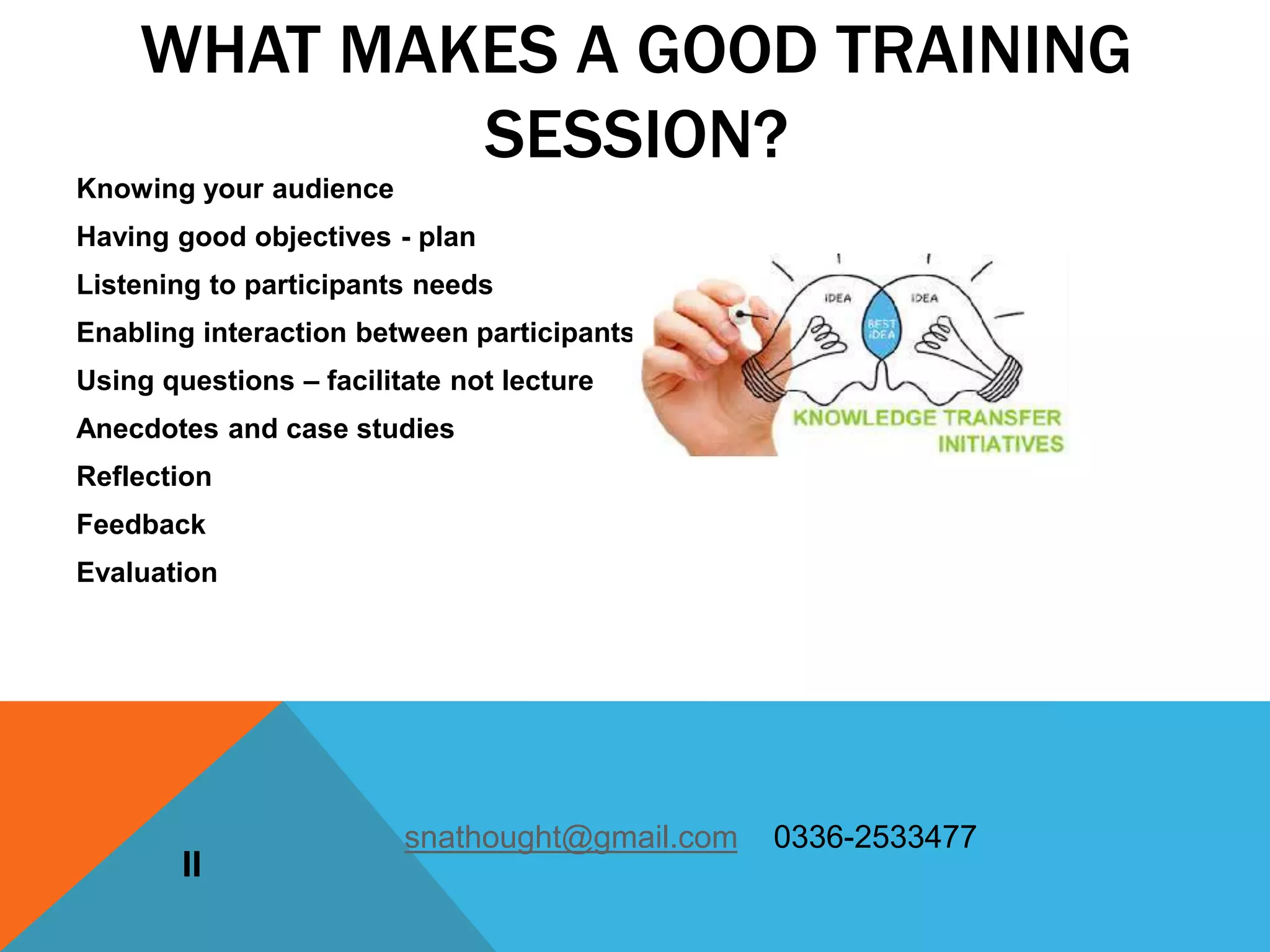
Knowing your audience
Having good objectives - plan
Listening to participants needs
Enabling interaction between participants
Using questions – facilitate not lecture
Anecdotes and case studies
Reflection
Feedback
Evaluation
II
WHAT MAKES A GOOD TRAINING
SESSION?
snathought@gmail.com 0336-2533477
METHODOLOGY
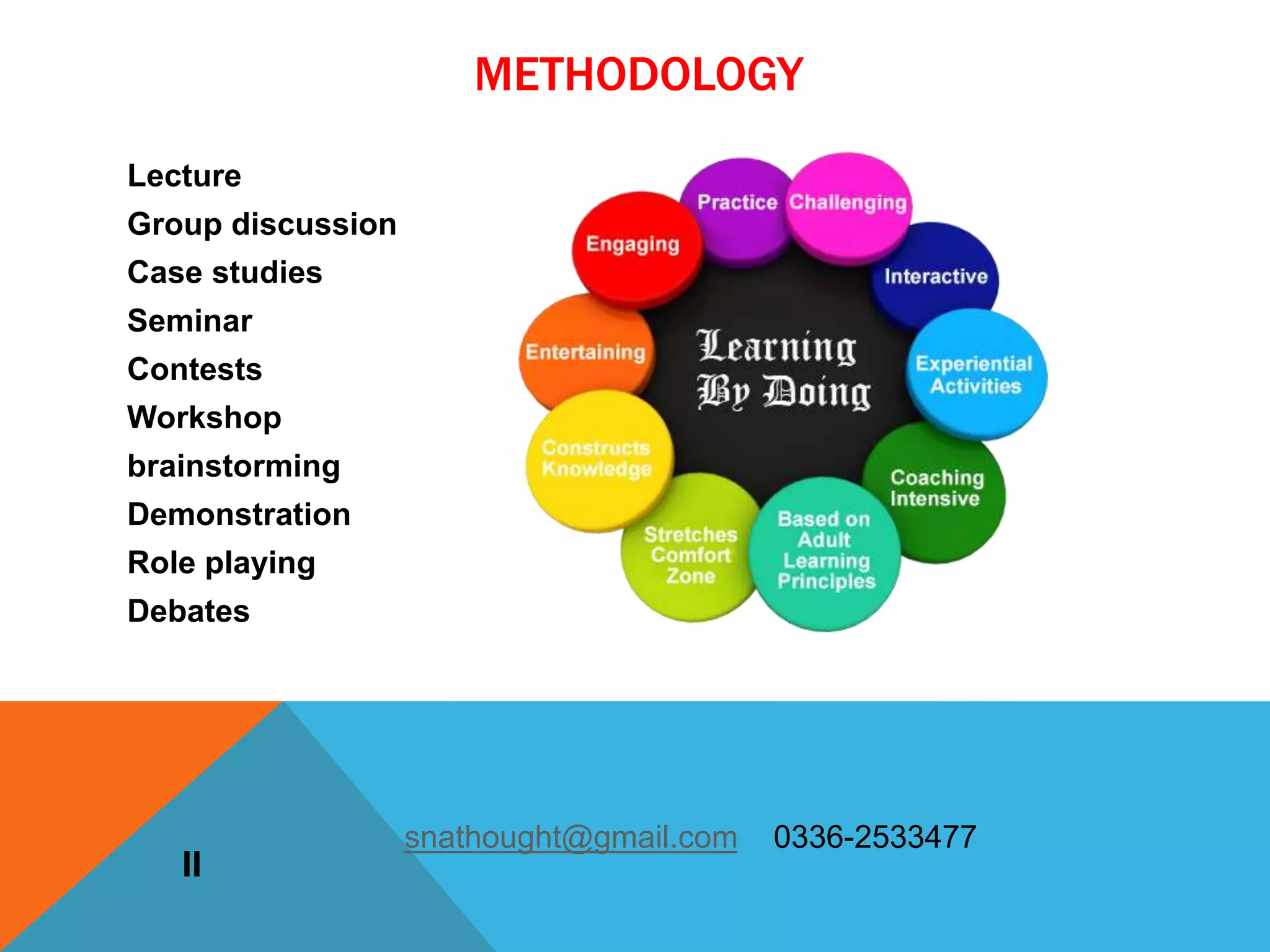
Lecture
Group discussion
Case studies
Seminar
Contests
Workshop
brainstorming
Demonstration
Role playing
Debates
II
snathought@gmail.com 0336-2533477
Prepare beforehand
Check the venue
Facilitate learning
Introduce training and participants
Handle questions and discussion
Troubleshoot
Keep participants focused
Ask open questions
Summarize and evaluate
Make improvements for future training
II
snathought@gmail.com 0336-2533477
TIPS FOR SUCCESSFUL TRAINING
Concepts
Examples
Emotional environment
Rooms allocation
Target audience
Materials
Manuals hard copies
Practice
Success stories
Clips or video
Ideas storming
Location
Training time
feedback
snathought@gmail.com 0336-2533477
II
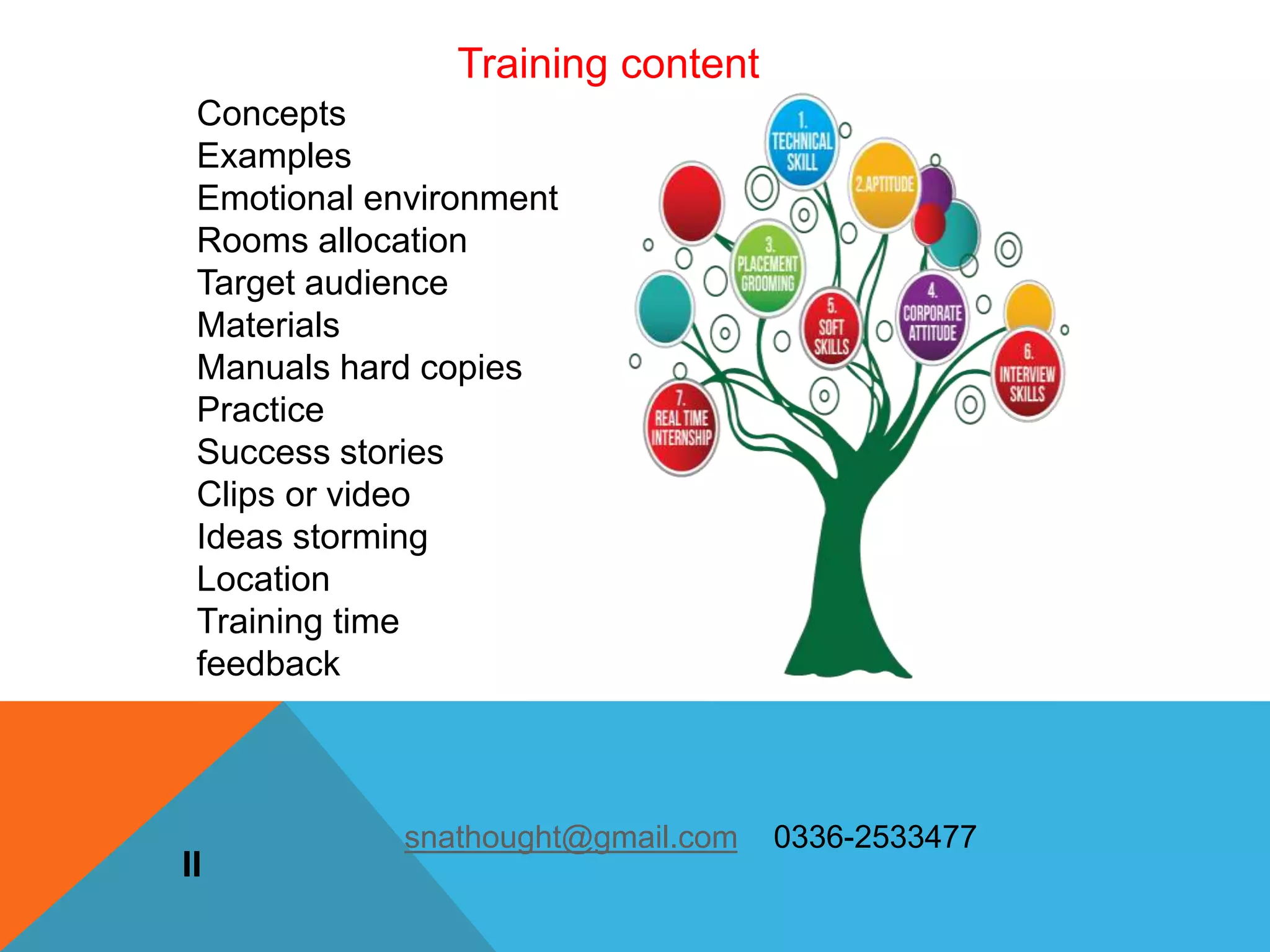
Training content

Training for trainer

  • 2.
    Philosophy of learning: Continuallyacquire and share knowledge Adaption of change: Accepting new ideas or behavior Talent management: Attracting ,retaining ,developing, motivating Knowledge : Know or know how to do
  • 3.
    WHO ARE TRAINERS? H.RManagers Consultant Employee expert Career developer Instructional designer Change agent Everyone is a trainer at some point in his or her life. (peer, sibling ,friends)
  • 4.
    FUNCTION Interpersonal • Building trust •Effective communication • Art of influencing • Networking • Diversity Business  Driving result  Thinking strategically  Needs analyst  Proposing solution Personal o Personal development o Adaptability o Managing knowledge
  • 5.
    1. Need assessment: analysis-task-challenge 2. Readiness for training :attitude-motivation-basic skills 3. Learning environment: objective-material-practice 4. Transfer of training : self management-support-development 5. Training method : traditional-modern 6. Identify outcomes :monetary benefits-cost-learning 7. Evaluation program : monitor-control-improve-conduct Process of training
  • 6.
    Communication: capacity to understandand use written and spoken language. Computability: fast and accurately a person can solve math problem Comparability: person capacity to take alternative decisions II Ability Reasoning : invent solutions to problem.
  • 7.
    Knowing your audience Havinggood objectives - plan Listening to participants needs Enabling interaction between participants Using questions – facilitate not lecture Anecdotes and case studies Reflection Feedback Evaluation II WHAT MAKES A GOOD TRAINING SESSION? snathought@gmail.com 0336-2533477
  • 8.
  • 9.
    Prepare beforehand Check thevenue Facilitate learning Introduce training and participants Handle questions and discussion Troubleshoot Keep participants focused Ask open questions Summarize and evaluate Make improvements for future training II snathought@gmail.com 0336-2533477 TIPS FOR SUCCESSFUL TRAINING
  • 10.
    Concepts Examples Emotional environment Rooms allocation Targetaudience Materials Manuals hard copies Practice Success stories Clips or video Ideas storming Location Training time feedback snathought@gmail.com 0336-2533477 II Training content

Editor's Notes