Training & Development
Training is a management skill and developing of
staff is continues activity of Human Resource
Development Department in any organization.
Training- A planned effort by a company to facilitate
employees’ learning of job-related competencies. Competencies
include knowledge, skills or behavior critical for successful job
performance.
The goal of training is for employees to master the
competencies and apply them to their day-to-day activities.
Definition of Training
 “Training is a systematic process through which
an organization’s human resource gain
knowledge and develop skills by instruction and
practical activities that result in improved
corporate performance”.
2
3
Do Organizations Need
Training?
 The answer is “YES”
 However, we must know the purpose and
functions of training before we can use it.
4
Reasons to Conduct Training
1. Employee obsolescence/out-dated –
 Technical advancements, cultural changes, new
systems, computerization
2. Career path
 Need for education and training programs
3. Employee Turnover
 Development plan for new employees
5
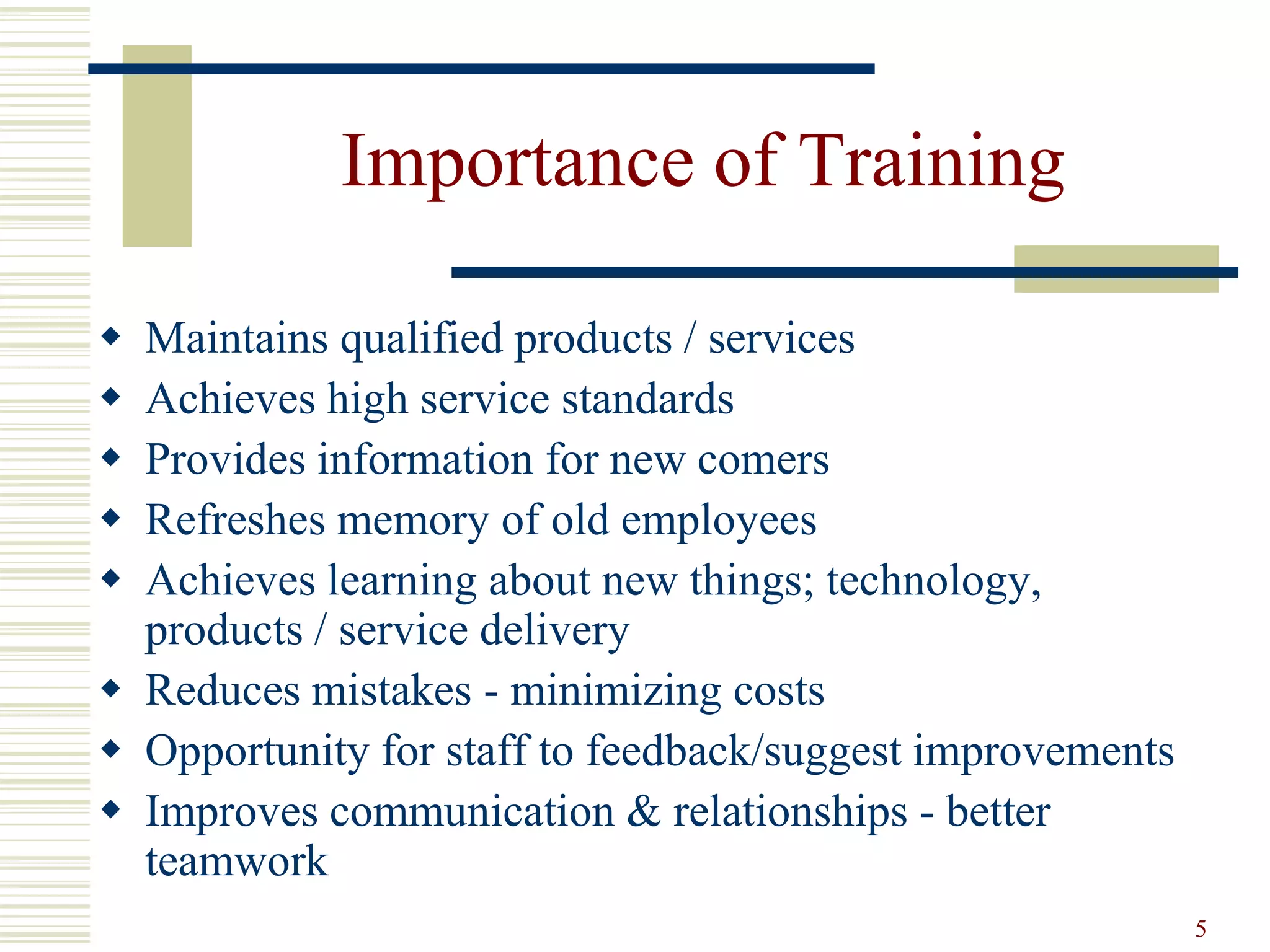
Importance of Training
 Maintains qualified products / services
 Achieves high service standards
 Provides information for new comers
 Refreshes memory of old employees
 Achieves learning about new things; technology,
products / service delivery
 Reduces mistakes - minimizing costs
 Opportunity for staff to feedback/suggest improvements
 Improves communication & relationships - better
teamwork
6
Benefits of Training
 Most training is targeted to ensure trainees
“learn” something they apply to their job.
7
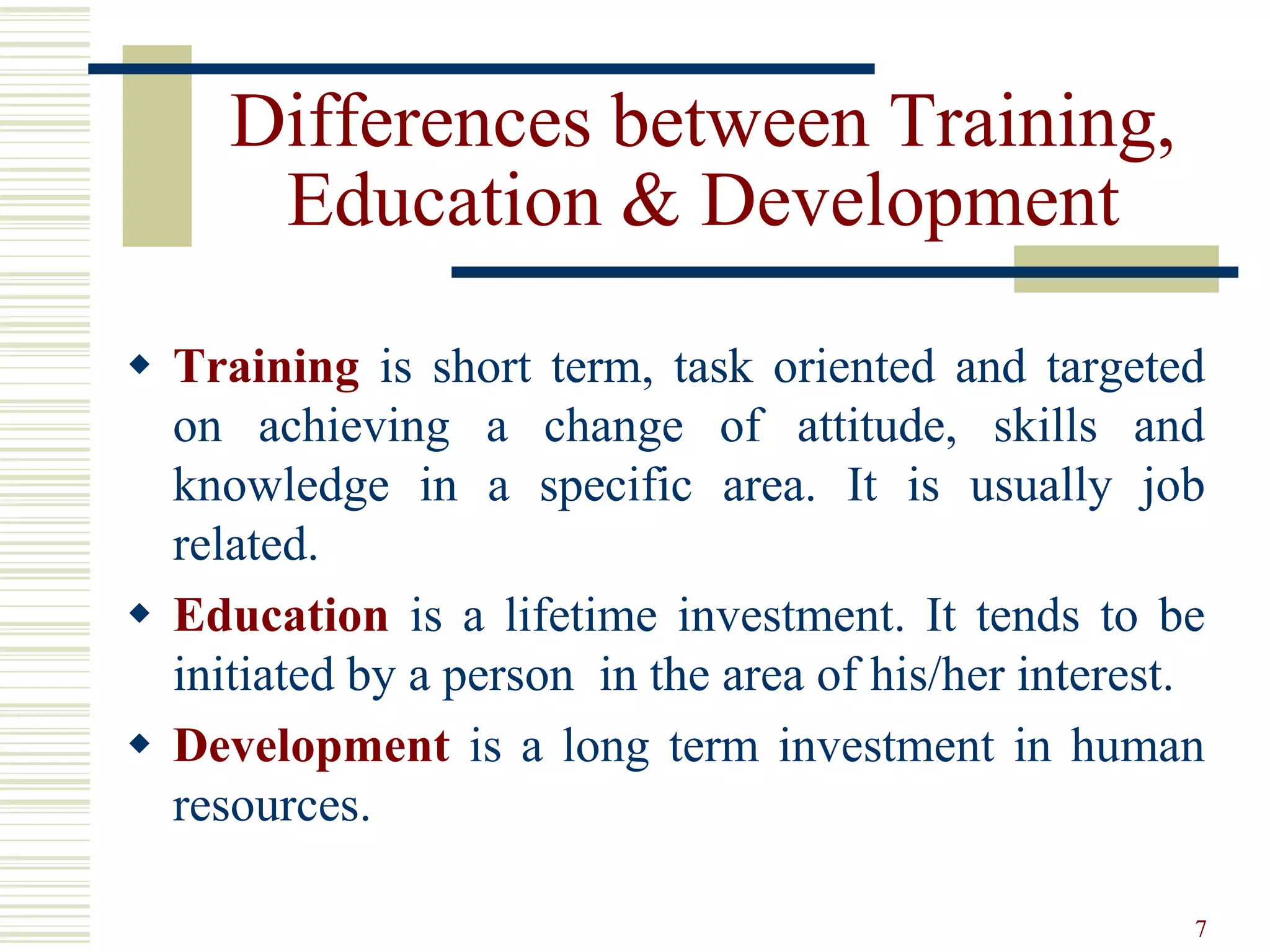
Differences between Training,
Education & Development
 Training is short term, task oriented and targeted
on achieving a change of attitude, skills and
knowledge in a specific area. It is usually job
related.
 Education is a lifetime investment. It tends to be
initiated by a person in the area of his/her interest.
 Development is a long term investment in human
resources.
8
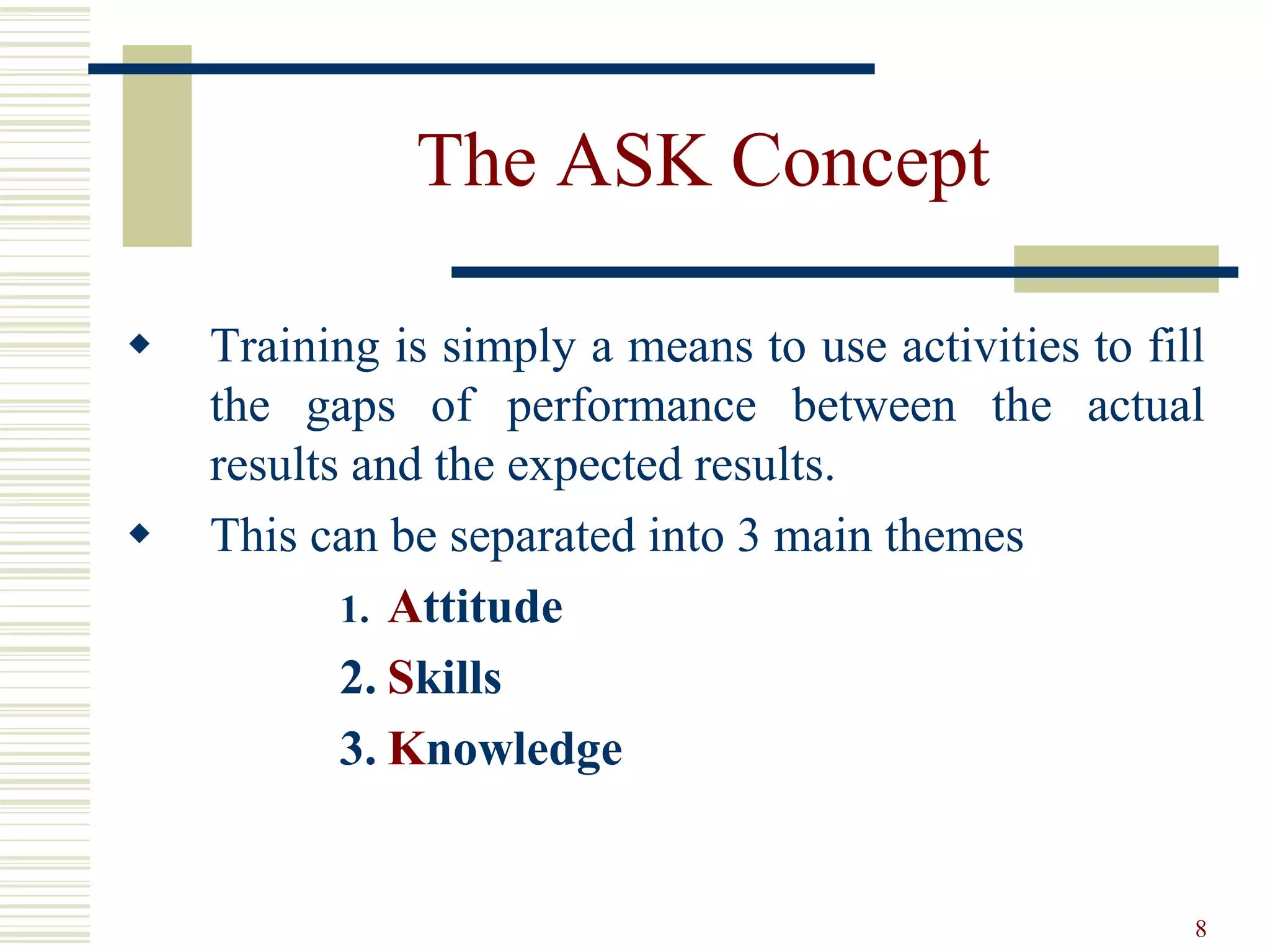
The ASK Concept
 Training is simply a means to use activities to fill
the gaps of performance between the actual
results and the expected results.
 This can be separated into 3 main themes
1. Attitude
2. Skills
3. Knowledge
9
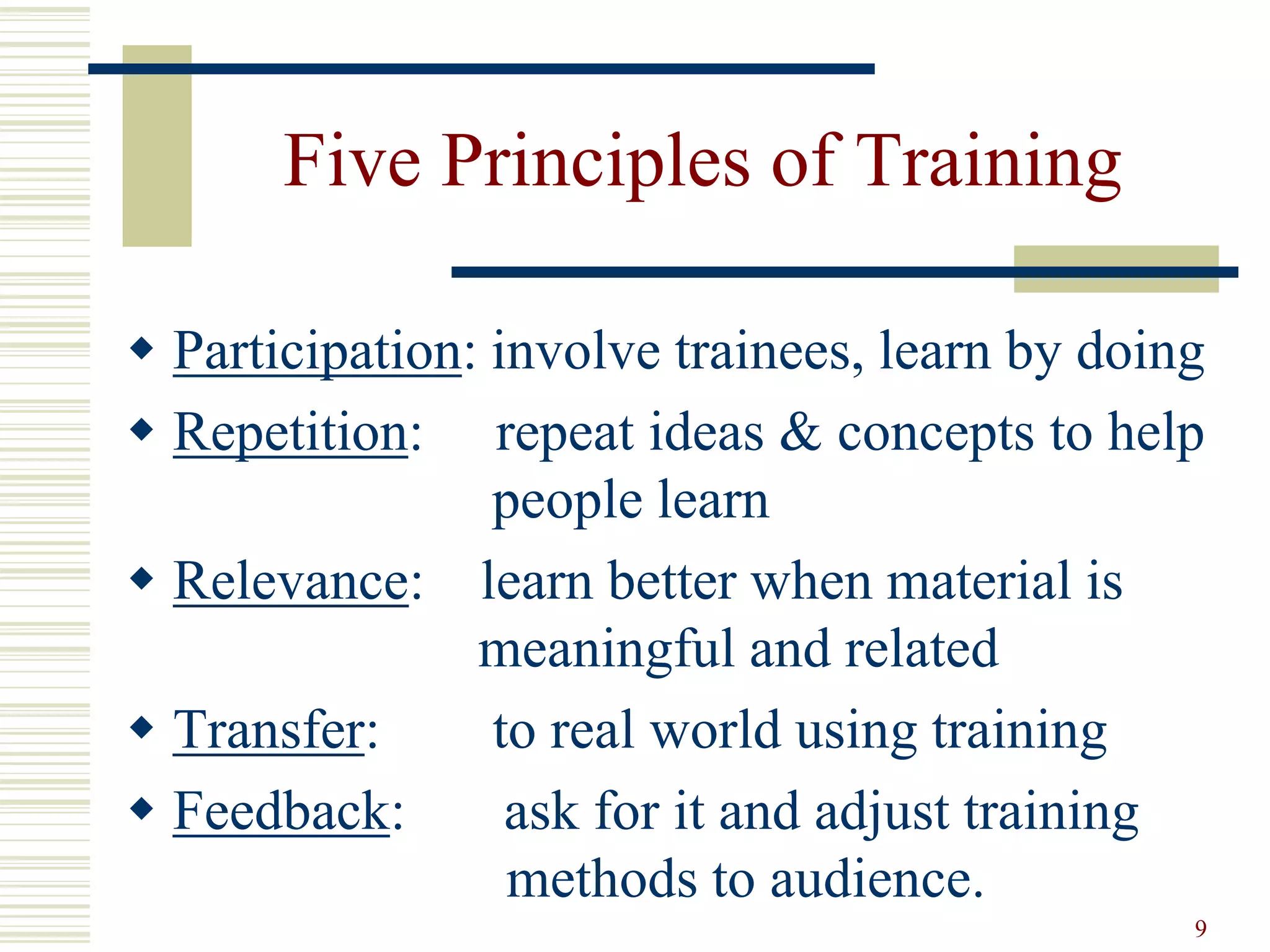
Five Principles of Training
 Participation: involve trainees, learn by doing
 Repetition: repeat ideas & concepts to help
people learn
 Relevance: learn better when material is
meaningful and related
 Transfer: to real world using training
 Feedback: ask for it and adjust training
methods to audience.
10
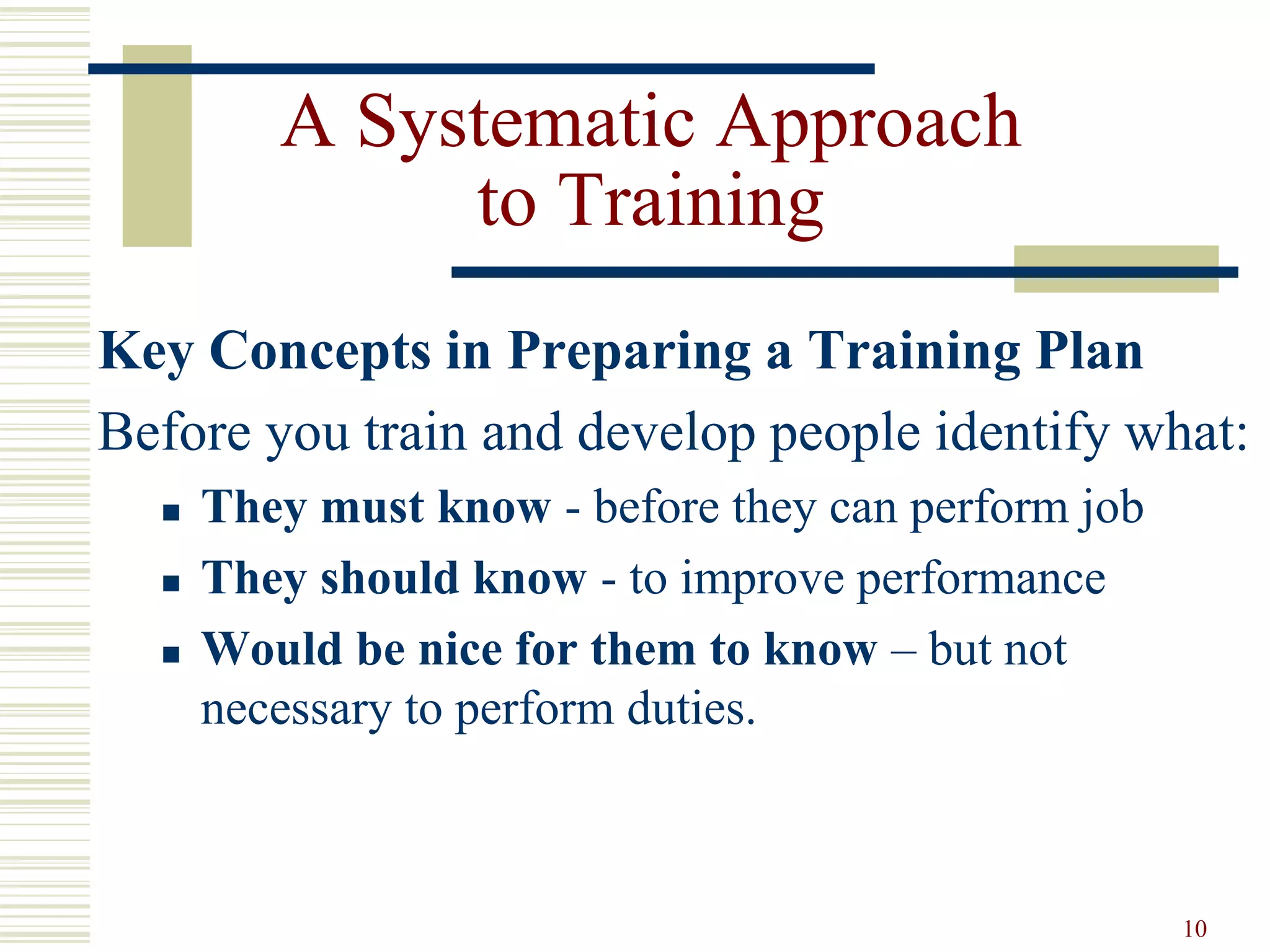
A Systematic Approach
to Training
Key Concepts in Preparing a Training Plan
Before you train and develop people identify what:
 They must know - before they can perform job
 They should know - to improve performance
 Would be nice for them to know – but not
necessary to perform duties.
11
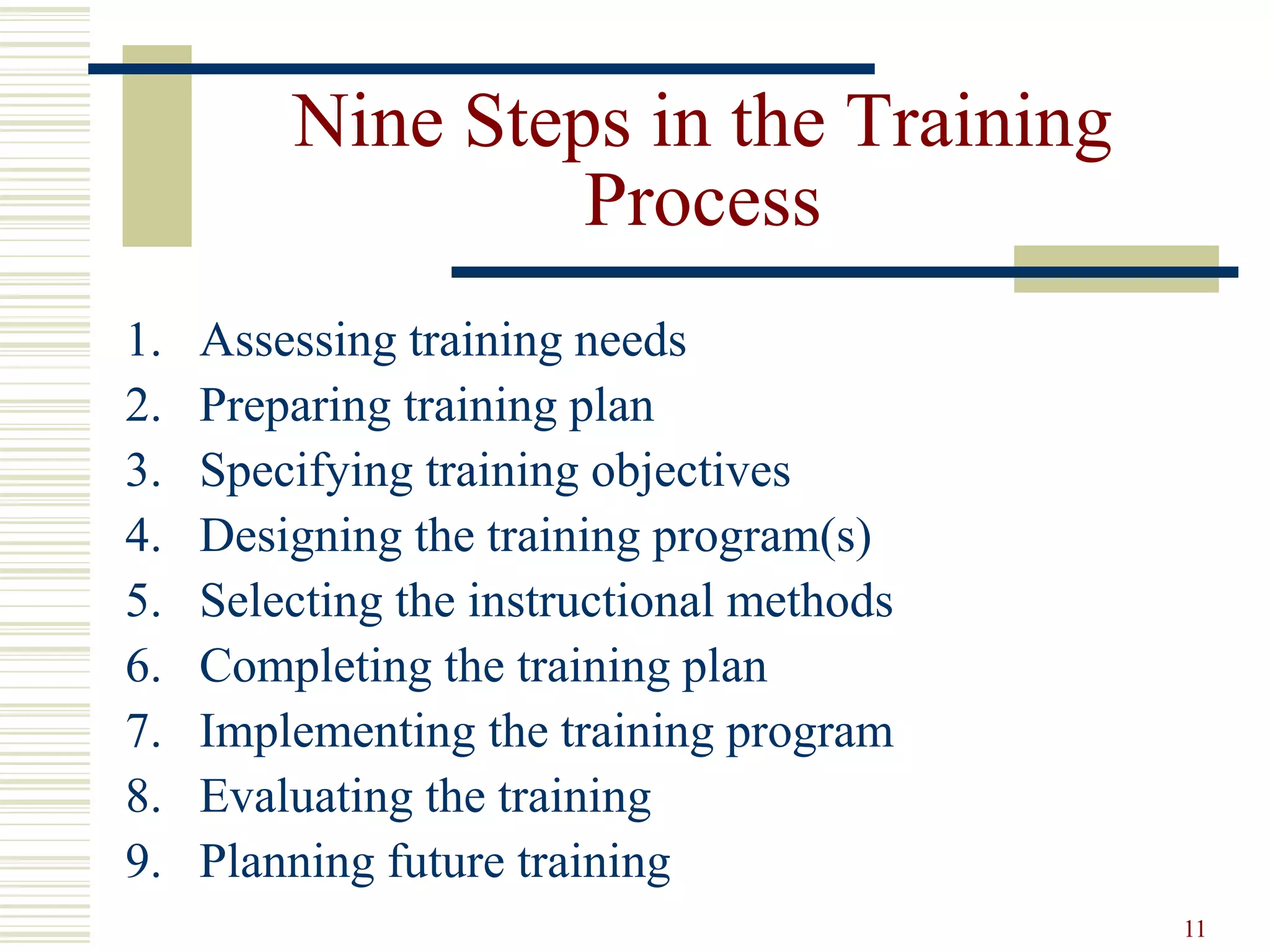
Nine Steps in the Training
Process
1. Assessing training needs
2. Preparing training plan
3. Specifying training objectives
4. Designing the training program(s)
5. Selecting the instructional methods
6. Completing the training plan
7. Implementing the training program
8. Evaluating the training
9. Planning future training
12
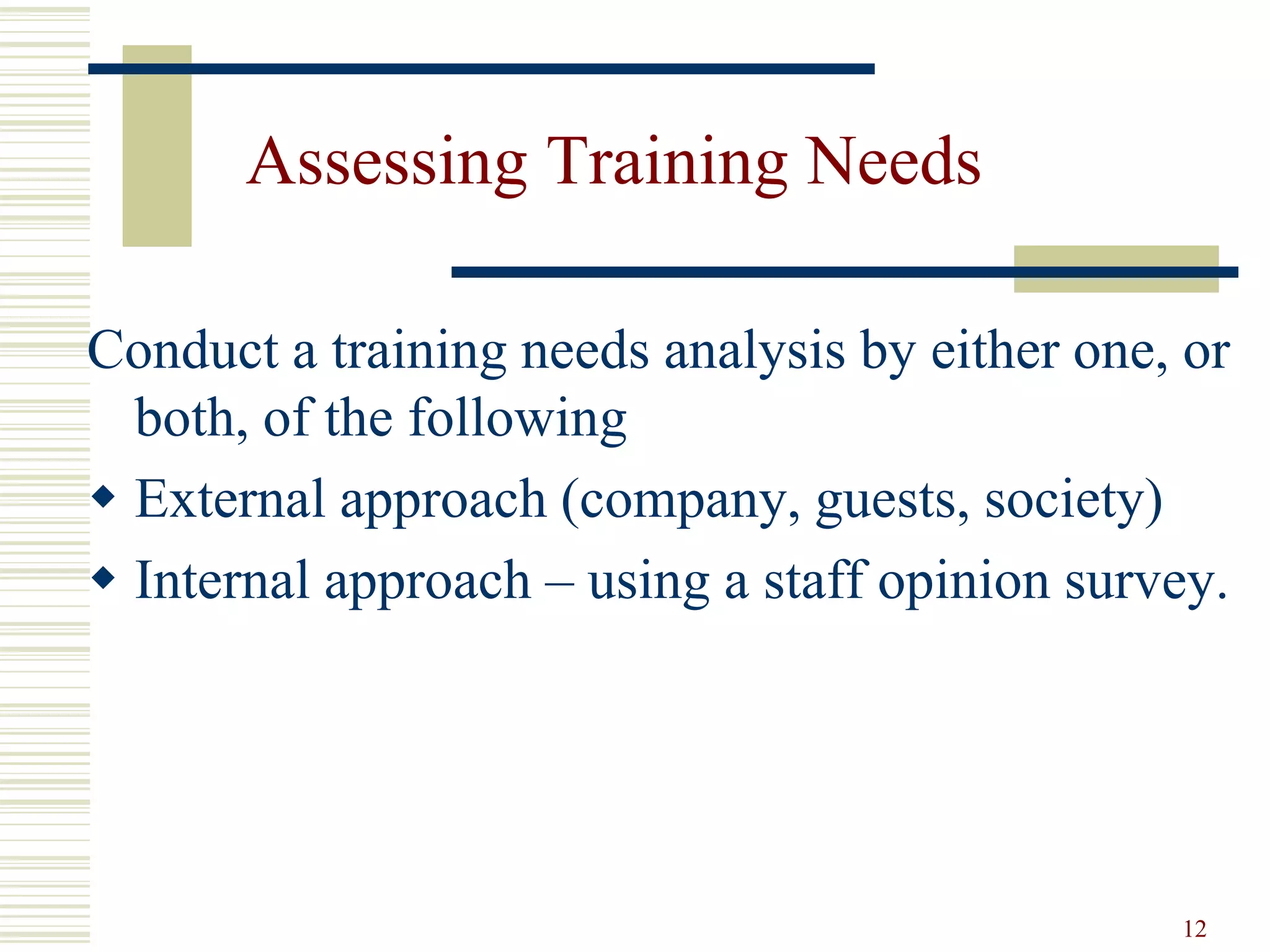
Assessing Training Needs
Conduct a training needs analysis by either one, or
both, of the following
 External approach (company, guests, society)
 Internal approach – using a staff opinion survey.
13
Specifying Training Objectives
Training Objectives must be specific & measurable.
Why? Very difficult to measure effectiveness after
course is finished.
 What should trainees be able to accomplish after
participating in the training program?
 What is the desired level of such accomplishment,
according to industry or organizational standards?
 Do you want to develop attitudes, skills, knowledge or
some combination of these three?
14
Design the Training Program(s)
1. Program duration
2. Program structure
3. Instruction methods
4. Trainers qualification
5. Nature of trainees
6. Support resources –
materials, OHP,
classroom
7. Training location &
environment
8. Criteria & methods
for assessing
participant learning
and achievement
9. Criteria & methods
for evaluating the
program
15
Selecting Instructional Methods
Note: This is the most important step
On-the job-training (OJT)
 learn while you’re working
Off -the job-training
 In house, training or classroom
 External, consultancies or attending external classes
 Independent bodies, such as government talks
 Distance learning, from books or notes
 Computer-assisted learning
 Interactive-video training
 Video conferencing, same as classroom except teachers and
students are in different locations.
16
Completing the Training Plan
 Target group – assess your audience
 Topic – task, skill or attitude ingredient
 Method – direct (one way communication) or
indirect (discussion, games, experimental
exercises…). Important as evaluation of trainees
usually lies on the perception on what they did in
the training session
 Time – length, period, breaks important to consider
 Location – away from the office?
17
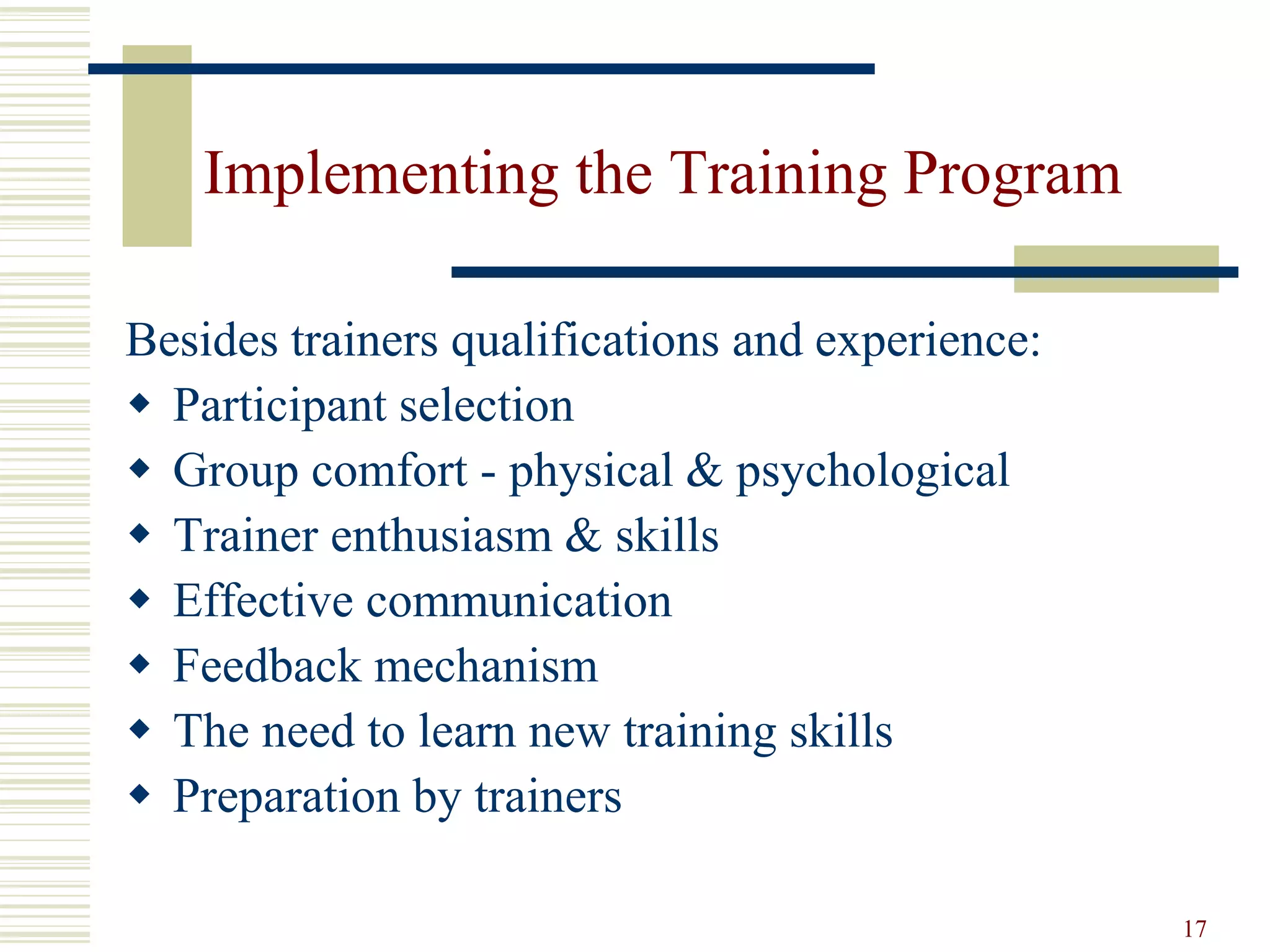
Implementing the Training Program
Besides trainers qualifications and experience:
 Participant selection
 Group comfort - physical & psychological
 Trainer enthusiasm & skills
 Effective communication
 Feedback mechanism
 The need to learn new training skills
 Preparation by trainers
18
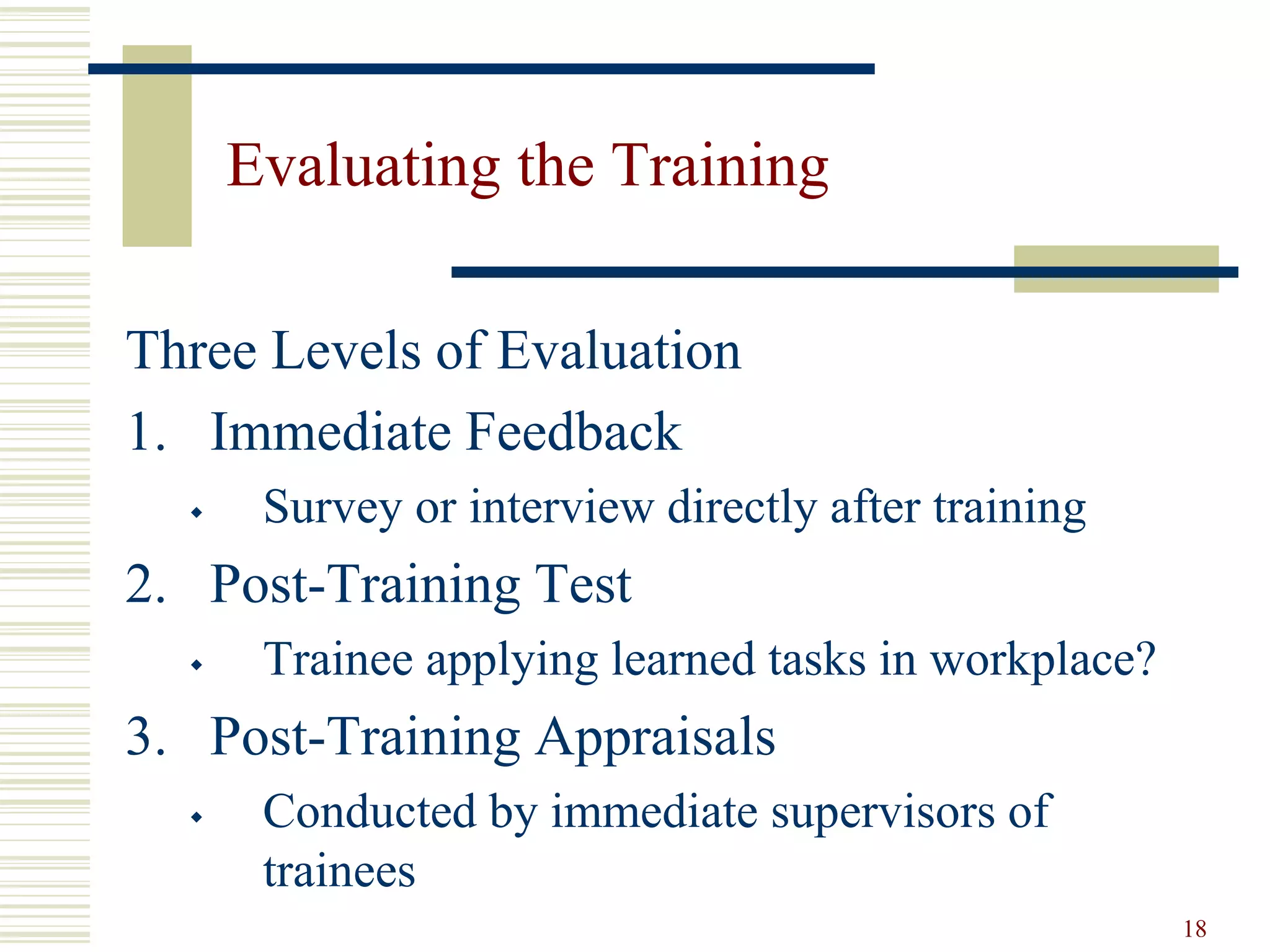
Evaluating the Training
Three Levels of Evaluation
1. Immediate Feedback
 Survey or interview directly after training
2. Post-Training Test
 Trainee applying learned tasks in workplace?
3. Post-Training Appraisals
 Conducted by immediate supervisors of
trainees
19
THANK YOU

Training and Development.ppt

  • 1.
    Training & Development Trainingis a management skill and developing of staff is continues activity of Human Resource Development Department in any organization. Training- A planned effort by a company to facilitate employees’ learning of job-related competencies. Competencies include knowledge, skills or behavior critical for successful job performance. The goal of training is for employees to master the competencies and apply them to their day-to-day activities.
  • 2.
    Definition of Training “Training is a systematic process through which an organization’s human resource gain knowledge and develop skills by instruction and practical activities that result in improved corporate performance”. 2
  • 3.
    3 Do Organizations Need Training? The answer is “YES”  However, we must know the purpose and functions of training before we can use it.
  • 4.
    4 Reasons to ConductTraining 1. Employee obsolescence/out-dated –  Technical advancements, cultural changes, new systems, computerization 2. Career path  Need for education and training programs 3. Employee Turnover  Development plan for new employees
  • 5.
    5 Importance of Training Maintains qualified products / services  Achieves high service standards  Provides information for new comers  Refreshes memory of old employees  Achieves learning about new things; technology, products / service delivery  Reduces mistakes - minimizing costs  Opportunity for staff to feedback/suggest improvements  Improves communication & relationships - better teamwork
  • 6.
    6 Benefits of Training Most training is targeted to ensure trainees “learn” something they apply to their job.
  • 7.
    7 Differences between Training, Education& Development  Training is short term, task oriented and targeted on achieving a change of attitude, skills and knowledge in a specific area. It is usually job related.  Education is a lifetime investment. It tends to be initiated by a person in the area of his/her interest.  Development is a long term investment in human resources.
  • 8.
    8 The ASK Concept Training is simply a means to use activities to fill the gaps of performance between the actual results and the expected results.  This can be separated into 3 main themes 1. Attitude 2. Skills 3. Knowledge
  • 9.
    9 Five Principles ofTraining  Participation: involve trainees, learn by doing  Repetition: repeat ideas & concepts to help people learn  Relevance: learn better when material is meaningful and related  Transfer: to real world using training  Feedback: ask for it and adjust training methods to audience.
  • 10.
    10 A Systematic Approach toTraining Key Concepts in Preparing a Training Plan Before you train and develop people identify what:  They must know - before they can perform job  They should know - to improve performance  Would be nice for them to know – but not necessary to perform duties.
  • 11.
    11 Nine Steps inthe Training Process 1. Assessing training needs 2. Preparing training plan 3. Specifying training objectives 4. Designing the training program(s) 5. Selecting the instructional methods 6. Completing the training plan 7. Implementing the training program 8. Evaluating the training 9. Planning future training
  • 12.
    12 Assessing Training Needs Conducta training needs analysis by either one, or both, of the following  External approach (company, guests, society)  Internal approach – using a staff opinion survey.
  • 13.
    13 Specifying Training Objectives TrainingObjectives must be specific & measurable. Why? Very difficult to measure effectiveness after course is finished.  What should trainees be able to accomplish after participating in the training program?  What is the desired level of such accomplishment, according to industry or organizational standards?  Do you want to develop attitudes, skills, knowledge or some combination of these three?
  • 14.
    14 Design the TrainingProgram(s) 1. Program duration 2. Program structure 3. Instruction methods 4. Trainers qualification 5. Nature of trainees 6. Support resources – materials, OHP, classroom 7. Training location & environment 8. Criteria & methods for assessing participant learning and achievement 9. Criteria & methods for evaluating the program
  • 15.
    15 Selecting Instructional Methods Note:This is the most important step On-the job-training (OJT)  learn while you’re working Off -the job-training  In house, training or classroom  External, consultancies or attending external classes  Independent bodies, such as government talks  Distance learning, from books or notes  Computer-assisted learning  Interactive-video training  Video conferencing, same as classroom except teachers and students are in different locations.
  • 16.
    16 Completing the TrainingPlan  Target group – assess your audience  Topic – task, skill or attitude ingredient  Method – direct (one way communication) or indirect (discussion, games, experimental exercises…). Important as evaluation of trainees usually lies on the perception on what they did in the training session  Time – length, period, breaks important to consider  Location – away from the office?
  • 17.
    17 Implementing the TrainingProgram Besides trainers qualifications and experience:  Participant selection  Group comfort - physical & psychological  Trainer enthusiasm & skills  Effective communication  Feedback mechanism  The need to learn new training skills  Preparation by trainers
  • 18.
    18 Evaluating the Training ThreeLevels of Evaluation 1. Immediate Feedback  Survey or interview directly after training 2. Post-Training Test  Trainee applying learned tasks in workplace? 3. Post-Training Appraisals  Conducted by immediate supervisors of trainees
  • 19.