Leaning
Process
All the three are basic process of learning
2Learning-Training-Development
 Learning implies acquisition of:
knowledge, Understanding, Skills & Attitudes
 Learning is a life long process
 Individual is able to apply them
 Challenge is to create learning culture by way of:
• Free flow of ideas, motivation, encouragement
• Involvement of all concerned & learners
• Application of newly acquired concepts
• On-going evaluation of progress & feedback
3Learning-Training-Development
Long term
activity to
prepare
individuals for
various roles
Focus on
individual needs
& society’s needs
Individual needs:
Be literate
Develop personal
talents
Prepare for
occupation
Society needs:
Respect for law &
order
Economic activities
Protection from
threats 4Learning-Training-Development
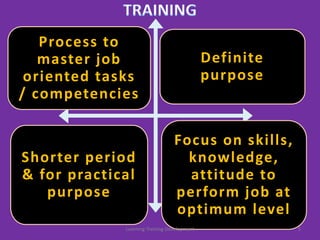
Process to
master job
oriented tasks
/ competencies
Definite
purpose
Shorter period
& for practical
purpose
Focus on skills,
knowledge,
attitude to
perform job at
optimum level
5Learning-Training-Development
Less tangible
Process to
develop full
potential
May occur as part of
organizational
activities or
personal activities
Concerned with
growth &
advancement
Flexible
May not have
systematic process
Require openness &
willingness to learn6Learning-Training-Development
Learning-Training-Development 7
Training & Development differ in terms of their
objectives & contents
Training is a short term
process utilizing a
systematic & organized
procedure by which non-
managerial personnel learn
technical knowledge & skills
for definite purpose
Development is a long term
educational process utilizing
a systematic & organized
procedure by which
managerial personnel learn
conceptual & theoretical
knowledge for general
purpose
Learning-Training-Development 8
Learning
Dimensions
Training Development
Who
Non-managerial
personnel
Managerial
personnel
What
Technical &
mechanical
Conceptual ideas
Why For specific job
For a variety of
jobs
When Short-term Long-term
System Single Multipal
Learning-Training-Development
9
Identification of high
potential employees
Formal coaching
Development planning
Succession planning
Cross-functional training
Apprenticeship /
Internships
Assignments with
executives
Project assignments
Job rotation
Mentoring
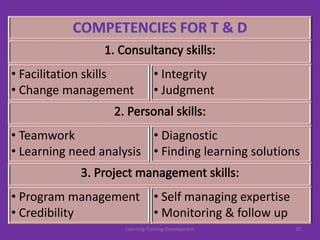
• Facilitation skills
• Change management
• Integrity
• Judgment
• Teamwork
• Learning need analysis
• Diagnostic
• Finding learning solutions
• Program management
• Credibility
• Self managing expertise
• Monitoring & follow up
10Learning-Training-Development
Learning-Training-Development 11

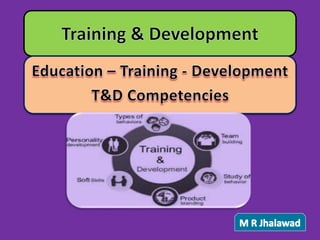
Training & Development - Education - Training - Development, T&D Competencies

  • 2.
    Leaning Process All the threeare basic process of learning 2Learning-Training-Development
  • 3.
     Learning impliesacquisition of: knowledge, Understanding, Skills & Attitudes  Learning is a life long process  Individual is able to apply them  Challenge is to create learning culture by way of: • Free flow of ideas, motivation, encouragement • Involvement of all concerned & learners • Application of newly acquired concepts • On-going evaluation of progress & feedback 3Learning-Training-Development
  • 4.
    Long term activity to prepare individualsfor various roles Focus on individual needs & society’s needs Individual needs: Be literate Develop personal talents Prepare for occupation Society needs: Respect for law & order Economic activities Protection from threats 4Learning-Training-Development
  • 5.
    Process to master job orientedtasks / competencies Definite purpose Shorter period & for practical purpose Focus on skills, knowledge, attitude to perform job at optimum level 5Learning-Training-Development
  • 6.
    Less tangible Process to developfull potential May occur as part of organizational activities or personal activities Concerned with growth & advancement Flexible May not have systematic process Require openness & willingness to learn6Learning-Training-Development
  • 7.
    Learning-Training-Development 7 Training &Development differ in terms of their objectives & contents Training is a short term process utilizing a systematic & organized procedure by which non- managerial personnel learn technical knowledge & skills for definite purpose Development is a long term educational process utilizing a systematic & organized procedure by which managerial personnel learn conceptual & theoretical knowledge for general purpose
  • 8.
    Learning-Training-Development 8 Learning Dimensions Training Development Who Non-managerial personnel Managerial personnel What Technical& mechanical Conceptual ideas Why For specific job For a variety of jobs When Short-term Long-term System Single Multipal
  • 9.
    Learning-Training-Development 9 Identification of high potentialemployees Formal coaching Development planning Succession planning Cross-functional training Apprenticeship / Internships Assignments with executives Project assignments Job rotation Mentoring
  • 10.
    • Facilitation skills •Change management • Integrity • Judgment • Teamwork • Learning need analysis • Diagnostic • Finding learning solutions • Program management • Credibility • Self managing expertise • Monitoring & follow up 10Learning-Training-Development
  • 11.