HUMAN RESOURCE 
MANAGEMENT 
“TRAINING & DEVELOPMENT” 
Done By: Himanshu 
Jain
CONTENTS... 
 Introduction to T&D. 
 Why Training? 
 Training Need Analysis. 
 Steps of TNA. 
 Training Plan. 
 Types of Training. 
 Methods of Training. 
 Differences.
INTRO... 
Training: 
 Act of increasing skills & knowledge. 
 A process of learning a sequence of programmed 
behaviour. 
 Substantial influence in changing the capacity of the 
individual to perform better. 
Development: 
 Process of improving Performance & Personality. 
 Progress to maturity & better decision making. 
 Effective utilization of capacity & resources to be a better 
person. 
 Equip for higher responsibilities & position.
WHY TRAINING...?? 
 Bridge the gap between current & actual knowledge & 
skill sets. 
 Optimum utilization of Human Resource. 
 Development of skills of Employees. 
 Increase Productivity. 
 Boost Team Spirit. 
 Quality Outcome. 
 Profitability.
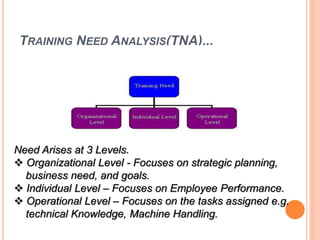
TRAINING NEED ANALYSIS(TNA)... 
Need Arises at 3 Levels. 
 Organizational Level - Focuses on strategic planning, 
business need, and goals. 
 Individual Level – Focuses on Employee Performance. 
 Operational Level – Focuses on the tasks assigned e.g. 
technical Knowledge, Machine Handling.
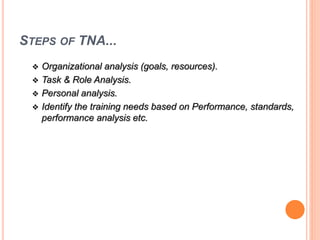
STEPS OF TNA... 
 Organizational analysis (goals, resources). 
 Task & Role Analysis. 
 Personal analysis. 
 Identify the training needs based on Performance, standards, 
performance analysis etc.
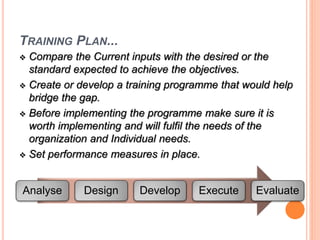
TRAINING PLAN... 
 Compare the Current inputs with the desired or the 
standard expected to achieve the objectives. 
 Create or develop a training programme that would help 
bridge the gap. 
 Before implementing the programme make sure it is 
worth implementing and will fulfil the needs of the 
organization and Individual needs. 
 Set performance measures in place. 
Analyse Design Develop Execute Evaluate
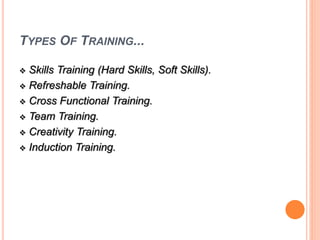
TYPES OF TRAINING... 
 Skills Training (Hard Skills, Soft Skills). 
 Refreshable Training. 
 Cross Functional Training. 
 Team Training. 
 Creativity Training. 
 Induction Training.
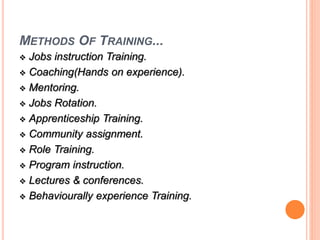
METHODS OF TRAINING... 
 Jobs instruction Training. 
 Coaching(Hands on experience). 
 Mentoring. 
 Jobs Rotation. 
 Apprenticeship Training. 
 Community assignment. 
 Role Training. 
 Program instruction. 
 Lectures & conferences. 
 Behaviourally experience Training.
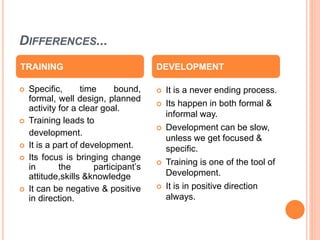
DIFFERENCES... 
TRAINING DEVELOPMENT 
 Specific, time bound, 
formal, well design, planned 
activity for a clear goal. 
 Training leads to 
development. 
 It is a part of development. 
 Its focus is bringing change 
in the participant’s 
attitude,skills &knowledge 
 It can be negative & positive 
in direction. 
 It is a never ending process. 
 Its happen in both formal & 
informal way. 
 Development can be slow, 
unless we get focused & 
specific. 
 Training is one of the tool of 
Development. 
 It is in positive direction 
always.
THANK YOU...

Training & development

  • 1.
    HUMAN RESOURCE MANAGEMENT “TRAINING & DEVELOPMENT” Done By: Himanshu Jain
  • 2.
    CONTENTS...  Introductionto T&D.  Why Training?  Training Need Analysis.  Steps of TNA.  Training Plan.  Types of Training.  Methods of Training.  Differences.
  • 3.
    INTRO... Training: Act of increasing skills & knowledge.  A process of learning a sequence of programmed behaviour.  Substantial influence in changing the capacity of the individual to perform better. Development:  Process of improving Performance & Personality.  Progress to maturity & better decision making.  Effective utilization of capacity & resources to be a better person.  Equip for higher responsibilities & position.
  • 4.
    WHY TRAINING...?? Bridge the gap between current & actual knowledge & skill sets.  Optimum utilization of Human Resource.  Development of skills of Employees.  Increase Productivity.  Boost Team Spirit.  Quality Outcome.  Profitability.
  • 5.
    TRAINING NEED ANALYSIS(TNA)... Need Arises at 3 Levels.  Organizational Level - Focuses on strategic planning, business need, and goals.  Individual Level – Focuses on Employee Performance.  Operational Level – Focuses on the tasks assigned e.g. technical Knowledge, Machine Handling.
  • 6.
    STEPS OF TNA...  Organizational analysis (goals, resources).  Task & Role Analysis.  Personal analysis.  Identify the training needs based on Performance, standards, performance analysis etc.
  • 7.
    TRAINING PLAN... Compare the Current inputs with the desired or the standard expected to achieve the objectives.  Create or develop a training programme that would help bridge the gap.  Before implementing the programme make sure it is worth implementing and will fulfil the needs of the organization and Individual needs.  Set performance measures in place. Analyse Design Develop Execute Evaluate
  • 8.
    TYPES OF TRAINING...  Skills Training (Hard Skills, Soft Skills).  Refreshable Training.  Cross Functional Training.  Team Training.  Creativity Training.  Induction Training.
  • 9.
    METHODS OF TRAINING...  Jobs instruction Training.  Coaching(Hands on experience).  Mentoring.  Jobs Rotation.  Apprenticeship Training.  Community assignment.  Role Training.  Program instruction.  Lectures & conferences.  Behaviourally experience Training.
  • 10.
    DIFFERENCES... TRAINING DEVELOPMENT  Specific, time bound, formal, well design, planned activity for a clear goal.  Training leads to development.  It is a part of development.  Its focus is bringing change in the participant’s attitude,skills &knowledge  It can be negative & positive in direction.  It is a never ending process.  Its happen in both formal & informal way.  Development can be slow, unless we get focused & specific.  Training is one of the tool of Development.  It is in positive direction always.
  • 11.