Date
Annual Refresher Program in Teaching (ARPIT)
through
National Resource Centres (NRCs)
Training
Development
&
Dr. Anil Mehta
Learning Objectives
To understand the core ideas related to training and development
To identify how the concepts can be applied in organizational context
Develop understanding about effective Training & Development
program
1
2
3
Definition of
Training
“Training is a planned activity to modify attitude,
knowledge or skill through learning experience to
achieve effective performance of an activity or range of
activities. Its purpose in the work situation is to
develop the abilities of an individual and to meet
current and future manpower needs of the
organization”
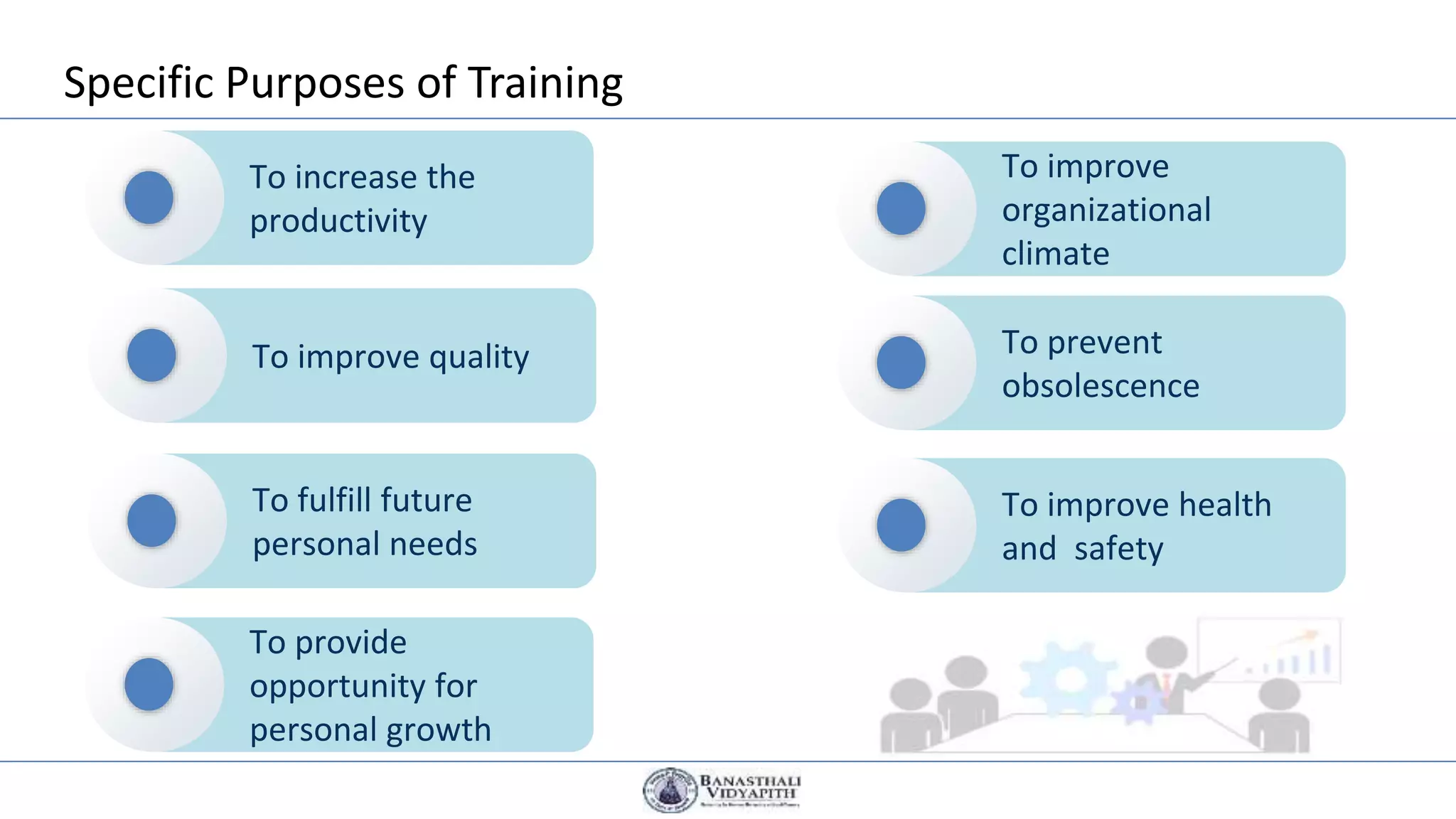
Specific Purposes of Training
To increase the
productivity
To improve quality
To fulfill future
personal needs
To improve
organizational
climate
To prevent
obsolescence
To improve health
and safety
To provide
opportunity for
personal growth
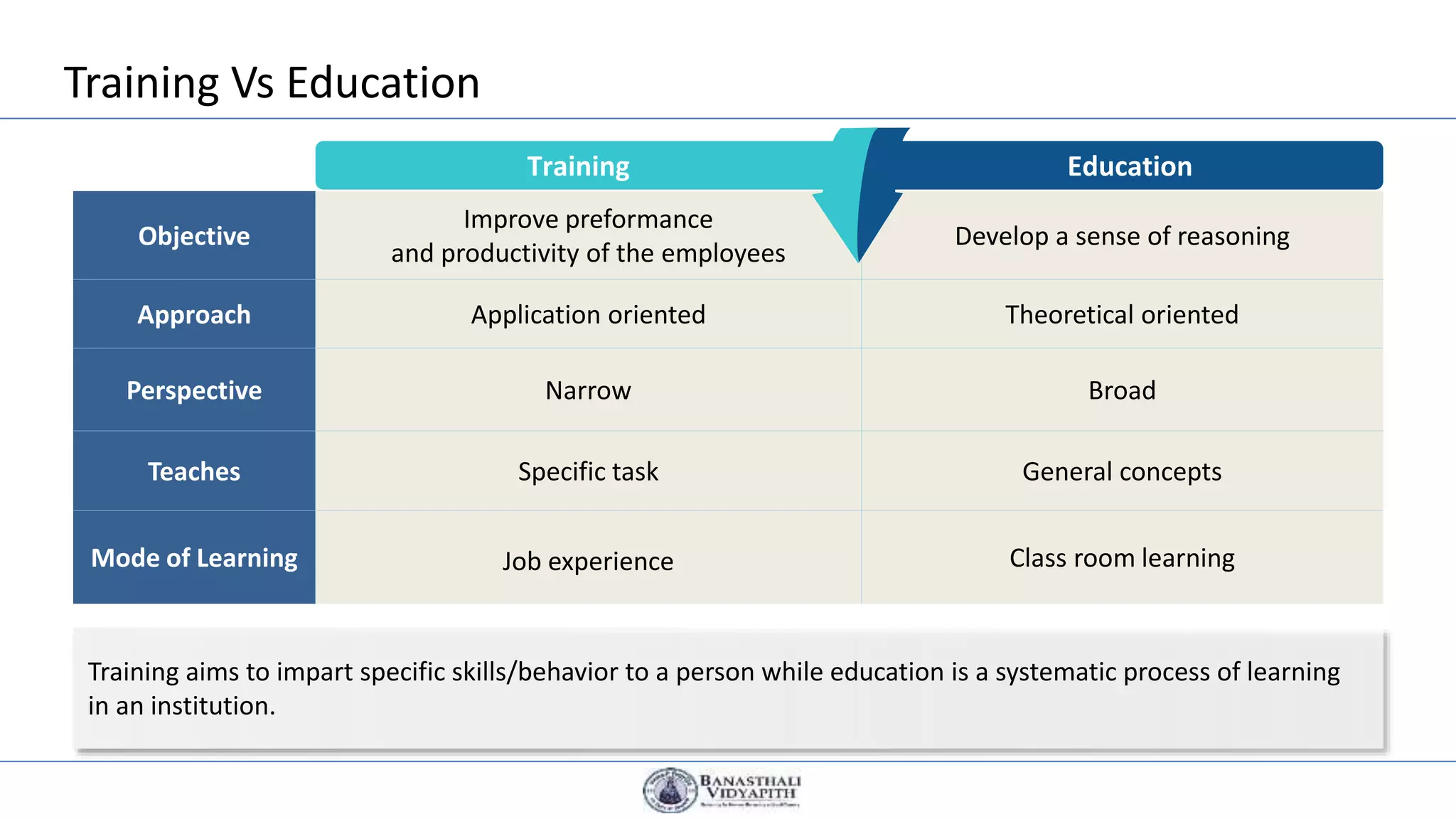
Objective
Improve preformance
and productivity of the employees
Develop a sense of reasoning
Approach Application oriented Theoretical oriented
Perspective Narrow Broad
Teaches Specific task General concepts
Mode of Learning Job experience Class room learning
Training Vs Education
Training Education
Training aims to impart specific skills/behavior to a person while education is a systematic process of learning
in an institution.
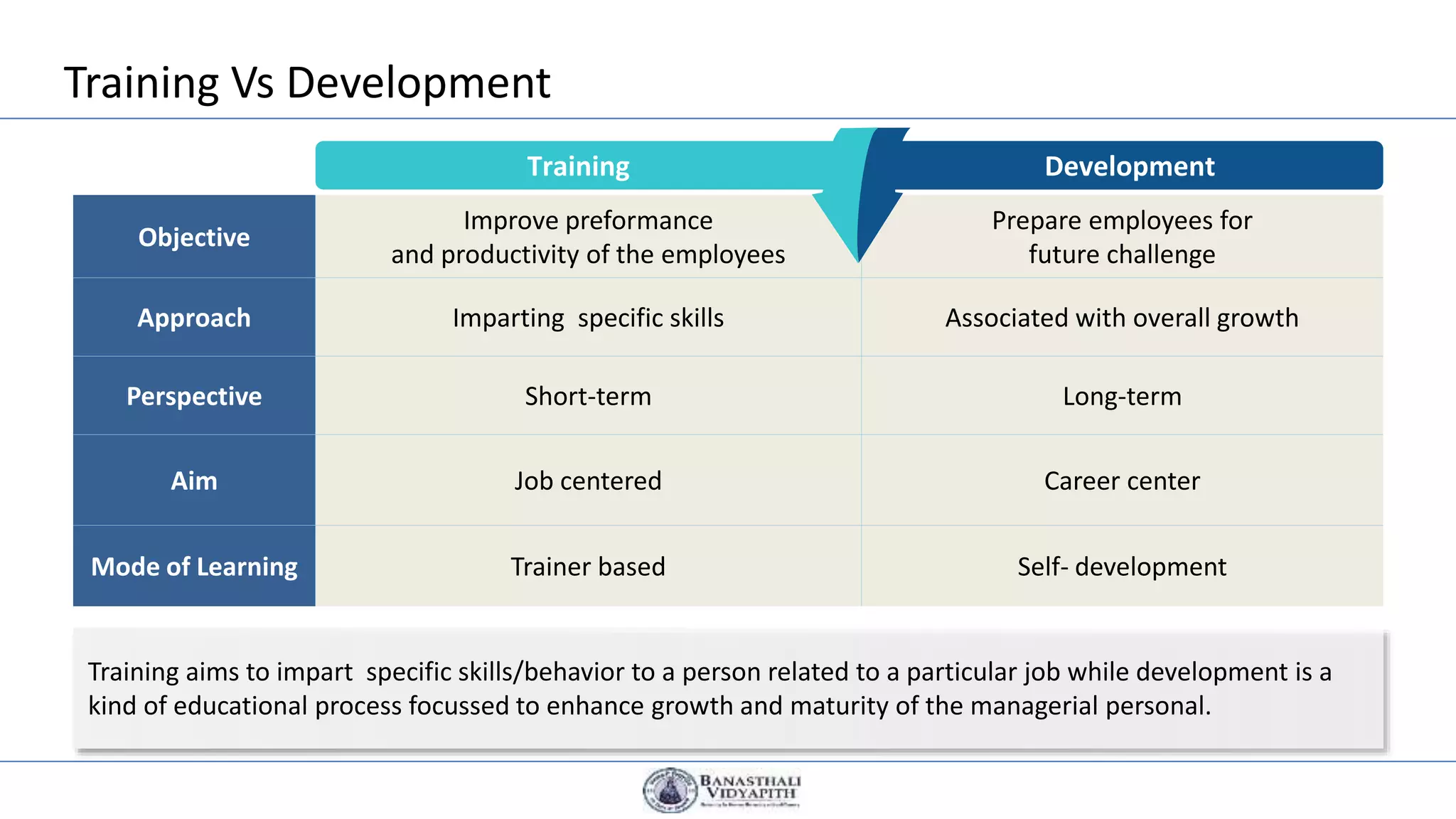
Objective
Improve preformance
and productivity of the employees
Prepare employees for
future challenge
Approach Imparting specific skills Associated with overall growth
Perspective Short-term Long-term
Aim Job centered Career center
Mode of Learning Trainer based Self- development
Training Vs Development
Training Development
Training aims to impart specific skills/behavior to a person related to a particular job while development is a
kind of educational process focussed to enhance growth and maturity of the managerial personal.
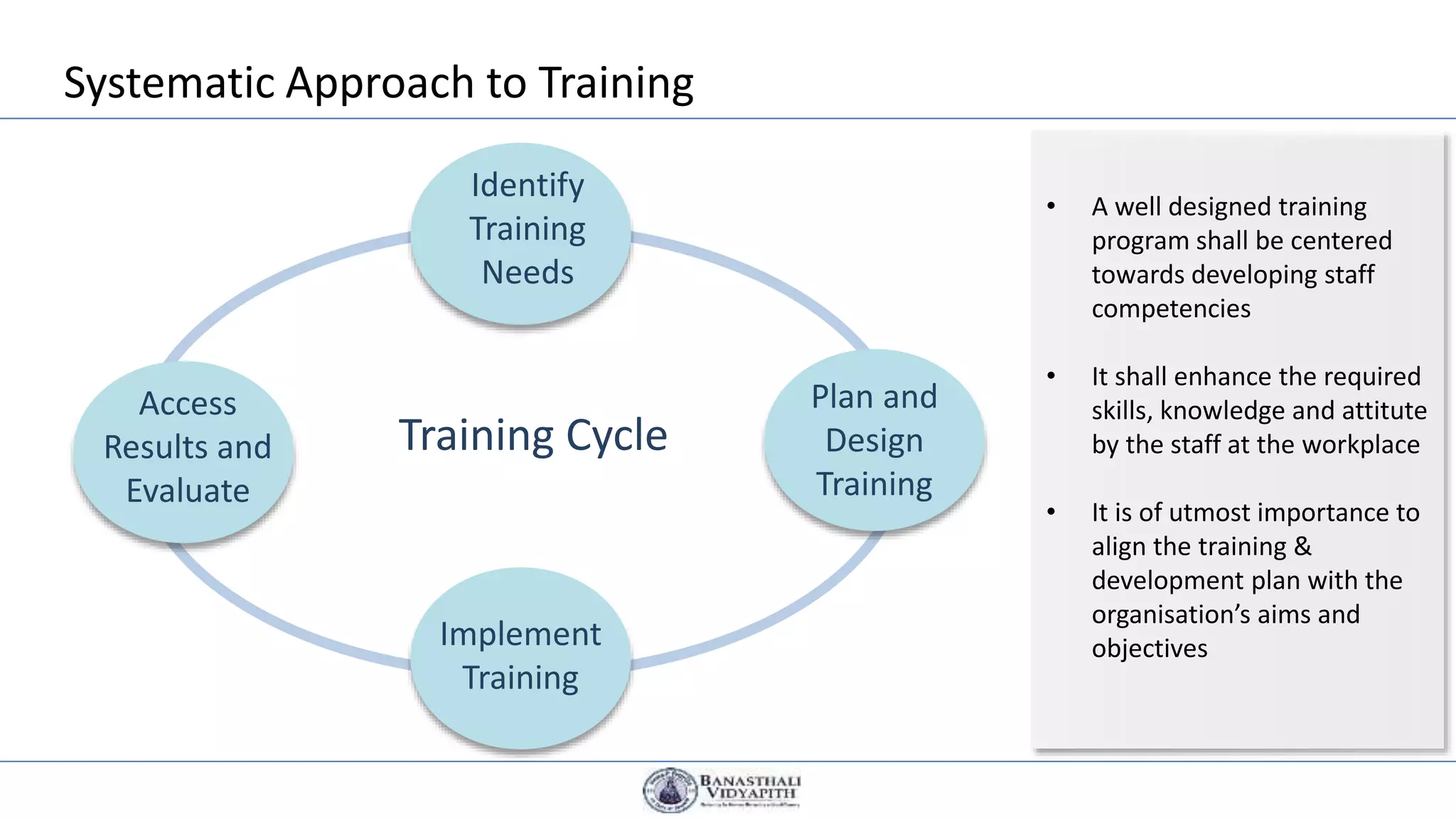
Systematic Approach to Training
Identify
Training
Needs
Plan and
Design
Training
Implement
Training
Access
Results and
Evaluate
Training Cycle
• A well designed training
program shall be centered
towards developing staff
competencies
• It shall enhance the required
skills, knowledge and attitute
by the staff at the workplace
• It is of utmost importance to
align the training &
development plan with the
organisation’s aims and
objectives
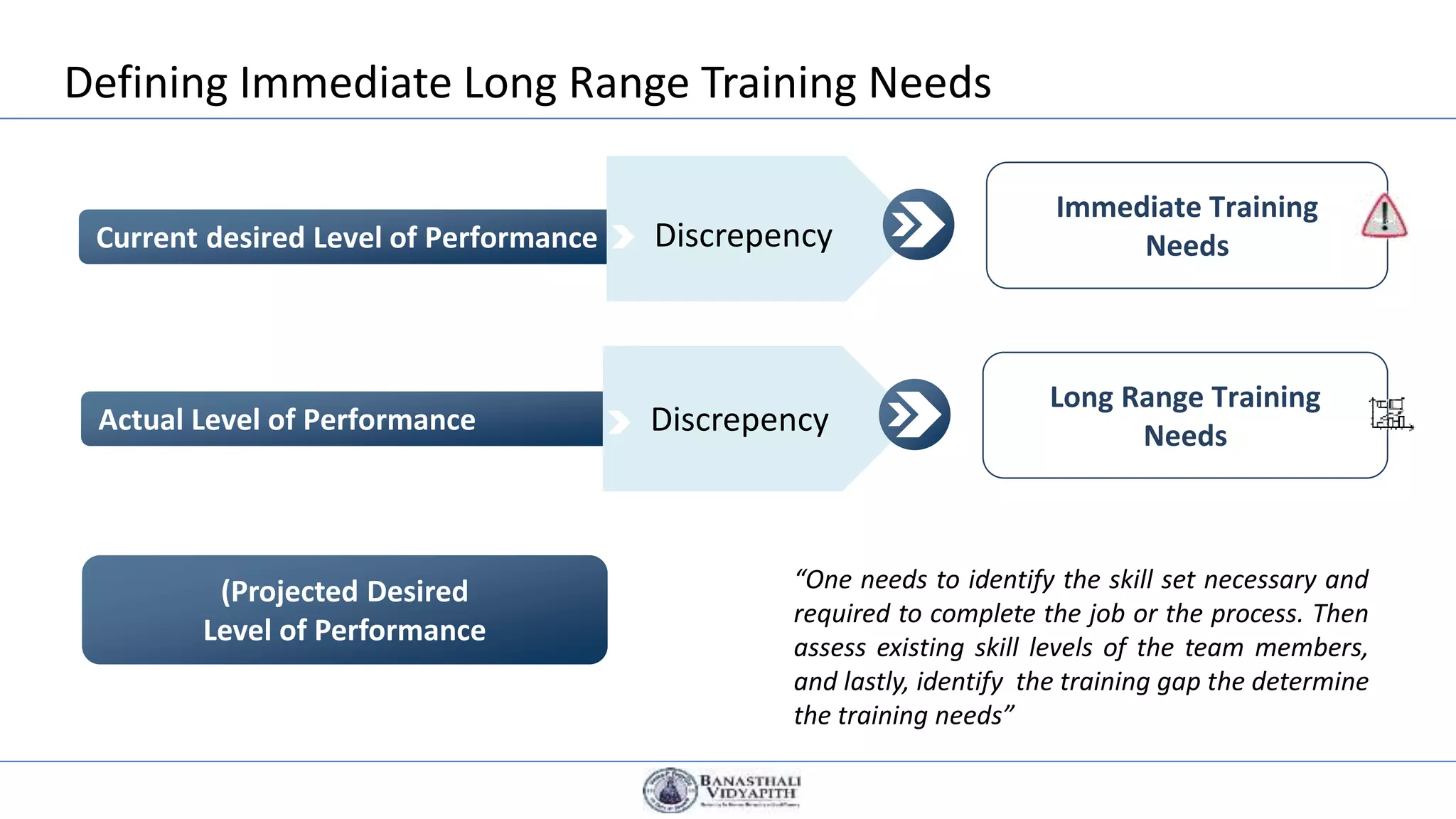
Current desired Level of Performance
Defining Immediate Long Range Training Needs
Actual Level of Performance
Discrepency
Immediate Training
Needs
Discrepency
Long Range Training
Needs
(Projected Desired
Level of Performance
“One needs to identify the skill set necessary and
required to complete the job or the process. Then
assess existing skill levels of the team members,
and lastly, identify the training gap the determine
the training needs”
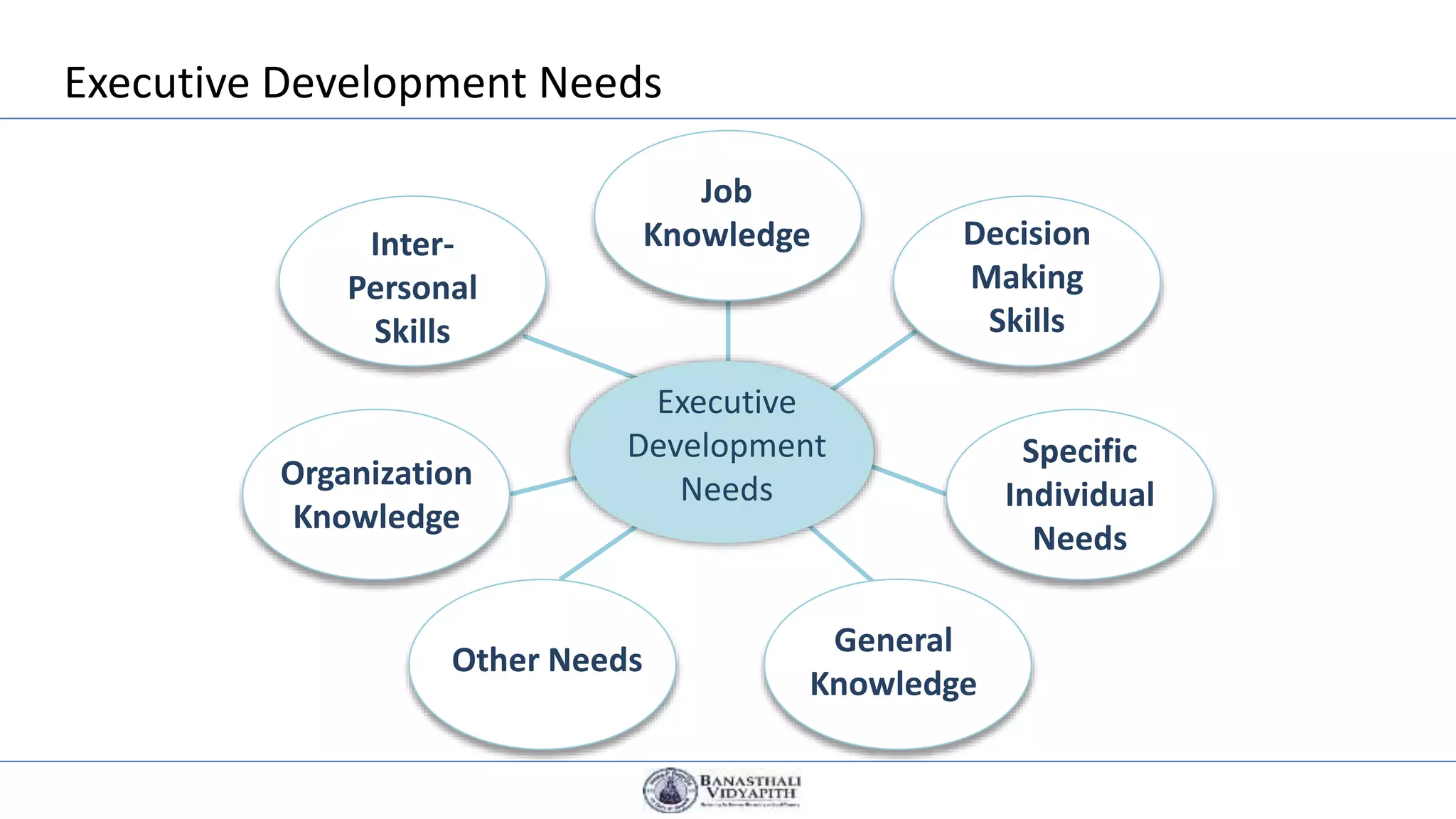
Executive Development Needs
Executive
Development
Needs
Job
Knowledge Decision
Making
Skills
Specific
Individual
Needs
General
Knowledge
Other Needs
Inter-
Personal
Skills
Organization
Knowledge
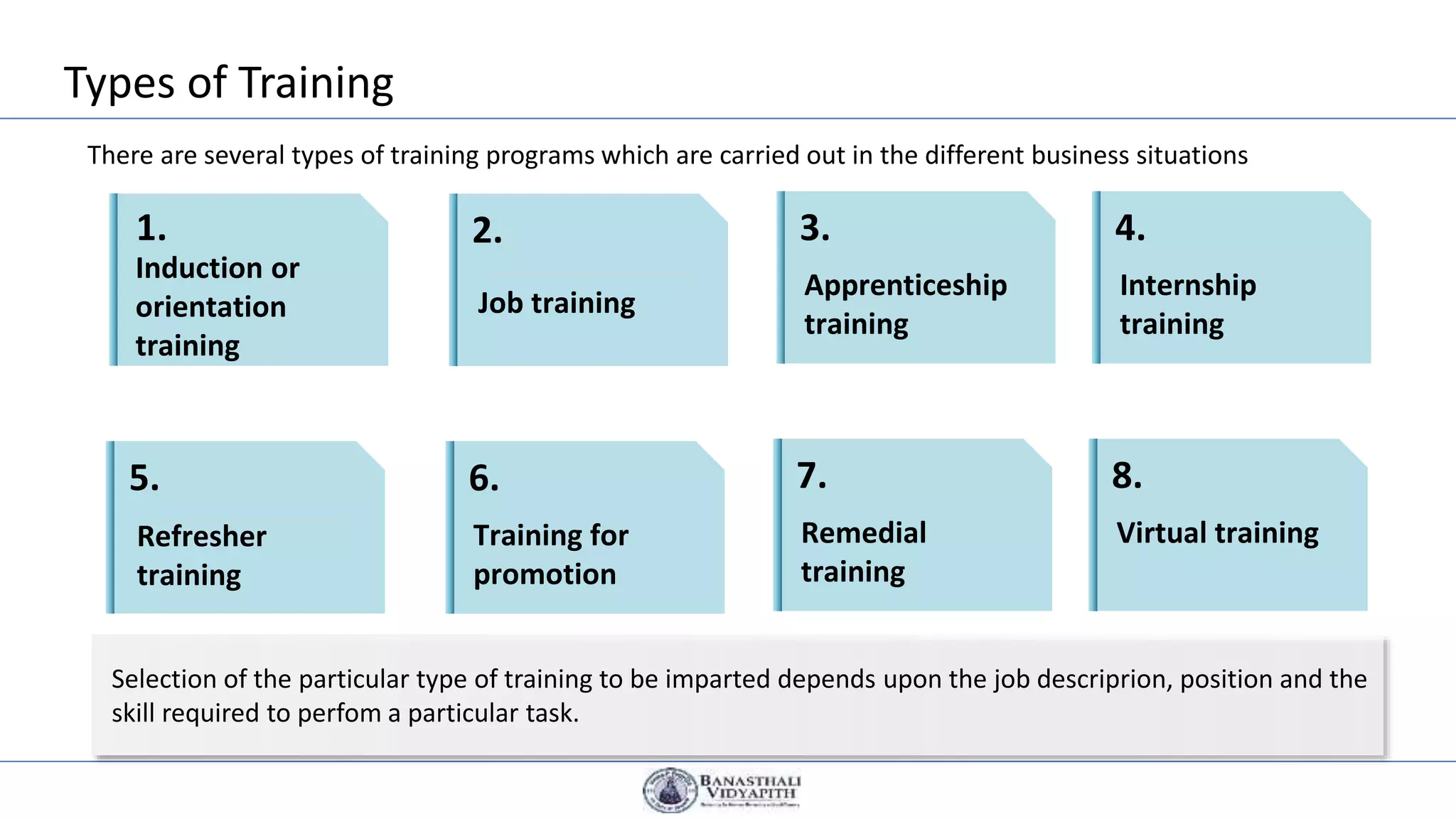
Types of Training
Induction or
orientation
training
1.
Job training
2.
Apprenticeship
training
3.
Internship
training
4.
Refresher
training
5.
Training for
promotion
6.
Remedial
training
7.
Virtual training
8.
There are several types of training programs which are carried out in the different business situations
Selection of the particular type of training to be imparted depends upon the job descriprion, position and the
skill required to perfom a particular task.
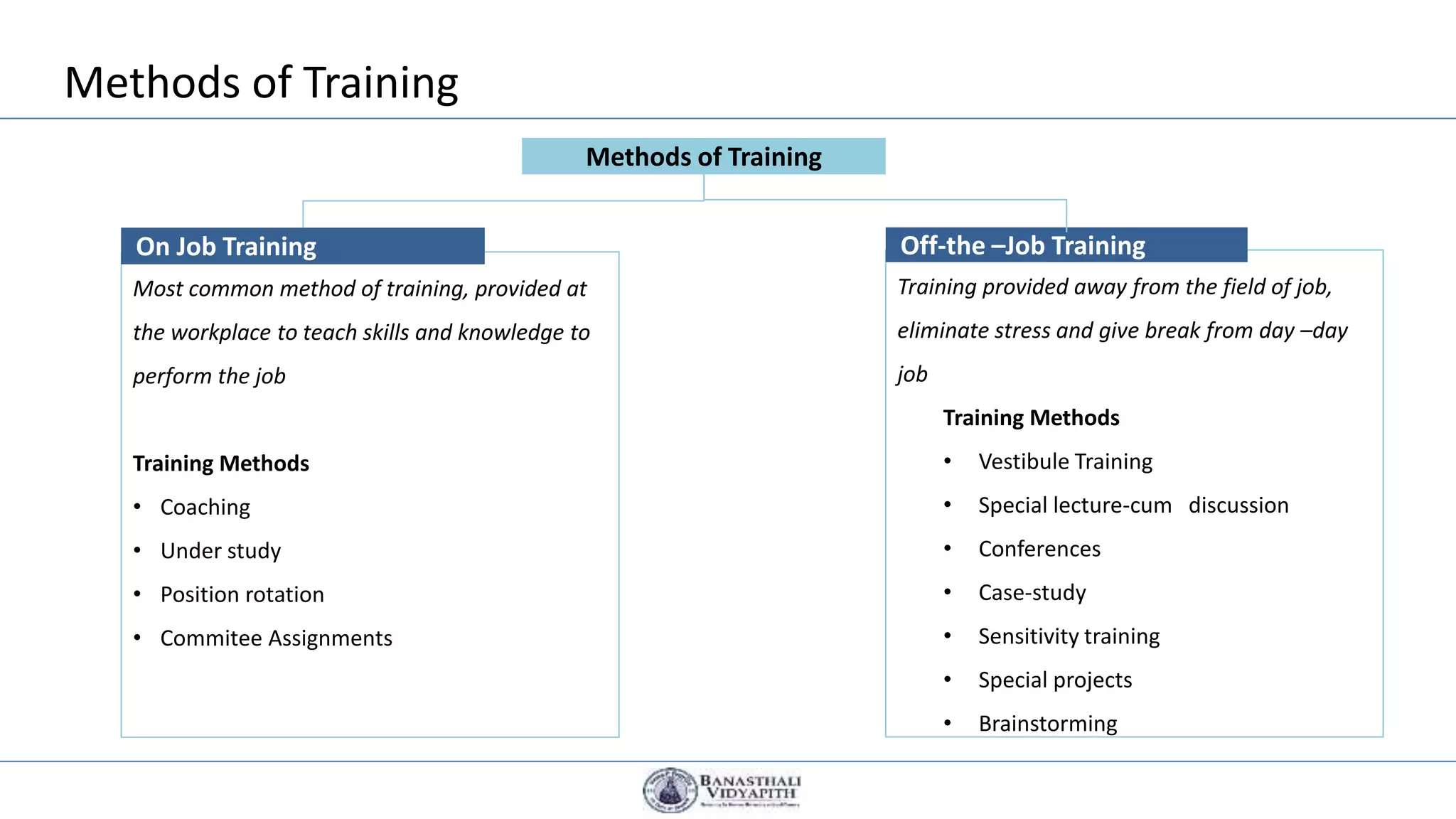
Methods of Training
Most common method of training, provided at
the workplace to teach skills and knowledge to
perform the job
Training Methods
• Coaching
• Under study
• Position rotation
• Commitee Assignments
Training provided away from the field of job,
eliminate stress and give break from day –day
job
Training Methods
• Vestibule Training
• Special lecture-cum discussion
• Conferences
• Case-study
• Sensitivity training
• Special projects
• Brainstorming
On Job Training Off-the –Job Training
Methods of Training
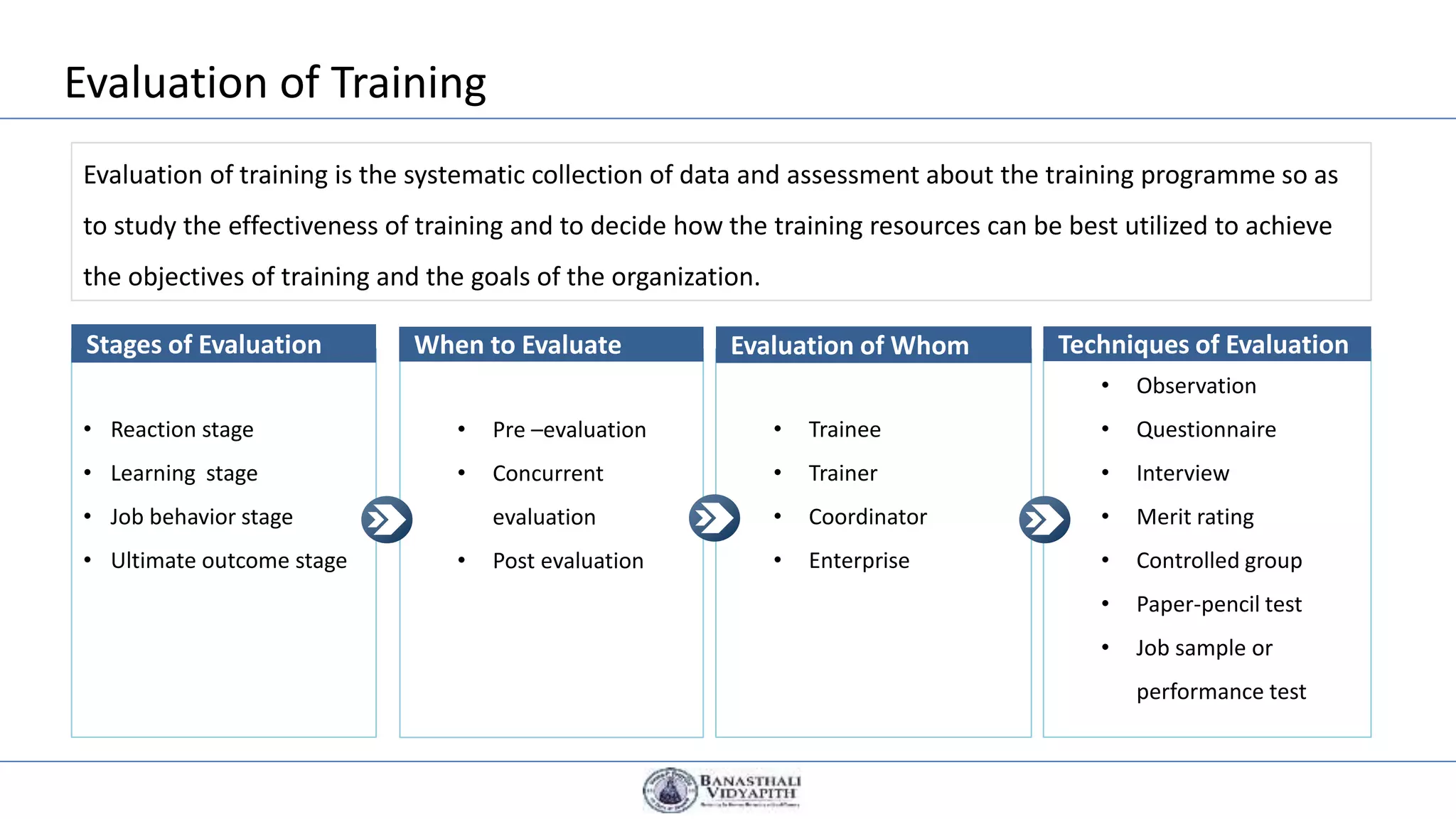
Evaluation of Training
Evaluation of training is the systematic collection of data and assessment about the training programme so as
to study the effectiveness of training and to decide how the training resources can be best utilized to achieve
the objectives of training and the goals of the organization.
• Reaction stage
• Learning stage
• Job behavior stage
• Ultimate outcome stage
• Pre –evaluation
• Concurrent
evaluation
• Post evaluation
• Trainee
• Trainer
• Coordinator
• Enterprise
Stages of Evaluation When to Evaluate Evaluation of Whom
• Observation
• Questionnaire
• Interview
• Merit rating
• Controlled group
• Paper-pencil test
• Job sample or
performance test
Techniques of Evaluation
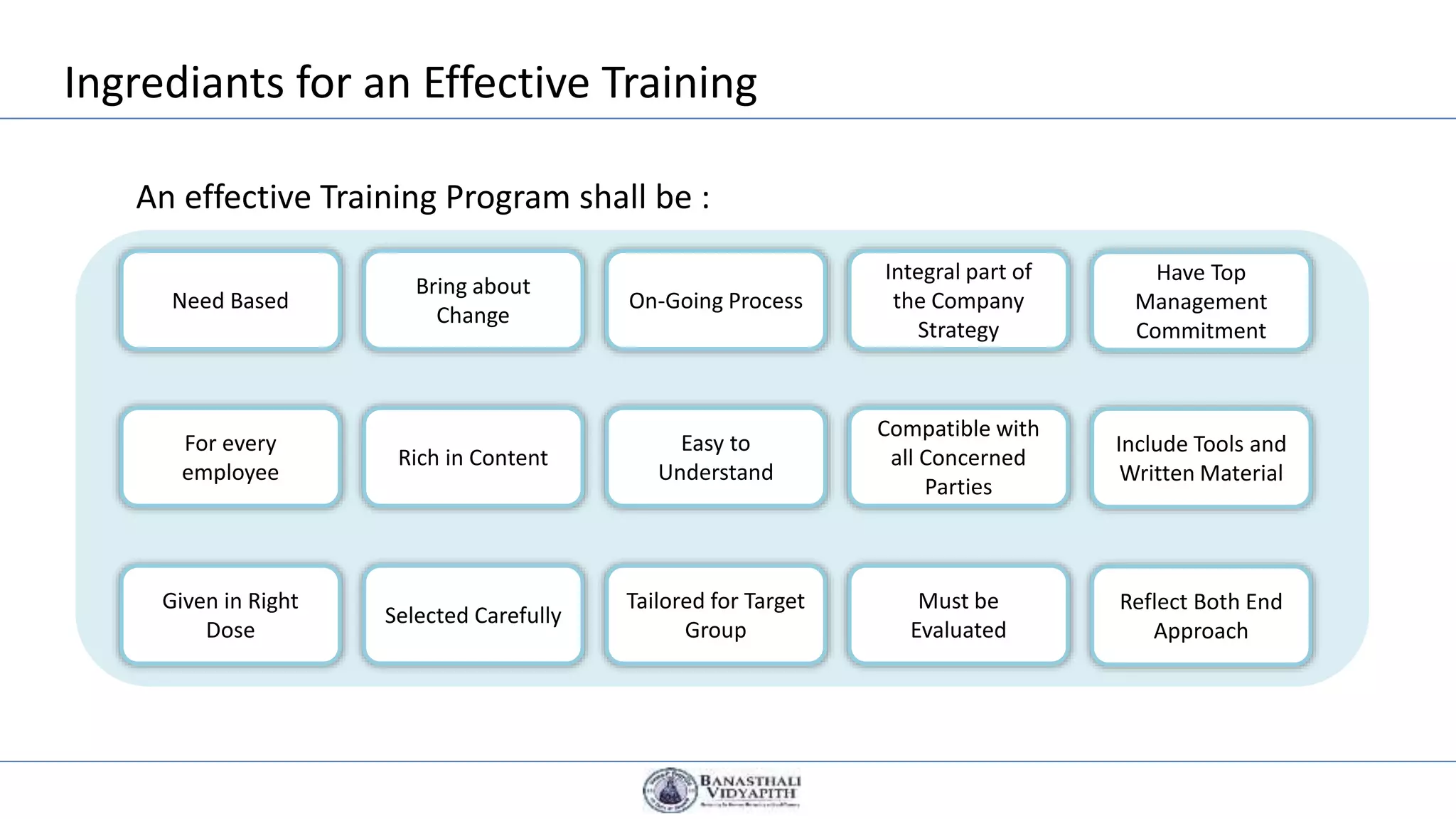
Ingrediants for an Effective Training
Need Based
Bring about
Change
On-Going Process
Integral part of
the Company
Strategy
Have Top
Management
Commitment
For every
employee
Rich in Content
Easy to
Understand
Compatible with
all Concerned
Parties
Include Tools and
Written Material
Given in Right
Dose
Selected Carefully
Tailored for Target
Group
Must be
Evaluated
Reflect Both End
Approach
An effective Training Program shall be :
Summary
Summary
• Training is and important function and needs focus in the
organization for overall effectiveness
• The cases reflect the need for understanding ground realities for
effective training

training and development

  • 1.
    Date Annual Refresher Programin Teaching (ARPIT) through National Resource Centres (NRCs)
  • 2.
  • 3.
    Learning Objectives To understandthe core ideas related to training and development To identify how the concepts can be applied in organizational context Develop understanding about effective Training & Development program 1 2 3
  • 4.
    Definition of Training “Training isa planned activity to modify attitude, knowledge or skill through learning experience to achieve effective performance of an activity or range of activities. Its purpose in the work situation is to develop the abilities of an individual and to meet current and future manpower needs of the organization”
  • 5.
    Specific Purposes ofTraining To increase the productivity To improve quality To fulfill future personal needs To improve organizational climate To prevent obsolescence To improve health and safety To provide opportunity for personal growth
  • 6.
    Objective Improve preformance and productivityof the employees Develop a sense of reasoning Approach Application oriented Theoretical oriented Perspective Narrow Broad Teaches Specific task General concepts Mode of Learning Job experience Class room learning Training Vs Education Training Education Training aims to impart specific skills/behavior to a person while education is a systematic process of learning in an institution.
  • 7.
    Objective Improve preformance and productivityof the employees Prepare employees for future challenge Approach Imparting specific skills Associated with overall growth Perspective Short-term Long-term Aim Job centered Career center Mode of Learning Trainer based Self- development Training Vs Development Training Development Training aims to impart specific skills/behavior to a person related to a particular job while development is a kind of educational process focussed to enhance growth and maturity of the managerial personal.
  • 8.
    Systematic Approach toTraining Identify Training Needs Plan and Design Training Implement Training Access Results and Evaluate Training Cycle • A well designed training program shall be centered towards developing staff competencies • It shall enhance the required skills, knowledge and attitute by the staff at the workplace • It is of utmost importance to align the training & development plan with the organisation’s aims and objectives
  • 9.
    Current desired Levelof Performance Defining Immediate Long Range Training Needs Actual Level of Performance Discrepency Immediate Training Needs Discrepency Long Range Training Needs (Projected Desired Level of Performance “One needs to identify the skill set necessary and required to complete the job or the process. Then assess existing skill levels of the team members, and lastly, identify the training gap the determine the training needs”
  • 10.
    Executive Development Needs Executive Development Needs Job KnowledgeDecision Making Skills Specific Individual Needs General Knowledge Other Needs Inter- Personal Skills Organization Knowledge
  • 11.
    Types of Training Inductionor orientation training 1. Job training 2. Apprenticeship training 3. Internship training 4. Refresher training 5. Training for promotion 6. Remedial training 7. Virtual training 8. There are several types of training programs which are carried out in the different business situations Selection of the particular type of training to be imparted depends upon the job descriprion, position and the skill required to perfom a particular task.
  • 12.
    Methods of Training Mostcommon method of training, provided at the workplace to teach skills and knowledge to perform the job Training Methods • Coaching • Under study • Position rotation • Commitee Assignments Training provided away from the field of job, eliminate stress and give break from day –day job Training Methods • Vestibule Training • Special lecture-cum discussion • Conferences • Case-study • Sensitivity training • Special projects • Brainstorming On Job Training Off-the –Job Training Methods of Training
  • 13.
    Evaluation of Training Evaluationof training is the systematic collection of data and assessment about the training programme so as to study the effectiveness of training and to decide how the training resources can be best utilized to achieve the objectives of training and the goals of the organization. • Reaction stage • Learning stage • Job behavior stage • Ultimate outcome stage • Pre –evaluation • Concurrent evaluation • Post evaluation • Trainee • Trainer • Coordinator • Enterprise Stages of Evaluation When to Evaluate Evaluation of Whom • Observation • Questionnaire • Interview • Merit rating • Controlled group • Paper-pencil test • Job sample or performance test Techniques of Evaluation
  • 14.
    Ingrediants for anEffective Training Need Based Bring about Change On-Going Process Integral part of the Company Strategy Have Top Management Commitment For every employee Rich in Content Easy to Understand Compatible with all Concerned Parties Include Tools and Written Material Given in Right Dose Selected Carefully Tailored for Target Group Must be Evaluated Reflect Both End Approach An effective Training Program shall be :
  • 15.
    Summary Summary • Training isand important function and needs focus in the organization for overall effectiveness • The cases reflect the need for understanding ground realities for effective training