By
Greeshma K
TRADITIONAL & COMPUTER BASED
TRAINING PROGRAMMES
TRAINING:
“Training is learning that is provided in order to improve performance on the
present job.”
- Dr. Leonard Nadler.
PURPOSE OF TRAINING:
“The purpose of any training program is to deliver results. People must be more
effective after the training than they were before.”
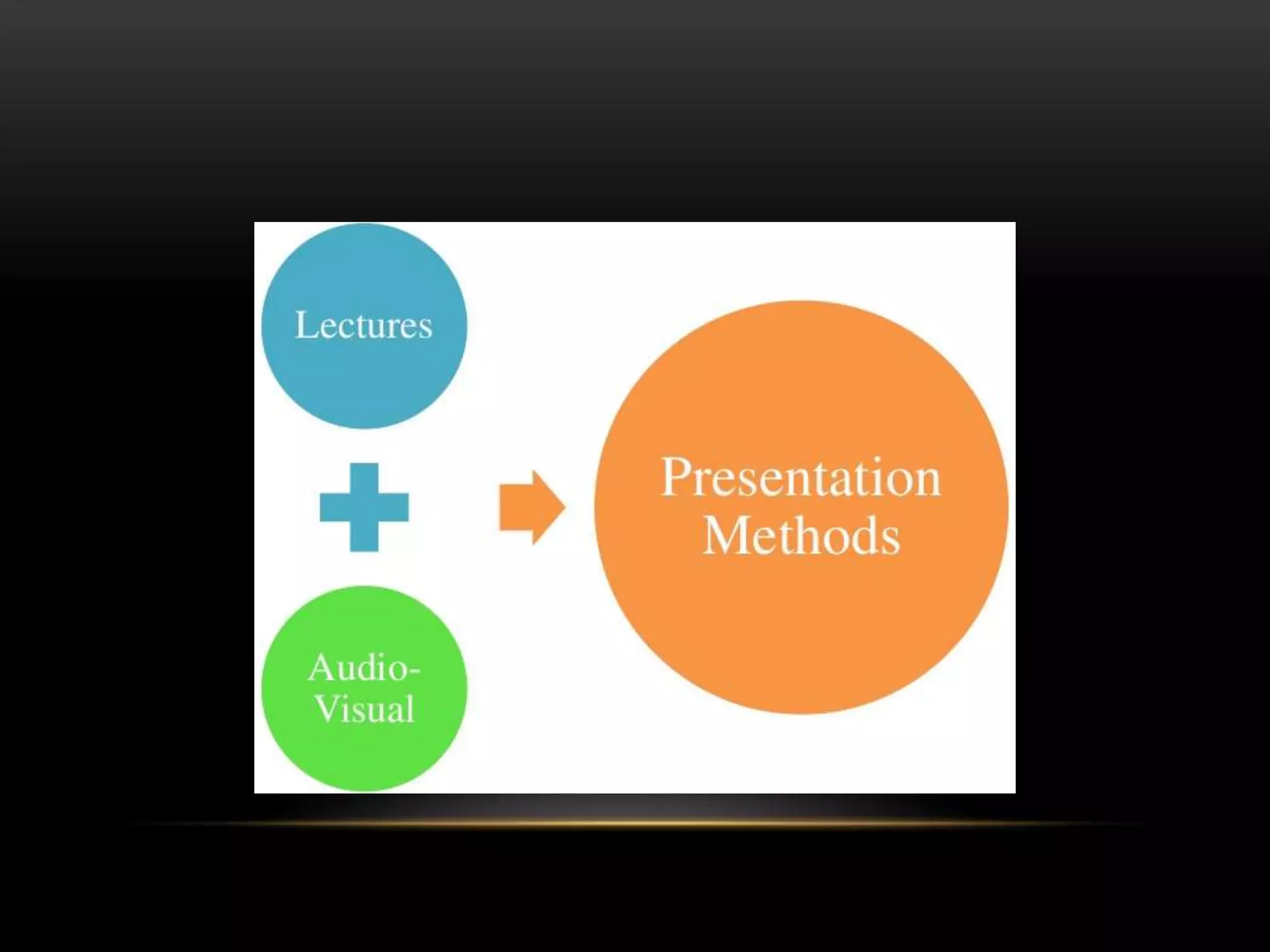
1. PRESENTATION METHODS
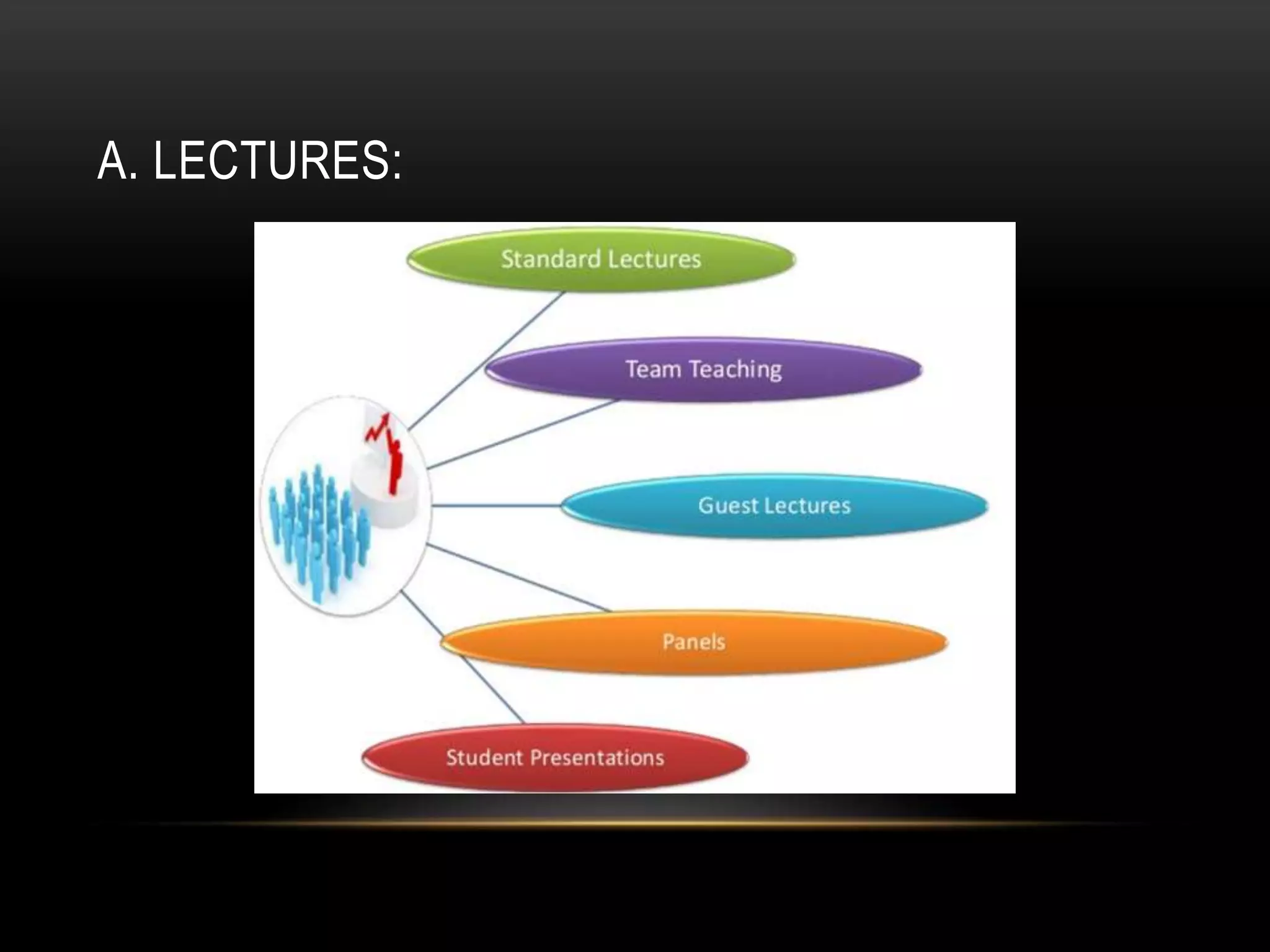
A. LECTURES:
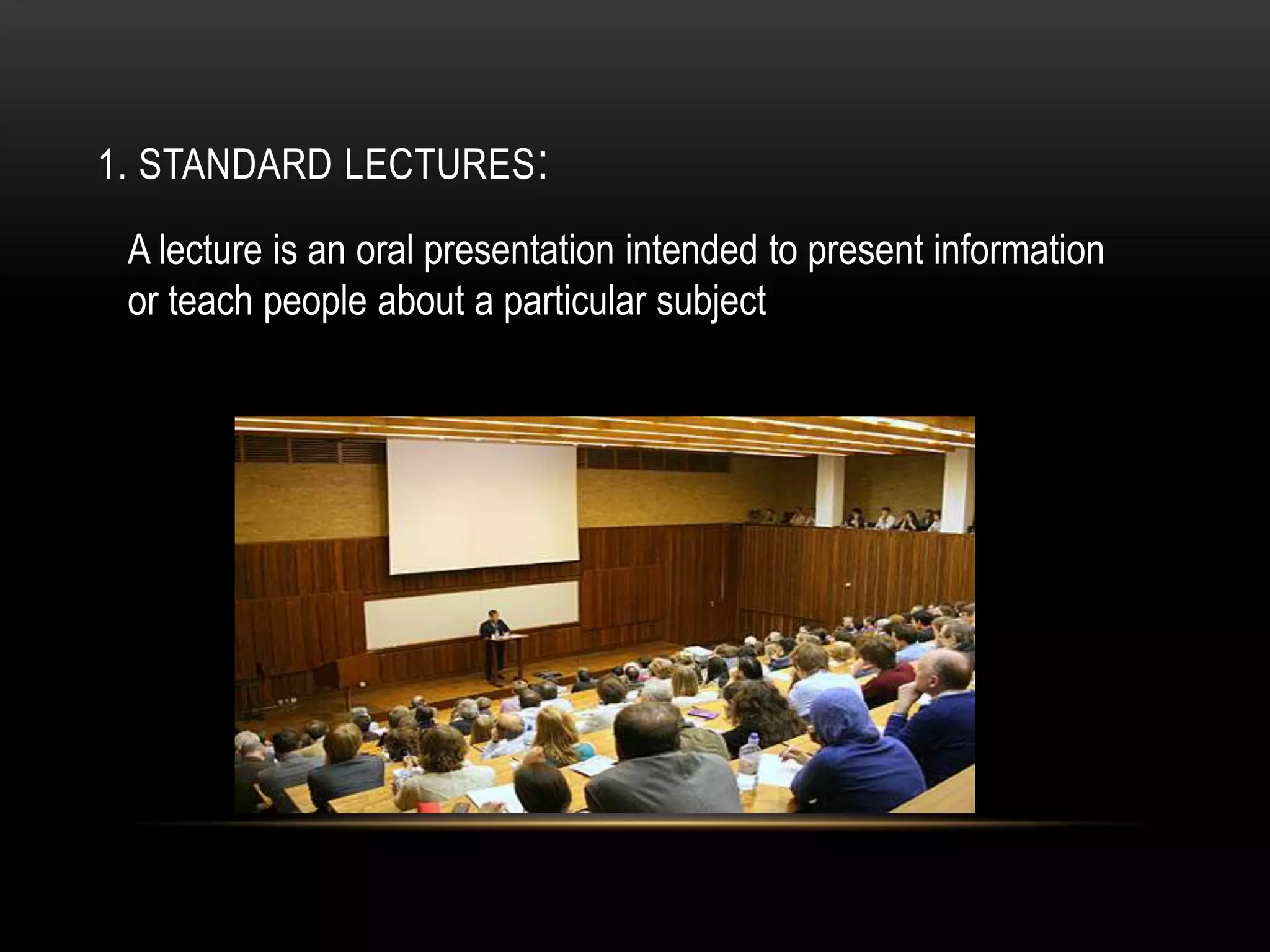
1. STANDARD LECTURES:
A lecture is an oral presentation intended to present information
or teach people about a particular subject
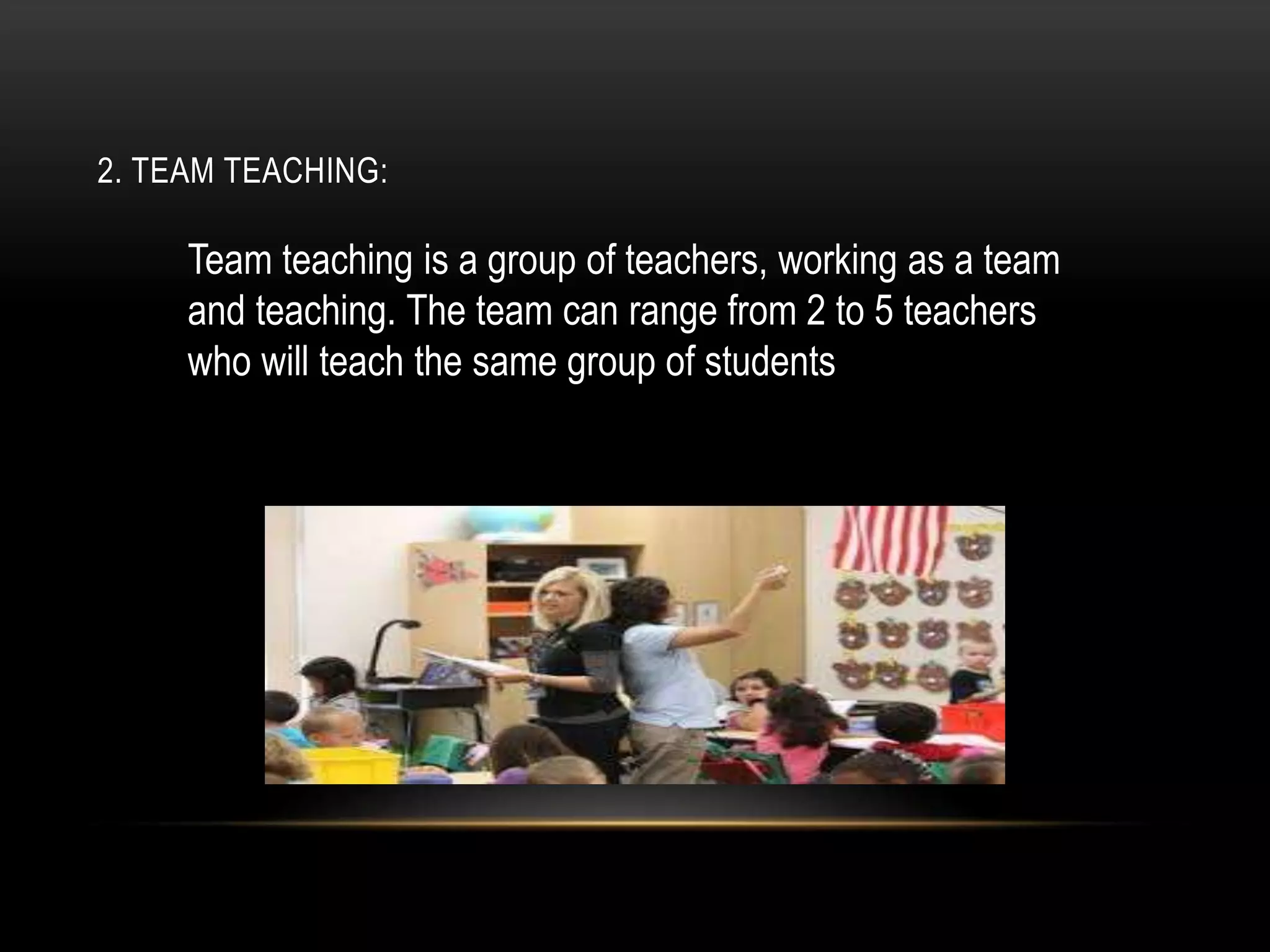
2. TEAM TEACHING:
Team teaching is a group of teachers, working as a team
and teaching. The team can range from 2 to 5 teachers
who will teach the same group of students
3.GUEST LECTURES:
Guest lecture involves an individual who is invited by an
institution to give a series of lectures
4. PANELS:
A panel, involves a group of people gathered to discuss a
topic in front of an audience
5. STUDENT PRESENTATIONS:
Student presentation is the process of presenting a topic to an
audience by students
B. AUDIO-VISUAL TECHNIQUES:
It is mixture of audio & visual instructions given to trainees by
providing real life experiences and examples. You can make
effective use of the technology's strengths to get your points
across.
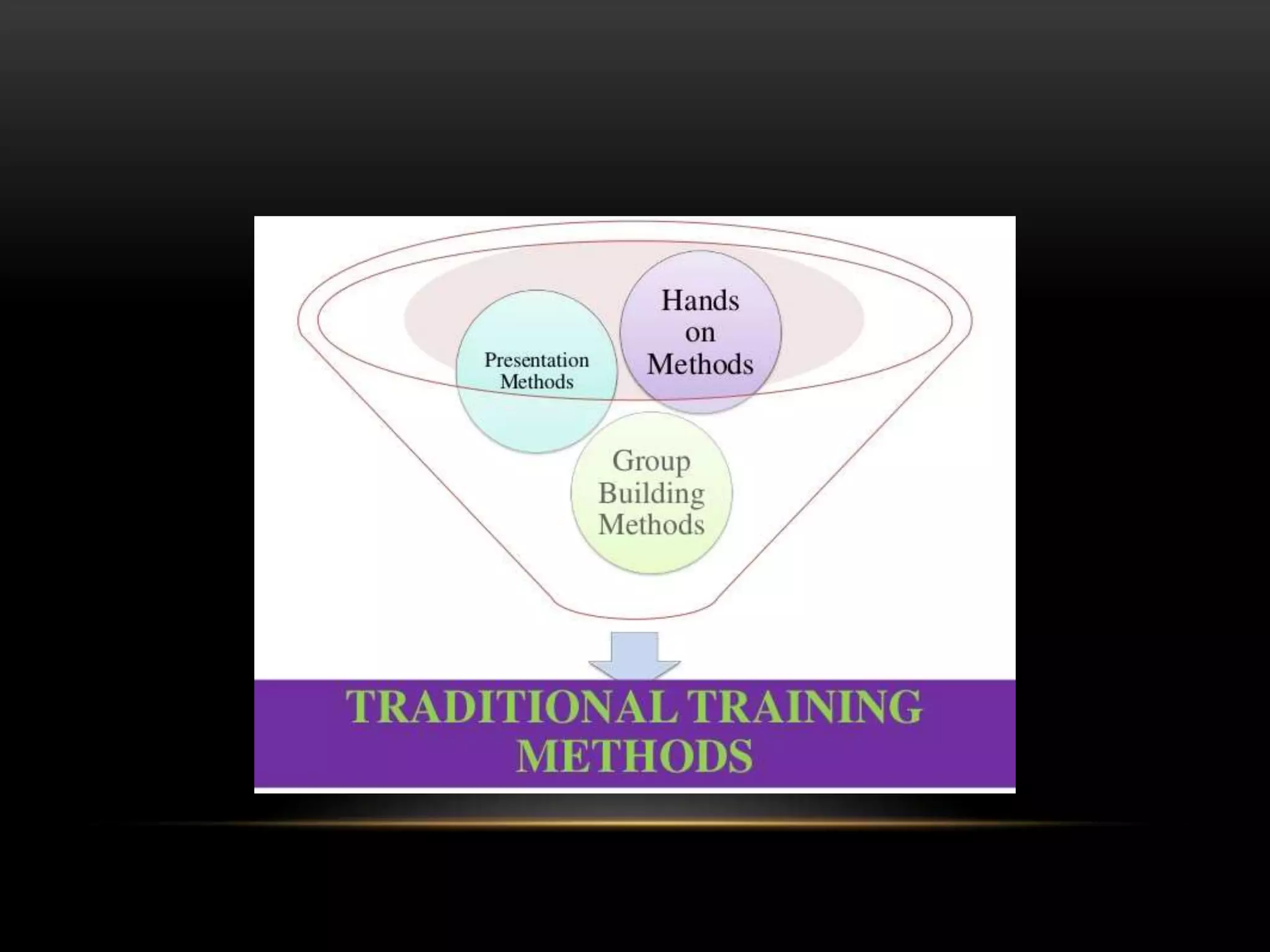
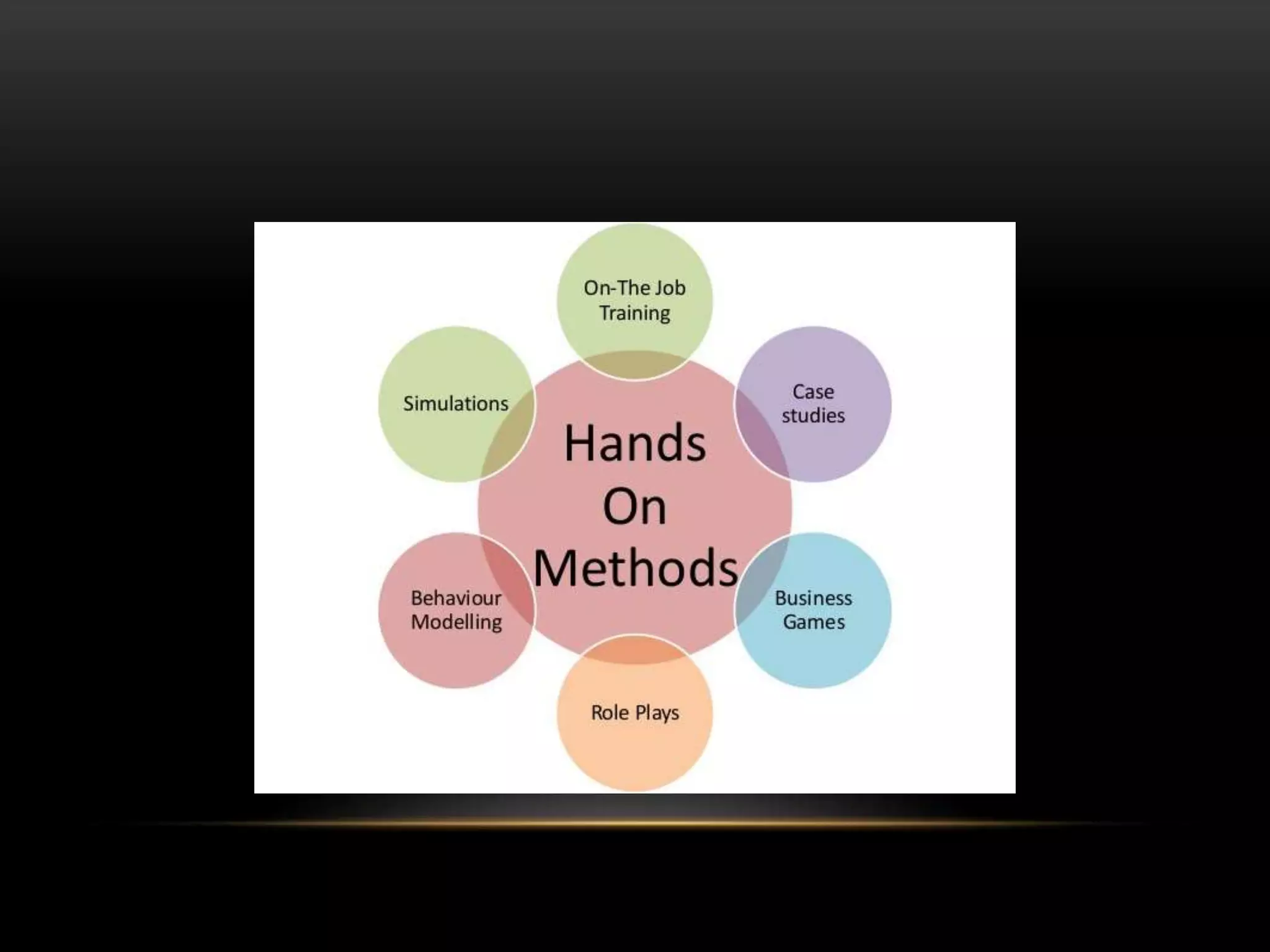
2.HANDS ON METHODS
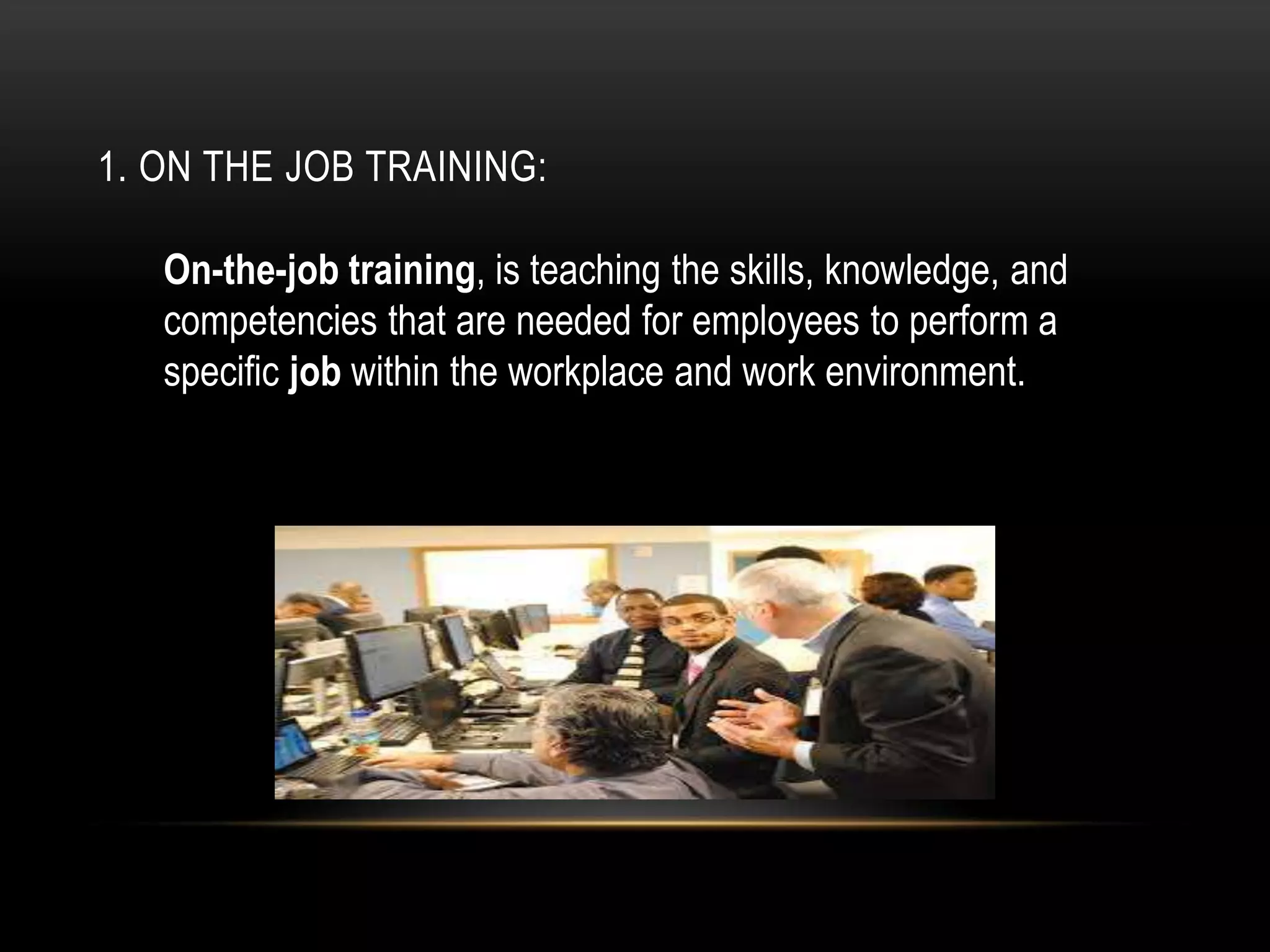
1. ON THE JOB TRAINING:
On-the-job training, is teaching the skills, knowledge, and
competencies that are needed for employees to perform a
specific job within the workplace and work environment.
2. CASE STUDY:
A case study has also been described as an intensive,
systematic investigation of a single individual, group, community
or some other unit in which the researcher examines in-depth
data relating to several variables
3. BUSINESS GAMES:
Business games are used as an educational tool for teaching
business, leads to the training of players in business skills or
the evaluation of players' performances.
4. ROLE PLAYS:
Role play is the act of imitating the character and behavior of
someone who is different from yourself, as a training exercise.
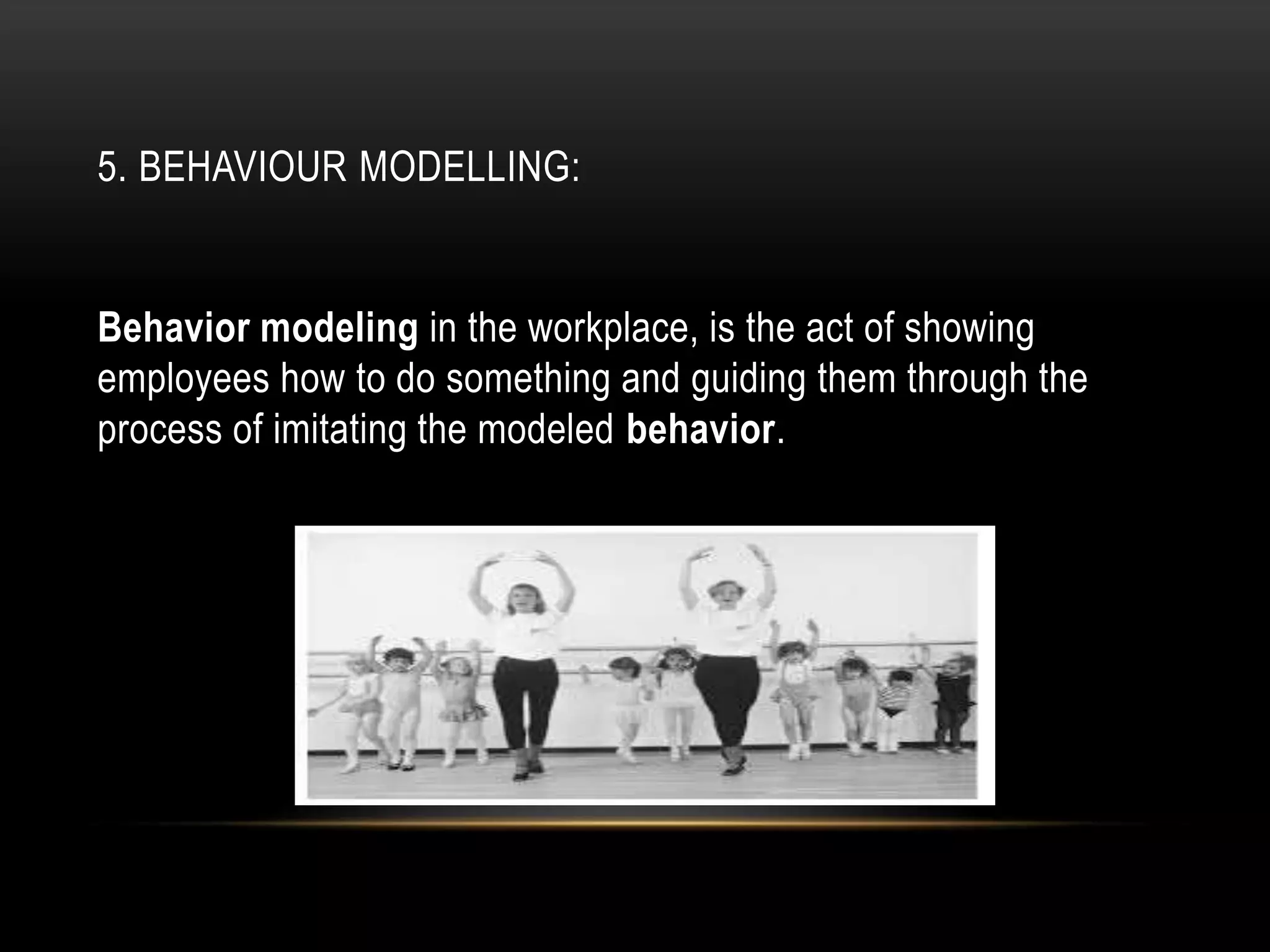
5. BEHAVIOUR MODELLING:
Behavior modeling in the workplace, is the act of showing
employees how to do something and guiding them through the
process of imitating the modeled behavior.
6. SIMULATIONS:
A simulation is an imitation of the operation of a real-world
process or system. The act of simulating something first requires
that a model be developed; this model represents the key
characteristics, behaviors and functions of the selected physical or
abstract system or process.
3. GROUP BUILDING METHODS
1. ADVENTURE TRAINING:
Development of teamwork and leadership skills using
structured outdoor activities
2. TEAM TRAINING:
Involves coordinating the performance of individuals who
works together for common goal
3. ACTION LEARNING:
Involves giving leaders or work groups an actual problem having
them work on solving it
COMPUTER BASED TRAINING
DEFINITION:
Computer-Based Training (CBT) involves the use of a personal or networked
computer for the delivery and access of training programs. CBT can be, online,
web-based, mobile, and distance learning.
TYPES OF CBT:
• Demonstration
• Tutorial
• Simulation
DEMONSTRATION:
• Demonstration is best used to support the introduction of new information
• applied widely for creation of instruction books
• is similar to E-book concerning the learning method
TUTORIAL
• main feature: a sequential manner of introducing new information
• useful for teaching factual information, simple discrimination, rules, and
simple application of rules
TUTORIAL - TYPE VARIATIONS
• Drill and Skill practice
used after initial instruction when mastery of a new skill or information is
desired
• Problem solving
used to augment higher order thinking skills
• ITS = Intelligent Tutorial Systems
provide direct feedback to students, without the intervention of human
beings, whilst performing a task.
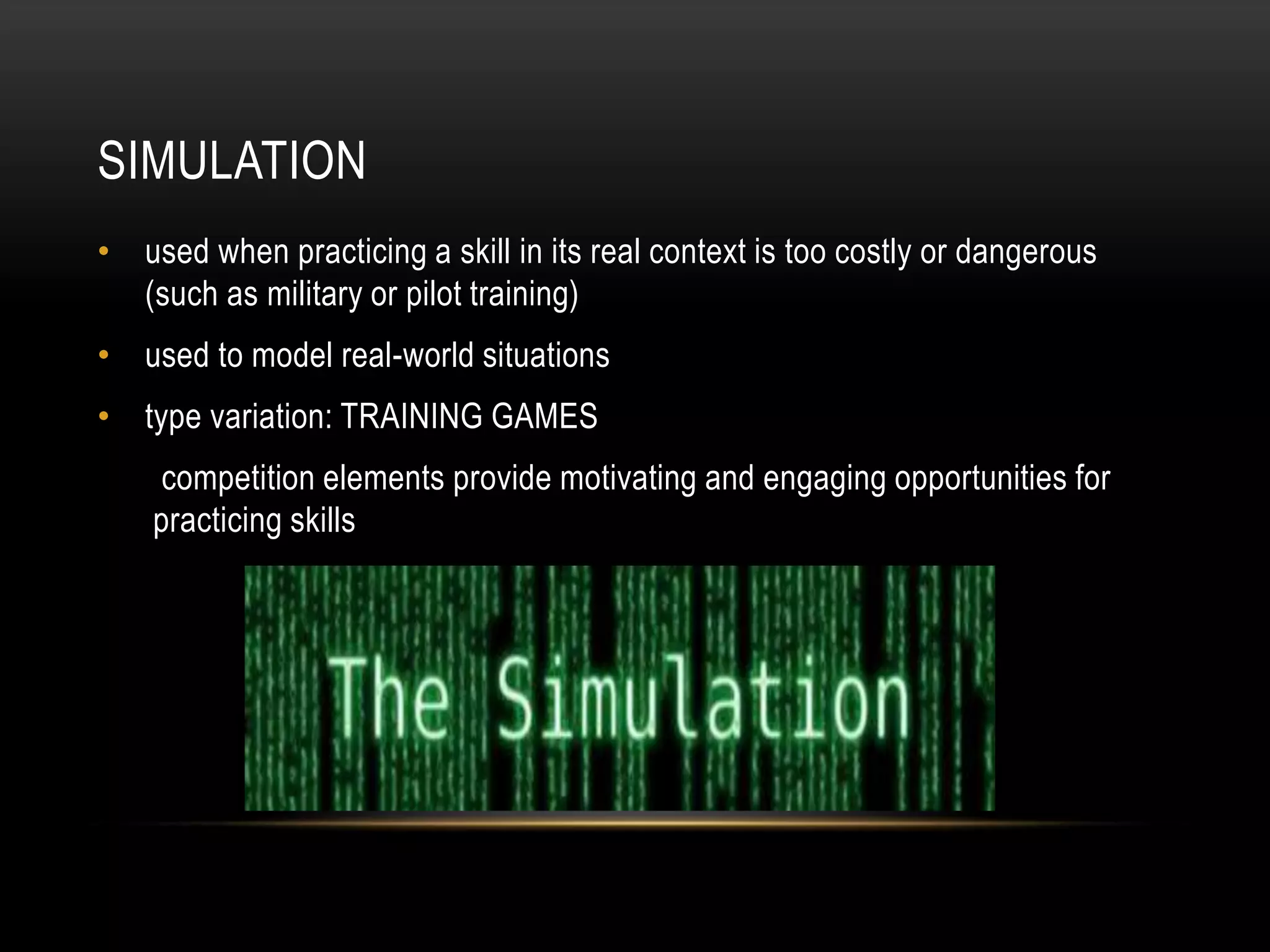
SIMULATION
• used when practicing a skill in its real context is too costly or dangerous
(such as military or pilot training)
• used to model real-world situations
• type variation: TRAINING GAMES
competition elements provide motivating and engaging opportunities for
practicing skills
BENEFITS OF CBT (LEARNING SITUATION)
• self-paced, flexible, individualized, convenient
• suitable educational method for adults,
• on-the job and off-the-job availability
• immediate feedback and scoring possible
• integrated texts, graphics, video and sound
• increased control and self-control possible
• increased learning satisfaction and motivation,
• reduced resource requirements
DRAWBACKS OF CBT
• high costs of supplying software and hardware infrastructure
• technical errors, unclear orders or instructions
• limited feedback
• narrow possibilities of interacting and creating
• small variation of practicing structures, e.g. multiple-choice or completion
tests - passive practicing
Traditional & Modern methods of training

Traditional & Modern methods of training

  • 1.
    By Greeshma K TRADITIONAL &COMPUTER BASED TRAINING PROGRAMMES
  • 2.
    TRAINING: “Training is learningthat is provided in order to improve performance on the present job.” - Dr. Leonard Nadler. PURPOSE OF TRAINING: “The purpose of any training program is to deliver results. People must be more effective after the training than they were before.”
  • 4.
  • 6.
  • 7.
    1. STANDARD LECTURES: Alecture is an oral presentation intended to present information or teach people about a particular subject
  • 8.
    2. TEAM TEACHING: Teamteaching is a group of teachers, working as a team and teaching. The team can range from 2 to 5 teachers who will teach the same group of students
  • 9.
    3.GUEST LECTURES: Guest lectureinvolves an individual who is invited by an institution to give a series of lectures
  • 10.
    4. PANELS: A panel,involves a group of people gathered to discuss a topic in front of an audience
  • 11.
    5. STUDENT PRESENTATIONS: Studentpresentation is the process of presenting a topic to an audience by students
  • 12.
    B. AUDIO-VISUAL TECHNIQUES: Itis mixture of audio & visual instructions given to trainees by providing real life experiences and examples. You can make effective use of the technology's strengths to get your points across.
  • 13.
  • 15.
    1. ON THEJOB TRAINING: On-the-job training, is teaching the skills, knowledge, and competencies that are needed for employees to perform a specific job within the workplace and work environment.
  • 16.
    2. CASE STUDY: Acase study has also been described as an intensive, systematic investigation of a single individual, group, community or some other unit in which the researcher examines in-depth data relating to several variables
  • 17.
    3. BUSINESS GAMES: Businessgames are used as an educational tool for teaching business, leads to the training of players in business skills or the evaluation of players' performances.
  • 18.
    4. ROLE PLAYS: Roleplay is the act of imitating the character and behavior of someone who is different from yourself, as a training exercise.
  • 19.
    5. BEHAVIOUR MODELLING: Behaviormodeling in the workplace, is the act of showing employees how to do something and guiding them through the process of imitating the modeled behavior.
  • 20.
    6. SIMULATIONS: A simulationis an imitation of the operation of a real-world process or system. The act of simulating something first requires that a model be developed; this model represents the key characteristics, behaviors and functions of the selected physical or abstract system or process.
  • 21.
  • 23.
    1. ADVENTURE TRAINING: Developmentof teamwork and leadership skills using structured outdoor activities
  • 24.
    2. TEAM TRAINING: Involvescoordinating the performance of individuals who works together for common goal
  • 25.
    3. ACTION LEARNING: Involvesgiving leaders or work groups an actual problem having them work on solving it
  • 26.
  • 27.
    DEFINITION: Computer-Based Training (CBT)involves the use of a personal or networked computer for the delivery and access of training programs. CBT can be, online, web-based, mobile, and distance learning.
  • 28.
    TYPES OF CBT: •Demonstration • Tutorial • Simulation
  • 29.
    DEMONSTRATION: • Demonstration isbest used to support the introduction of new information • applied widely for creation of instruction books • is similar to E-book concerning the learning method
  • 30.
    TUTORIAL • main feature:a sequential manner of introducing new information • useful for teaching factual information, simple discrimination, rules, and simple application of rules
  • 31.
    TUTORIAL - TYPEVARIATIONS • Drill and Skill practice used after initial instruction when mastery of a new skill or information is desired • Problem solving used to augment higher order thinking skills • ITS = Intelligent Tutorial Systems provide direct feedback to students, without the intervention of human beings, whilst performing a task.
  • 32.
    SIMULATION • used whenpracticing a skill in its real context is too costly or dangerous (such as military or pilot training) • used to model real-world situations • type variation: TRAINING GAMES competition elements provide motivating and engaging opportunities for practicing skills
  • 33.
    BENEFITS OF CBT(LEARNING SITUATION) • self-paced, flexible, individualized, convenient • suitable educational method for adults, • on-the job and off-the-job availability • immediate feedback and scoring possible • integrated texts, graphics, video and sound • increased control and self-control possible • increased learning satisfaction and motivation, • reduced resource requirements
  • 34.
    DRAWBACKS OF CBT •high costs of supplying software and hardware infrastructure • technical errors, unclear orders or instructions • limited feedback • narrow possibilities of interacting and creating • small variation of practicing structures, e.g. multiple-choice or completion tests - passive practicing

Editor's Notes

  • #8 A lecture is an oral presentation intended to present information or teach people about a particular subject Team teaching it is a group of teachers, working as a team and teaching. The team can range from 2 to 5 teachers who will teach the same group of students. Guest lecture, is an individual who is invited by an institution to give a series of lectures a panel, involves a group of people gathered to discuss a topic in front of an audience Student presentation is the process of presenting a topic to an audience by students
  • #13 Audio Visual Techniques: It is mixture of audio & visual instructions given to trainees by providing real life experiences and examples. If you use an overhead projector to present in-house seminars, paid lectures or other meeting materials, you can make effective use of the technology's strengths to get your points across A slide is a single page of an electronic presentation which you usually view on a computer or on a larger screen. A video is a film or television programme recorded digitally for people to watch
  • #14 Hands on method Training methods that require the trainee to be involved in learning.
  • #16 On-the-job training, is teaching the skills, knowledge, and competencies that are needed for employees to perform a specific job within the workplace and work environment.
  • #17 A case study has also been described as an intensive, systematic investigation of a single individual, group, community or some other unit in which the researcher examines in-depth data relating to several variables
  • #18 are used as an educational tool for teaching business, leads to the training of players in business skills or the evaluation of players' performances
  • #19 Role play is the act of imitating the character and behaviour of someone who is different from yourself, for example as a training exercise.
  • #22 • Based on principle of social learning theory. • Helps in teaching interpersonal and computer skills. • It is appropriate for learning and behavioural skills than factual information. • Involves presenting trainees with the model who demonstrate key behaviour.
  • #23 - training methods designed to improve team or group effectiveness Adventure Learning:- development of teamwork and leadership skills using structured outdoor activities. • Team Training:- involves coordinating the performance of individuals who works together for common goal. • Action learning:- involves giving leaders or work groups an actual problem having them work on solving it.