


Training Needs Analysis
an Overview
by
Training Needs Analysis
Definition, Role & Requirement
2
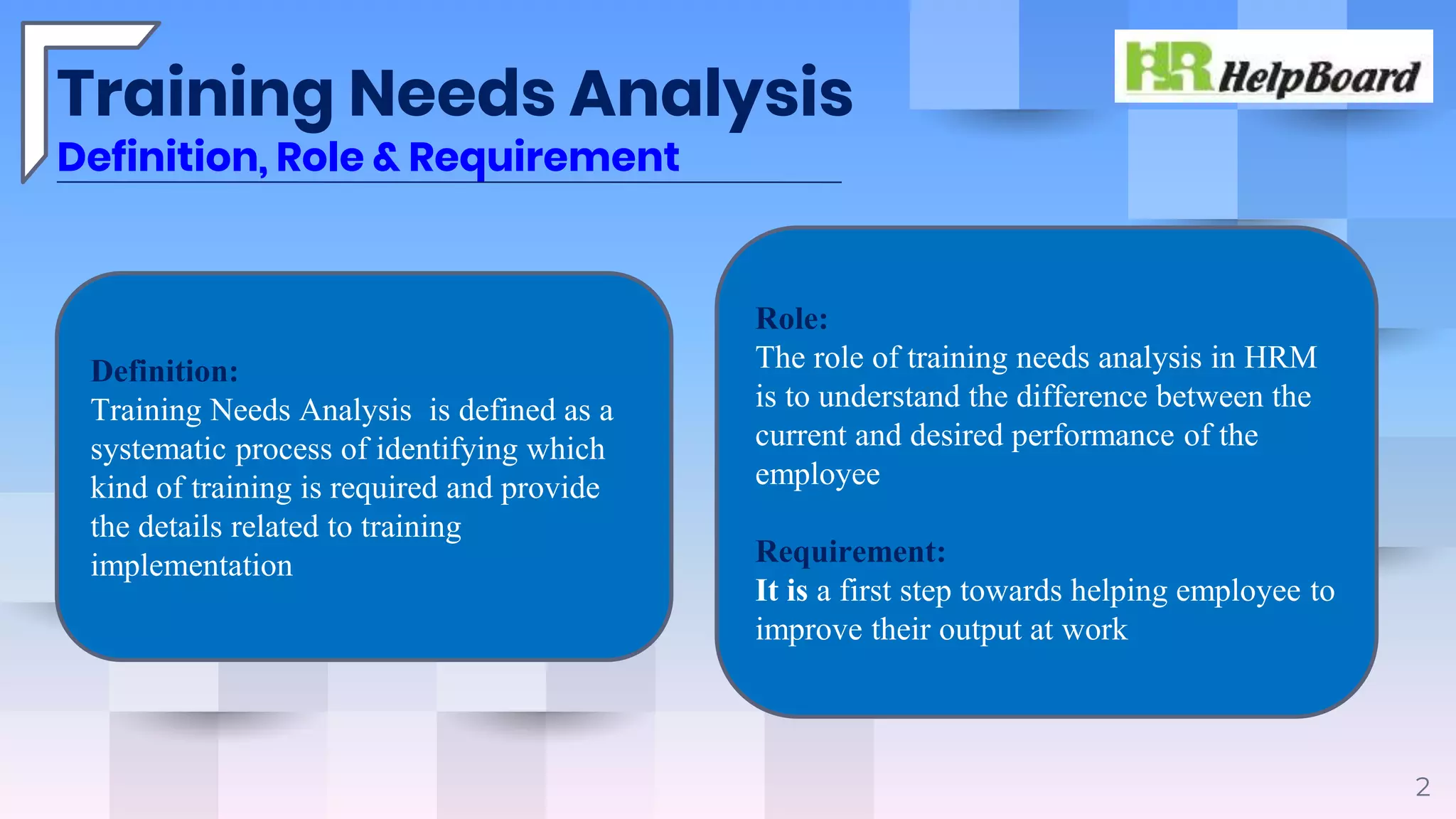
Role:
The role of training needs analysis in HRM
is to understand the difference between the
current and desired performance of the
employee
Requirement:
It is a first step towards helping employee to
improve their output at work
Definition:
Training Needs Analysis is defined as a
systematic process of identifying which
kind of training is required and provide
the details related to training
implementation
Training Needs Analysis
Methods
3
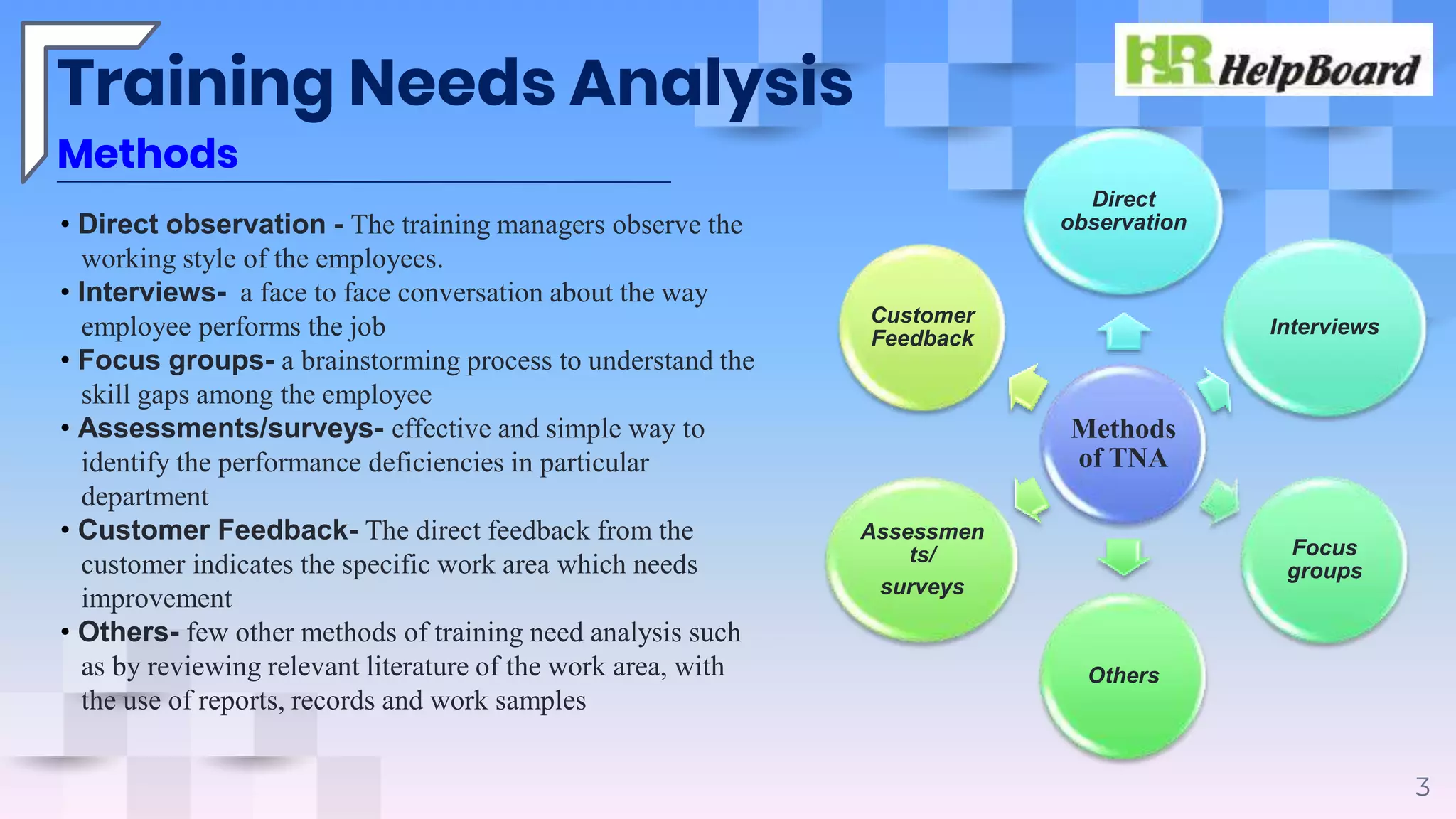
Methods
of TNA
Direct
observation
Interviews
Focus
groups
Others
Assessmen
ts/
surveys
Customer
Feedback
• Direct observation - The training managers observe the
working style of the employees.
• Interviews- a face to face conversation about the way
employee performs the job
• Focus groups- a brainstorming process to understand the
skill gaps among the employee
• Assessments/surveys- effective and simple way to
identify the performance deficiencies in particular
department
• Customer Feedback- The direct feedback from the
customer indicates the specific work area which needs
improvement
• Others- few other methods of training need analysis such
as by reviewing relevant literature of the work area, with
the use of reports, records and work samples
Training Needs Analysis
Process
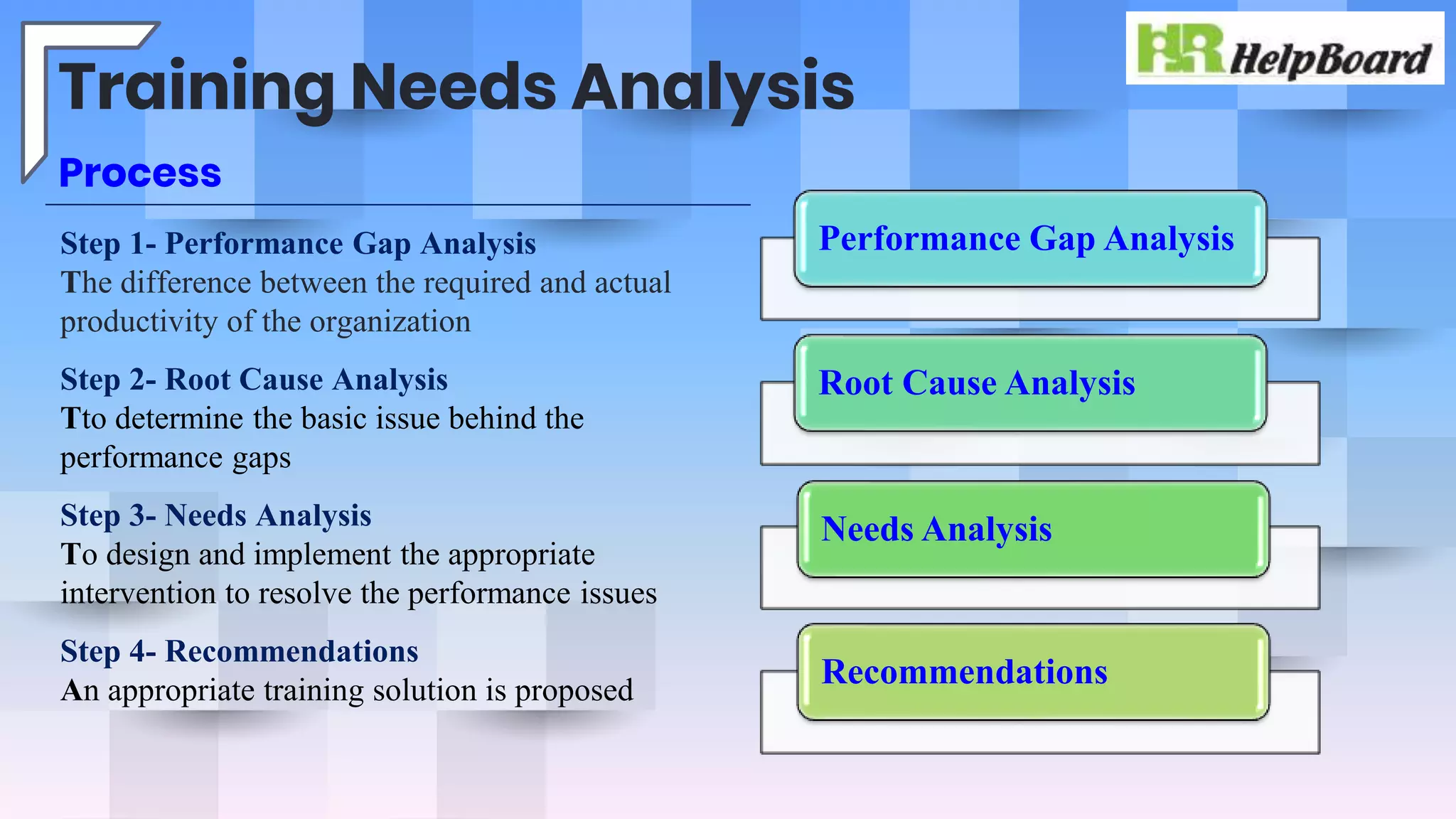
Step 1- Performance Gap Analysis
The difference between the required and actual
productivity of the organization
Step 2- Root Cause Analysis
Tto determine the basic issue behind the
performance gaps
Step 3- Needs Analysis
To design and implement the appropriate
intervention to resolve the performance issues
Step 4- Recommendations
An appropriate training solution is proposed
Performance Gap Analysis
Root Cause Analysis
Needs Analysis
Recommendations
Training Needs Analysis
Create a
appropriate
performance
benchmark
Ensure that
customer
requirement
is met
Help the
organization to
set appropriate
goals and achieve
them
Enable
employees to
evaluate their
current skill sets
Highlight the
work quality
issues in the
organization
Provide
employee
opportunity to
upgrade skills
Objectives
Training Needs Analysis
Objectives
6
Training Needs Analysis
Components
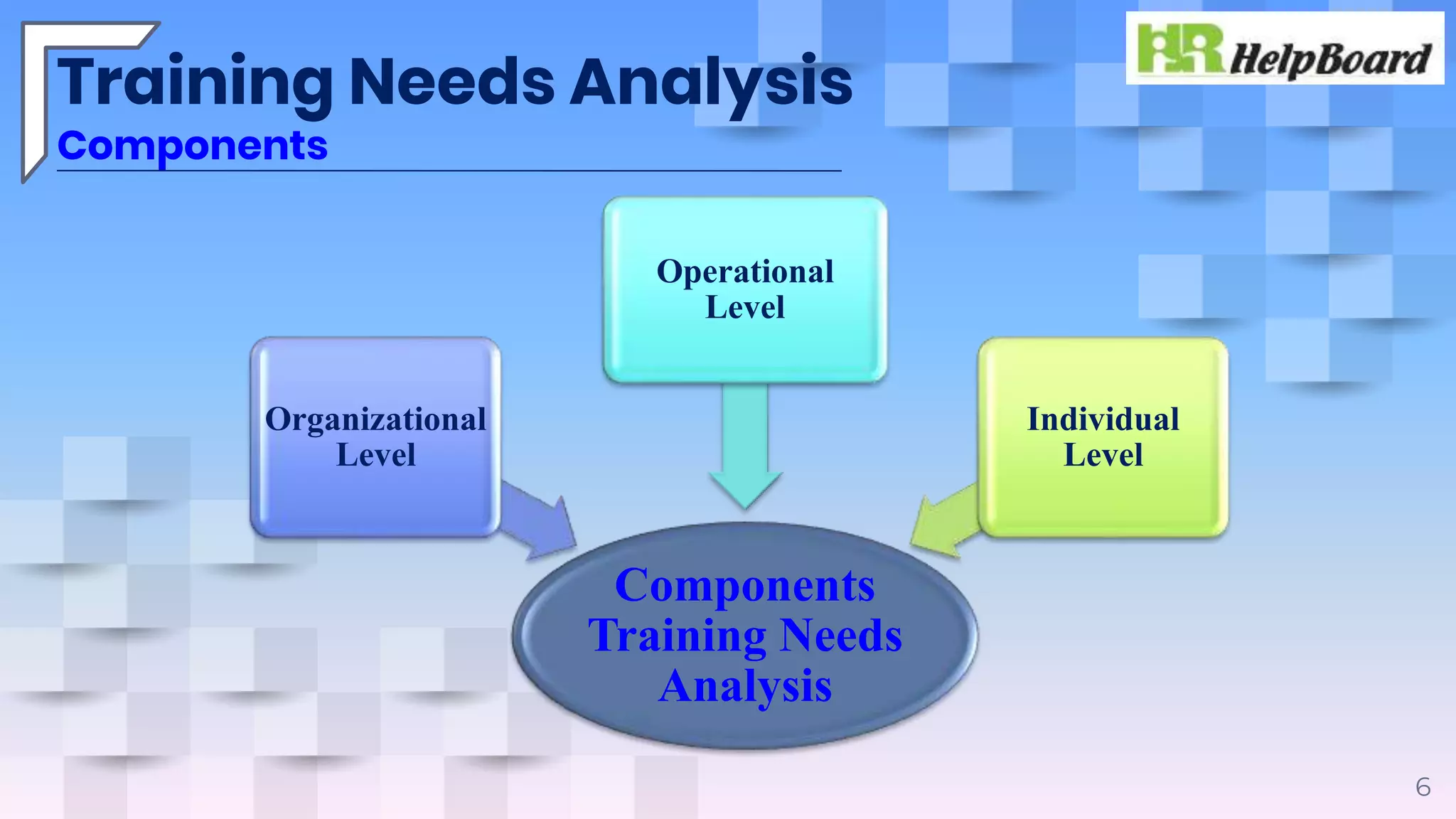
Components
Training Needs
Analysis
Organizational
Level
Operational
Level
Individual
Level
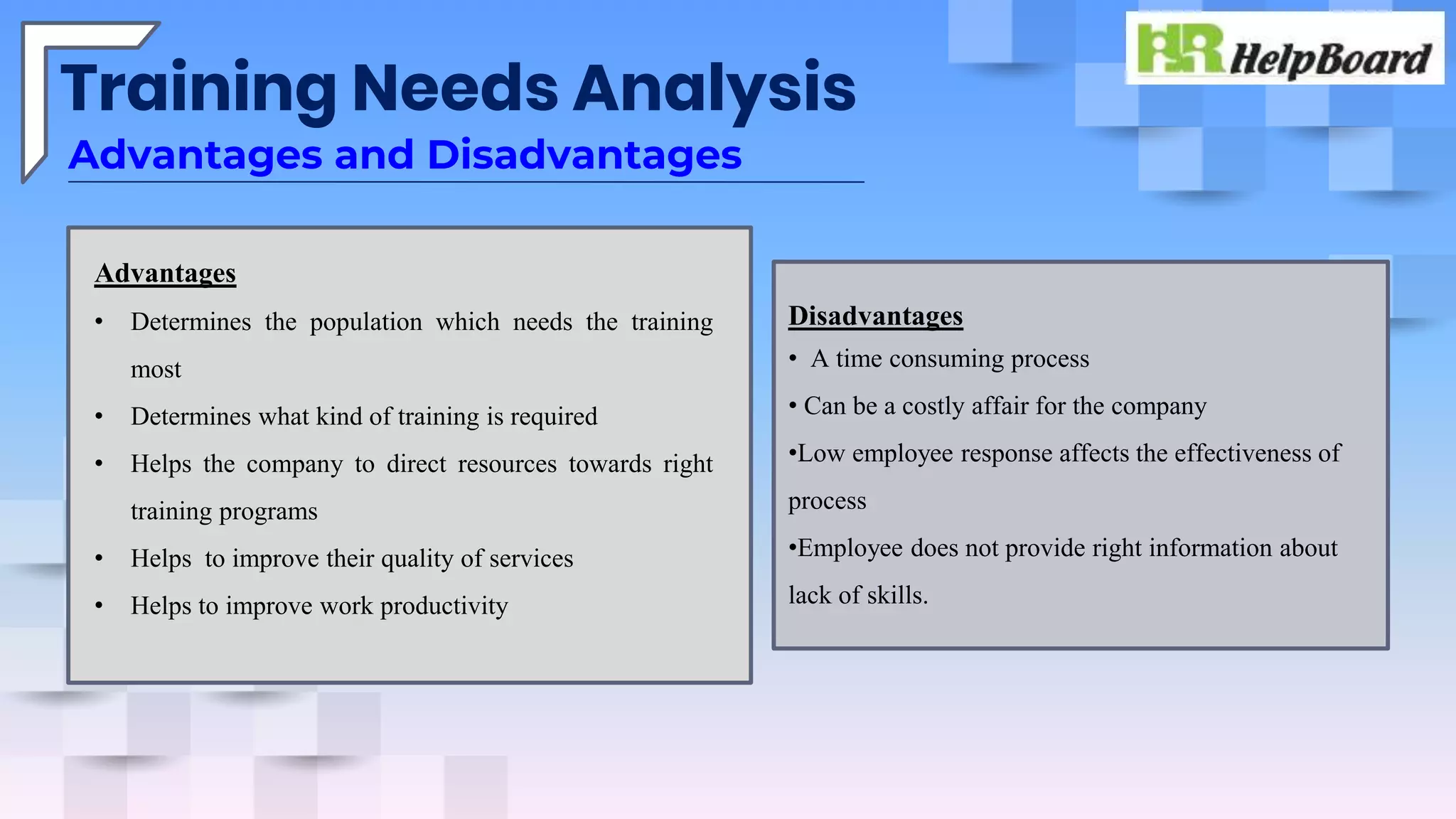
Advantages and Disadvantages
Advantages
• Determines the population which needs the training
most
• Determines what kind of training is required
• Helps the company to direct resources towards right
training programs
• Helps to improve their quality of services
• Helps to improve work productivity
Disadvantages
• A time consuming process
• Can be a costly affair for the company
•Low employee response affects the effectiveness of
process
•Employee does not provide right information about
lack of skills.
Training Needs Analysis
8
To know more about
 Training & Development
 Training & Development Process
 Training Strategy
 Training Methods and more…
Visit
Thanks you for paying attention on
Training Needs Analysis

Training Needs Analysis

  • 1.
  • 2.
    Training Needs Analysis Definition,Role & Requirement 2 Role: The role of training needs analysis in HRM is to understand the difference between the current and desired performance of the employee Requirement: It is a first step towards helping employee to improve their output at work Definition: Training Needs Analysis is defined as a systematic process of identifying which kind of training is required and provide the details related to training implementation
  • 3.
    Training Needs Analysis Methods 3 Methods ofTNA Direct observation Interviews Focus groups Others Assessmen ts/ surveys Customer Feedback • Direct observation - The training managers observe the working style of the employees. • Interviews- a face to face conversation about the way employee performs the job • Focus groups- a brainstorming process to understand the skill gaps among the employee • Assessments/surveys- effective and simple way to identify the performance deficiencies in particular department • Customer Feedback- The direct feedback from the customer indicates the specific work area which needs improvement • Others- few other methods of training need analysis such as by reviewing relevant literature of the work area, with the use of reports, records and work samples
  • 4.
    Training Needs Analysis Process Step1- Performance Gap Analysis The difference between the required and actual productivity of the organization Step 2- Root Cause Analysis Tto determine the basic issue behind the performance gaps Step 3- Needs Analysis To design and implement the appropriate intervention to resolve the performance issues Step 4- Recommendations An appropriate training solution is proposed Performance Gap Analysis Root Cause Analysis Needs Analysis Recommendations
  • 5.
    Training Needs Analysis Createa appropriate performance benchmark Ensure that customer requirement is met Help the organization to set appropriate goals and achieve them Enable employees to evaluate their current skill sets Highlight the work quality issues in the organization Provide employee opportunity to upgrade skills Objectives Training Needs Analysis Objectives
  • 6.
    6 Training Needs Analysis Components Components TrainingNeeds Analysis Organizational Level Operational Level Individual Level
  • 7.
    Advantages and Disadvantages Advantages •Determines the population which needs the training most • Determines what kind of training is required • Helps the company to direct resources towards right training programs • Helps to improve their quality of services • Helps to improve work productivity Disadvantages • A time consuming process • Can be a costly affair for the company •Low employee response affects the effectiveness of process •Employee does not provide right information about lack of skills. Training Needs Analysis
  • 8.
    8 To know moreabout  Training & Development  Training & Development Process  Training Strategy  Training Methods and more… Visit Thanks you for paying attention on Training Needs Analysis