Towards a bimodal curriculum:   changing the paradigm in the classrooms Pere Marquès (2011). UAB – DIM group http://peremarques.blogspot.com/ See too :  la praxis del currículum bimodal New culture demands new curriculum Tools always available for the " i-Person " What is the "auxiliary memory"? The development of the bimodal curriculum memorizing activities and practical activities Beyond memorizing: Bloom and skills
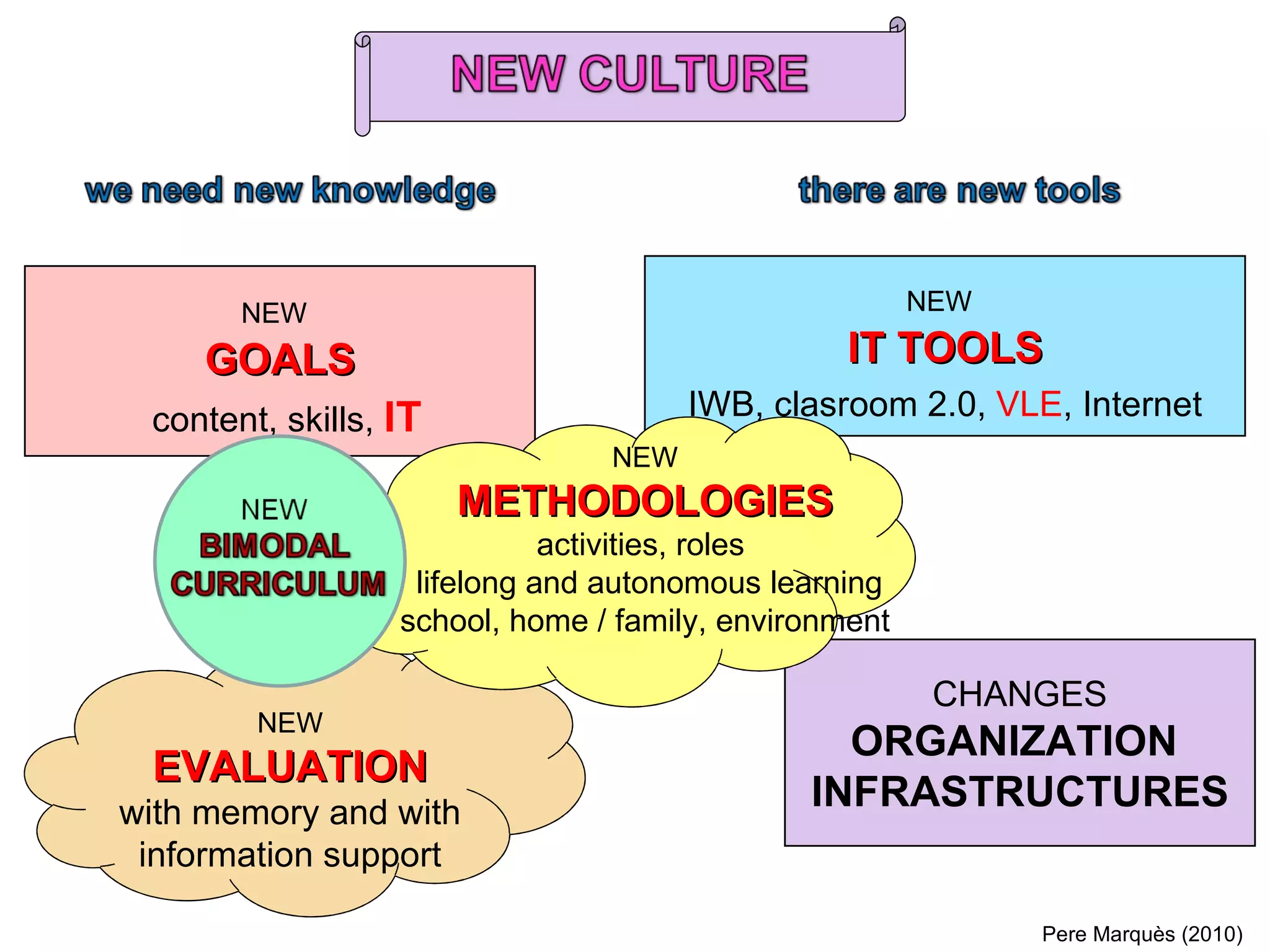
NEW   GOALS   content, skills,  IT NEW   IT TOOLS IWB, clasroom 2.0,  VLE , Internet NEW EVALUATION with memory and with information support CHANGES ORGANIZATION  INFRASTRUCTURES NEW METHODOLOGIES activities, roles   lifelong and autonomous learning school, home / family, environment Pere Marquès (2010)
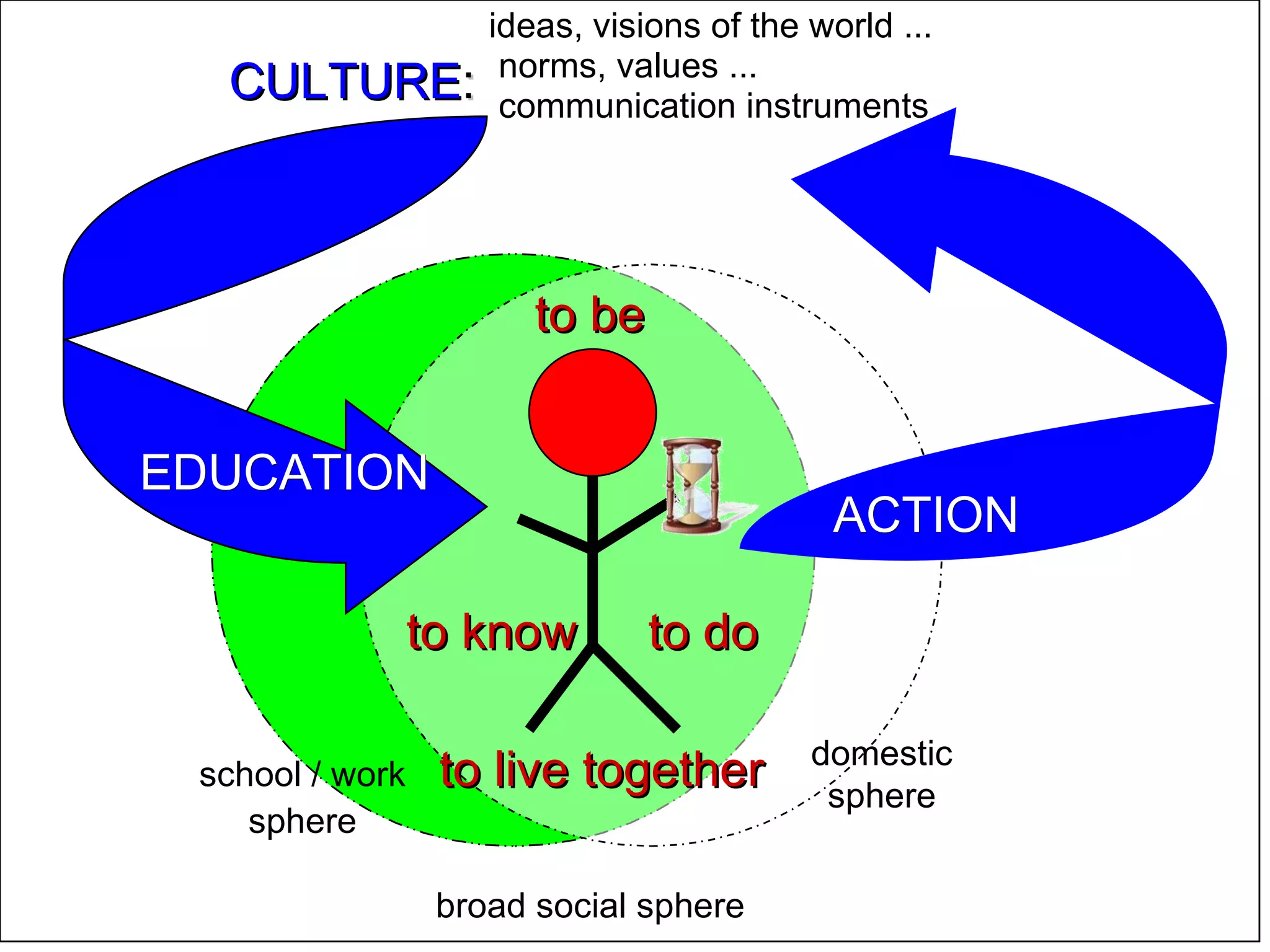
CULTURE : ideas, visions of the world ... norms, values ​​... communication instruments to live together to be to do to know domestic sphere school / work sphere broad social sphere EDUCATION ACTION
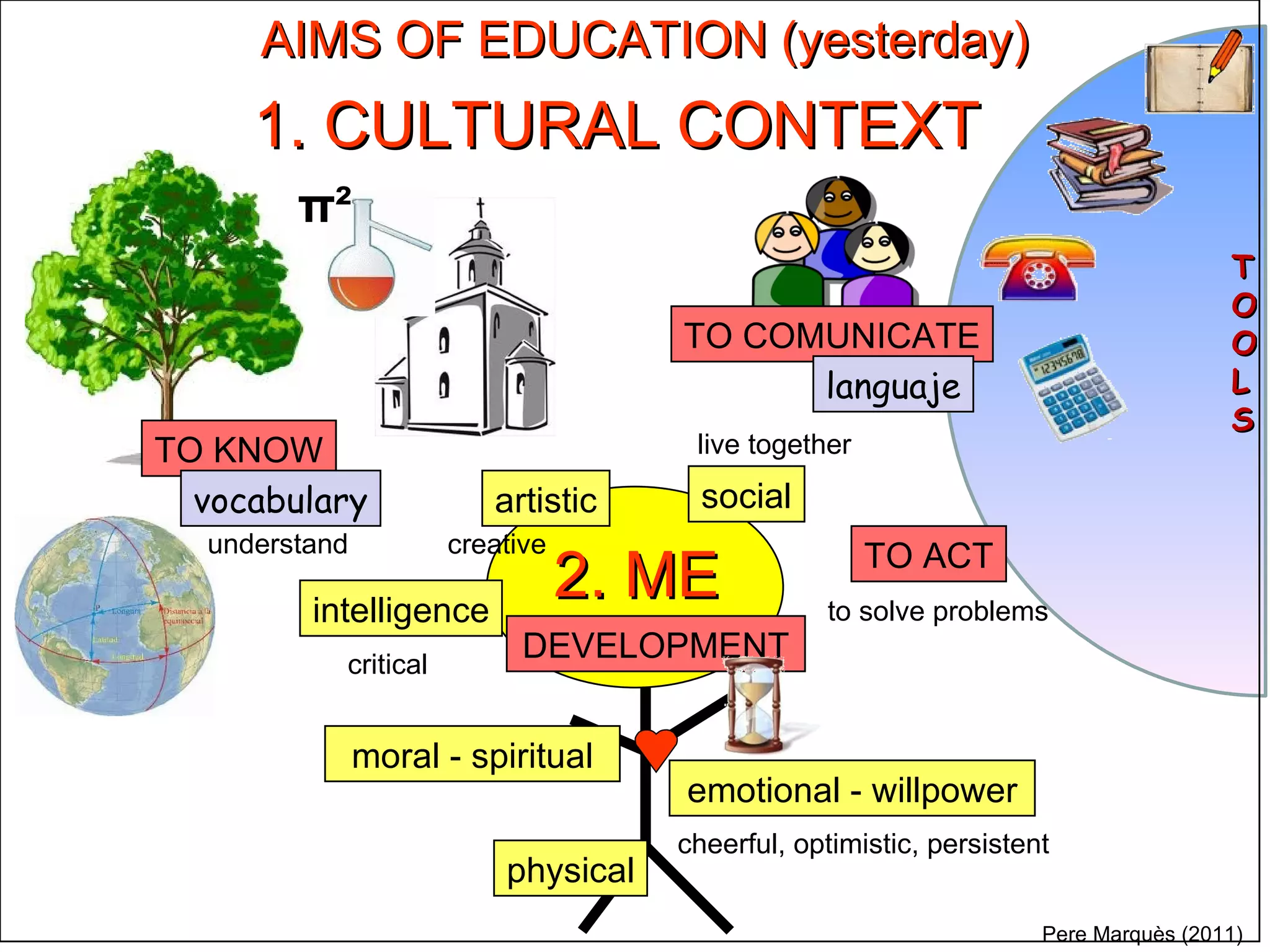
AIMS OF EDUCATION (yesterday) 1. CULTURAL CONTEXT physical emotional - willpower intelligence Pere Marquès (2011) 2. ME TO COMUNICATE TO ACT TO KNOW social artistic vocabulary understand live together to solve problems critical cheerful, optimistic, persistent moral - spiritual DEVELOPMENT languaje TOOLS creative π²
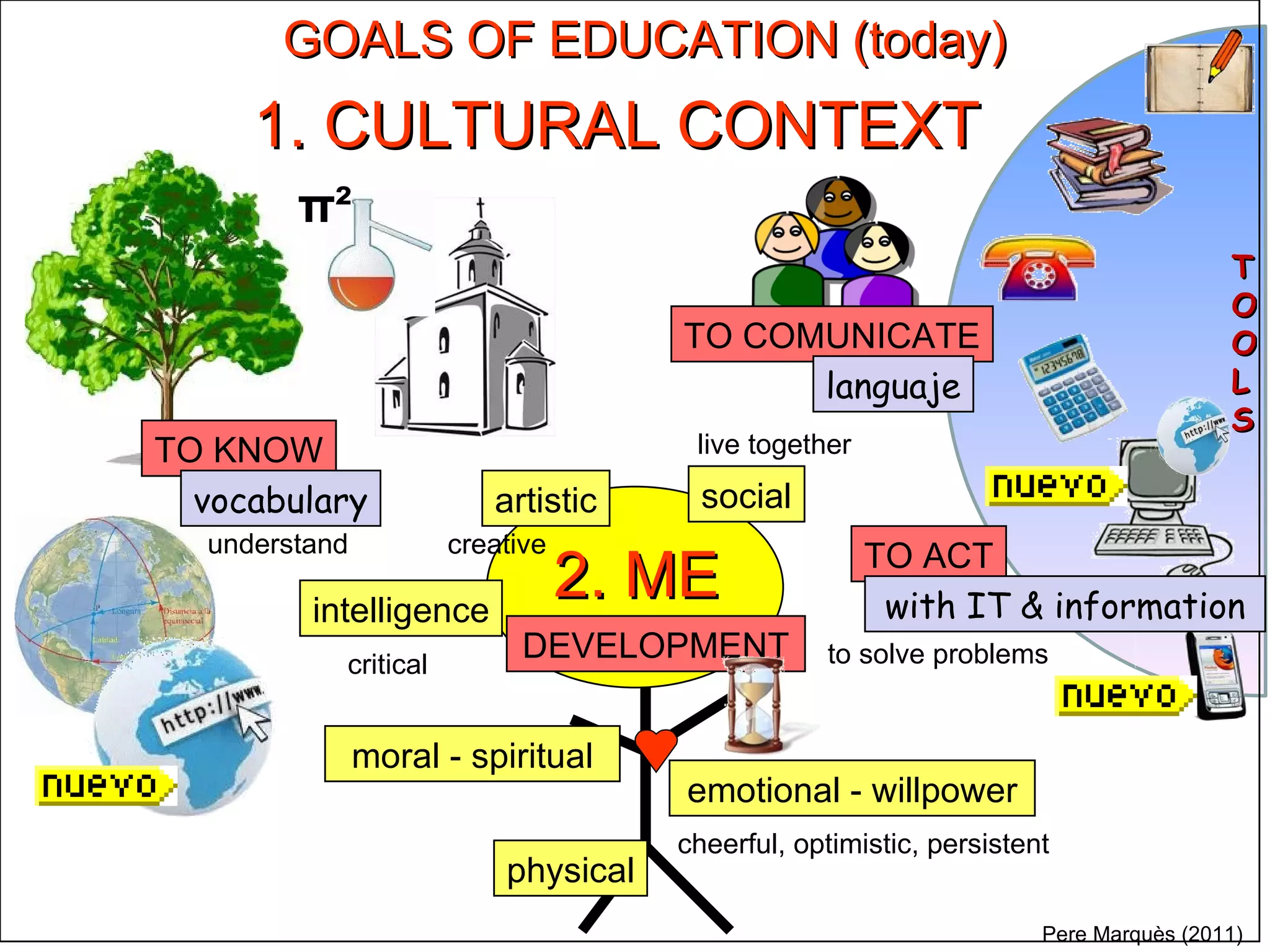
GOALS OF EDUCATION (today) 1. CULTURAL CONTEXT physical emotional - willpower intelligence Pere Marquès (2011) 2. ME TO COMUNICATE TO ACT TO KNOW social artistic vocabulary understand live together to solve problems critical cheerful, optimistic, persistent moral - spiritual DEVELOPMENT languaje TOOLS creative π² with IT & information
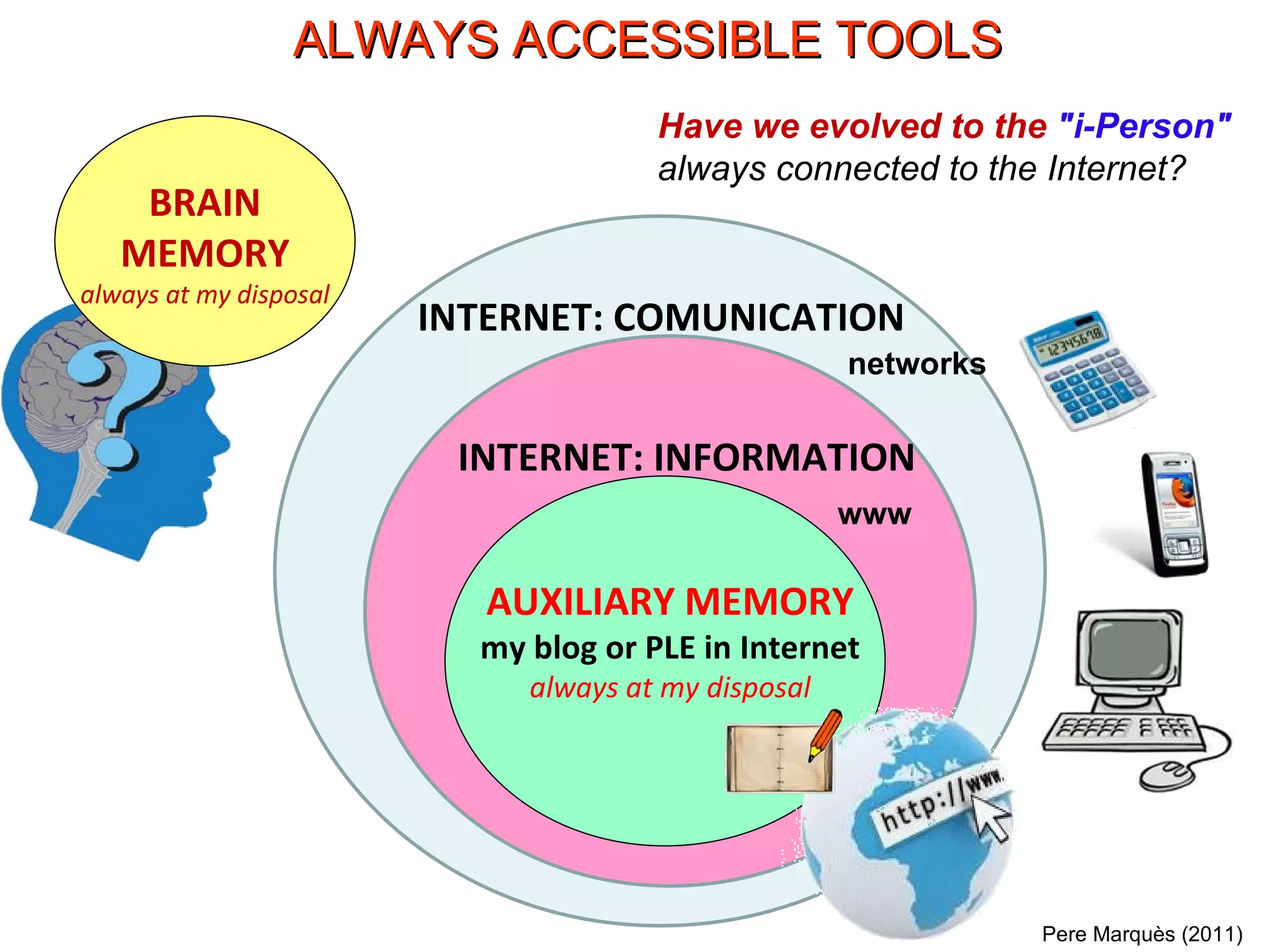
BRAIN MEMORY always at my disposal AUXILIARY MEMORY my blog or PLE in Internet always at my disposal INTERNET: INFORMATION INTERNET: COMUNICATION ALWAYS ACCESSIBLE TOOLS Pere Marquès (2011) Have we evolved to the  "i-Person"  always connected to the Internet? networks www
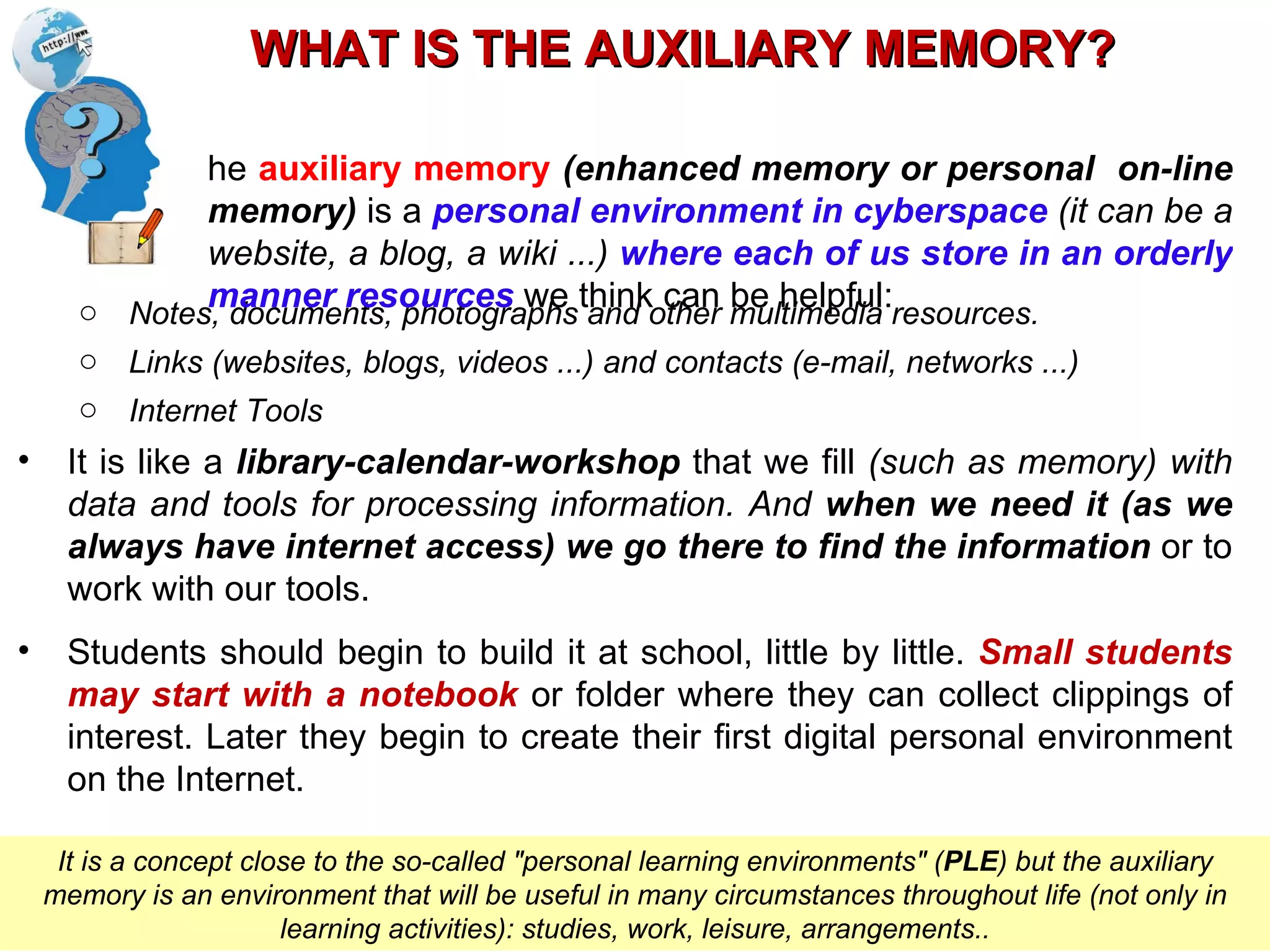
Notes, documents, photographs and other multimedia resources. Links (websites, blogs, videos ...) and contacts (e-mail, networks ...) Internet Tools It is like a  library-calendar-workshop  that we fill  (such as memory) with data and tools for processing information. And  when we need it (as we always have internet access) we go there to find the information  or to work with our tools. Students should begin to build it at school, little by little.  Small students may start with a notebook  or folder where they can collect clippings of interest. Later they begin to create their first digital personal environment on the Internet. WHAT IS THE AUXILIARY MEMORY? Pere Marquès (2011) It is a concept close to the so-called "personal learning environments" ( PLE ) but the auxiliary memory is an environment that will be useful in many circumstances throughout life (not only in learning activities): studies, work, leisure, arrangements.. The  auxiliary memory  (enhanced memory or personal  on-line memory)  is a  personal environment in cyberspace  (it can be a website, a blog, a wiki ...)   where each of us store in an orderly manner resources  we think can be helpful :
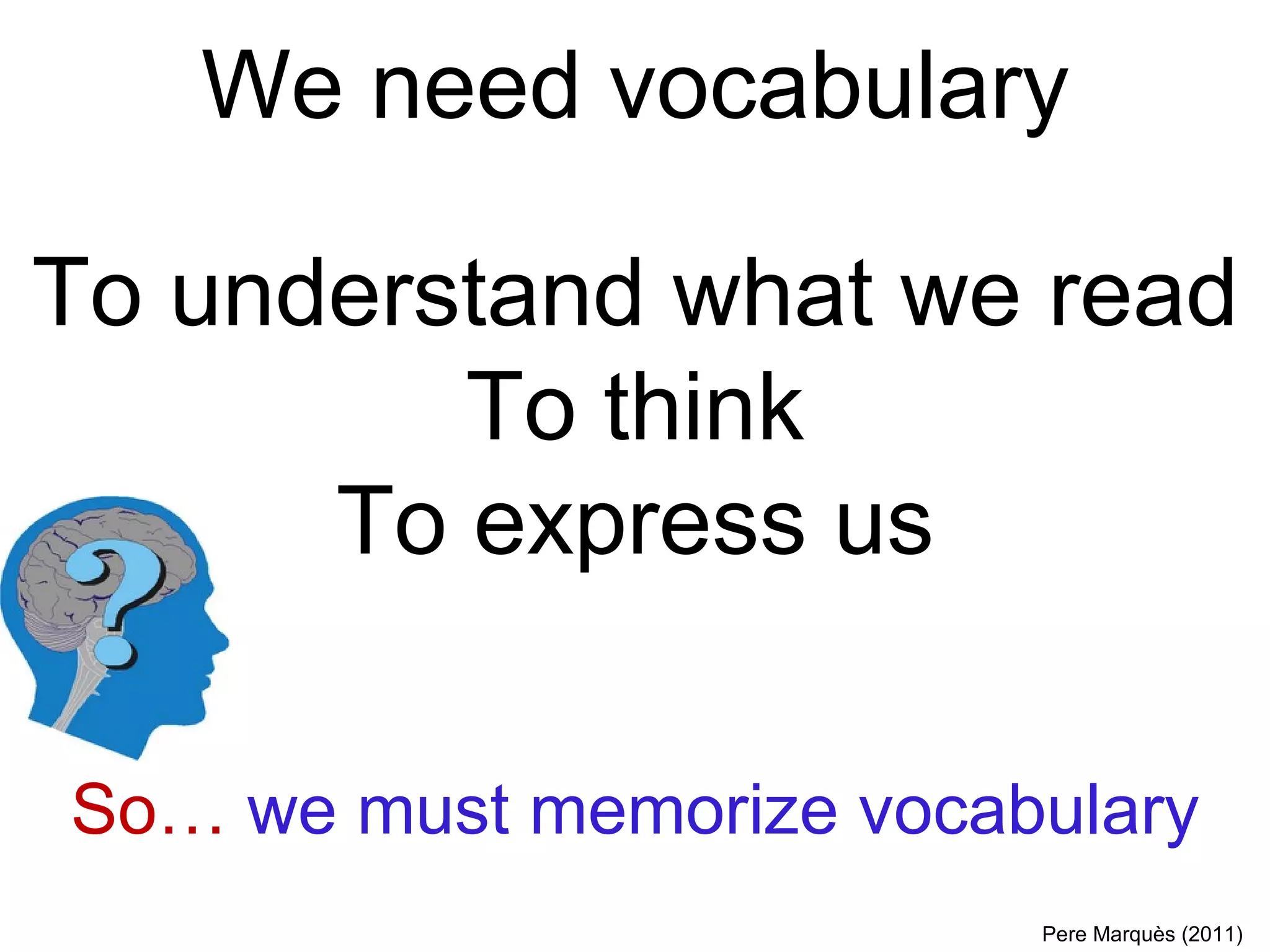
We need vocabulary To understand what we read To think To express us So…  we must memorize vocabulary Pere Marquès (2011)
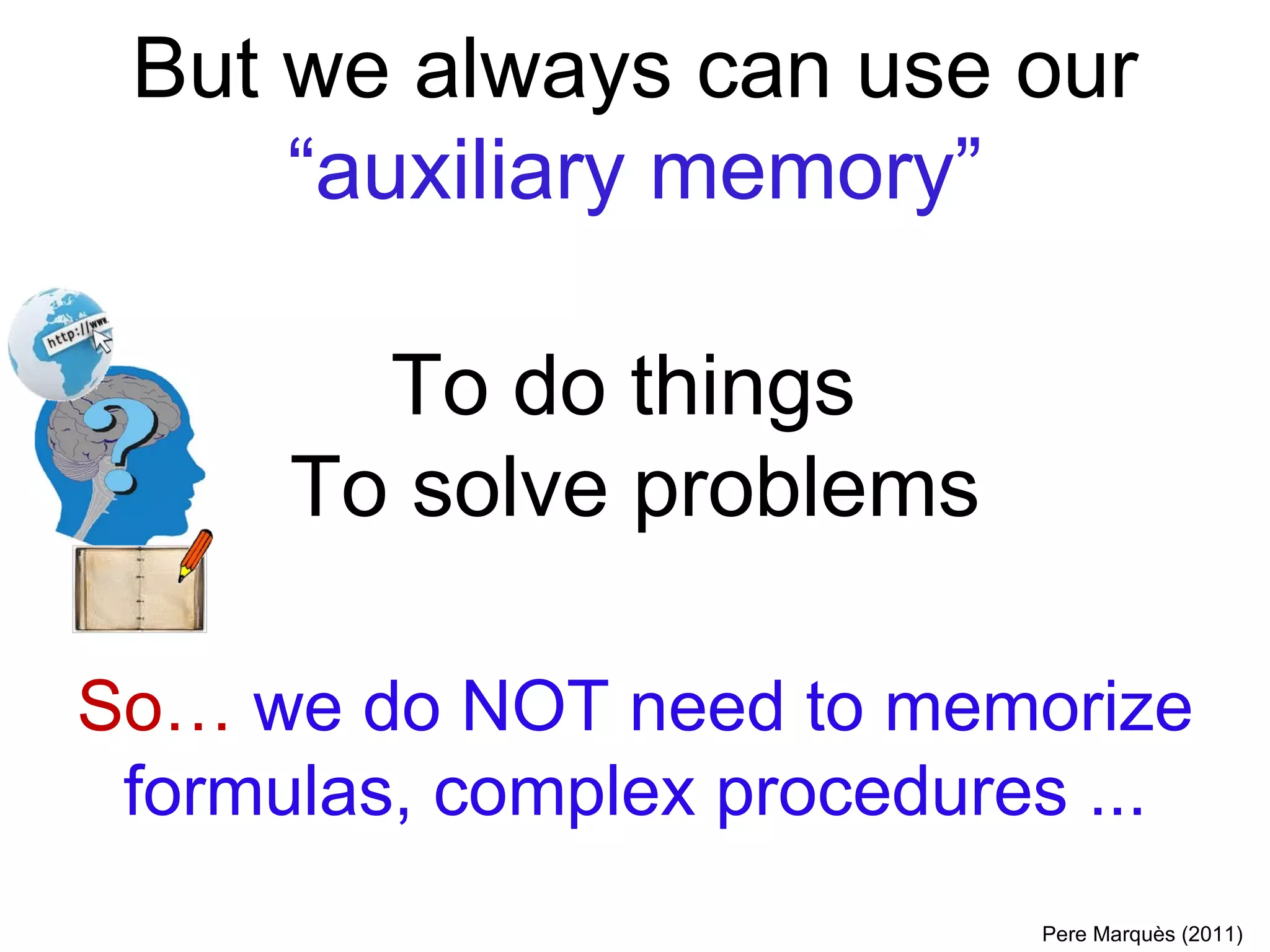
But we always can use our  “auxiliary memory” To do things  To solve problems So…  we do NOT need to memorize formulas, complex procedures ... Pere Marquès (2011)
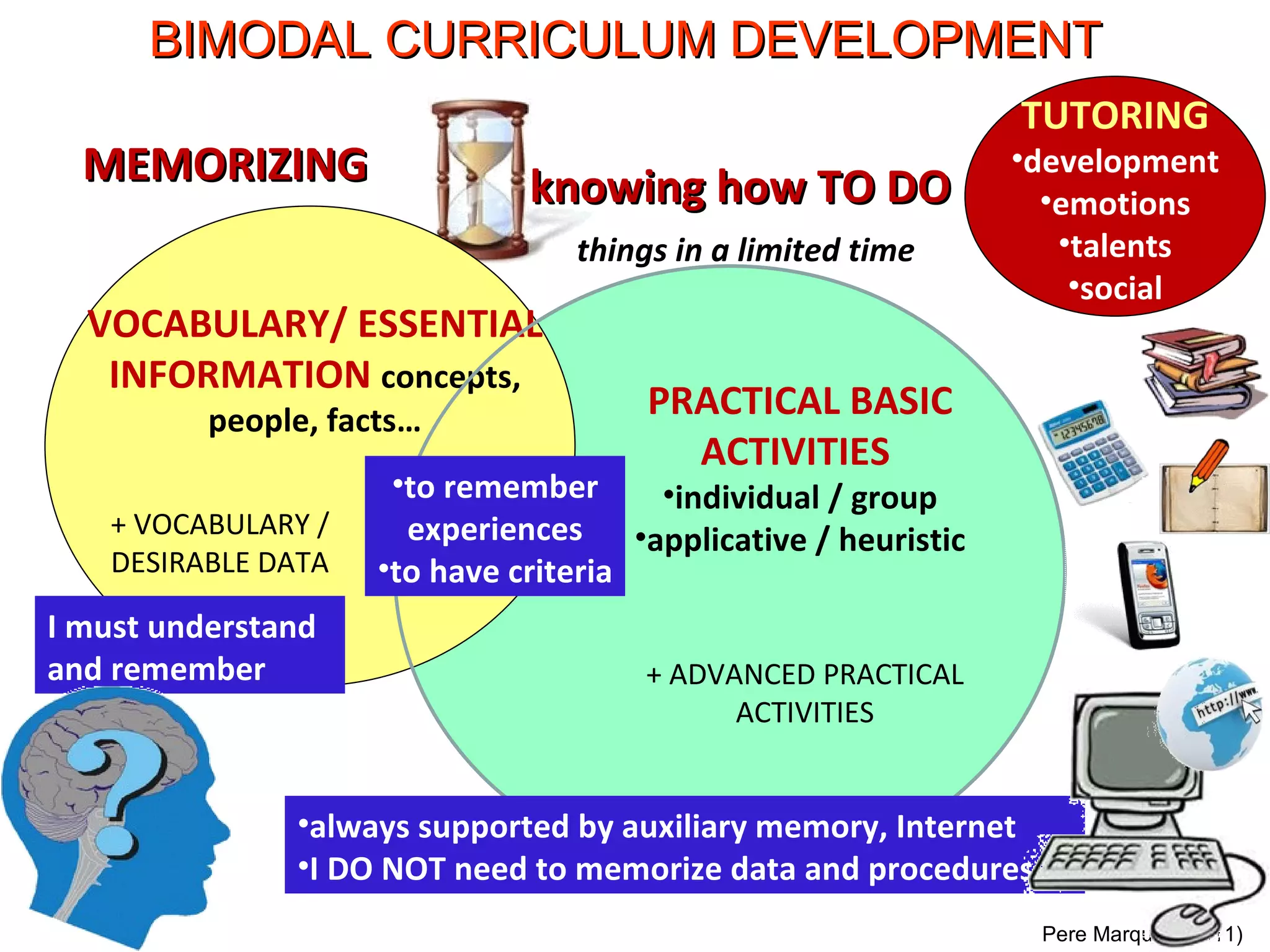
BIMODAL CURRICULUM DEVELOPMENT VOCABULARY/ ESSENTIAL INFORMATION   concepts, people, facts… PRACTICAL BASIC ACTIVITIES  individual / group applicative / heuristic I must understand and remember always supported by auxiliary memory, Internet I DO NOT need to memorize data and procedures + VOCABULARY / DESIRABLE DATA +  ADVANCED PRACTICAL ACTIVITIES MEMORIZING knowing how TO DO   things in a limited time TUTORING development emotions talents social to remember experiences to have criteria Pere Marquès (2011)
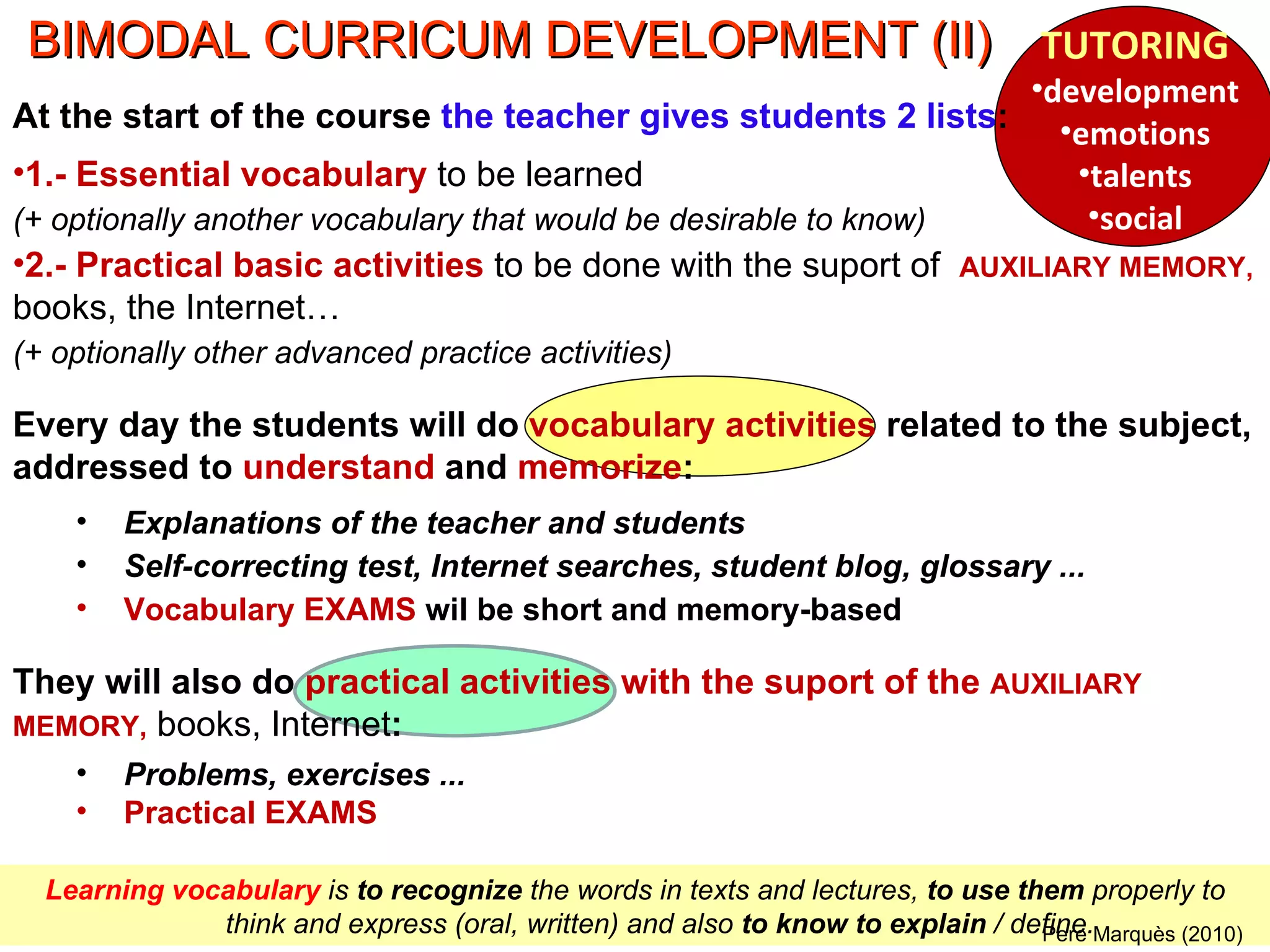
Learning vocabulary  is  to recognize  the words in texts and lectures,  to use them  properly to think and express (oral, written) and also  to know to explain  / define. Pere Marquès (2010) BIMODAL CURRICUM DEVELOPMENT (II) TUTORING development emotions talents social At the start of the course  the teacher gives students 2 lists : 1.- Essential vocabulary  to be learned (+ optionally another vocabulary that would be desirable to know) 2.- Practical basic activities  to be done with the suport of  AUXILIARY MEMORY,   books, the Internet…  (+ optionally other advanced practice activities) Every day the students will do  vocabulary activities  related to the subject, addressed to  understand  and  memorize : Explanations of the teacher and students Self-correcting test, Internet searches, student blog, glossary ... Vocabulary EXAMS  wil be short and memory-based They will also do  practical activities with the suport of the  AUXILIARY MEMORY,   books, Internet : Problems, exercises ... Practical EXAMS
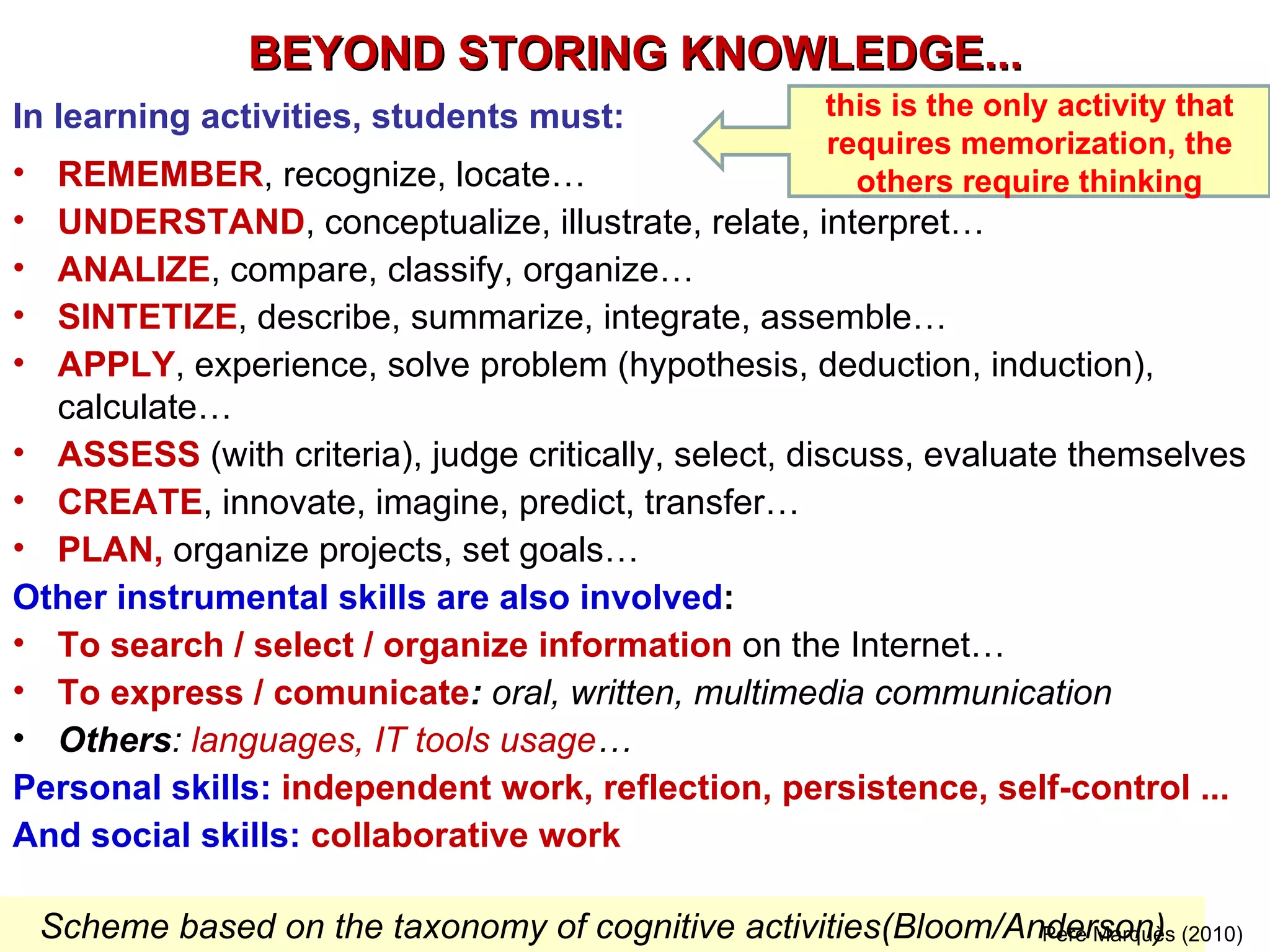
BEYOND STORING KNOWLEDGE... In learning activities, students must: REMEMBER , recognize, locate…  UNDERSTAND , conceptualize, illustrate, relate, interpret… ANALIZE , compare, classify, organize… SINTETIZE , describe, summarize, integrate, assemble… APPLY , experience, solve problem (hypothesis, deduction, induction), calculate… ASSESS  (with criteria), judge critically, select, discuss, evaluate themselves CREATE , innovate, imagine, predict, transfer… PLAN,  organize projects, set goals… Other instrumental skills are also involved : To search / select / organize information  on the Internet…  To express / comunicate :  oral, written, multimedia communication Others :  languages, IT tools usage … Personal skills:  independent work, reflection, persistence, self-control ... And social skills:  collaborative work Scheme based on the taxonomy of cognitive activities (Bloom/Anderson) Pere Marquès (2010) this is the only activity that requires memorization, the others require thinking
La praxis del currículum bimodal ¿Qué es el currículum bimodal? Hacia un desarrollo curricular bimodal ¿Podemos mejorar con las TIC los resultados académicos? Recetas para reducir el fracaso escolar:  pon exámenes más fáciles  Recetas para reducir el fracaso escolar : yo soy yo y mi ordenador  Nuevas técnicas contra el fracaso escolar Principios de aprendizaje y de enseñanza Investigación DIM-Fundación Telefónica  sobre currículum bimodal y contra el fracaso escolar  (2011-2013) CHISPAS TIC Y EDUCACIÓN Tecnología educativa. Web de Pere Marquès Grupo de investigación DIM-UAB PD Pere Marquès (2008) MORE INFO ...

Towards a bimodal curriculum

  • 1.
    Towards a bimodalcurriculum: changing the paradigm in the classrooms Pere Marquès (2011). UAB – DIM group http://peremarques.blogspot.com/ See too : la praxis del currículum bimodal New culture demands new curriculum Tools always available for the " i-Person " What is the "auxiliary memory"? The development of the bimodal curriculum memorizing activities and practical activities Beyond memorizing: Bloom and skills
  • 2.
    NEW GOALS content, skills, IT NEW IT TOOLS IWB, clasroom 2.0, VLE , Internet NEW EVALUATION with memory and with information support CHANGES ORGANIZATION INFRASTRUCTURES NEW METHODOLOGIES activities, roles lifelong and autonomous learning school, home / family, environment Pere Marquès (2010)
  • 3.
    CULTURE : ideas,visions of the world ... norms, values ​​... communication instruments to live together to be to do to know domestic sphere school / work sphere broad social sphere EDUCATION ACTION
  • 4.
    AIMS OF EDUCATION(yesterday) 1. CULTURAL CONTEXT physical emotional - willpower intelligence Pere Marquès (2011) 2. ME TO COMUNICATE TO ACT TO KNOW social artistic vocabulary understand live together to solve problems critical cheerful, optimistic, persistent moral - spiritual DEVELOPMENT languaje TOOLS creative π²
  • 5.
    GOALS OF EDUCATION(today) 1. CULTURAL CONTEXT physical emotional - willpower intelligence Pere Marquès (2011) 2. ME TO COMUNICATE TO ACT TO KNOW social artistic vocabulary understand live together to solve problems critical cheerful, optimistic, persistent moral - spiritual DEVELOPMENT languaje TOOLS creative π² with IT & information
  • 6.
    BRAIN MEMORY alwaysat my disposal AUXILIARY MEMORY my blog or PLE in Internet always at my disposal INTERNET: INFORMATION INTERNET: COMUNICATION ALWAYS ACCESSIBLE TOOLS Pere Marquès (2011) Have we evolved to the "i-Person" always connected to the Internet? networks www
  • 7.
    Notes, documents, photographsand other multimedia resources. Links (websites, blogs, videos ...) and contacts (e-mail, networks ...) Internet Tools It is like a library-calendar-workshop that we fill (such as memory) with data and tools for processing information. And when we need it (as we always have internet access) we go there to find the information or to work with our tools. Students should begin to build it at school, little by little. Small students may start with a notebook or folder where they can collect clippings of interest. Later they begin to create their first digital personal environment on the Internet. WHAT IS THE AUXILIARY MEMORY? Pere Marquès (2011) It is a concept close to the so-called "personal learning environments" ( PLE ) but the auxiliary memory is an environment that will be useful in many circumstances throughout life (not only in learning activities): studies, work, leisure, arrangements.. The auxiliary memory (enhanced memory or personal on-line memory) is a personal environment in cyberspace (it can be a website, a blog, a wiki ...) where each of us store in an orderly manner resources we think can be helpful :
  • 8.
    We need vocabularyTo understand what we read To think To express us So… we must memorize vocabulary Pere Marquès (2011)
  • 9.
    But we alwayscan use our “auxiliary memory” To do things To solve problems So… we do NOT need to memorize formulas, complex procedures ... Pere Marquès (2011)
  • 10.
    BIMODAL CURRICULUM DEVELOPMENTVOCABULARY/ ESSENTIAL INFORMATION concepts, people, facts… PRACTICAL BASIC ACTIVITIES individual / group applicative / heuristic I must understand and remember always supported by auxiliary memory, Internet I DO NOT need to memorize data and procedures + VOCABULARY / DESIRABLE DATA + ADVANCED PRACTICAL ACTIVITIES MEMORIZING knowing how TO DO things in a limited time TUTORING development emotions talents social to remember experiences to have criteria Pere Marquès (2011)
  • 11.
    Learning vocabulary is to recognize the words in texts and lectures, to use them properly to think and express (oral, written) and also to know to explain / define. Pere Marquès (2010) BIMODAL CURRICUM DEVELOPMENT (II) TUTORING development emotions talents social At the start of the course the teacher gives students 2 lists : 1.- Essential vocabulary to be learned (+ optionally another vocabulary that would be desirable to know) 2.- Practical basic activities to be done with the suport of AUXILIARY MEMORY, books, the Internet… (+ optionally other advanced practice activities) Every day the students will do vocabulary activities related to the subject, addressed to understand and memorize : Explanations of the teacher and students Self-correcting test, Internet searches, student blog, glossary ... Vocabulary EXAMS wil be short and memory-based They will also do practical activities with the suport of the AUXILIARY MEMORY, books, Internet : Problems, exercises ... Practical EXAMS
  • 12.
    BEYOND STORING KNOWLEDGE...In learning activities, students must: REMEMBER , recognize, locate… UNDERSTAND , conceptualize, illustrate, relate, interpret… ANALIZE , compare, classify, organize… SINTETIZE , describe, summarize, integrate, assemble… APPLY , experience, solve problem (hypothesis, deduction, induction), calculate… ASSESS (with criteria), judge critically, select, discuss, evaluate themselves CREATE , innovate, imagine, predict, transfer… PLAN, organize projects, set goals… Other instrumental skills are also involved : To search / select / organize information on the Internet… To express / comunicate : oral, written, multimedia communication Others : languages, IT tools usage … Personal skills: independent work, reflection, persistence, self-control ... And social skills: collaborative work Scheme based on the taxonomy of cognitive activities (Bloom/Anderson) Pere Marquès (2010) this is the only activity that requires memorization, the others require thinking
  • 13.
    La praxis delcurrículum bimodal ¿Qué es el currículum bimodal? Hacia un desarrollo curricular bimodal ¿Podemos mejorar con las TIC los resultados académicos? Recetas para reducir el fracaso escolar: pon exámenes más fáciles Recetas para reducir el fracaso escolar : yo soy yo y mi ordenador Nuevas técnicas contra el fracaso escolar Principios de aprendizaje y de enseñanza Investigación DIM-Fundación Telefónica sobre currículum bimodal y contra el fracaso escolar (2011-2013) CHISPAS TIC Y EDUCACIÓN Tecnología educativa. Web de Pere Marquès Grupo de investigación DIM-UAB PD Pere Marquès (2008) MORE INFO ...