Objectives Chapter 1
1. Define the term anatomy and discuss its subdivisions:
1. Gross anatomy: regional anatomy, systemic anatomy,
surface anatomy
2. Microscopic anatomy: cytology, histology
3. Developmental anatomy: embryology, fetology
4. Pathological anatomy
5. Radiographic anatomy: X ray, computed tomography,
magnetic resonance imaging, positron emisision
tomography, ultrasound
1
Anatomy and Physiology
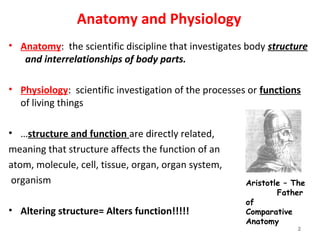
• Anatomy: the scientific discipline that investigates body structure
and interrelationships of body parts.
• Physiology: scientific investigation of the processes or functions
of living things
• …structure and function are directly related,
meaning that structure affects the function of an
atom, molecule, cell, tissue, organ, organ system,
organism
• Altering structure= Alters function!!!!!
2
Aristotle – The
Father
of
Comparative
Anatomy
Anatomy & Physiology
1.To study anatomy:
– Mastery of anatomical
terminology
– Observation
– Manipulation
– Palpation
– Auscultation
2.To study physiology:
– Ability to focus at many levels
(from systemic to cellular and
molecular)
– Study of basic physical
principles (e.g., electrical
currents, pressure, and
mechanical movement)
– Study of basic chemical
principles
3
4.Radiographic Anatomy
-X ray
-computed axial tomography
-positron emission tomography
-magnetic resonance imaging
-ultrasound imaging
Subdivisions of Anatomy Anatomy
5.Pathological
Anatomy
1. Gross Anatomy
-regional
-systemic
-surface
2. Developmental Anatomy
-embryology
-teratology
3.Microscopic Anatomy
-cytology
-histology
4
Gross
Anatomy:
anatomical study of structures that are large
enough to be seen without magnification
Includes:
examination of all structures found within a
particular region of the body
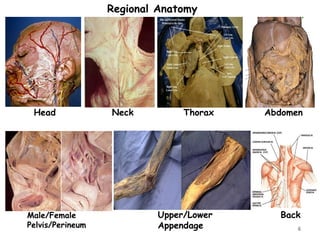
1. Regional Anatomy:
2. Systemic
Anatomy:
examination of all structures within a
particular system of the body
3. Surface anatomy:
the study of internal structures as they relate
to the body surface
5
Head Neck
Regional Anatomy
Thorax Abdomen
Male/Female
Pelvis/Perineum
Upper/Lower
Appendage
Back
6
Systemic Anatomy:
A body system consists of structures that are all
concerned with carrying out a specific function of the body
7
Figure 1.3 The body’s organ systems and their major functions. (1 of 2)
Skeletal
muscles
Bones
Joint
Nails
Hair
Skin
Brain
Nerves
Spinal
cord
Pineal gland
Pituitary
glandThyroid
gland
Thymus
Adrenal
gland
Pancreas
Ovary
Testis
Blood
vessels
Heart
Skeletal System
Protects and supports body organs,
and provides a framework the muscles
use to cause movement. Blood cells
are formed within bones. Bones store
minerals.
Integumentary System
Forms the external body covering,
and protects deeper tissues from injury.
Synthesizes vitamin D, and houses
cutaneous (pain, pressure, etc.)
receptors and sweat and oil glands.
Muscular System
Allows manipulation of the environment,
locomotion, and facial expression.
Maintains posture, and produces heat.
Cardiovascular System
Blood vessels transport blood,
which carries oxygen, carbon dioxide,
nutrients, wastes, etc. The heart
pumps blood.
Endocrine System
Glands secrete hormones that
regulate processes such as growth,
reproduction, and nutrient use
(metabolism) by body cells.
Nervous System
As the fast-acting control system of
the body, it responds to internal and
external changes by activating
appropriate muscles and glands.
8
Figure 1.3 The body’s organ systems and their major functions. (2 of 2)
Male Reproductive
System
Overall function is production of offspring.
Testes produce sperm and male sex hormone,
and male ducts and glands aid in delivery of
sperm to the female reproductive
tract.
Mammary
glands (in
breasts)
Ovary
Uterine
tube
Uterus
Vagina
Prostate
gland
Ductus
deferens
Scrotum
Penis
Testis
Kidney
Ureter
Urinary
bladder
Urethra
Red bone
marrow
Thymus
Lymphatic
vessels
Thoracic
duct
Spleen
Lymph nodes
Lung
Trachea
Larynx Bronchus
Nasal
cavity
Pharynx
Oral cavity
Esophagus
Liver
Large
intestine
Rectum
Anus
Small
intestine
Stomach
Lymphatic System/Immunity
Picks up fluid leaked from blood vessels
and returns it to blood. Disposes
of debris in the lymphatic stream.
Houses white blood cells (lymphocytes)
involved in immunity. The immune
response mounts the attack against
foreign substances within the body.
Respiratory System
Keeps blood constantly supplied with
oxygen and removes carbon dioxide.
The gaseous exchanges occur through
the walls of the air sacs of the lungs.
Digestive System
Breaks down food into absorbable units
that enter the blood for distribution to
body cells. Indigestible foodstuffs are
eliminated as feces.
Urinary System
Eliminates nitrogenous wastes from the
body. Regulates water, electrolyte and
acid-base balance of the blood.
Female Reproductive System
Ovaries produce eggs and female sex hormones. The remaining
female structures serve as sites for fertilization and
development of the fetus. Mammary glands of female
breasts produce milk to nourish the newborn. 9
Surface anatomy:
Auscultatory Areas for heart
sounds
Relationship of lungs to Anterior
Thoracic wall
Auscultation: listening to sounds from the heart, lungs, or
other organs, typically with a stethoscope
the study of internal structures as they relate
to the body surface
10
Microscopic anatomy:
*Different approaches to microscopic anatomy include cytology and
histology
anatomical study of structures that need
magnification in order to be seen
11
Squamous Cells Adipose CellSkeletal Muscle Cells
Cytology: the study of the specific cell types of the body
Cell is the smallest living structure
Characteristics of life: maintaining boundaries, movement,
irritability, metabolism,
reproduction and growth
A cell culture contains only 1 cell type!!!!!
12
Histology: the study of the tissues of the body
a tissue is composed of a group of two or more cells
that have a common function
there are four classes of tissues in the body:
Muscle
Tissue
Nerve
Tissue
Connective
tissue
Epithelial
tissue
13
Developmental Anatomy:
14
the study of structural changes that occur
from conception through old age
Developmental Anatomy:
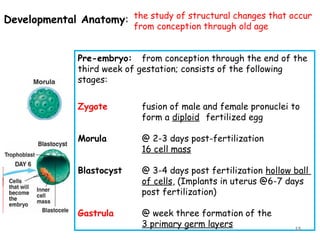
Pre-embryo: from conception through the end of the
third week of gestation; consists of the following
stages:
Zygote fusion of male and female pronuclei to
form a diploid fertilized egg
Morula @ 2-3 days post-fertilization
16 cell mass
Blastocyst @ 3-4 days post fertilization hollow ball
of cells, (Implants in uterus @6-7 days
post fertilization)
Gastrula @ week three formation of the
3 primary germ layers 15
Three primary germ layers formed during Gastrulation:
Ectoderm – nervous system, skin
Mesoderm – muscle, connective tissues
Endoderm – epithelial lining of digestive, respiratory, and urogenital
systems and associated glands
ectoderm
endoderm
mesoderm
16
Embryology (embryo): 4th
-8th
weeks of gestation; period
of organ system morphogenesis
Fetology (fetus): 9th week of gestation to birth; growth
and differentiation of tissues and organ
systems
Embryo at 8 Weeks Fetus at 14 Weeks
17
Pathological anatomy:
Rheumatoid arthritis
study of structural changes
that occur during a disease process (anatomic pathology)
Scoliosis
18
Cleft Palate
Imaging Techniques
• Radiography
• Ultrasound (US)
• Computed Tomography (CT)
• Dynamic Spatial Reconstruction (DSR)
• Digital Subtraction Angiography (DSA)
• Magnetic Resonance Imaging (MRI)
• Positron Emission Tomography (PET)
Radiographic anatomy: study of the structures of the
body using various imaging techniques
19
•Radiography (X-ray): Shadowy negative of
internal body structures
X Ray: a band of radiation passes through the body to a
film or a fluorescent screen
20
PATIENT Right PATIENT Left
21
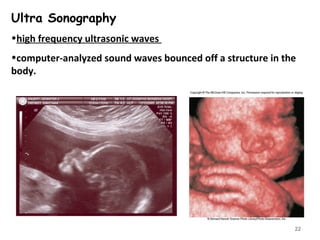
Ultra Sonography
•high frequency ultrasonic waves
•computer-analyzed sound waves bounced off a structure in the
body.
22
Computed Axial Tomography (CAT or CT scan)
• an X ray source is rotated in a circle around the body
• a computer interprets the data and generates 3D-images
23
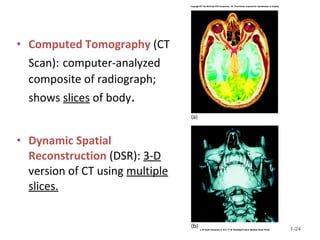
• Computed Tomography (CT
Scan): computer-analyzed
composite of radiograph;
shows slices of body.
• Dynamic Spatial
Reconstruction (DSR): 3-D
version of CT using multiple
slices.
1-24
•Digital Subtraction Angiography
(DSA): comparison of radiographs with
and without dye. Used in blood vessel
studies.
•Magnetic Resonance Imaging
(MRI): uses magnetism and radio
waves to look for varying alignment of
protons in soft tissues.
25
Magnetic Resonance Imaging (MRI)
A magnetic field induces hydrogen
atoms, which normally spin in random
directions, to align
When the magnetic field is turned
off, the atoms return to random
alignment and emit radiofrequency
waves
Different tissues emit different
frequencies based on atomic
makeup and environment
26
Positron Emission Tomography (PET Scan)
•allows researchers to study in detail metabolic activity in living, awake
patients
•the patient is given a radioisotope
•The isotope emits positrons (e+
) which collide with e-
in the tissue
•The collision produces gamma rays which are detected with a scanner
•CELLS OR TISSUES that have higher metabolic activity take up more
of the isotope
Areas of activity are indicated
by color – red highest, yellow,
green, blue lowest
27
Lung cancer
Functional areas of the brain
Hodgkins lymphoma
Positron Emission Tomography
(PET Scan)
28
You are using the cardiac muscle cell culture described above to
study the microscopic structure of these cells. Which of the
following terms best describes the subdivision of anatomy you
are using in your study?
a) Histology
b) Pathology
c) Gross anatomy
d) Cytology
e) Developmental
anatomy
a) Histology (Incorrect. Histology is the study of tissues)
b) Pathology (incorrect. Pathology would study diseased or
abnormal cells)
c) Gross anatomy (Incorrect. Gross anatomy is the study of
structures that can be observed with the naked eye)
d) Cytology (The correct answer)
e) Developmental anatomy (Incorrect. Developmental anatomy is
the study of changes in structure that occur over a lifetime)
?29
Sometimes scientists use organ cultures, called organotypic
culture, to study aspects of organ physiology. The culture you
used to study the structure of cardiac cells would not be
considered an organotypic culture because ___________.
a) For it to be considered organ like there would have to be at least
two tissue types present in the culture dish
b) Cardiac muscle cells are found in many different organs in the
human body organ
c) The cells are in single cell layer in the culture dish
d) Cardiac muscle cells are not one of the four tissue types found in
the body
e) Organs must contain all four tissue types
a) For it to be considered organ like there would have to be at
least two tissue types present in the culture dish (Correct
answer. Students must know what constitutes an organ and
apply that knowledge to this hypothetical situation)
b) Cardiac muscle cells are found in many different organs in the
human body organ (Incorrect)
c) The cells are in single cell layer in the culture dish (Incorrect)
d) Cardiac muscle cells are not one of the four tissue types found
in the body (Incorrect)
e) Organs must contain all four tissue types (Incorrect)
?30
Objective 2
Define the term physiology, and discuss its relationship with
anatomy (complementarity of structure and function)
Physiology:
1. Study of the function of the body
2. Subdivisions based on organ systems
(e.g., renal or cardiovascular physiology)
3. Often focuses on cellular and molecular level
4. Body's abilities depend on chemical reactions in individual
cells
31
Objective 1 Physiology
A. Definition of physiology
Physiology - the study of how the structures of the body
function
Physiology
Physis Logos
means ‘nature’ means ‘study’
B. Physiologists draw on anatomical knowledge to help them
understand how things work. In fact, the function of an
object is often determined by its structure.
32
Principle of Complementarity
1. Anatomy and physiology
are inseparable
2. Function always reflects
structure
3. What a structure can do
depends on its specific
form
• …structure and function
are directly related,
meaning that structure
affects the function of
an atom, molecule, cell,
tissue, organ, organ
system, organism
• Altering structure=
Altered function
33
?
FUNCTION
• Structure: venous valves
•Function: Prevent backflow of blood
•Propel blood via muscle contraction
•Exchange of fluids via a thin epithelium
Which vessel is best suited for fluid exchange,
which is best suited to propel blood?
Complementarity
34
Objective 3
Discuss the basic structure of the human body and define the
following terms: chemical level, cellular level, tissue level, organ
level, organ system level, and organism level.
Levels of
Organization
35
Objective 3 The Organizational Plan
Levels of complexity – (simple to most complex)
Level Examples
Atomic
Molecular
Cellular
Tissue
Organ
Organ System
Organism
C, H, N, O, P, S, Na+
, K+
, Cl-
, Ca2
, etc.
H2O, carbohydrates, lipids, proteins, nucleic acids, vitamins
red blood cells (erythrocytes), fat cells, (adipocytes), bone
cells (osteocytes), nerve cells (neurons), etc.
epithelial tissue, connective tissue, muscle tissue, nerve tissue
liver, heart, stomach, aorta, uterus, gall bladder, etc.
integumentary system, skeletal system, muscular
system, nervous system, endocrine system, etc.
36
Place the following structures in order
from the simplest to most complex:
1. transitional epithelium
2. Urine
3. podocyte
4. urinary bladder
5. urinary system
a) 3, 2, 1, 4, 5
b) 2, 3, 1, 4, 5
c) 5, 4, 1, 3, 2
d) 1, 2, 3, 5, 4
e) 1, 3, 2, 5, 4
?37
Necessary Life Functions
• Maintaining boundaries
• Movement
• Responsiveness
• Digestion
• Metabolism
• Dispose of wastes
• Reproduction
• Growth
Survival Needs
• Appropriate amounts necessary for life
• Too little or too much harmful
• Nutrients
• Oxygen
• Water
• Normal body temperature
• Appropriate atmospheric pressure
Interdependence of Body Cells
1. Humans are multicellular (eukaryotic)
2. To function, must keep individual cells alive
3. All cells depend on organ systems to meet their survival needs
4. All body functions spread among different organ systems
5. Organ systems cooperate to maintain life 38
Interrelationships among Organ Systems
Digestive system
Takes in nutrients, breaks them
down, and eliminates unabsorbed
matter (feces)
Food O2 CO2
Respiratory system
Takes in oxygen and
eliminates carbon dioxide
Cardiovascular system
Via the blood, distributes oxygen
and nutrients to all body cells and
delivers wastes and carbon
dioxide to disposal organs
Blood
CO2
O2
Heart
Nutrients
Interstitial fluid
Integumentary system Protects
the body as a whole from the external
environment
Nutrients and wastes pass between blood
and cells
via the interstitial fluid
Feces Urine
Urinary system
Eliminates
nitrogenous
wastes and
excess ions
39
• OBJECTIVE 4:
Identify the eleven organ systems of the human
body and discuss their composition and
functions. (Lab linked objective)
Review slides 8-10
40
• OBJECTIVE 5:
Define the term homeostasis and discuss how
homeostasis is affected by negative feedback
and positive feedback mechanisms.
• OBJECTIVE 6:
Discuss the following basic components of
control mechanisms: control center, set
point, receptor, afferent pathway, efferent
pathway, and effector
41
Objective 5 Homeostasis
1. Homeostasis refers to the ability to maintain
relatively constant internal environment
- it is a ‘balanced condition’ involving the
maintenance of a ‘dynamic equilibrium’ between
organ systems
• Arterial pH (range 7.35-7.45)
• Plasma sodium (range 136-151 mEq/L)
• Blood oxygen (17.2-22.0 ml/100 ml)
• Plasma glucose (75-110 mg/100 ml)
• Ventilation (14-20/minute)
• Body temperature (97.8 - 99.8 O
F)
• Plasma protein (6.5-8.0 g/100ml)
• Heart Rate (70-75 beats/min)
What is the set point
range for body
temperature, blood
pH, & heart rate?
?
42
Bloodpressure
Time
Normal BP at rest Normal BP
after exercise
Normal BP
during exercise
Normalrange
Constantly increasing value
outside of the normal range
Constantly decreasing value
outside of the normal range
Time
Homeostasis is
maintained.
Homeostasis is
Not maintained.
• Set point: the ideal range of normal values of a variable.
• Dynamic Equilibrium: Values fluctuate around the set point to
establish a normal range of values.
Homeostasis
43
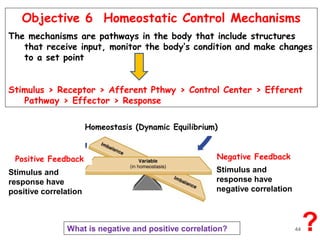
Objective 6 Homeostatic Control Mechanisms
The mechanisms are pathways in the body that include structures
that receive input, monitor the body’s condition and make changes
to a set point
Stimulus > Receptor > Afferent Pthwy > Control Center > Efferent
Pathway > Effector > Response
Negative FeedbackPositive Feedback
Homeostasis (Dynamic Equilibrium)
Stimulus and
response have
positive correlation
Stimulus and
response have
negative correlation
?What is negative and positive correlation? 44
Homeostatic Control Mechanisms
1. Stimulus: a
disruption that
causes a change in
the controlled
condition
2. Receptor:
senses
change in stimulus
3. Input/Afferent
Pathway: carries
information from
receptor to control
center
4. Control Center
determines the desirable
range at which a set
point is to be maintained
5. Output/Efferent
Pathway: carries
information from
control center effector
6. Effector:
executes
a response that
changes the
intensity of the
original stimulus
7. Response/Effect:
changes the
intensity of the
original stimulus
45
Copyright © The McGraw-Hill Companies, Inc. Permission required for reproduction or display.
Centers in the brain decrease
stimulation of heart and blood vessels.
PNS stimulation
Centers in the brain increase
stimulation of heart and blood vessels.
Heart rate and stroke volume
increase; blood vessels constrict.
SNS stimulation
Heart rate and stroke volume
decrease; blood vessels dilate.
Bloodpressure
(normalrange)
1 6
3 4
Blood pressure decreases:
Homeostasis Restored5
Blood pressure increases:
Homeostasis Restored
Blood pressure decreases:
Homeostasis Disturbed
Blood pressure increases:
Homeostasis Disturbed
2
Start Here
Bloodpressure
(normalrange)
46
Please note that due to differing
operating systems, some animations
will not appear until the presentation is
viewed in Presentation Mode (Slide
Show view). You may see blank slides
in the “Normal” or “Slide Sorter” views.
All animations will appear after viewing
in Presentation Mode and playing each
animation. Most animations will require
the latest version of the Flash Player,
which is available at
http://get.adobe.com/flashplayer.
47
Figure 1.5 Body temperature is regulated by a negative feedback mechanism.
4. Control Center
(thermoregulatory
center in brain)
3. Afferent
pathway
5. Efferent
pathway
2. Receptors
Temperature-sensitive
cells in skin and brain)
6. Effectors
Sweat glands
Sweat glands activated
7. Response
Evaporation of sweat
Body temperature falls;
stimulus endsBody temperature
rises
1. Stimulus: Heat
7. Response
Body temperature rises;
stimulus ends
f. Effectors
Skeletal muscles
e. Efferent
pathwayShivering begins
BALANCE
IMBALANCE
IMBALANCE
c. Afferent
pathway
d. Control Center
(thermoregulatory
center in brain)
b. Receptors
Temperature-sensitive
cells in skin and brain
a. Stimulus: Cold
Body temperature
falls
48
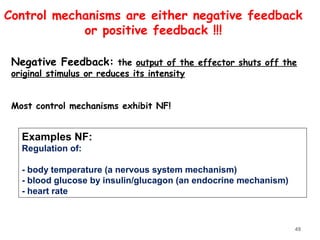
Negative Feedback: the output of the effector shuts off the
original stimulus or reduces its intensity
Most control mechanisms exhibit NF!
Control mechanisms are either negative feedback
or positive feedback !!!
Examples NF:
Regulation of:
- body temperature (a nervous system mechanism)
- blood glucose by insulin/glucagon (an endocrine mechanism)
- heart rate
49
• Normal range for BP is ~120/70
• If BP increases to 190/90 (too
high)…..then Negative feedback
mechanism returns BP to 120/70
(lowers it)
or
• BP decreases to 80/60 (too low)
…..then Negative feedback
mechanism returns BP to 120/70
(raises it)
• Normal value for blood glucose
is ~90mg/100ml
• Blood glucose increases to
300mg/100ml (too high) …..then
Negative feedback mechanism
returns blood glucose to
90mg/100ml (lowers it)
or
• Blood glucose decreases to
60mg/100ml (too low) …..then
Negative feedback mechanism
returns blood glucose to
90mg/100ml (raises it)
Examples of negative feedback mechanisms:
Blood Pressure Blood Glucose
50
Stimulus 1:
↑ blood glucose
Receptors:
Target body cells
Control center:
Pancreas (Insulin)
Effector Organ:
Liver (glycogen formation)
Response:
↓ blood glucose
Stimulus 2:
↓ blood glucose
Receptors:
Target body cells
Control center:
Pancreas (glucagon)
Effector Organ:
Liver (glycogen breakdown)
Response:
↑ blood glucose
51
Stimulus 1: High blood glucose
2. Receptors sense increased
blood glucose (blood sugar)
3. Pancreas (control center)
secretes insulin into the blood
4. Insulin causes body cells
(effectors) to absorb more
glucose, and liver cells
(effectors) to make glycogen
5. Response : decreases blood
glucose levels
Stimulus 2: Low blood glucose
2. Receptors sense low blood
glucose (blood sugar)
3. Pancreas (control center)
secretes glucagon into the blood
4. Glucagon causes body cells
(effectors) to absorb more
glucose, and liver cells
(effectors) to break down
glycogen
5. Response : increases blood
glucose levels 52
The vagus nerve
(parasympathetic)
decreases heart rate.
Dorsal motor nucleus
of vagus
Cardioinhibitory
center
Cardioaccele-
ratory center
Medulla oblongata
Sympathetic
trunk
ganglion
Thoracic spinal cord
Sympathetic trunk
Sympathetic cardiac
nerves increase heart rate
and force of contraction.
AV
node
SA
node
Figure 18.16 Autonomic innervation of the heart.
Sympathetic  ↑ HR and force
Parasympathetic  ↓ HR
Negative Feedback -
Neural Control of Heart Rate
53
Negative Feedback: Heart Rate
Sensory input: -baroreceptors (stretch/blood pressure sensors/ receptors),
-chemoreceptors (CO2 sensors)
Afferent pathways: CN X (vegus Nerve) (PNS)
Control centers – Medulla Oblongata
in cardiac inhibitory center (CIC)
Efferent pathway – parasympathetic nerves (PNS)
Effectors – Pacemaker (nodal) cells (heart rate, chronotropic effect)
cardiac myocytes (contractility, inotropic effect)
Stimulus: Increased HR
Response – nodal cells ( heart rate, chronotropic effect)
cardiac myocytes ( contractility, inotropic effect)
54
Negative Feedback: Heart Rate
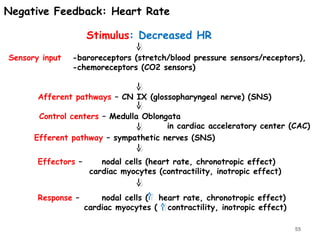
Sensory input -baroreceptors (stretch/blood pressure sensors/receptors),
-chemoreceptors (CO2 sensors)
Afferent pathways – CN IX (glossopharyngeal nerve) (SNS)
Control centers – Medulla Oblongata
in cardiac acceleratory center (CAC)
Efferent pathway – sympathetic nerves (SNS)
Effectors – nodal cells (heart rate, chronotropic effect)
cardiac myocytes (contractility, inotropic effect)
Stimulus: Decreased HR
Response – nodal cells ( heart rate, chronotropic effect)
cardiac myocytes ( contractility, inotropic effect)
55
Positive Feedback: occurs when the output of the effector
intensifies the original stimulus; most cases of positive
feedback promote instability and may be associated with
disease states
Brain (hypothalamus)
Afferent nerves Oxytocin release
(hormone)
Cervical stretch Uterus contracts
receptors
Increases
strength
of uterine
contractions
Stimulus:
Increases
pressure on
cervix
Partition (Birth) 56
Released
chemicals
attract more
platelets.
Positive
feedback
loop
Platelets
adhere to site and
release chemicals.
Feedback cycle ends
when plug is formed.
Platelet plug
is fully formed.
Break or tear
occurs in blood
vessel wall.
Positive feedback
cycle is initiated.
1
23
4
Coagulation
Positive Feedback:
57
Feedback Summary
• Negative Feedback
• Positive Feedback
If stimulus ↑’s parameter, then
response will ↓ that parameter
If stimulus ↓’s parameter, then
response will ↑ that parameter
If stimulus ↑’s parameter, then
response will ↑ that parameter
If stimulus ↓’s parameter, then
response will ↓ that parameter
Examples: blood pressure, heart rate,
blood glucose, body temp
Examples: partition and
coagulation
Negative Correlation
Positive Correlation
58
Homeostatic Imbalance
• Increases risk of disease
• Contributes to changes
associated with aging
• Control systems less
efficient
• If negative feedback
mechanisms overwhelmed,
then…….destructive
positive feedback
mechanisms may take over
(e.g., heart failure)
59
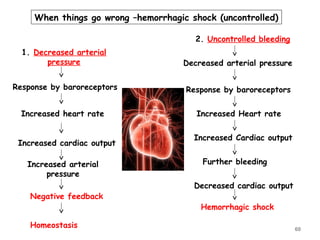
When things go wrong –hemorrhagic shock (uncontrolled)
2. Uncontrolled bleeding
1. Decreased arterial
pressure
Response by baroreceptors
Increased heart rate
Increased cardiac output
Increased arterial
pressure
Decreased arterial pressure
Response by baroreceptors
Increased Heart rate
Increased Cardiac output
Further bleeding
Decreased cardiac output
Hemorrhagic shock
Negative feedback
Homeostasis 60
An athlete travels to the Colorado Rockies to train for
an upcoming marathon. He runs 15 miles every
other day and while breathing O2 deficient air. His
blood O2 levels become lowered as a result. His
kidney cells sense the reduction in O2 and secrete a
hormone, erythropoietin into the blood stream. The
hormone circulates to the bone marrow where it acts
on stem cells. The stem cells differentiate into
mature red blood cells which can carry additional
oxygen.
Type of feedback:
Stimulus:
Control Center:
Effector:
Response: 61
You’ve just stepped on a
piece of glass. Pain
receptors in the skin of
your foot send a signal to
your spinal cord. Your
spinal cord activates the
muscles needed to lift
your foot via spinal
nerves.
What type of feed back is
this?
What is the stimulus?
What is the control center?
What is/are the effector(s)?
Exposure to a hot
environment causes
sweating. Sweating is the
major method the body
uses to cool down. As the
temperature rises, the
amount of sweat produced
increases.
Is this an example of a negative
or positive feedback mechanism?
Explain your answer.
62
There are chemoreceptors
adjacent to the respiratory center
in the medulla oblongata of the
brain that are sensitive to the
carbon dioxide content of the
blood. Carbon dioxide
concentration is measured as a
partial pressure of the gas in
blood. Normal PCO2 is 40 mm Hg.
When PCO2 rises the respiratory
center is stimulated and the
breathing rate increases.
Increasing the respiratory rate
results in increased removal of
carbon dioxide.
What is the stimulus?
What is the control center?
What type of feedback?
Normally platelets, blood
cells that function in blood
clot formation, do not stick
to blood vessel walls.
However in response to a
tear or damage to the vessel
wall platelets will adhere to
the vessel wall at the site of
damage. The platelets that
first stick to the wall release
chemicals that attract other
platelets. Those platelets
then adhere to the site and
release chemicals that
attract even more platelets.
Is this a positive or negative
feedback system?
Explain your answer. 63
Objective 7: Describe the anatomical position. (Lab linked objective)
Objective 8: Differentiate the following directional terms and apply them to a given
human situation: (Lab linked objective)
Anterior (ventral)/ posterior (dorsal)
superior (cranial)/ inferior (caudal)
medial/ lateral/ intermediate
proximal/ distal
superficial (external)/ deep (internal)
Objective 9: Differentiate between the following regional terms and apply them to a
given human situation: (Lab linked objective)
Axial, appendicular, cervical, thoracic, lumbar sacral, palmar,
axillary, inguinal, brachial, antebrachial, femoral, crural, nasal,
oral, cephalic, frontal, gluteal, popliteal, mammary, antecubital,
carpal, pubic, patellar, tarsal, optic, occipital, olecranal, perineal,
peroneal, abdominal, digital, pedal, buccal, umbilical, coxal, sural,
calcaneal, hallux, mental, sternal, sternal, scapular, manus,
pollex, acromial
64
Objective 10: Differentiate between the following terms and apply them to
human situations: (Lab linked objective)
Frontal (coronal) plane, transverse (horizontal) plane,
sagittal (midsagittal and parasagittal) plane
Objective 11: Locate the following body cavities and identify the organs that
are found there: (Lab linked objective)
Dorsal cavity (cranial, vertebral), ventral cavity (thoracic,
abdominopelvic)
65
• Objective 12:
Define the following terms and discuss their
structure and location:
– Mediastinum, pleura (parietal, visceral), pleural
cavity, pericardium (parietal, visceral)
pericardial cavity, peritonteum (parietal,
visceral) peritoneal cavity
66
Objective 12 Serous Membranes
Double layered membranes found within the ventral body cavity.
Basic structural plan for all of these membranes is:
Parietal
Viseral
67
Serous Membranes
• Parietal serosa lines body
cavity wall
• Visceral serosa covers the
organs (viscera)
• Layers separated by slit-like
cavity filled with serous fluid
• Fluid secreted by both layers of
membrane
• Allows organs to move or slide
without friction
Parietal Pericardium Visceral Pericardium
68
Serous Membranes
Named for Their Specific Cavities and Organs
Pericardium
refers to
heart.
(Pericarditis)
Pleura refers to
lungs and
thoracic cavity
(Pleuritis)
Peritoneum refers to
abdominopelvic
cavity
(Peritoneum)
1-69
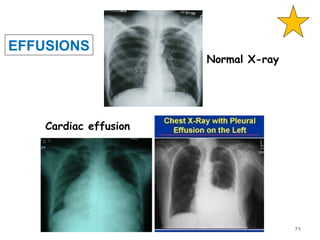
Fluid can build up between the membranes causing an effusion!!!
70
Normal X-ray
Cardiac effusion
EFFUSIONS
71
Ascites – Abnormal fluid
accumulation in the peritoneal
cavity
This patient has cirrhosis of
the liver. Cirrhosis causes
about 80% of all cases of
ascites in the United States
EFFUSIONS
72
Which is the Peritoneal (Abdominal) cavity
Superior Transverse Section Inferior Transverse Section
Which organ is retro-peritoneal?
73
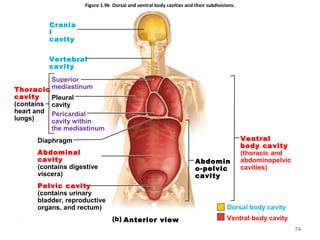
Figure 1.9b Dorsal and ventral body cavities and their subdivisions.
Crania
l
cavity
Vertebral
cavity
Superior
mediastinum
Pleural
cavity
Pericardial
cavity within
the mediastinum
Diaphragm
Pelvic cavity
(contains urinary
bladder, reproductive
organs, and rectum)
Abdomin
o-pelvic
cavity
Abdominal
cavity
(contains digestive
viscera)
Ventral
body cavity
(thoracic and
abdominopelvic
cavities)
Thoracic
cavity
(contains
heart and
lungs)
Anterior view
Dorsal body cavity
Ventral body cavity
74
The mediastinum is an intrapleural (lies between the lungs) space that
contains all of the thoracic viscera except the lungs.
It extends from the sternum (anteriorly) to the thoracic vertebrae
(posteriorly)
Structures of the
Mediastinum:
Heart/pericardial
cavity
Trachea, bronchi
Blood vessels (aorta,
vena cava, etc.)
Phrenic nerve
Lymph nodes
Esophagus
Thymus gland
Thoracic duct
Vagus nerve 75
Lesser omentum: connects liver and stomach
Greater Omentum: Connects stomach and intestines
Mesentary: anchors in intestines
• Other cavities…..
– Nasal
– Oral
– Orbit
– Ear
– Synovial
• Other structures…..
76
Objective 13: Locate the following abdominopelvic regions:
(Lab linked objective)
Right and left hypochondriac, epigastric, right and left
lumbar, umbilical, right and left iliac (inguinal), hypogastric
(pubic)
Objective 14: Locate the following abdominopelvic quadrants:
Right upper quadrant, right lower quadrant, left upper
quadrant, left lower quadrant
77
Right upper
quadrant
(RUQ)
Right lower
quadrant
(RLQ)
Left upper
quadrant
(LUQ)
Left lower
quadrant
(LLQ)
Objectives 14 Abdominopelvic Quadrants
Note: Do not confuse abdominal quadrants with the 9 abdomino-pelvic regions
78
Right-upper
quadrant
Left-upper
quadrant
Right-lower
quadrant
Left-lower
quadrant
Right
hypochondriac
region
Left
hypochondriac
region
Epigastric
region
Right
lumbar
region
Umbilical
region
Left
lumbar
region
Right
iliac
region
Hypogastric
region
Left
iliac
region
(a) (b)
4 Quadrants 9 Regions
Be able to name 2 organs in each!!! 79

Topic 1 lecture objectives

  • 1.
    Objectives Chapter 1 1.Define the term anatomy and discuss its subdivisions: 1. Gross anatomy: regional anatomy, systemic anatomy, surface anatomy 2. Microscopic anatomy: cytology, histology 3. Developmental anatomy: embryology, fetology 4. Pathological anatomy 5. Radiographic anatomy: X ray, computed tomography, magnetic resonance imaging, positron emisision tomography, ultrasound 1
  • 2.
    Anatomy and Physiology •Anatomy: the scientific discipline that investigates body structure and interrelationships of body parts. • Physiology: scientific investigation of the processes or functions of living things • …structure and function are directly related, meaning that structure affects the function of an atom, molecule, cell, tissue, organ, organ system, organism • Altering structure= Alters function!!!!! 2 Aristotle – The Father of Comparative Anatomy
  • 3.
    Anatomy & Physiology 1.Tostudy anatomy: – Mastery of anatomical terminology – Observation – Manipulation – Palpation – Auscultation 2.To study physiology: – Ability to focus at many levels (from systemic to cellular and molecular) – Study of basic physical principles (e.g., electrical currents, pressure, and mechanical movement) – Study of basic chemical principles 3
  • 4.
    4.Radiographic Anatomy -X ray -computedaxial tomography -positron emission tomography -magnetic resonance imaging -ultrasound imaging Subdivisions of Anatomy Anatomy 5.Pathological Anatomy 1. Gross Anatomy -regional -systemic -surface 2. Developmental Anatomy -embryology -teratology 3.Microscopic Anatomy -cytology -histology 4
  • 5.
    Gross Anatomy: anatomical study ofstructures that are large enough to be seen without magnification Includes: examination of all structures found within a particular region of the body 1. Regional Anatomy: 2. Systemic Anatomy: examination of all structures within a particular system of the body 3. Surface anatomy: the study of internal structures as they relate to the body surface 5
  • 6.
    Head Neck Regional Anatomy ThoraxAbdomen Male/Female Pelvis/Perineum Upper/Lower Appendage Back 6
  • 7.
    Systemic Anatomy: A bodysystem consists of structures that are all concerned with carrying out a specific function of the body 7
  • 8.
    Figure 1.3 Thebody’s organ systems and their major functions. (1 of 2) Skeletal muscles Bones Joint Nails Hair Skin Brain Nerves Spinal cord Pineal gland Pituitary glandThyroid gland Thymus Adrenal gland Pancreas Ovary Testis Blood vessels Heart Skeletal System Protects and supports body organs, and provides a framework the muscles use to cause movement. Blood cells are formed within bones. Bones store minerals. Integumentary System Forms the external body covering, and protects deeper tissues from injury. Synthesizes vitamin D, and houses cutaneous (pain, pressure, etc.) receptors and sweat and oil glands. Muscular System Allows manipulation of the environment, locomotion, and facial expression. Maintains posture, and produces heat. Cardiovascular System Blood vessels transport blood, which carries oxygen, carbon dioxide, nutrients, wastes, etc. The heart pumps blood. Endocrine System Glands secrete hormones that regulate processes such as growth, reproduction, and nutrient use (metabolism) by body cells. Nervous System As the fast-acting control system of the body, it responds to internal and external changes by activating appropriate muscles and glands. 8
  • 9.
    Figure 1.3 Thebody’s organ systems and their major functions. (2 of 2) Male Reproductive System Overall function is production of offspring. Testes produce sperm and male sex hormone, and male ducts and glands aid in delivery of sperm to the female reproductive tract. Mammary glands (in breasts) Ovary Uterine tube Uterus Vagina Prostate gland Ductus deferens Scrotum Penis Testis Kidney Ureter Urinary bladder Urethra Red bone marrow Thymus Lymphatic vessels Thoracic duct Spleen Lymph nodes Lung Trachea Larynx Bronchus Nasal cavity Pharynx Oral cavity Esophagus Liver Large intestine Rectum Anus Small intestine Stomach Lymphatic System/Immunity Picks up fluid leaked from blood vessels and returns it to blood. Disposes of debris in the lymphatic stream. Houses white blood cells (lymphocytes) involved in immunity. The immune response mounts the attack against foreign substances within the body. Respiratory System Keeps blood constantly supplied with oxygen and removes carbon dioxide. The gaseous exchanges occur through the walls of the air sacs of the lungs. Digestive System Breaks down food into absorbable units that enter the blood for distribution to body cells. Indigestible foodstuffs are eliminated as feces. Urinary System Eliminates nitrogenous wastes from the body. Regulates water, electrolyte and acid-base balance of the blood. Female Reproductive System Ovaries produce eggs and female sex hormones. The remaining female structures serve as sites for fertilization and development of the fetus. Mammary glands of female breasts produce milk to nourish the newborn. 9
  • 10.
    Surface anatomy: Auscultatory Areasfor heart sounds Relationship of lungs to Anterior Thoracic wall Auscultation: listening to sounds from the heart, lungs, or other organs, typically with a stethoscope the study of internal structures as they relate to the body surface 10
  • 11.
    Microscopic anatomy: *Different approachesto microscopic anatomy include cytology and histology anatomical study of structures that need magnification in order to be seen 11
  • 12.
    Squamous Cells AdiposeCellSkeletal Muscle Cells Cytology: the study of the specific cell types of the body Cell is the smallest living structure Characteristics of life: maintaining boundaries, movement, irritability, metabolism, reproduction and growth A cell culture contains only 1 cell type!!!!! 12
  • 13.
    Histology: the studyof the tissues of the body a tissue is composed of a group of two or more cells that have a common function there are four classes of tissues in the body: Muscle Tissue Nerve Tissue Connective tissue Epithelial tissue 13
  • 14.
  • 15.
    the study ofstructural changes that occur from conception through old age Developmental Anatomy: Pre-embryo: from conception through the end of the third week of gestation; consists of the following stages: Zygote fusion of male and female pronuclei to form a diploid fertilized egg Morula @ 2-3 days post-fertilization 16 cell mass Blastocyst @ 3-4 days post fertilization hollow ball of cells, (Implants in uterus @6-7 days post fertilization) Gastrula @ week three formation of the 3 primary germ layers 15
  • 16.
    Three primary germlayers formed during Gastrulation: Ectoderm – nervous system, skin Mesoderm – muscle, connective tissues Endoderm – epithelial lining of digestive, respiratory, and urogenital systems and associated glands ectoderm endoderm mesoderm 16
  • 17.
    Embryology (embryo): 4th -8th weeksof gestation; period of organ system morphogenesis Fetology (fetus): 9th week of gestation to birth; growth and differentiation of tissues and organ systems Embryo at 8 Weeks Fetus at 14 Weeks 17
  • 18.
    Pathological anatomy: Rheumatoid arthritis studyof structural changes that occur during a disease process (anatomic pathology) Scoliosis 18 Cleft Palate
  • 19.
    Imaging Techniques • Radiography •Ultrasound (US) • Computed Tomography (CT) • Dynamic Spatial Reconstruction (DSR) • Digital Subtraction Angiography (DSA) • Magnetic Resonance Imaging (MRI) • Positron Emission Tomography (PET) Radiographic anatomy: study of the structures of the body using various imaging techniques 19
  • 20.
    •Radiography (X-ray): Shadowynegative of internal body structures X Ray: a band of radiation passes through the body to a film or a fluorescent screen 20
  • 21.
  • 22.
    Ultra Sonography •high frequencyultrasonic waves •computer-analyzed sound waves bounced off a structure in the body. 22
  • 23.
    Computed Axial Tomography(CAT or CT scan) • an X ray source is rotated in a circle around the body • a computer interprets the data and generates 3D-images 23
  • 24.
    • Computed Tomography(CT Scan): computer-analyzed composite of radiograph; shows slices of body. • Dynamic Spatial Reconstruction (DSR): 3-D version of CT using multiple slices. 1-24
  • 25.
    •Digital Subtraction Angiography (DSA):comparison of radiographs with and without dye. Used in blood vessel studies. •Magnetic Resonance Imaging (MRI): uses magnetism and radio waves to look for varying alignment of protons in soft tissues. 25
  • 26.
    Magnetic Resonance Imaging(MRI) A magnetic field induces hydrogen atoms, which normally spin in random directions, to align When the magnetic field is turned off, the atoms return to random alignment and emit radiofrequency waves Different tissues emit different frequencies based on atomic makeup and environment 26
  • 27.
    Positron Emission Tomography(PET Scan) •allows researchers to study in detail metabolic activity in living, awake patients •the patient is given a radioisotope •The isotope emits positrons (e+ ) which collide with e- in the tissue •The collision produces gamma rays which are detected with a scanner •CELLS OR TISSUES that have higher metabolic activity take up more of the isotope Areas of activity are indicated by color – red highest, yellow, green, blue lowest 27
  • 28.
    Lung cancer Functional areasof the brain Hodgkins lymphoma Positron Emission Tomography (PET Scan) 28
  • 29.
    You are usingthe cardiac muscle cell culture described above to study the microscopic structure of these cells. Which of the following terms best describes the subdivision of anatomy you are using in your study? a) Histology b) Pathology c) Gross anatomy d) Cytology e) Developmental anatomy a) Histology (Incorrect. Histology is the study of tissues) b) Pathology (incorrect. Pathology would study diseased or abnormal cells) c) Gross anatomy (Incorrect. Gross anatomy is the study of structures that can be observed with the naked eye) d) Cytology (The correct answer) e) Developmental anatomy (Incorrect. Developmental anatomy is the study of changes in structure that occur over a lifetime) ?29
  • 30.
    Sometimes scientists useorgan cultures, called organotypic culture, to study aspects of organ physiology. The culture you used to study the structure of cardiac cells would not be considered an organotypic culture because ___________. a) For it to be considered organ like there would have to be at least two tissue types present in the culture dish b) Cardiac muscle cells are found in many different organs in the human body organ c) The cells are in single cell layer in the culture dish d) Cardiac muscle cells are not one of the four tissue types found in the body e) Organs must contain all four tissue types a) For it to be considered organ like there would have to be at least two tissue types present in the culture dish (Correct answer. Students must know what constitutes an organ and apply that knowledge to this hypothetical situation) b) Cardiac muscle cells are found in many different organs in the human body organ (Incorrect) c) The cells are in single cell layer in the culture dish (Incorrect) d) Cardiac muscle cells are not one of the four tissue types found in the body (Incorrect) e) Organs must contain all four tissue types (Incorrect) ?30
  • 31.
    Objective 2 Define theterm physiology, and discuss its relationship with anatomy (complementarity of structure and function) Physiology: 1. Study of the function of the body 2. Subdivisions based on organ systems (e.g., renal or cardiovascular physiology) 3. Often focuses on cellular and molecular level 4. Body's abilities depend on chemical reactions in individual cells 31
  • 32.
    Objective 1 Physiology A.Definition of physiology Physiology - the study of how the structures of the body function Physiology Physis Logos means ‘nature’ means ‘study’ B. Physiologists draw on anatomical knowledge to help them understand how things work. In fact, the function of an object is often determined by its structure. 32
  • 33.
    Principle of Complementarity 1.Anatomy and physiology are inseparable 2. Function always reflects structure 3. What a structure can do depends on its specific form • …structure and function are directly related, meaning that structure affects the function of an atom, molecule, cell, tissue, organ, organ system, organism • Altering structure= Altered function 33
  • 34.
    ? FUNCTION • Structure: venousvalves •Function: Prevent backflow of blood •Propel blood via muscle contraction •Exchange of fluids via a thin epithelium Which vessel is best suited for fluid exchange, which is best suited to propel blood? Complementarity 34
  • 35.
    Objective 3 Discuss thebasic structure of the human body and define the following terms: chemical level, cellular level, tissue level, organ level, organ system level, and organism level. Levels of Organization 35
  • 36.
    Objective 3 TheOrganizational Plan Levels of complexity – (simple to most complex) Level Examples Atomic Molecular Cellular Tissue Organ Organ System Organism C, H, N, O, P, S, Na+ , K+ , Cl- , Ca2 , etc. H2O, carbohydrates, lipids, proteins, nucleic acids, vitamins red blood cells (erythrocytes), fat cells, (adipocytes), bone cells (osteocytes), nerve cells (neurons), etc. epithelial tissue, connective tissue, muscle tissue, nerve tissue liver, heart, stomach, aorta, uterus, gall bladder, etc. integumentary system, skeletal system, muscular system, nervous system, endocrine system, etc. 36
  • 37.
    Place the followingstructures in order from the simplest to most complex: 1. transitional epithelium 2. Urine 3. podocyte 4. urinary bladder 5. urinary system a) 3, 2, 1, 4, 5 b) 2, 3, 1, 4, 5 c) 5, 4, 1, 3, 2 d) 1, 2, 3, 5, 4 e) 1, 3, 2, 5, 4 ?37
  • 38.
    Necessary Life Functions •Maintaining boundaries • Movement • Responsiveness • Digestion • Metabolism • Dispose of wastes • Reproduction • Growth Survival Needs • Appropriate amounts necessary for life • Too little or too much harmful • Nutrients • Oxygen • Water • Normal body temperature • Appropriate atmospheric pressure Interdependence of Body Cells 1. Humans are multicellular (eukaryotic) 2. To function, must keep individual cells alive 3. All cells depend on organ systems to meet their survival needs 4. All body functions spread among different organ systems 5. Organ systems cooperate to maintain life 38
  • 39.
    Interrelationships among OrganSystems Digestive system Takes in nutrients, breaks them down, and eliminates unabsorbed matter (feces) Food O2 CO2 Respiratory system Takes in oxygen and eliminates carbon dioxide Cardiovascular system Via the blood, distributes oxygen and nutrients to all body cells and delivers wastes and carbon dioxide to disposal organs Blood CO2 O2 Heart Nutrients Interstitial fluid Integumentary system Protects the body as a whole from the external environment Nutrients and wastes pass between blood and cells via the interstitial fluid Feces Urine Urinary system Eliminates nitrogenous wastes and excess ions 39
  • 40.
    • OBJECTIVE 4: Identifythe eleven organ systems of the human body and discuss their composition and functions. (Lab linked objective) Review slides 8-10 40
  • 41.
    • OBJECTIVE 5: Definethe term homeostasis and discuss how homeostasis is affected by negative feedback and positive feedback mechanisms. • OBJECTIVE 6: Discuss the following basic components of control mechanisms: control center, set point, receptor, afferent pathway, efferent pathway, and effector 41
  • 42.
    Objective 5 Homeostasis 1.Homeostasis refers to the ability to maintain relatively constant internal environment - it is a ‘balanced condition’ involving the maintenance of a ‘dynamic equilibrium’ between organ systems • Arterial pH (range 7.35-7.45) • Plasma sodium (range 136-151 mEq/L) • Blood oxygen (17.2-22.0 ml/100 ml) • Plasma glucose (75-110 mg/100 ml) • Ventilation (14-20/minute) • Body temperature (97.8 - 99.8 O F) • Plasma protein (6.5-8.0 g/100ml) • Heart Rate (70-75 beats/min) What is the set point range for body temperature, blood pH, & heart rate? ? 42
  • 43.
    Bloodpressure Time Normal BP atrest Normal BP after exercise Normal BP during exercise Normalrange Constantly increasing value outside of the normal range Constantly decreasing value outside of the normal range Time Homeostasis is maintained. Homeostasis is Not maintained. • Set point: the ideal range of normal values of a variable. • Dynamic Equilibrium: Values fluctuate around the set point to establish a normal range of values. Homeostasis 43
  • 44.
    Objective 6 HomeostaticControl Mechanisms The mechanisms are pathways in the body that include structures that receive input, monitor the body’s condition and make changes to a set point Stimulus > Receptor > Afferent Pthwy > Control Center > Efferent Pathway > Effector > Response Negative FeedbackPositive Feedback Homeostasis (Dynamic Equilibrium) Stimulus and response have positive correlation Stimulus and response have negative correlation ?What is negative and positive correlation? 44
  • 45.
    Homeostatic Control Mechanisms 1.Stimulus: a disruption that causes a change in the controlled condition 2. Receptor: senses change in stimulus 3. Input/Afferent Pathway: carries information from receptor to control center 4. Control Center determines the desirable range at which a set point is to be maintained 5. Output/Efferent Pathway: carries information from control center effector 6. Effector: executes a response that changes the intensity of the original stimulus 7. Response/Effect: changes the intensity of the original stimulus 45
  • 46.
    Copyright © TheMcGraw-Hill Companies, Inc. Permission required for reproduction or display. Centers in the brain decrease stimulation of heart and blood vessels. PNS stimulation Centers in the brain increase stimulation of heart and blood vessels. Heart rate and stroke volume increase; blood vessels constrict. SNS stimulation Heart rate and stroke volume decrease; blood vessels dilate. Bloodpressure (normalrange) 1 6 3 4 Blood pressure decreases: Homeostasis Restored5 Blood pressure increases: Homeostasis Restored Blood pressure decreases: Homeostasis Disturbed Blood pressure increases: Homeostasis Disturbed 2 Start Here Bloodpressure (normalrange) 46
  • 47.
    Please note thatdue to differing operating systems, some animations will not appear until the presentation is viewed in Presentation Mode (Slide Show view). You may see blank slides in the “Normal” or “Slide Sorter” views. All animations will appear after viewing in Presentation Mode and playing each animation. Most animations will require the latest version of the Flash Player, which is available at http://get.adobe.com/flashplayer. 47
  • 48.
    Figure 1.5 Bodytemperature is regulated by a negative feedback mechanism. 4. Control Center (thermoregulatory center in brain) 3. Afferent pathway 5. Efferent pathway 2. Receptors Temperature-sensitive cells in skin and brain) 6. Effectors Sweat glands Sweat glands activated 7. Response Evaporation of sweat Body temperature falls; stimulus endsBody temperature rises 1. Stimulus: Heat 7. Response Body temperature rises; stimulus ends f. Effectors Skeletal muscles e. Efferent pathwayShivering begins BALANCE IMBALANCE IMBALANCE c. Afferent pathway d. Control Center (thermoregulatory center in brain) b. Receptors Temperature-sensitive cells in skin and brain a. Stimulus: Cold Body temperature falls 48
  • 49.
    Negative Feedback: theoutput of the effector shuts off the original stimulus or reduces its intensity Most control mechanisms exhibit NF! Control mechanisms are either negative feedback or positive feedback !!! Examples NF: Regulation of: - body temperature (a nervous system mechanism) - blood glucose by insulin/glucagon (an endocrine mechanism) - heart rate 49
  • 50.
    • Normal rangefor BP is ~120/70 • If BP increases to 190/90 (too high)…..then Negative feedback mechanism returns BP to 120/70 (lowers it) or • BP decreases to 80/60 (too low) …..then Negative feedback mechanism returns BP to 120/70 (raises it) • Normal value for blood glucose is ~90mg/100ml • Blood glucose increases to 300mg/100ml (too high) …..then Negative feedback mechanism returns blood glucose to 90mg/100ml (lowers it) or • Blood glucose decreases to 60mg/100ml (too low) …..then Negative feedback mechanism returns blood glucose to 90mg/100ml (raises it) Examples of negative feedback mechanisms: Blood Pressure Blood Glucose 50
  • 51.
    Stimulus 1: ↑ bloodglucose Receptors: Target body cells Control center: Pancreas (Insulin) Effector Organ: Liver (glycogen formation) Response: ↓ blood glucose Stimulus 2: ↓ blood glucose Receptors: Target body cells Control center: Pancreas (glucagon) Effector Organ: Liver (glycogen breakdown) Response: ↑ blood glucose 51
  • 52.
    Stimulus 1: Highblood glucose 2. Receptors sense increased blood glucose (blood sugar) 3. Pancreas (control center) secretes insulin into the blood 4. Insulin causes body cells (effectors) to absorb more glucose, and liver cells (effectors) to make glycogen 5. Response : decreases blood glucose levels Stimulus 2: Low blood glucose 2. Receptors sense low blood glucose (blood sugar) 3. Pancreas (control center) secretes glucagon into the blood 4. Glucagon causes body cells (effectors) to absorb more glucose, and liver cells (effectors) to break down glycogen 5. Response : increases blood glucose levels 52
  • 53.
    The vagus nerve (parasympathetic) decreasesheart rate. Dorsal motor nucleus of vagus Cardioinhibitory center Cardioaccele- ratory center Medulla oblongata Sympathetic trunk ganglion Thoracic spinal cord Sympathetic trunk Sympathetic cardiac nerves increase heart rate and force of contraction. AV node SA node Figure 18.16 Autonomic innervation of the heart. Sympathetic  ↑ HR and force Parasympathetic  ↓ HR Negative Feedback - Neural Control of Heart Rate 53
  • 54.
    Negative Feedback: HeartRate Sensory input: -baroreceptors (stretch/blood pressure sensors/ receptors), -chemoreceptors (CO2 sensors) Afferent pathways: CN X (vegus Nerve) (PNS) Control centers – Medulla Oblongata in cardiac inhibitory center (CIC) Efferent pathway – parasympathetic nerves (PNS) Effectors – Pacemaker (nodal) cells (heart rate, chronotropic effect) cardiac myocytes (contractility, inotropic effect) Stimulus: Increased HR Response – nodal cells ( heart rate, chronotropic effect) cardiac myocytes ( contractility, inotropic effect) 54
  • 55.
    Negative Feedback: HeartRate Sensory input -baroreceptors (stretch/blood pressure sensors/receptors), -chemoreceptors (CO2 sensors) Afferent pathways – CN IX (glossopharyngeal nerve) (SNS) Control centers – Medulla Oblongata in cardiac acceleratory center (CAC) Efferent pathway – sympathetic nerves (SNS) Effectors – nodal cells (heart rate, chronotropic effect) cardiac myocytes (contractility, inotropic effect) Stimulus: Decreased HR Response – nodal cells ( heart rate, chronotropic effect) cardiac myocytes ( contractility, inotropic effect) 55
  • 56.
    Positive Feedback: occurswhen the output of the effector intensifies the original stimulus; most cases of positive feedback promote instability and may be associated with disease states Brain (hypothalamus) Afferent nerves Oxytocin release (hormone) Cervical stretch Uterus contracts receptors Increases strength of uterine contractions Stimulus: Increases pressure on cervix Partition (Birth) 56
  • 57.
    Released chemicals attract more platelets. Positive feedback loop Platelets adhere tosite and release chemicals. Feedback cycle ends when plug is formed. Platelet plug is fully formed. Break or tear occurs in blood vessel wall. Positive feedback cycle is initiated. 1 23 4 Coagulation Positive Feedback: 57
  • 58.
    Feedback Summary • NegativeFeedback • Positive Feedback If stimulus ↑’s parameter, then response will ↓ that parameter If stimulus ↓’s parameter, then response will ↑ that parameter If stimulus ↑’s parameter, then response will ↑ that parameter If stimulus ↓’s parameter, then response will ↓ that parameter Examples: blood pressure, heart rate, blood glucose, body temp Examples: partition and coagulation Negative Correlation Positive Correlation 58
  • 59.
    Homeostatic Imbalance • Increasesrisk of disease • Contributes to changes associated with aging • Control systems less efficient • If negative feedback mechanisms overwhelmed, then…….destructive positive feedback mechanisms may take over (e.g., heart failure) 59
  • 60.
    When things gowrong –hemorrhagic shock (uncontrolled) 2. Uncontrolled bleeding 1. Decreased arterial pressure Response by baroreceptors Increased heart rate Increased cardiac output Increased arterial pressure Decreased arterial pressure Response by baroreceptors Increased Heart rate Increased Cardiac output Further bleeding Decreased cardiac output Hemorrhagic shock Negative feedback Homeostasis 60
  • 61.
    An athlete travelsto the Colorado Rockies to train for an upcoming marathon. He runs 15 miles every other day and while breathing O2 deficient air. His blood O2 levels become lowered as a result. His kidney cells sense the reduction in O2 and secrete a hormone, erythropoietin into the blood stream. The hormone circulates to the bone marrow where it acts on stem cells. The stem cells differentiate into mature red blood cells which can carry additional oxygen. Type of feedback: Stimulus: Control Center: Effector: Response: 61
  • 62.
    You’ve just steppedon a piece of glass. Pain receptors in the skin of your foot send a signal to your spinal cord. Your spinal cord activates the muscles needed to lift your foot via spinal nerves. What type of feed back is this? What is the stimulus? What is the control center? What is/are the effector(s)? Exposure to a hot environment causes sweating. Sweating is the major method the body uses to cool down. As the temperature rises, the amount of sweat produced increases. Is this an example of a negative or positive feedback mechanism? Explain your answer. 62
  • 63.
    There are chemoreceptors adjacentto the respiratory center in the medulla oblongata of the brain that are sensitive to the carbon dioxide content of the blood. Carbon dioxide concentration is measured as a partial pressure of the gas in blood. Normal PCO2 is 40 mm Hg. When PCO2 rises the respiratory center is stimulated and the breathing rate increases. Increasing the respiratory rate results in increased removal of carbon dioxide. What is the stimulus? What is the control center? What type of feedback? Normally platelets, blood cells that function in blood clot formation, do not stick to blood vessel walls. However in response to a tear or damage to the vessel wall platelets will adhere to the vessel wall at the site of damage. The platelets that first stick to the wall release chemicals that attract other platelets. Those platelets then adhere to the site and release chemicals that attract even more platelets. Is this a positive or negative feedback system? Explain your answer. 63
  • 64.
    Objective 7: Describethe anatomical position. (Lab linked objective) Objective 8: Differentiate the following directional terms and apply them to a given human situation: (Lab linked objective) Anterior (ventral)/ posterior (dorsal) superior (cranial)/ inferior (caudal) medial/ lateral/ intermediate proximal/ distal superficial (external)/ deep (internal) Objective 9: Differentiate between the following regional terms and apply them to a given human situation: (Lab linked objective) Axial, appendicular, cervical, thoracic, lumbar sacral, palmar, axillary, inguinal, brachial, antebrachial, femoral, crural, nasal, oral, cephalic, frontal, gluteal, popliteal, mammary, antecubital, carpal, pubic, patellar, tarsal, optic, occipital, olecranal, perineal, peroneal, abdominal, digital, pedal, buccal, umbilical, coxal, sural, calcaneal, hallux, mental, sternal, sternal, scapular, manus, pollex, acromial 64
  • 65.
    Objective 10: Differentiatebetween the following terms and apply them to human situations: (Lab linked objective) Frontal (coronal) plane, transverse (horizontal) plane, sagittal (midsagittal and parasagittal) plane Objective 11: Locate the following body cavities and identify the organs that are found there: (Lab linked objective) Dorsal cavity (cranial, vertebral), ventral cavity (thoracic, abdominopelvic) 65
  • 66.
    • Objective 12: Definethe following terms and discuss their structure and location: – Mediastinum, pleura (parietal, visceral), pleural cavity, pericardium (parietal, visceral) pericardial cavity, peritonteum (parietal, visceral) peritoneal cavity 66
  • 67.
    Objective 12 SerousMembranes Double layered membranes found within the ventral body cavity. Basic structural plan for all of these membranes is: Parietal Viseral 67
  • 68.
    Serous Membranes • Parietalserosa lines body cavity wall • Visceral serosa covers the organs (viscera) • Layers separated by slit-like cavity filled with serous fluid • Fluid secreted by both layers of membrane • Allows organs to move or slide without friction Parietal Pericardium Visceral Pericardium 68
  • 69.
    Serous Membranes Named forTheir Specific Cavities and Organs Pericardium refers to heart. (Pericarditis) Pleura refers to lungs and thoracic cavity (Pleuritis) Peritoneum refers to abdominopelvic cavity (Peritoneum) 1-69
  • 70.
    Fluid can buildup between the membranes causing an effusion!!! 70
  • 71.
  • 72.
    Ascites – Abnormalfluid accumulation in the peritoneal cavity This patient has cirrhosis of the liver. Cirrhosis causes about 80% of all cases of ascites in the United States EFFUSIONS 72
  • 73.
    Which is thePeritoneal (Abdominal) cavity Superior Transverse Section Inferior Transverse Section Which organ is retro-peritoneal? 73
  • 74.
    Figure 1.9b Dorsaland ventral body cavities and their subdivisions. Crania l cavity Vertebral cavity Superior mediastinum Pleural cavity Pericardial cavity within the mediastinum Diaphragm Pelvic cavity (contains urinary bladder, reproductive organs, and rectum) Abdomin o-pelvic cavity Abdominal cavity (contains digestive viscera) Ventral body cavity (thoracic and abdominopelvic cavities) Thoracic cavity (contains heart and lungs) Anterior view Dorsal body cavity Ventral body cavity 74
  • 75.
    The mediastinum isan intrapleural (lies between the lungs) space that contains all of the thoracic viscera except the lungs. It extends from the sternum (anteriorly) to the thoracic vertebrae (posteriorly) Structures of the Mediastinum: Heart/pericardial cavity Trachea, bronchi Blood vessels (aorta, vena cava, etc.) Phrenic nerve Lymph nodes Esophagus Thymus gland Thoracic duct Vagus nerve 75
  • 76.
    Lesser omentum: connectsliver and stomach Greater Omentum: Connects stomach and intestines Mesentary: anchors in intestines • Other cavities….. – Nasal – Oral – Orbit – Ear – Synovial • Other structures….. 76
  • 77.
    Objective 13: Locatethe following abdominopelvic regions: (Lab linked objective) Right and left hypochondriac, epigastric, right and left lumbar, umbilical, right and left iliac (inguinal), hypogastric (pubic) Objective 14: Locate the following abdominopelvic quadrants: Right upper quadrant, right lower quadrant, left upper quadrant, left lower quadrant 77
  • 78.
    Right upper quadrant (RUQ) Right lower quadrant (RLQ) Leftupper quadrant (LUQ) Left lower quadrant (LLQ) Objectives 14 Abdominopelvic Quadrants Note: Do not confuse abdominal quadrants with the 9 abdomino-pelvic regions 78
  • 79.

Editor's Notes

  • #5 1. Gross Anatomy -regional -systemic -surface 2. Developmental Anatomy -embryology -teratology 3. Microscopic Anatomy -cytology -histology
  • #33 Overview of Anatomy and Physiology To study anatomy Mastery of anatomical terminology Observation Manipulation Palpation Auscultation
  • #37 Levels of Structural Organization Chemical Atoms and molecules (chapter 2); and organelles (chapter 3) Cellular Cells (chapter 3) Tissue Groups of similar cells (chapter 4) Organ Contains two or more types of tissues Organ System Organs that work closely together Organismal All organ systems
  • #43 Maintenance of relatively stable internal conditions despite continuous changes in environment A dynamic state of equilibrium Maintained by contributions of all organ systems Maintained by contributions of all organ systems Involve continuous monitoring and regulation of all factors that can change (variables) Communication necessary for monitoring and regulation Functions of nervous and endocrine systems Nervous and endocrine systems accomplish communication via nerve impulses and hormones
  • #45 Bring up how this can be done on any level. Use example of sensory response, spinal cord and reflex arc.
  • #46 Bring up how this can be done on any level. Use example of sensory response, spinal cord and reflex arc.
  • #49 Receptor (sensor)- Monitors environment Responds to stimuli (something that causes changes in controlled variables) -Control center Determines set point at which variable is maintained Receives input from receptor Determines appropriate response -Effector Receives output from control center Provides the means to respond
  • #50 Most feedback mechanisms in body Response reduces or shuts off original stimulus Variable changes in opposite direction of initial change Examples Regulation of body temperature (a nervous system mechanism) Regulation of blood glucose by insulin (an endocrine system mechanism)
  • #52 Stimulus 1: High blood glucose 2. Receptors sense increased blood glucose (blood sugar) 3. Pancreas (control center) secretes insulin into the blood 4. Insulin causes body cells (effectors) to absorb more glucose, and liver cells (effectors) to make glycogen 5. Effector: Liver/tissues 6. Response : decreases blood glucose levels Stimulus 2: Low blood glucose 2. Receptors sense low blood glucose (blood sugar) 3. Pancreas (control center) secretes glucagon into the blood 4. Glucagon causes body cells (effectors) to absorb more glucose, and liver cells (effectors) to break down glycogen 5. Response : increases blood glucose levels
  • #53 Stimulus 1: High blood glucose 2. Receptors sense increased blood glucose (blood sugar) 3. Pancreas (control center) secretes insulin into the blood 4. Insulin causes body cells (effectors) to absorb more glucose, and liver cells (effectors) to make glycogen 5. Response : decreases blood glucose levels Stimulus 2: Low blood glucose 2. Receptors sense low blood glucose (blood sugar) 3. Pancreas (control center) secretes glucagon into the blood 4. Glucagon causes body cells (effectors) to absorb more glucose, and liver cells (effectors) to break down glycogen 5. Response : increases blood glucose levels
  • #60 Disturbance of homeostasis Increases risk of disease Contributes to changes associated with aging Control systems less efficient If negative feedback mechanisms overwhelmed Destructive positive feedback mechanisms may take over (e.g., heart failure)
  • #62 Positive feedback: Stimulus: Low 02 Receptors sense low o2 Control center-kidney secretes EPO Effector-Bone marrow stem cells picks up EPO& stimulate stem cells tp differentiate into mature RBCs which carry additional o1
  • #68 Thoracic cavity subdivisions Two pleural cavities Each surrounds a lung Mediastinum Contains pericardial cavity Surrounds thoracic organs Pericardial cavity Encloses heart
  • #72 Ask how can they determine betweenm the 2!!!
  • #74 How can you tell?