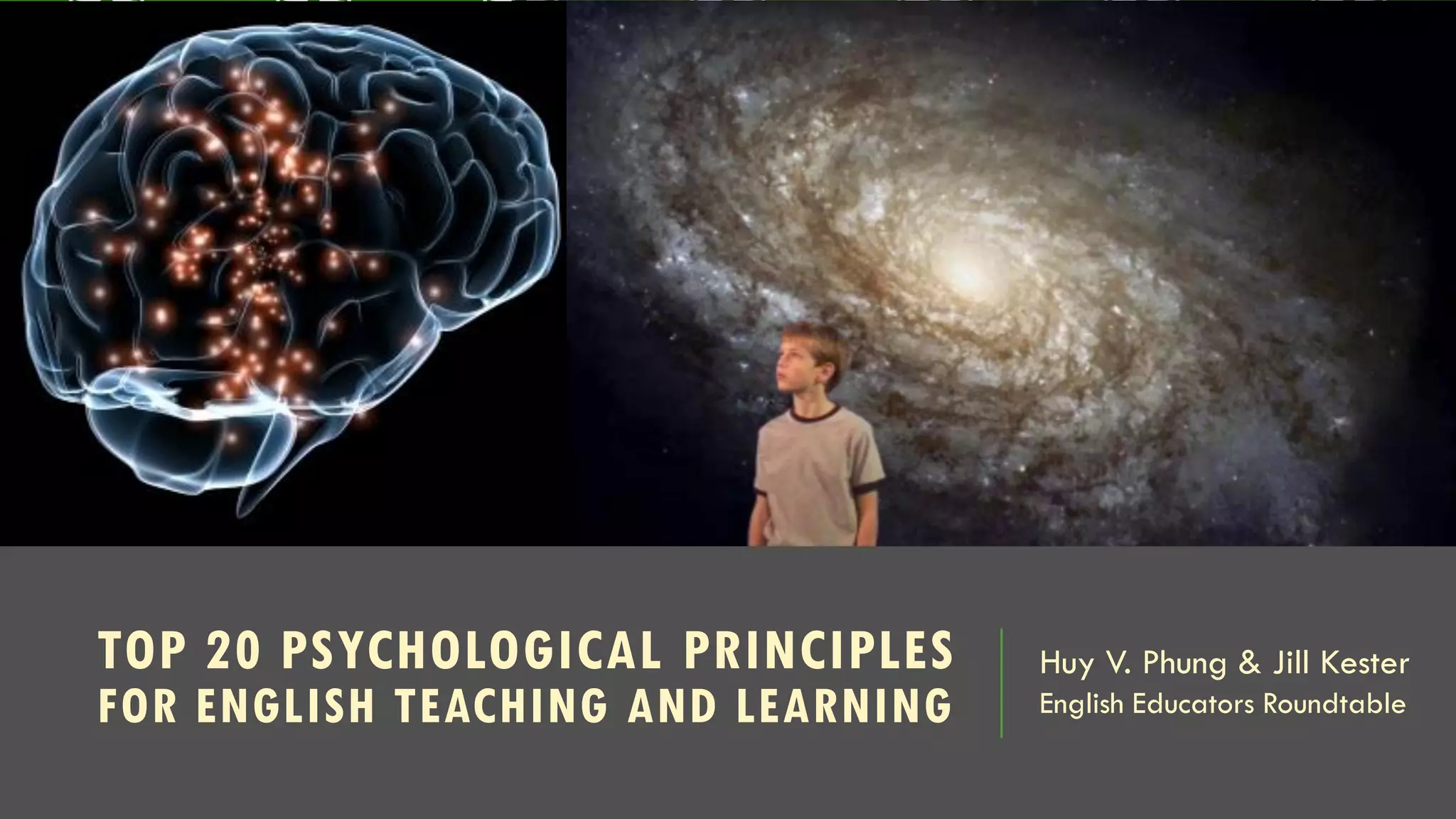









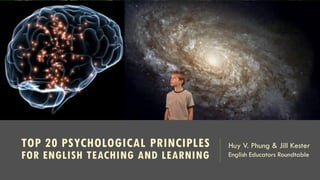


TOP 20 PSYCHOLOGICAL PRINCIPLES
FOR ENGLISH TEACHING AND LEARNING
Huy V. Phung & Jill Kester
English Educators Roundtable
WHAT ARE THE
MOST ESSENTIAL FACTORS
TO SUCCESSFUL FOREIGN LANGUAGE TEACHING/LEARNING?
THINK-PAIR-SHARE
1 Brainstorm 3+ contributing factors.
Provide reasons for your selection.
Group/rank them in order of importance.
2
3
HOW ARE THE
TOP 20 PRINCIPLES
IDENTIFIED?
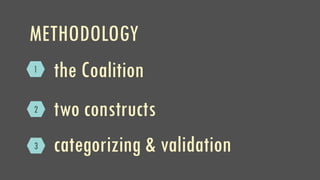
METHODOLOGY
1 the Coalition
two constructs
categorizing & validation
2
3
ITERATIVE
HOW ARE THE 20 PRINCIPLES
CATEGORIZED?
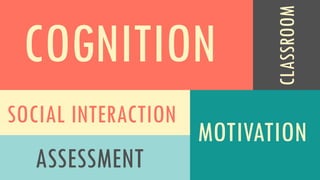
COGNITION
MOTIVATION
SOCIAL INTERACTION
ASSESSMENT
CLASSROOM
8
43
3
2
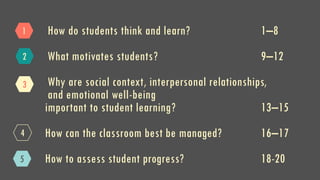
How do students think and learn? 1–8
What motivates students? 9–12
Why are social context, interpersonal relationships,
and emotional well-being
important to student learning? 13–15
How can the classroom best be managed? 16–17
How to assess student progress? 18-20
1
2
3
4
5
9-1213-15
18-20
16-17
THE TOP
PRINCIPLES
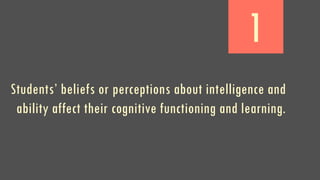
1
Students’ beliefs or perceptions about intelligence and
ability affect their cognitive functioning and learning.
2
What students already know affects their learning.
3
Students’ cognitive development and learning are not
limited by general stages of development.
4
Learning is based on context, so generalizing learning
to new contexts is not spontaneous but instead needs
to be facilitated.
5
Acquiring long-term knowledge and skill is largely
dependent on practice.
6
Clear, explanatory, and timely feedback to students is
important for learning.
7
Students’ self-regulation assists learning,
and self-regulatory skills can be taught.
8
Student creativity can be fostered.
9
Students tend to enjoy learning and perform better
when they are more intrinsically than extrinsically
motivated to achieve.
10
Students persist in the face of challenging tasks and
process information more deeply when they adopt
mastery goals rather than performance goals.
11
Teachers’ expectations about their students affect
students’ opportunities to learn, their motivation,
and their learning outcomes.
12
Setting goals that are short term (proximal), specific,
and moderately challenging enhances motivation
more than establishing goals that are long term
(distal), general, and overly challenging.
13
Learning is situated within multiple social contexts.
14
Emotional well-being influences educational
performance, learning, and development.
15
Emotional well-being influences educational
performance, learning, and development.
16
Expectations for classroom conduct and social
interaction are learned and can be taught using
proven principles of behavior and effective classroom
instruction.
17
Effective classroom management is based on
(a) setting and communicating high expectations,
(b) consistently nurturing positive relationships,
and (c) providing a high level of student support.
18
Formative and summative assessments are both
important and useful but require different approaches
and interpretations.
19
Students’ skills, knowledge, and abilities are best
measured with assessment processes grounded in
psychological science with well-defined standards for
quality and fairness.
20
Making sense of assessment data depends on clear,
appropriate, and fair interpretation.
HOW DO THESE PRINCIPLES
RESONATE OR CONTRADICT
YOUR OWN THEORIES/BELIEFS ABOUT HOW STUDENT LEARN
& HOW WE SHOULD TEACH?
OF THE SET OF PRINCIPLES, WHICH ONE(S) DO YOU FIND
MOST INTERESTINGOR MOST TROUBLESOME?
WHY?
WHAT ARE THE
TOP 3 PRINCIPLES
IMYPORTANT TO YOU?
1 2 3
CLICK HERE TO RANK
TOP 20 PSYCHOLOGICAL PRINCIPLES
FOR ENGLISH TEACHING AND LEARNING
Huy V. Phung & Jill Kester
English Educators Roundtable
PHOTO CREDITS
Slide 1a: http://www.niu.edu/clas/academics/explore/psychology/images/Brain.jpg
Slide 1b: http://brainrules.net/brain-rules-video
Slide 6: http://cdn3.prcapps.com/cdn/farfuture/qSf64bP5KUkLuKUhJPinfLJuwODMfQvrlstM40eBgww/
mtime:1418068197/sites/default/files/iterative-philosophy.png
ACKNOWLEDGEMENTS
Thispresentation is adapted from the APA-published report on “Top 20 Principles of Psychology” to facilitate the discussion among English educators in
Vietnam participating the roundtable hosted by the American Center in Hanoi, Vietnam. Always use the original report for future reference.
REFERENCE
American Psychological Association, Coalition for Psychology in Schools and Education. (2015). Top 20 principles from psychology for preK–12 teaching and
learning. Retrieved from http:// www.apa.org/ed/schools/cpse/top-twenty-principles.pdf
THANK YOU
READ MORE…
SLIDES:
TOP 20 PRINCIPLES FROM PSYCHOLOGY
FOR PREK–12 TEACHING AND LEARNING
PHUNG HUY EDU

Top 20 Psychological Principles for Teaching & Learning

  • 1.
    TOP 20 PSYCHOLOGICALPRINCIPLES FOR ENGLISH TEACHING AND LEARNING Huy V. Phung & Jill Kester English Educators Roundtable
  • 2.
    WHAT ARE THE MOSTESSENTIAL FACTORS TO SUCCESSFUL FOREIGN LANGUAGE TEACHING/LEARNING?
  • 3.
    THINK-PAIR-SHARE 1 Brainstorm 3+contributing factors. Provide reasons for your selection. Group/rank them in order of importance. 2 3
  • 4.
    HOW ARE THE TOP20 PRINCIPLES IDENTIFIED?
  • 5.
    METHODOLOGY 1 the Coalition twoconstructs categorizing & validation 2 3
  • 6.
  • 7.
    HOW ARE THE20 PRINCIPLES CATEGORIZED?
  • 8.
  • 9.
  • 10.
    How do studentsthink and learn? 1–8 What motivates students? 9–12 Why are social context, interpersonal relationships, and emotional well-being important to student learning? 13–15 How can the classroom best be managed? 16–17 How to assess student progress? 18-20 1 2 3 4 5
  • 11.
  • 12.
  • 13.
    1 Students’ beliefs orperceptions about intelligence and ability affect their cognitive functioning and learning.
  • 14.
    2 What students alreadyknow affects their learning.
  • 15.
    3 Students’ cognitive developmentand learning are not limited by general stages of development.
  • 16.
    4 Learning is basedon context, so generalizing learning to new contexts is not spontaneous but instead needs to be facilitated.
  • 17.
    5 Acquiring long-term knowledgeand skill is largely dependent on practice.
  • 18.
    6 Clear, explanatory, andtimely feedback to students is important for learning.
  • 19.
    7 Students’ self-regulation assistslearning, and self-regulatory skills can be taught.
  • 20.
  • 21.
    9 Students tend toenjoy learning and perform better when they are more intrinsically than extrinsically motivated to achieve.
  • 22.
    10 Students persist inthe face of challenging tasks and process information more deeply when they adopt mastery goals rather than performance goals.
  • 23.
    11 Teachers’ expectations abouttheir students affect students’ opportunities to learn, their motivation, and their learning outcomes.
  • 24.
    12 Setting goals thatare short term (proximal), specific, and moderately challenging enhances motivation more than establishing goals that are long term (distal), general, and overly challenging.
  • 25.
    13 Learning is situatedwithin multiple social contexts.
  • 26.
    14 Emotional well-being influenceseducational performance, learning, and development.
  • 27.
    15 Emotional well-being influenceseducational performance, learning, and development.
  • 28.
    16 Expectations for classroomconduct and social interaction are learned and can be taught using proven principles of behavior and effective classroom instruction.
  • 29.
    17 Effective classroom managementis based on (a) setting and communicating high expectations, (b) consistently nurturing positive relationships, and (c) providing a high level of student support.
  • 30.
    18 Formative and summativeassessments are both important and useful but require different approaches and interpretations.
  • 31.
    19 Students’ skills, knowledge,and abilities are best measured with assessment processes grounded in psychological science with well-defined standards for quality and fairness.
  • 32.
    20 Making sense ofassessment data depends on clear, appropriate, and fair interpretation.
  • 33.
    HOW DO THESEPRINCIPLES RESONATE OR CONTRADICT YOUR OWN THEORIES/BELIEFS ABOUT HOW STUDENT LEARN & HOW WE SHOULD TEACH?
  • 34.
    OF THE SETOF PRINCIPLES, WHICH ONE(S) DO YOU FIND MOST INTERESTINGOR MOST TROUBLESOME? WHY?
  • 35.
    WHAT ARE THE TOP3 PRINCIPLES IMYPORTANT TO YOU?
  • 36.
    1 2 3 CLICKHERE TO RANK
  • 37.
    TOP 20 PSYCHOLOGICALPRINCIPLES FOR ENGLISH TEACHING AND LEARNING Huy V. Phung & Jill Kester English Educators Roundtable
  • 38.
    PHOTO CREDITS Slide 1a:http://www.niu.edu/clas/academics/explore/psychology/images/Brain.jpg Slide 1b: http://brainrules.net/brain-rules-video Slide 6: http://cdn3.prcapps.com/cdn/farfuture/qSf64bP5KUkLuKUhJPinfLJuwODMfQvrlstM40eBgww/ mtime:1418068197/sites/default/files/iterative-philosophy.png ACKNOWLEDGEMENTS Thispresentation is adapted from the APA-published report on “Top 20 Principles of Psychology” to facilitate the discussion among English educators in Vietnam participating the roundtable hosted by the American Center in Hanoi, Vietnam. Always use the original report for future reference. REFERENCE American Psychological Association, Coalition for Psychology in Schools and Education. (2015). Top 20 principles from psychology for preK–12 teaching and learning. Retrieved from http:// www.apa.org/ed/schools/cpse/top-twenty-principles.pdf
  • 39.
    THANK YOU READ MORE… SLIDES: TOP20 PRINCIPLES FROM PSYCHOLOGY FOR PREK–12 TEACHING AND LEARNING PHUNG HUY EDU