Downloaded 742 times
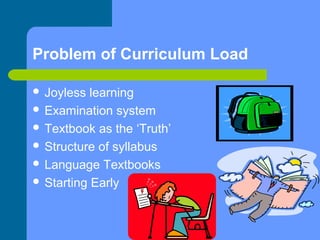
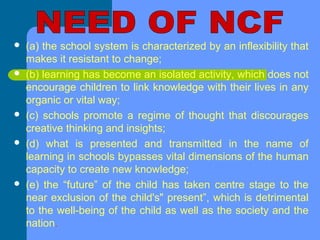

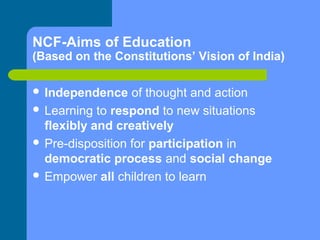
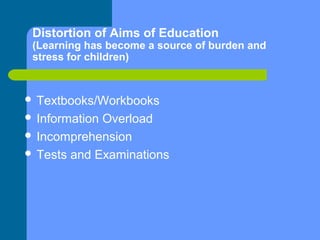
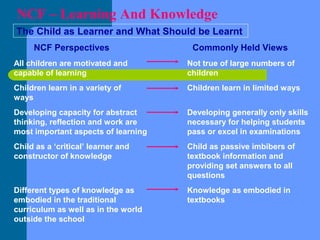
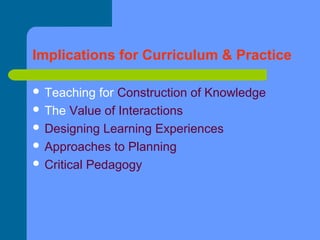

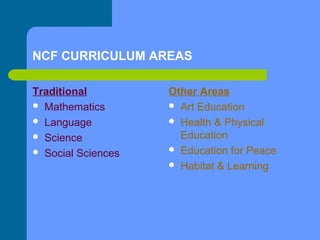
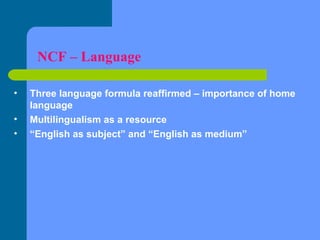
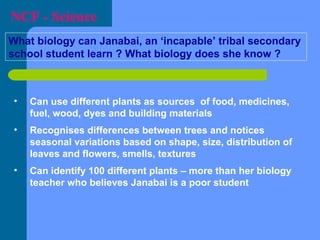
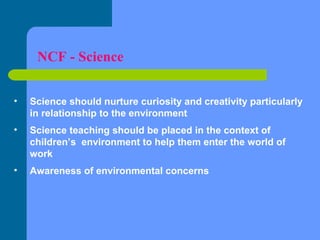
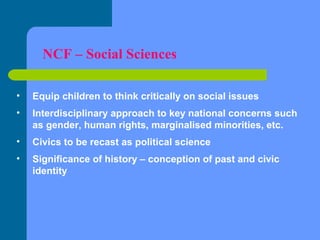


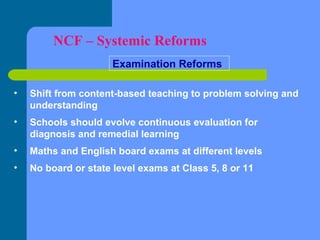
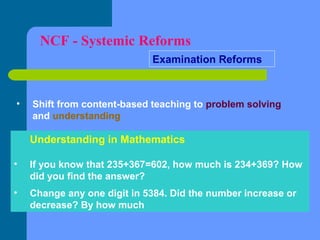


The National Curriculum Framework of 2005 aimed to reform India's school education system by making learning more flexible, organic, and linked to students' lives. It sought to move away from an exam-focused and textbook-centered approach towards developing students' creative and abstract thinking. The framework emphasized seeing students as active learners and knowledge constructors rather than passive receivers of information. It recommended treating local and environmental knowledge as valuable resources for learning. Key reforms included integrating subjects like art, health and civic education; emphasizing multilingualism; shifting assessments towards understanding over rote knowledge; and training teachers for curriculum renewal.


