Semester
8
Oral medicine 22014 1614ID
Tooth brushing
techniques
Asmaa Abdelrahman abdelhakeem sayed
Group A2
Introduction
A number of toothbrushing technique have
achieved acceptance by the dental profession.
• Each technique has been designed to achieve
a definite goal.
• Depending on the individual cases,the
techniques of toothbrusing may have to be
altered to achieve the maximum beneficial effects.
TYPES OF TOOTH BRUSHING
TECHNIQUE
• The bass or sulcus cleaning method.
• Modified bass technique.
Stillamann's technique
• Modified STILLMANN’s technique.
• Fones or circular or scrub method.
• Vertical or LEONARDS method.
• CHARTER’S method.
• Scrub brush method.
• The roll technique.
• Physiologic or SMITH method
1)BASS OR SULCUS CLEANING
METHOD
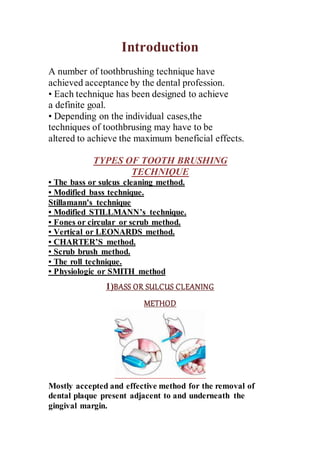
Mostly accepted and effective method for the removal of
dental plaque present adjacent to and underneath the
gingival margin.
• INDICATIONS
 adaptable for interproximal areas
 cervical areas beneath the
 height of contour of enamel.
 exposed root surfaces.
TECHNIQUES
• The bristles are placed at a 45 angle to the
gingiva and moved in small circular motions.
• Strokes are repeated around 20 times,3
teeth at a time.
• On the lingual aspect of the anterior teeth,the brush
is pressed into the gingival sulci and proximal
surfaces at a 45 angle.
• The britles are then activated.
• Occlusal surfaces are cleaned by pressing the
bristles firmly and then activating the bristles.
ADVANTAGES
• Effective method for removing plaque.
• Provides good gingival stimulation.
DISADVANTAGES
 cause injury to the gingival margin.
 Time consuming.
 Dexerity.
2)MODIFIED BASS TECHNIQUE
• INDICATION:
• As a routine oral hygiene measure intrasulcular
cleansing.
TECHINIQUE
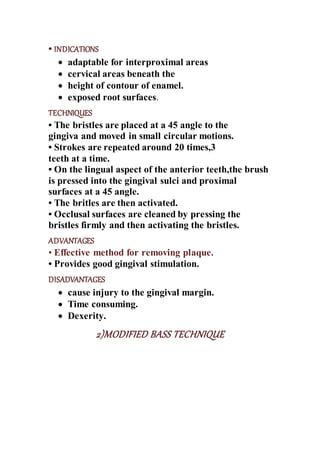
• Vibratary and circular movements with
sweeping motion
• Bristles are at 45 to the gingiva
• Bristles are swept over the sides of the teeth
towards their occlusal surfaces in a single
stroke.
ADVANTAGES
• Excellent Sulcus Cleaning.
• Good Inter Proximal And Gingival
Cleaning.
• Good Gingival Stimulation
Disadvatages•Dexterity.
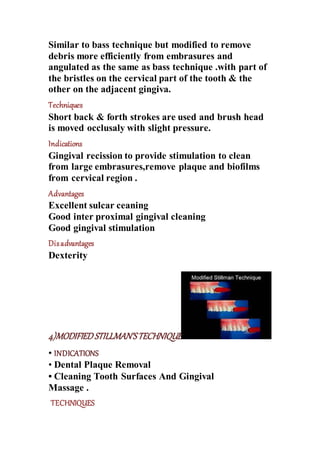
3) stillman technique
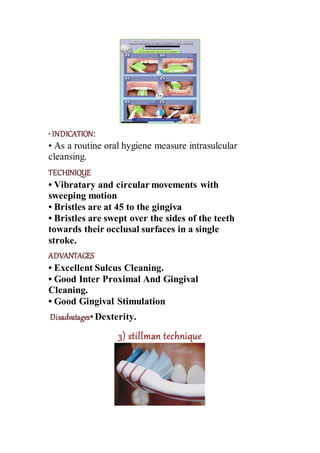
Similar to bass technique but modified to remove
debris more efficiently from embrasures and
angulated as the same as bass technique .with part of
the bristles on the cervical part of the tooth & the
other on the adjacent gingiva.
Techniques
Short back & forth strokes are used and brush head
is moved occlusaly with slight pressure.
Indications
Gingival recission to provide stimulation to clean
from large embrasures,remove plaque and biofilms
from cervical region .
Advantages
Excellent sulcar ceaning
Good inter proximal gingival cleaning
Good gingival stimulation
Disadvantages
Dexterity
4)MODIFIED STILLMAN’STECHNIQUE
• INDICATIONS
• Dental Plaque Removal
• Cleaning Tooth Surfaces And Gingival
Massage .
TECHNIQUES
• Bristles are pointed apically with an oblique
angle to the long axis of the tooth
• Bristles placed on the cervical aspect of the
teeth
• Short back and forth motion moved in a
coronal direction.
DISADVANTAGES
• Time Consuming
• Damage Epithelial Attachment
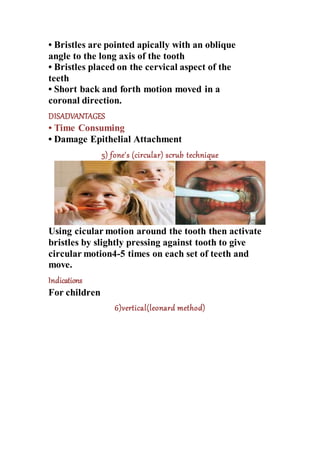
5) fone's (circular) scrub technique
Using cicular motion around the tooth then activate
bristles by slightly pressing against tooth to give
circular motion4-5 times on each set of teeth and
move.
Indications
For children
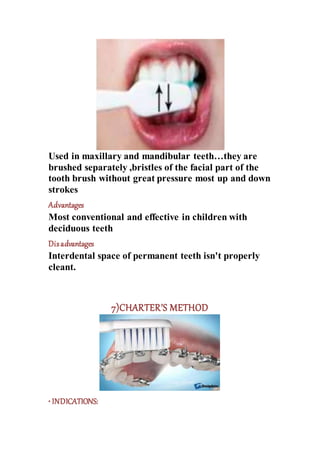
6)vertical(leonard method)
Used in maxillary and mandibular teeth…they are
brushed separately ,bristles of the facial part of the
tooth brush without great pressure most up and down
strokes
Advantages
Most conventional and effective in children with
deciduous teeth
Disadvantages
Interdental space of permanent teeth isn't properly
cleant.
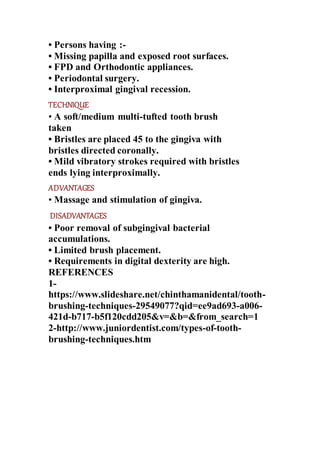
7)CHARTER’S METHOD
• INDICATIONS:
• Persons having :-
• Missing papilla and exposed root surfaces.
• FPD and Orthodontic appliances.
• Periodontal surgery.
• Interproximal gingival recession.
TECHNIQUE
• A soft/medium multi-tufted tooth brush
taken
• Bristles are placed 45 to the gingiva with
bristles directed coronally.
• Mild vibratory strokes required with bristles
ends lying interproximally.
ADVANTAGES
• Massage and stimulation of gingiva.
DISADVANTAGES
• Poor removal of subgingival bacterial
accumulations.
• Limited brush placement.
• Requirements in digital dexterity are high.
REFERENCES
1-
https://www.slideshare.net/chinthamanidental/tooth-
brushing-techniques-29549077?qid=ee9ad693-a006-
421d-b717-b5f120cdd205&v=&b=&from_search=1
2-http://www.juniordentist.com/types-of-tooth-
brushing-techniques.htm

Tooth brushing techniques

  • 1.
    Semester 8 Oral medicine 220141614ID Tooth brushing techniques Asmaa Abdelrahman abdelhakeem sayed Group A2
  • 2.
    Introduction A number oftoothbrushing technique have achieved acceptance by the dental profession. • Each technique has been designed to achieve a definite goal. • Depending on the individual cases,the techniques of toothbrusing may have to be altered to achieve the maximum beneficial effects. TYPES OF TOOTH BRUSHING TECHNIQUE • The bass or sulcus cleaning method. • Modified bass technique. Stillamann's technique • Modified STILLMANN’s technique. • Fones or circular or scrub method. • Vertical or LEONARDS method. • CHARTER’S method. • Scrub brush method. • The roll technique. • Physiologic or SMITH method 1)BASS OR SULCUS CLEANING METHOD Mostly accepted and effective method for the removal of dental plaque present adjacent to and underneath the gingival margin.
  • 3.
    • INDICATIONS  adaptablefor interproximal areas  cervical areas beneath the  height of contour of enamel.  exposed root surfaces. TECHNIQUES • The bristles are placed at a 45 angle to the gingiva and moved in small circular motions. • Strokes are repeated around 20 times,3 teeth at a time. • On the lingual aspect of the anterior teeth,the brush is pressed into the gingival sulci and proximal surfaces at a 45 angle. • The britles are then activated. • Occlusal surfaces are cleaned by pressing the bristles firmly and then activating the bristles. ADVANTAGES • Effective method for removing plaque. • Provides good gingival stimulation. DISADVANTAGES  cause injury to the gingival margin.  Time consuming.  Dexerity. 2)MODIFIED BASS TECHNIQUE
  • 4.
    • INDICATION: • Asa routine oral hygiene measure intrasulcular cleansing. TECHINIQUE • Vibratary and circular movements with sweeping motion • Bristles are at 45 to the gingiva • Bristles are swept over the sides of the teeth towards their occlusal surfaces in a single stroke. ADVANTAGES • Excellent Sulcus Cleaning. • Good Inter Proximal And Gingival Cleaning. • Good Gingival Stimulation Disadvatages•Dexterity. 3) stillman technique
  • 5.
    Similar to basstechnique but modified to remove debris more efficiently from embrasures and angulated as the same as bass technique .with part of the bristles on the cervical part of the tooth & the other on the adjacent gingiva. Techniques Short back & forth strokes are used and brush head is moved occlusaly with slight pressure. Indications Gingival recission to provide stimulation to clean from large embrasures,remove plaque and biofilms from cervical region . Advantages Excellent sulcar ceaning Good inter proximal gingival cleaning Good gingival stimulation Disadvantages Dexterity 4)MODIFIED STILLMAN’STECHNIQUE • INDICATIONS • Dental Plaque Removal • Cleaning Tooth Surfaces And Gingival Massage . TECHNIQUES
  • 6.
    • Bristles arepointed apically with an oblique angle to the long axis of the tooth • Bristles placed on the cervical aspect of the teeth • Short back and forth motion moved in a coronal direction. DISADVANTAGES • Time Consuming • Damage Epithelial Attachment 5) fone's (circular) scrub technique Using cicular motion around the tooth then activate bristles by slightly pressing against tooth to give circular motion4-5 times on each set of teeth and move. Indications For children 6)vertical(leonard method)
  • 7.
    Used in maxillaryand mandibular teeth…they are brushed separately ,bristles of the facial part of the tooth brush without great pressure most up and down strokes Advantages Most conventional and effective in children with deciduous teeth Disadvantages Interdental space of permanent teeth isn't properly cleant. 7)CHARTER’S METHOD • INDICATIONS:
  • 8.
    • Persons having:- • Missing papilla and exposed root surfaces. • FPD and Orthodontic appliances. • Periodontal surgery. • Interproximal gingival recession. TECHNIQUE • A soft/medium multi-tufted tooth brush taken • Bristles are placed 45 to the gingiva with bristles directed coronally. • Mild vibratory strokes required with bristles ends lying interproximally. ADVANTAGES • Massage and stimulation of gingiva. DISADVANTAGES • Poor removal of subgingival bacterial accumulations. • Limited brush placement. • Requirements in digital dexterity are high. REFERENCES 1- https://www.slideshare.net/chinthamanidental/tooth- brushing-techniques-29549077?qid=ee9ad693-a006- 421d-b717-b5f120cdd205&v=&b=&from_search=1 2-http://www.juniordentist.com/types-of-tooth- brushing-techniques.htm