BRUSHING TECHNIQUES
Chinkita Chaudhary
BDS(Final Year)
CONTENT
• Brushing motions
• Scrub technique
• Roll method (Fones technique)
• Bass method
• Modified Bass technique
• Stillman’s method
• Modified Stillman’s technique
• Charter,s method
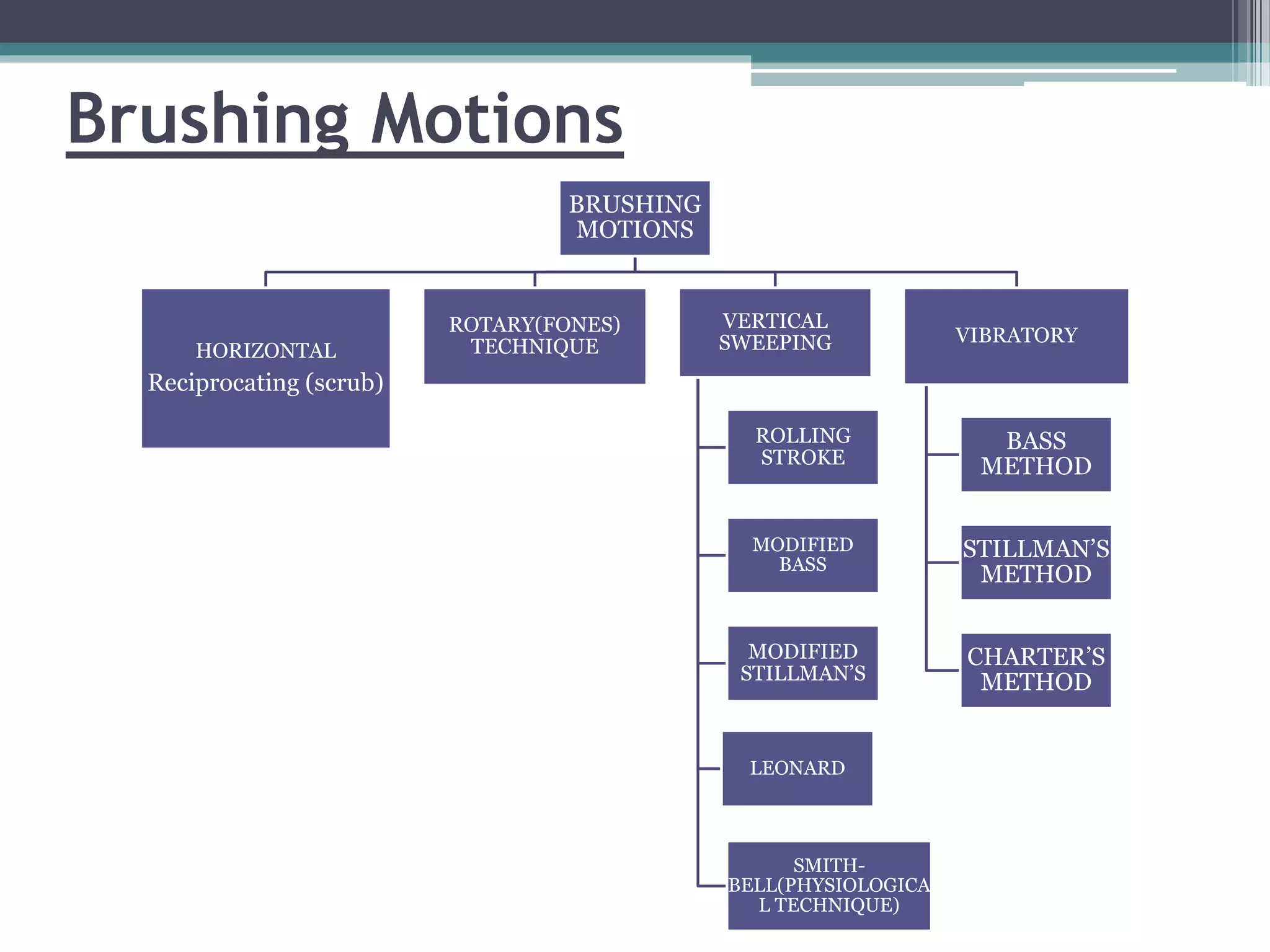
Brushing Motions
BRUSHING
MOTIONS
HORIZONTAL
Reciprocating (scrub)
ROTARY(FONES)
TECHNIQUE
VERTICAL
SWEEPING
ROLLING
STROKE
MODIFIED
BASS
MODIFIED
STILLMAN’S
LEONARD
SMITH-
BELL(PHYSIOLOGICA
L TECHNIQUE)
VIBRATORY
BASS
METHOD
STILLMAN’S
METHOD
CHARTER’S
METHOD
SCRUB (RECIPROCATING) METHOD
• TECHNIQUE
Place the bristle on
tooth surface
Move them back and forth
• Easy to
master
ADVANTAGE
• Poor plaque
removal
• Cause cervical
abrasion
DISADVANTAGE
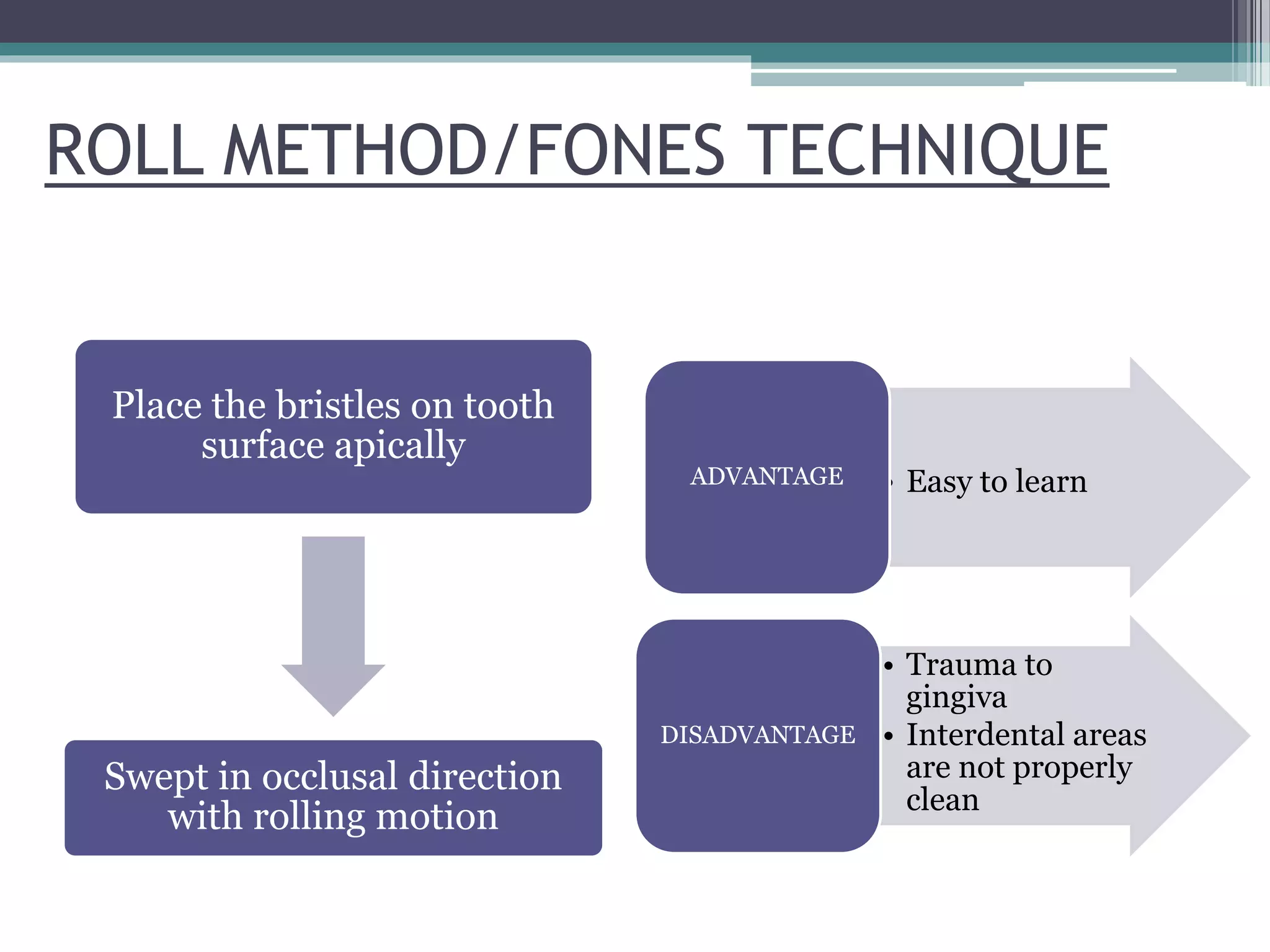
ROLL METHOD/FONES TECHNIQUE
Place the bristles on tooth
surface apically
Swept in occlusal direction
with rolling motion
• Easy to learnADVANTAGE
• Trauma to
gingiva
• Interdental areas
are not properly
clean
DISADVANTAGE
BASS METHOD
• Also known as INTRASULULAR METHOD
• Vibratory motion is used
• TECHNIQUE :
Place the bristles at
gingival margin at
45º to the long axis
of the tooth
Apply gentle
pressure and use
short ‘backward
forth motion”
Allow bristles into
tooth sulci and
into interproximal
embrassures
Complete 20
strokes in same
position
Repeat the process
for all the surfaces
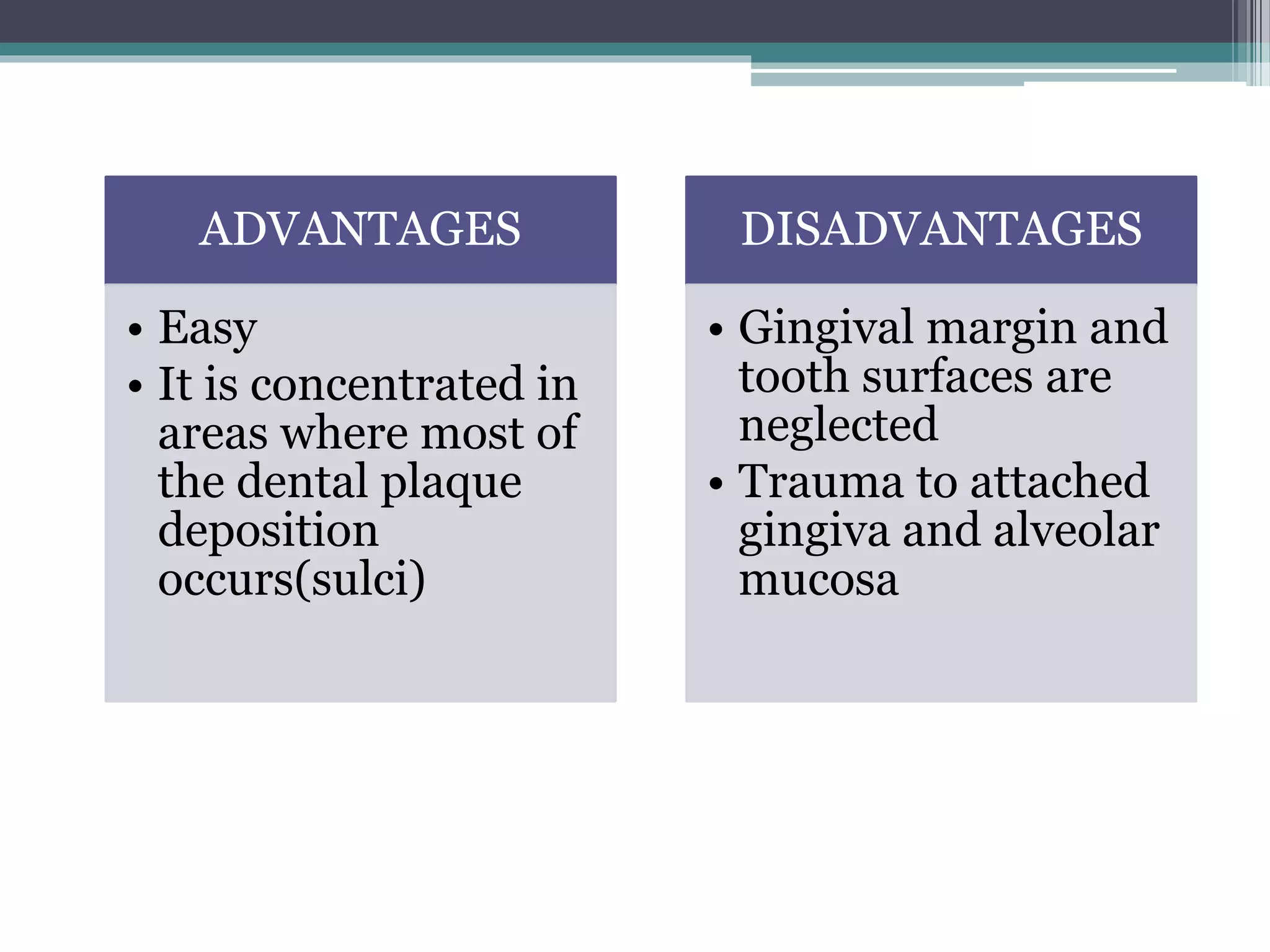
ADVANTAGES
• Easy
• It is concentrated in
areas where most of
the dental plaque
deposition
occurs(sulci)
DISADVANTAGES
• Gingival margin and
tooth surfaces are
neglected
• Trauma to attached
gingiva and alveolar
mucosa
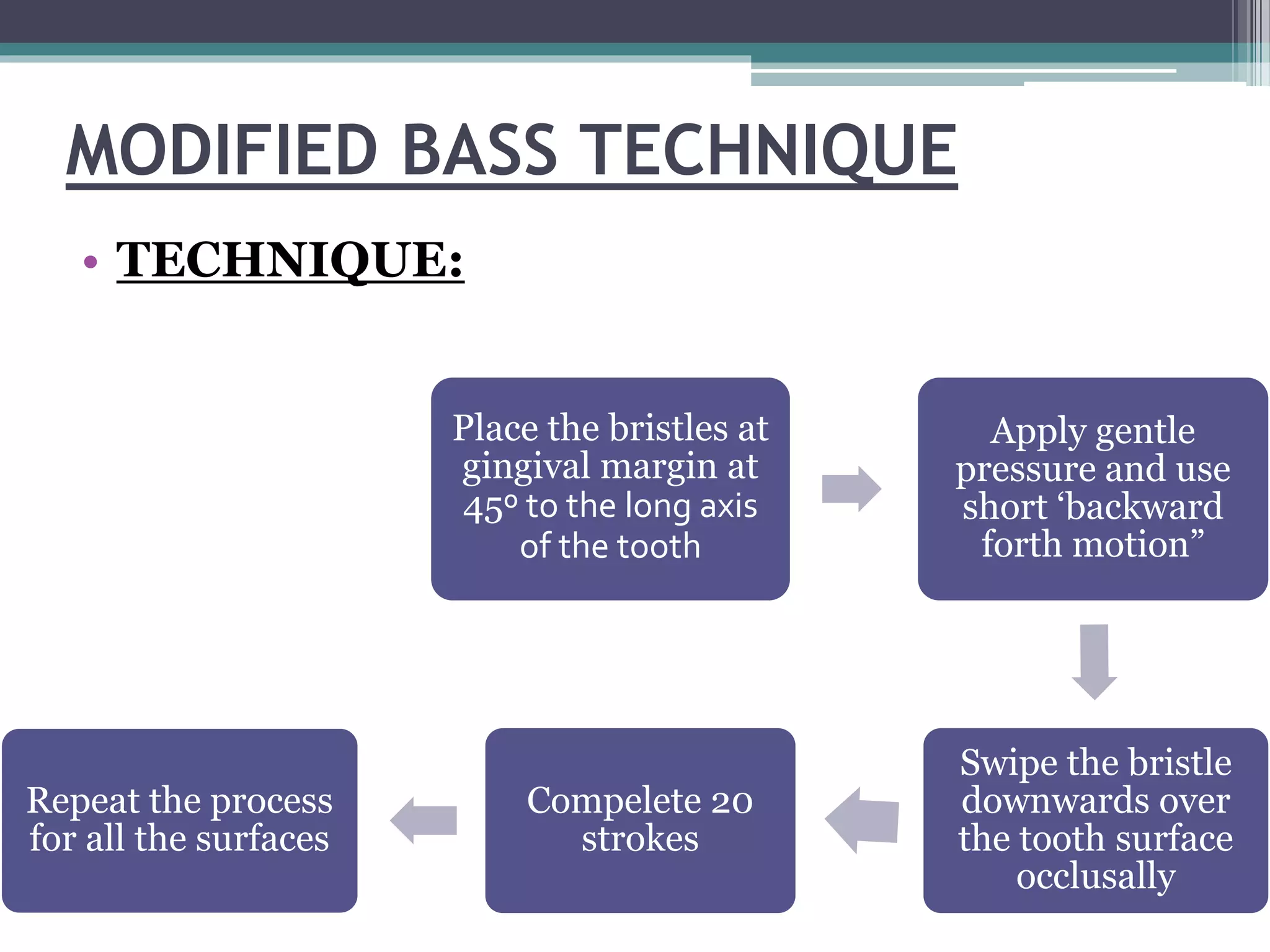
MODIFIED BASS TECHNIQUE
• TECHNIQUE:
Place the bristles at
gingival margin at
45º to the long axis
of the tooth
Apply gentle
pressure and use
short ‘backward
forth motion”
Swipe the bristle
downwards over
the tooth surface
occlusally
Compelete 20
strokes
Repeat the process
for all the surfaces
STILLMAN’S METHOD
• TECHNIQUE:
Place the bristle
ends at 45º angle
Bristle partly on
gingiva and partly
on cervical portion
of the teeth
Apply the gentle
pressure
Firm rotary
motion is
applied to the
brush with the
bristle
remaining in
the same
position
ADVANTAGES
• It removes
soft deposites
from cervical
areas
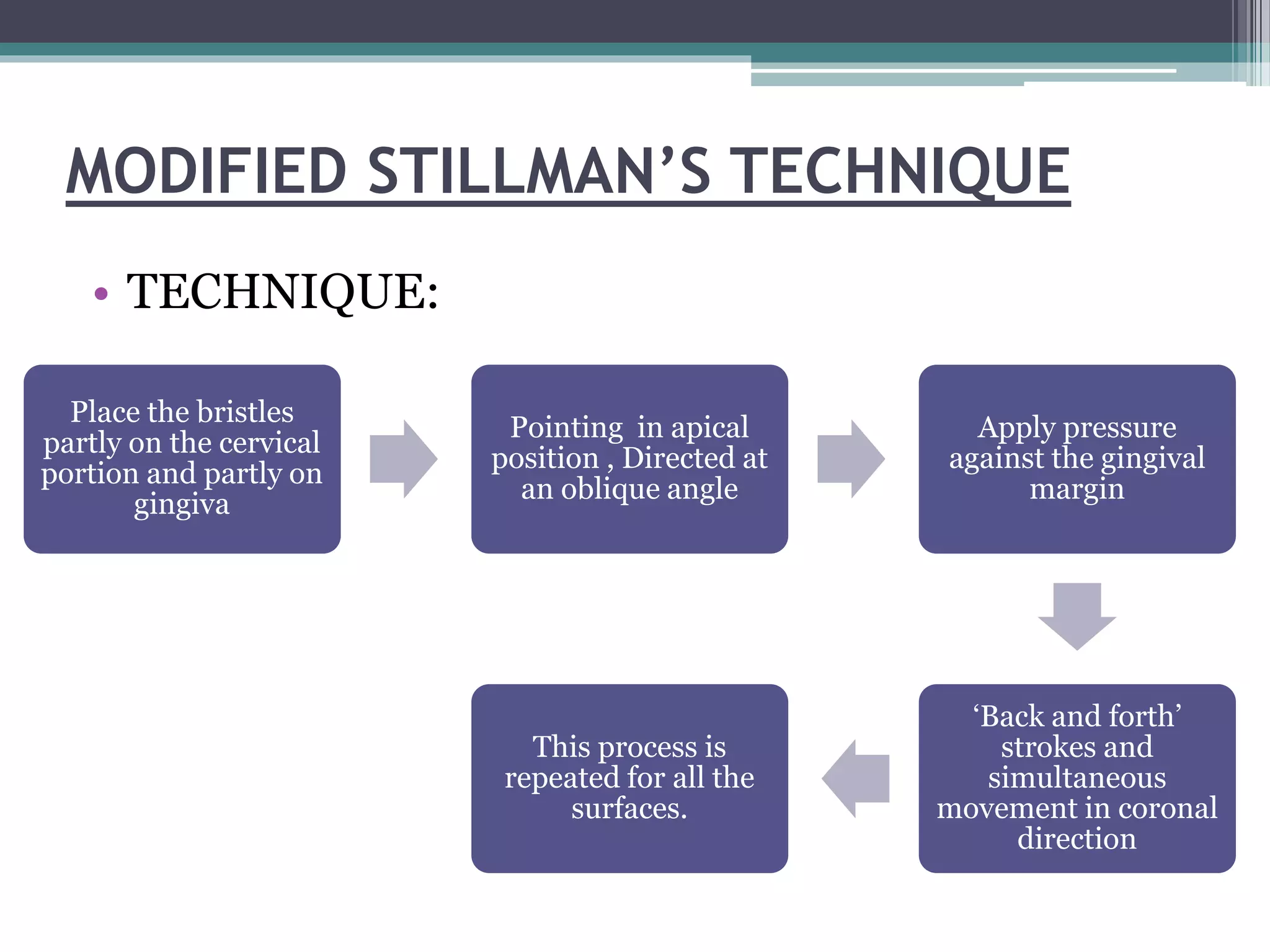
MODIFIED STILLMAN’S TECHNIQUE
• TECHNIQUE:
Place the bristles
partly on the cervical
portion and partly on
gingiva
Pointing in apical
position , Directed at
an oblique angle
Apply pressure
against the gingival
margin
‘Back and forth’
strokes and
simultaneous
movement in coronal
direction
This process is
repeated for all the
surfaces.
ADVANTAGES
• For cleaning
areas with
progressing
gingival
recession and
root exposure.
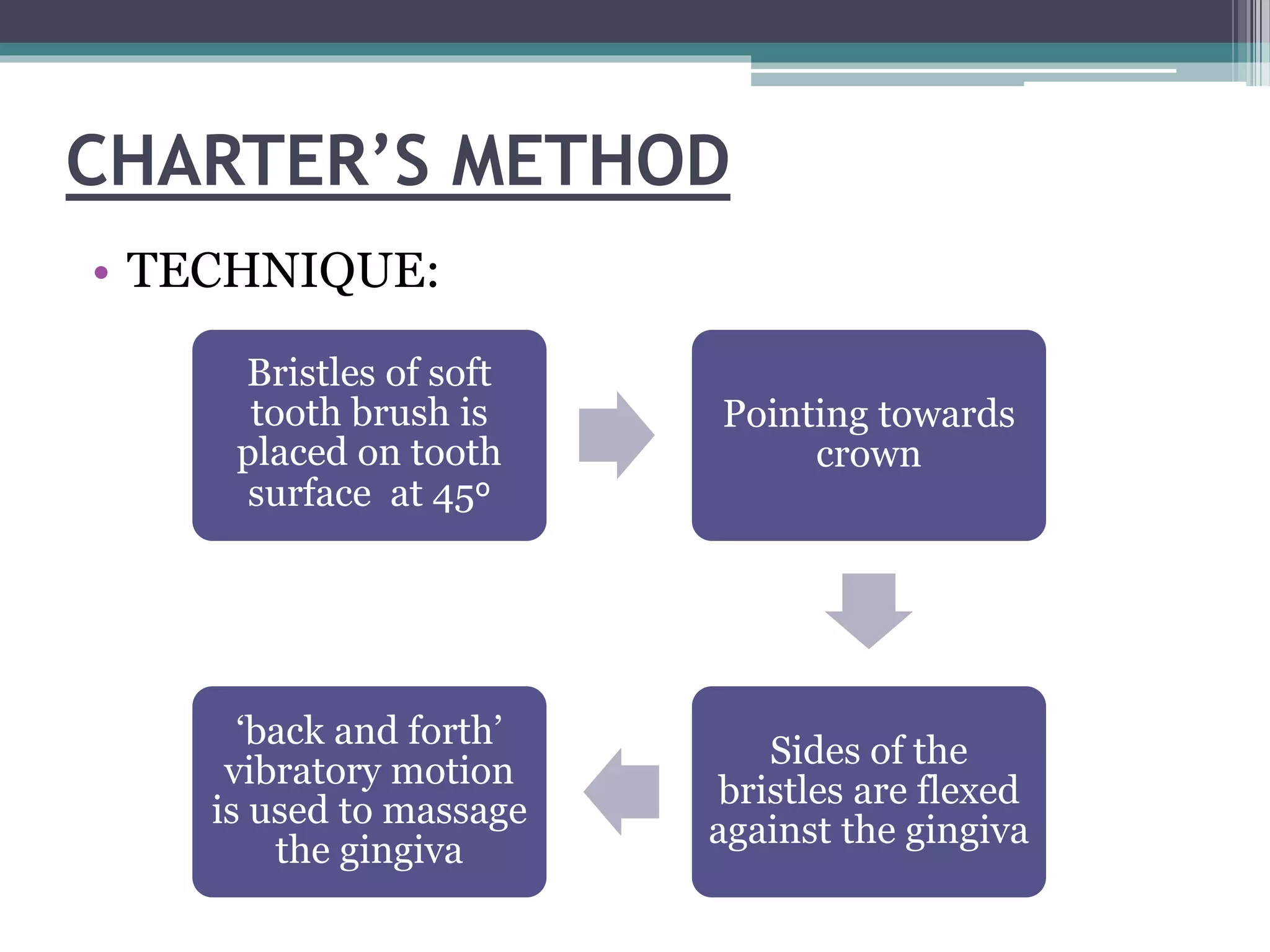
CHARTER’S METHOD
• TECHNIQUE:
Bristles of soft
tooth brush is
placed on tooth
surface at 45º
Pointing towards
crown
Sides of the
bristles are flexed
against the gingiva
‘back and forth’
vibratory motion
is used to massage
the gingiva
ADVATAGES
• Used in case of
receded interdental
papilla
• For gentle plaque
removal
• For temporary
cleaning after
periodontal surgery
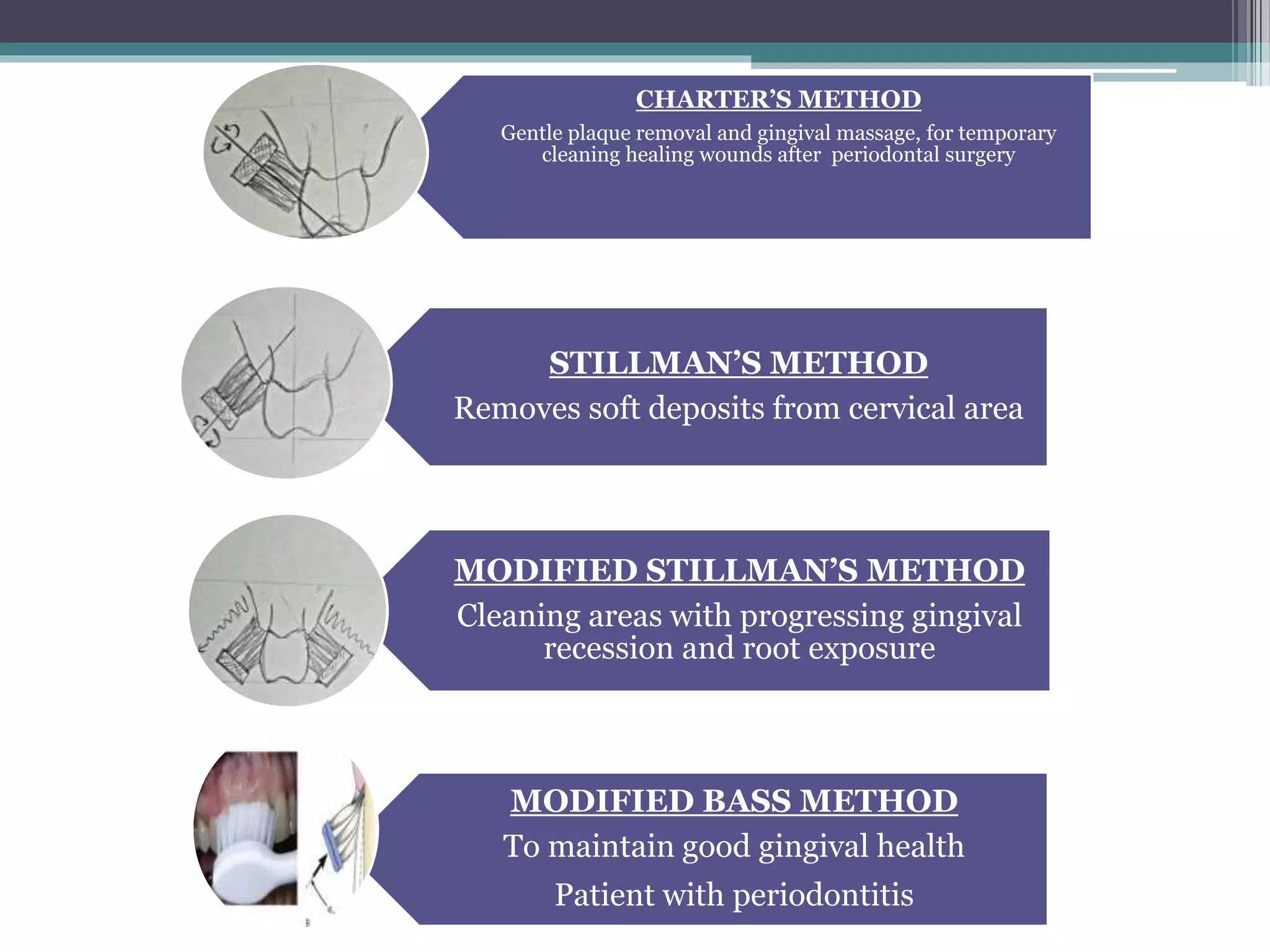
STILLMAN’S METHOD
Removes soft deposits from cervical area
CHARTER’S METHOD
Gentle plaque removal and gingival massage, for temporary
cleaning healing wounds after periodontal surgery
MODIFIED STILLMAN’S METHOD
Cleaning areas with progressing gingival
recession and root exposure
MODIFIED BASS METHOD
To maintain good gingival health
Patient with periodontitis
Brushing techniques

Brushing techniques

  • 1.
  • 2.
    CONTENT • Brushing motions •Scrub technique • Roll method (Fones technique) • Bass method • Modified Bass technique • Stillman’s method • Modified Stillman’s technique • Charter,s method
  • 3.
  • 4.
    SCRUB (RECIPROCATING) METHOD •TECHNIQUE Place the bristle on tooth surface Move them back and forth • Easy to master ADVANTAGE • Poor plaque removal • Cause cervical abrasion DISADVANTAGE
  • 5.
    ROLL METHOD/FONES TECHNIQUE Placethe bristles on tooth surface apically Swept in occlusal direction with rolling motion • Easy to learnADVANTAGE • Trauma to gingiva • Interdental areas are not properly clean DISADVANTAGE
  • 6.
    BASS METHOD • Alsoknown as INTRASULULAR METHOD • Vibratory motion is used • TECHNIQUE : Place the bristles at gingival margin at 45º to the long axis of the tooth Apply gentle pressure and use short ‘backward forth motion” Allow bristles into tooth sulci and into interproximal embrassures Complete 20 strokes in same position Repeat the process for all the surfaces
  • 7.
    ADVANTAGES • Easy • Itis concentrated in areas where most of the dental plaque deposition occurs(sulci) DISADVANTAGES • Gingival margin and tooth surfaces are neglected • Trauma to attached gingiva and alveolar mucosa
  • 8.
    MODIFIED BASS TECHNIQUE •TECHNIQUE: Place the bristles at gingival margin at 45º to the long axis of the tooth Apply gentle pressure and use short ‘backward forth motion” Swipe the bristle downwards over the tooth surface occlusally Compelete 20 strokes Repeat the process for all the surfaces
  • 10.
    STILLMAN’S METHOD • TECHNIQUE: Placethe bristle ends at 45º angle Bristle partly on gingiva and partly on cervical portion of the teeth Apply the gentle pressure Firm rotary motion is applied to the brush with the bristle remaining in the same position
  • 11.
    ADVANTAGES • It removes softdeposites from cervical areas
  • 12.
    MODIFIED STILLMAN’S TECHNIQUE •TECHNIQUE: Place the bristles partly on the cervical portion and partly on gingiva Pointing in apical position , Directed at an oblique angle Apply pressure against the gingival margin ‘Back and forth’ strokes and simultaneous movement in coronal direction This process is repeated for all the surfaces.
  • 13.
    ADVANTAGES • For cleaning areaswith progressing gingival recession and root exposure.
  • 14.
    CHARTER’S METHOD • TECHNIQUE: Bristlesof soft tooth brush is placed on tooth surface at 45º Pointing towards crown Sides of the bristles are flexed against the gingiva ‘back and forth’ vibratory motion is used to massage the gingiva
  • 15.
    ADVATAGES • Used incase of receded interdental papilla • For gentle plaque removal • For temporary cleaning after periodontal surgery
  • 16.
    STILLMAN’S METHOD Removes softdeposits from cervical area CHARTER’S METHOD Gentle plaque removal and gingival massage, for temporary cleaning healing wounds after periodontal surgery MODIFIED STILLMAN’S METHOD Cleaning areas with progressing gingival recession and root exposure MODIFIED BASS METHOD To maintain good gingival health Patient with periodontitis