1
Good morning
PLAQUE CONTROL
2
3
Contents :
Classification
Mechanical Plaque Control
 Toothbrush
 Interdental Cleaning Aids
 Oral Irrigation
 Dentifrice
Plaque control in special child
Chemical Plaque Control
 Classification
 Various Chemical Agents Used
Conclusion
References
4
INTRODUCTION
Removal of the plaque and the prevention of its accumulation on the teeth and
adjacent gingival surfaces.
OBJECTIVES
 Removal of soft deposits on the teeth and gingival tissues.
 Gingival stimulation
 Loe and his colleagues in n1965
 Sanders 1962
 Lang 1973
PLAQUE
CONTROL
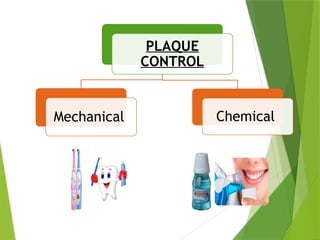
Mechanical Chemical
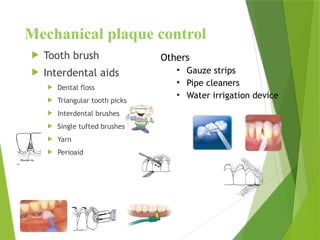
Mechanical plaque control
 Tooth brush
 Interdental aids
 Dental floss
 Triangular tooth picks
 Interdental brushes
 Single tufted brushes
 Yarn
 Perioaid
Others
• Gauze strips
• Pipe cleaners
• Water irrigation device
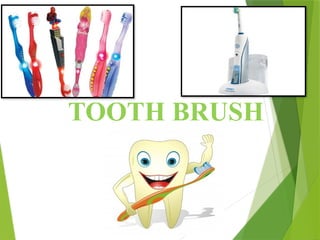
TOOTH BRUSH
8
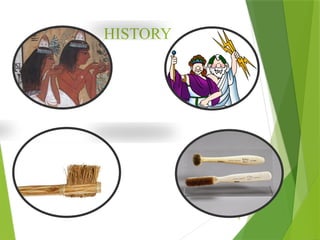
HISTORY
9
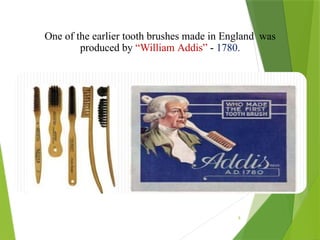
One of the earlier tooth brushes made in England was
produced by “William Addis” - 1780.
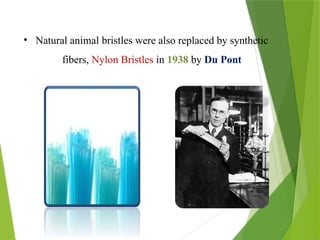
• Natural animal bristles were also replaced by synthetic
fibers, Nylon Bristles in 1938 by Du Pont
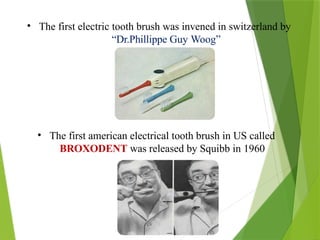
• The first electric tooth brush was invened in switzerland by
“Dr.Phillippe Guy Woog”
• The first american electrical tooth brush in US called
BROXODENT was released by Squibb in 1960
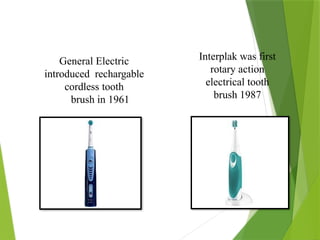
General Electric
introduced rechargable
cordless tooth
brush in 1961
Interplak was first
rotary action
electrical tooth
brush 1987
13
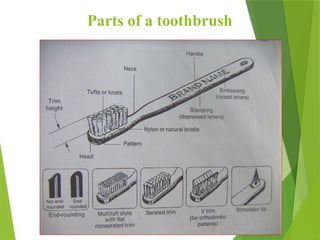
Parts of a toothbrush
IDEAL REQUIREMENTS
 Use of soft filament configurations
 Filament patterns which enhance plaque removal in the
interproximal spaces and along the gum line.
 Inexpensive, durable, impervious to moisture, and easily cleaned.
14
Tooth brush
ADA SPECIFICATION:
 Total brush length is about 15 cm.
 Head should be only large enough to accommodate the tufts.
 Length of brushing plane 25.4 mm to 31.8 mm,
 width 7.9 to 9.5 mm.
 Bristle or filament height 11 mm.
 2-4 rows of bristles, 5-12 tufts in each row.
15
16
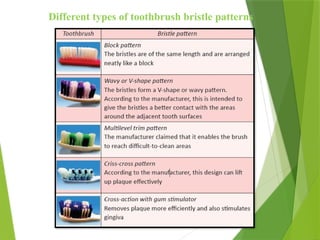
Different types of toothbrush bristle patterns
TEXTURE AND FILAMENT
 The texture of a toothbrush is determined by
 Diameter
 Length
 Size of the hole
 Number of tufts in a given area
 Number of filaments
 BRISTLES TEXTURE
 Made of highest quality nylon usually 0.007 or 0.008 inches
(0.1778 or 0.2032 mm) in diameter
17
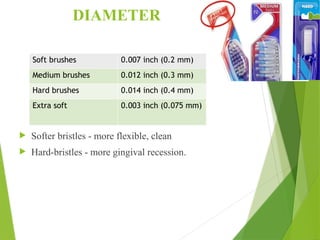
DIAMETER
 Softer bristles - more flexible, clean
 Hard-bristles - more gingival recession.
Soft brushes 0.007 inch (0.2 mm)
Medium brushes 0.012 inch (0.3 mm)
Hard brushes 0.014 inch (0.4 mm)
Extra soft 0.003 inch (0.075 mm)
19
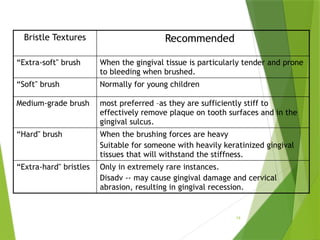
Bristle Textures Recommended
“Extra-soft" brush When the gingival tissue is particularly tender and prone
to bleeding when brushed.
“Soft" brush Normally for young children
Medium-grade brush most preferred –as they are sufficiently stiff to
effectively remove plaque on tooth surfaces and in the
gingival sulcus.
“Hard" brush When the brushing forces are heavy
Suitable for someone with heavily keratinized gingival
tissues that will withstand the stiffness.
“Extra-hard" bristles Only in extremely rare instances.
Disadv -- may cause gingival damage and cervical
abrasion, resulting in gingival recession.
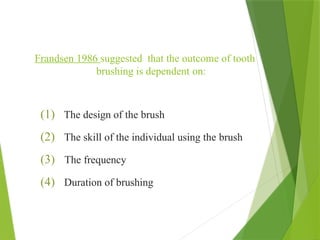
Frandsen 1986 suggested that the outcome of tooth
brushing is dependent on:
(1) The design of the brush
(2) The skill of the individual using the brush
(3) The frequency
(4) Duration of brushing
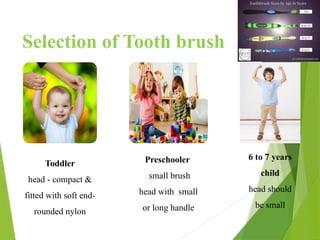
Selection of Tooth brush
Toddler
head - compact &
fitted with soft end-
rounded nylon
Preschooler
small brush
head with small
or long handle
6 to 7 years
child
head should
be small
How to brush?
Brushing Techniques?
The Bass method / Sulcular
brushing
Dr. C.C. Bass in 1948.
 Rationale: To eliminate soft food debris and bacterial plaque
that has accumulated at the gingival margin as well as
beneath the marginal tissue within the sulcus.
I. Purposes and Indications
 For all patients for bacterial plaque removal adjacent to
and directly beneath the gingival margin.
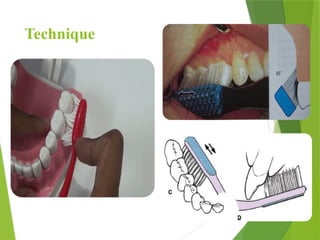
Technique
• Cervical and interproximal area
of posterior teeth
• Easy to master.
• Provides good gingival
stimulation.
• Very-short strokes into a scrub-
brush technique may cause
injury to the gingival margin.
• Dexterity requirement may be
too high for certain patients.
• Time consuming.
ADVANTAGES LIMITATIONS
Modified Bass
 After the placement and slight vibratory – pressure motion, the
bristles are swept down over the crown toward the occlusal or
incisal surface.
 Indications:
1. As a routine oral hygiene measure.
2. For intrasulcular cleansing.
Technique
• Excellent sulcus cleansing.
• Good interproximal and
gingival cleaning.
• Good gingival stimulation.
• Time consuming
• Gingival margin injury
• Patients may tend to roll the
brush down over the crown
prematurely, thereby
accomplishing very little
sulcular brushing.
LIMITATIONS
ADVANTAGES
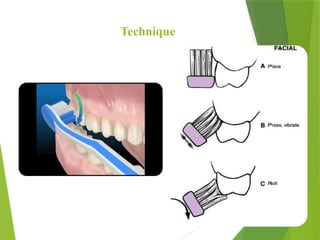
Roll/ rolling stroke/ sweep
method
Purposes and indication
 Cleaning gingiva and removal of plaque from the teeth
without emphasis on gingival sulcus.
 For children where a sulcular technique may seem
difficult for the patient to master.
 In conjunction with the use of a vibratory technique
 Preparatory instruction for Modified Stillman technique
Technique
Disadvantages
 Laceration of the alveolar mucosa.
 No brushing in the cervical third and interproximal areas.
 Replacing brush with filament tips directed into the gingiva can
produce punctate lesions.
 Requires some dexterity around the wrist.
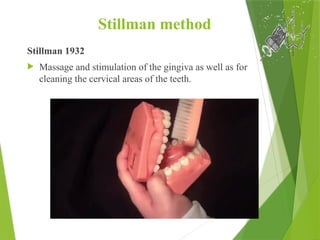
Stillman method
Stillman 1932
 Massage and stimulation of the gingiva as well as for
cleaning the cervical areas of the teeth.
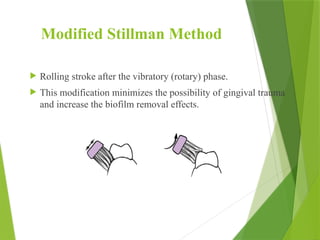
Modified Stillman Method
 Rolling stroke after the vibratory (rotary) phase.
 This modification minimizes the possibility of gingival trauma
and increase the biofilm removal effects.
Purpose and indications
 Plaque removal from cervical areas below the height of contour of the
crown and from exposed proximal surfaces.
 Cleaning tooth surfaces and massage of the gingiva.
 For cleaning in areas with progressive gingival recession and root
exposure to minimize abrasive tissue destruction.
Disadvantages
1. Tissue laceration can result when a hard brush is used
2. May be ineffective for plaque removal at the gingival margin.
3. Time consuming.
4. Improper brushing can damage epithelial attachment.
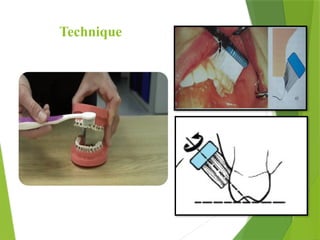
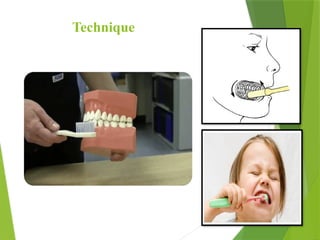
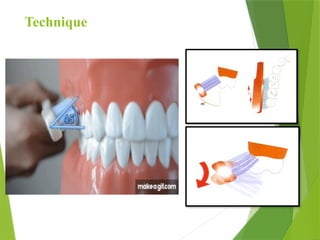
Charter’s method
Dr.W.J.Charters 1928,
 Stimulate the gingival margin “All around each tooth, especially
in the interdental spaces.”
Purpose and Indications
 Loosening of debris and bacterial plaque.
Massage and stimulation for marginal and interdental gingiva.
Recommended for cleaning in areas of healing wounds after
periodontal surgery.
Technique
Disadvantages
1. Brush ends do not engage the gingival sulcus to remove subgingival
bacterial accumulation.
2. In some areas, the correct brush placement is limited or impossible
3. Requirements in digital dexterity are high.
Fones method/ Circular scrub method
Alfred. C.Fones 1934
 Who founded the first course for dental hygienists.
 For young children and for patients with limited dexterity.
 A soft brush - 0.006 to 0.008 inch filament diameter is selected.
Technique
• It is easy to learn.
• Shorter time.
• Patients who lack dexterity,
physically or emotionally
handicapped individuals.
• Possible trauma to gingiva.
• Interdental areas not properly
reached.
• Detrimental to adults who use
the brush vigorously.
ADVANTAGES LIMITATIONS
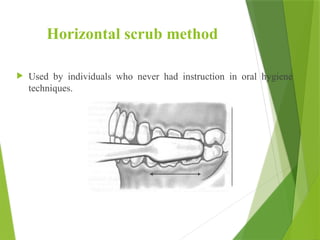
Horizontal scrub method
 Used by individuals who never had instruction in oral hygiene
techniques.
Toothbrush Types
 Oscillating
a. counter
b. rotation
 Ultrasonic
 Sonic
 Circular
 Head Types
 Sub-Compact
 Standard
 Round
 Rectangular/Tapered
 Bristle Types
 Soft
 Extra Soft
 Sensitive
 Extra Sensitive.
43
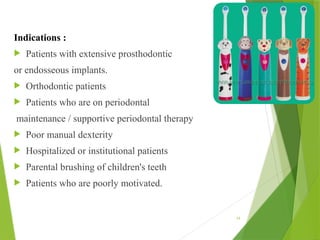
Indications :
 Patients with extensive prosthodontic
or endosseous implants.
 Orthodontic patients
 Patients who are on periodontal
maintenance / supportive periodontal therapy
 Poor manual dexterity
 Hospitalized or institutional patients
 Parental brushing of children's teeth
 Patients who are poorly motivated.
44
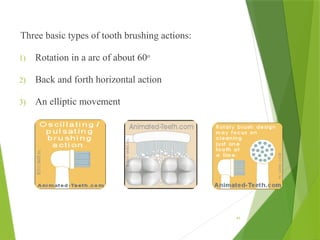
Three basic types of tooth brushing actions:
1) Rotation in a arc of about 60o
2) Back and forth horizontal action
3) An elliptic movement
45
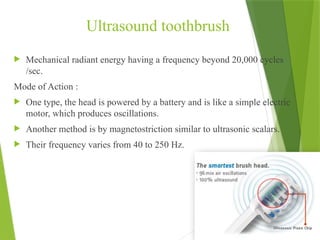
Ultrasound toothbrush
 Mechanical radiant energy having a frequency beyond 20,000 cycles
/sec.
Mode of Action :
 One type, the head is powered by a battery and is like a simple electric
motor, which produces oscillations.
 Another method is by magnetostriction similar to ultrasonic scalars.
 Their frequency varies from 40 to 250 Hz.
46
 3 minutes of normal brushing
2 times – removes 97% of
bacterial plaque
 Clinically proven safe, gentle
and incredibly effective
 Not used in patients with
cardiac pacemakers
 Not used by young children
47
LIMITATIONS
ADVANTAGES
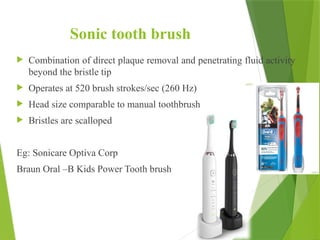
Sonic tooth brush
 Combination of direct plaque removal and penetrating fluid activity
beyond the bristle tip
 Operates at 520 brush strokes/sec (260 Hz)
 Head size comparable to manual toothbrush
 Bristles are scalloped
Eg: Sonicare Optiva Corp
Braun Oral –B Kids Power Tooth brush
48
49
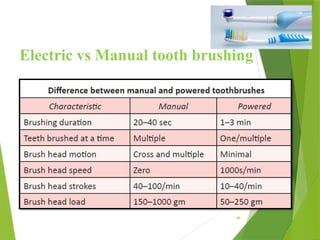
Electric vs Manual tooth brushing
50
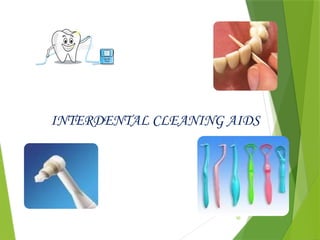
INTERDENTAL CLEANING AIDS
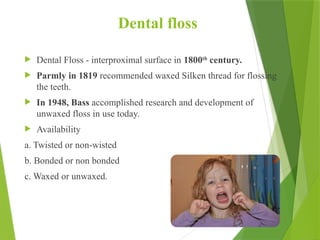
Dental floss
 Dental Floss - interproximal surface in 1800th
century.
 Parmly in 1819 recommended waxed Silken thread for flossing
the teeth.
 In 1948, Bass accomplished research and development of
unwaxed floss in use today.
 Availability
a. Twisted or non-wisted
b. Bonded or non bonded
c. Waxed or unwaxed.
51
Acc. To ADA specification
 Type I- Unbonded dental floss composed of yarn having no
additive
 Type II-Bonded dental floss composed of yarn having additives.
Other than binding agent or agent for cosmetic performance
 Type III-Bonded or unbonded having drug for therapeutic
usage.
52
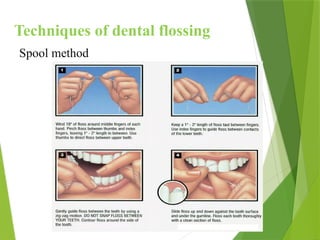
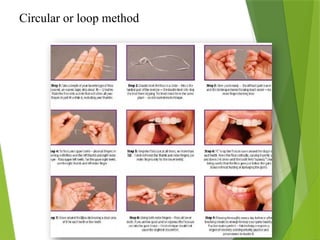
Techniques of dental flossing
Spool method
Circular or loop method
55
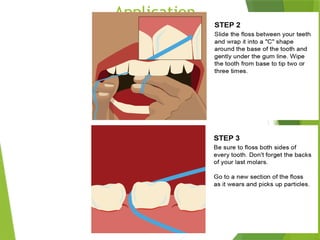
Application
Introduction: The various methods for plaque control include mechanical plaque control
methods which comprises use of toothbrushes, flosses, interdental brushes, and chemical
plaque control which includes mouthwashes, dentrifices. The need for the study was to prove
the efficacy of flossing in children using gumchucks.
Materials and methods: A total sample size of 24 children age groups 6–12 years according to
chronological age were selected. In 12 patients, flossing using gumchucks was done and in 12
patients flossing using unwaxed floss without handle was done. Proximal plaque index was
taken at 0,2,4,6 weeks to assess the efficacy of both types of floss in removal of interproximal
plaque. At the end of 6 weeks, patient’s parents were asked to fill up the questionnaire.
Results: In the intragroup comparison for gumchucks, significant plaque reductions were
found at 4 and 6 weeks. In the intragroup comparison for unwaxed floss, significant reduction
for plaque marginal index were recorded from baseline to 2 and 4 weeks. In the intergroup
comparison, significant reduction in plaque index was recorded at 4 and 6 weeks.
Conclusion: Gumchucks have the high efficacy of plaque removal as well as easy in use for
children routinely. Also when surveyed majority of the patents preferred gumchucks if
available in the stores.
56
Comparison of Plaque Removal Efficacy of A Novel Flossing Agent with
the Conventional Floss: A Clinical Study by 1 Shital DP Kiran, et al
( 2019) IJCPD
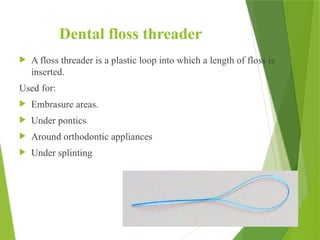
Dental floss threader
 A floss threader is a plastic loop into which a length of floss is
inserted.
Used for:
 Embrasure areas.
 Under pontics
 Around orthodontic appliances
 Under splinting
57
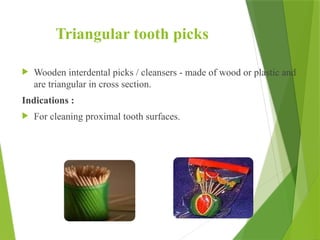
Triangular tooth picks
 Wooden interdental picks / cleansers - made of wood or plastic and
are triangular in cross section.
Indications :
 For cleaning proximal tooth surfaces.
58
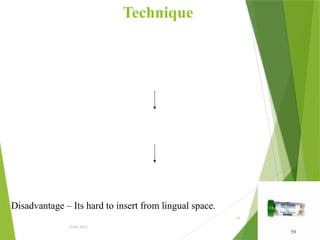
Technique
23-01-2012
59
Disadvantage – Its hard to insert from lingual space.
59
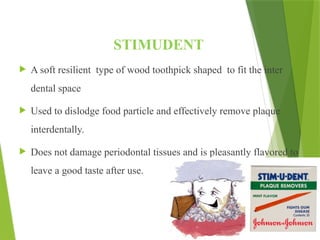
STIMUDENT
 A soft resilient type of wood toothpick shaped to fit the inter
dental space
 Used to dislodge food particle and effectively remove plaque
interdentally.
 Does not damage periodontal tissues and is pleasantly flavored to
leave a good taste after use.
60
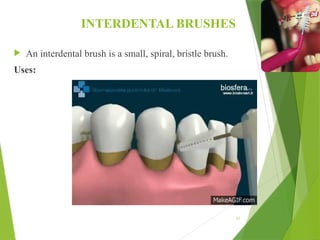
INTERDENTAL BRUSHES
 An interdental brush is a small, spiral, bristle brush.
Uses:
61
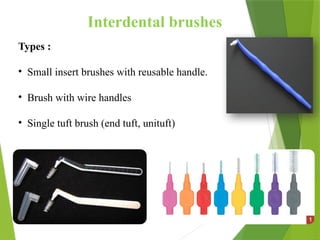
Interdental brushes
Types :
• Small insert brushes with reusable handle.
• Brush with wire handles
• Single tuft brush (end tuft, unituft)
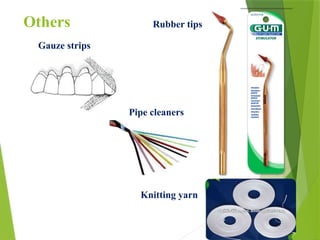
Others
63
Gauze strips
Pipe cleaners
Rubber tips
Knitting yarn
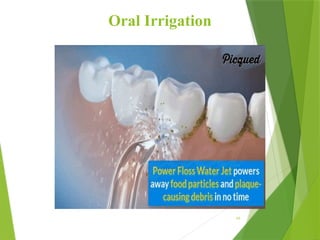
Oral Irrigation
64
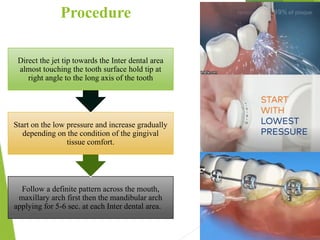
Procedure
65
Follow a definite pattern across the mouth,
maxillary arch first then the mandibular arch
applying for 5-6 sec. at each Inter dental area.
Start on the low pressure and increase gradually
depending on the condition of the gingival
tissue comfort.
Direct the jet tip towards the Inter dental area
almost touching the tooth surface hold tip at
right angle to the long axis of the tooth
Advantages of Oral Irrigation :
 Reduction of Gingivitis
 Subgingival access.
 Reduction or alteration of microbial flora
 Delivering antimicrobial agents
 When used as adjunct to tooth brushing- retard formation of plaque
and calculus
Contraindications:
 Advanced periodontitis
 Medically compromised patients
66
67
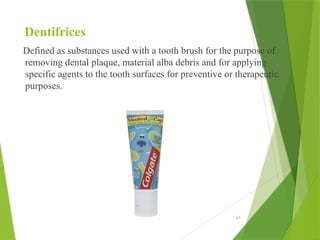
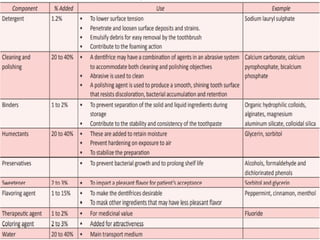
Dentifrices
Defined as substances used with a tooth brush for the purpose of
removing dental plaque, material alba debris and for applying
specific agents to the tooth surfaces for preventive or therapeutic
purposes.
68
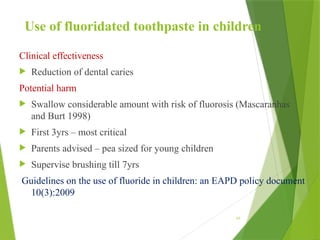
Use of fluoridated toothpaste in children
Clinical effectiveness
 Reduction of dental caries
Potential harm
 Swallow considerable amount with risk of fluorosis (Mascaranhas
and Burt 1998)
 First 3yrs – most critical
 Parents advised – pea sized for young children
 Supervise brushing till 7yrs
Guidelines on the use of fluoride in children: an EAPD policy document
10(3):2009
69
70
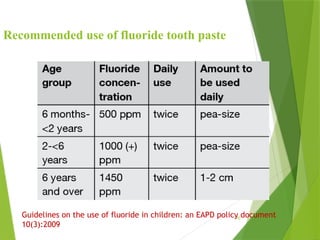
Recommended use of fluoride tooth paste
Guidelines on the use of fluoride in children: an EAPD policy document
10(3):2009
71
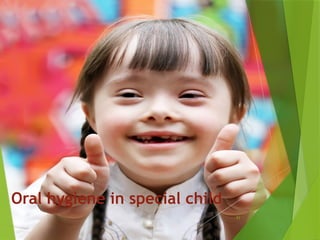
Oral hygiene in special child
72
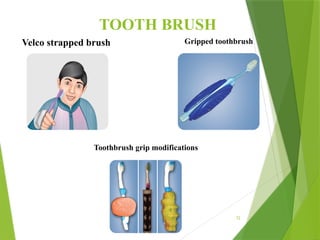
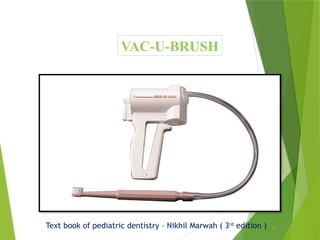
TOOTH BRUSH
Velco strapped brush Gripped toothbrush
Toothbrush grip modifications
73
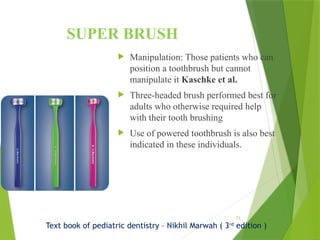
SUPER BRUSH
 Manipulation: Those patients who can
position a toothbrush but cannot
manipulate it Kaschke et al.
 Three-headed brush performed best for
adults who otherwise required help
with their tooth brushing
 Use of powered toothbrush is also best
indicated in these individuals.
Text book of pediatric dentistry – Nikhil Marwah ( 3rd
edition )
74
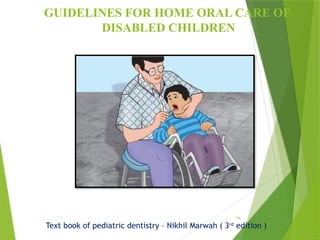
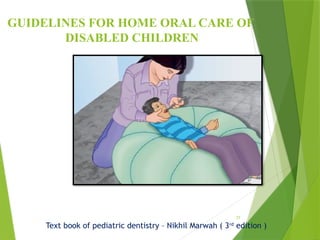
GUIDELINES FOR HOME ORAL CARE OF
DISABLED CHILDREN
Text book of pediatric dentistry – Nikhil Marwah ( 3rd
edition )
75
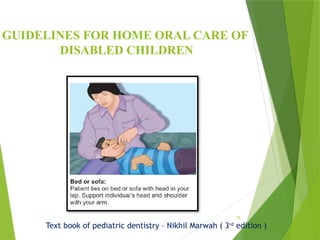
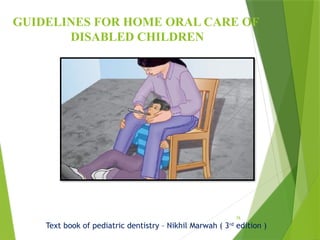
GUIDELINES FOR HOME ORAL CARE OF
DISABLED CHILDREN
Text book of pediatric dentistry – Nikhil Marwah ( 3rd
edition )
76
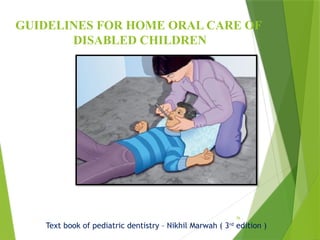
GUIDELINES FOR HOME ORAL CARE OF
DISABLED CHILDREN
Text book of pediatric dentistry – Nikhil Marwah ( 3rd
edition )
77
GUIDELINES FOR HOME ORAL CARE OF
DISABLED CHILDREN
Text book of pediatric dentistry – Nikhil Marwah ( 3rd
edition )
78
GUIDELINES FOR HOME ORAL CARE OF
DISABLED CHILDREN
Text book of pediatric dentistry – Nikhil Marwah ( 3rd
edition )
79
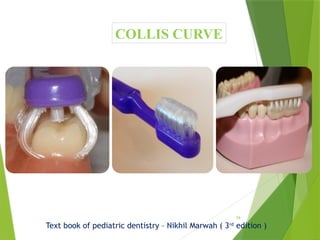
COLLIS CURVE
Text book of pediatric dentistry – Nikhil Marwah ( 3rd
edition )
80
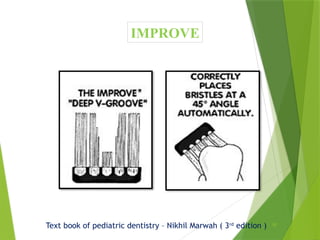
IMPROVE
Text book of pediatric dentistry – Nikhil Marwah ( 3rd
edition )
81
VAC-U-BRUSH
Text book of pediatric dentistry – Nikhil Marwah ( 3rd
edition )
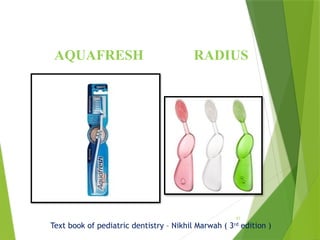
AQUAFRESH RADIUS
82
Text book of pediatric dentistry – Nikhil Marwah ( 3rd
edition )
83
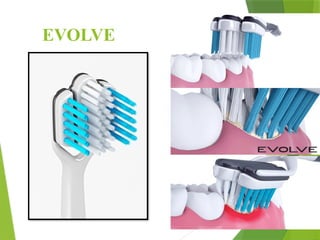
EVOLVE
84
Chemical plaque control
Ideal properties
 Agent should affect only the target tissue.
 Active agents should remain at the site of the action for a time sufficient
 Agent should be safe to the oral tissues
 Agent should be safe to ingest at a level expected
 Agent should have desirable characteristics that enhance compliance with a
preventive regimen.
 Inexpensive.
 Agent should produce meaningful reduction in gingivitis or periodontitis, or both.
Mitchell, E.: Ideal properties. J. Am. Dent. Assoc., 112:24, 1986.
Jafer M, Patil S, Hosmani J, Bhandi SH, Chalisserry EP, Anil S. Chemical Plaque Control
Strategies in the Prevention of Biofilm-associated Oral Diseases. J Contemp Dent Pract
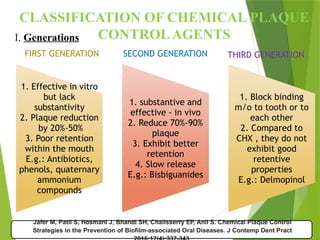
CLASSIFICATION OF CHEMICAL PLAQUE
CONTROLAGENTS
1. Effective in vitro
but lack
substantivity
2. Plaque reduction
by 20%-50%
3. Poor retention
within the mouth
E.g.: Antibiotics,
phenols, quaternary
ammonium
compounds
1. substantive and
effective - in vivo
2. Reduce 70%-90%
plaque
3. Exhibit better
retention
4. Slow release
E.g.: Bisbiguanides
1. Block binding
m/o to tooth or to
each other
2. Compared to
CHX , they do not
exhibit good
retentive
properties
E.g.: Delmopinol
I. Generations
FIRST GENERATION SECOND GENERATION THIRD GENERATION
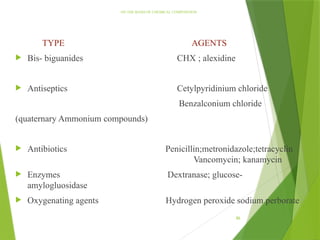
ON THE BASIS OF CHEMICAL COMPOSITION
TYPE AGENTS
 Bis- biguanides CHX ; alexidine
 Antiseptics Cetylpyridinium chloride
Benzalconium chloride
(quaternary Ammonium compounds)
 Antibiotics Penicillin;metronidazole;tetracyclin
Vancomycin; kanamycin
 Enzymes Dextranase; glucose-
amylogluosidase
 Oxygenating agents Hydrogen peroxide sodium perborate
86
87
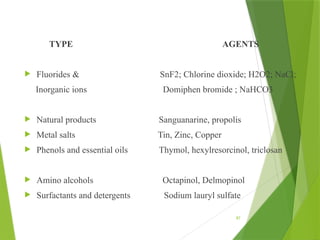
TYPE AGENTS
 Fluorides & SnF2; Chlorine dioxide; H2O2; NaCl;
Inorganic ions Domiphen bromide ; NaHCO3
 Natural products Sanguanarine, propolis
 Metal salts Tin, Zinc, Copper
 Phenols and essential oils Thymol, hexylresorcinol, triclosan
 Amino alcohols Octapinol, Delmopinol
 Surfactants and detergents Sodium lauryl sulfate
88
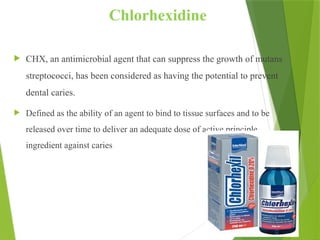
Chlorhexidine
 CHX, an antimicrobial agent that can suppress the growth of mutans
streptococci, has been considered as having the potential to prevent
dental caries.
 Defined as the ability of an agent to bind to tissue surfaces and to be
released over time to deliver an adequate dose of active principle
ingredient against caries
89
 Adjunct to mechanical oral hygiene
 20
prevention
 Plaque control among physically and mentally handicapped
children
 Fixed orthodontic appliance wearers
 Medically compromised patients
 High caries risk patients
 In pts with IMF
Martin Addy & John M Moran (1997)
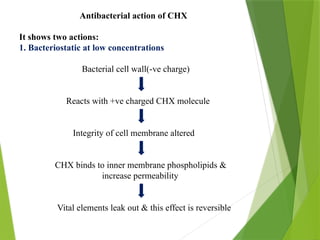
Antibacterial action of CHX
It shows two actions:
1. Bacteriostatic at low concentrations
Bacterial cell wall(-ve charge)
Reacts with +ve charged CHX molecule
Integrity of cell membrane altered
CHX binds to inner membrane phospholipids &
increase permeability
Vital elements leak out & this effect is reversible
91
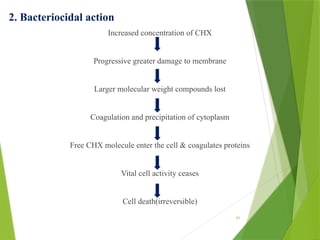
2. Bacteriocidal action
Increased concentration of CHX
Progressive greater damage to membrane
Larger molecular weight compounds lost
Coagulation and precipitation of cytoplasm
Free CHX molecule enter the cell & coagulates proteins
Vital cell activity ceases
Cell death(irreversible)
92
Comparing the effect of 0.06% -, 0.12% and 0.2% Chlorhexidine
on plaque, bleeding and side effects in an experimental gingivitis
model: a parallel group, double masked randomized clinical trial
Maliha Haydari et al (2018) BMC
Abstract: Chlorhexidine is the gold standard of dental plaque prevention. The aim of the
present study was to compare the plaque and gingivitis inhibiting effect of commercial
products containing 0.2%, 0.12% and 0.06% chlorhexidine in a modified experimental
gingivitis model.
Methods: In three groups of healthy volunteers, experimental gingivitis was induced and
monitored over 21 days and simultaneously treated with the commercial solutions containing
0.2%, 0.12% and 0.06% chlorhexidine. The maxillary right quadrant of each individual
received mouthwash only, whereas the maxillary left quadrant was subject to both rinsing
and mechanical oral hygiene. Compliance and side effects were monitored at days 7, 14, and
21. Plaque and gingivitis scores were obtained at baseline and day 21.
Results: The commercial mouthwash containing 0.2% chlorhexidine resulted in statistically
significantly lower plaque scores than the 0.12 and 0.06% mouthwashes after 21 days use,
whereas no statistically significant difference was found between the effects of the two latter.
Conclusion: A commercially available mouthwash containing 0.2% chlorhexidine had
statistically significant better effect in preventing dental plaque than the 0.12% and 0.06%
solutions. Trial registration: ClinicalTrials.gov NCT02911766. Registration date: September
9th 2016.
93
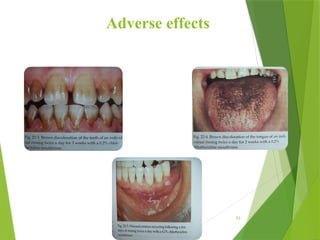
Adverse effects
94
Toxicology, safety and side
effects
 Less absorption through skin and mucosa
 No evidence of teratogenicity
 Hypersensitivity – few reports
 No bacterial resistance reported
 No super infection
95
Various forms
 Mouth rinses
 Gels – 0.12% or 0.2%
 Sprays – 0.1% or 0.12%
 Varnishes
 Chewing gums
 Chlorhexidine chips
Triclosan
 Phenol derivative
 Is synthetic and ionic
 Used as a topical antimicrobial agent
 Broad spectrum of action including both gram positive and gram negative
bacteria
 It also includes mycobacterium spores and Candida species
96
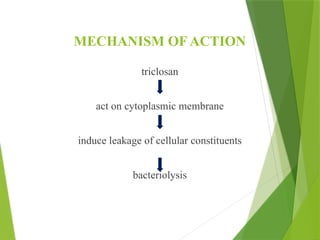
MECHANISM OF ACTION
triclosan
act on cytoplasmic membrane
induce leakage of cellular constituents
bacteriolysis
98
Essential Oil Mouth Wash
 Listerine - phenolic related essential oil.
0.06% thymol,
0.09% eucalytol,
0.04% menthol and
Methyl salicilate
 26.9% or 21.6% alcohol vehicle with a PH of 5.0 or 4.4 .
 They are effective to a lesser degree than Chlorhexidine in plaque
reduction
 Causes an initial burning sensation & bitter taste in mouth
MOA: Cell wall disruption & inhibition of bacterial enzymes
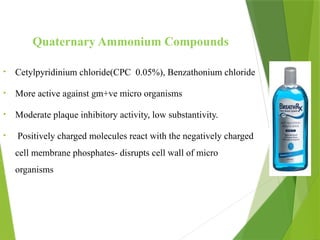
Quaternary Ammonium Compounds
• Cetylpyridinium chloride(CPC 0.05%), Benzathonium chloride
• More active against gm+ve micro organisms
• Moderate plaque inhibitory activity, low substantivity.
• Positively charged molecules react with the negatively charged
cell membrane phosphates- disrupts cell wall of micro
organisms
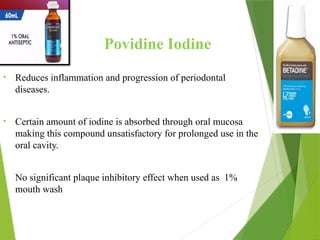
Povidine Iodine
• Reduces inflammation and progression of periodontal
diseases.
• Certain amount of iodine is absorbed through oral mucosa
making this compound unsatisfactory for prolonged use in the
oral cavity.
• No significant plaque inhibitory effect when used as 1%
mouth wash
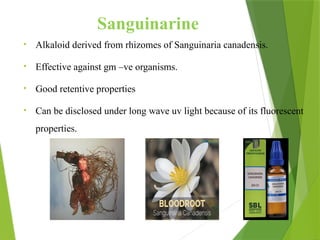
Sanguinarine
• Alkaloid derived from rhizomes of Sanguinaria canadensis.
• Effective against gm –ve organisms.
• Good retentive properties
• Can be disclosed under long wave uv light because of its fluorescent
properties.
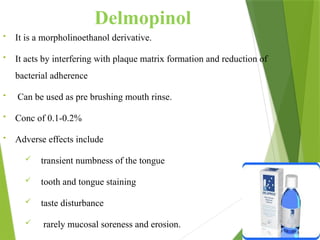
Delmopinol
• It is a morpholinoethanol derivative.
• It acts by interfering with plaque matrix formation and reduction of
bacterial adherence
• Can be used as pre brushing mouth rinse.
• Conc of 0.1-0.2%
• Adverse effects include
 transient numbness of the tongue
 tooth and tongue staining
 taste disturbance
 rarely mucosal soreness and erosion.
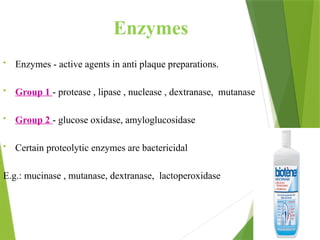
Enzymes
• Enzymes - active agents in anti plaque preparations.
• Group 1 - protease , lipase , nuclease , dextranase, mutanase
• Group 2 - glucose oxidase, amyloglucosidase
• Certain proteolytic enzymes are bactericidal
E.g.: mucinase , mutanase, dextranase, lactoperoxidase
104
CONCLUSION
REFERENCES
• Clinical Periodontology- Carranza F.A, Newman M.G.(10th
ed)
• Text book of pediatric dentistry – Nikhil Marwah ( 3rd
edition )
• Soben Peter – Textbook of community dentistry -3rd
edition.
• Michele Muller, Frederic Coursonb. Toothbrushing Methods to Use in
Children: A Systematic Review. Oral Health Prev Dent 2013;11(4):341-347
• Norman O.Harris. Primary preventive dentistry.
• Nicholas C. Claydon. Current concepts in tooth brushing and interdental
cleaning. Periodontology 2000, vol. 48, 2008, 10–22.
• Mandal A, Singh DK, Siddiqui H, New dimensions in mechanical plaque
control: An overview. Indian J Dent Sci 2017;9:133-9.
• George Philip, Dayakar M M, Vijayalakshmi Divater, Shivprasad :Emerging
concepts in oral chemical Plaque control – an overview
• Jafer M, Patil S, Hosmani J, Bhandi SH, Chalisserry EP, Anil S. Chemical
Plaque Control Strategies in the Prevention of Biofilm-associated Oral
Diseases. J Contemp Dent Pract 2016;17(4):337-343.
106
Thank you

plaque control in children ppt .pptx

  • 1.
  • 2.
  • 3.
    3 Contents : Classification Mechanical PlaqueControl  Toothbrush  Interdental Cleaning Aids  Oral Irrigation  Dentifrice Plaque control in special child Chemical Plaque Control  Classification  Various Chemical Agents Used Conclusion References
  • 4.
    4 INTRODUCTION Removal of theplaque and the prevention of its accumulation on the teeth and adjacent gingival surfaces. OBJECTIVES  Removal of soft deposits on the teeth and gingival tissues.  Gingival stimulation  Loe and his colleagues in n1965  Sanders 1962  Lang 1973
  • 5.
  • 6.
    Mechanical plaque control Tooth brush  Interdental aids  Dental floss  Triangular tooth picks  Interdental brushes  Single tufted brushes  Yarn  Perioaid Others • Gauze strips • Pipe cleaners • Water irrigation device
  • 7.
  • 8.
  • 9.
    9 One of theearlier tooth brushes made in England was produced by “William Addis” - 1780.
  • 10.
    • Natural animalbristles were also replaced by synthetic fibers, Nylon Bristles in 1938 by Du Pont
  • 11.
    • The firstelectric tooth brush was invened in switzerland by “Dr.Phillippe Guy Woog” • The first american electrical tooth brush in US called BROXODENT was released by Squibb in 1960
  • 12.
    General Electric introduced rechargable cordlesstooth brush in 1961 Interplak was first rotary action electrical tooth brush 1987
  • 13.
    13 Parts of atoothbrush
  • 14.
    IDEAL REQUIREMENTS  Useof soft filament configurations  Filament patterns which enhance plaque removal in the interproximal spaces and along the gum line.  Inexpensive, durable, impervious to moisture, and easily cleaned. 14
  • 15.
    Tooth brush ADA SPECIFICATION: Total brush length is about 15 cm.  Head should be only large enough to accommodate the tufts.  Length of brushing plane 25.4 mm to 31.8 mm,  width 7.9 to 9.5 mm.  Bristle or filament height 11 mm.  2-4 rows of bristles, 5-12 tufts in each row. 15
  • 16.
    16 Different types oftoothbrush bristle patterns
  • 17.
    TEXTURE AND FILAMENT The texture of a toothbrush is determined by  Diameter  Length  Size of the hole  Number of tufts in a given area  Number of filaments  BRISTLES TEXTURE  Made of highest quality nylon usually 0.007 or 0.008 inches (0.1778 or 0.2032 mm) in diameter 17
  • 18.
    DIAMETER  Softer bristles- more flexible, clean  Hard-bristles - more gingival recession. Soft brushes 0.007 inch (0.2 mm) Medium brushes 0.012 inch (0.3 mm) Hard brushes 0.014 inch (0.4 mm) Extra soft 0.003 inch (0.075 mm)
  • 19.
    19 Bristle Textures Recommended “Extra-soft"brush When the gingival tissue is particularly tender and prone to bleeding when brushed. “Soft" brush Normally for young children Medium-grade brush most preferred –as they are sufficiently stiff to effectively remove plaque on tooth surfaces and in the gingival sulcus. “Hard" brush When the brushing forces are heavy Suitable for someone with heavily keratinized gingival tissues that will withstand the stiffness. “Extra-hard" bristles Only in extremely rare instances. Disadv -- may cause gingival damage and cervical abrasion, resulting in gingival recession.
  • 20.
    Frandsen 1986 suggestedthat the outcome of tooth brushing is dependent on: (1) The design of the brush (2) The skill of the individual using the brush (3) The frequency (4) Duration of brushing
  • 21.
    Selection of Toothbrush Toddler head - compact & fitted with soft end- rounded nylon Preschooler small brush head with small or long handle 6 to 7 years child head should be small
  • 22.
  • 23.
    The Bass method/ Sulcular brushing Dr. C.C. Bass in 1948.  Rationale: To eliminate soft food debris and bacterial plaque that has accumulated at the gingival margin as well as beneath the marginal tissue within the sulcus. I. Purposes and Indications  For all patients for bacterial plaque removal adjacent to and directly beneath the gingival margin.
  • 24.
  • 25.
    • Cervical andinterproximal area of posterior teeth • Easy to master. • Provides good gingival stimulation. • Very-short strokes into a scrub- brush technique may cause injury to the gingival margin. • Dexterity requirement may be too high for certain patients. • Time consuming. ADVANTAGES LIMITATIONS
  • 26.
    Modified Bass  Afterthe placement and slight vibratory – pressure motion, the bristles are swept down over the crown toward the occlusal or incisal surface.  Indications: 1. As a routine oral hygiene measure. 2. For intrasulcular cleansing.
  • 27.
  • 28.
    • Excellent sulcuscleansing. • Good interproximal and gingival cleaning. • Good gingival stimulation. • Time consuming • Gingival margin injury • Patients may tend to roll the brush down over the crown prematurely, thereby accomplishing very little sulcular brushing. LIMITATIONS ADVANTAGES
  • 29.
    Roll/ rolling stroke/sweep method Purposes and indication  Cleaning gingiva and removal of plaque from the teeth without emphasis on gingival sulcus.  For children where a sulcular technique may seem difficult for the patient to master.  In conjunction with the use of a vibratory technique  Preparatory instruction for Modified Stillman technique
  • 30.
  • 31.
    Disadvantages  Laceration ofthe alveolar mucosa.  No brushing in the cervical third and interproximal areas.  Replacing brush with filament tips directed into the gingiva can produce punctate lesions.  Requires some dexterity around the wrist.
  • 32.
    Stillman method Stillman 1932 Massage and stimulation of the gingiva as well as for cleaning the cervical areas of the teeth.
  • 33.
    Modified Stillman Method Rolling stroke after the vibratory (rotary) phase.  This modification minimizes the possibility of gingival trauma and increase the biofilm removal effects.
  • 34.
    Purpose and indications Plaque removal from cervical areas below the height of contour of the crown and from exposed proximal surfaces.  Cleaning tooth surfaces and massage of the gingiva.  For cleaning in areas with progressive gingival recession and root exposure to minimize abrasive tissue destruction.
  • 35.
    Disadvantages 1. Tissue lacerationcan result when a hard brush is used 2. May be ineffective for plaque removal at the gingival margin. 3. Time consuming. 4. Improper brushing can damage epithelial attachment.
  • 36.
    Charter’s method Dr.W.J.Charters 1928, Stimulate the gingival margin “All around each tooth, especially in the interdental spaces.” Purpose and Indications  Loosening of debris and bacterial plaque. Massage and stimulation for marginal and interdental gingiva. Recommended for cleaning in areas of healing wounds after periodontal surgery.
  • 37.
  • 38.
    Disadvantages 1. Brush endsdo not engage the gingival sulcus to remove subgingival bacterial accumulation. 2. In some areas, the correct brush placement is limited or impossible 3. Requirements in digital dexterity are high.
  • 39.
    Fones method/ Circularscrub method Alfred. C.Fones 1934  Who founded the first course for dental hygienists.  For young children and for patients with limited dexterity.  A soft brush - 0.006 to 0.008 inch filament diameter is selected.
  • 40.
  • 41.
    • It iseasy to learn. • Shorter time. • Patients who lack dexterity, physically or emotionally handicapped individuals. • Possible trauma to gingiva. • Interdental areas not properly reached. • Detrimental to adults who use the brush vigorously. ADVANTAGES LIMITATIONS
  • 42.
    Horizontal scrub method Used by individuals who never had instruction in oral hygiene techniques.
  • 43.
    Toothbrush Types  Oscillating a.counter b. rotation  Ultrasonic  Sonic  Circular  Head Types  Sub-Compact  Standard  Round  Rectangular/Tapered  Bristle Types  Soft  Extra Soft  Sensitive  Extra Sensitive. 43
  • 44.
    Indications :  Patientswith extensive prosthodontic or endosseous implants.  Orthodontic patients  Patients who are on periodontal maintenance / supportive periodontal therapy  Poor manual dexterity  Hospitalized or institutional patients  Parental brushing of children's teeth  Patients who are poorly motivated. 44
  • 45.
    Three basic typesof tooth brushing actions: 1) Rotation in a arc of about 60o 2) Back and forth horizontal action 3) An elliptic movement 45
  • 46.
    Ultrasound toothbrush  Mechanicalradiant energy having a frequency beyond 20,000 cycles /sec. Mode of Action :  One type, the head is powered by a battery and is like a simple electric motor, which produces oscillations.  Another method is by magnetostriction similar to ultrasonic scalars.  Their frequency varies from 40 to 250 Hz. 46
  • 47.
     3 minutesof normal brushing 2 times – removes 97% of bacterial plaque  Clinically proven safe, gentle and incredibly effective  Not used in patients with cardiac pacemakers  Not used by young children 47 LIMITATIONS ADVANTAGES
  • 48.
    Sonic tooth brush Combination of direct plaque removal and penetrating fluid activity beyond the bristle tip  Operates at 520 brush strokes/sec (260 Hz)  Head size comparable to manual toothbrush  Bristles are scalloped Eg: Sonicare Optiva Corp Braun Oral –B Kids Power Tooth brush 48
  • 49.
    49 Electric vs Manualtooth brushing
  • 50.
  • 51.
    Dental floss  DentalFloss - interproximal surface in 1800th century.  Parmly in 1819 recommended waxed Silken thread for flossing the teeth.  In 1948, Bass accomplished research and development of unwaxed floss in use today.  Availability a. Twisted or non-wisted b. Bonded or non bonded c. Waxed or unwaxed. 51
  • 52.
    Acc. To ADAspecification  Type I- Unbonded dental floss composed of yarn having no additive  Type II-Bonded dental floss composed of yarn having additives. Other than binding agent or agent for cosmetic performance  Type III-Bonded or unbonded having drug for therapeutic usage. 52
  • 53.
    Techniques of dentalflossing Spool method
  • 54.
  • 55.
  • 56.
    Introduction: The variousmethods for plaque control include mechanical plaque control methods which comprises use of toothbrushes, flosses, interdental brushes, and chemical plaque control which includes mouthwashes, dentrifices. The need for the study was to prove the efficacy of flossing in children using gumchucks. Materials and methods: A total sample size of 24 children age groups 6–12 years according to chronological age were selected. In 12 patients, flossing using gumchucks was done and in 12 patients flossing using unwaxed floss without handle was done. Proximal plaque index was taken at 0,2,4,6 weeks to assess the efficacy of both types of floss in removal of interproximal plaque. At the end of 6 weeks, patient’s parents were asked to fill up the questionnaire. Results: In the intragroup comparison for gumchucks, significant plaque reductions were found at 4 and 6 weeks. In the intragroup comparison for unwaxed floss, significant reduction for plaque marginal index were recorded from baseline to 2 and 4 weeks. In the intergroup comparison, significant reduction in plaque index was recorded at 4 and 6 weeks. Conclusion: Gumchucks have the high efficacy of plaque removal as well as easy in use for children routinely. Also when surveyed majority of the patents preferred gumchucks if available in the stores. 56 Comparison of Plaque Removal Efficacy of A Novel Flossing Agent with the Conventional Floss: A Clinical Study by 1 Shital DP Kiran, et al ( 2019) IJCPD
  • 57.
    Dental floss threader A floss threader is a plastic loop into which a length of floss is inserted. Used for:  Embrasure areas.  Under pontics  Around orthodontic appliances  Under splinting 57
  • 58.
    Triangular tooth picks Wooden interdental picks / cleansers - made of wood or plastic and are triangular in cross section. Indications :  For cleaning proximal tooth surfaces. 58
  • 59.
    Technique 23-01-2012 59 Disadvantage – Itshard to insert from lingual space. 59
  • 60.
    STIMUDENT  A softresilient type of wood toothpick shaped to fit the inter dental space  Used to dislodge food particle and effectively remove plaque interdentally.  Does not damage periodontal tissues and is pleasantly flavored to leave a good taste after use. 60
  • 61.
    INTERDENTAL BRUSHES  Aninterdental brush is a small, spiral, bristle brush. Uses: 61
  • 62.
    Interdental brushes Types : •Small insert brushes with reusable handle. • Brush with wire handles • Single tuft brush (end tuft, unituft)
  • 63.
  • 64.
  • 65.
    Procedure 65 Follow a definitepattern across the mouth, maxillary arch first then the mandibular arch applying for 5-6 sec. at each Inter dental area. Start on the low pressure and increase gradually depending on the condition of the gingival tissue comfort. Direct the jet tip towards the Inter dental area almost touching the tooth surface hold tip at right angle to the long axis of the tooth
  • 66.
    Advantages of OralIrrigation :  Reduction of Gingivitis  Subgingival access.  Reduction or alteration of microbial flora  Delivering antimicrobial agents  When used as adjunct to tooth brushing- retard formation of plaque and calculus Contraindications:  Advanced periodontitis  Medically compromised patients 66
  • 67.
    67 Dentifrices Defined as substancesused with a tooth brush for the purpose of removing dental plaque, material alba debris and for applying specific agents to the tooth surfaces for preventive or therapeutic purposes.
  • 68.
  • 69.
    Use of fluoridatedtoothpaste in children Clinical effectiveness  Reduction of dental caries Potential harm  Swallow considerable amount with risk of fluorosis (Mascaranhas and Burt 1998)  First 3yrs – most critical  Parents advised – pea sized for young children  Supervise brushing till 7yrs Guidelines on the use of fluoride in children: an EAPD policy document 10(3):2009 69
  • 70.
    70 Recommended use offluoride tooth paste Guidelines on the use of fluoride in children: an EAPD policy document 10(3):2009
  • 71.
    71 Oral hygiene inspecial child
  • 72.
    72 TOOTH BRUSH Velco strappedbrush Gripped toothbrush Toothbrush grip modifications
  • 73.
    73 SUPER BRUSH  Manipulation:Those patients who can position a toothbrush but cannot manipulate it Kaschke et al.  Three-headed brush performed best for adults who otherwise required help with their tooth brushing  Use of powered toothbrush is also best indicated in these individuals. Text book of pediatric dentistry – Nikhil Marwah ( 3rd edition )
  • 74.
    74 GUIDELINES FOR HOMEORAL CARE OF DISABLED CHILDREN Text book of pediatric dentistry – Nikhil Marwah ( 3rd edition )
  • 75.
    75 GUIDELINES FOR HOMEORAL CARE OF DISABLED CHILDREN Text book of pediatric dentistry – Nikhil Marwah ( 3rd edition )
  • 76.
    76 GUIDELINES FOR HOMEORAL CARE OF DISABLED CHILDREN Text book of pediatric dentistry – Nikhil Marwah ( 3rd edition )
  • 77.
    77 GUIDELINES FOR HOMEORAL CARE OF DISABLED CHILDREN Text book of pediatric dentistry – Nikhil Marwah ( 3rd edition )
  • 78.
    78 GUIDELINES FOR HOMEORAL CARE OF DISABLED CHILDREN Text book of pediatric dentistry – Nikhil Marwah ( 3rd edition )
  • 79.
    79 COLLIS CURVE Text bookof pediatric dentistry – Nikhil Marwah ( 3rd edition )
  • 80.
    80 IMPROVE Text book ofpediatric dentistry – Nikhil Marwah ( 3rd edition )
  • 81.
    81 VAC-U-BRUSH Text book ofpediatric dentistry – Nikhil Marwah ( 3rd edition )
  • 82.
    AQUAFRESH RADIUS 82 Text bookof pediatric dentistry – Nikhil Marwah ( 3rd edition )
  • 83.
  • 84.
    84 Chemical plaque control Idealproperties  Agent should affect only the target tissue.  Active agents should remain at the site of the action for a time sufficient  Agent should be safe to the oral tissues  Agent should be safe to ingest at a level expected  Agent should have desirable characteristics that enhance compliance with a preventive regimen.  Inexpensive.  Agent should produce meaningful reduction in gingivitis or periodontitis, or both. Mitchell, E.: Ideal properties. J. Am. Dent. Assoc., 112:24, 1986.
  • 85.
    Jafer M, PatilS, Hosmani J, Bhandi SH, Chalisserry EP, Anil S. Chemical Plaque Control Strategies in the Prevention of Biofilm-associated Oral Diseases. J Contemp Dent Pract CLASSIFICATION OF CHEMICAL PLAQUE CONTROLAGENTS 1. Effective in vitro but lack substantivity 2. Plaque reduction by 20%-50% 3. Poor retention within the mouth E.g.: Antibiotics, phenols, quaternary ammonium compounds 1. substantive and effective - in vivo 2. Reduce 70%-90% plaque 3. Exhibit better retention 4. Slow release E.g.: Bisbiguanides 1. Block binding m/o to tooth or to each other 2. Compared to CHX , they do not exhibit good retentive properties E.g.: Delmopinol I. Generations FIRST GENERATION SECOND GENERATION THIRD GENERATION
  • 86.
    ON THE BASISOF CHEMICAL COMPOSITION TYPE AGENTS  Bis- biguanides CHX ; alexidine  Antiseptics Cetylpyridinium chloride Benzalconium chloride (quaternary Ammonium compounds)  Antibiotics Penicillin;metronidazole;tetracyclin Vancomycin; kanamycin  Enzymes Dextranase; glucose- amylogluosidase  Oxygenating agents Hydrogen peroxide sodium perborate 86
  • 87.
    87 TYPE AGENTS  Fluorides& SnF2; Chlorine dioxide; H2O2; NaCl; Inorganic ions Domiphen bromide ; NaHCO3  Natural products Sanguanarine, propolis  Metal salts Tin, Zinc, Copper  Phenols and essential oils Thymol, hexylresorcinol, triclosan  Amino alcohols Octapinol, Delmopinol  Surfactants and detergents Sodium lauryl sulfate
  • 88.
    88 Chlorhexidine  CHX, anantimicrobial agent that can suppress the growth of mutans streptococci, has been considered as having the potential to prevent dental caries.  Defined as the ability of an agent to bind to tissue surfaces and to be released over time to deliver an adequate dose of active principle ingredient against caries
  • 89.
    89  Adjunct tomechanical oral hygiene  20 prevention  Plaque control among physically and mentally handicapped children  Fixed orthodontic appliance wearers  Medically compromised patients  High caries risk patients  In pts with IMF Martin Addy & John M Moran (1997)
  • 90.
    Antibacterial action ofCHX It shows two actions: 1. Bacteriostatic at low concentrations Bacterial cell wall(-ve charge) Reacts with +ve charged CHX molecule Integrity of cell membrane altered CHX binds to inner membrane phospholipids & increase permeability Vital elements leak out & this effect is reversible
  • 91.
    91 2. Bacteriocidal action Increasedconcentration of CHX Progressive greater damage to membrane Larger molecular weight compounds lost Coagulation and precipitation of cytoplasm Free CHX molecule enter the cell & coagulates proteins Vital cell activity ceases Cell death(irreversible)
  • 92.
    92 Comparing the effectof 0.06% -, 0.12% and 0.2% Chlorhexidine on plaque, bleeding and side effects in an experimental gingivitis model: a parallel group, double masked randomized clinical trial Maliha Haydari et al (2018) BMC Abstract: Chlorhexidine is the gold standard of dental plaque prevention. The aim of the present study was to compare the plaque and gingivitis inhibiting effect of commercial products containing 0.2%, 0.12% and 0.06% chlorhexidine in a modified experimental gingivitis model. Methods: In three groups of healthy volunteers, experimental gingivitis was induced and monitored over 21 days and simultaneously treated with the commercial solutions containing 0.2%, 0.12% and 0.06% chlorhexidine. The maxillary right quadrant of each individual received mouthwash only, whereas the maxillary left quadrant was subject to both rinsing and mechanical oral hygiene. Compliance and side effects were monitored at days 7, 14, and 21. Plaque and gingivitis scores were obtained at baseline and day 21. Results: The commercial mouthwash containing 0.2% chlorhexidine resulted in statistically significantly lower plaque scores than the 0.12 and 0.06% mouthwashes after 21 days use, whereas no statistically significant difference was found between the effects of the two latter. Conclusion: A commercially available mouthwash containing 0.2% chlorhexidine had statistically significant better effect in preventing dental plaque than the 0.12% and 0.06% solutions. Trial registration: ClinicalTrials.gov NCT02911766. Registration date: September 9th 2016.
  • 93.
  • 94.
    94 Toxicology, safety andside effects  Less absorption through skin and mucosa  No evidence of teratogenicity  Hypersensitivity – few reports  No bacterial resistance reported  No super infection
  • 95.
    95 Various forms  Mouthrinses  Gels – 0.12% or 0.2%  Sprays – 0.1% or 0.12%  Varnishes  Chewing gums  Chlorhexidine chips
  • 96.
    Triclosan  Phenol derivative Is synthetic and ionic  Used as a topical antimicrobial agent  Broad spectrum of action including both gram positive and gram negative bacteria  It also includes mycobacterium spores and Candida species 96
  • 97.
    MECHANISM OF ACTION triclosan acton cytoplasmic membrane induce leakage of cellular constituents bacteriolysis
  • 98.
    98 Essential Oil MouthWash  Listerine - phenolic related essential oil. 0.06% thymol, 0.09% eucalytol, 0.04% menthol and Methyl salicilate  26.9% or 21.6% alcohol vehicle with a PH of 5.0 or 4.4 .  They are effective to a lesser degree than Chlorhexidine in plaque reduction  Causes an initial burning sensation & bitter taste in mouth MOA: Cell wall disruption & inhibition of bacterial enzymes
  • 99.
    Quaternary Ammonium Compounds •Cetylpyridinium chloride(CPC 0.05%), Benzathonium chloride • More active against gm+ve micro organisms • Moderate plaque inhibitory activity, low substantivity. • Positively charged molecules react with the negatively charged cell membrane phosphates- disrupts cell wall of micro organisms
  • 100.
    Povidine Iodine • Reducesinflammation and progression of periodontal diseases. • Certain amount of iodine is absorbed through oral mucosa making this compound unsatisfactory for prolonged use in the oral cavity. • No significant plaque inhibitory effect when used as 1% mouth wash
  • 101.
    Sanguinarine • Alkaloid derivedfrom rhizomes of Sanguinaria canadensis. • Effective against gm –ve organisms. • Good retentive properties • Can be disclosed under long wave uv light because of its fluorescent properties.
  • 102.
    Delmopinol • It isa morpholinoethanol derivative. • It acts by interfering with plaque matrix formation and reduction of bacterial adherence • Can be used as pre brushing mouth rinse. • Conc of 0.1-0.2% • Adverse effects include  transient numbness of the tongue  tooth and tongue staining  taste disturbance  rarely mucosal soreness and erosion.
  • 103.
    Enzymes • Enzymes -active agents in anti plaque preparations. • Group 1 - protease , lipase , nuclease , dextranase, mutanase • Group 2 - glucose oxidase, amyloglucosidase • Certain proteolytic enzymes are bactericidal E.g.: mucinase , mutanase, dextranase, lactoperoxidase
  • 104.
  • 105.
    REFERENCES • Clinical Periodontology-Carranza F.A, Newman M.G.(10th ed) • Text book of pediatric dentistry – Nikhil Marwah ( 3rd edition ) • Soben Peter – Textbook of community dentistry -3rd edition. • Michele Muller, Frederic Coursonb. Toothbrushing Methods to Use in Children: A Systematic Review. Oral Health Prev Dent 2013;11(4):341-347 • Norman O.Harris. Primary preventive dentistry. • Nicholas C. Claydon. Current concepts in tooth brushing and interdental cleaning. Periodontology 2000, vol. 48, 2008, 10–22. • Mandal A, Singh DK, Siddiqui H, New dimensions in mechanical plaque control: An overview. Indian J Dent Sci 2017;9:133-9. • George Philip, Dayakar M M, Vijayalakshmi Divater, Shivprasad :Emerging concepts in oral chemical Plaque control – an overview • Jafer M, Patil S, Hosmani J, Bhandi SH, Chalisserry EP, Anil S. Chemical Plaque Control Strategies in the Prevention of Biofilm-associated Oral Diseases. J Contemp Dent Pract 2016;17(4):337-343.
  • 106.

Editor's Notes

  • #4 Prescence of plaque Most important predictive factor in determining the overall prognosis of the treatment therapy. Thus Removal of microbial plaque and the prevention of accumulation on the teeth and adjacent gingival surface by the use of tooth brush and other mechanical hygiene aids is a Effective way of treating and preventing gingivitis, periodontitis ect. Loe and his colleagues in 1965. The cause and effect relationship between supragingival plaque and gingivitis was When plaque was allowed to accumulate, gingivitis developed within 21 days. When plaque control was initiated, the gingivitis was reversed to clinical gingival health Sanders , 1962 The removal of plaque also decreased the rate of formation of calculus. Lang,1973 Masses of plaque first develop in Molar , Premolar areas , followed by proximal surfaces of the antrier teeth , and the facial surfaces of the molar and premolar
  • #8 Egyptians 5000 years ago with the help of “ chewstick” Used tooth picks to clean their teeth 1400 AD – Chinese invented bristle tooth brush made of siberian wild boar hair fixed to a bamboo or bone handle 1600 AD – Europeans replaced boar hair with softer horse hair
  • #9 The first patient for a tooth brush was by HN Wadsworth in 1857 in united states. During 1900s , Celluloid handles gradually replaced bone handles in tooth brushes.
  • #18 However, the manner in which a brush is used and the abrasiveness of the dentifrice affect the abrasion to a greater degree than the bristle hardness itself.
  • #21 For toddler- head should be compact and fitted with soft end-rounded nylon so the adult can brush the child's teeth effectively. For a preschooler - small brush head with a small or long handle. For the child 6 to 7 years of age - The brush head should be small. For children 8-12 years of age –Medium sized head, bristles and handle
  • #22 Patient is instructed to start with molar region of one arch around the opposite side then continue back around the lingual or facial surfaces of the same arch Last surface to be brush are occlusal. Patient instructed to stroke each area ten times of spend 10 seconds per area then move on to next area. Time : Atleast 2 ½ min- 3 min to cover all four quadrants Roll method , Bass method, Modifies stillman method, Charters method, Circular method, Horizontal scrub method
  • #24 Apical towards gingival into sulcus at 45 degrees to tooth surface short back and forth motion while bristles remain in sulcus
  • #30 Apically parallel to tooth and then over tooth surface on buccal and lingual inward pressure, the rolling of head to sweep bristle over gingiva and tooth
  • #32 On the buccal and lingual, apically at an oblique angle to long axis of the tooth bristle ends rest on cervical and gingival part slight rotary motion is started
  • #40 Perpendicular to the tooth with teeth in occlusion move brush in rotary motion over both arches and gingival margins
  • #44 Contraindications : Cannot be use in patients with cardiac pacemaker. Cannot be used in patients suffering from infectious diseases eg. AIDS, Hepatitis B etc
  • #53 Spool method- adults and teenagers with manual dexterity Also called the finger-wrap method,Cut off a piece of floss about18” long.Lightly wrap each side of the piece of floss several times around each middle finger. Next, carefully move the floss in between the teeth with your index fingers and thumbs in an up and down not side-to-side, motion.Bend it to form a C on the side of each tooth.
  • #54 Cut off a piece of floss that is about 18 inches long.Tie it securely in a circle.Next, place all of the fingers, except the thumb, within the loop.Then use your index fingers to guide the floss through the lower teeth. Use your thumbs to guide the floss through the upper teeth. Go below the gum line, bending it to form a C on the side of each tooth.
  • #61 To clean spaces between teeth, around fractions, orthodontics bands and fixed prosthetic appliances. Periodontal therapy Stimulation to the gingival tissues. To apply chemotherapeutic agents
  • #64 Targeted application of a pulsated or steady stream of water or other irrigant for a cleansing and therapeutic purpose.
  • #72 For people who cannot hold or grasp, the objective is to fasten the brush handle to the hand. This can be achieved by using Velcro strap with pocket on the palm side into which tb Is inserted Given for the patients fingers permanently flexed tooth brush with variations in the grip and handle width in all shapes and sizes are commercially available
  • #79 Commercially available modified toothbrushes
  • #88 The use of chlorhexidine in caries prevention has been referred to as a non-surgical management of dental caries. The presence of bacteria alone is not sufficient to cause enamel and dentin demineralization. In the presence of a diet high in sugar, it has been shown that subjects with high levels of S mutans develop more caries than those with low levels of S mutans. Cationic bisbiguanide with pronounced antiseptic and antiplaque activities. Used as 0.12% or 0.2% solutions and gels
  • #90 Antiplaque action of chlorhexidine 1. Prevents pellicle formation 2. Prevents adsorption of bacterial cell wall 3. Prevents binding of mature plaques
  • #93 Degradation of chlorhexidine molecule to release parachloroaniline Catalysis of millard reactions Protein denaturation with metal sulfide formation Precipitation of anionic dietary chromogens
  • #102 It is able to form a barrier that reduces surface tension on the teeth and gums and inhibits bacterial glycosyl transferases, preventing microbial adhesion and colonisation on their surface, thus hampering the adherence of bacteria and significantly slowing the formation of new plaque without altering the oral bacteria flora. working at the interface between dental plaque bacteria and the surface of the tooth. promotes a healthy balance of oral microflora and protects gently and safely against gingivitis. maintains a healthy level of plaque but prevents excessive build up and colonisation by harmful bacteria. This is similar to the pro-biotic approach taken when using pro-biotic lactobacillus-based yoghurts.
  • #104 The emergence of a new philosophy dentistry based on prevention rather than repair and replacement has been one of the most significant developments in the history of dentistry. Despite these substantial improvements in health 2 main dental diseases dc and perio diseases frequently begun in childhood and often have long sequelae, therefore to prevent these problems 1o preventive dentistry must begin early in life before the insidious onset of these diseases.