TOOTH BRUSHING TECHNIQUES
INTRODUCTION:
o A number of toothbrushing technique have
achieved acceptance by the dental
profession.
o Each technique has been designed to
achieve a definite goal.
o Depending on the individual cases, the
techniques of toothbrushing may have to
be altered to achieve the maximum
beneficial effects.
OBJECTIVES
• To clean teeth and interdental spaces of
food remnants, debris and stains etc.
• To prevent plaque formation
• To disturb and remove plaque
• To stimulate and massage gingival tissues
• To clean the tongue
i. The bass or sulcus cleaning method
ii. Stillman’s technique
iii. Fones or circular or scrub method
iv. Charter’s method
v. The roll technique
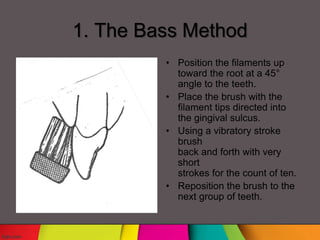
1. The Bass Method
• Position the filaments up
toward the root at a 45°
angle to the teeth.
• Place the brush with the
filament tips directed into
the gingival sulcus.
• Using a vibratory stroke
brush
back and forth with very
short
strokes for the count of ten.
• Reposition the brush to the
next group of teeth.
The Bass Method
INDICATIONS
• adaptable for interproximal
areas.
• cervical areas beneath the
height of contour of enamel.
• exposed root surfaces.
ADVANTAGES
• Effective method for
removing plaque.
• Provides good gingival
stimulation.
DISADVANTAGES
• cause injury to the gingival
margins
• Time consuming.
• Dexterity.
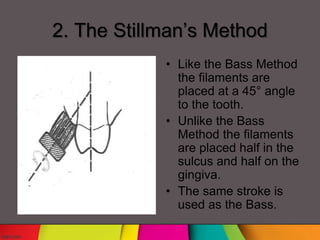
2. The Stillman’s Method
• Like the Bass Method
the filaments are
placed at a 45° angle
to the tooth.
• Unlike the Bass
Method the filaments
are placed half in the
sulcus and half on the
gingiva.
• The same stroke is
used as the Bass.
The Stillman’s Method
INDICATIONS
• Dental plaque removal
• Cleaning tooth surfaces
and gingival massage
DISADVANTAGES
• Time consuming
• Damage epithelial
attachment
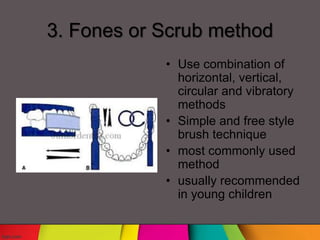
3. Fones or Scrub method
• Use combination of
horizontal, vertical,
circular and vibratory
methods
• Simple and free style
brush technique
• most commonly used
method
• usually recommended
in young children
Fones or Scrub method
ADVANTAGES:
• Dexterity requirement is low
• Easy to learn
• Take shorter time
• Physically and emotionally
handicap persons can use this
technique
DISADVANTAGES:
• Interdental areas are not
properly cleaned
• Can lead to gingival recession
• Can lead to teeth abrasion
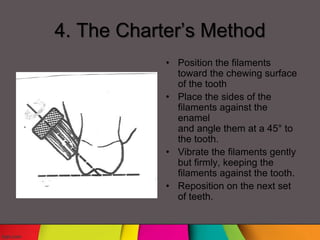
4. The Charter’s Method
• Position the filaments
toward the chewing surface
of the tooth
• Place the sides of the
filaments against the
enamel
and angle them at a 45° to
the tooth.
• Vibrate the filaments gently
but firmly, keeping the
filaments against the tooth.
• Reposition on the next set
of teeth.
The Charter’s Method
INDICATIONS:
• Missing papilla and
exposed root surfaces and
open interdental spaces.
• FPD and Orthodontic
appliances.
• Periodontal surgery.
• Interproximal gingival
recession.
ADVANTAGES
• Massage and stimulation of
gingiva.
DISADVANTAGES
• Poor removal of
subgingival bacterial
accumulations.
• Limited brush
placement.
• Dexterity are high.
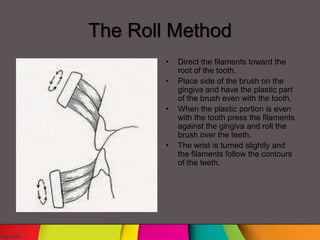
The Roll Method
• Direct the filaments toward the
root of the tooth.
• Place side of the brush on the
gingiva and have the plastic part
of the brush even with the tooth.
• When the plastic portion is even
with the tooth press the filaments
against the gingiva and roll the
brush over the teeth.
• The wrist is turned slightly and
the filaments follow the contours
of the teeth.
The Roll Method
ADVANTAGES:
• Gingival stimulation
• Used in combination
with other techniques
DISADVANTAGE:
• Laceration of alveolar
mucosa on initial
placement
• No brushing of cervical
thirds of the tooth
EFFECTS OF IMPROPER
BRUSHING
• Tooth brush trauma
• Diffuse redness and
attached gingiva
• Punctate lesions that
appear as red pin
point spots
• Abrasions
THANK YOU

TOOTH BRUSHING TECHNIQUES

  • 1.
  • 2.
    INTRODUCTION: o A numberof toothbrushing technique have achieved acceptance by the dental profession. o Each technique has been designed to achieve a definite goal. o Depending on the individual cases, the techniques of toothbrushing may have to be altered to achieve the maximum beneficial effects.
  • 3.
    OBJECTIVES • To cleanteeth and interdental spaces of food remnants, debris and stains etc. • To prevent plaque formation • To disturb and remove plaque • To stimulate and massage gingival tissues • To clean the tongue
  • 4.
    i. The bassor sulcus cleaning method ii. Stillman’s technique iii. Fones or circular or scrub method iv. Charter’s method v. The roll technique
  • 5.
    1. The BassMethod • Position the filaments up toward the root at a 45° angle to the teeth. • Place the brush with the filament tips directed into the gingival sulcus. • Using a vibratory stroke brush back and forth with very short strokes for the count of ten. • Reposition the brush to the next group of teeth.
  • 6.
    The Bass Method INDICATIONS •adaptable for interproximal areas. • cervical areas beneath the height of contour of enamel. • exposed root surfaces. ADVANTAGES • Effective method for removing plaque. • Provides good gingival stimulation. DISADVANTAGES • cause injury to the gingival margins • Time consuming. • Dexterity.
  • 7.
    2. The Stillman’sMethod • Like the Bass Method the filaments are placed at a 45° angle to the tooth. • Unlike the Bass Method the filaments are placed half in the sulcus and half on the gingiva. • The same stroke is used as the Bass.
  • 8.
    The Stillman’s Method INDICATIONS •Dental plaque removal • Cleaning tooth surfaces and gingival massage DISADVANTAGES • Time consuming • Damage epithelial attachment
  • 9.
    3. Fones orScrub method • Use combination of horizontal, vertical, circular and vibratory methods • Simple and free style brush technique • most commonly used method • usually recommended in young children
  • 10.
    Fones or Scrubmethod ADVANTAGES: • Dexterity requirement is low • Easy to learn • Take shorter time • Physically and emotionally handicap persons can use this technique DISADVANTAGES: • Interdental areas are not properly cleaned • Can lead to gingival recession • Can lead to teeth abrasion
  • 11.
    4. The Charter’sMethod • Position the filaments toward the chewing surface of the tooth • Place the sides of the filaments against the enamel and angle them at a 45° to the tooth. • Vibrate the filaments gently but firmly, keeping the filaments against the tooth. • Reposition on the next set of teeth.
  • 12.
    The Charter’s Method INDICATIONS: •Missing papilla and exposed root surfaces and open interdental spaces. • FPD and Orthodontic appliances. • Periodontal surgery. • Interproximal gingival recession. ADVANTAGES • Massage and stimulation of gingiva. DISADVANTAGES • Poor removal of subgingival bacterial accumulations. • Limited brush placement. • Dexterity are high.
  • 13.
    The Roll Method •Direct the filaments toward the root of the tooth. • Place side of the brush on the gingiva and have the plastic part of the brush even with the tooth. • When the plastic portion is even with the tooth press the filaments against the gingiva and roll the brush over the teeth. • The wrist is turned slightly and the filaments follow the contours of the teeth.
  • 14.
    The Roll Method ADVANTAGES: •Gingival stimulation • Used in combination with other techniques DISADVANTAGE: • Laceration of alveolar mucosa on initial placement • No brushing of cervical thirds of the tooth
  • 15.
    EFFECTS OF IMPROPER BRUSHING •Tooth brush trauma • Diffuse redness and attached gingiva • Punctate lesions that appear as red pin point spots • Abrasions
  • 16.