Sense Perception

   Some examples
         &
  some questions…
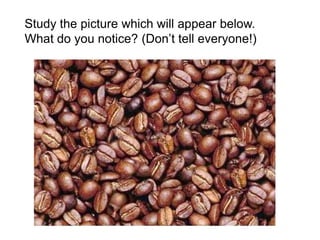
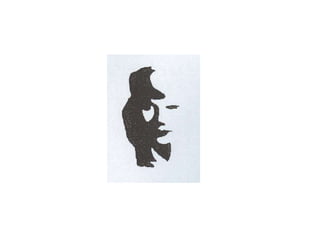
Study the picture which will appear below.
What do you notice? (Don‟t tell everyone!)
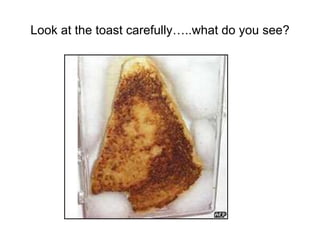
Look at the toast carefully…..what do you see?
• Already we have two issues to bear in
  mind when assessing sense
  perception as a way of knowing

• We may fail to see something that is
  there

• We may see something that is
  (possibly) not there
More problems…

• Think about why the following
  images are problematic
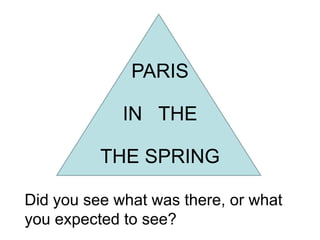
PARIS

             IN THE

          THE SPRING

Did you see what was there, or what
you expected to see?
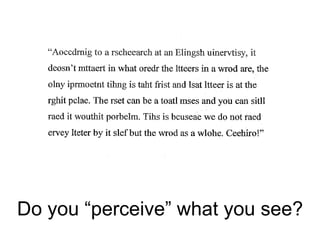
Do you “perceive” what you see?
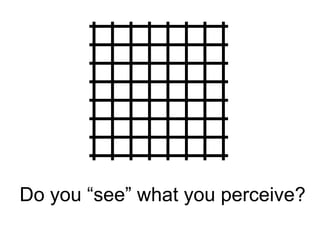
Do you “see” what you perceive?
Moving pictures can also be
             problematic…


• http://www.youtube.com/watch?v=sKa0eaKsdA0

http://www.youtube.com/watch?v=jP_jYmbke14

• http://www.michaelbach.de/ot/mot_adapt/index.html
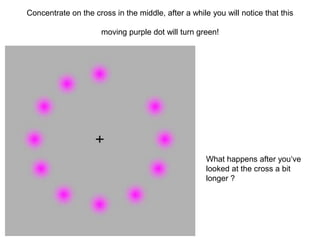
Concentrate on the cross in the middle, after a while you will notice that this

                      moving purple dot will turn green!


                                                     What happens after you„ve
                                                     looked at the cross a bit
                                                     longer ?
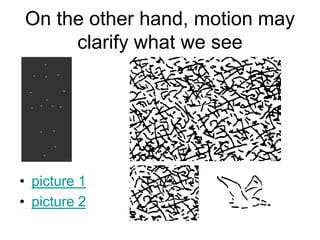
On the other hand, motion may
     clarify what we see


• picture 1
• picture 2
What causes these problems?
•    Context may mislead us
•    There may be different, but equally valid
     interpretations of what we see
•    We may see something only when
     someone else tells us it is there
•    We jump to conclusions, seeing what
     we expect to see
•    We impose order on what we see
Are there similar problems with
      our other senses?
 •   taste
 •   smell
 •   touch
 •   hearing
 •   any other senses
Some sound problems
• http://asa.aip.org/demo27.html


• http://jeffmilner.com/backmasking.htm
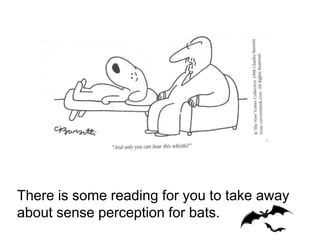
There is some reading for you to take away
about sense perception for bats.
Conclusions?
• The sensations we experience are subject to the
   limitations of the body‟s sensory systems and may not
   therefore be a true representation of the external world
Examples could include
• frequency limitations for hearing which vary with species
   or individual
• sight limitations such as colour-blindness or lack of focus
• psychological effects may cause sensations without an
   external cause.
• temporary confusion may be induced by conflicting
   messages
or
• we may overinterpret what we sense!
We could say…


Our internal constructions may
 differ from the external world
              or


 “The eye is not a camera”

ToK presentation on sense perception 2013

  • 1.
    Sense Perception Some examples & some questions…
  • 2.
    Study the picturewhich will appear below. What do you notice? (Don‟t tell everyone!)
  • 4.
    Look at thetoast carefully…..what do you see?
  • 5.
    • Already wehave two issues to bear in mind when assessing sense perception as a way of knowing • We may fail to see something that is there • We may see something that is (possibly) not there
  • 6.
    More problems… • Thinkabout why the following images are problematic
  • 7.
    PARIS IN THE THE SPRING Did you see what was there, or what you expected to see?
  • 8.
    Do you “perceive”what you see?
  • 9.
    Do you “see”what you perceive?
  • 12.
    Moving pictures canalso be problematic… • http://www.youtube.com/watch?v=sKa0eaKsdA0 http://www.youtube.com/watch?v=jP_jYmbke14 • http://www.michaelbach.de/ot/mot_adapt/index.html
  • 13.
    Concentrate on thecross in the middle, after a while you will notice that this moving purple dot will turn green! What happens after you„ve looked at the cross a bit longer ?
  • 14.
    On the otherhand, motion may clarify what we see • picture 1 • picture 2
  • 15.
    What causes theseproblems? • Context may mislead us • There may be different, but equally valid interpretations of what we see • We may see something only when someone else tells us it is there • We jump to conclusions, seeing what we expect to see • We impose order on what we see
  • 16.
    Are there similarproblems with our other senses? • taste • smell • touch • hearing • any other senses
  • 17.
    Some sound problems •http://asa.aip.org/demo27.html • http://jeffmilner.com/backmasking.htm
  • 18.
    There is somereading for you to take away about sense perception for bats.
  • 19.
    Conclusions? • The sensationswe experience are subject to the limitations of the body‟s sensory systems and may not therefore be a true representation of the external world Examples could include • frequency limitations for hearing which vary with species or individual • sight limitations such as colour-blindness or lack of focus • psychological effects may cause sensations without an external cause. • temporary confusion may be induced by conflicting messages or • we may overinterpret what we sense!
  • 20.
    We could say… Ourinternal constructions may differ from the external world or “The eye is not a camera”