Reason
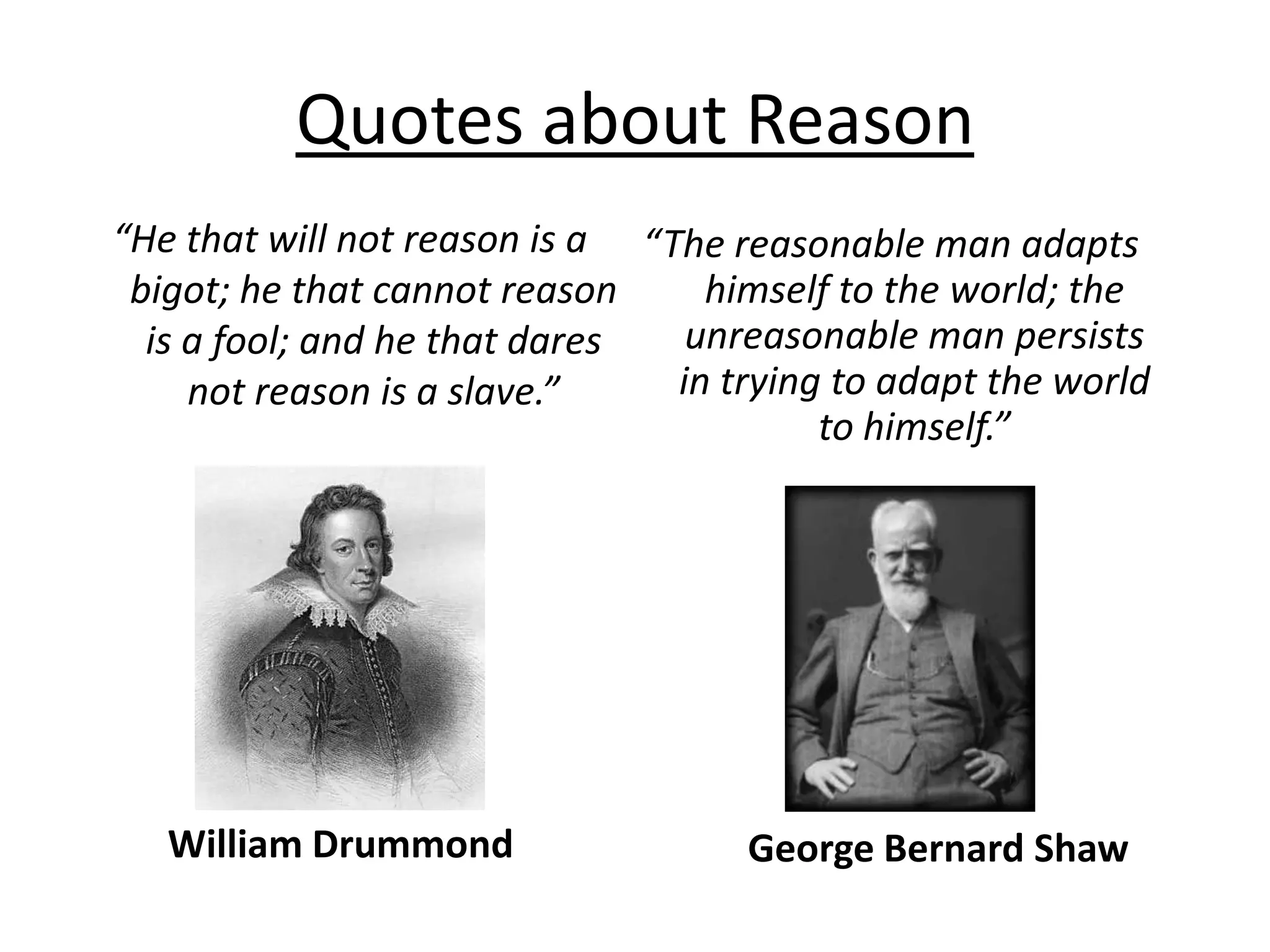
Quotes about Reason“He that will not reason is a bigot; he that cannot reason is a fool; and he that dares not reason is a slave.”“The reasonable man adapts himself to the world; the unreasonable man persists in trying to adapt the world to himself.”George Bernard ShawWilliam Drummond
Quotes about Reason“The further the spiritual evolution of mankind advances, the more certain it seems to me that the path of genuine religiosity [lies] through striving after rational knowledge.”“People generally quarrel because they cannot argue.”Albert EinsteinG.K. Chesterton
Two types of logic:Inductive and Deductive
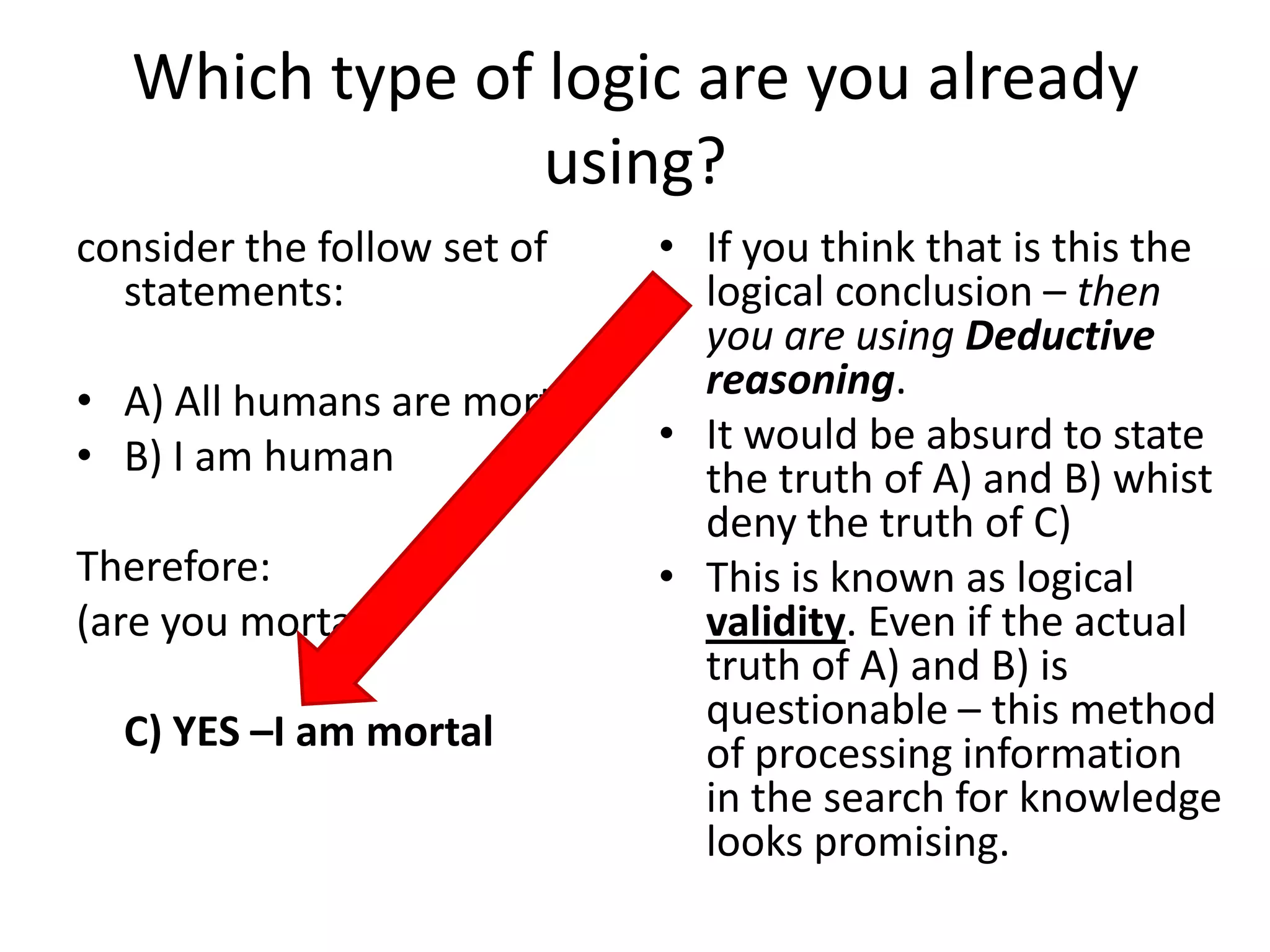
Which type of logic are you already using?consider the follow set of statements:A) All humans are mortalB) I am humanTherefore: (are you mortal?)	C) YES –I am mortalIf you think that is this the logical conclusion – then you are using Deductive reasoning.It would be absurd to state the truth of A) and B) whist deny the truth of C)This is known as logical validity. Even if the actual truth of A) and B) is questionable – this method of processing information in the search for knowledge looks promising.
The Distinction between truth and validityTRUTHConcerned with what is the caseVALIDITYConcerned with whether conclusions follows from premisesThe validity of an argument is independent of the truth or falsity of the premises it contains.Consider the following syllogism:
ValidityAll panthers are pinkChe Guevara is a pantherTherefore Che Guevara is pink.Both the premises and the conclusion  of this argument are false.But the argument itself is valid.It is possible to imagine a world in which all panters are pink and where Che Guevara ia a panther. In this world it must be that Che Guevara is pink.
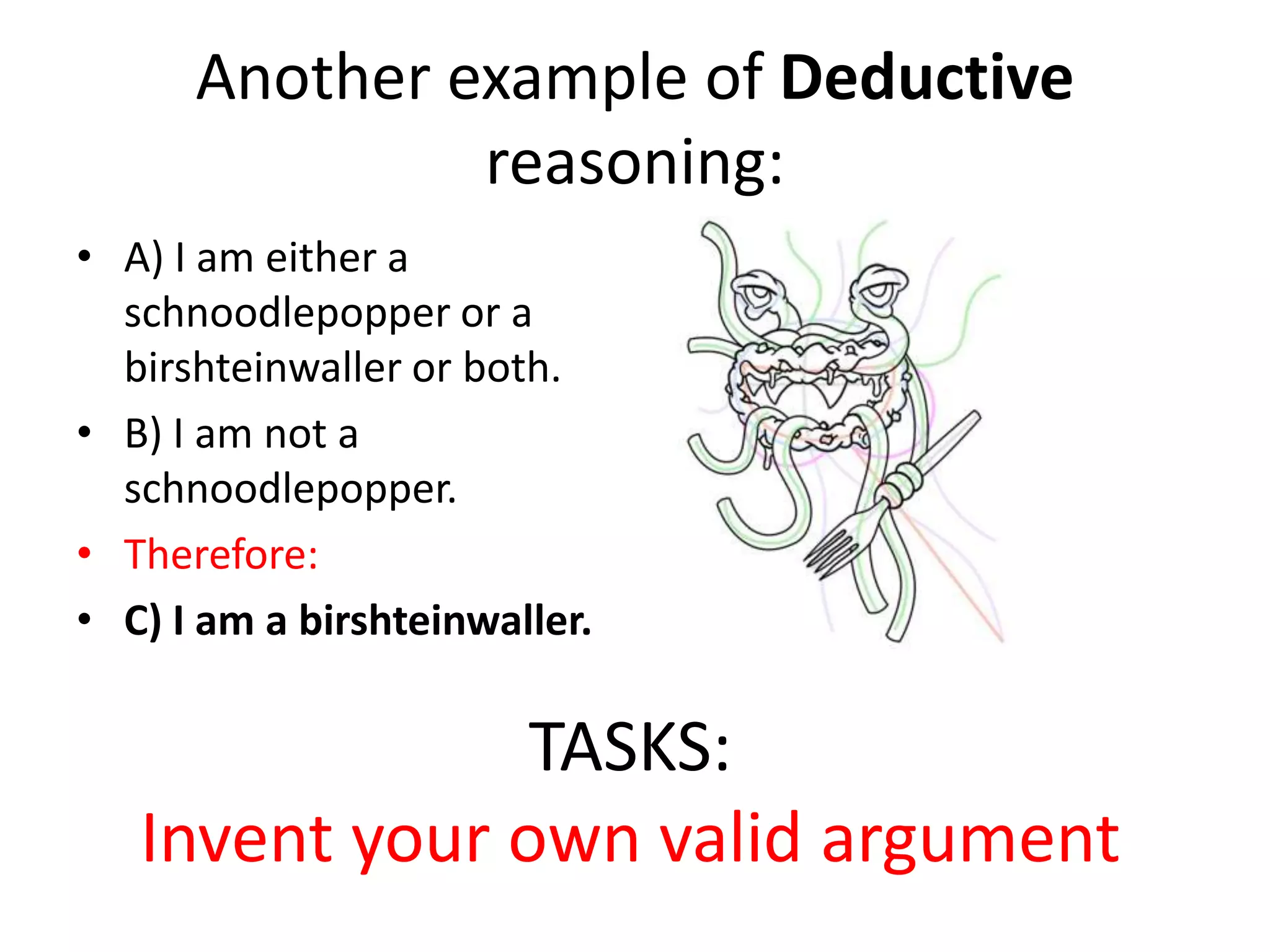
Another example of Deductive reasoning:A) I am either a schnoodlepopper or a birshteinwaller or both.B) I am not a schnoodlepopper.Therefore:C) I am a birshteinwaller.TASKS: Invent your own valid argument
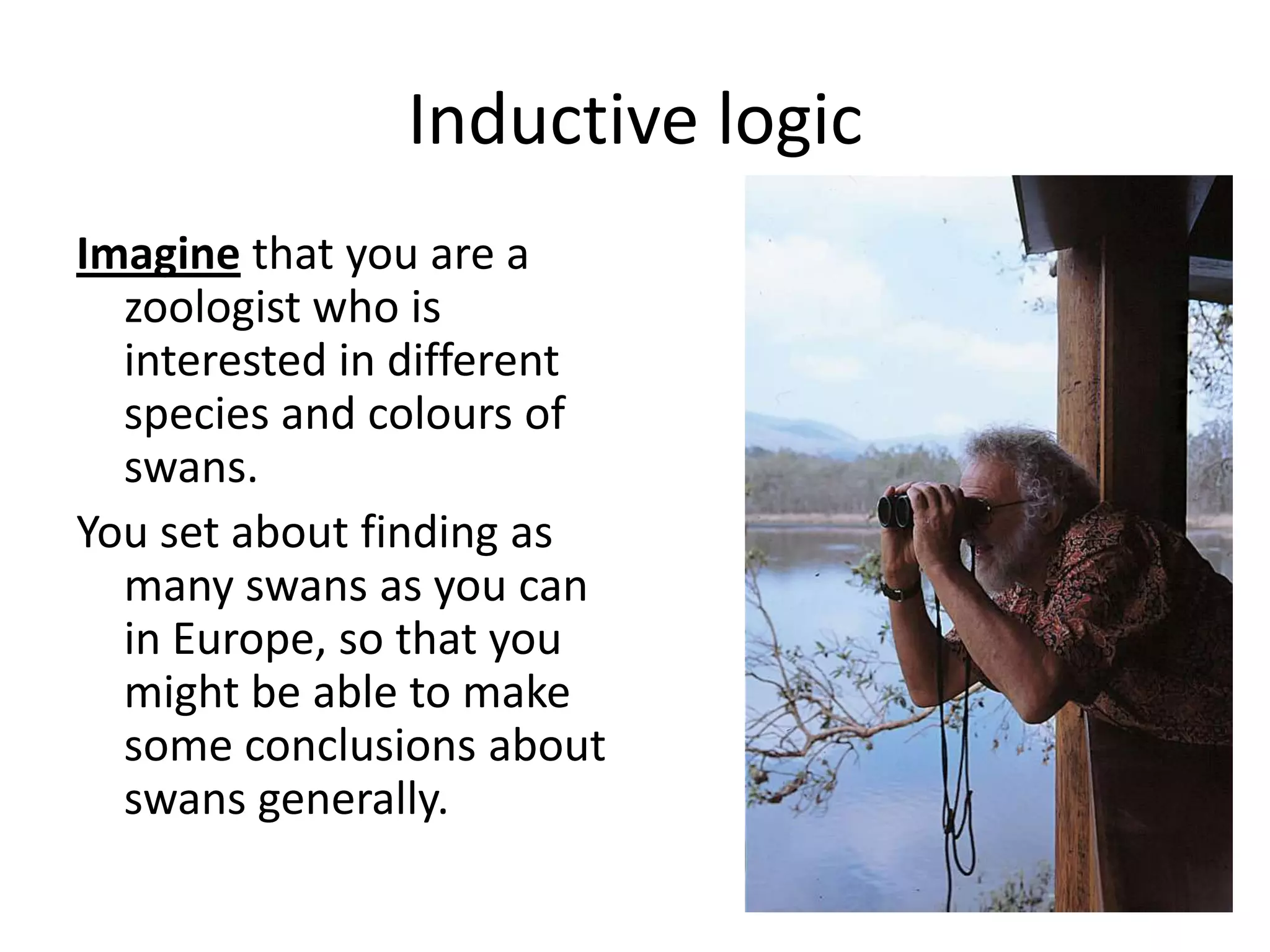
Inductive logic Imagine that you are a zoologist who is interested in different species and colours of swans.You set about finding as many swans as you can in Europe, so that you might be able to make some conclusions about swans generally.
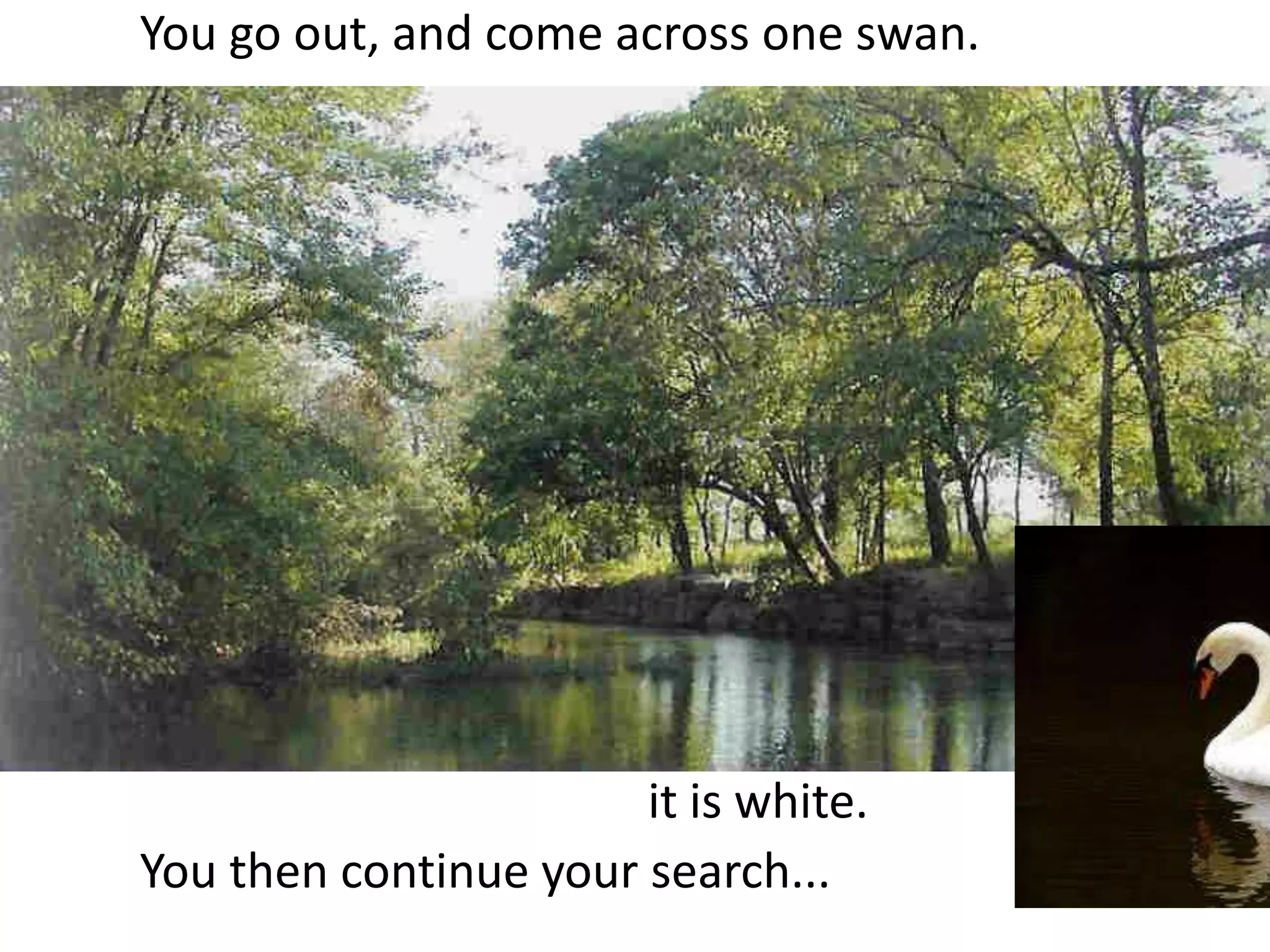
You go out, and come across one swan.					it is white.  You then continue your search...
“All swans are white”At this point, what colour are swans in your experience?What conclusions might you draw about swans (as an entire species)?If you think that this is the logical conclusion to come to, then you have been using Inductive reasoning.What type of logic are you already using?
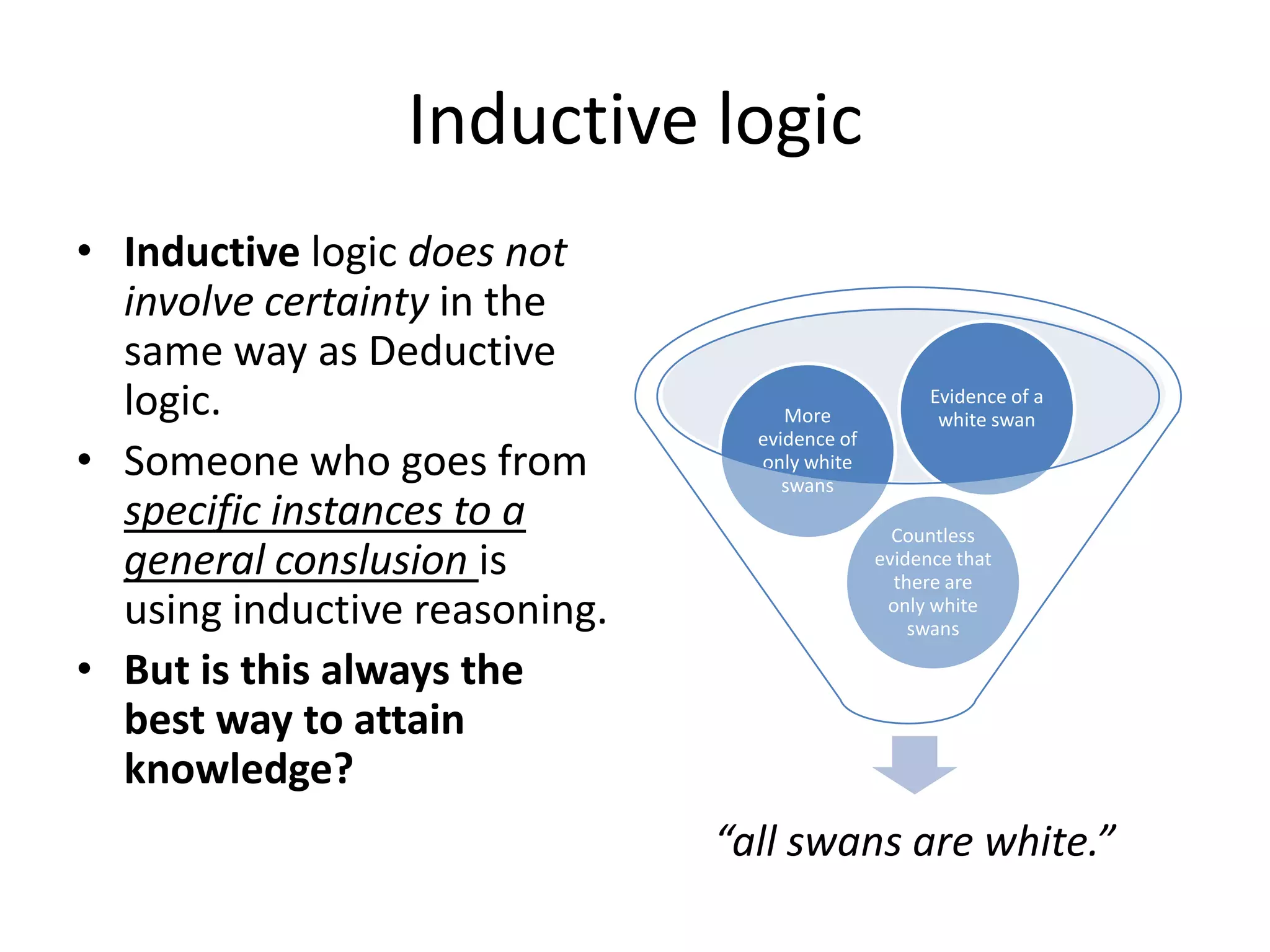
Inductive logicInductive logic does not involve certainty in the same way as Deductive logic.Someone who goes from specific instances to a general conslusion is using inductive reasoning.But is this always the best way to attain knowledge?
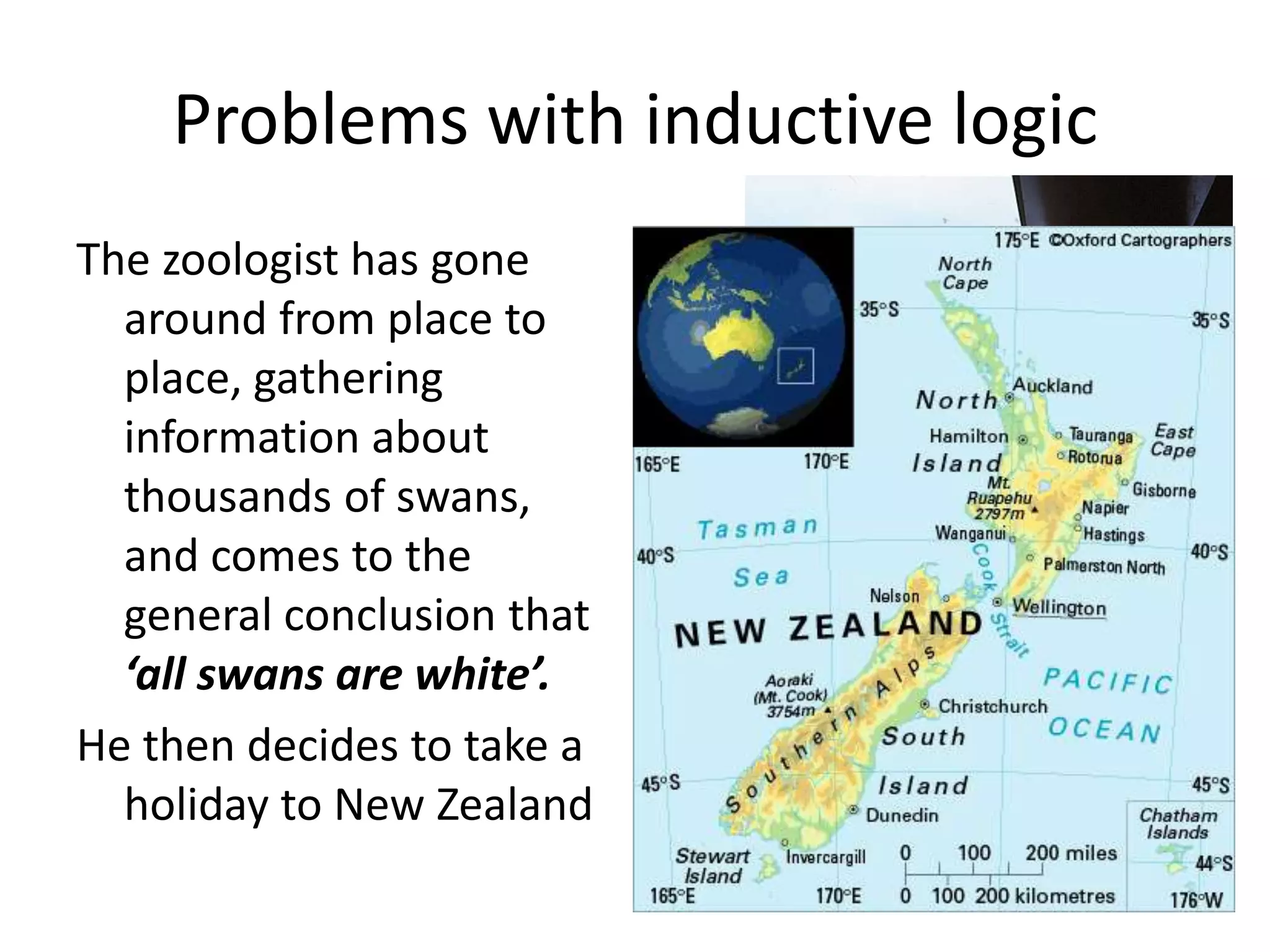
Problems with inductive logicThe zoologist has gone around from place to place, gathering information about thousands of swans, and comes to the general conclusion that ‘all swans are white’.He then decides to take a holiday to New Zealand
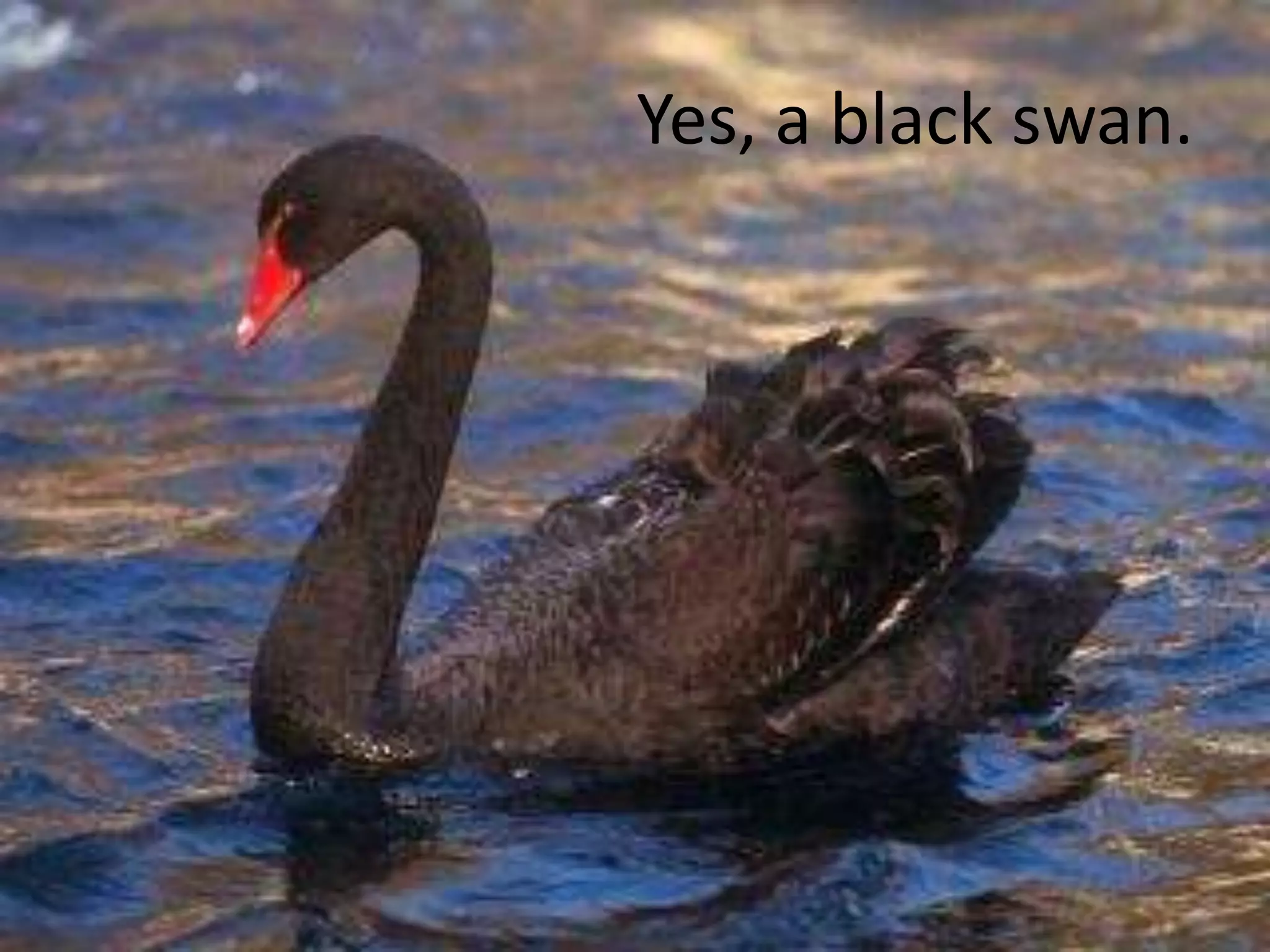
Yes, a black swan.
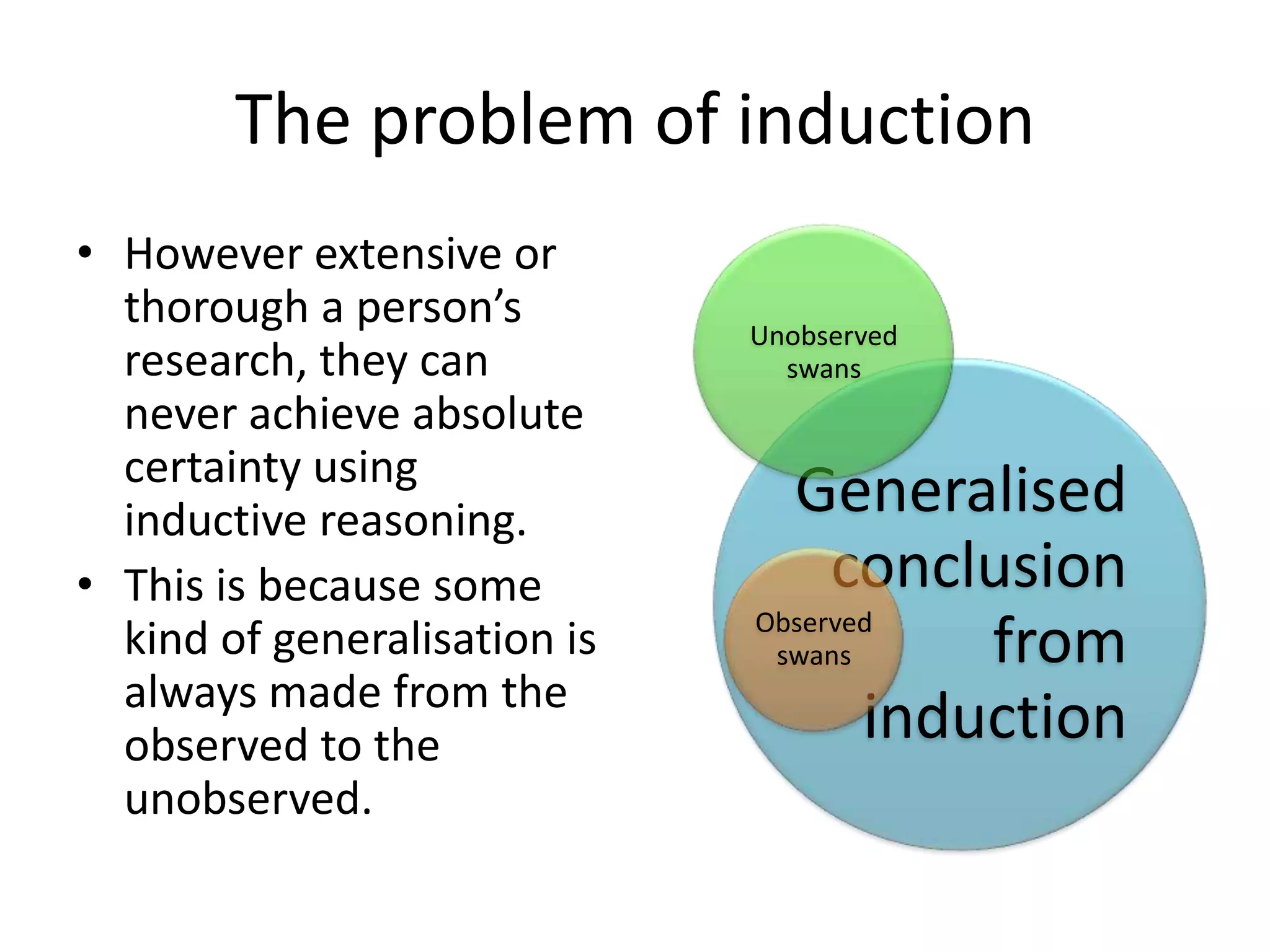
The problem of inductionHowever extensive or thorough a person’s research, they can never achieve absolute certainty using inductive reasoning.This is because some kind of generalisation is always made from the observed to the unobserved.
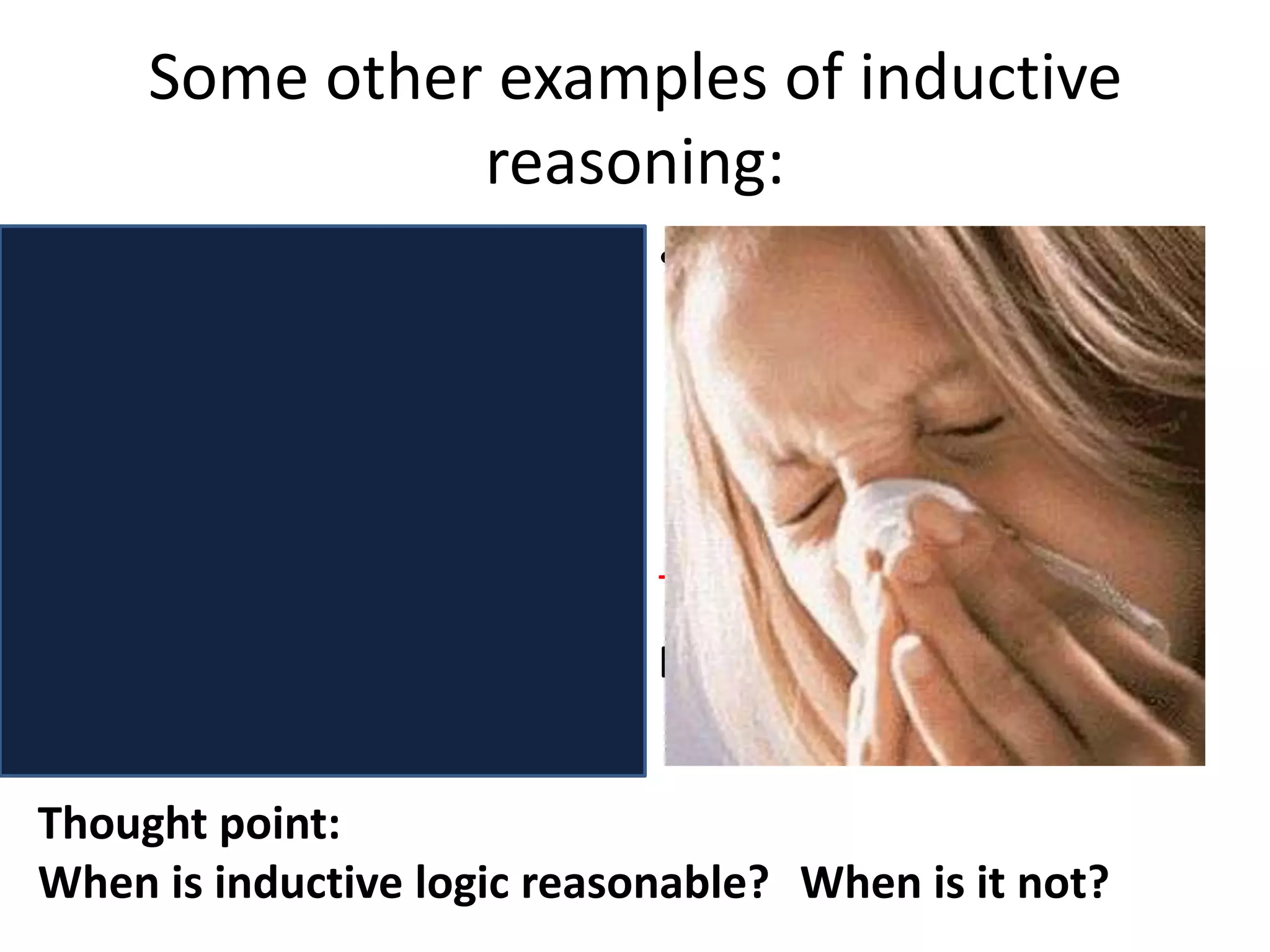
Some other examples of inductive reasoning:Premise : every time I’ve seen a person with a cold, they have had a runny noseTherefore :all colds involve having a runny nose.Premise: in my experience, day has always followed night.Therefore:Day will always follow night in the future.Thought point: When is inductive logic reasonable? 	When is it not?
Lessons to be learned from reason when acquiring knowledgeHasty generalisations – be aware whenever you say ‘all’.Avoid making stereotypesWe can’t avoid generalisations altogether – but these should be informed and not hasty.Hindsight bias – after the event, the answer seems obvious.
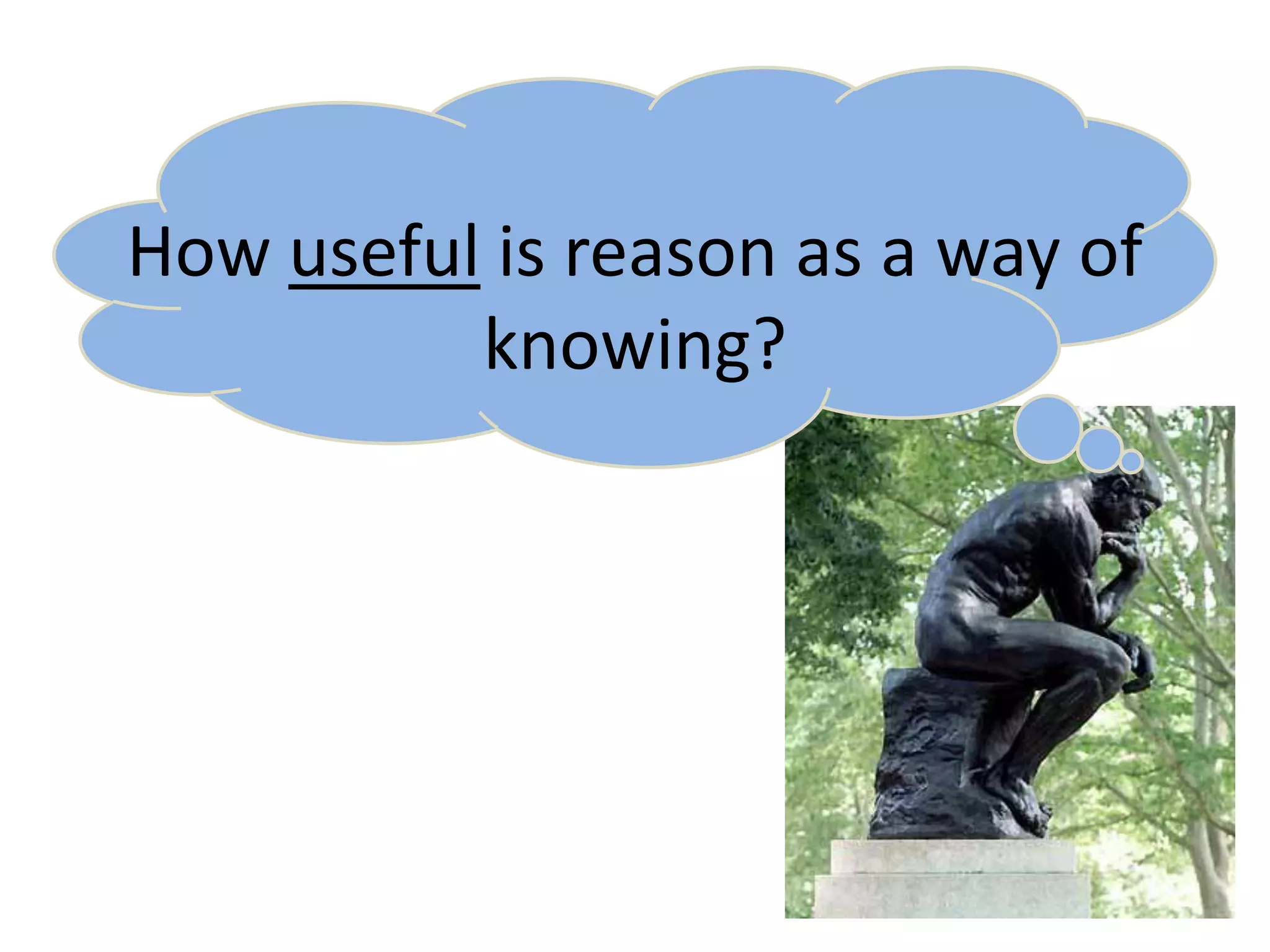
How useful is reason as a way of knowing?
Is Mathematics reducible to reason?Mathematical and logical truths may tell us lots about the rules and patterns we are working with,And maths and physics may reveal complex truths on a scientific level like how to create an atomic bomb.But they may not provide us with much practical information which is useful in day to day life.It looks as if maths is a numerical version of a rational proofIs there any difference between the knowledge provided by logical reasoning and the knowledge provided by maths?
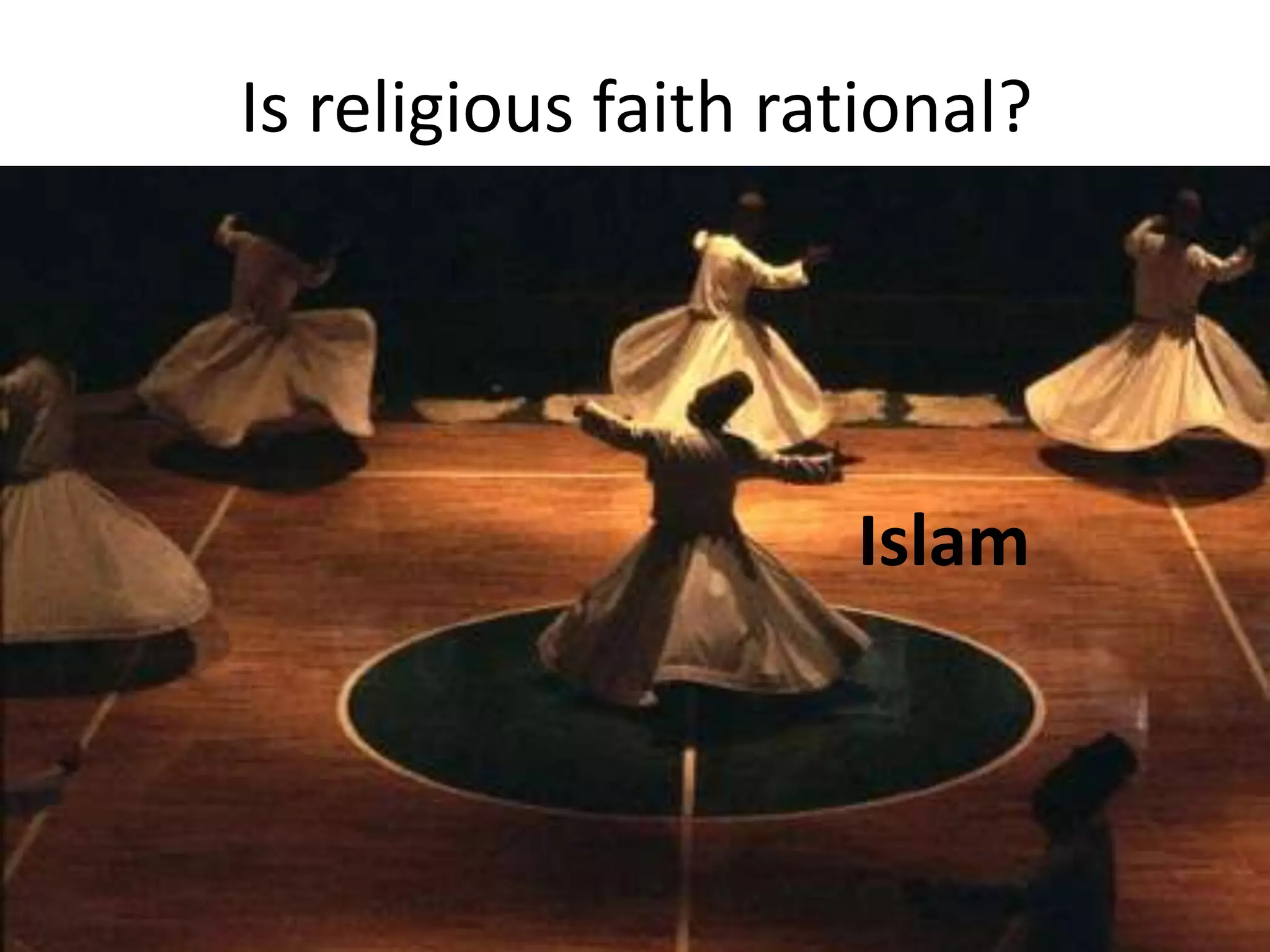
Is religious faith rational?Islam
Christianity
Buddhism
Hinduism
Judaism
Faith and Religious beliefAll these people have a belief in a type of religious knowledge which sometimes appears to transcend reason.this is known as religious faith.But how reliable is this?The trouble with religious faith is that it is often not based on evidence, and therefore is not easy to proove or disprove.Yet many religious people claim that  faith gives them access to some of the most important truths that they know about.
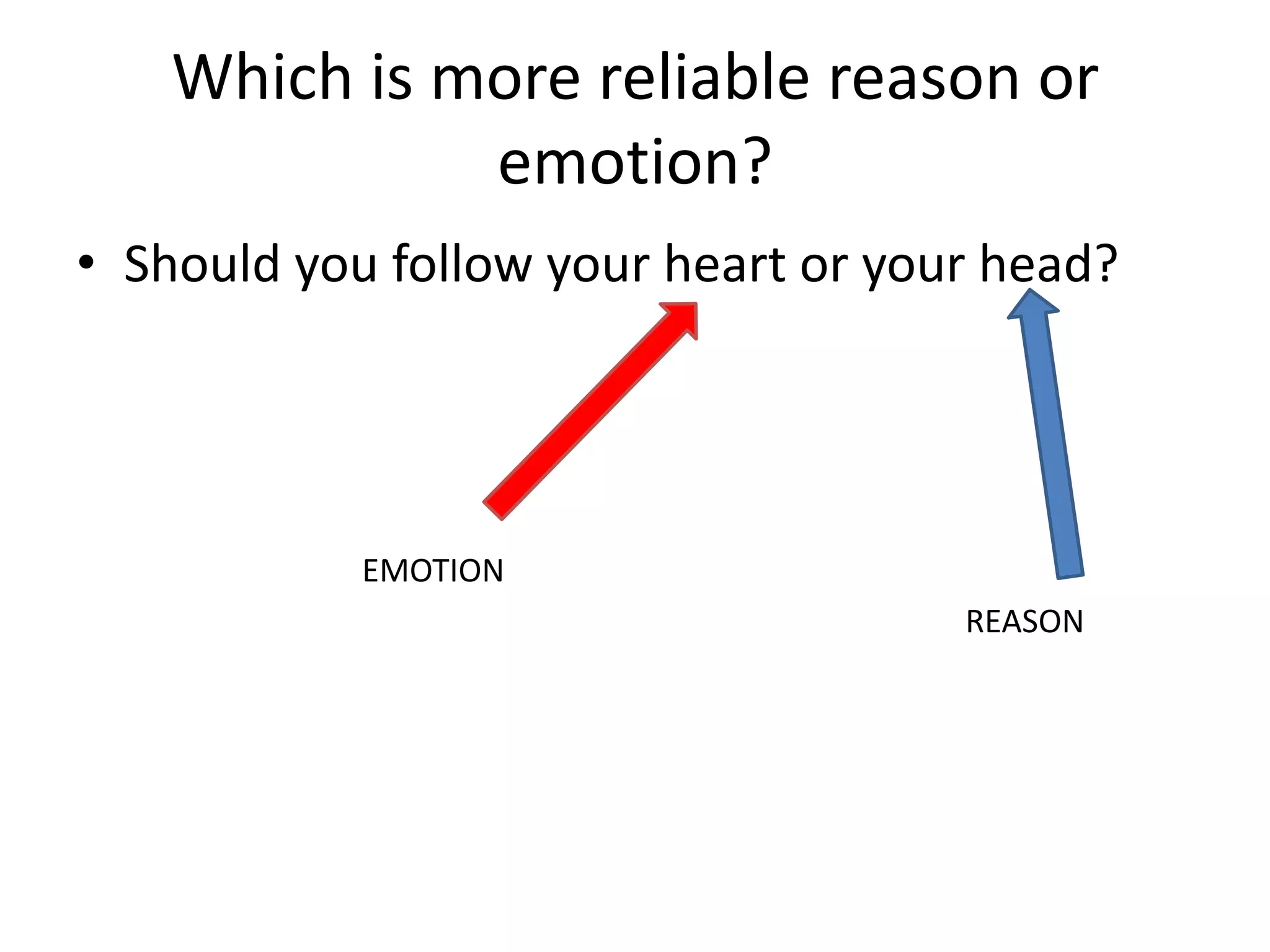
Which is more reliable reason or emotion?Should you follow your heart or your head?	EMOTION											REASON
How effective is reason as a way of attaining knowledge?Benefits of reasonIt is able to give precise and direct answers, which are true in all situations.Rational information is either true or false – there is  no abiguety about what constitutes a correct answerDrawbacks of reasonThe things we know that are logically true or false may be arbitrary. For example I might know with 100% certainty that is a man is a bachelor, then he must be an unmarried man.  But this may not give me very much practical  information; it doesn’t tell me anything about bachelors in the real world.

Introdutory presentation on Reason for Tok

  • 1.
  • 2.
    Quotes about Reason“Hethat will not reason is a bigot; he that cannot reason is a fool; and he that dares not reason is a slave.”“The reasonable man adapts himself to the world; the unreasonable man persists in trying to adapt the world to himself.”George Bernard ShawWilliam Drummond
  • 3.
    Quotes about Reason“Thefurther the spiritual evolution of mankind advances, the more certain it seems to me that the path of genuine religiosity [lies] through striving after rational knowledge.”“People generally quarrel because they cannot argue.”Albert EinsteinG.K. Chesterton
  • 4.
    Two types oflogic:Inductive and Deductive
  • 5.
    Which type oflogic are you already using?consider the follow set of statements:A) All humans are mortalB) I am humanTherefore: (are you mortal?) C) YES –I am mortalIf you think that is this the logical conclusion – then you are using Deductive reasoning.It would be absurd to state the truth of A) and B) whist deny the truth of C)This is known as logical validity. Even if the actual truth of A) and B) is questionable – this method of processing information in the search for knowledge looks promising.
  • 6.
    The Distinction betweentruth and validityTRUTHConcerned with what is the caseVALIDITYConcerned with whether conclusions follows from premisesThe validity of an argument is independent of the truth or falsity of the premises it contains.Consider the following syllogism:
  • 7.
    ValidityAll panthers arepinkChe Guevara is a pantherTherefore Che Guevara is pink.Both the premises and the conclusion of this argument are false.But the argument itself is valid.It is possible to imagine a world in which all panters are pink and where Che Guevara ia a panther. In this world it must be that Che Guevara is pink.
  • 8.
    Another example ofDeductive reasoning:A) I am either a schnoodlepopper or a birshteinwaller or both.B) I am not a schnoodlepopper.Therefore:C) I am a birshteinwaller.TASKS: Invent your own valid argument
  • 9.
    Inductive logic Imaginethat you are a zoologist who is interested in different species and colours of swans.You set about finding as many swans as you can in Europe, so that you might be able to make some conclusions about swans generally.
  • 10.
    You go out,and come across one swan. it is white. You then continue your search...
  • 16.
    “All swans arewhite”At this point, what colour are swans in your experience?What conclusions might you draw about swans (as an entire species)?If you think that this is the logical conclusion to come to, then you have been using Inductive reasoning.What type of logic are you already using?
  • 17.
    Inductive logicInductive logicdoes not involve certainty in the same way as Deductive logic.Someone who goes from specific instances to a general conslusion is using inductive reasoning.But is this always the best way to attain knowledge?
  • 18.
    Problems with inductivelogicThe zoologist has gone around from place to place, gathering information about thousands of swans, and comes to the general conclusion that ‘all swans are white’.He then decides to take a holiday to New Zealand
  • 19.
  • 20.
    The problem ofinductionHowever extensive or thorough a person’s research, they can never achieve absolute certainty using inductive reasoning.This is because some kind of generalisation is always made from the observed to the unobserved.
  • 21.
    Some other examplesof inductive reasoning:Premise : every time I’ve seen a person with a cold, they have had a runny noseTherefore :all colds involve having a runny nose.Premise: in my experience, day has always followed night.Therefore:Day will always follow night in the future.Thought point: When is inductive logic reasonable? When is it not?
  • 22.
    Lessons to belearned from reason when acquiring knowledgeHasty generalisations – be aware whenever you say ‘all’.Avoid making stereotypesWe can’t avoid generalisations altogether – but these should be informed and not hasty.Hindsight bias – after the event, the answer seems obvious.
  • 23.
    How useful isreason as a way of knowing?
  • 24.
    Is Mathematics reducibleto reason?Mathematical and logical truths may tell us lots about the rules and patterns we are working with,And maths and physics may reveal complex truths on a scientific level like how to create an atomic bomb.But they may not provide us with much practical information which is useful in day to day life.It looks as if maths is a numerical version of a rational proofIs there any difference between the knowledge provided by logical reasoning and the knowledge provided by maths?
  • 26.
    Is religious faithrational?Islam
  • 27.
  • 28.
  • 29.
  • 30.
  • 31.
    Faith and ReligiousbeliefAll these people have a belief in a type of religious knowledge which sometimes appears to transcend reason.this is known as religious faith.But how reliable is this?The trouble with religious faith is that it is often not based on evidence, and therefore is not easy to proove or disprove.Yet many religious people claim that faith gives them access to some of the most important truths that they know about.
  • 32.
    Which is morereliable reason or emotion?Should you follow your heart or your head? EMOTION REASON
  • 33.
    How effective isreason as a way of attaining knowledge?Benefits of reasonIt is able to give precise and direct answers, which are true in all situations.Rational information is either true or false – there is no abiguety about what constitutes a correct answerDrawbacks of reasonThe things we know that are logically true or false may be arbitrary. For example I might know with 100% certainty that is a man is a bachelor, then he must be an unmarried man. But this may not give me very much practical information; it doesn’t tell me anything about bachelors in the real world.