Sense Perception
By Filippo Pietrantonio and Matteo Gillio
Our senses are our primary way of interacting with
the world. Long before we have learnt how to use
language, or reason, or be anything like in control of
our emotions, we are able to make use of our
senses.
How many senses are there?
1) Sight
2) Hearing
3) Taste
4) Smell
5) Touch
But if we define the senses as the means by which our body communicates, then
we could argue that there are at least three more senses, among them being:
1) Kinesthetic sense (awareness of one‟s own body movements and dimensions)
2) Vestibular sense (balance)
3) Organic sense („call of nature‟, hunger, thirst, etc.)
Real Life Situation:
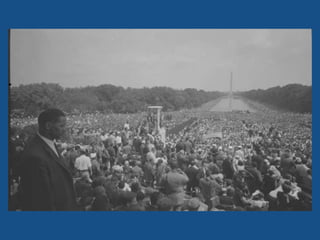
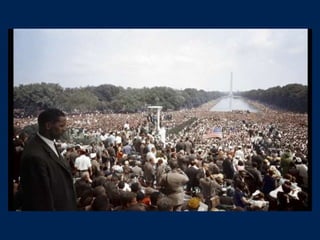
What Color is the past?
Source:
http://www.theguardian.com/artanddesign/gallery
/2013/nov/18/historical-photographs-get-a-
colorized-makeover-in-pictures
Knowledge Questions
- How does color affect our perception?
- Should we alter historical documents in
order to influence perception?
- How does it change our knowledge of
history to make events from the past
more „immediate‟?
We change the way we see and feel
pictures, videos, films, etc… also by their color. For
example, if a film has dark and dull colors it will transmit more
sadness or bad moments.
On the other hand, when we see bright and luminous colors
we associate the idea of happiness and of feeling good.
The same thing applies to pictures and images but not in the
case of historical pictures.
https://www.youtube.com/watch?v=litXW91UauE
Areas of Knowledge
• History —> Historical Images
• The Arts —> The ability to “transform”
these pictures
What‟s the Consequence?
A new trend on social media is the
coloring of images showing historical
events and characters. Seeing these in a
different light makes them far more
immediate and engaging, but this gallery
leads us on to a discussion of whether we
should manipulate such images in order to
change our perception of the past
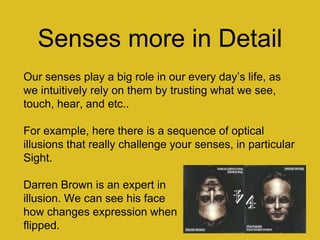
Senses more in Detail
Our senses play a big role in our every day‟s life, as
we intuitively rely on them by trusting what we see,
touch, hear, and etc..
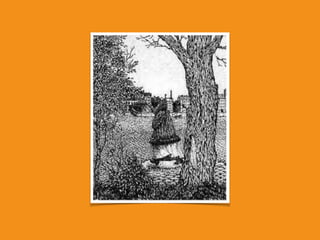
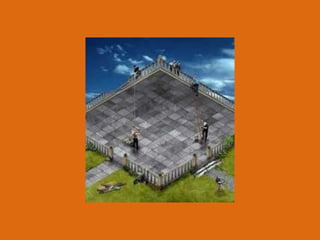
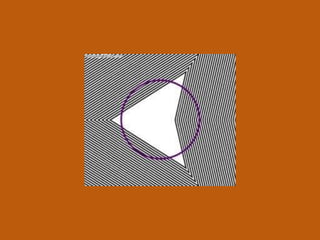
For example, here there is a sequence of optical
illusions that really challenge your senses, in particular
Sight.
Darren Brown is an expert in
illusion. We can see his face
how changes expression when
flipped.
Sight affects everything
• Emotions - when you see something, you will feel it in a
different way. For example, when someone talks to you, you
might feel different emotions if you look to the person
because you will see the facial expressions and therefore
change your perception of knowledge
• Taste - If you are about to eat an hamburger, if it is well-
looking and colorful, you will probably eat it straight away
• Hearing - it affects the way you hear something by seeing
what surrounds you
• Etc
If you noticed, in the entire presentation
slides changed colors to see if colors
changed your perception of knowledge
and the way you saw the slides.
By Filippo Pietrantonio

TOK Sense Perception Presentation

  • 1.
    Sense Perception By FilippoPietrantonio and Matteo Gillio Our senses are our primary way of interacting with the world. Long before we have learnt how to use language, or reason, or be anything like in control of our emotions, we are able to make use of our senses.
  • 2.
    How many sensesare there? 1) Sight 2) Hearing 3) Taste 4) Smell 5) Touch But if we define the senses as the means by which our body communicates, then we could argue that there are at least three more senses, among them being: 1) Kinesthetic sense (awareness of one‟s own body movements and dimensions) 2) Vestibular sense (balance) 3) Organic sense („call of nature‟, hunger, thirst, etc.)
  • 3.
    Real Life Situation: WhatColor is the past? Source: http://www.theguardian.com/artanddesign/gallery /2013/nov/18/historical-photographs-get-a- colorized-makeover-in-pictures
  • 6.
    Knowledge Questions - Howdoes color affect our perception? - Should we alter historical documents in order to influence perception? - How does it change our knowledge of history to make events from the past more „immediate‟?
  • 7.
    We change theway we see and feel pictures, videos, films, etc… also by their color. For example, if a film has dark and dull colors it will transmit more sadness or bad moments. On the other hand, when we see bright and luminous colors we associate the idea of happiness and of feeling good. The same thing applies to pictures and images but not in the case of historical pictures. https://www.youtube.com/watch?v=litXW91UauE
  • 8.
    Areas of Knowledge •History —> Historical Images • The Arts —> The ability to “transform” these pictures
  • 9.
    What‟s the Consequence? Anew trend on social media is the coloring of images showing historical events and characters. Seeing these in a different light makes them far more immediate and engaging, but this gallery leads us on to a discussion of whether we should manipulate such images in order to change our perception of the past
  • 10.
    Senses more inDetail Our senses play a big role in our every day‟s life, as we intuitively rely on them by trusting what we see, touch, hear, and etc.. For example, here there is a sequence of optical illusions that really challenge your senses, in particular Sight. Darren Brown is an expert in illusion. We can see his face how changes expression when flipped.
  • 14.
    Sight affects everything •Emotions - when you see something, you will feel it in a different way. For example, when someone talks to you, you might feel different emotions if you look to the person because you will see the facial expressions and therefore change your perception of knowledge • Taste - If you are about to eat an hamburger, if it is well- looking and colorful, you will probably eat it straight away • Hearing - it affects the way you hear something by seeing what surrounds you • Etc
  • 15.
    If you noticed,in the entire presentation slides changed colors to see if colors changed your perception of knowledge and the way you saw the slides. By Filippo Pietrantonio