TETRALOGY OF
FALLOT
BY
SACHIN DWIVEDI
CLINICAL INSTRUCTOR , KGMU
CON LUCKNOW
INTRODUCTION
• Tetralogy of Fallot (TOF), first
described in 1888 and named after
Louis Arthur Fallot. Tetralogy of
fallot - the most common congenital
heart disorders.
• TOF is classified as a cyanotic heart
disorder because TOF results in an
inadequate flow of blood to the
lungs for oxygenation.
DEFINITION
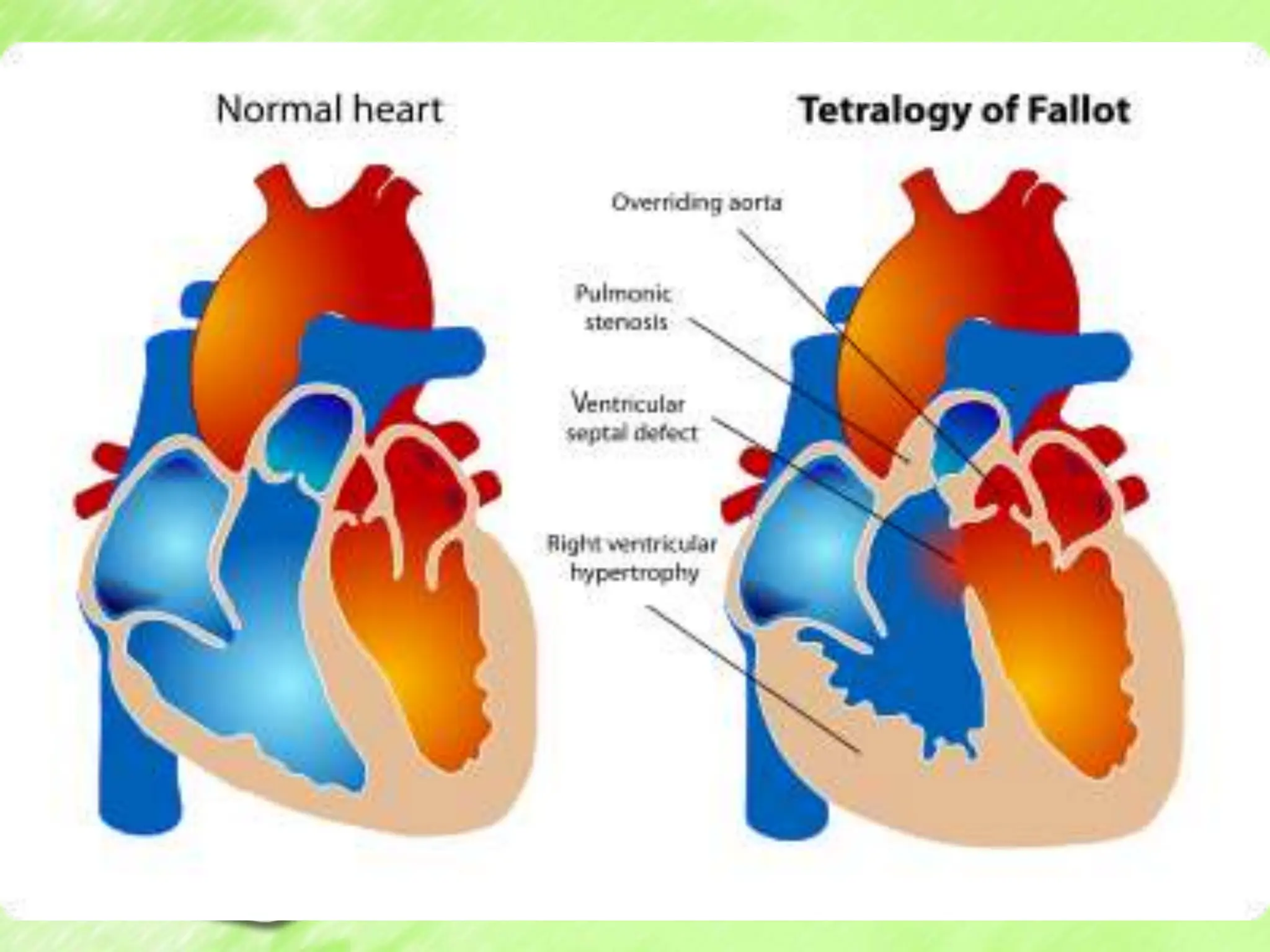
Tetralogy of fallot is a congenital heart defect
which is characterised by the combinations of four
defects :
• Pulmonary stenosis (right ventricular
outflow tract obstruction).
• Ventricular Septal Defect.
• Overriding or dextroposition of the
aorta
• Right ventricular hypertrophy.
Incidence
• Tetralogy of Fallot (TOF) represents approximately
7%-10% of congenital heart diseases (CHDs), and
it is the most common cyanotic CHD, with 0.23-0.63
cases per 1,000 births.
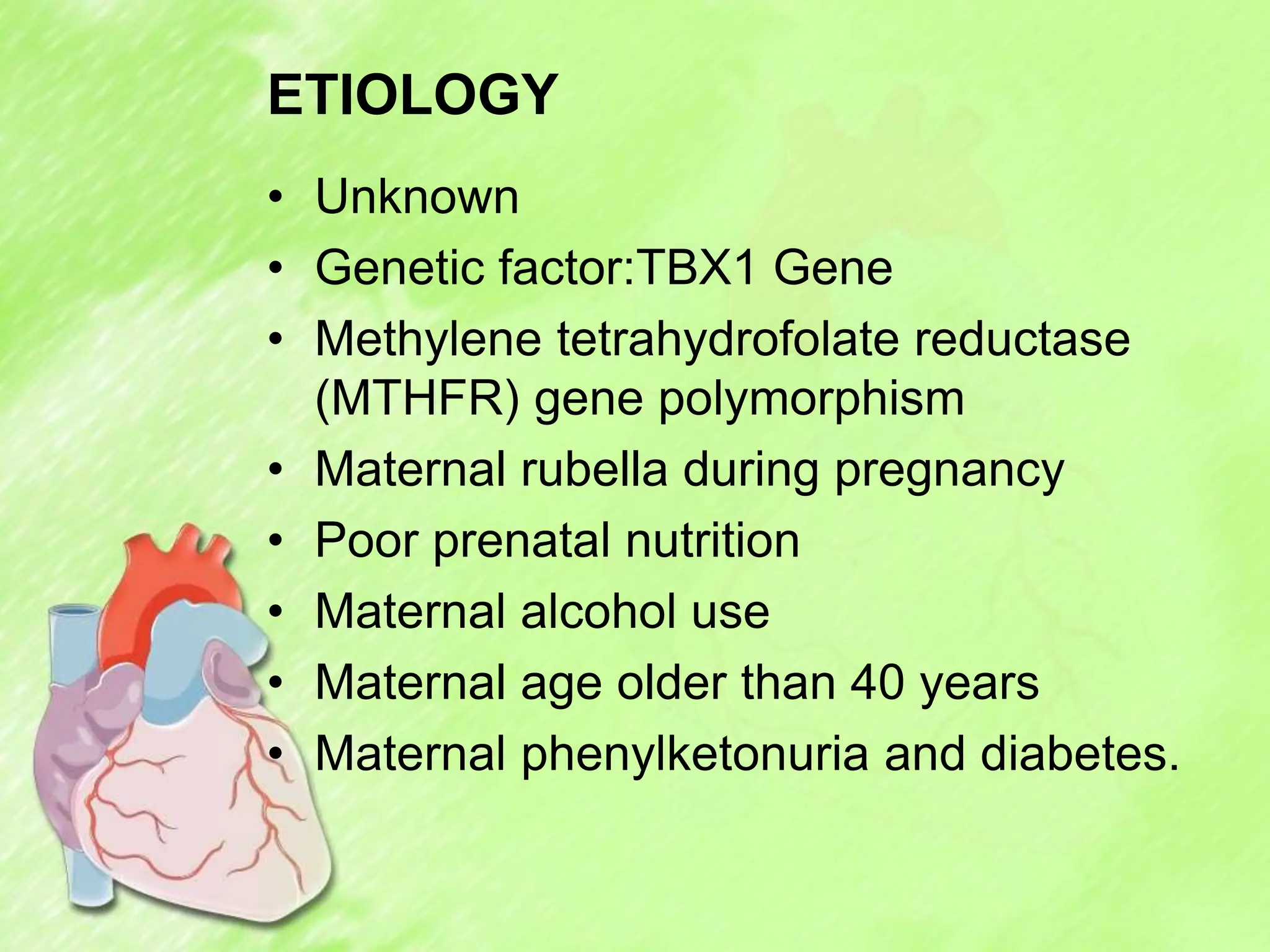
ETIOLOGY
• Unknown
• Genetic factor:TBX1 Gene
• Methylene tetrahydrofolate reductase
(MTHFR) gene polymorphism
• Maternal rubella during pregnancy
• Poor prenatal nutrition
• Maternal alcohol use
• Maternal age older than 40 years
• Maternal phenylketonuria and diabetes.
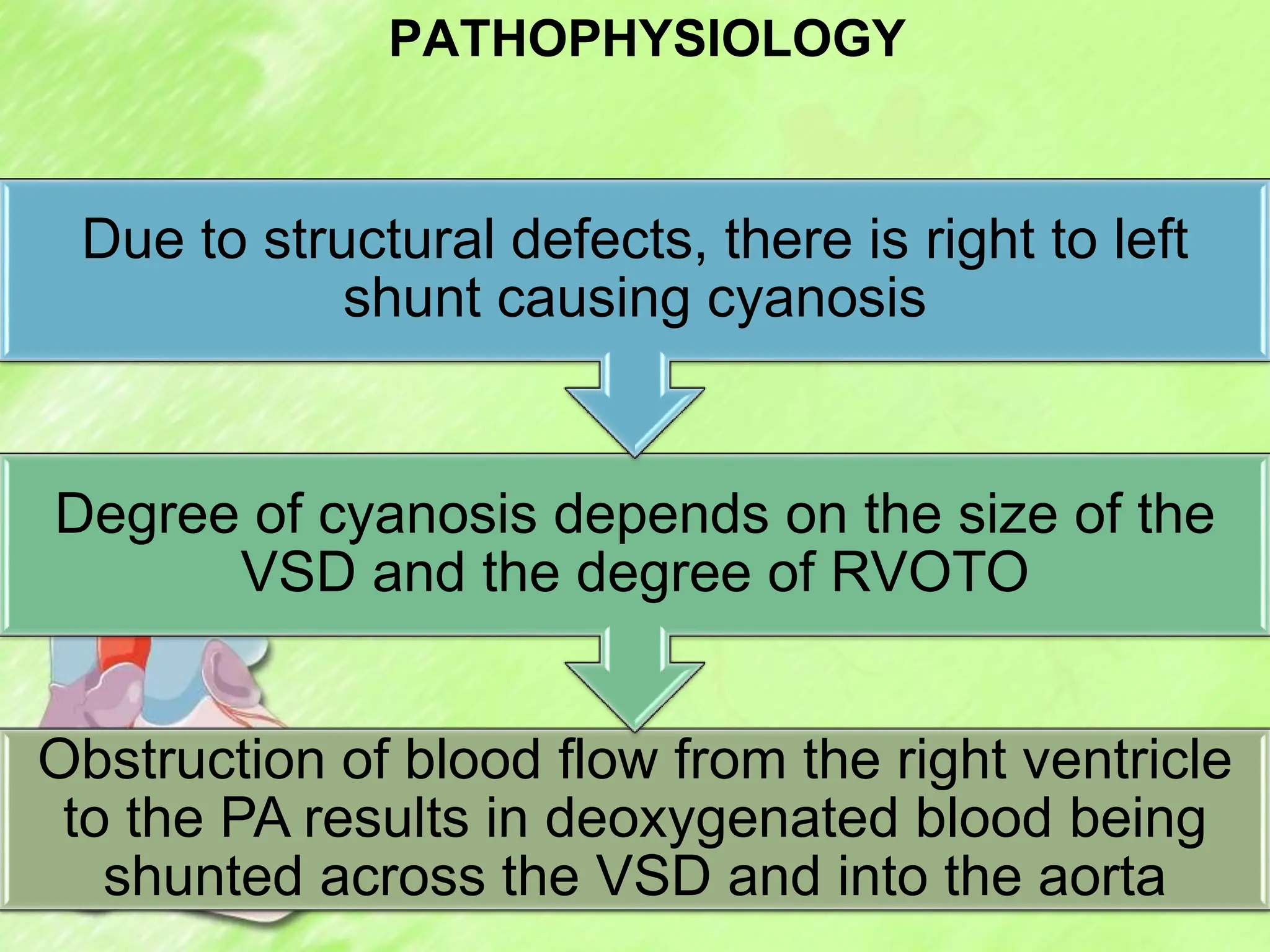
PATHOPHYSIOLOGY
Obstruction of blood flow from the right ventricle
to the PA results in deoxygenated blood being
shunted across the VSD and into the aorta
Degree of cyanosis depends on the size of the
VSD and the degree of RVOTO
Due to structural defects, there is right to left
shunt causing cyanosis
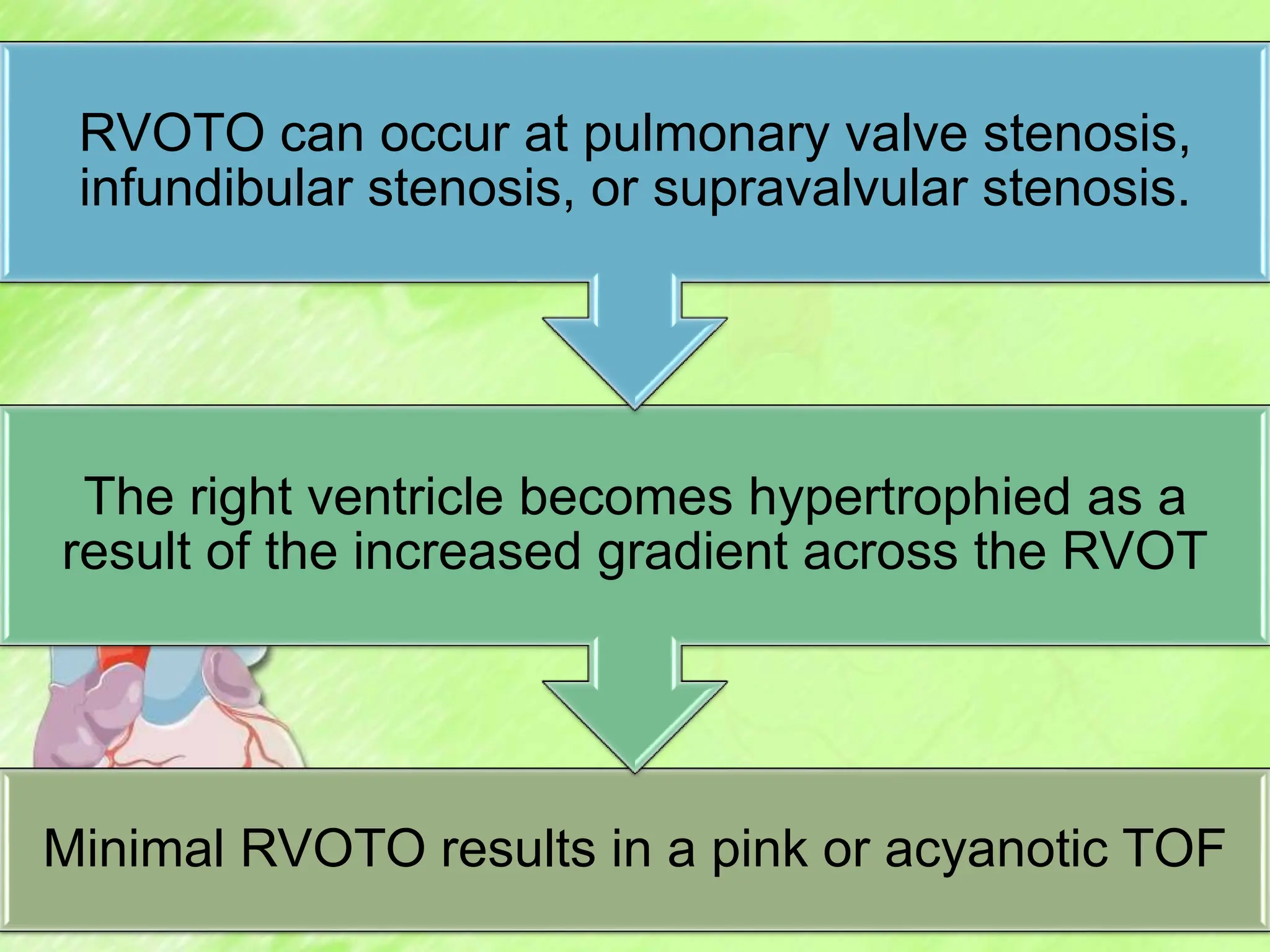
Minimal RVOTO results in a pink or acyanotic TOF
The right ventricle becomes hypertrophied as a
result of the increased gradient across the RVOT
RVOTO can occur at pulmonary valve stenosis,
infundibular stenosis, or supravalvular stenosis.
CLINICAL MANIFESTATIONS
• Cyanosis
• Tet spells
• Squatting position
• Slow weight gain and mental
slowness.
• Difficulty with feeding and
failure to thrive.
• Clubbing
• Polycythemia
• Decreased activity tolerance
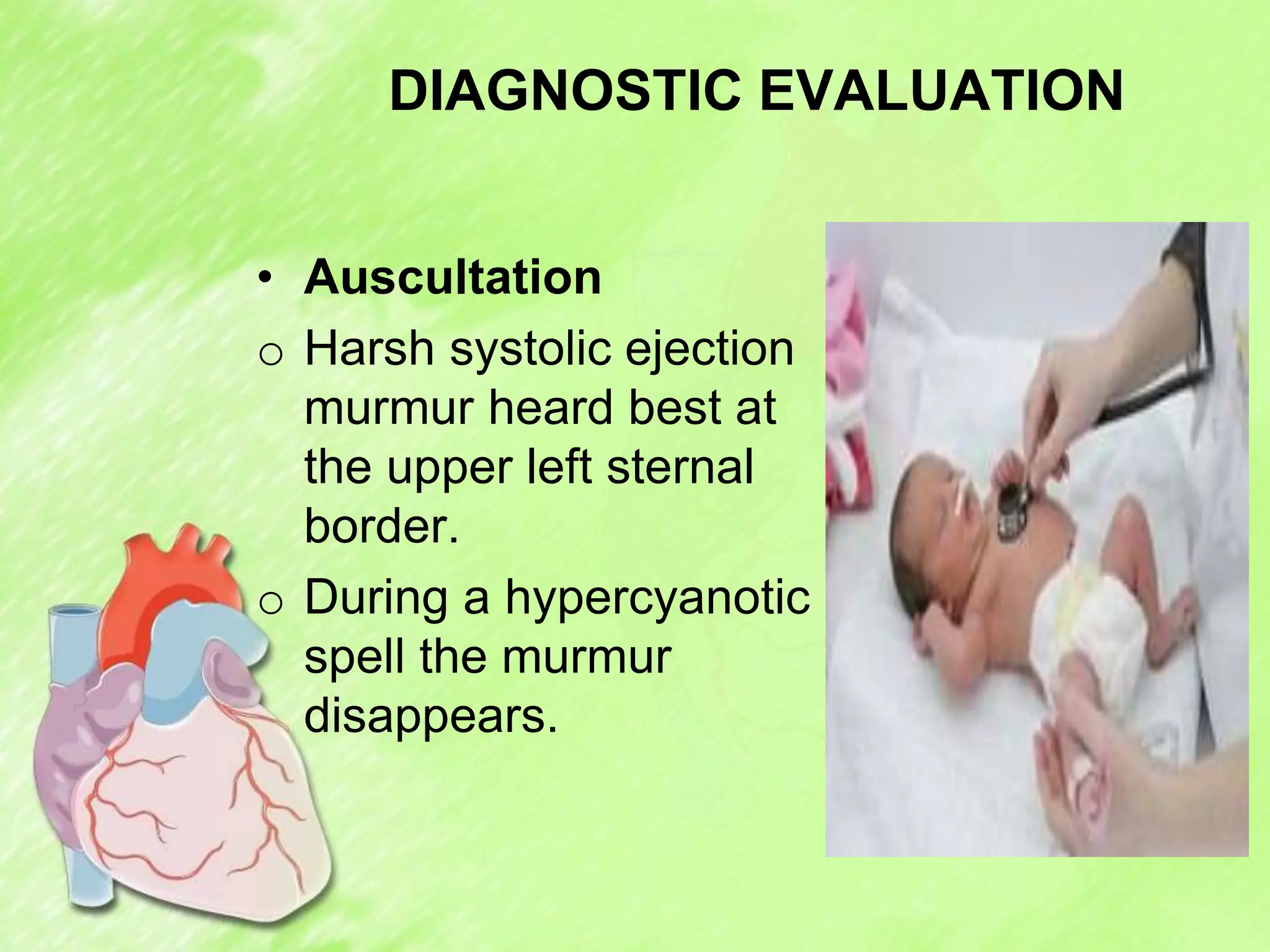
DIAGNOSTIC EVALUATION
• Auscultation
o Harsh systolic ejection
murmur heard best at
the upper left sternal
border.
o During a hypercyanotic
spell the murmur
disappears.
DIAGNOSTIC EVALUATION
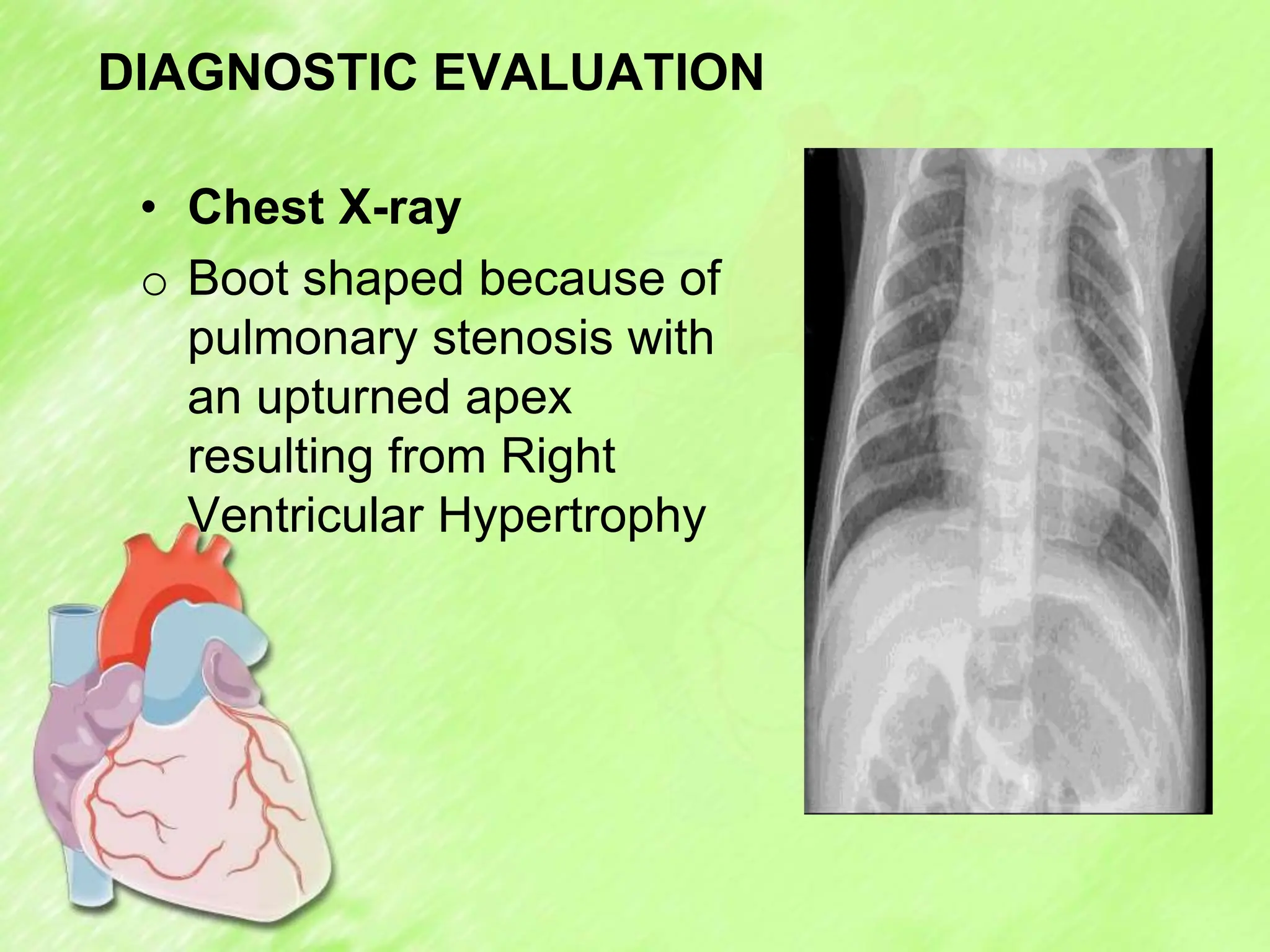
• Chest X-ray
o Boot shaped because of
pulmonary stenosis with
an upturned apex
resulting from Right
Ventricular Hypertrophy
DIAGNOSTIC EVALUATION
• Hematologic studies
o Haemoglobin and hematocrit values
are usually elevated in proportion to
the degree of cyanosis.
o Prolonged cyanosis causes reactive
polycythemia that increases the
oxygen carrying capacity.
Coagulation studies
• There is diminished coagulation
factors and diminished total
fibrinogen, which are associated
with prolonged prothrombin and
coagulation times.
DIAGNOSTIC EVALUATION
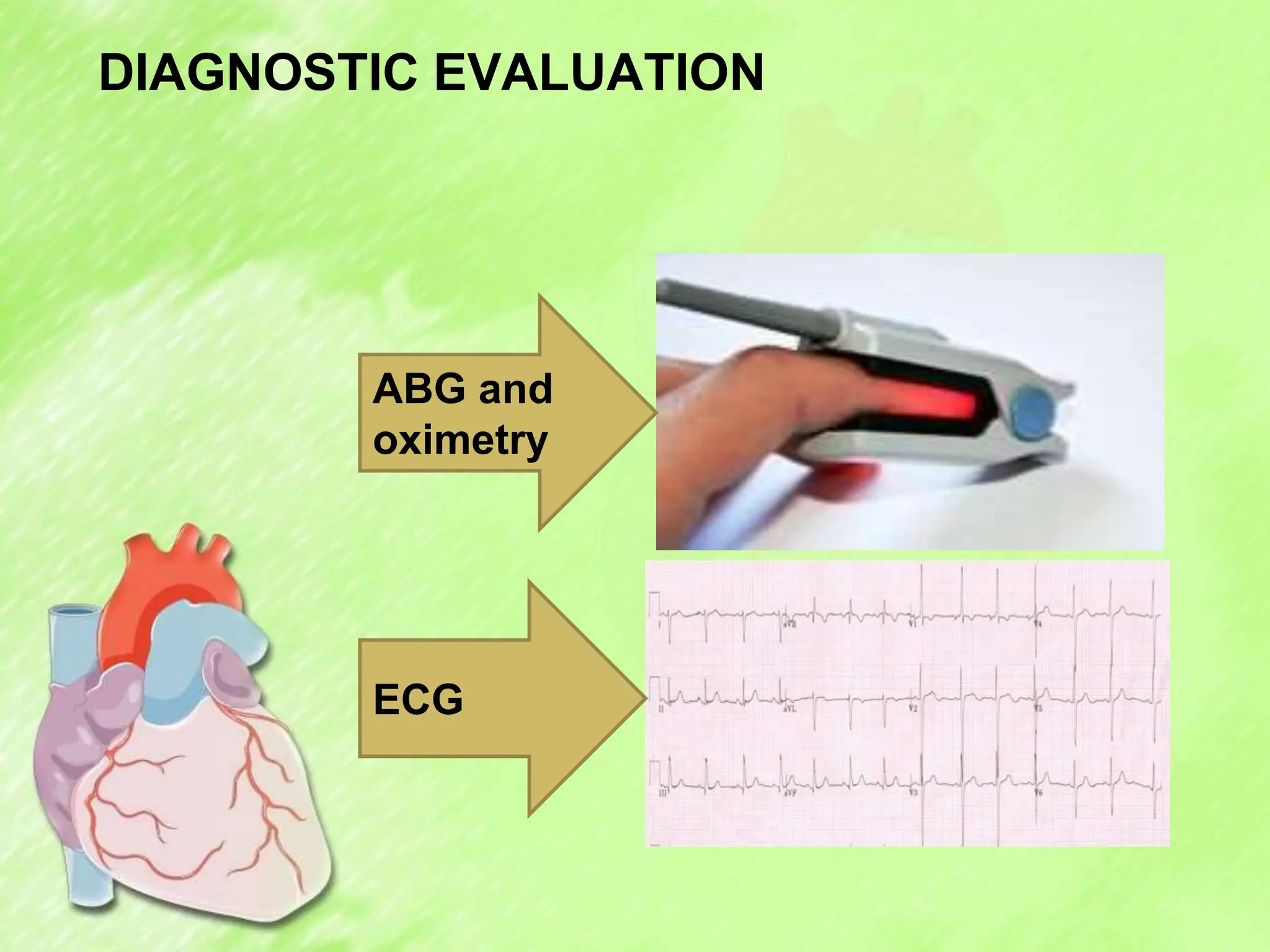
ABG and
oximetry
ECG
DIAGNOSTIC EVALUATION
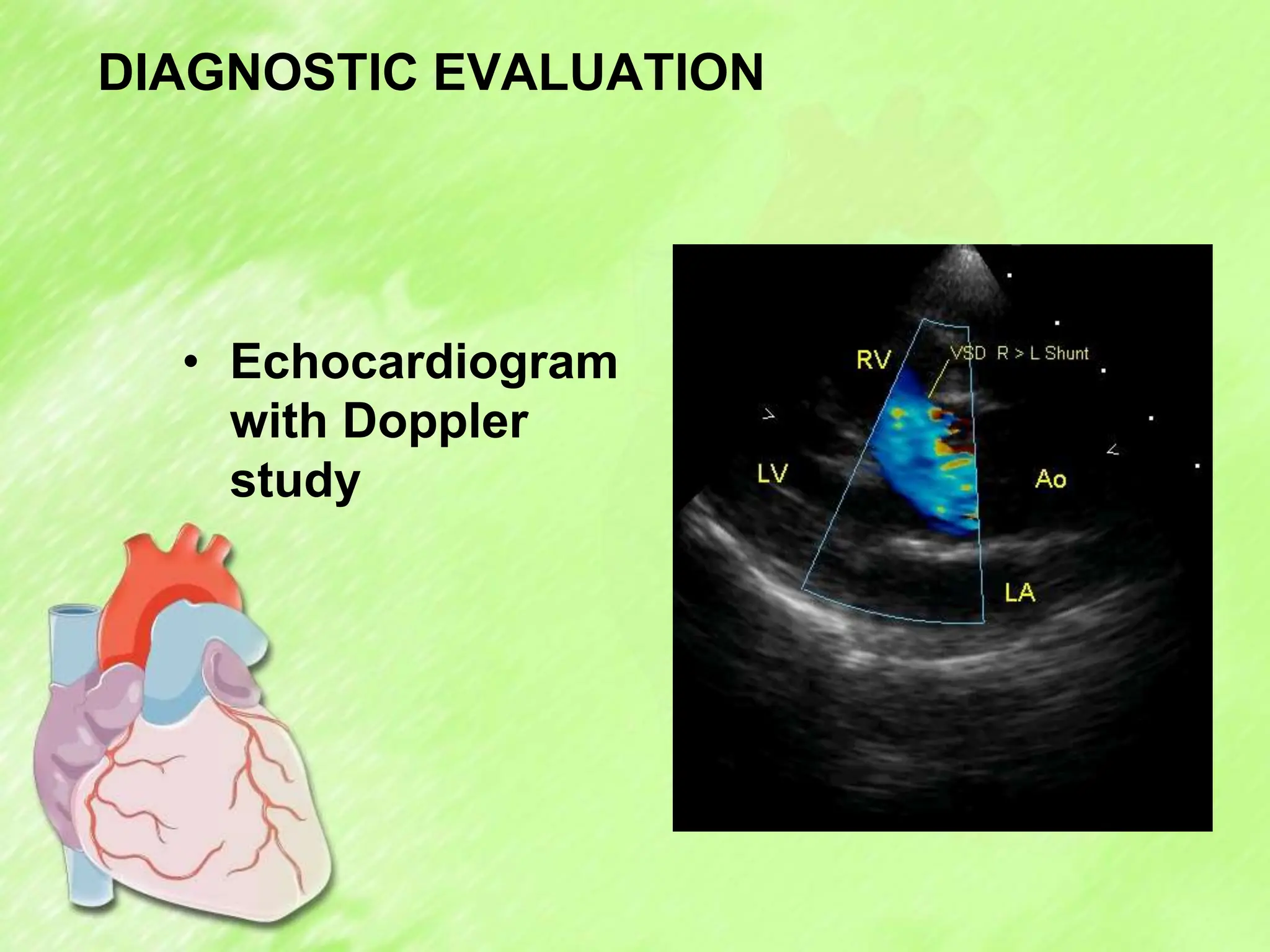
• Echocardiogram
with Doppler
study
DIAGNOSTIC EVALUATION
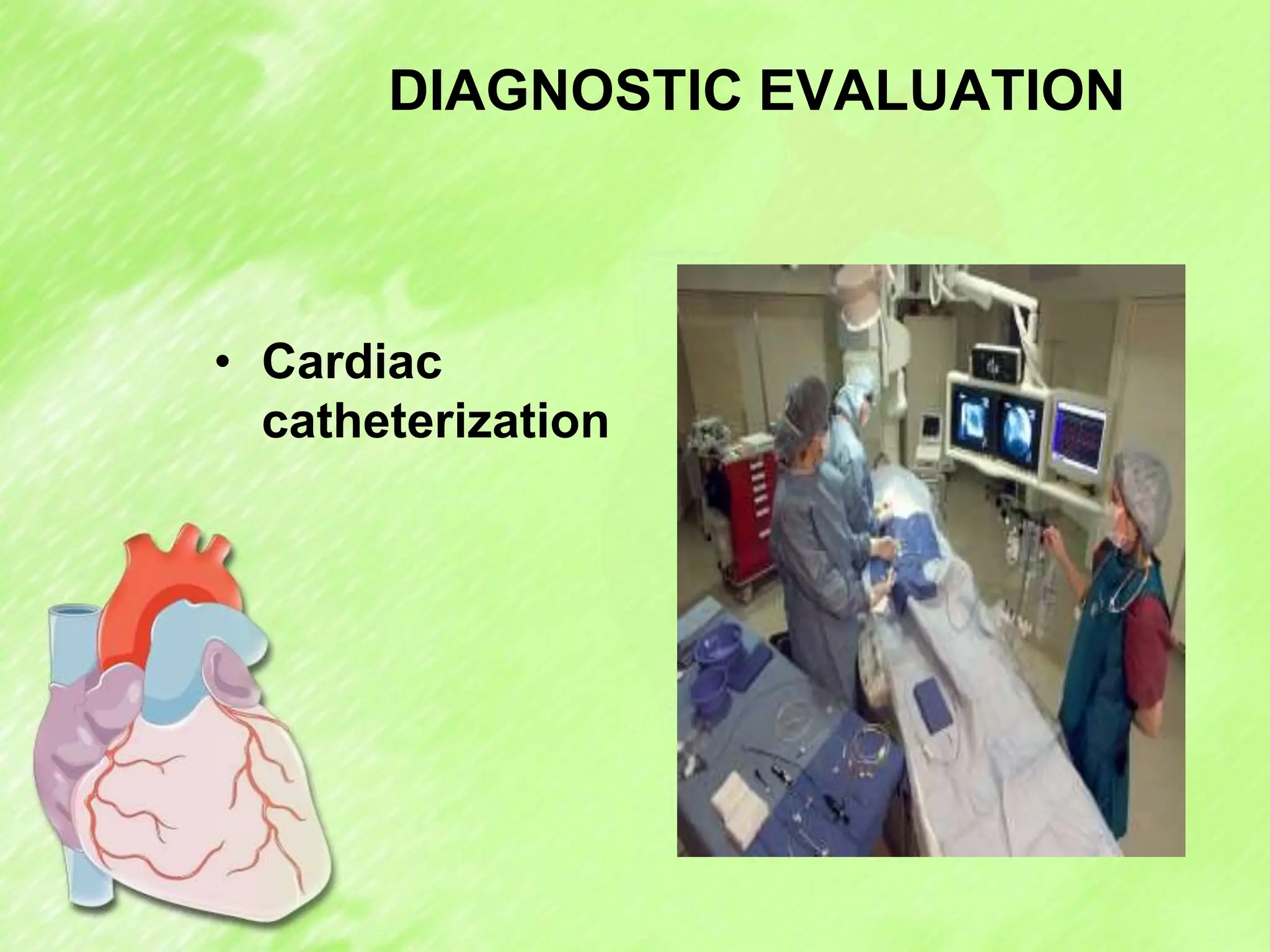
• Cardiac
catheterization
MANAGEMENT
• Supplemental oxygen - to compensate
for restricted pulmonary blood flow
• Analgesics- Most analgesic agents
have sedating properties, which are
beneficial for patients who are having
hypercyanotic episodes
MANAGEMENT
• Morphine sulfate, 0.1-0.2 mg/kg
intramuscularly (IM) or subcutaneously
(SC), may decrease systemic venous
return as well as producing a sedative
effect that provides comfort and
diminishes anxiety for the patient
MANAGEMENT
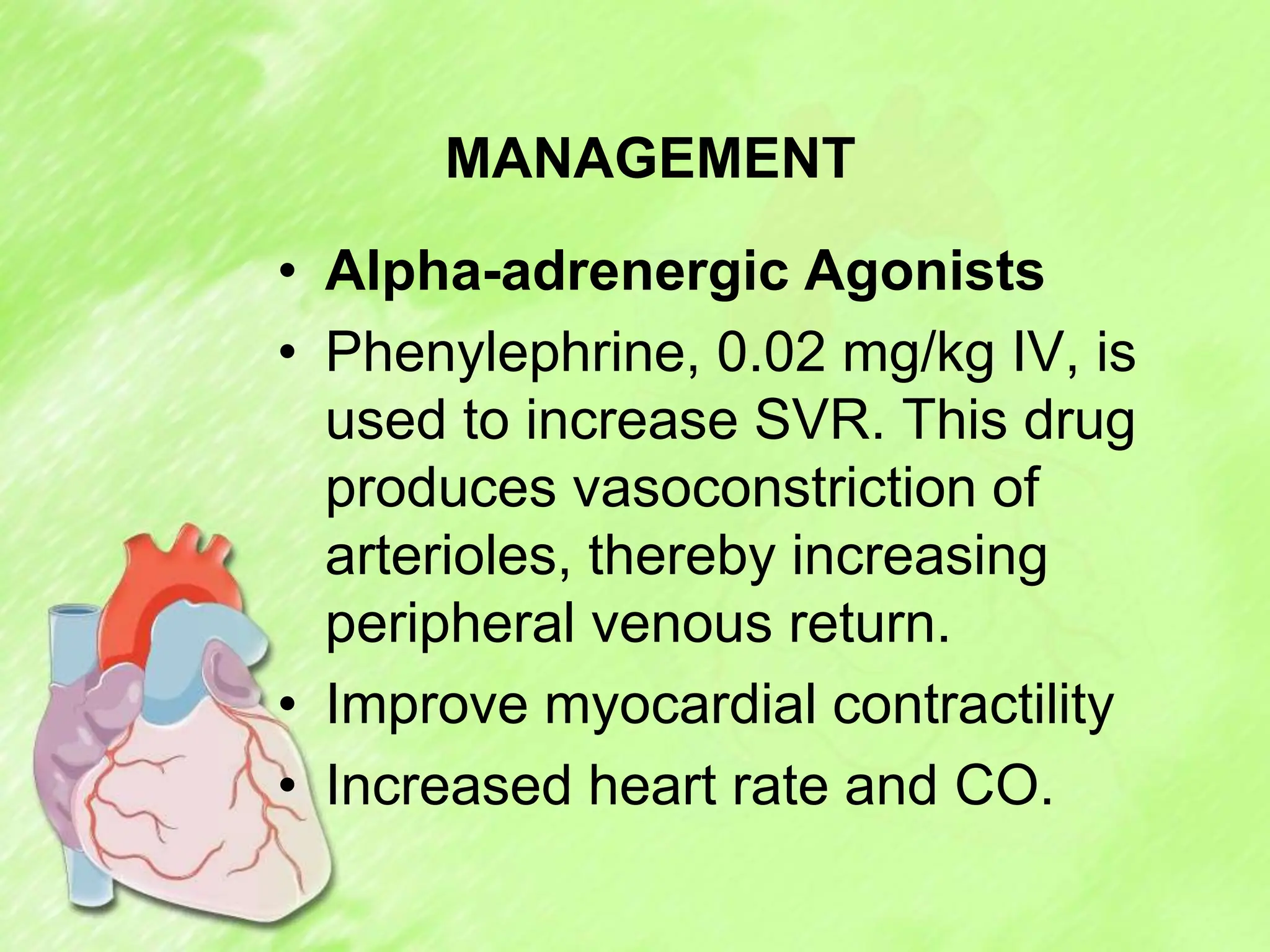
• Alpha-adrenergic Agonists
• Phenylephrine, 0.02 mg/kg IV, is
used to increase SVR. This drug
produces vasoconstriction of
arterioles, thereby increasing
peripheral venous return.
• Improve myocardial contractility
• Increased heart rate and CO.
MANAGEMENT
• IV propranolol (Inderal) may be
administered, which relaxes the
infundibular muscle spasm causing
RVOTO.
Management of "tet" spells
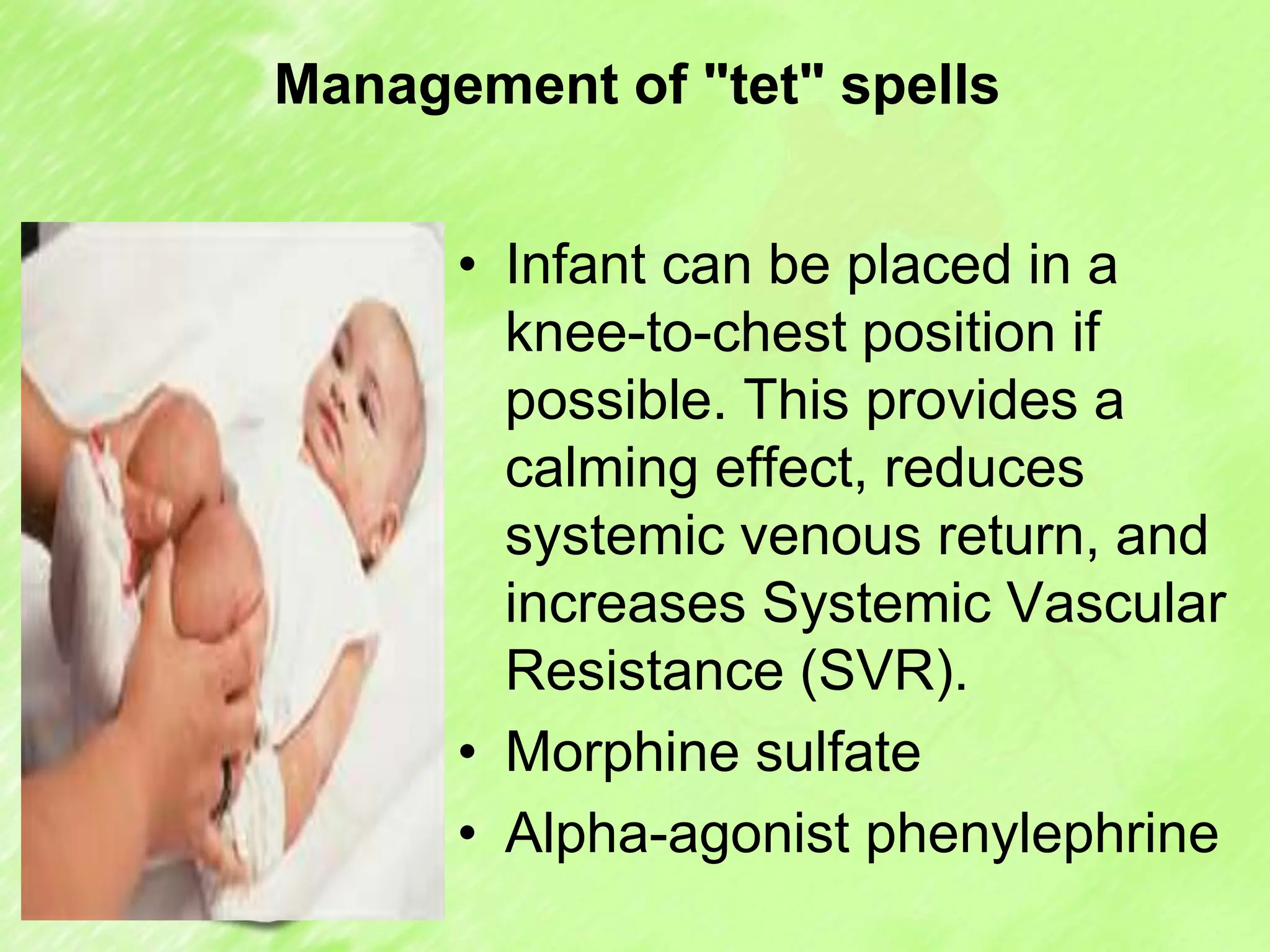
• Infant can be placed in a
knee-to-chest position if
possible. This provides a
calming effect, reduces
systemic venous return, and
increases Systemic Vascular
Resistance (SVR).
• Morphine sulfate
• Alpha-agonist phenylephrine
SURGICAL MANAGEMENT
• The timing of complete surgical repair is
dependent on numerous variables,
including symptoms and any associated
lesions (Eg. Multiple VSD).
• The trend is to perform a complete
surgical procedure before the age of 1
year and preferably by the age of 2 years.
Studies have shown, however, that
surgery is preferably done at or about 12
months of age.
SURGICAL MANAGEMENT
PALLIATIVE
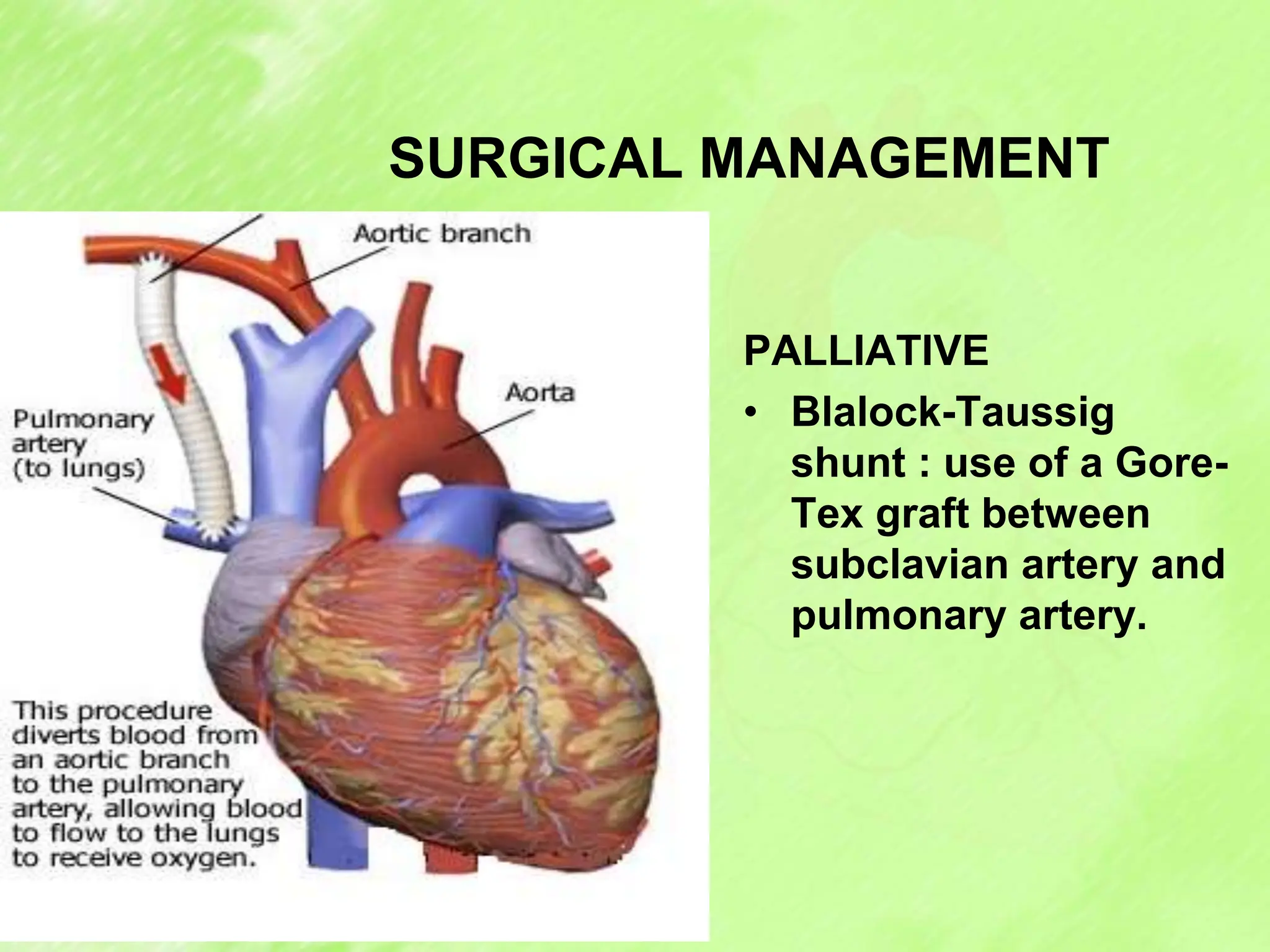
• Blalock-Taussig
shunt : use of a Gore-
Tex graft between
subclavian artery and
pulmonary artery.
SURGICAL MANAGEMENT
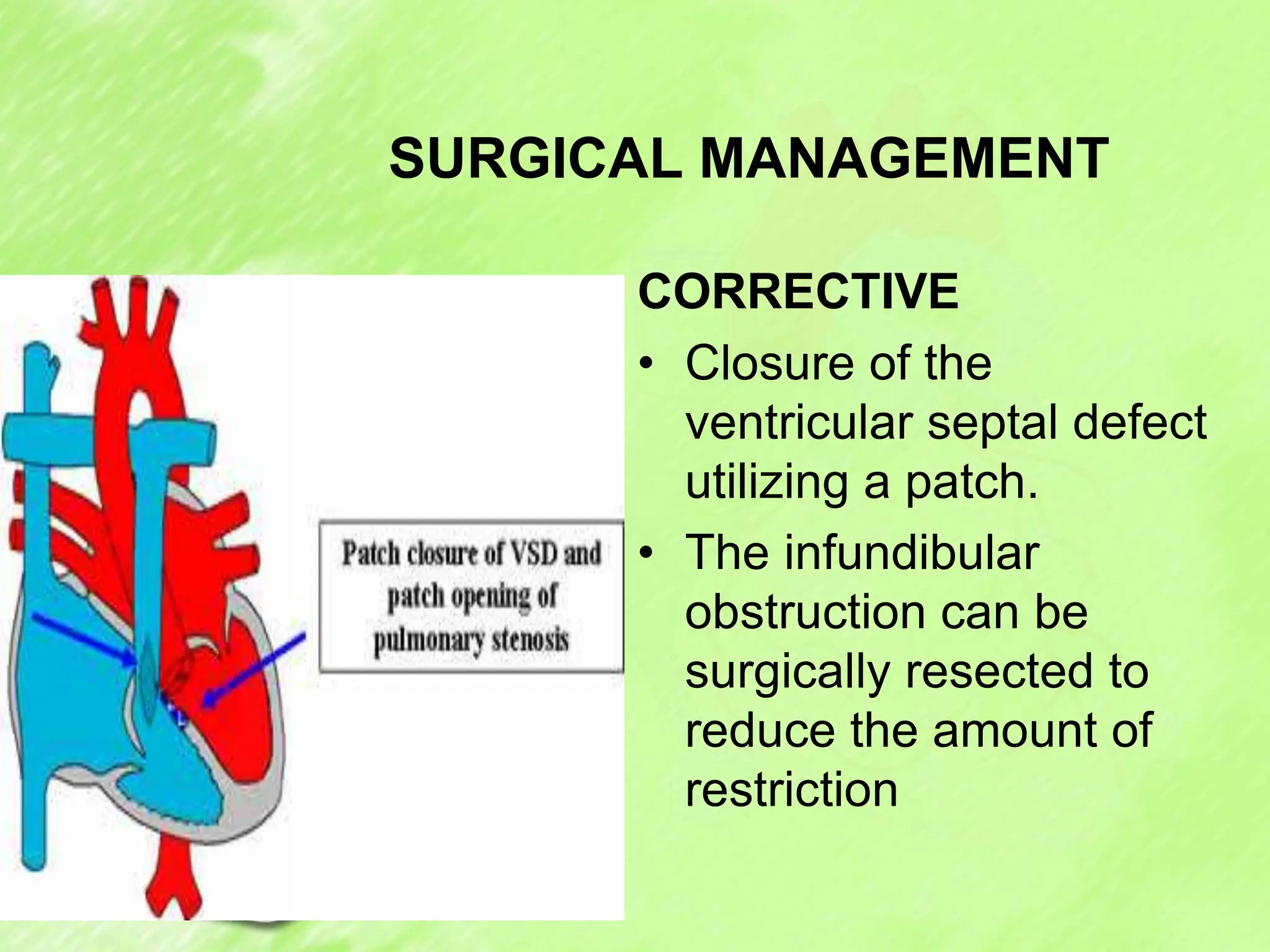
CORRECTIVE
• Closure of the
ventricular septal defect
utilizing a patch.
• The infundibular
obstruction can be
surgically resected to
reduce the amount of
restriction
SURGICAL MANAGEMENT
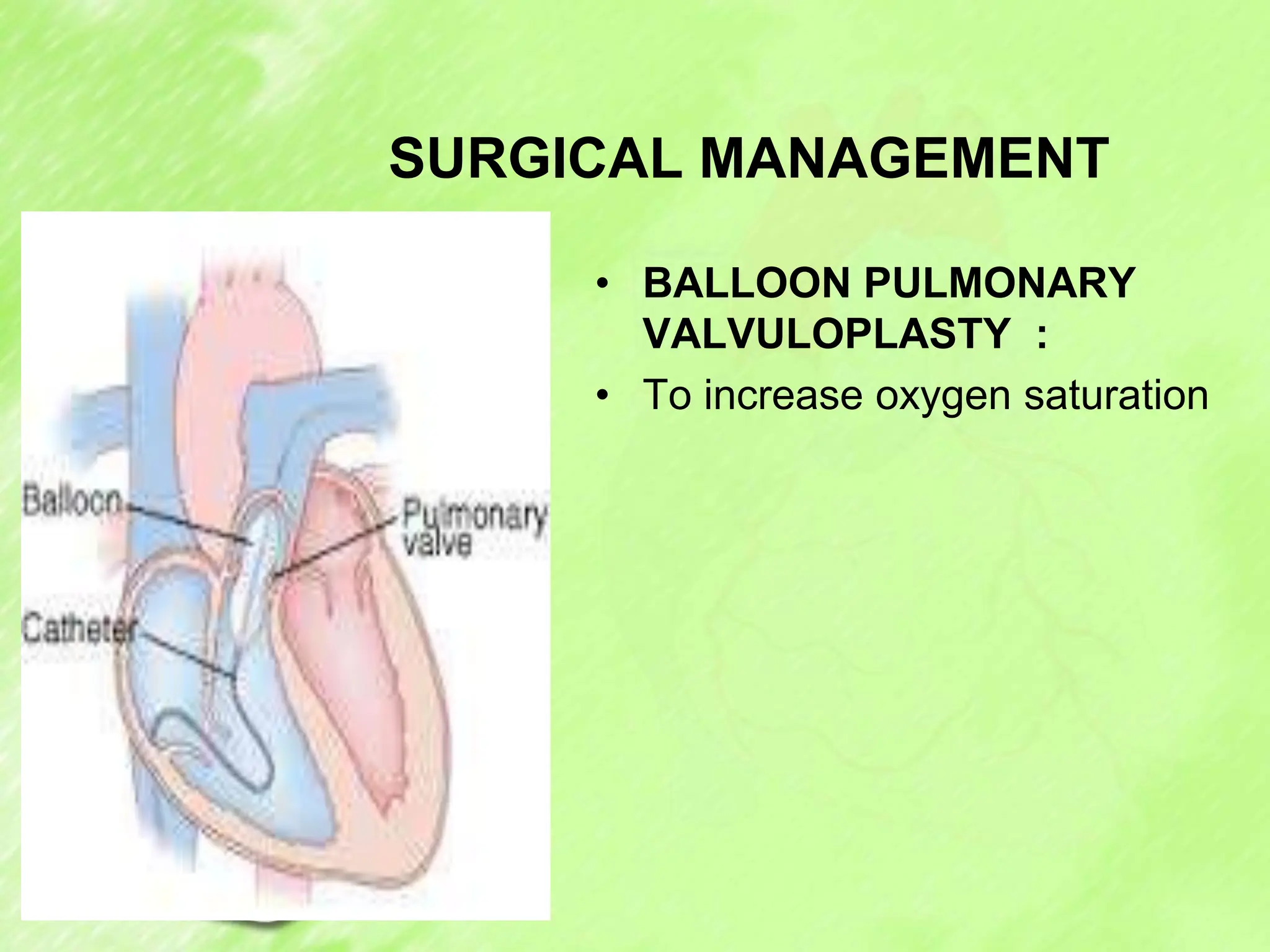
• BALLOON PULMONARY
VALVULOPLASTY :
• To increase oxygen saturation
COMPLICATIONS
• Hypoxia.
• Hypercyanotic spells.
• Polycythemia.
• CHF
• Right ventricular dysfunction.
• Ventricular arrhythmias.
• Infective endocarditis.
TOF.pptx

TOF.pptx

  • 1.
  • 2.
    INTRODUCTION • Tetralogy ofFallot (TOF), first described in 1888 and named after Louis Arthur Fallot. Tetralogy of fallot - the most common congenital heart disorders. • TOF is classified as a cyanotic heart disorder because TOF results in an inadequate flow of blood to the lungs for oxygenation.
  • 3.
    DEFINITION Tetralogy of fallotis a congenital heart defect which is characterised by the combinations of four defects : • Pulmonary stenosis (right ventricular outflow tract obstruction). • Ventricular Septal Defect. • Overriding or dextroposition of the aorta • Right ventricular hypertrophy.
  • 5.
    Incidence • Tetralogy ofFallot (TOF) represents approximately 7%-10% of congenital heart diseases (CHDs), and it is the most common cyanotic CHD, with 0.23-0.63 cases per 1,000 births.
  • 6.
    ETIOLOGY • Unknown • Geneticfactor:TBX1 Gene • Methylene tetrahydrofolate reductase (MTHFR) gene polymorphism • Maternal rubella during pregnancy • Poor prenatal nutrition • Maternal alcohol use • Maternal age older than 40 years • Maternal phenylketonuria and diabetes.
  • 7.
    PATHOPHYSIOLOGY Obstruction of bloodflow from the right ventricle to the PA results in deoxygenated blood being shunted across the VSD and into the aorta Degree of cyanosis depends on the size of the VSD and the degree of RVOTO Due to structural defects, there is right to left shunt causing cyanosis
  • 8.
    Minimal RVOTO resultsin a pink or acyanotic TOF The right ventricle becomes hypertrophied as a result of the increased gradient across the RVOT RVOTO can occur at pulmonary valve stenosis, infundibular stenosis, or supravalvular stenosis.
  • 9.
    CLINICAL MANIFESTATIONS • Cyanosis •Tet spells • Squatting position • Slow weight gain and mental slowness. • Difficulty with feeding and failure to thrive. • Clubbing • Polycythemia • Decreased activity tolerance
  • 10.
    DIAGNOSTIC EVALUATION • Auscultation oHarsh systolic ejection murmur heard best at the upper left sternal border. o During a hypercyanotic spell the murmur disappears.
  • 11.
    DIAGNOSTIC EVALUATION • ChestX-ray o Boot shaped because of pulmonary stenosis with an upturned apex resulting from Right Ventricular Hypertrophy
  • 12.
    DIAGNOSTIC EVALUATION • Hematologicstudies o Haemoglobin and hematocrit values are usually elevated in proportion to the degree of cyanosis. o Prolonged cyanosis causes reactive polycythemia that increases the oxygen carrying capacity.
  • 13.
    Coagulation studies • Thereis diminished coagulation factors and diminished total fibrinogen, which are associated with prolonged prothrombin and coagulation times.
  • 14.
  • 15.
  • 16.
  • 17.
    MANAGEMENT • Supplemental oxygen- to compensate for restricted pulmonary blood flow • Analgesics- Most analgesic agents have sedating properties, which are beneficial for patients who are having hypercyanotic episodes
  • 18.
    MANAGEMENT • Morphine sulfate,0.1-0.2 mg/kg intramuscularly (IM) or subcutaneously (SC), may decrease systemic venous return as well as producing a sedative effect that provides comfort and diminishes anxiety for the patient
  • 19.
    MANAGEMENT • Alpha-adrenergic Agonists •Phenylephrine, 0.02 mg/kg IV, is used to increase SVR. This drug produces vasoconstriction of arterioles, thereby increasing peripheral venous return. • Improve myocardial contractility • Increased heart rate and CO.
  • 20.
    MANAGEMENT • IV propranolol(Inderal) may be administered, which relaxes the infundibular muscle spasm causing RVOTO.
  • 21.
    Management of "tet"spells • Infant can be placed in a knee-to-chest position if possible. This provides a calming effect, reduces systemic venous return, and increases Systemic Vascular Resistance (SVR). • Morphine sulfate • Alpha-agonist phenylephrine
  • 22.
    SURGICAL MANAGEMENT • Thetiming of complete surgical repair is dependent on numerous variables, including symptoms and any associated lesions (Eg. Multiple VSD). • The trend is to perform a complete surgical procedure before the age of 1 year and preferably by the age of 2 years. Studies have shown, however, that surgery is preferably done at or about 12 months of age.
  • 23.
    SURGICAL MANAGEMENT PALLIATIVE • Blalock-Taussig shunt: use of a Gore- Tex graft between subclavian artery and pulmonary artery.
  • 24.
    SURGICAL MANAGEMENT CORRECTIVE • Closureof the ventricular septal defect utilizing a patch. • The infundibular obstruction can be surgically resected to reduce the amount of restriction
  • 25.
    SURGICAL MANAGEMENT • BALLOONPULMONARY VALVULOPLASTY : • To increase oxygen saturation
  • 26.
    COMPLICATIONS • Hypoxia. • Hypercyanoticspells. • Polycythemia. • CHF • Right ventricular dysfunction. • Ventricular arrhythmias. • Infective endocarditis.