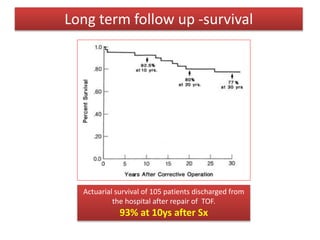
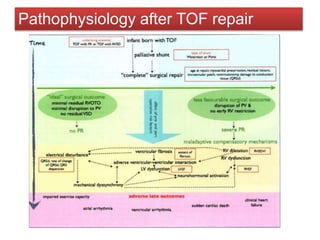
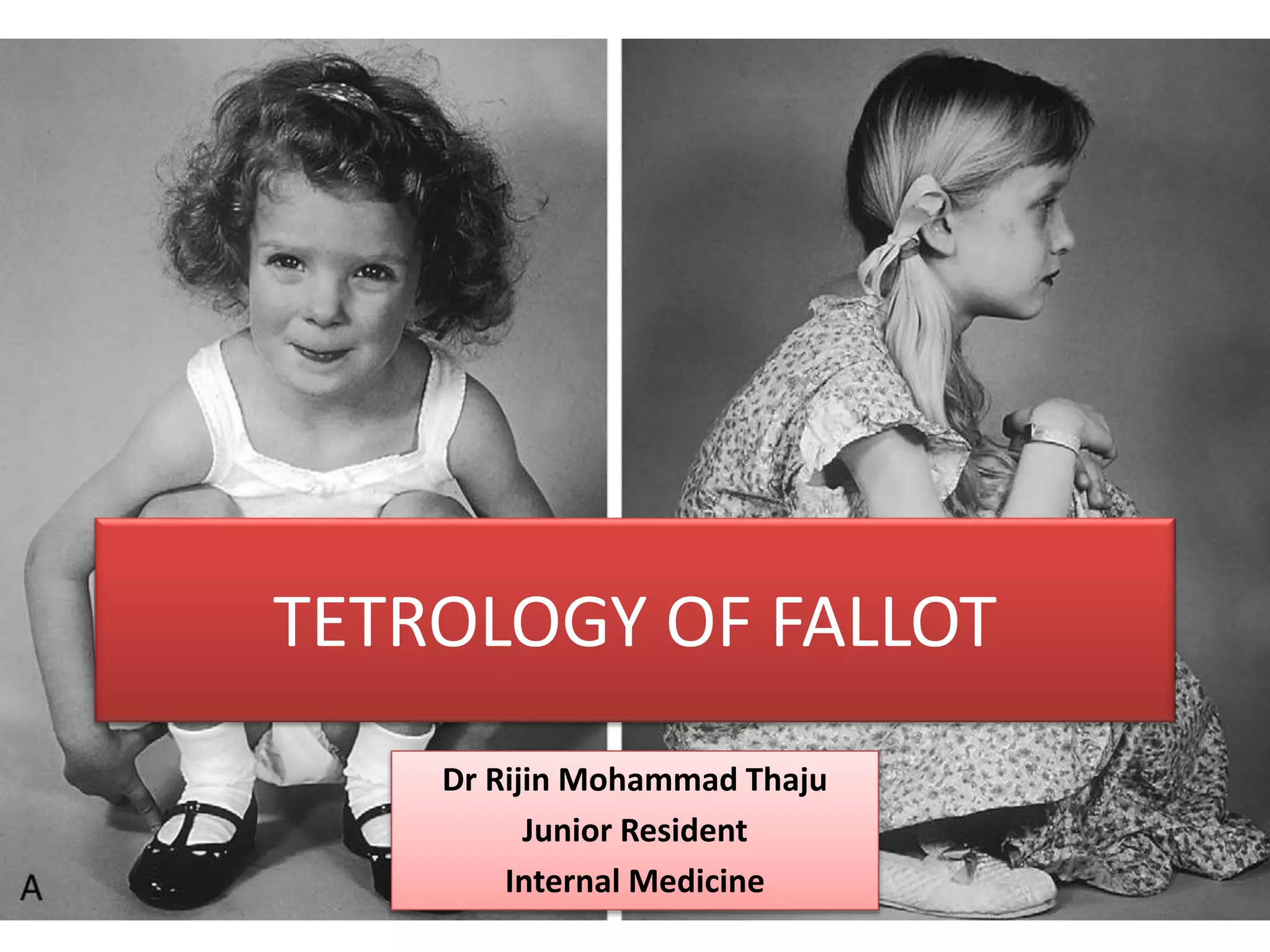
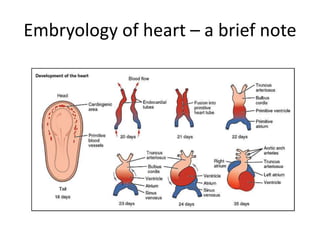
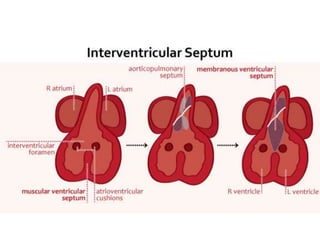
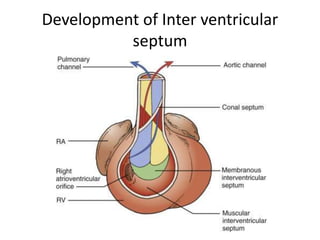
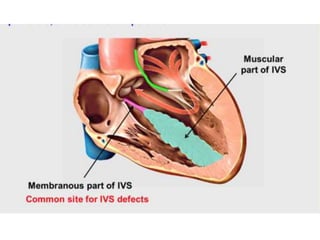
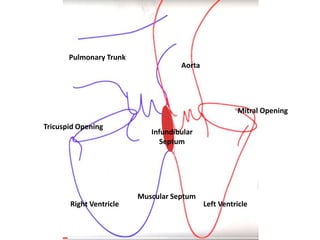
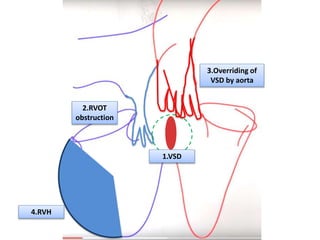
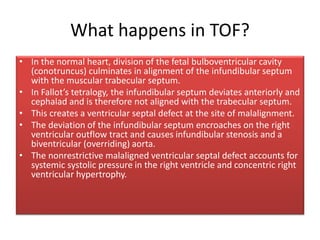
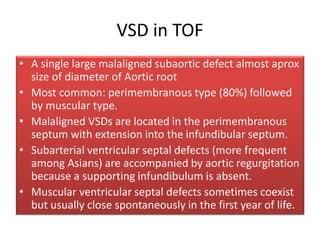
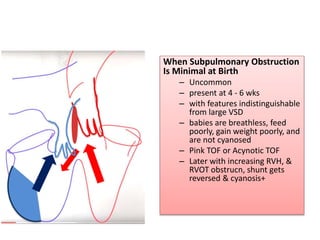
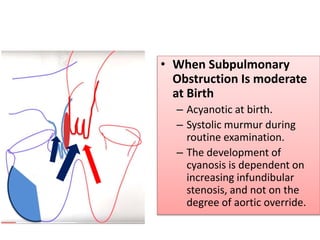
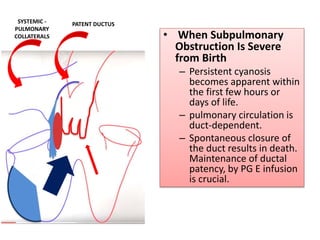
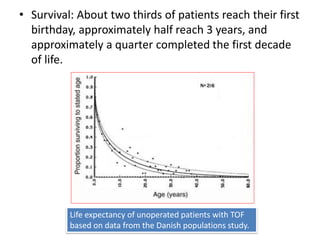
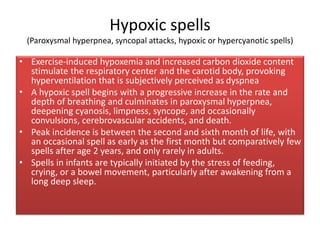
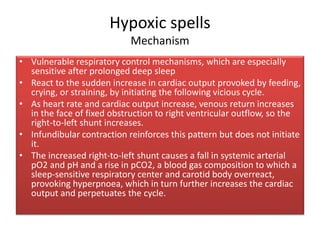
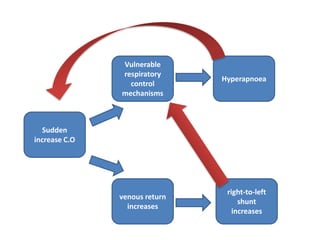
Fallot's tetralogy is the most common form of cyanotic congenital heart disease. It consists of four anatomical abnormalities: a ventricular septal defect, pulmonary stenosis, an overriding aorta, and right ventricular hypertrophy. The degree of pulmonary stenosis determines the direction and magnitude of blood flow through the ventricular septal defect. In severe cases, hypoxic spells can occur due to an imbalance between systemic oxygen delivery and demand during times of increased cardiac output. Without surgical repair, long-term outcomes are poor with most patients not surviving past childhood.

![Environmental Factors:
Maternal diabetes [3 fold increased risk of TOF]
Retinoic acids
Maternal phenylketonuria (PKU)
Recurrence risk:
-1 sibling affected: 2.5% ≥2 siblings affected: 8%
-Mother with TOF : 2% - Father with TOF: 1.4%](https://image.slidesharecdn.com/tof-221108181255-5b332f33/85/TOF-pptx-5-320.jpg)

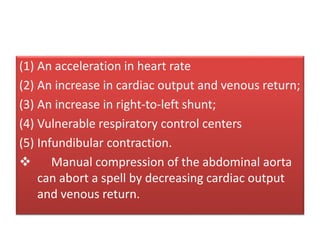

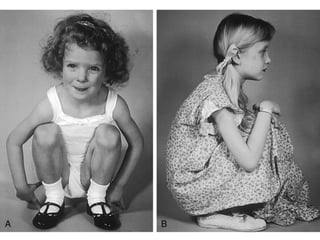

![BT shunt-advantages :
- Low incidence of problems from excess PBF
- No pericardial adhesions as pericardium is not entered
- Easy to close at the time of complete repair
- Less distortion of PAs
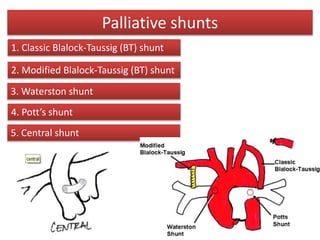
Central shunt :
- Connecting a short tubular graft of Teflon or GoreTex from the
aorta to the MPA.
Advantages over other shunts:
- Size of the communication could be controlled selecting a tube
with a diameter appropriate for the patient
- Branch PAs are not disturbed so that reconstruction is not
required at the time of corrective surgery.
Waterston/Potts shunts – complications:
- Excessive PBF HF [20%] & Pulmonary HTN
- Difficulty in taking down shunt at time of correction
- Distortion of RPA/LPA
- RPA/LPA aneurysm](https://image.slidesharecdn.com/tof-221108181255-5b332f33/85/TOF-pptx-86-320.jpg)