PLACENTA
PREVIA
 Definition
 Pathophysiology
 Risk Factors
 Types
 Signs and Symptoms
 Diagnostic Tests
 Medical Management
 Surgical Management
 Nursing Management
o Nursing Assessment
o Nursing Diagnosis
o Nursing Care Plans
o Nursing Interventions
o Evaluation
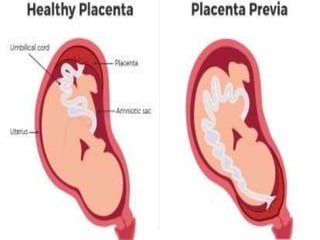
Placenta previa is a condition wherein the
placenta of a pregnant woman is implanted
abnormally in the uterus. It accounts for the
most incidents of bleeding in the third
trimester of pregnancy.
 The placenta implants on the lower part of the
uterus.
 The lower uterine segment separates from the
upper segment as the cervix starts to dilate.
 The placenta is unable to stretch and
accommodate the shape of the cervix,
resulting in bleeding.
 Placenta previa is dangerous if not detected early. However, it is
also highly preventable once you get to know the risk factors.
 Advanced maternal age. Women who are over the age of 35
years old are at an increased risk of developing placenta previa.
 Multiple gestations. The uterus which has accommodated more
than one fetus has an increased risk for placenta previa.
 Increased parity. Women who have given birth to a lot of
children have an increased chance of having placenta previa.
 Past caesarean births. Giving birth via
caesarean delivery predisposes the woman to
placenta previa on her next childbearing.
 Past uterine curettage. Scars from a past
curettage can affect the implantation of the
uterus and lead to placenta previa
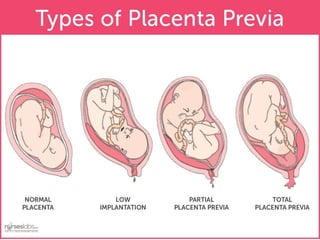
 These types of placenta previa are classified
according to the degree of the opening that is
covered by the placenta.
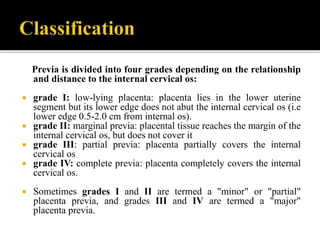
Previa is divided into four grades depending on the relationship
and distance to the internal cervical os:
 grade I: low-lying placenta: placenta lies in the lower uterine
segment but its lower edge does not abut the internal cervical os (i.e
lower edge 0.5-2.0 cm from internal os).
 grade II: marginal previa: placental tissue reaches the margin of the
internal cervical os, but does not cover it
 grade III: partial previa: placenta partially covers the internal
cervical os
 grade IV: complete previa: placenta completely covers the internal
cervical os.
 Sometimes grades I and II are termed a "minor" or "partial"
placenta previa, and grades III and IV are termed a "major"
placenta previa.
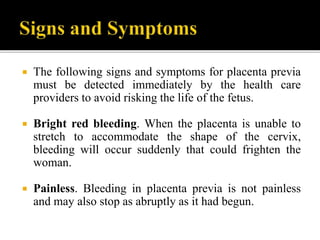
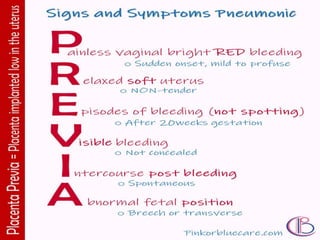
 The following signs and symptoms for placenta previa
must be detected immediately by the health care
providers to avoid risking the life of the fetus.
 Bright red bleeding. When the placenta is unable to
stretch to accommodate the shape of the cervix,
bleeding will occur suddenly that could frighten the
woman.
 Painless. Bleeding in placenta previa is not painless
and may also stop as abruptly as it had begun.
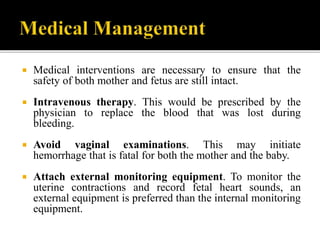
 Medical interventions are necessary to ensure that the
safety of both mother and fetus are still intact.
 Intravenous therapy. This would be prescribed by the
physician to replace the blood that was lost during
bleeding.
 Avoid vaginal examinations. This may initiate
hemorrhage that is fatal for both the mother and the baby.
 Attach external monitoring equipment. To monitor the
uterine contractions and record fetal heart sounds, an
external equipment is preferred than the internal monitoring
equipment.
To diagnose placenta previa, the patient must
undergo the following diagnostic procedure.
 Ultrasound. Early detection of placenta
previa is always possible through
ultrasonography. It is the most common and
initial diagnostic test that could confirm the
diagnosis.
 Surgical interventions are carried out once the
condition of both the mother and the fetus has
reached a critical stage and their lives are
exposed to undeniable danger.
 Cesarean delivery. Although the best way to
deliver a baby is through normal delivery, if the
placenta has obstructed more than 30% of the
cervical os it would be hard for the fetus to get
past the placenta through normal delivery.
Cesarean birth is then recommended by the
physician.
 Nurses also play a major role in the care of a
woman with placenta previa. They are also
entrusted with the outcome of the lives of both
the mother and the child.
 Assess baseline vital signs especially the blood
pressure. The physician would order monitoring
of the blood pressure every 5-15 minutes.
 Assess fetal heart sounds to monitor the
wellbeing of the fetus.
 Monitor uterine contractions to establish the
progress of labor of the mother.
 Weigh perineal pads used during bleeding to
calculate the amount of blood lost.
 Assist the woman in a side lying position when
bleeding occurs.
 Fear related to outcome of pregnancy due to
bleeding
 Assess fetal heart sounds so the mother would be
aware of the health of her baby.
 Allow the mother to vent out her feelings to
lessen her emotional stress.
 Assess any bleeding or spotting that might occur
to give adequate measures.
 Answer the mother’s questions honestly to
establish a trusting environment.
 Include the mother in the planning of the care
plan for both the mother and the baby.
 Woman is able to discuss her concerns with the health
care providers.
 States that hearing the fetal heartbeat assures her of the
baby’s safety.
 One could move mountains just to save the lives of
their mother and child. That is also true for health care
providers. The conditions that affect the health of the
mother and the baby can be conquered if both the
support system and the health care providers are
working as a team towards one measurable purpose: to
save lives.
THANK YOU

Placenta previa

  • 1.
  • 2.
     Definition  Pathophysiology Risk Factors  Types  Signs and Symptoms  Diagnostic Tests  Medical Management  Surgical Management  Nursing Management o Nursing Assessment o Nursing Diagnosis o Nursing Care Plans o Nursing Interventions o Evaluation
  • 3.
    Placenta previa isa condition wherein the placenta of a pregnant woman is implanted abnormally in the uterus. It accounts for the most incidents of bleeding in the third trimester of pregnancy.
  • 5.
     The placentaimplants on the lower part of the uterus.  The lower uterine segment separates from the upper segment as the cervix starts to dilate.  The placenta is unable to stretch and accommodate the shape of the cervix, resulting in bleeding.
  • 6.
     Placenta previais dangerous if not detected early. However, it is also highly preventable once you get to know the risk factors.  Advanced maternal age. Women who are over the age of 35 years old are at an increased risk of developing placenta previa.  Multiple gestations. The uterus which has accommodated more than one fetus has an increased risk for placenta previa.  Increased parity. Women who have given birth to a lot of children have an increased chance of having placenta previa.
  • 7.
     Past caesareanbirths. Giving birth via caesarean delivery predisposes the woman to placenta previa on her next childbearing.  Past uterine curettage. Scars from a past curettage can affect the implantation of the uterus and lead to placenta previa
  • 8.
     These typesof placenta previa are classified according to the degree of the opening that is covered by the placenta.
  • 10.
    Previa is dividedinto four grades depending on the relationship and distance to the internal cervical os:  grade I: low-lying placenta: placenta lies in the lower uterine segment but its lower edge does not abut the internal cervical os (i.e lower edge 0.5-2.0 cm from internal os).  grade II: marginal previa: placental tissue reaches the margin of the internal cervical os, but does not cover it  grade III: partial previa: placenta partially covers the internal cervical os  grade IV: complete previa: placenta completely covers the internal cervical os.  Sometimes grades I and II are termed a "minor" or "partial" placenta previa, and grades III and IV are termed a "major" placenta previa.
  • 11.
     The followingsigns and symptoms for placenta previa must be detected immediately by the health care providers to avoid risking the life of the fetus.  Bright red bleeding. When the placenta is unable to stretch to accommodate the shape of the cervix, bleeding will occur suddenly that could frighten the woman.  Painless. Bleeding in placenta previa is not painless and may also stop as abruptly as it had begun.
  • 13.
     Medical interventionsare necessary to ensure that the safety of both mother and fetus are still intact.  Intravenous therapy. This would be prescribed by the physician to replace the blood that was lost during bleeding.  Avoid vaginal examinations. This may initiate hemorrhage that is fatal for both the mother and the baby.  Attach external monitoring equipment. To monitor the uterine contractions and record fetal heart sounds, an external equipment is preferred than the internal monitoring equipment.
  • 14.
    To diagnose placentaprevia, the patient must undergo the following diagnostic procedure.  Ultrasound. Early detection of placenta previa is always possible through ultrasonography. It is the most common and initial diagnostic test that could confirm the diagnosis.
  • 15.
     Surgical interventionsare carried out once the condition of both the mother and the fetus has reached a critical stage and their lives are exposed to undeniable danger.  Cesarean delivery. Although the best way to deliver a baby is through normal delivery, if the placenta has obstructed more than 30% of the cervical os it would be hard for the fetus to get past the placenta through normal delivery. Cesarean birth is then recommended by the physician.
  • 16.
     Nurses alsoplay a major role in the care of a woman with placenta previa. They are also entrusted with the outcome of the lives of both the mother and the child.
  • 17.
     Assess baselinevital signs especially the blood pressure. The physician would order monitoring of the blood pressure every 5-15 minutes.  Assess fetal heart sounds to monitor the wellbeing of the fetus.  Monitor uterine contractions to establish the progress of labor of the mother.  Weigh perineal pads used during bleeding to calculate the amount of blood lost.  Assist the woman in a side lying position when bleeding occurs.
  • 18.
     Fear relatedto outcome of pregnancy due to bleeding
  • 19.
     Assess fetalheart sounds so the mother would be aware of the health of her baby.  Allow the mother to vent out her feelings to lessen her emotional stress.  Assess any bleeding or spotting that might occur to give adequate measures.  Answer the mother’s questions honestly to establish a trusting environment.  Include the mother in the planning of the care plan for both the mother and the baby.
  • 20.
     Woman isable to discuss her concerns with the health care providers.  States that hearing the fetal heartbeat assures her of the baby’s safety.  One could move mountains just to save the lives of their mother and child. That is also true for health care providers. The conditions that affect the health of the mother and the baby can be conquered if both the support system and the health care providers are working as a team towards one measurable purpose: to save lives.
  • 21.