Teaching and Learning Team

        Report to the School Board
           December 1, 2011


1
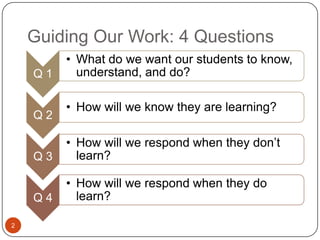
Guiding Our Work: 4 Questions
         • What do we want our students to know,
    Q1     understand, and do?

         • How will we know they are learning?
    Q2

         • How will we respond when they don’t
    Q3     learn?

         • How will we respond when they do
    Q4     learn?

2
Perspective on Curriculum

     ―A rigorous curriculum is an inclusive set of
     intentionally aligned components—clear
     learning outcomes with matching
     assessments, engaging learning experiences,
     and instructional strategies—organized into
     sequenced units of study that serve as both
     the detailed road map and the high –quality
     delivery system of ensuring that all students
     achieve the desired end: the attainment of
     their designated grade- or course-specific
3
     standards within a particular content area.‖
Curriculum
    1.   Facilitate the development of standards-based
         curriculum guides
    2.   Develop a system of managing and
         implementing curricula
    3.   Facilitate job-embedded teacher professional
         development in each course and/or content area
    4.   Evaluate the English as a Second Language
         Program
    5.   Support the creation and implementation a PreK-12
         Literacy Plan
    6.   Monitor implementation of the Curriculum
         Management System
4
Writing Curriculum for All
         Subjects
    1.     Facilitate the development
           of standards-based
           curriculum guides
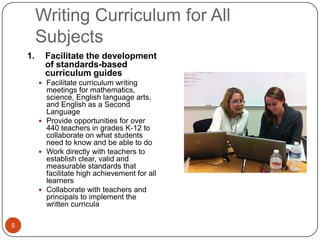
          Facilitate curriculum writing
           meetings for mathematics,
           science, English language arts,
           and English as a Second
           Language
          Provide opportunities for over
           440 teachers in grades K-12 to
           collaborate on what students
           need to know and be able to do
          Work directly with teachers to
           establish clear, valid and
           measurable standards that
           facilitate high achievement for all
           learners
          Collaborate with teachers and
           principals to implement the
           written curricula

5
Creating a Curriculum Library
    2. Develop a system of
       managing and
       implementing
       curricula
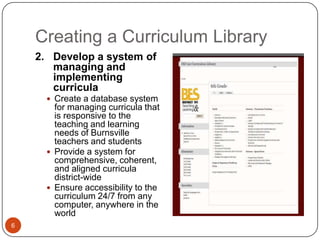
       Create a database system
        for managing curricula that
        is responsive to the
        teaching and learning
        needs of Burnsville
        teachers and students
       Provide a system for
        comprehensive, coherent,
        and aligned curricula
        district-wide
       Ensure accessibility to the
        curriculum 24/7 from any
        computer, anywhere in the
        world
6
Reviewing English as a Second
    Language Programs
    4.     Evaluate the English as a
           Second Language (ESL)
           Program
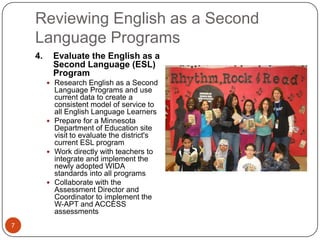
          Research English as a Second
           Language Programs and use
           current data to create a
           consistent model of service to
           all English Language Learners
          Prepare for a Minnesota
           Department of Education site
           visit to evaluate the district's
           current ESL program
          Work directly with teachers to
           integrate and implement the
           newly adopted WIDA
           standards into all programs
          Collaborate with the
           Assessment Director and
           Coordinator to implement the
           W-APT and ACCESS
           assessments
7
Perspective on Professional Development
     ―What teachers know and do influences
     students’ academic success. The need for
     ongoing professional learning that deepens
     teachers’ understanding of their content area
     and expands their instructional repertoire is
     essential to improving student learning. When
     the content of staff development focuses
     specifically on what data about student
     performance indicate are the areas of greatest
     need for students, the return on the
     investment in professional learning is likely to
8    be higher.‖
Instruction and Professional Development
    1. Facilitate principals’ collaborative team meetings
    2. Support the development and implementation of
         school improvement and professional
         development plans
    3.   Support the implementation of district leadership
         teams
    4.   Coordinate job-embedded and sustained district-
         wide professional development
    5.   Support the development of a system of
         interventions and enrichments
    6.   Facilitate the development of a district-wide equity
         and integration plan
9
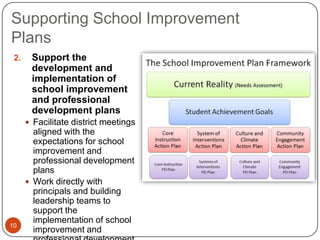
Supporting School Improvement
Plans
 2.    Support the
       development and
       implementation of
       school improvement
       and professional
       development plans
       Facilitate district meetings
        aligned with the
        expectations for school
        improvement and
        professional development
        plans
       Work directly with
        principals and building
        leadership teams to
        support the
        implementation of school
10
        improvement and
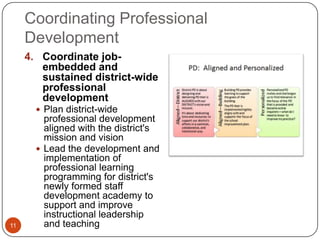
Coordinating Professional
     Development
     4. Coordinate job-
        embedded and
        sustained district-wide
        professional
        development
        Plan district-wide
         professional development
         aligned with the district's
         mission and vision
        Lead the development and
         implementation of
         professional learning
         programming for district's
         newly formed staff
         development academy to
         support and improve
         instructional leadership
11       and teaching
Developing a System of Interventions
     5. Support the
        development of a
        system of interventions
        and enrichments
        Facilitate the
         implementation of
         collaborative teams
         (PLCs) to support role of
         interventionists and
         enrichment specialists
         across the district
        Organize and lead district
         professional development
         to support response to
         instruction (classroom-
         initiated interventions) and
         response to intervention
         (more intensive
         interventions) to improve
12       student achievement
Perspective on Balanced
                 Assessment

     ―With assessment, purpose is everything. We
     assess for two reasons: (1) to gather evidence
     to inform instructional decisions and (2) to
     encourage students to try to learn. Both
     purposes must be well
     served for schools to be effective.‖
                 - Rick Stiggins, Assessment Training Institute


13
Assessment and Data
     1.   Coordinate and interpret assessment results for
          improving student learning and programs and
          public accountability
     2.   Serve as liaison for district surrounding policy and
          governance of student assessment data
     3.   Facilitate the development and implementation
          of assessment processes and protocols
     4.   Facilitate the development and implementation
          of student data systems to drive instruction and
          programming
     5.   Support collaborative team meetings with data-rich
          artifacts
14
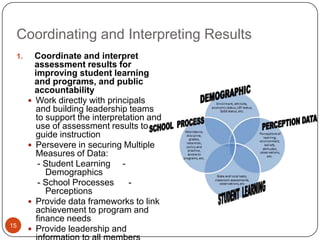
Coordinating and Interpreting Results
 1.     Coordinate and interpret
        assessment results for
        improving student learning
        and programs, and public
        accountability
       Work directly with principals
        and building leadership teams
        to support the interpretation and
        use of assessment results to
        guide instruction
       Persevere in securing Multiple
        Measures of Data:
         - Student Learning -
           Demographics
         - School Processes      -
           Perceptions
       Provide data frameworks to link
        achievement to program and
        finance needs
15
       Provide leadership and
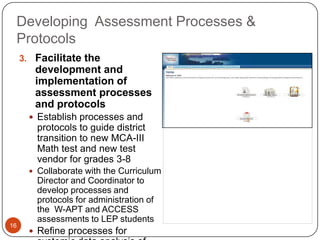
Developing Assessment Processes &
 Protocols
     3. Facilitate the
        development and
        implementation of
        assessment processes
        and protocols
        Establish processes and
         protocols to guide district
         transition to new MCA-III
         Math test and new test
         vendor for grades 3-8
        Collaborate with the Curriculum
         Director and Coordinator to
         develop processes and
         protocols for administration of
         the W-APT and ACCESS
         assessments to LEP students
16
        Refine processes for
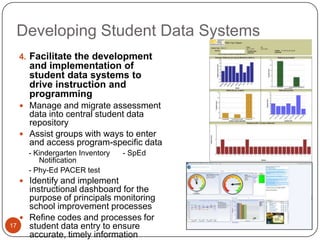
Developing Student Data Systems
  4. Facilitate the development
     and implementation of
     student data systems to
     drive instruction and
     programming
   Manage and migrate assessment
    data into central student data
    repository
   Assist groups with ways to enter
    and access program-specific data
    - Kindergarten Inventory   - SpEd
       Notification
    - Phy-Ed PACER test
   Identify and implement
     instructional dashboard for the
     purpose of principals monitoring
     school improvement processes
    Refine codes and processes for
17   student data entry to ensure
     accurate, timely information
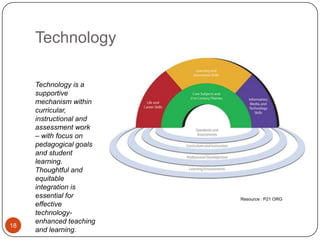
Technology

     Technology is a
     supportive
     mechanism within
     curricular,
     instructional and
     assessment work
     – with focus on
     pedagogical goals
     and student
     learning.
     Thoughtful and
     equitable
     integration is
     essential for       Resource : P21 ORG
     effective
     technology-
     enhanced teaching
18
     and learning.
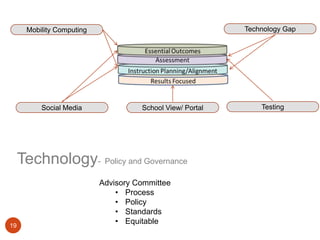
Mobility Computing                                   Technology Gap


          Social Media               School View/ Portal       Testing


     Technology- Policy and Governance
                           Advisory Committee
                               • Process
                               • Policy
                               • Standards
19
                               • Equitable
Technology – 21st Century
     Learning
                         Collaboration Tool
                           Web 2.0
                             Google Apps
                             Drupal Gardens -online curriculum
                              library
                           Moodle
                             Online Course – Full & Hybrid

        …….in the classroom and beyond


20
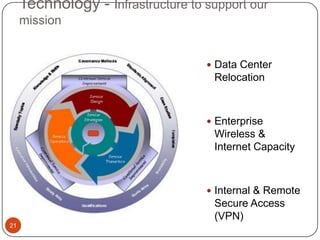
Technology - Infrastructure to support our
     mission


                                     Data Center
                                     Relocation


                                     Enterprise
                                     Wireless &
                                     Internet Capacity


                                     Internal & Remote
                                     Secure Access
                                     (VPN)
21
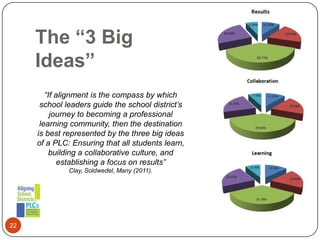
The “3 Big
     Ideas”
        ―If alignment is the compass by which
      school leaders guide the school district’s
          journey to becoming a professional
      learning community, then the destination
     is best represented by the three big ideas
     of a PLC: Ensuring that all students learn,
          building a collaborative culture, and
             establishing a focus on results‖
              Clay, Soldwedel, Many (2011).


22
“What Are We Waiting For?”
           ―Imagine if everyone in a school thought
     that what happened in every classroom, to
     every teacher and every student, was of
     tremendous significance and that quality
     learning was the most valued commodity.
     What would that mean for how time is used?
     What would it enable in terms of teachers’
     interactions with others? What would
     principals, teachers, and community members
     believe in and expect? What would students
     be able to accomplish?‖
                -Martin-Kneip, Communities That Lead, Learn, and Last
23

Tlt board report 12 1-11

  • 1.
    Teaching and LearningTeam Report to the School Board December 1, 2011 1
  • 2.
    Guiding Our Work:4 Questions • What do we want our students to know, Q1 understand, and do? • How will we know they are learning? Q2 • How will we respond when they don’t Q3 learn? • How will we respond when they do Q4 learn? 2
  • 3.
    Perspective on Curriculum ―A rigorous curriculum is an inclusive set of intentionally aligned components—clear learning outcomes with matching assessments, engaging learning experiences, and instructional strategies—organized into sequenced units of study that serve as both the detailed road map and the high –quality delivery system of ensuring that all students achieve the desired end: the attainment of their designated grade- or course-specific 3 standards within a particular content area.‖
  • 4.
    Curriculum 1. Facilitate the development of standards-based curriculum guides 2. Develop a system of managing and implementing curricula 3. Facilitate job-embedded teacher professional development in each course and/or content area 4. Evaluate the English as a Second Language Program 5. Support the creation and implementation a PreK-12 Literacy Plan 6. Monitor implementation of the Curriculum Management System 4
  • 5.
    Writing Curriculum forAll Subjects 1. Facilitate the development of standards-based curriculum guides  Facilitate curriculum writing meetings for mathematics, science, English language arts, and English as a Second Language  Provide opportunities for over 440 teachers in grades K-12 to collaborate on what students need to know and be able to do  Work directly with teachers to establish clear, valid and measurable standards that facilitate high achievement for all learners  Collaborate with teachers and principals to implement the written curricula 5
  • 6.
    Creating a CurriculumLibrary 2. Develop a system of managing and implementing curricula  Create a database system for managing curricula that is responsive to the teaching and learning needs of Burnsville teachers and students  Provide a system for comprehensive, coherent, and aligned curricula district-wide  Ensure accessibility to the curriculum 24/7 from any computer, anywhere in the world 6
  • 7.
    Reviewing English asa Second Language Programs 4. Evaluate the English as a Second Language (ESL) Program  Research English as a Second Language Programs and use current data to create a consistent model of service to all English Language Learners  Prepare for a Minnesota Department of Education site visit to evaluate the district's current ESL program  Work directly with teachers to integrate and implement the newly adopted WIDA standards into all programs  Collaborate with the Assessment Director and Coordinator to implement the W-APT and ACCESS assessments 7
  • 8.
    Perspective on ProfessionalDevelopment ―What teachers know and do influences students’ academic success. The need for ongoing professional learning that deepens teachers’ understanding of their content area and expands their instructional repertoire is essential to improving student learning. When the content of staff development focuses specifically on what data about student performance indicate are the areas of greatest need for students, the return on the investment in professional learning is likely to 8 be higher.‖
  • 9.
    Instruction and ProfessionalDevelopment 1. Facilitate principals’ collaborative team meetings 2. Support the development and implementation of school improvement and professional development plans 3. Support the implementation of district leadership teams 4. Coordinate job-embedded and sustained district- wide professional development 5. Support the development of a system of interventions and enrichments 6. Facilitate the development of a district-wide equity and integration plan 9
  • 10.
    Supporting School Improvement Plans 2. Support the development and implementation of school improvement and professional development plans  Facilitate district meetings aligned with the expectations for school improvement and professional development plans  Work directly with principals and building leadership teams to support the implementation of school 10 improvement and
  • 11.
    Coordinating Professional Development 4. Coordinate job- embedded and sustained district-wide professional development  Plan district-wide professional development aligned with the district's mission and vision  Lead the development and implementation of professional learning programming for district's newly formed staff development academy to support and improve instructional leadership 11 and teaching
  • 12.
    Developing a Systemof Interventions 5. Support the development of a system of interventions and enrichments  Facilitate the implementation of collaborative teams (PLCs) to support role of interventionists and enrichment specialists across the district  Organize and lead district professional development to support response to instruction (classroom- initiated interventions) and response to intervention (more intensive interventions) to improve 12 student achievement
  • 13.
    Perspective on Balanced Assessment ―With assessment, purpose is everything. We assess for two reasons: (1) to gather evidence to inform instructional decisions and (2) to encourage students to try to learn. Both purposes must be well served for schools to be effective.‖ - Rick Stiggins, Assessment Training Institute 13
  • 14.
    Assessment and Data 1. Coordinate and interpret assessment results for improving student learning and programs and public accountability 2. Serve as liaison for district surrounding policy and governance of student assessment data 3. Facilitate the development and implementation of assessment processes and protocols 4. Facilitate the development and implementation of student data systems to drive instruction and programming 5. Support collaborative team meetings with data-rich artifacts 14
  • 15.
    Coordinating and InterpretingResults 1. Coordinate and interpret assessment results for improving student learning and programs, and public accountability  Work directly with principals and building leadership teams to support the interpretation and use of assessment results to guide instruction  Persevere in securing Multiple Measures of Data: - Student Learning - Demographics - School Processes - Perceptions  Provide data frameworks to link achievement to program and finance needs 15  Provide leadership and
  • 16.
    Developing Assessment Processes& Protocols 3. Facilitate the development and implementation of assessment processes and protocols  Establish processes and protocols to guide district transition to new MCA-III Math test and new test vendor for grades 3-8  Collaborate with the Curriculum Director and Coordinator to develop processes and protocols for administration of the W-APT and ACCESS assessments to LEP students 16  Refine processes for
  • 17.
    Developing Student DataSystems 4. Facilitate the development and implementation of student data systems to drive instruction and programming  Manage and migrate assessment data into central student data repository  Assist groups with ways to enter and access program-specific data - Kindergarten Inventory - SpEd Notification - Phy-Ed PACER test  Identify and implement instructional dashboard for the purpose of principals monitoring school improvement processes  Refine codes and processes for 17 student data entry to ensure accurate, timely information
  • 18.
    Technology Technology is a supportive mechanism within curricular, instructional and assessment work – with focus on pedagogical goals and student learning. Thoughtful and equitable integration is essential for Resource : P21 ORG effective technology- enhanced teaching 18 and learning.
  • 19.
    Mobility Computing Technology Gap Social Media School View/ Portal Testing Technology- Policy and Governance Advisory Committee • Process • Policy • Standards 19 • Equitable
  • 20.
    Technology – 21stCentury Learning  Collaboration Tool  Web 2.0  Google Apps  Drupal Gardens -online curriculum library  Moodle  Online Course – Full & Hybrid …….in the classroom and beyond 20
  • 21.
    Technology - Infrastructureto support our mission  Data Center Relocation  Enterprise Wireless & Internet Capacity  Internal & Remote Secure Access (VPN) 21
  • 22.
    The “3 Big Ideas” ―If alignment is the compass by which school leaders guide the school district’s journey to becoming a professional learning community, then the destination is best represented by the three big ideas of a PLC: Ensuring that all students learn, building a collaborative culture, and establishing a focus on results‖ Clay, Soldwedel, Many (2011). 22
  • 23.
    “What Are WeWaiting For?” ―Imagine if everyone in a school thought that what happened in every classroom, to every teacher and every student, was of tremendous significance and that quality learning was the most valued commodity. What would that mean for how time is used? What would it enable in terms of teachers’ interactions with others? What would principals, teachers, and community members believe in and expect? What would students be able to accomplish?‖ -Martin-Kneip, Communities That Lead, Learn, and Last 23

Editor's Notes

  • #23  Haven't begun to address this issue Talking, but no action yet Have begun to address this issue Have moved beyond implementation Process deeply embedded in our culture