

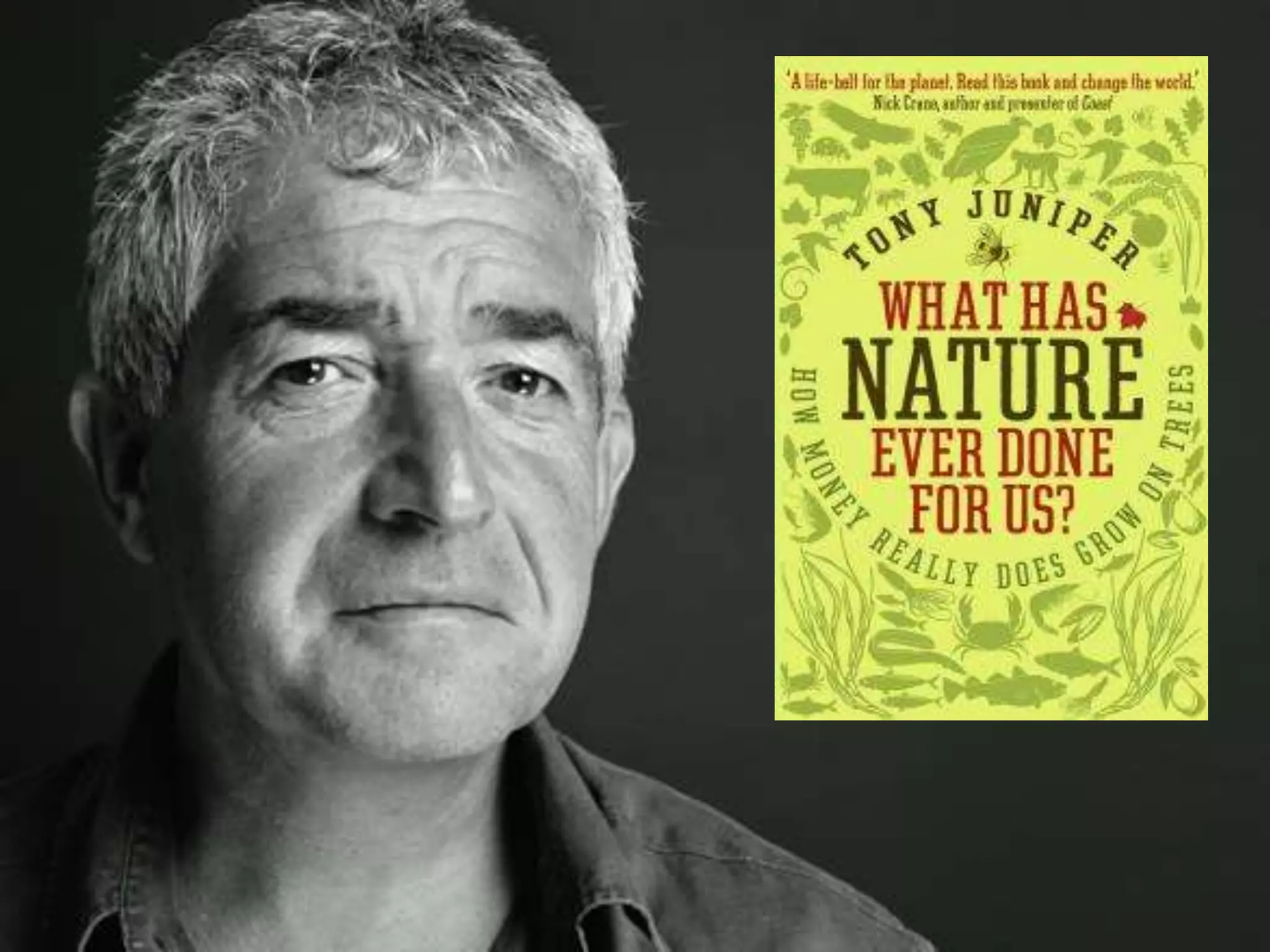

Mumbai, 8 July 2014
Professor Jeremy B Williams
Director, Asia Pacific Centre
for Sustainable Enterprise
@TheGreenMBA
@jeremybwilliams
tinyurl.com/teribcsd
Time to rethink well-being
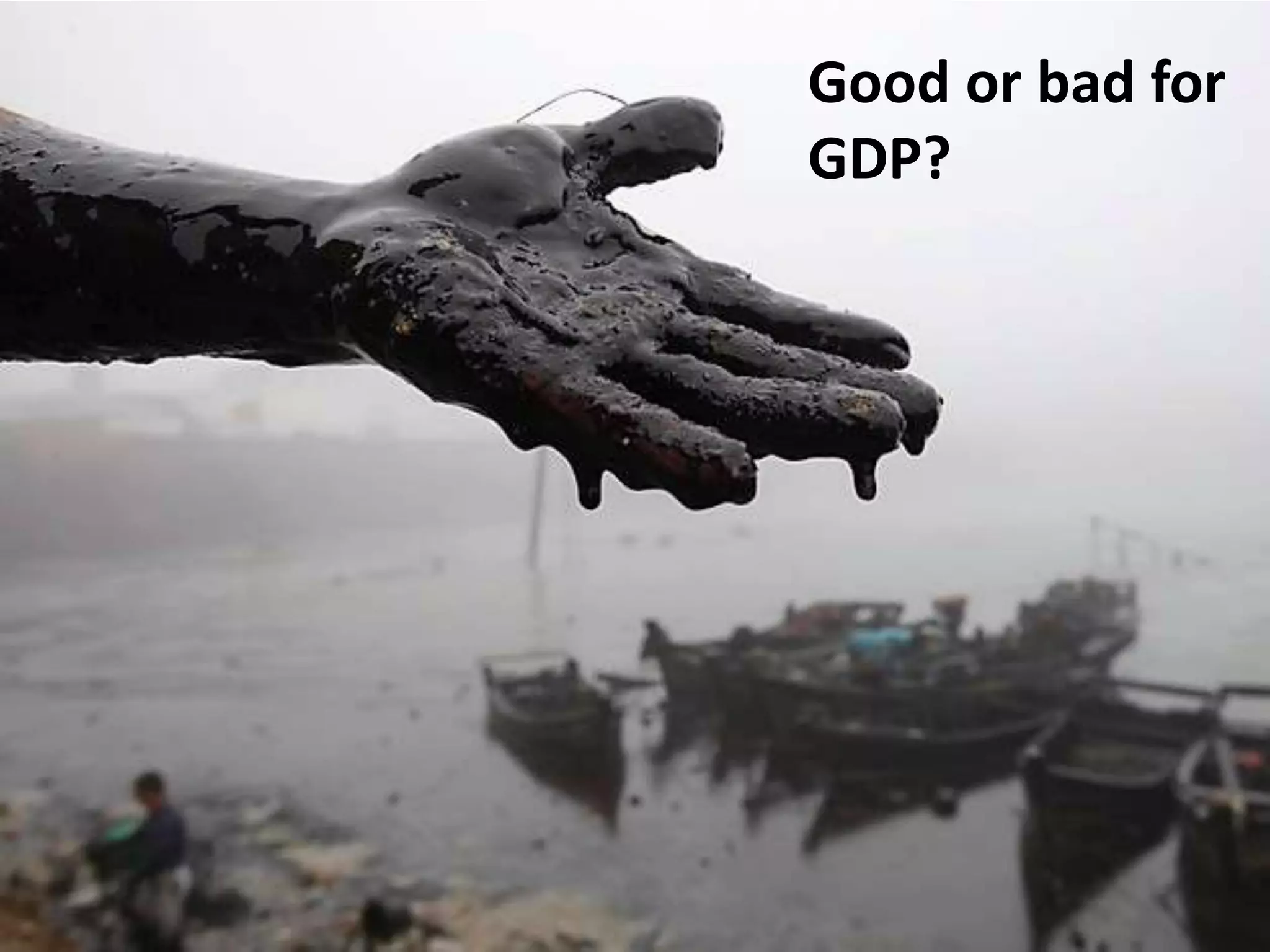
Good or bad for
GDP?
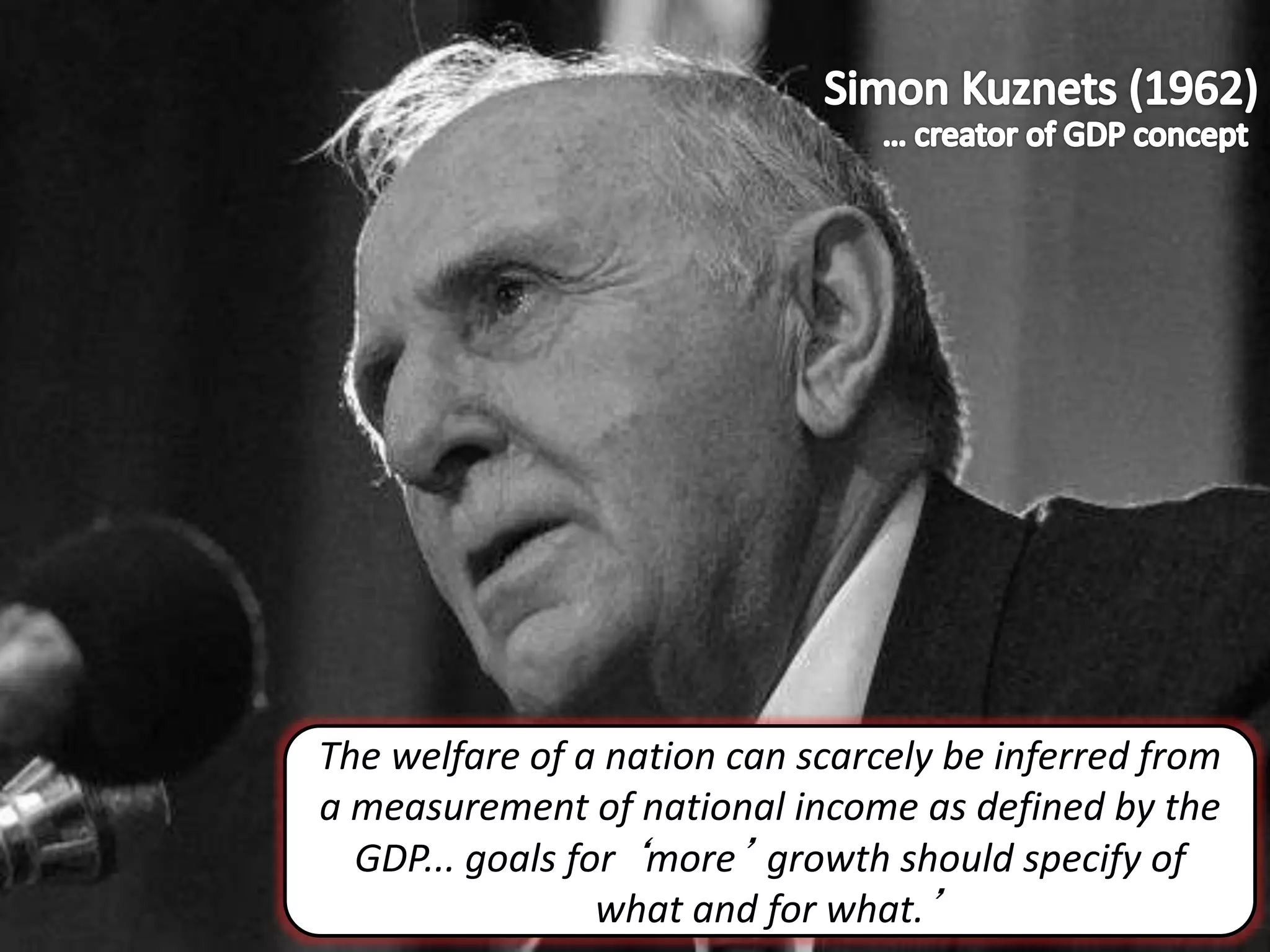
The welfare of a nation can scarcely be inferred from
a measurement of national income as defined by the
GDP... goals for ‘more’ growth should specify of
what and for what.’
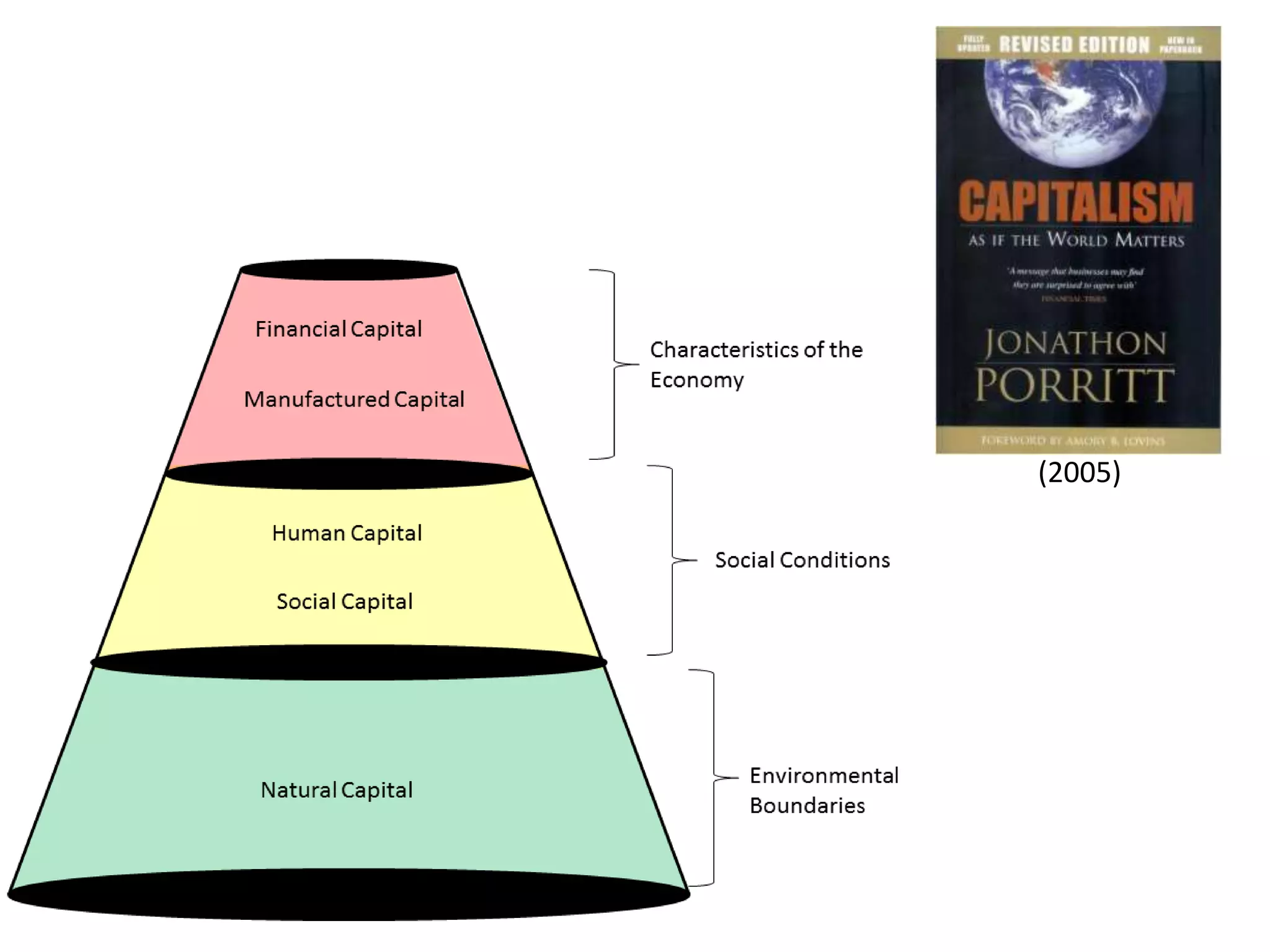
(2005)
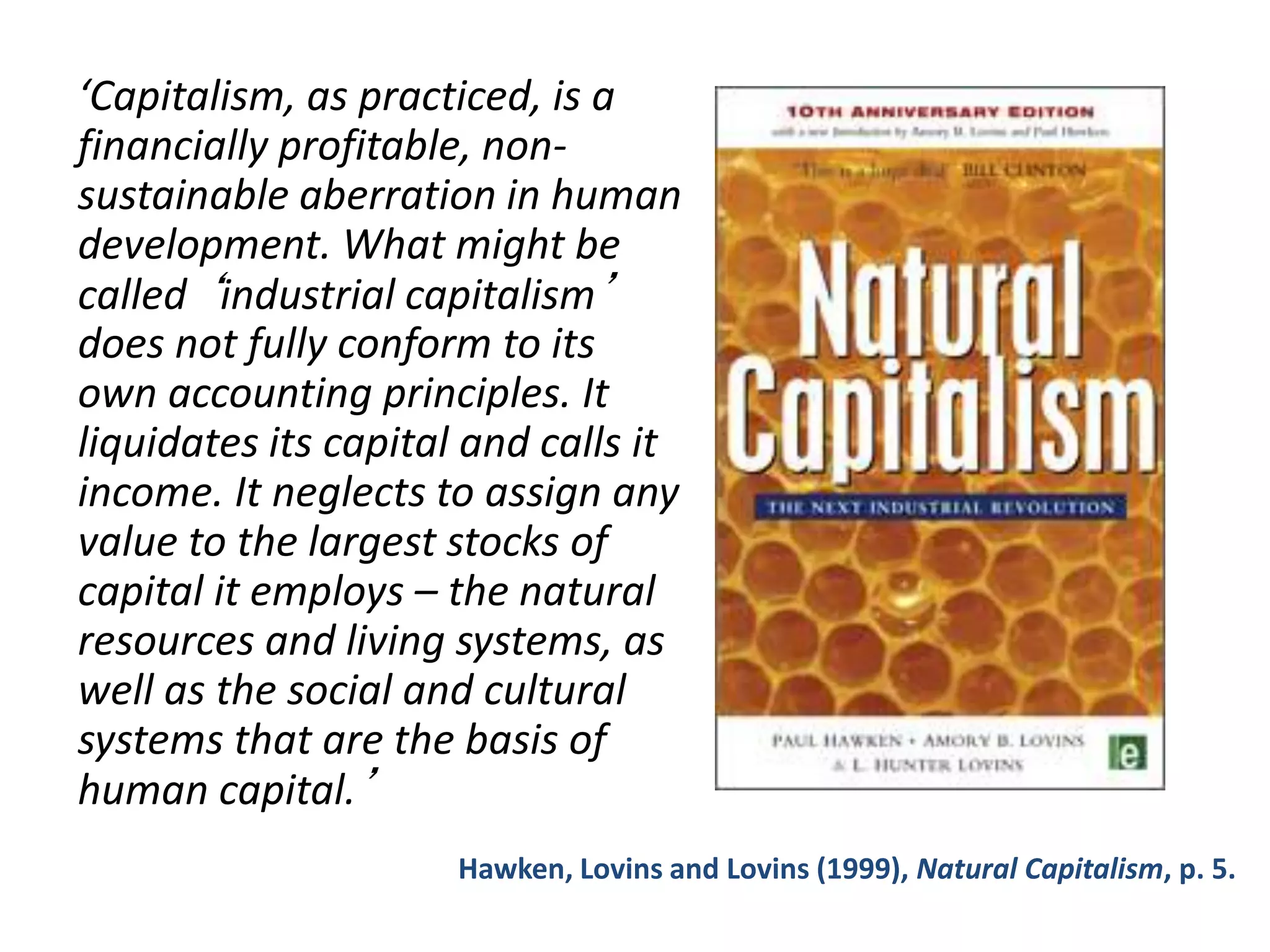
‘Capitalism, as practiced, is a
financially profitable, non-
sustainable aberration in human
development. What might be
called ‘industrial capitalism’
does not fully conform to its
own accounting principles. It
liquidates its capital and calls it
income. It neglects to assign any
value to the largest stocks of
capital it employs – the natural
resources and living systems, as
well as the social and cultural
systems that are the basis of
human capital.’
Hawken, Lovins and Lovins (1999), Natural Capitalism, p. 5.
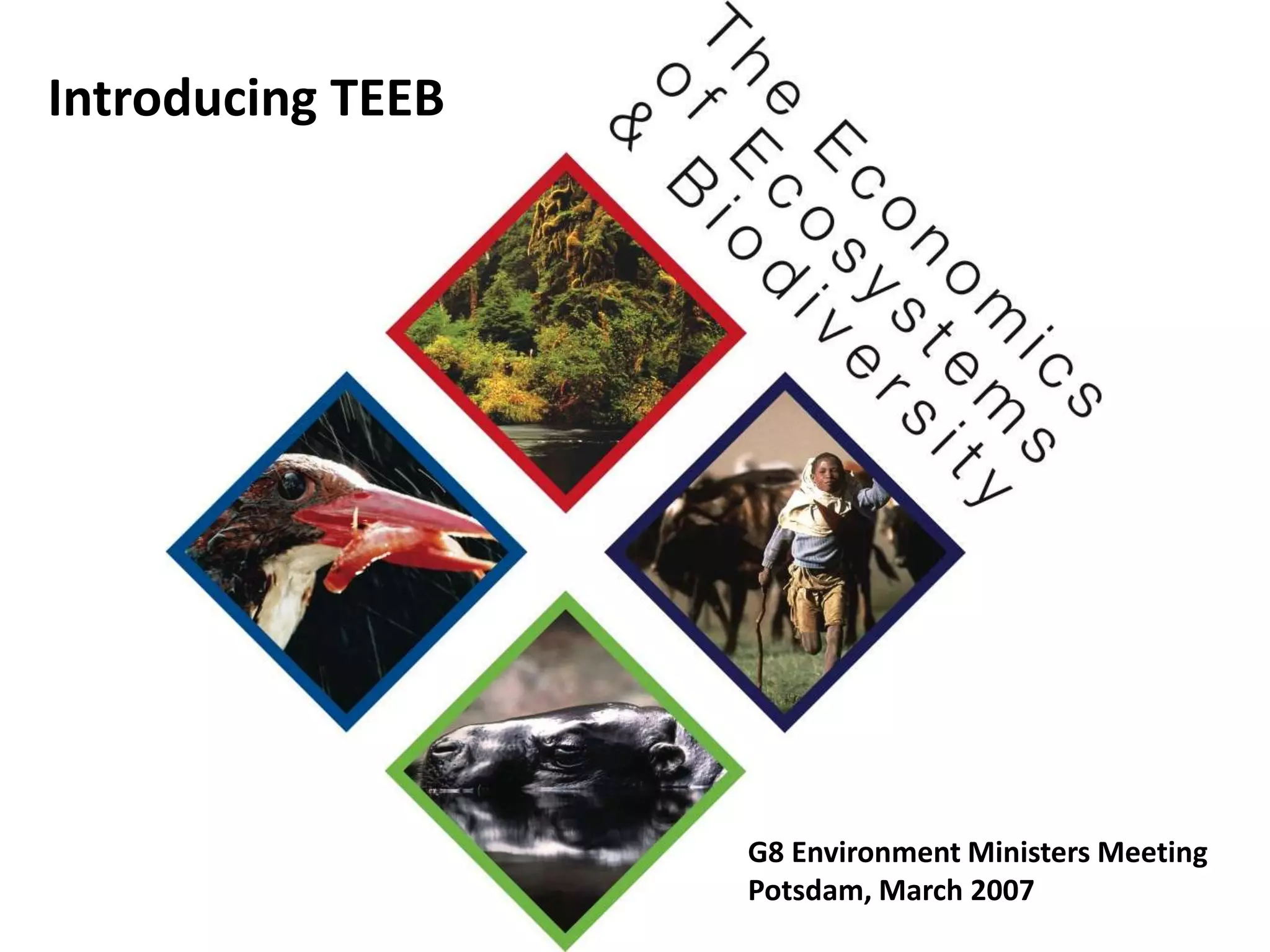
Introducing TEEB
G8 Environment Ministers Meeting
Potsdam, March 2007
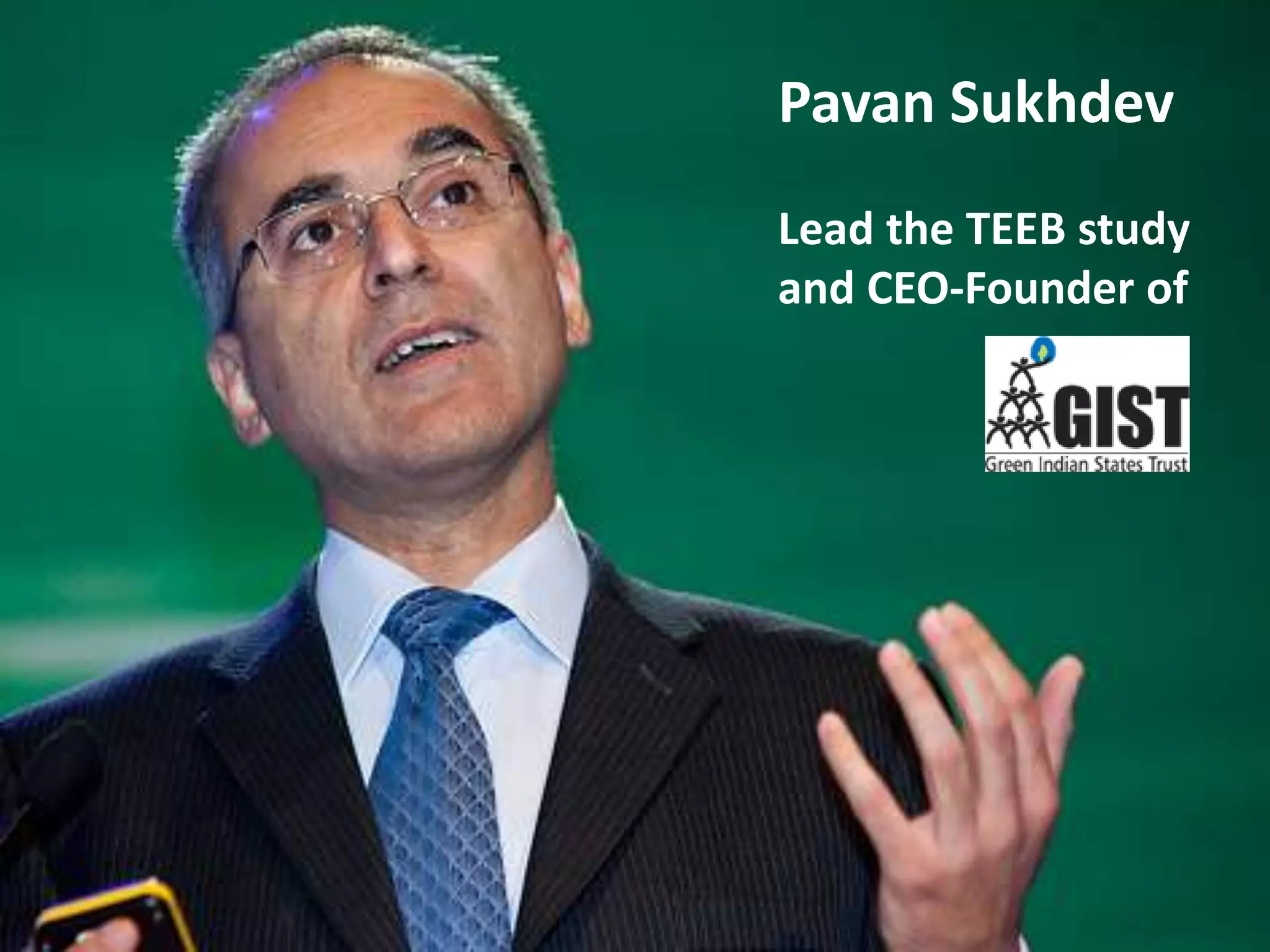
Pavan Sukhdev
Lead the TEEB study
and CEO-Founder of
Ending the economic invisibility of nature
(2012)
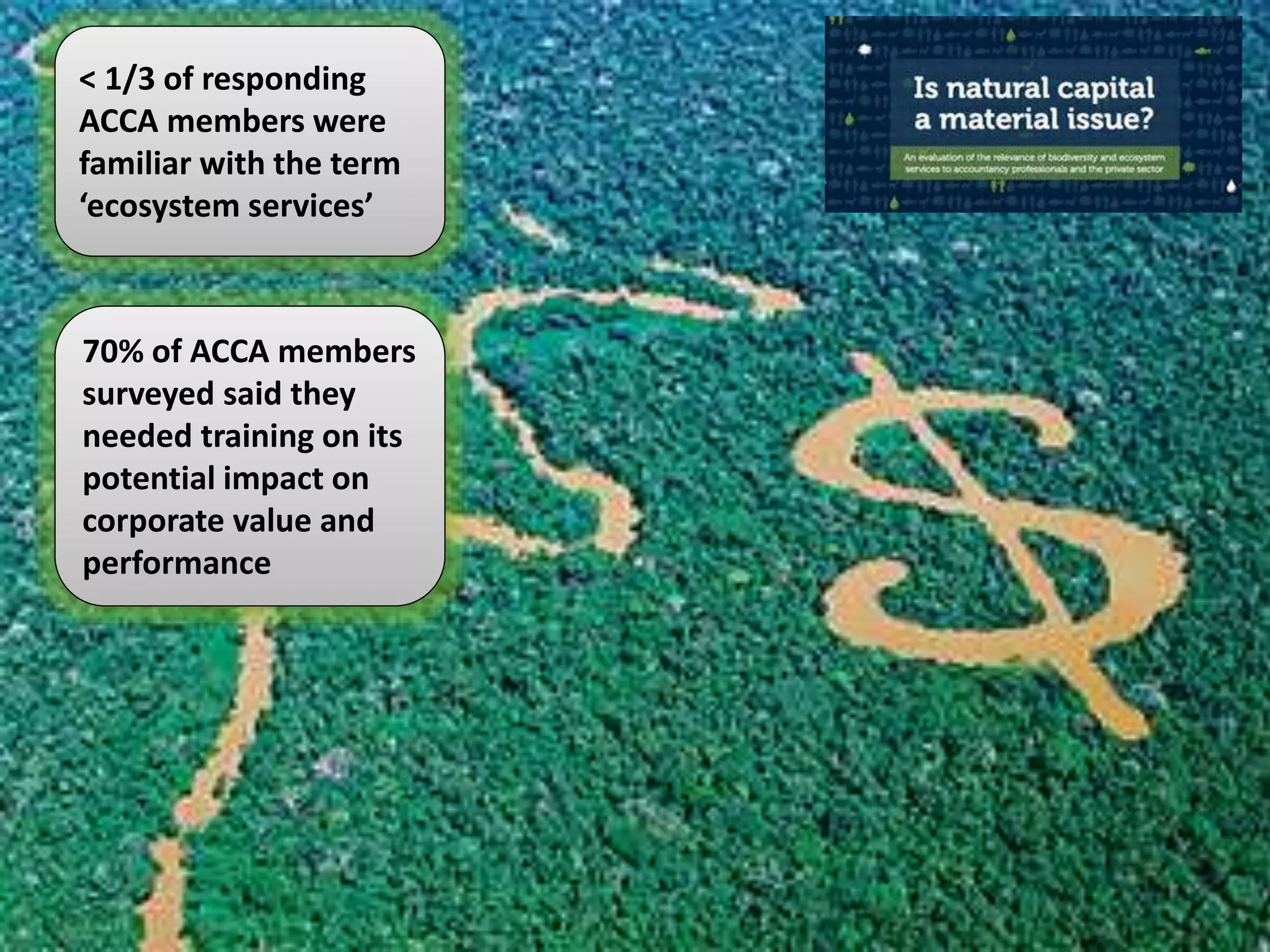
< 1/3 of responding
ACCA members were
familiar with the term
‘ecosystem services’
70% of ACCA members
surveyed said they
needed training on its
potential impact on
corporate value and
performance
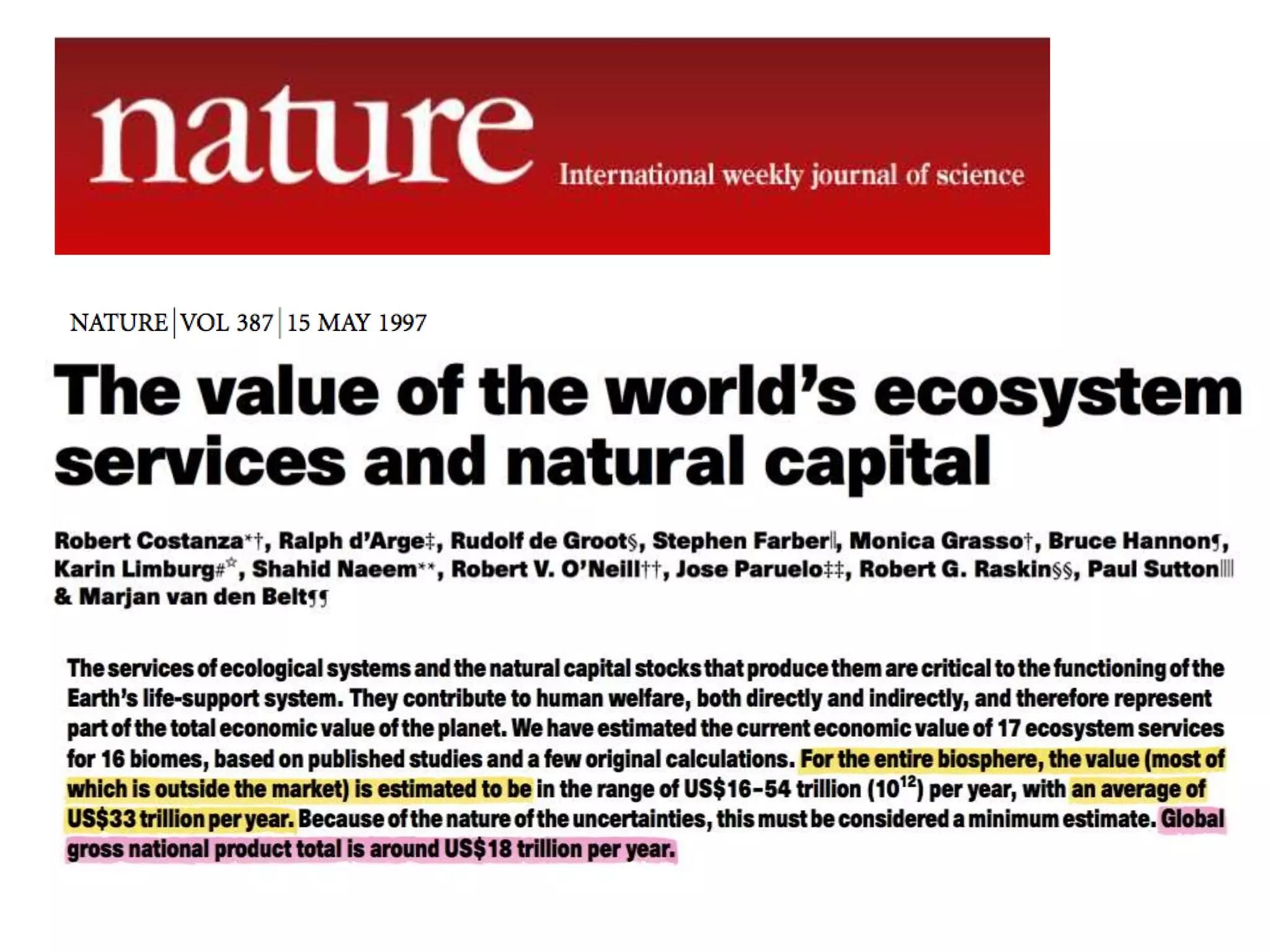
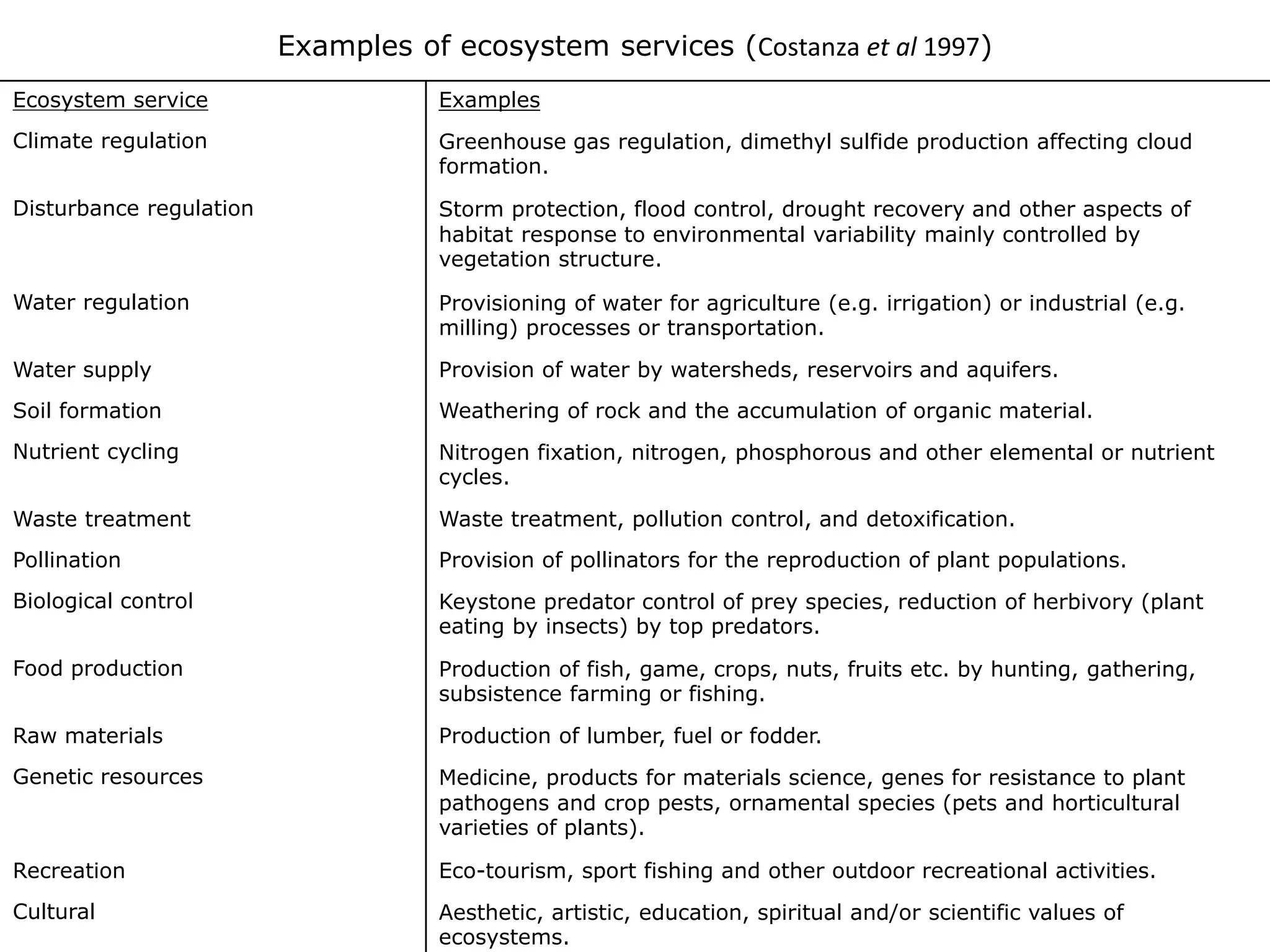
Examples of ecosystem services (Costanza et al 1997)
Ecosystem service Examples
Climate regulation Greenhouse gas regulation, dimethyl sulfide production affecting cloud
formation.
Disturbance regulation Storm protection, flood control, drought recovery and other aspects of
habitat response to environmental variability mainly controlled by
vegetation structure.
Water regulation Provisioning of water for agriculture (e.g. irrigation) or industrial (e.g.
milling) processes or transportation.
Water supply Provision of water by watersheds, reservoirs and aquifers.
Soil formation Weathering of rock and the accumulation of organic material.
Nutrient cycling Nitrogen fixation, nitrogen, phosphorous and other elemental or nutrient
cycles.
Waste treatment Waste treatment, pollution control, and detoxification.
Pollination Provision of pollinators for the reproduction of plant populations.
Biological control Keystone predator control of prey species, reduction of herbivory (plant
eating by insects) by top predators.
Food production Production of fish, game, crops, nuts, fruits etc. by hunting, gathering,
subsistence farming or fishing.
Raw materials Production of lumber, fuel or fodder.
Genetic resources Medicine, products for materials science, genes for resistance to plant
pathogens and crop pests, ornamental species (pets and horticultural
varieties of plants).
Recreation Eco-tourism, sport fishing and other outdoor recreational activities.
Cultural Aesthetic, artistic, education, spiritual and/or scientific values of
ecosystems.
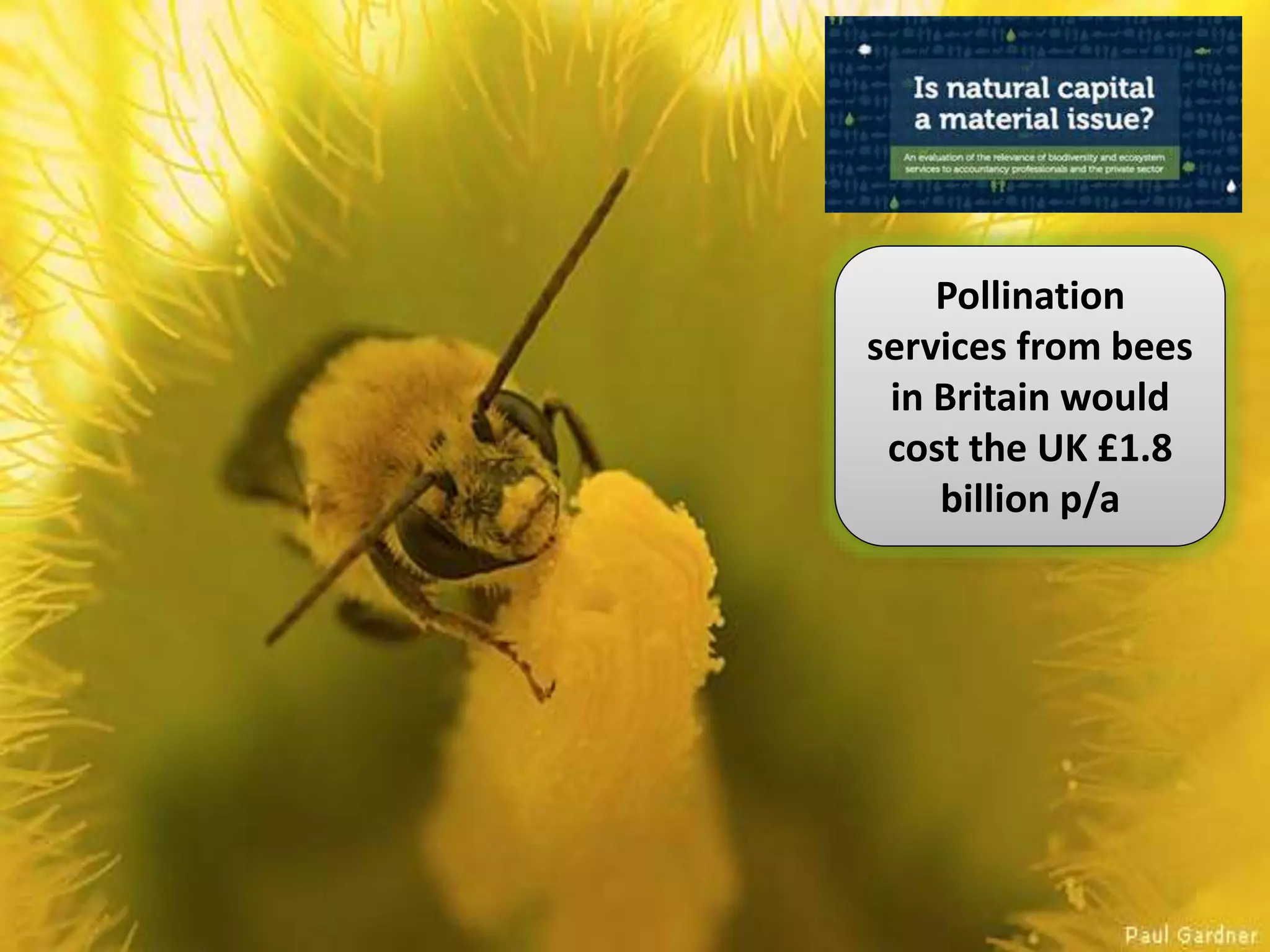
Pollination
services from bees
in Britain would
cost the UK £1.8
billion p/a
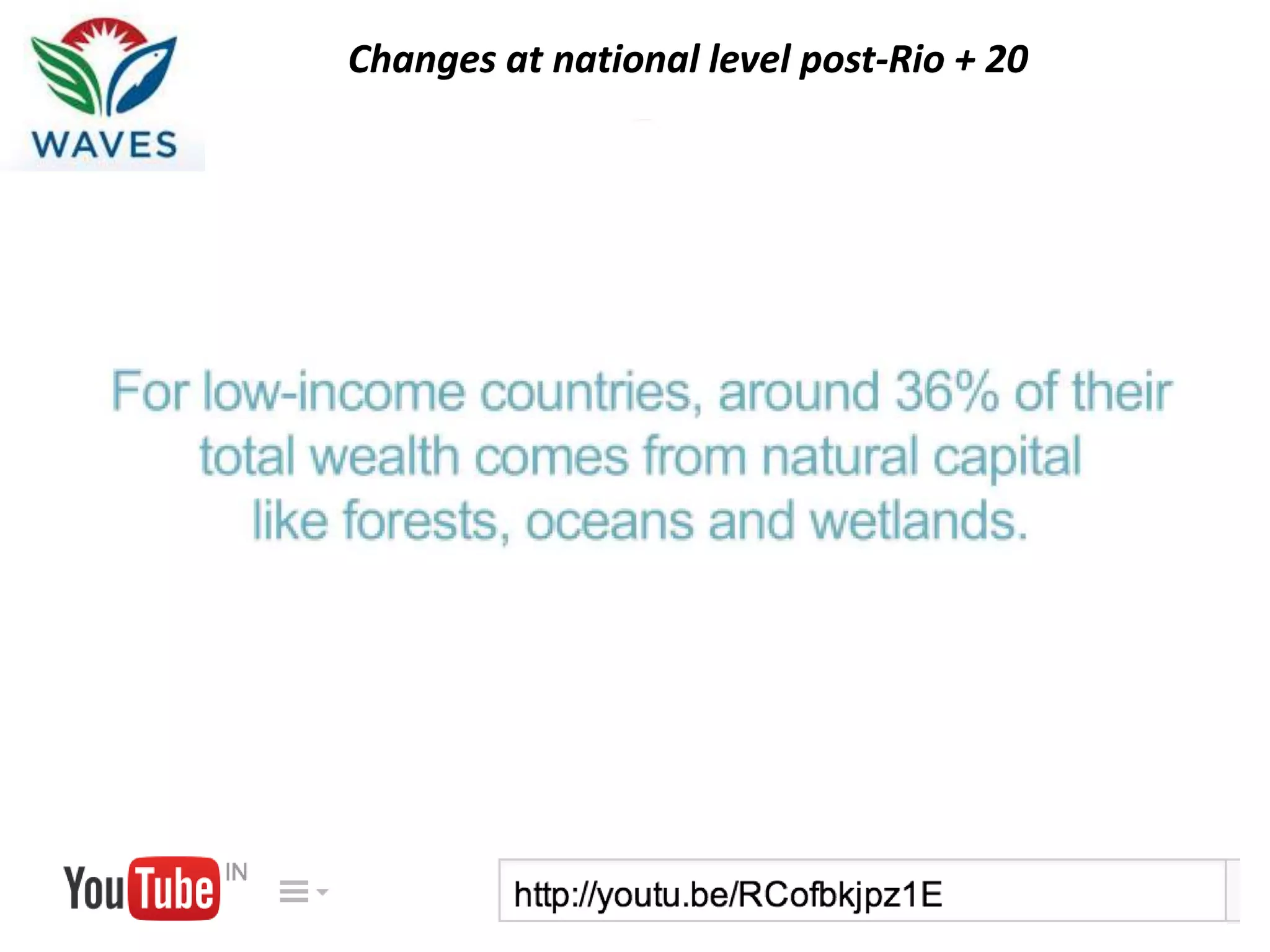
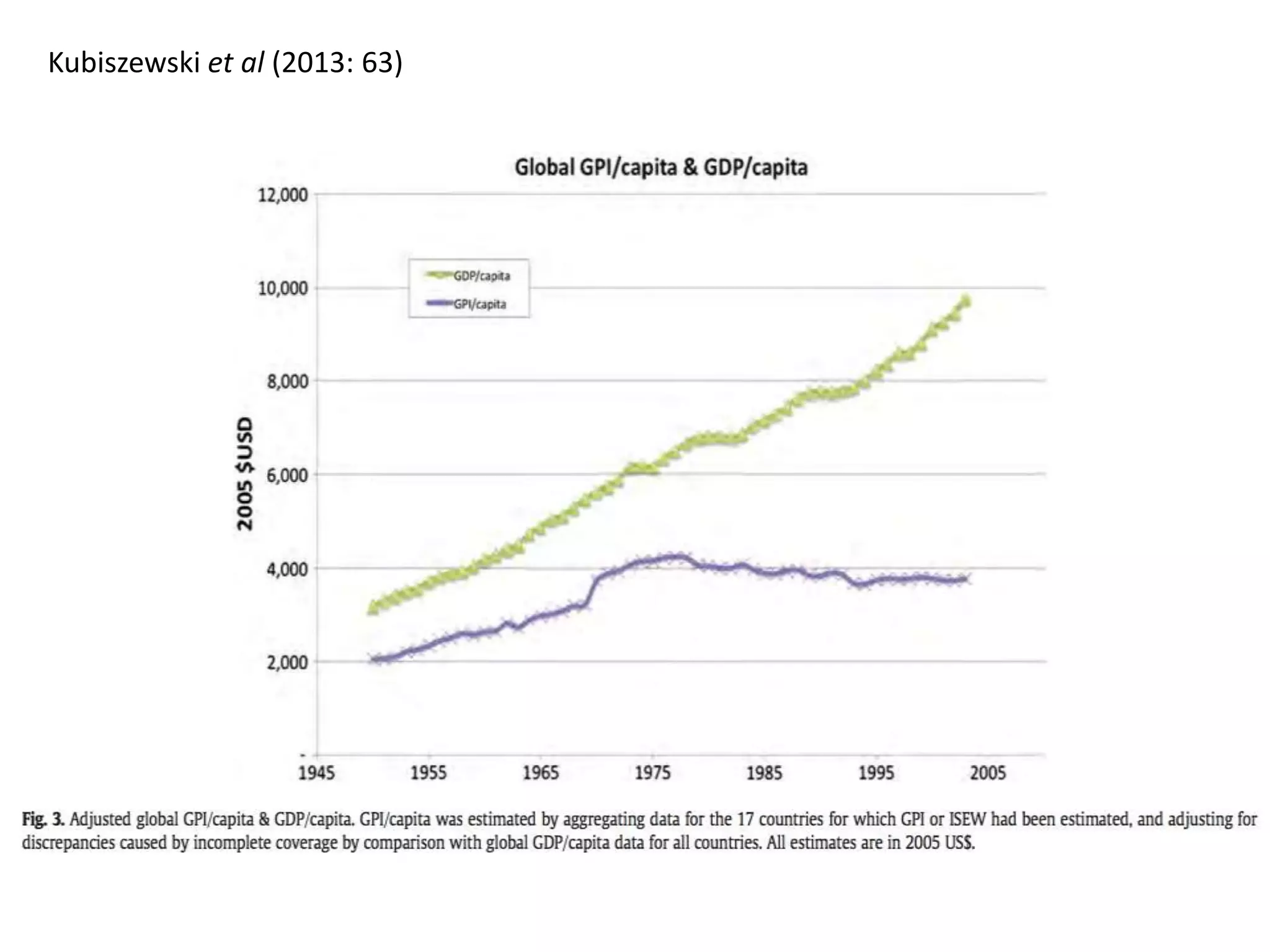
Changes at national level post-Rio + 20
Kubiszewski et al (2013: 63)
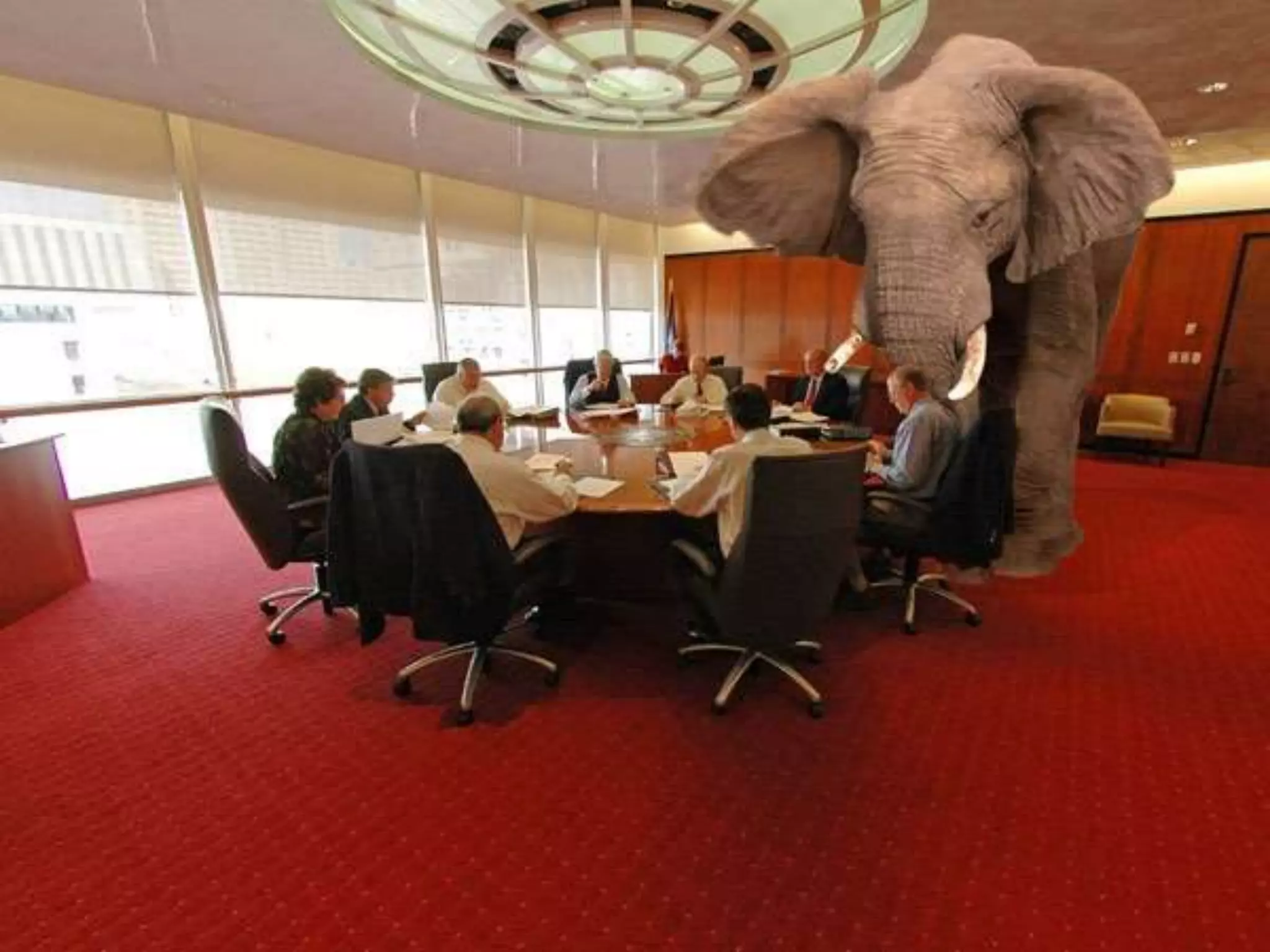
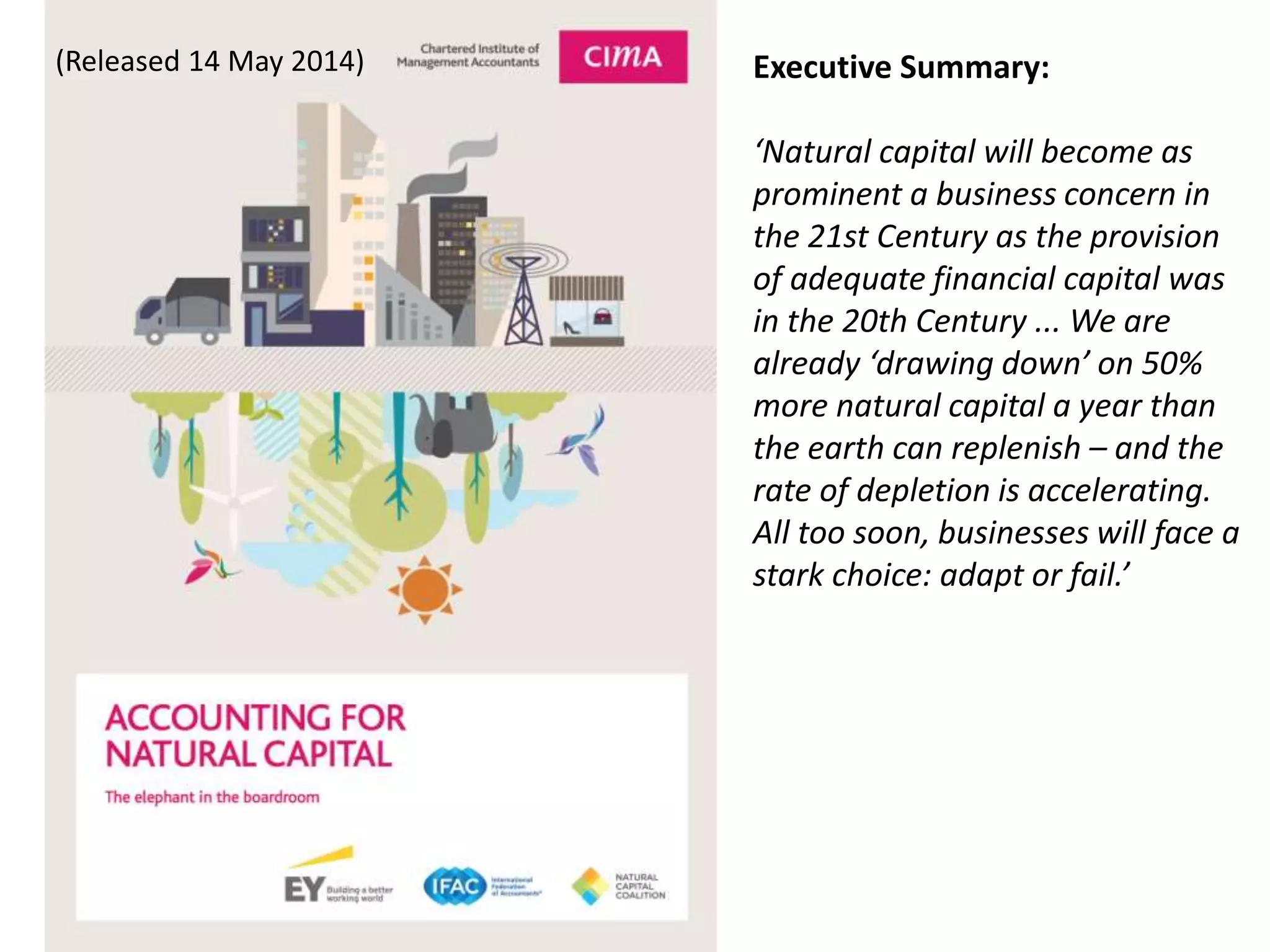
(Released 14 May 2014) Executive Summary:
‘Natural capital will become as
prominent a business concern in
the 21st Century as the provision
of adequate financial capital was
in the 20th Century ... We are
already ‘drawing down’ on 50%
more natural capital a year than
the earth can replenish – and the
rate of depletion is accelerating.
All too soon, businesses will face a
stark choice: adapt or fail.’
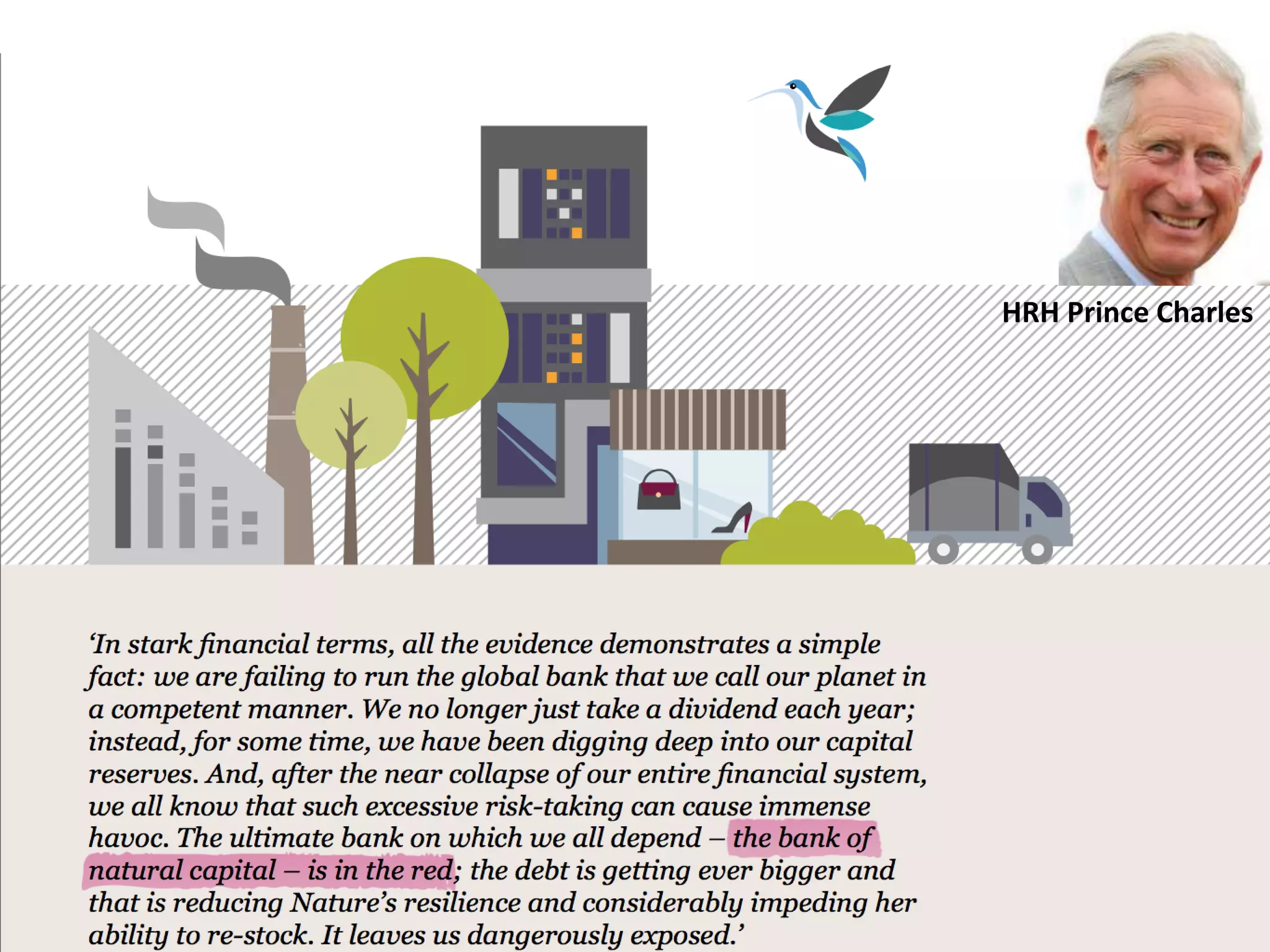
HRH Prince Charles
Count It, Change It, Scale It
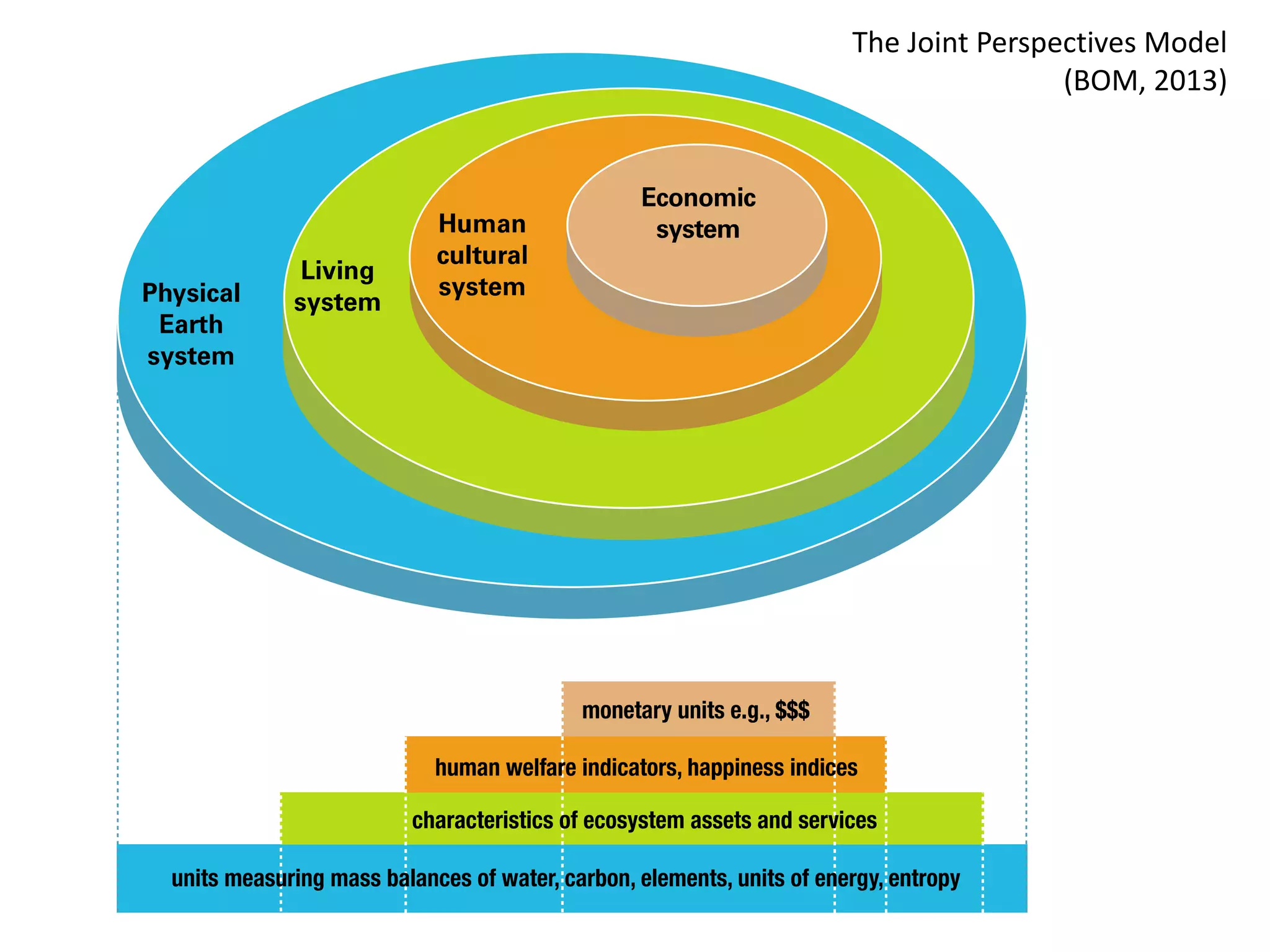
The Joint Perspectives Model
(BOM, 2013)
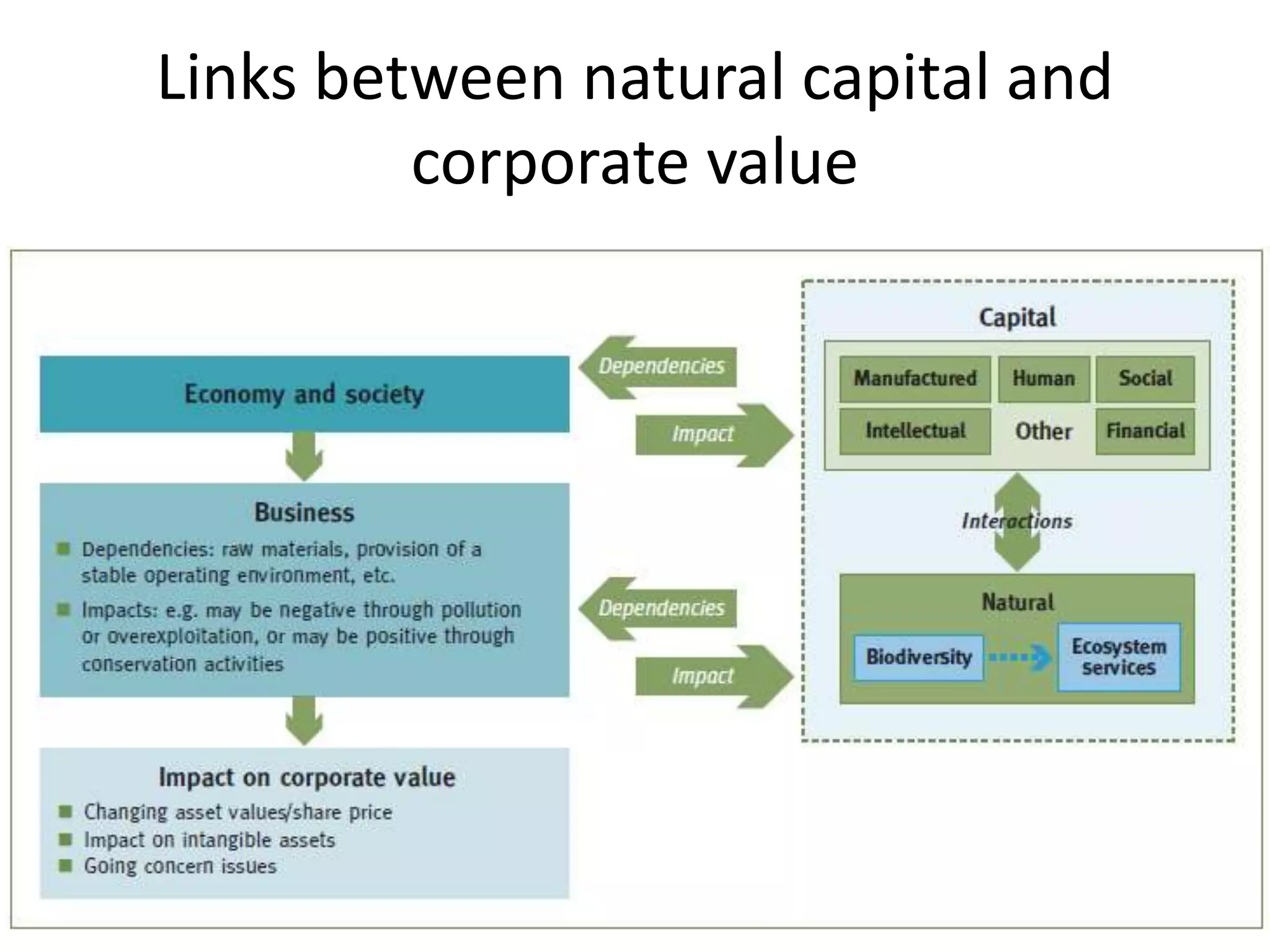
Links between natural capital and
corporate value
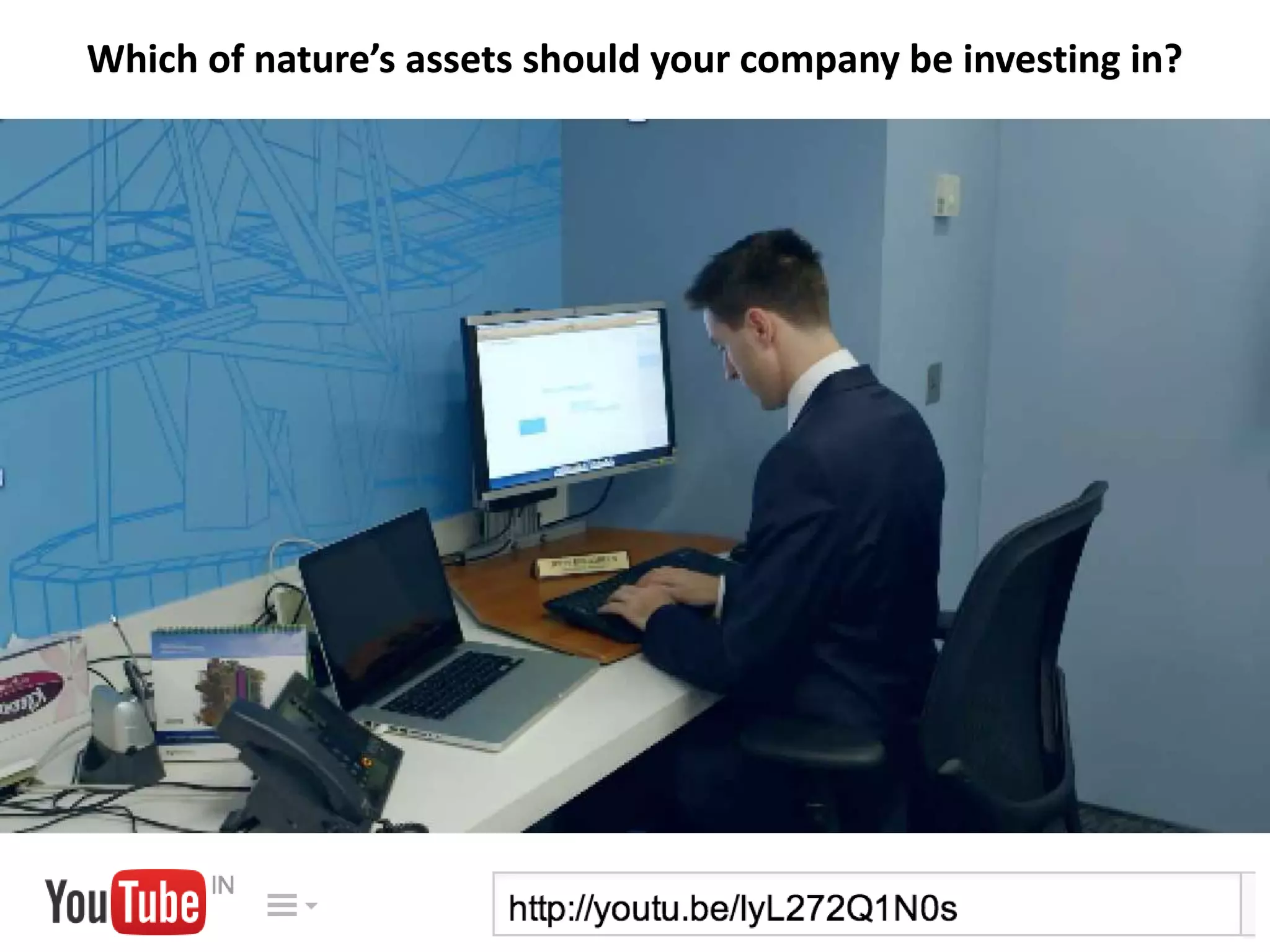
Which of nature’s assets should your company be investing in?
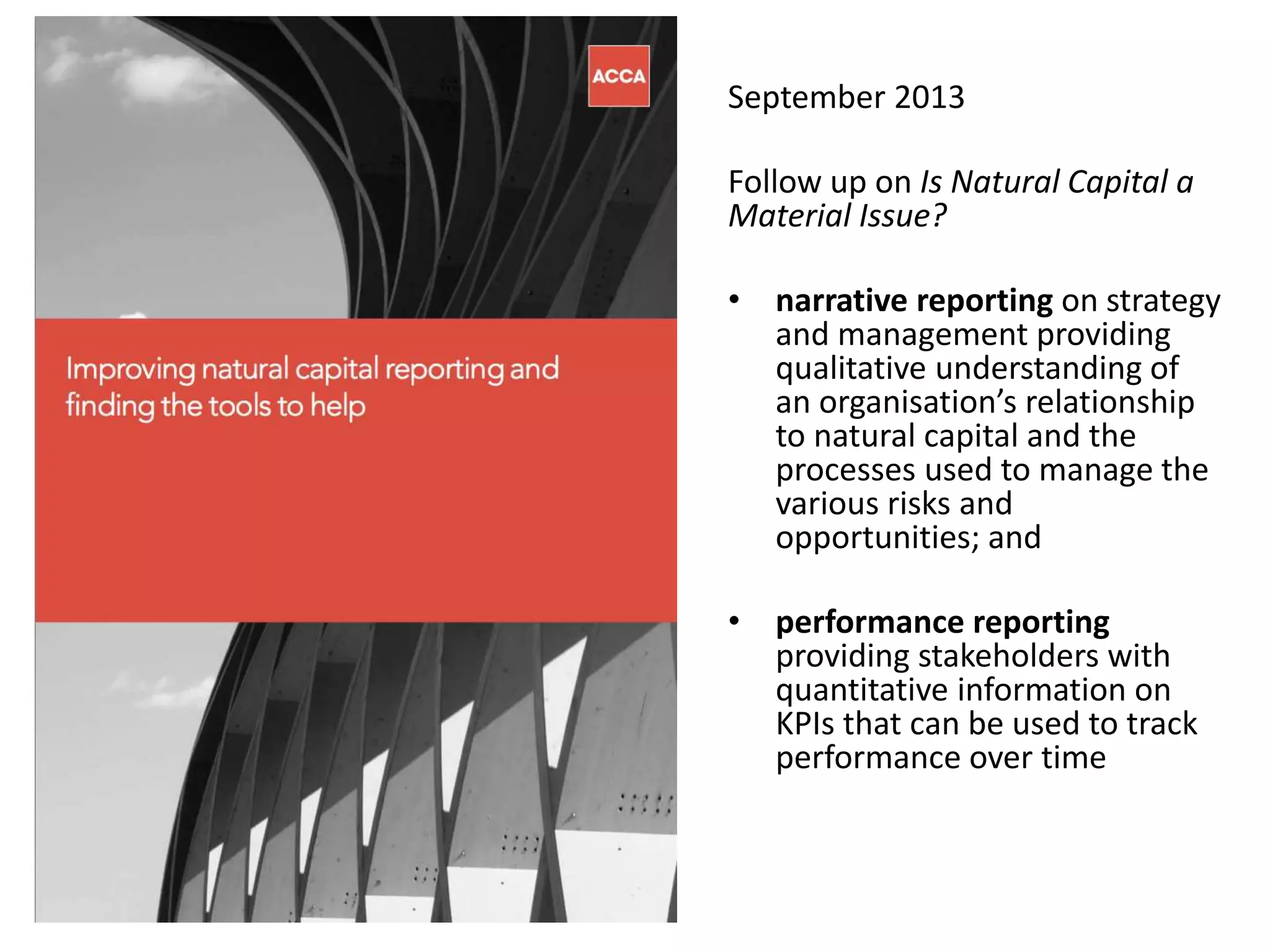
September 2013
Follow up on Is Natural Capital a
Material Issue?
• narrative reporting on strategy
and management providing
qualitative understanding of
an organisation’s relationship
to natural capital and the
processes used to manage the
various risks and
opportunities; and
• performance reporting
providing stakeholders with
quantitative information on
KPIs that can be used to track
performance over time
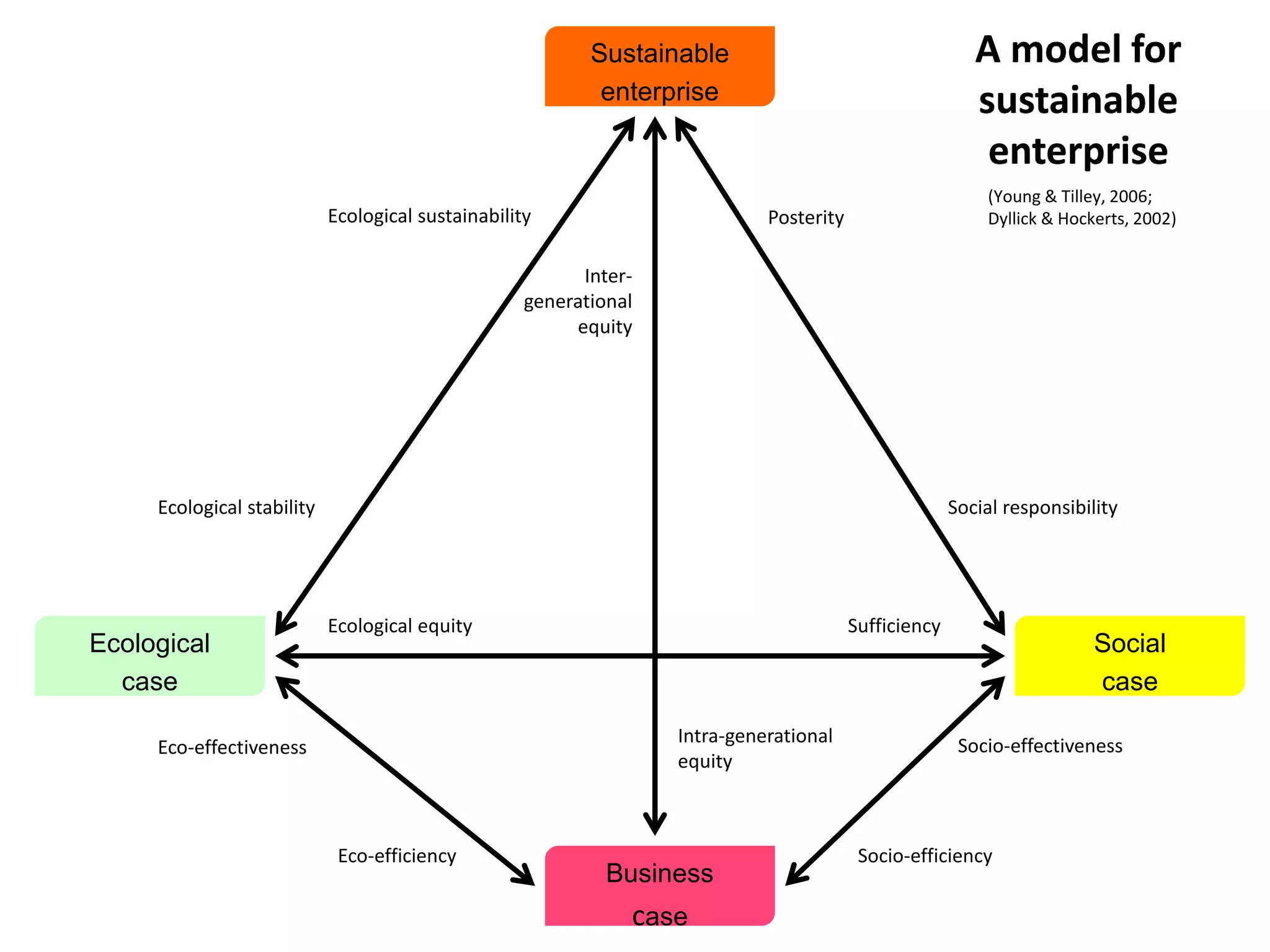
Ecological
case
Social
case
Business
case
Eco-efficiency
Eco-effectiveness
Socio-efficiency
Socio-effectiveness
Ecological equity Sufficiency
Sustainable
enterprise
Intra-generational
equity
Inter-
generational
equity
Social responsibility
Posterity
Ecological stability
Ecological sustainability
A model for
sustainable
enterprise
(Young & Tilley, 2006;
Dyllick & Hockerts, 2002)
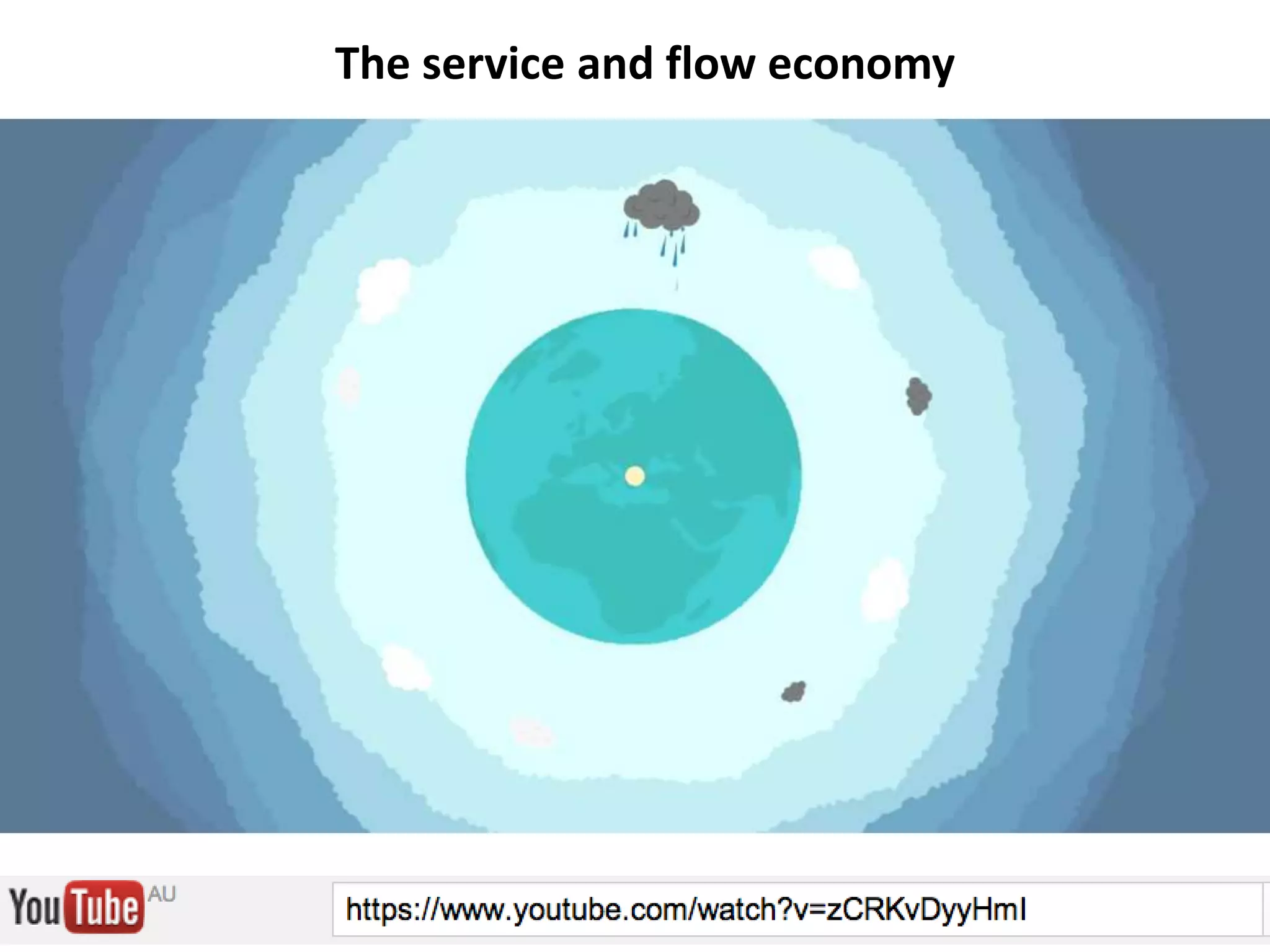
The service and flow economy
(ACCA, 2013)
Piloting the Natural Capital Protocol (2014-15)
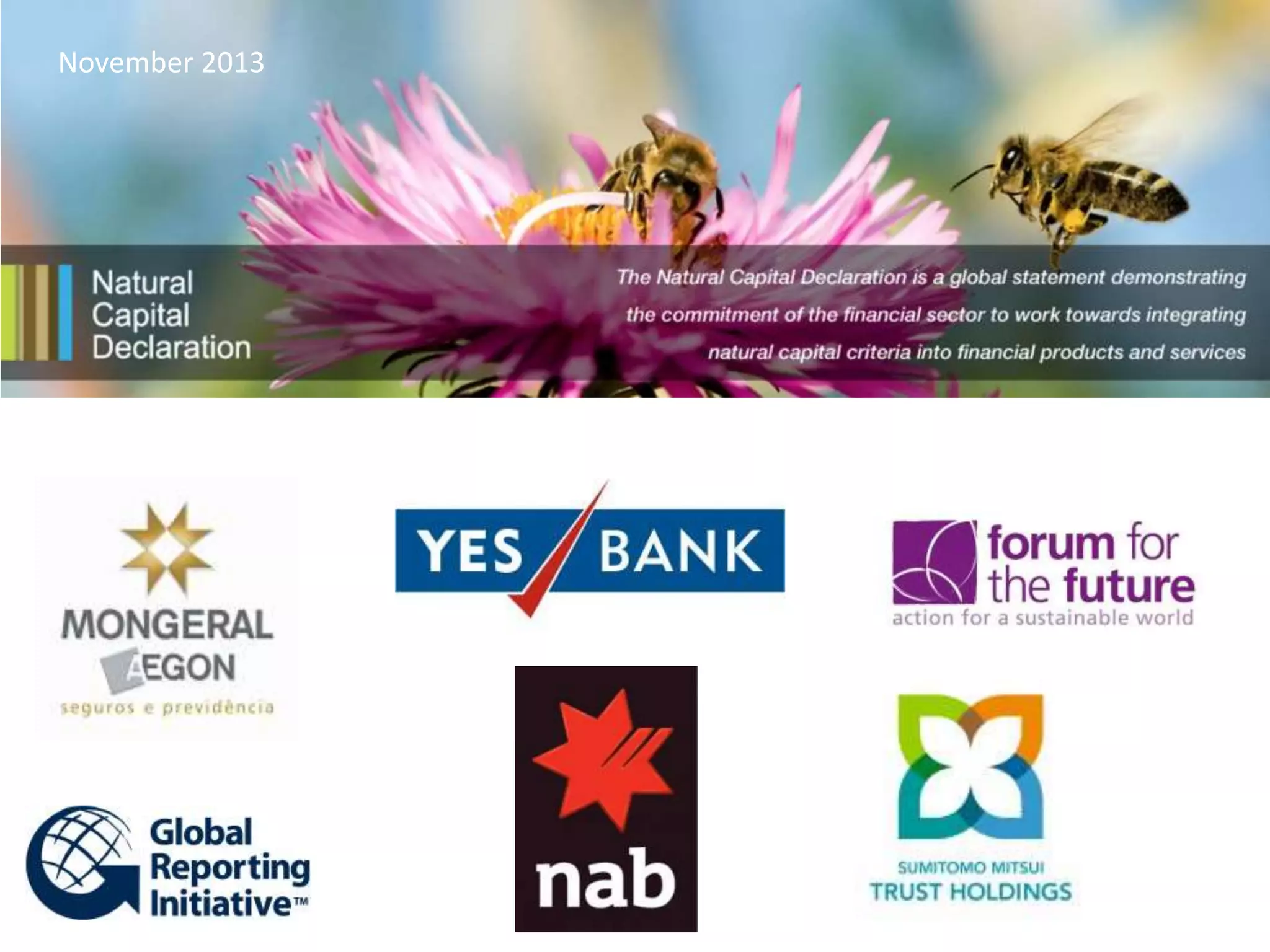
November 2013
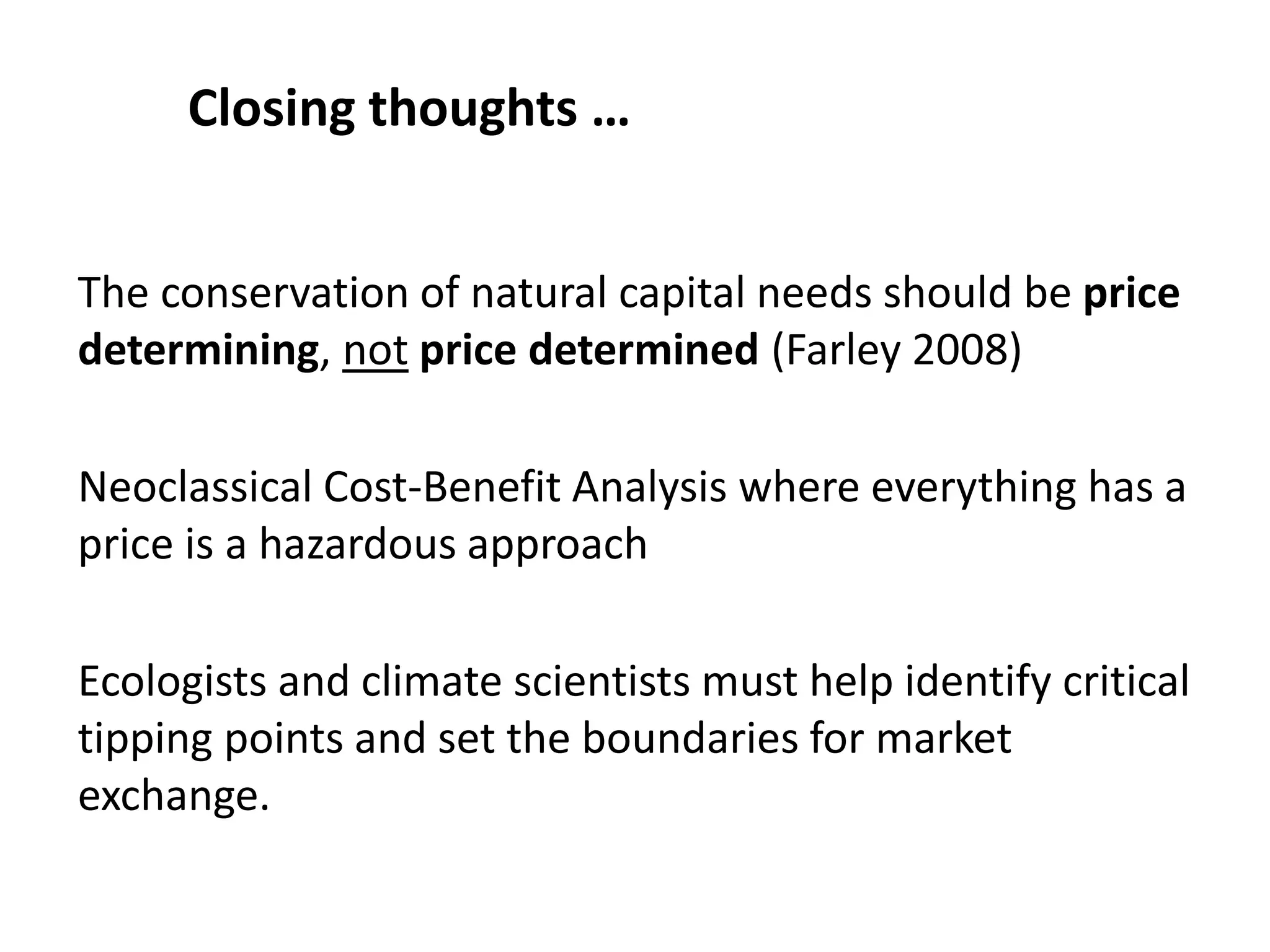
The conservation of natural capital needs should be price
determining, not price determined (Farley 2008)
Neoclassical Cost-Benefit Analysis where everything has a
price is a hazardous approach
Ecologists and climate scientists must help identify critical
tipping points and set the boundaries for market
exchange.
Closing thoughts …
profjeremybwilliams

Tipping Points: Why Business Needs a Natural Capital Protocol

  • 1.
    Mumbai, 8 July2014 Professor Jeremy B Williams Director, Asia Pacific Centre for Sustainable Enterprise @TheGreenMBA @jeremybwilliams tinyurl.com/teribcsd
  • 16.
    Time to rethinkwell-being
  • 17.
    Good or badfor GDP?
  • 18.
    The welfare ofa nation can scarcely be inferred from a measurement of national income as defined by the GDP... goals for ‘more’ growth should specify of what and for what.’
  • 19.
  • 20.
    ‘Capitalism, as practiced,is a financially profitable, non- sustainable aberration in human development. What might be called ‘industrial capitalism’ does not fully conform to its own accounting principles. It liquidates its capital and calls it income. It neglects to assign any value to the largest stocks of capital it employs – the natural resources and living systems, as well as the social and cultural systems that are the basis of human capital.’ Hawken, Lovins and Lovins (1999), Natural Capitalism, p. 5.
  • 22.
    Introducing TEEB G8 EnvironmentMinisters Meeting Potsdam, March 2007
  • 23.
    Pavan Sukhdev Lead theTEEB study and CEO-Founder of
  • 24.
    Ending the economicinvisibility of nature
  • 25.
  • 26.
    < 1/3 ofresponding ACCA members were familiar with the term ‘ecosystem services’ 70% of ACCA members surveyed said they needed training on its potential impact on corporate value and performance
  • 27.
    Examples of ecosystemservices (Costanza et al 1997) Ecosystem service Examples Climate regulation Greenhouse gas regulation, dimethyl sulfide production affecting cloud formation. Disturbance regulation Storm protection, flood control, drought recovery and other aspects of habitat response to environmental variability mainly controlled by vegetation structure. Water regulation Provisioning of water for agriculture (e.g. irrigation) or industrial (e.g. milling) processes or transportation. Water supply Provision of water by watersheds, reservoirs and aquifers. Soil formation Weathering of rock and the accumulation of organic material. Nutrient cycling Nitrogen fixation, nitrogen, phosphorous and other elemental or nutrient cycles. Waste treatment Waste treatment, pollution control, and detoxification. Pollination Provision of pollinators for the reproduction of plant populations. Biological control Keystone predator control of prey species, reduction of herbivory (plant eating by insects) by top predators. Food production Production of fish, game, crops, nuts, fruits etc. by hunting, gathering, subsistence farming or fishing. Raw materials Production of lumber, fuel or fodder. Genetic resources Medicine, products for materials science, genes for resistance to plant pathogens and crop pests, ornamental species (pets and horticultural varieties of plants). Recreation Eco-tourism, sport fishing and other outdoor recreational activities. Cultural Aesthetic, artistic, education, spiritual and/or scientific values of ecosystems.
  • 28.
    Pollination services from bees inBritain would cost the UK £1.8 billion p/a
  • 29.
    Changes at nationallevel post-Rio + 20
  • 31.
  • 33.
    (Released 14 May2014) Executive Summary: ‘Natural capital will become as prominent a business concern in the 21st Century as the provision of adequate financial capital was in the 20th Century ... We are already ‘drawing down’ on 50% more natural capital a year than the earth can replenish – and the rate of depletion is accelerating. All too soon, businesses will face a stark choice: adapt or fail.’
  • 34.
  • 36.
    Count It, ChangeIt, Scale It
  • 37.
    The Joint PerspectivesModel (BOM, 2013)
  • 38.
    Links between naturalcapital and corporate value
  • 39.
    Which of nature’sassets should your company be investing in?
  • 40.
    September 2013 Follow upon Is Natural Capital a Material Issue? • narrative reporting on strategy and management providing qualitative understanding of an organisation’s relationship to natural capital and the processes used to manage the various risks and opportunities; and • performance reporting providing stakeholders with quantitative information on KPIs that can be used to track performance over time
  • 41.
    Ecological case Social case Business case Eco-efficiency Eco-effectiveness Socio-efficiency Socio-effectiveness Ecological equity Sufficiency Sustainable enterprise Intra-generational equity Inter- generational equity Socialresponsibility Posterity Ecological stability Ecological sustainability A model for sustainable enterprise (Young & Tilley, 2006; Dyllick & Hockerts, 2002)
  • 42.
    The service andflow economy
  • 46.
  • 49.
    Piloting the NaturalCapital Protocol (2014-15)
  • 50.
  • 51.
    The conservation ofnatural capital needs should be price determining, not price determined (Farley 2008) Neoclassical Cost-Benefit Analysis where everything has a price is a hazardous approach Ecologists and climate scientists must help identify critical tipping points and set the boundaries for market exchange. Closing thoughts …
  • 52.

Editor's Notes

  • #2 http://www.wallpapergate.com/data/media/2706/On_The_Brink_57166.jpg
  • #3 http://2.bp.blogspot.com/-wrmOGpXLJFE/TfubPF0lfXI/AAAAAAAAAC0/zxd3SxXNjdk/s1600/Crowded-Planet-Earth-Widescreen-Wallpaper.jpg
  • #4 http://www.flickr.com/photos/jpinlac/5906500583/sizes/l/in/photolist-9ZWmQX-eLNW2M-eM1jPS-7P9oqT-8Zstcp-7CsQ4g-9sS1tp-bMyvmZ-e8C7sC-bD3r5T-aYhNHi-8J1pkb-eaugiC-amgCiz-eNE67x-7SDwfp-gfNY2M-dCCtic-gfNz4K-bj7bN8-hsT1Mm-dPPrVc-a2H9wU-cWXYYo-inyQCD-arGSjy-dzCxpQ-hVy38w-9Zrera-dQCSpi-9b4MMa-8p6a1W-fuoz1k-dwsD8Z-gfNMjs-byvZhm-8ycdWu-gfPb7D-arjoGB-bfPLeX-aBuzVD-aC1BqP-eyqHMz-a3y2hE-8jufyt-cBjfD7-deVATN-deVFg3-e81SFB-ao9UbE-btUqrE/
  • #5 http://www.flickr.com/photos/samuel-leo/3550983108/sizes/o/in/photolist-6pMHyG-6rG1XV-6segmM-6DfWnE-6FbiYA-6Guseh-6Hi7RV-6Jct9g-6QtpUC-77KGkR-78MLKv-7cSfv6-7dKpdk-7f6SwT-7jRwj3-7jYF1r-7kBnwh-7qaHz5-7tttuy-7vxRnW-962a61-7ykurM-aC8vgP-9EZUc9-8aGjRY-8Em4Tq-hUWYNe-cnnQCU-87SwfE-dMMeVb-89fKd8-ckARMh-cjFE7f-9w8eWL-8PU4g1-7PAweF-7Pxzzf-7ZgCRz-d1N5hS-9R7Aur-9R7F9K-fLuTck-dMDxhQ-ehFmc5-8bBS1U-8FGV95-bxqrNw-8Zg8Ff-91MtTF-8ZGXRw-8NV6fr/
  • #6 http://www.flickr.com/photos/45203387@N07/5265613763/sizes/l/in/photolist-92iDwc-8D7uaJ-fHDDbP-fHDD7T-9isLca-8QAaKd-7YUHuQ-9w9zj5-8tTk8M-aRcUYx-879pFq-8vPaNy-8vP9Mj-8vPaq1-bi6XAD-7ZuKBQ-7Ts7G2-brRc2P-9jMdWp-b4tgxF-8AqgTU-gTcauh-bzwbq4-7UGgQz-7UGfxa-7UKws3-7UKwYU-7UGgYX-7UGgnV-9diCCw-97sQEE-ak6QrC-7Tvnj5-8YxzRt-7TvmZA-brR8b4-brR3Hr-brR57P-brR4Sn-brR4oP-brR7Mi-brR8VM-brR3hR-brR3UV-brR7A6-brR5pD-brR8Ha-brR1Dv-brR5RR-brR7XX-brRbGr/
  • #7 http://anticap.files.wordpress.com/2011/03/burtynsky_oil_fields_19b.jpg
  • #8 http://firstpeoples.org/wp/wp-content/uploads/2013/06/Yanacocha-Gold-Mine-02.jpg
  • #9 https://www.flickr.com/photos/marie-2008/3297447049
  • #10 http://assets.worldwildlife.org/photos/1246/images/story_full_width/Overfishing-1600x1200px.jpg?1345540690
  • #11 http://www.huffingtonpost.com/2013/09/03/daesung-lee_n_3859821.html?utm_hp_ref=tw
  • #12 http://www.bioregional.com/files/media/image/graphics/footprints%20fb.jpg
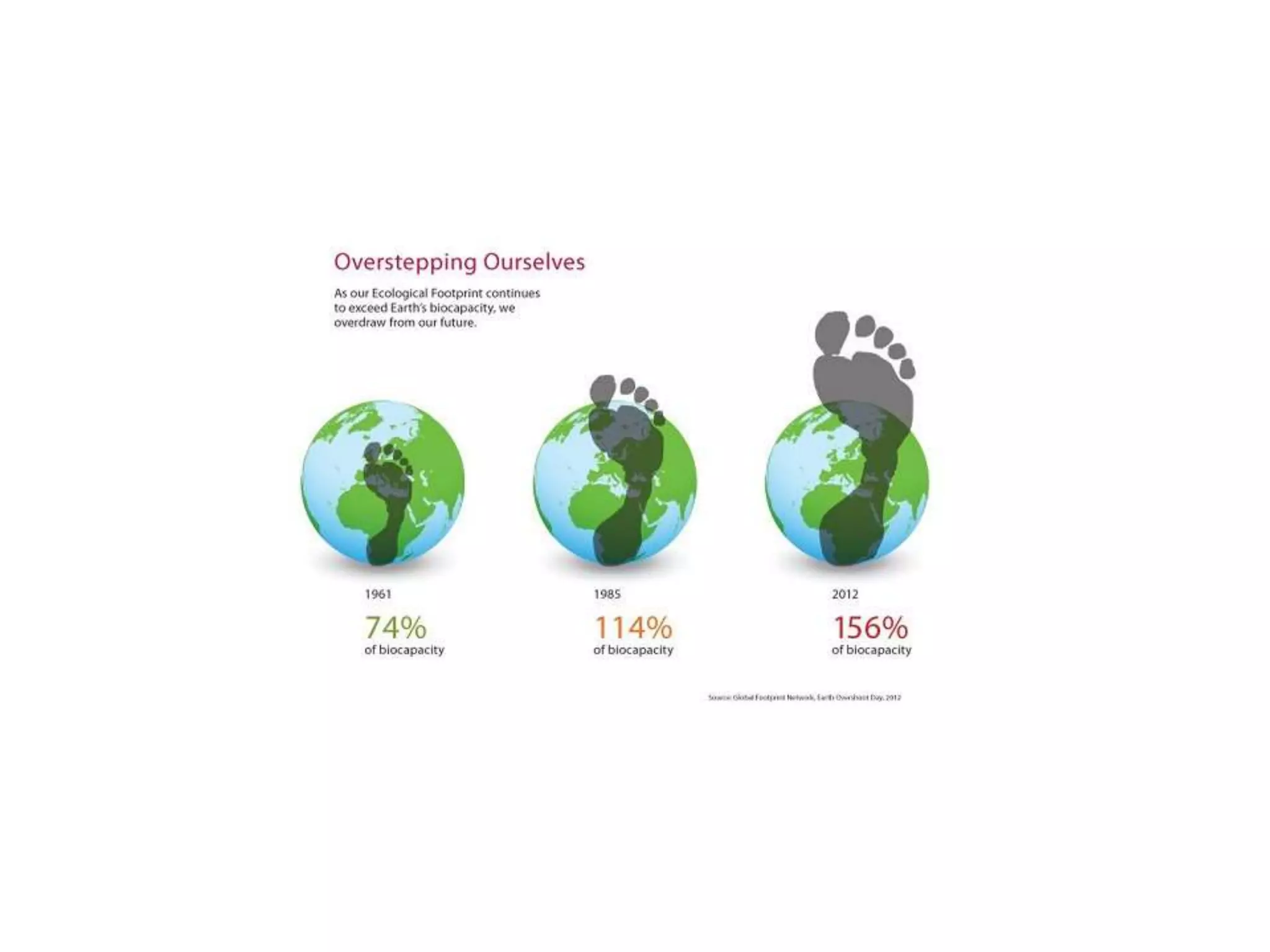
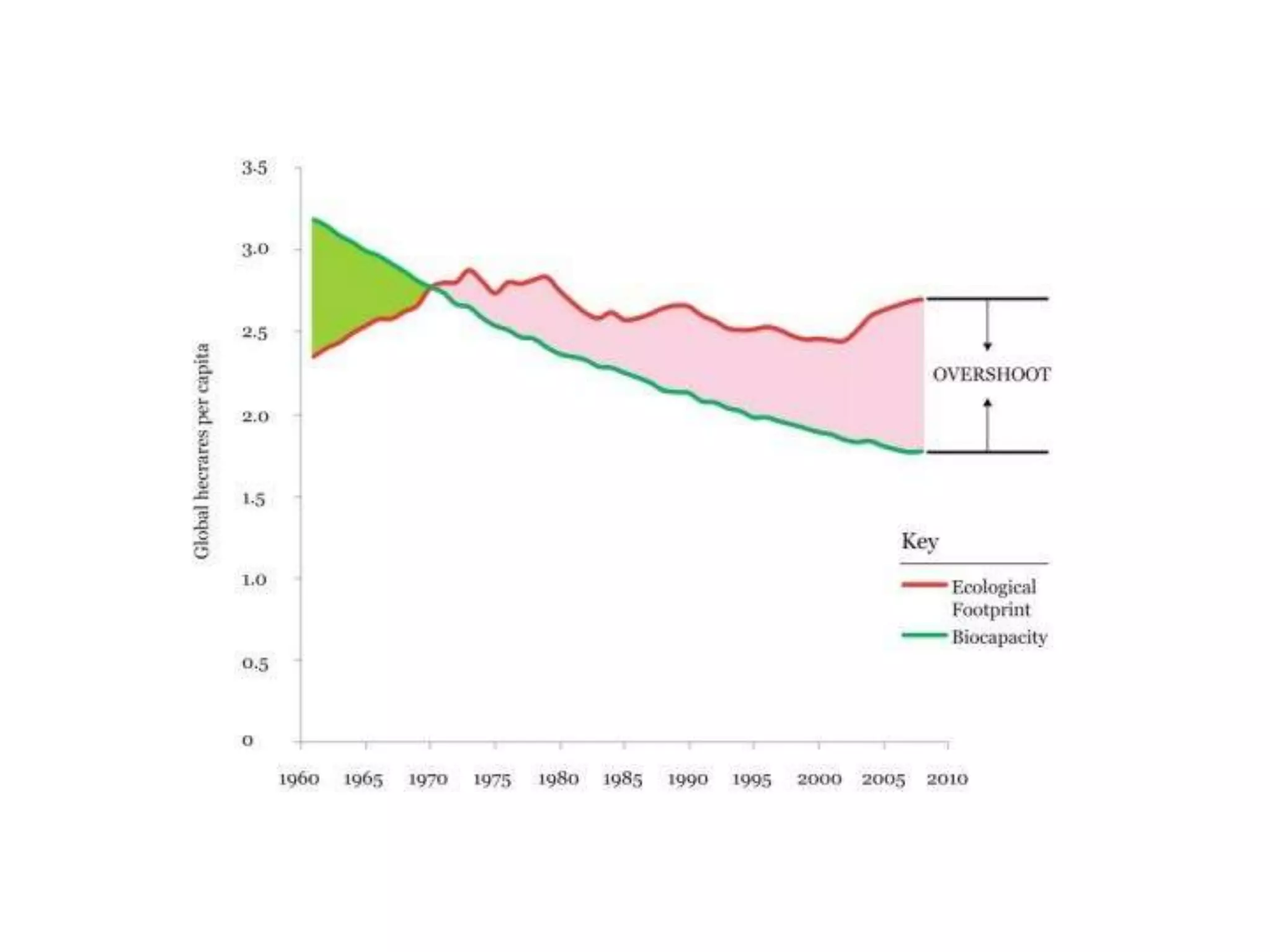
  • #13 http://i1.wp.com/cleantechnica.com/files/2013/08/footprint-biocapacity.jpg?w=900
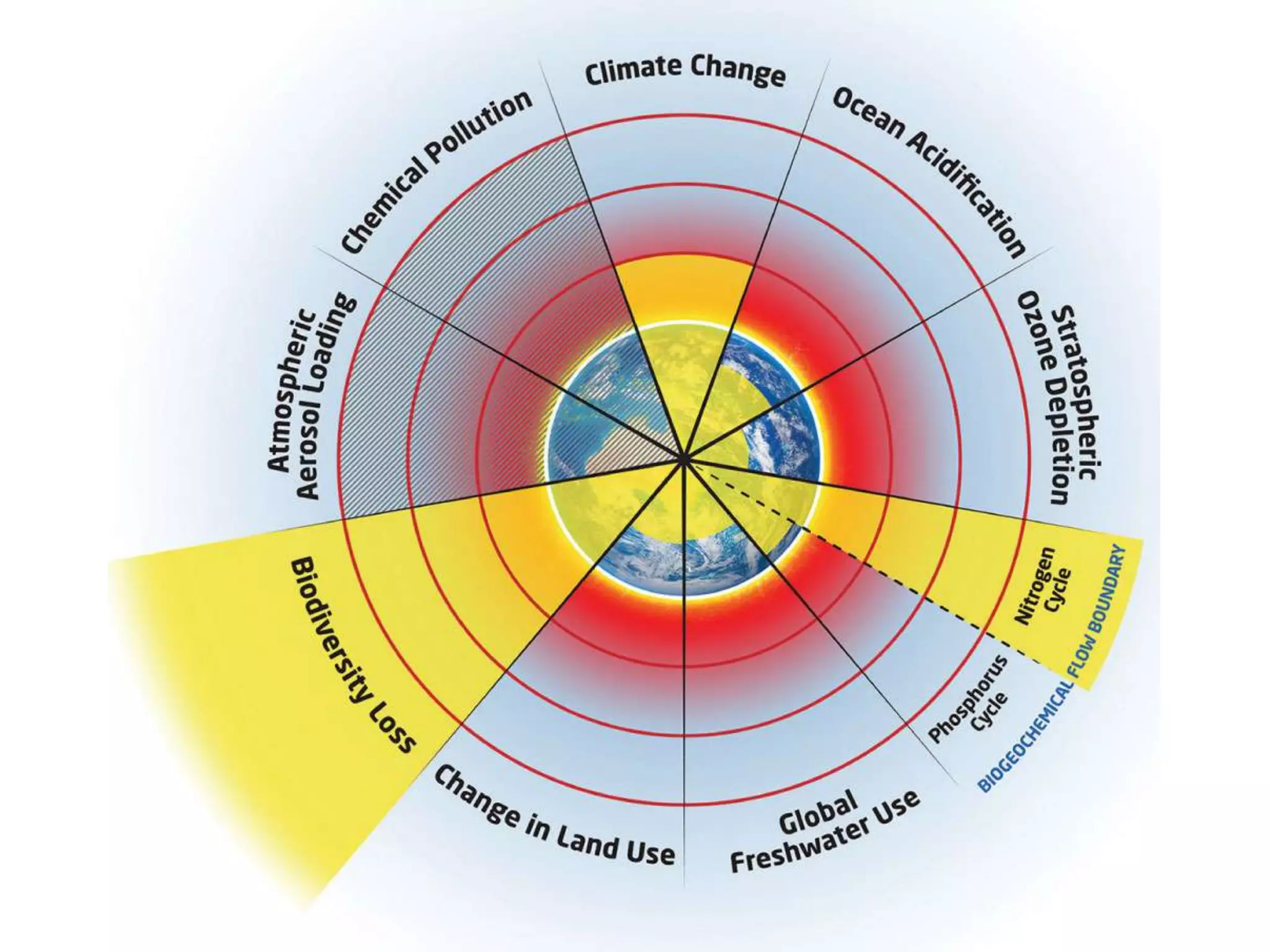
  • #15 http://www.igbp.net/images/18.20d892f132f30b443080003063/PB5-fig4.jpg
  • #16 http://www.greenawards.com/cms/wp-content/uploads/2012/04/Tony-Juniper.jpg
  • #18 http://media3.washingtonpost.com/wp-srv/photo/gallery/100722/GAL-10Jul22-5221/media/PHO-10Jul22-239749.jpg
  • #19 http://www.foreignaffairs.com/files/imagecache/551x/images/15_Karabell.jpg
  • #20 http://www.markpretorius.com/wp-content/uploads/2012/08/5-capitals.png
  • #23 http://www.earthzine.org/wp-content/uploads/2011/09/TEEB_Diamond_Blk_Type.jpg
  • #24 http://vitrinedefranquias.com.br/wp-content/uploads/2012/06/pavan.jpg
  • #27 http://thebreakthrough.org/images/main_image/rise_and_fall_of_.jpg KPMG Report – Released November 2012
  • #29 http://blog.nwf.org/wp-content/blogs.dir/11/files/2014/06/NativeBee_PaulGardner_295696-copy.jpg KPMG Report – Released November 2012
  • #30 Wealth Accounting and the Valuation of Ecosystem Services (WAVES) was launched at the 2010 Convention on Biological Diversity meeting in Nagoya, Japan.    Botswana, Colombia, Costa Rica, Madagascar, and the Philippines were the initial core implementing countries that embarked on programs for natural capital accounting endorsed at the highest level of their governments, with extensive technical support from WAVES. These countries established national steering committees, carried out stakeholder consultations, identified policy priorities and designed work plans that are now being implemented.    Guatemala, Indonesia and Rwanda joined WAVES as core implementing countries in late 2013. 
  • #33 http://steveheather.com.au/wp-content/uploads/Elephant-in-the-boardroom.jpg
  • #34 Chartered Institute of Management Accountants (2014), Accounting for Natural Capital: The elephant in the boardroom. http://www.cimaglobal.com/Documents/Thought_leadership_docs/Sustainability%20and%20Climate%20Change/CIMA-accounting-for-natural-capital.pdf Executive summary
  • #35 Chartered Institute of Management Accountants (2014), Accounting for Natural Capital: The elephant in the boardroom. HRH Prince Charles http://images.smh.com.au/2011/07/26/2517049/prince_charles_729-420x0.jpg
  • #36 http://clearlypresentable.files.wordpress.com/2010/10/manage-measure.jpg
  • #38 The Guide to environmental accounting in Australia (BOM 2013) presents a Joint Perspectives Model that sets out key relationships between the environment, society, and the economy relevant to producing environmental accounts (Figure 2). This model consists of four nested systems: the physical Earth, living, human cultural, and economic systems. Each system has emerged from all the others listed before it and is not separate from them. This means that any transaction in an emergent system can also be viewed from the perspective of the systems in which it is nested. In the lower cross-sectional view, the vertical dotted lines delineate systems while the coloured horizontal slices represent the different perspectives from which systems can be viewed. For each perspective (slice), potential accounting units are listed.
  • #39 KMPG Report pg 12 The links between BES and corporate value through impacts on share price are strengthening as the extent of corporate reliance on BES becomes clearer. These links are likely to strengthen further as governments take steps to maintain stocks of natural capital in the face of increasingly competing demands of resource users.
  • #40 Hyperlink: http://www.youtube.com/watch?v=IyL272Q1N0s
  • #41 September 2013
  • #43 http://youtu.be/zCRKvDyyHmI
  • #44 http://www.greenbiz.com/sites/default/files/inline/120210-puma-fig2-big.jpg PwC
  • #45 http://2.bp.blogspot.com/-g59n2GOTUQg/Umk1hJAwNVI/AAAAAAAAUrE/dlau5foOi5s/s1600/Unilever+Sustainabilty.JPG
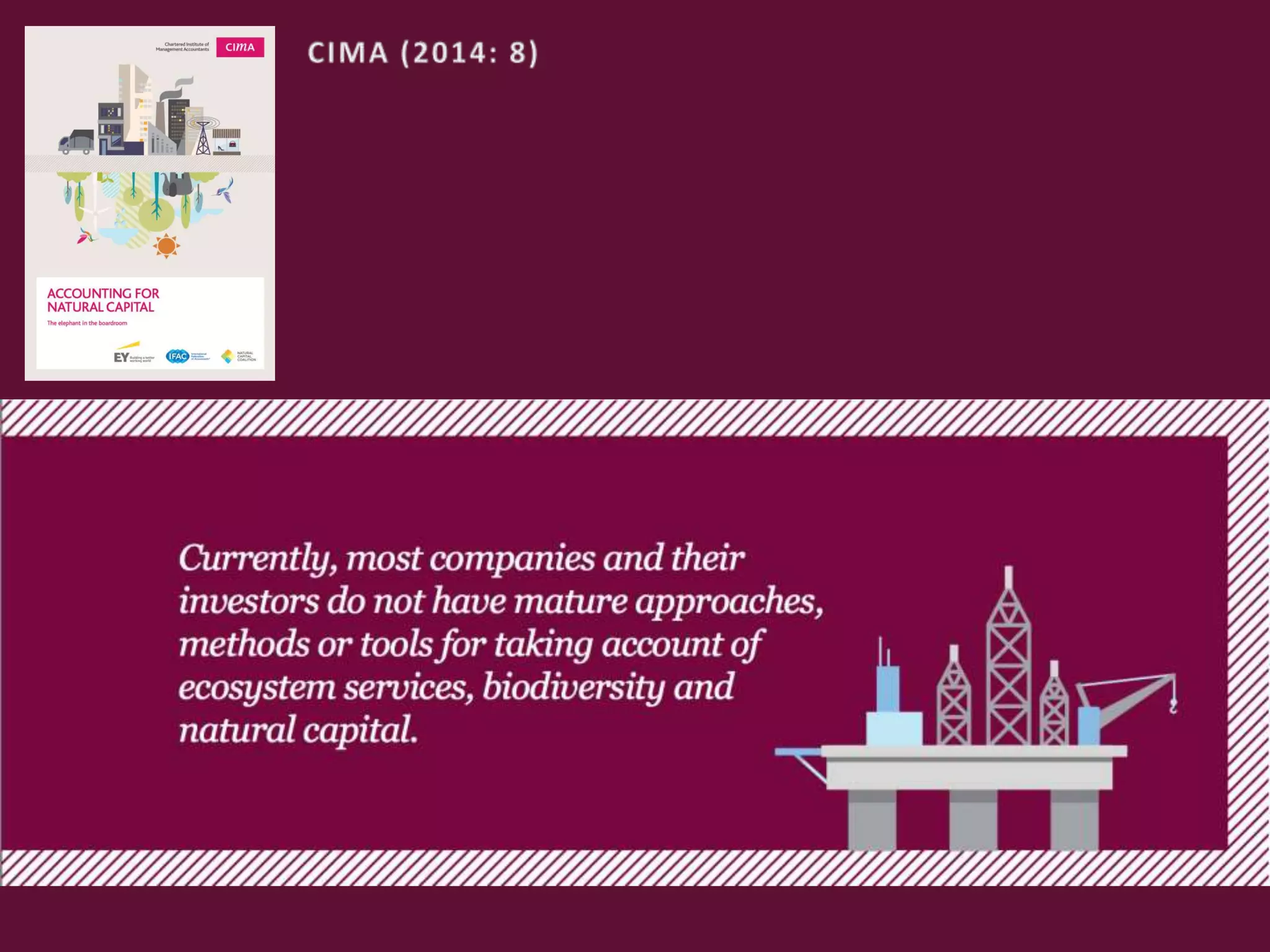
  • #46 CIMA p8
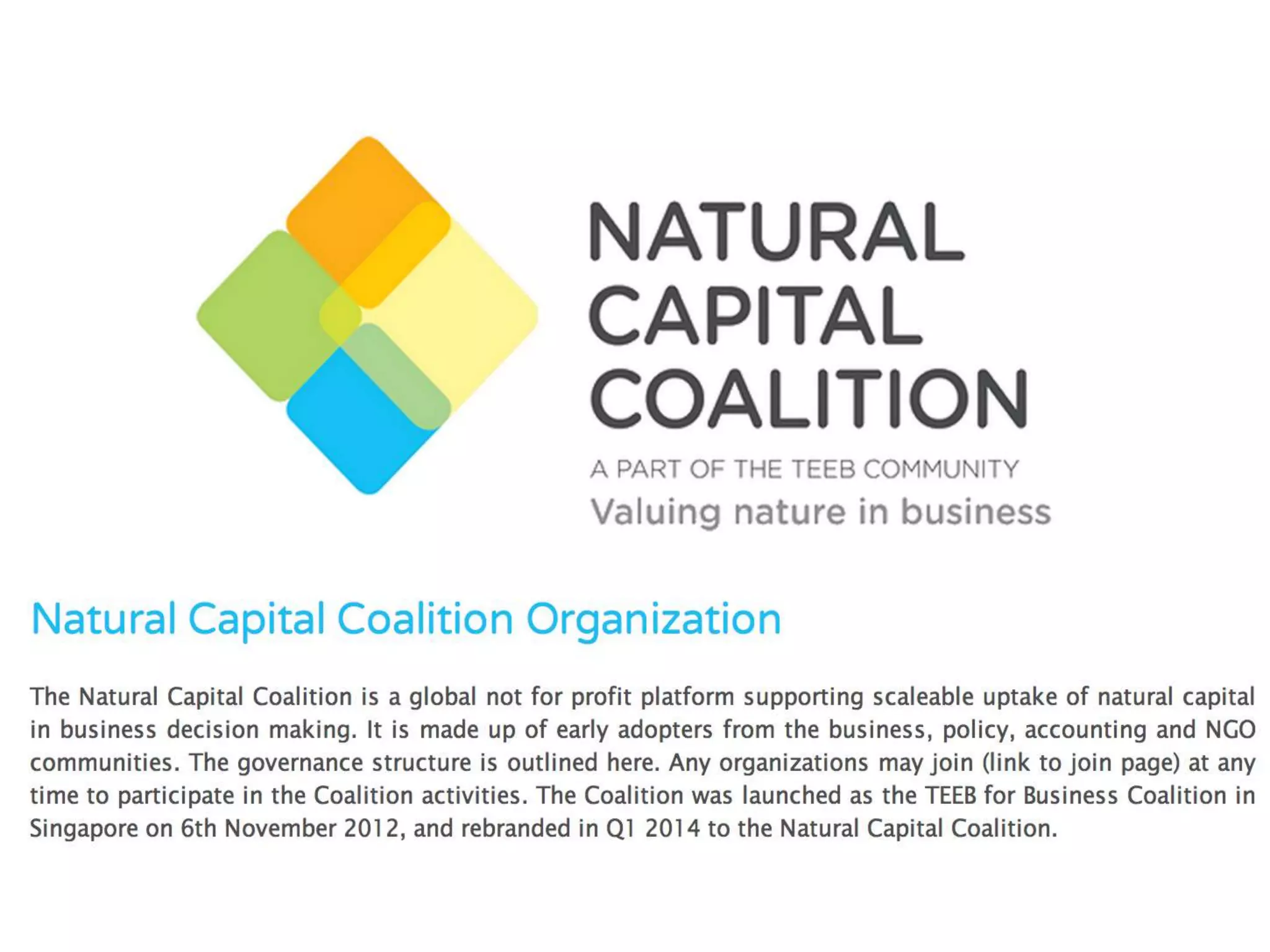
  • #48 http://www.naturalcapitalcoalition.org/about/what/organisation.html
  • #49 http://www.naturalcapitalcoalition.org/about/what/organisation.html
  • #50 CIMA p 10-11
  • #51 Hyper link takes you to the website: http://www.naturalcapitaldeclaration.org/ The CEOs of 37 major financial institutions announced that they would be integrating natural capital considerations into their products and services as a result of their commitment to the UN backed Natural Capital Declaration. Yes Bank - India: signed September 2013 Mongeral Aegon – Brazil Sumitomo Mitsui – Japan NAB – Australia
  • #53 http://www.peer.eu/fileadmin/user_upload/artplan21Test/francine/Picture1_01.jpg