Symbiosis is
classified into three
types:
  1. Parasitism;
  2. Commensalism;
and
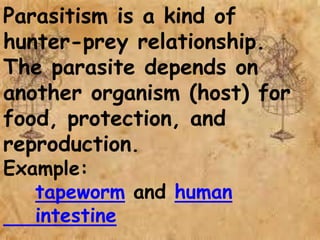
Parasitism is a kind of
hunter-prey relationship.
The parasite depends on
another organism (host) for
food, protection, and
reproduction.
Example:
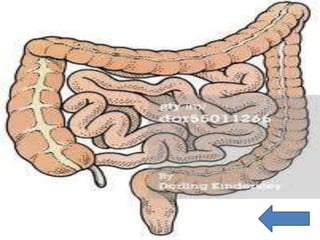
   tapeworm and human
   intestine
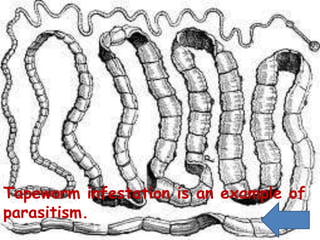
Tapeworm infestation is an example of
parasitism.
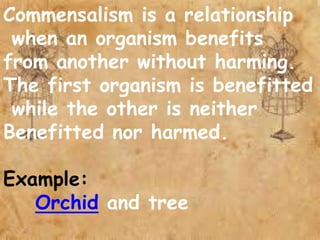
Commensalism is a relationship
 when an organism benefits
from another without harming.
The first organism is benefitted
 while the other is neither
Benefitted nor harmed.

Example:
   Orchid and tree
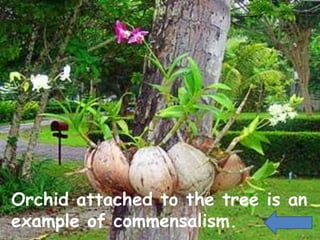
Orchid attached to the tree is an
example of commensalism.
Mutualism is a kind of
relationship where both
organisms benefit. It is a give
and take relationship between
two organisms where they can
be benefitted from each other.

Example:
   Anabaena and azolla
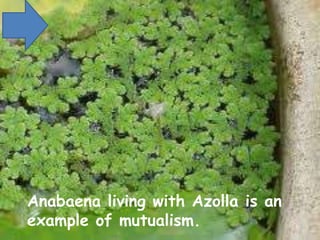
Anabaena living with Azolla is an
example of mutualism.
Key Concept:
   Symbiosis affects the
food chain. If a harmful
kind of relationship
dominates in an
ecosystem, it will cause
problem.
 Example:
Thank You
     for
 watching
    and
 listening
Edmar P. Tiburcio

Tiburcio, edmar

  • 4.
    Symbiosis is classified intothree types: 1. Parasitism; 2. Commensalism; and
  • 5.
    Parasitism is akind of hunter-prey relationship. The parasite depends on another organism (host) for food, protection, and reproduction. Example: tapeworm and human intestine
  • 6.
    Tapeworm infestation isan example of parasitism.
  • 8.
    Commensalism is arelationship when an organism benefits from another without harming. The first organism is benefitted while the other is neither Benefitted nor harmed. Example: Orchid and tree
  • 9.
    Orchid attached tothe tree is an example of commensalism.
  • 10.
    Mutualism is akind of relationship where both organisms benefit. It is a give and take relationship between two organisms where they can be benefitted from each other. Example: Anabaena and azolla
  • 11.
    Anabaena living withAzolla is an example of mutualism.
  • 12.
    Key Concept: Symbiosis affects the food chain. If a harmful kind of relationship dominates in an ecosystem, it will cause problem. Example:
  • 14.
    Thank You for watching and listening
  • 15.