ATMOSPHERE   Layers of
             Atmosphe
             re
ATMOSPHERE

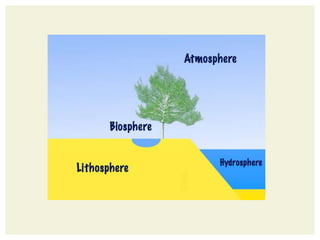
 An atmosphere (New Latin atmosphaera, created in the 17th
  century from Greek ἀτμός [atmos] "vapor" [1] and σφαῖρα
  [sphaira] "sphere" [2] ) is a layer ofgases that may surround a
  material body of suf ficient mass, [3] and that is held in place
  by the gravity of the body. An atmosphere may be retained for
  a longer duration, if the gravity is high and the atmosphere's
  temperature is low. Some planets consist mainly of various
  gases, but only their outer layer is their atmosphere.
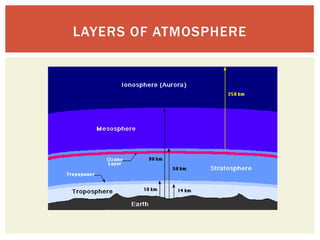
LAYERS OF ATMOSPHERE

 The Troposphere
 The troposphere is where all weather takes place; it is the
  region of rising and falling packets of air. The air pressure at
  the top of the troposphere is only 10% of that at sea level (0.1
  atmospheres). There is a thin buffer zone between the
  troposphere and the next layer called the tropopause.
STRATOSPHERE

 The Stratosphere and Ozone Layer
 Above the troposphere is the stratosphere, where air flow is
  mostly horizontal. The thin ozone layer in the upper
  stratosphere has a high concentration of ozone, a particularly
  reactive form of oxygen. This layer is primarily responsible for
  absorbing the ultraviolet radiation from the Sun. The
  formation of this layer is a delicate matter, since only when
  oxygen is produced in the atmosphere can an ozone layer
  form and prevent an intense flux of ultraviolet radiation from
  reaching the surface, where it is quite hazardous to the
  evolution of life. There is considerable recent concern that
  manmade flourocarbon compounds may be depleting the
  ozone layer, with dire future consequences for life on the
  Earth
MESOSPHERE

 The mesosphere (/ˈmɛs oʊs fɪ ər/; from Greek mesos = middle
  and sphaira = ball) is the layer of the Earth's atmosphere that is directly
  above the stratosphere and directl y below the thermosphere . In the
  mesosphere temperature decreases with increasing height. The upper
  boundary of the mesosphere is the mesopause , which can be the coldest
  naturall y occurring place on Earth with temperatures below 130 K. The
  exact upper and lower boundaries of the mesosphere vary with latitude
  and with season, but the lower boundary of the mesosphere is usually
  located at heights of about 50 km above the Earth's surface and the
  mesopause is usually at heights near 100 km, except at middle and high
  latitudes in summer where it descends to heights of about 85 km.

 The stratos phere, mesosphere and lowest part of the thermosphere are
  collectively referred to as the "middle atmosphere", which spans heights
  from approxi matel y 10 to 100 km. The mesopause , at an altitude of 80 –
  90 km (50–56 mi), separates the mesosphere from thether mos phere —the
  second-outermos t layer of the Earth's atmosphere. This is also around
  the same altitude as the turbopause , below which different chemical
  species are well mixed due to turbulent eddies. Above this level the
  atmosphere becomes non -uni form; the scale heights of different
  chemical species differ by their molecular masses .
IONOSPHERE

 The ionosphere is a part of the upper atmosphere, from
  about 85 km (53 mi) to 600 km (370 mi) altitude, comprising
  portions of the mesosphere, thermosphere and exosphere,
  distinguished because it is ionized by solar radiation. It
  plays an important part in atmospheric electricity and forms
  the inner edge of the magnetosphere. It has practical
  importance because, among other functions, it
  influences radio propagation to distant places on
  the Earth. [1]
LAYERS OF ATMOSPHERE

Rubi, melvilyn

  • 1.
    ATMOSPHERE Layers of Atmosphe re
  • 2.
    ATMOSPHERE  An atmosphere(New Latin atmosphaera, created in the 17th century from Greek ἀτμός [atmos] "vapor" [1] and σφαῖρα [sphaira] "sphere" [2] ) is a layer ofgases that may surround a material body of suf ficient mass, [3] and that is held in place by the gravity of the body. An atmosphere may be retained for a longer duration, if the gravity is high and the atmosphere's temperature is low. Some planets consist mainly of various gases, but only their outer layer is their atmosphere.
  • 4.
    LAYERS OF ATMOSPHERE The Troposphere  The troposphere is where all weather takes place; it is the region of rising and falling packets of air. The air pressure at the top of the troposphere is only 10% of that at sea level (0.1 atmospheres). There is a thin buffer zone between the troposphere and the next layer called the tropopause.
  • 5.
    STRATOSPHERE  The Stratosphereand Ozone Layer  Above the troposphere is the stratosphere, where air flow is mostly horizontal. The thin ozone layer in the upper stratosphere has a high concentration of ozone, a particularly reactive form of oxygen. This layer is primarily responsible for absorbing the ultraviolet radiation from the Sun. The formation of this layer is a delicate matter, since only when oxygen is produced in the atmosphere can an ozone layer form and prevent an intense flux of ultraviolet radiation from reaching the surface, where it is quite hazardous to the evolution of life. There is considerable recent concern that manmade flourocarbon compounds may be depleting the ozone layer, with dire future consequences for life on the Earth
  • 6.
    MESOSPHERE  The mesosphere(/ˈmɛs oʊs fɪ ər/; from Greek mesos = middle and sphaira = ball) is the layer of the Earth's atmosphere that is directly above the stratosphere and directl y below the thermosphere . In the mesosphere temperature decreases with increasing height. The upper boundary of the mesosphere is the mesopause , which can be the coldest naturall y occurring place on Earth with temperatures below 130 K. The exact upper and lower boundaries of the mesosphere vary with latitude and with season, but the lower boundary of the mesosphere is usually located at heights of about 50 km above the Earth's surface and the mesopause is usually at heights near 100 km, except at middle and high latitudes in summer where it descends to heights of about 85 km.  The stratos phere, mesosphere and lowest part of the thermosphere are collectively referred to as the "middle atmosphere", which spans heights from approxi matel y 10 to 100 km. The mesopause , at an altitude of 80 – 90 km (50–56 mi), separates the mesosphere from thether mos phere —the second-outermos t layer of the Earth's atmosphere. This is also around the same altitude as the turbopause , below which different chemical species are well mixed due to turbulent eddies. Above this level the atmosphere becomes non -uni form; the scale heights of different chemical species differ by their molecular masses .
  • 7.
    IONOSPHERE  The ionosphereis a part of the upper atmosphere, from about 85 km (53 mi) to 600 km (370 mi) altitude, comprising portions of the mesosphere, thermosphere and exosphere, distinguished because it is ionized by solar radiation. It plays an important part in atmospheric electricity and forms the inner edge of the magnetosphere. It has practical importance because, among other functions, it influences radio propagation to distant places on the Earth. [1]
  • 8.