Symbiosis Introduction 
Objective 
NHA Explain common patterns of interdependence and interrelationships of living things. 
Vocabulary 
Symbiosis Relationship Mutualism 
Commensalism Parasitism 
Materials 
Symbiotic Relationships worksheet 
Symbiotic Relationship game cards 
Can We Be Friends?: Nature's Partners (Nature’s Treasures) by Alexandra Wright 
Hummingbirds and Flowers video 
Procedure 
1. Today, students will learn about different way animals and plants live together. 
2. Ask students if they know what a relationship is. (When two things interact or "hang" out" with 
each other). When we talk about animals and plants we say they have symbiotic relationships. That 
means they have a relationship in which at least one of the organisms is benefiting/getting something. 
3. Read the story about symbiosis between some ants and aphids from Can We Be Friends?: 
Nature's Partners (Nature’s Treasures) by Alexandra Wright. 
4. Do you think the ants and the aphids have a good or bad relationship? (Good. The ants get sweet 
juice from the aphids and the aphids get protection from the ants) 
4. Pass out the Symbiosis worksheet and complete the definitions. Animals and plants have three 
main types of symbiotic relationships: 
· Relationship #1: If your friend gives you a piece of candy, is that a nice thing to do? (yes) Does 
it hurt your friend? (no) What would we call this type of relationship? (happy/doesn’t matter, 
/ or +/0) This is known as commensalism. If the students are having trouble 
remembering the scientific terms, refer to the smiley faces and simple explanations. 
· Relationship #2: If you buy a piece of candy from the store, you pay the cashier. Are both 
people happy? (yes, you got the candy and the cashier got the money) Does anyone get hurt? 
(no) This type of relationship is called a happy/happy, / or +/+ relationship. This is known 
as mutualism. 
· Relationship #3: If a bad child in the neighborhood punches you in the nose. Does anyone get 
hurt? (yes) This type of relationship is called a happy/sad, / or +/- relationship. This is 
known as parasitism. 
5. What type of symbiotic relationship do you think the ants and the aphids had? (mutualism, the ants 
get sweet juice from the aphids and the aphids get protection from the ants) Show the Hummingbirds 
and Flowers video and ask the students to identify the type of relationship. (mutualism) 
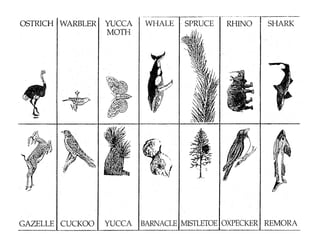
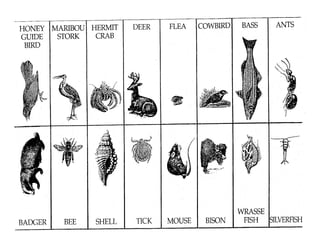
6. Pass out one animal card to each student. (you will have extras so make sure each student has a 
partner card) The student must find their ‘partner’ in the relationship. (They will walk around the room 
looking for their partner.) 
7. When they find their partner, they will look on their worksheet and read what it explains about their
relationship. They will use this information to decide what kind of relationship they have 
(commensalism, mutualism, or parasitism). Once they figure out the relationship, they should write it 
down on their worksheet in the appropriate place. If the students are having a difficult time with this 
activity, you may want to do it as a whole class activity. 
8. When each pair is finished, have a race to see who can figure out the rest of the relationships on 
their worksheet. 
9. Read each of the relationships and have the class vote, to decide whether the relationships are 
commensalism, mutualism or parasitism. Students should write the correct answers on their 
worksheet, if they had any wrong.
Name: 
Symbiotic Relationships 
Define each symbiotic relationship term: 
Commensalism 
Mutualism 
Parasitism 
Read the information below. Decide what type of symbiotic relationship the two organisms 
have and write the answer on the line. 
Ostriches and gazelles eat next to each other. They 
both watch for predators and danger. Since they see 
things differently, they each can identify threats the 
other animal may not see. Both species are happy. 
A cuckoo bird may lay its eggs in a warbler’s nest. The 
cuckoo’s young will kick out the warbler’s young and will 
be raised by the warbler. This is good for the cuckoo but 
bad for the warbler. 
Yucca flowers are pollinated by yucca moths. The moths 
lay their eggs in the flowers and the eggs hatch. The 
larvae eat some of the seeds, and spread them around. 
Both species are happy.
Barnacles attach themselves to whales so they can get a 
free meal. This neither harms nor helps the whales. 
Mistletoe takes water and nutrients from the spruce 
tree. This is good for the mistletoe but bad for the tree. 
Oxpecker birds get a good meal by eating the ticks found 
on a rhinoceros. The rhinoceros get a free cleaning. Both 
species are happy. 
Remora fish attach themselves to a shark’s body. They 
then travel with the shark and eat scraps from the 
shark’s meals. This neither harms nor helps the shark. 
Silverfish bugs live and hunt with army ants. They share 
the prey. This neither helps nor harms the ants. 
Wrasse fish get a free meal by eating the parasites 
found on the bass fish’s body. The bass gets free doctor 
services. Both species are happy. 
A bison walks through the grass, insects fly up and are 
seen, and eaten, by cowbirds. This neither harms nor 
helps the bison. 
A flea feeds on a mouse’s blood. This is good for the flea 
but bad for the mouse. 
Ticks feed on deer blood. This helps the ticks but hurts 
the deer. 
Hermit crabs live in shells that snails don't use anymore. 
The hermit crab gets a nice free home. This neither 
harms nor helps the snails. 
The stork bird uses its saw-like beak to cut up dead 
animals it eats. Bees then come along and lay their eggs in 
the meat so when the eggs hatch, their larvae will have 
food to eat. This neither harms nor helps the stork.
Honey guide birds show badgers where bee hives are. 
The badger rips open the hive and eats the honey first. 
Then the honey guide birds eat.

Symbiosis introduction

  • 1.
    Symbiosis Introduction Objective NHA Explain common patterns of interdependence and interrelationships of living things. Vocabulary Symbiosis Relationship Mutualism Commensalism Parasitism Materials Symbiotic Relationships worksheet Symbiotic Relationship game cards Can We Be Friends?: Nature's Partners (Nature’s Treasures) by Alexandra Wright Hummingbirds and Flowers video Procedure 1. Today, students will learn about different way animals and plants live together. 2. Ask students if they know what a relationship is. (When two things interact or "hang" out" with each other). When we talk about animals and plants we say they have symbiotic relationships. That means they have a relationship in which at least one of the organisms is benefiting/getting something. 3. Read the story about symbiosis between some ants and aphids from Can We Be Friends?: Nature's Partners (Nature’s Treasures) by Alexandra Wright. 4. Do you think the ants and the aphids have a good or bad relationship? (Good. The ants get sweet juice from the aphids and the aphids get protection from the ants) 4. Pass out the Symbiosis worksheet and complete the definitions. Animals and plants have three main types of symbiotic relationships: · Relationship #1: If your friend gives you a piece of candy, is that a nice thing to do? (yes) Does it hurt your friend? (no) What would we call this type of relationship? (happy/doesn’t matter, / or +/0) This is known as commensalism. If the students are having trouble remembering the scientific terms, refer to the smiley faces and simple explanations. · Relationship #2: If you buy a piece of candy from the store, you pay the cashier. Are both people happy? (yes, you got the candy and the cashier got the money) Does anyone get hurt? (no) This type of relationship is called a happy/happy, / or +/+ relationship. This is known as mutualism. · Relationship #3: If a bad child in the neighborhood punches you in the nose. Does anyone get hurt? (yes) This type of relationship is called a happy/sad, / or +/- relationship. This is known as parasitism. 5. What type of symbiotic relationship do you think the ants and the aphids had? (mutualism, the ants get sweet juice from the aphids and the aphids get protection from the ants) Show the Hummingbirds and Flowers video and ask the students to identify the type of relationship. (mutualism) 6. Pass out one animal card to each student. (you will have extras so make sure each student has a partner card) The student must find their ‘partner’ in the relationship. (They will walk around the room looking for their partner.) 7. When they find their partner, they will look on their worksheet and read what it explains about their
  • 2.
    relationship. They willuse this information to decide what kind of relationship they have (commensalism, mutualism, or parasitism). Once they figure out the relationship, they should write it down on their worksheet in the appropriate place. If the students are having a difficult time with this activity, you may want to do it as a whole class activity. 8. When each pair is finished, have a race to see who can figure out the rest of the relationships on their worksheet. 9. Read each of the relationships and have the class vote, to decide whether the relationships are commensalism, mutualism or parasitism. Students should write the correct answers on their worksheet, if they had any wrong.
  • 5.
    Name: Symbiotic Relationships Define each symbiotic relationship term: Commensalism Mutualism Parasitism Read the information below. Decide what type of symbiotic relationship the two organisms have and write the answer on the line. Ostriches and gazelles eat next to each other. They both watch for predators and danger. Since they see things differently, they each can identify threats the other animal may not see. Both species are happy. A cuckoo bird may lay its eggs in a warbler’s nest. The cuckoo’s young will kick out the warbler’s young and will be raised by the warbler. This is good for the cuckoo but bad for the warbler. Yucca flowers are pollinated by yucca moths. The moths lay their eggs in the flowers and the eggs hatch. The larvae eat some of the seeds, and spread them around. Both species are happy.
  • 6.
    Barnacles attach themselvesto whales so they can get a free meal. This neither harms nor helps the whales. Mistletoe takes water and nutrients from the spruce tree. This is good for the mistletoe but bad for the tree. Oxpecker birds get a good meal by eating the ticks found on a rhinoceros. The rhinoceros get a free cleaning. Both species are happy. Remora fish attach themselves to a shark’s body. They then travel with the shark and eat scraps from the shark’s meals. This neither harms nor helps the shark. Silverfish bugs live and hunt with army ants. They share the prey. This neither helps nor harms the ants. Wrasse fish get a free meal by eating the parasites found on the bass fish’s body. The bass gets free doctor services. Both species are happy. A bison walks through the grass, insects fly up and are seen, and eaten, by cowbirds. This neither harms nor helps the bison. A flea feeds on a mouse’s blood. This is good for the flea but bad for the mouse. Ticks feed on deer blood. This helps the ticks but hurts the deer. Hermit crabs live in shells that snails don't use anymore. The hermit crab gets a nice free home. This neither harms nor helps the snails. The stork bird uses its saw-like beak to cut up dead animals it eats. Bees then come along and lay their eggs in the meat so when the eggs hatch, their larvae will have food to eat. This neither harms nor helps the stork.
  • 7.
    Honey guide birdsshow badgers where bee hives are. The badger rips open the hive and eats the honey first. Then the honey guide birds eat.