AST Teaching:
Thrombolysis vs PCI in
STEMI
Aug 2015
Koh Choong Hou
Scope
•  Reperfusion workflow
•  Trial Results Supporting Recommendations
•  PCI vs Thrombolysis Meta Analysis
ACC Guidelines
Reperfusion Workflow (ACC 2013)
ACC 2013
Ø Primary PCI is the recommended method of
reperfusion when it can be performed in a
timely fashion by experienced operators (LO
A)
§  Keeley EC, Boura JA, Grines CL. Primary angioplasty versus intravenous
thrombolytic therapy for acute myocardial infarction: a quantitative review of 23
randomised trials. Lancet. 2003;361:13–20
§  Andersen HR, Nielsen TT, Vesterlund T, et al. Danish multicenter randomized st
on fibrinolytic therapy versus acute coronary angioplasty in acute myocardial
infarction: rationale and design of the DANish trial in Acute Myocardial Infarction
(DANAMI-2). Am Heart J. 2003;146:234–41
§  Dalby M, Bouzamondo A, Lechat P, et al. Transfer for primary angioplasty versus
immediate thrombolysis in acute myocardial infarction: a meta-analysis. Circulatio
(or delayed) catheterization and PCI after fibrinolytic
therapy
Ø In the absence of contraindications, fibrinolyt
therapy should be administered to patients
with STEMI at non–PCI-capable hospitals wh
the anticipated FMC-to-device time at a PCI-
capable hospital exceeds 120 minutes becaus
of unavoidable delays (LOE: B)
§  Fibrinolytic Therapy Trialists’ (FTT) Collaborative Group. Indications for fibrinol
therapy in suspected acute myocardial infarction: collaborative overview of early
mortality and major morbidity results from all randomised trials of more than 10
patients. Lancet. 1994;343:311–22. Erratum in: Lancet. 1994;343:742
§  Nallamothu BK, Bates ER. Percutaneous coronary intervention versus fibrinolytic
therapy in acute myocardial infarction: is timing (almost) everything? Am J Cardio
2003;92:824–6
§  Pinto DS, Kirtane AJ, Nallamothu BK, et al. Hospital delays in reperfusion for ST
ACC 2013
Ø When fibrinolytic therapy is indicated or chosen as
the primary reperfusion strategy, it should be
administered within 30 minutes of hospital arrival
(LOE: B)
§  Boersma E, Maas AC, Deckers JW, et al. Early thrombolytic treatment in acute
myocardial infarction: reappraisal of the golden hour. Lancet. 1996;348:771–5.
§  Chareonthaitawee P, Gibbons RJ, Roberts RS, et al; for the CORE investigators
(Collaborative Organisation for RheothRx Evaluation). The impact of time to
thrombolytic treatment on outcome in patients with acute myocardial infarction.
Heart. 2000;84:142– 8.
§  McNamara RL, Herrin J, Wang Y, et al. Impact of delay in door to needle time on
mortality in patients with ST-segment elevation myocardial infarction. Am J Card
2007;100:1227–32.
§  Milavetz JJ, Giebel DW, Christian TF, et al. Time to therapy and salvage in
Ø  In the absence of contraindications, fibrinolytic therapy should be
given to patients with STEMI and onset of ischemic symptoms with
the previous 12 hours when it is anticipated that primary PCI canno
be performed within 120 minutes of FMC (LOE: A)
§  Fibrinolytic Therapy Trialists’ (FTT) Collaborative Group. Indications for fibrinolytic therapy in suspected ac
myocardial infarction: collaborative overview of early mortality and major morbidity results from all random
trials of more than 1000 patients. Lancet. 1994;343:311–22. Erratum in: Lancet. 1994;343:742
§  AIMS Trial Study Group. Effect of intravenous APSAC on mortality after acute myocardial infarction: prelim
report of a placebo controlled clinical trial. Lancet. 1988;1:545–9.
§  EMERAS (Estudio Multicéntrico Estreptoquinasa Repúblicas de América del Sur) Collaborative Group.
Randomised trial of late thrombolysis in patients with suspected acute myocardial infarction. Lancet.
1993;342:767–72.
§  ISIS-2 (Second International Study of Infarct Survival) Collaborative Group. Randomised trial of intravenous
streptokinase, oral aspirin, both, or neither among 17,187 cases of suspected acute myocardial infarction: IS
Lancet. 1988;2:349–60.
§  Late Assessment of Thrombolytic Efficacy (LATE) study with alteplase 6–24 hours after onset of acute
myocardial infarction. Lancet. 1993; 342:759–66.
Choice of Thrombolytic
Agents
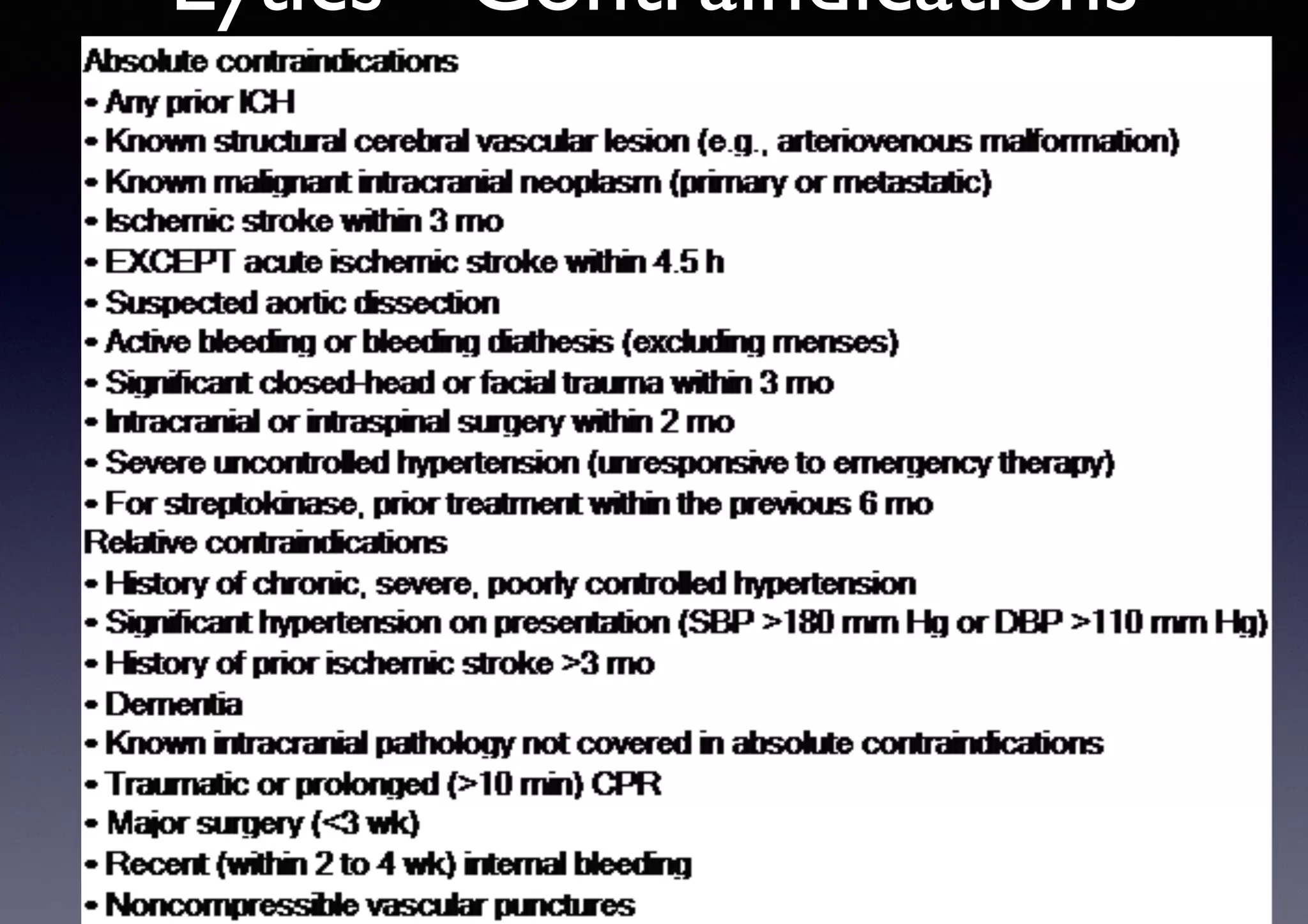
Lytics - Contraindications
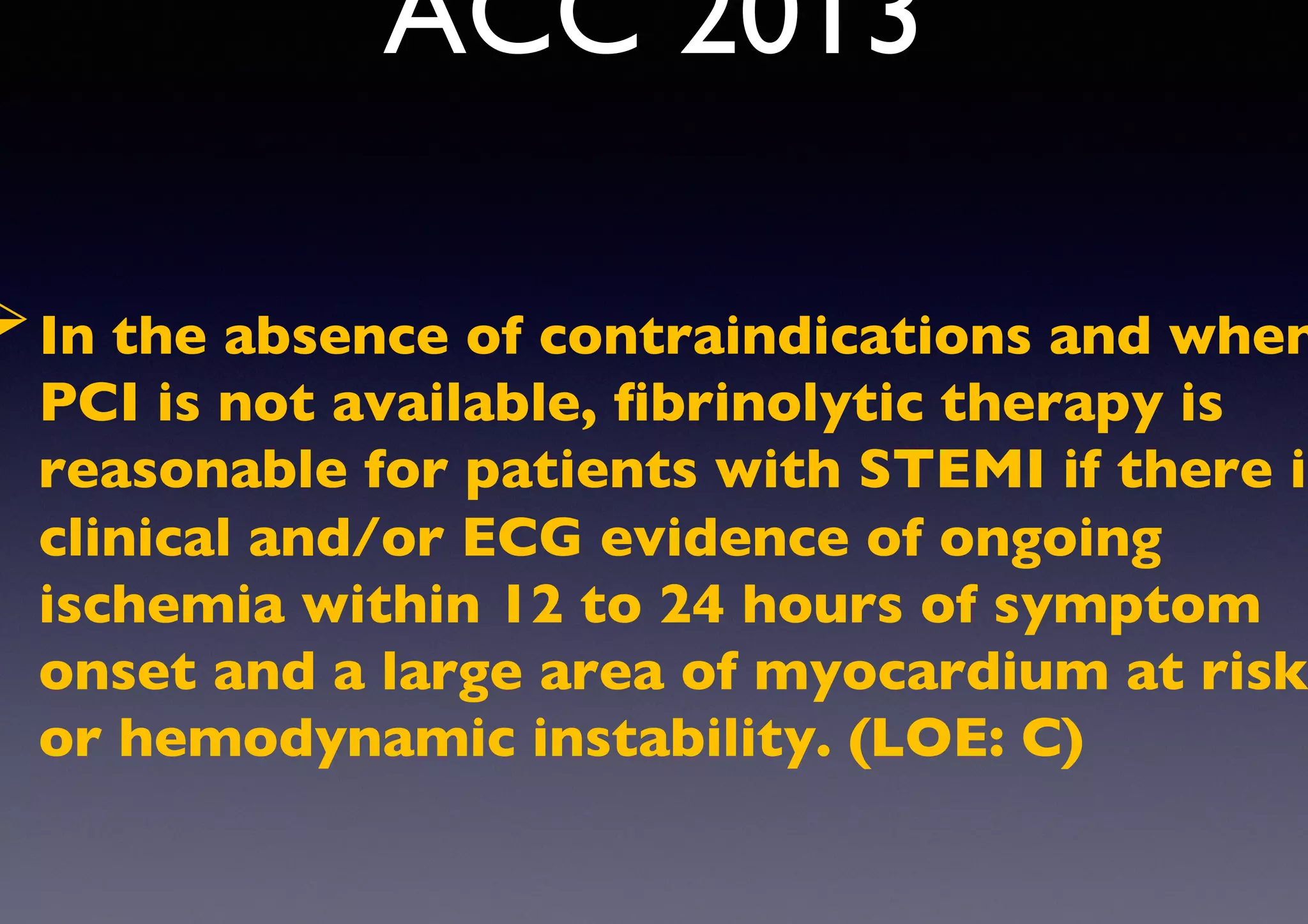
ACC 2013
Ø In the absence of contraindications and when
PCI is not available, fibrinolytic therapy is
reasonable for patients with STEMI if there is
clinical and/or ECG evidence of ongoing
ischemia within 12 to 24 hours of symptom
onset and a large area of myocardium at risk
or hemodynamic instability. (LOE: C)
Thrombolysis vs PCI for STEMI

Thrombolysis vs PCI for STEMI

  • 1.
    AST Teaching: Thrombolysis vsPCI in STEMI Aug 2015 Koh Choong Hou
  • 2.
    Scope •  Reperfusion workflow • Trial Results Supporting Recommendations •  PCI vs Thrombolysis Meta Analysis
  • 3.
  • 4.
  • 5.
    ACC 2013 Ø Primary PCIis the recommended method of reperfusion when it can be performed in a timely fashion by experienced operators (LO A) §  Keeley EC, Boura JA, Grines CL. Primary angioplasty versus intravenous thrombolytic therapy for acute myocardial infarction: a quantitative review of 23 randomised trials. Lancet. 2003;361:13–20 §  Andersen HR, Nielsen TT, Vesterlund T, et al. Danish multicenter randomized st on fibrinolytic therapy versus acute coronary angioplasty in acute myocardial infarction: rationale and design of the DANish trial in Acute Myocardial Infarction (DANAMI-2). Am Heart J. 2003;146:234–41 §  Dalby M, Bouzamondo A, Lechat P, et al. Transfer for primary angioplasty versus immediate thrombolysis in acute myocardial infarction: a meta-analysis. Circulatio
  • 10.
    (or delayed) catheterizationand PCI after fibrinolytic therapy
  • 11.
    Ø In the absenceof contraindications, fibrinolyt therapy should be administered to patients with STEMI at non–PCI-capable hospitals wh the anticipated FMC-to-device time at a PCI- capable hospital exceeds 120 minutes becaus of unavoidable delays (LOE: B) §  Fibrinolytic Therapy Trialists’ (FTT) Collaborative Group. Indications for fibrinol therapy in suspected acute myocardial infarction: collaborative overview of early mortality and major morbidity results from all randomised trials of more than 10 patients. Lancet. 1994;343:311–22. Erratum in: Lancet. 1994;343:742 §  Nallamothu BK, Bates ER. Percutaneous coronary intervention versus fibrinolytic therapy in acute myocardial infarction: is timing (almost) everything? Am J Cardio 2003;92:824–6 §  Pinto DS, Kirtane AJ, Nallamothu BK, et al. Hospital delays in reperfusion for ST
  • 18.
    ACC 2013 Ø When fibrinolytictherapy is indicated or chosen as the primary reperfusion strategy, it should be administered within 30 minutes of hospital arrival (LOE: B) §  Boersma E, Maas AC, Deckers JW, et al. Early thrombolytic treatment in acute myocardial infarction: reappraisal of the golden hour. Lancet. 1996;348:771–5. §  Chareonthaitawee P, Gibbons RJ, Roberts RS, et al; for the CORE investigators (Collaborative Organisation for RheothRx Evaluation). The impact of time to thrombolytic treatment on outcome in patients with acute myocardial infarction. Heart. 2000;84:142– 8. §  McNamara RL, Herrin J, Wang Y, et al. Impact of delay in door to needle time on mortality in patients with ST-segment elevation myocardial infarction. Am J Card 2007;100:1227–32. §  Milavetz JJ, Giebel DW, Christian TF, et al. Time to therapy and salvage in
  • 24.
    Ø  In theabsence of contraindications, fibrinolytic therapy should be given to patients with STEMI and onset of ischemic symptoms with the previous 12 hours when it is anticipated that primary PCI canno be performed within 120 minutes of FMC (LOE: A) §  Fibrinolytic Therapy Trialists’ (FTT) Collaborative Group. Indications for fibrinolytic therapy in suspected ac myocardial infarction: collaborative overview of early mortality and major morbidity results from all random trials of more than 1000 patients. Lancet. 1994;343:311–22. Erratum in: Lancet. 1994;343:742 §  AIMS Trial Study Group. Effect of intravenous APSAC on mortality after acute myocardial infarction: prelim report of a placebo controlled clinical trial. Lancet. 1988;1:545–9. §  EMERAS (Estudio Multicéntrico Estreptoquinasa Repúblicas de América del Sur) Collaborative Group. Randomised trial of late thrombolysis in patients with suspected acute myocardial infarction. Lancet. 1993;342:767–72. §  ISIS-2 (Second International Study of Infarct Survival) Collaborative Group. Randomised trial of intravenous streptokinase, oral aspirin, both, or neither among 17,187 cases of suspected acute myocardial infarction: IS Lancet. 1988;2:349–60. §  Late Assessment of Thrombolytic Efficacy (LATE) study with alteplase 6–24 hours after onset of acute myocardial infarction. Lancet. 1993; 342:759–66.
  • 30.
  • 31.
  • 32.
    ACC 2013 Ø In theabsence of contraindications and when PCI is not available, fibrinolytic therapy is reasonable for patients with STEMI if there is clinical and/or ECG evidence of ongoing ischemia within 12 to 24 hours of symptom onset and a large area of myocardium at risk or hemodynamic instability. (LOE: C)