PRIMARY PCI
(Percutaneous Coronary Intervention)
Amir Aziz AlkatiriAmir Aziz Alkatiri
RS Awal Bros Pekanbaru
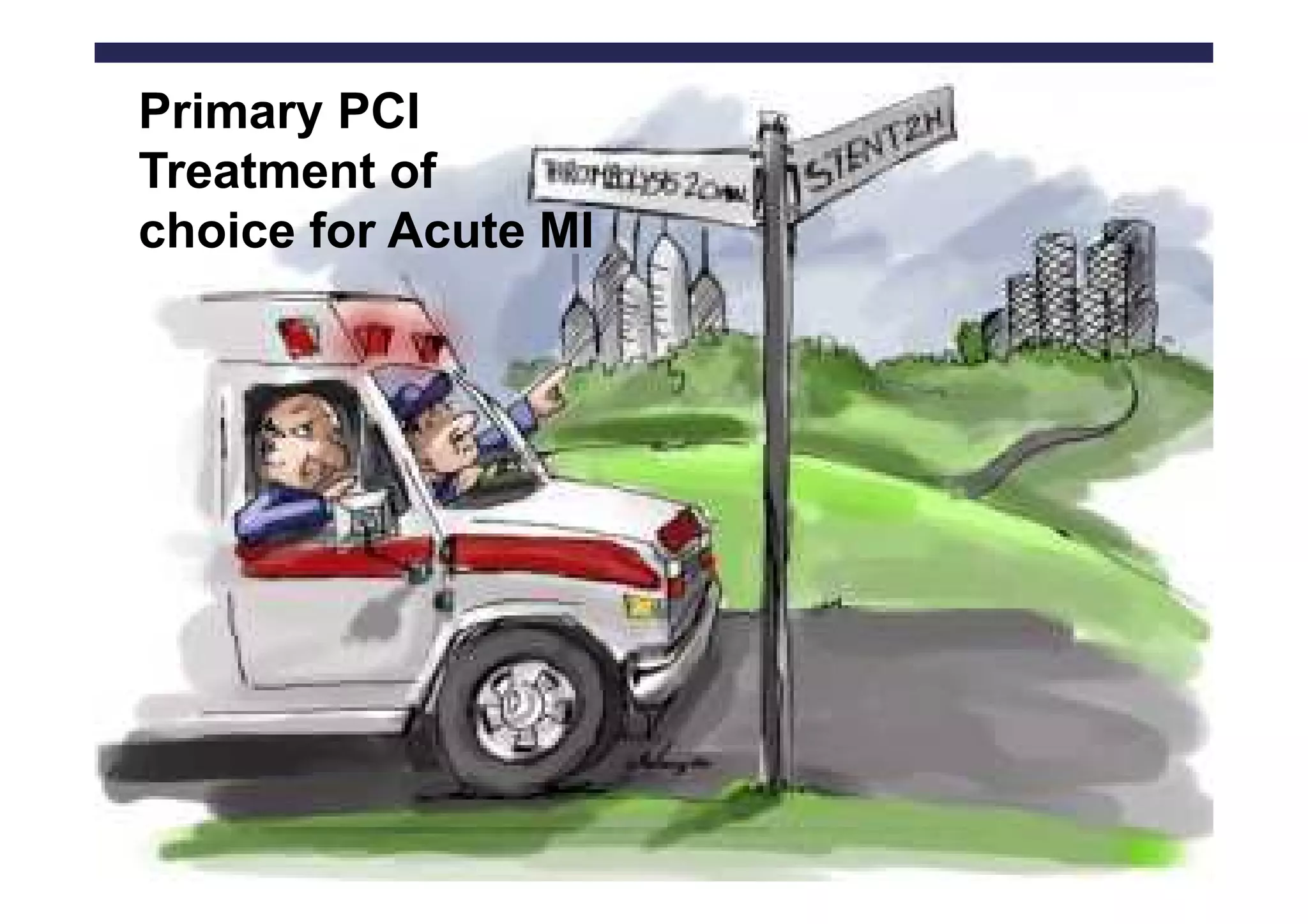
Primary PCI
Treatment of
choice for Acute MI
Definition
• Primary PCI : an emergent
percutaneous catheter intervention
in the setting of STEMI, without
previous fibrinolytic treatment
• is the preferred reperfusion strategy
in patients with STEMI
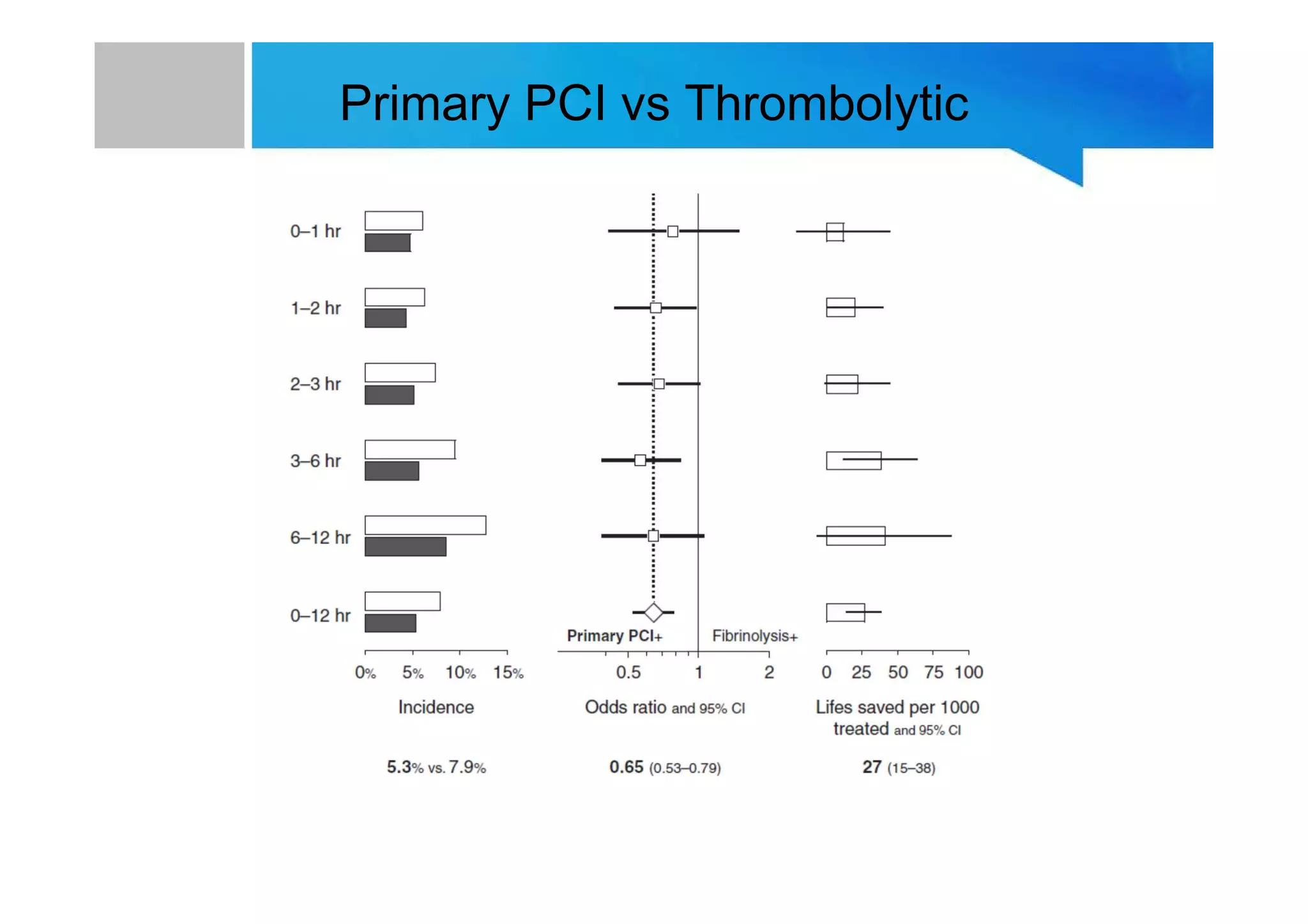
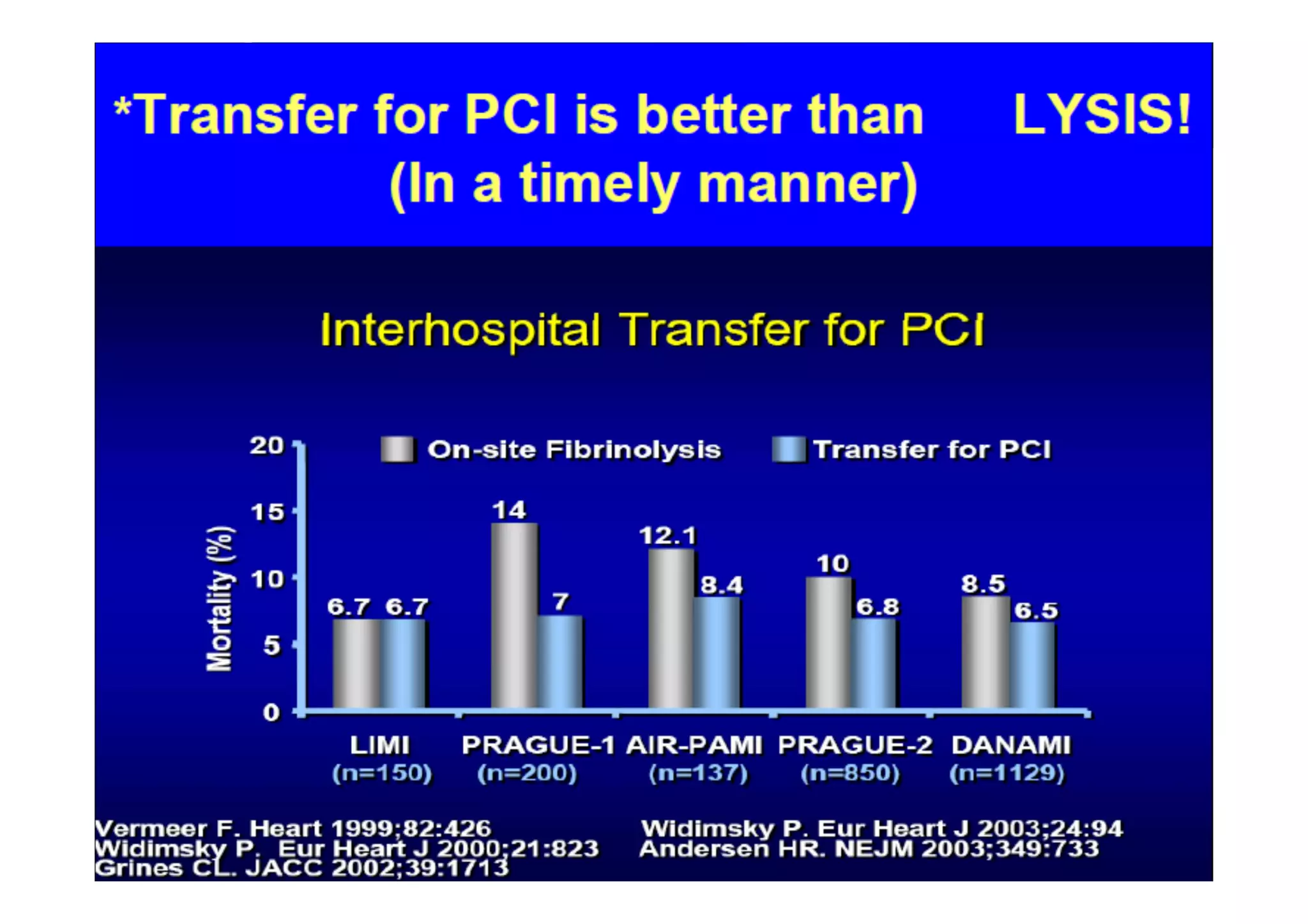
Primary PCI vs Thrombolytic
Primary PCI vs Thrombolysis
• Thrombolysis is effective in 40–60% of patients,
while p-PCI is effective in > 90%.
• Thus,comparing thrombolysis vs primary PCI is
comparing a semi-effective therapy vs a fully
effective therapy.
• The mortality benefit derived from the primary
PCI strategy is not related to the fact that the
underlying stenosis is removed.
• The mortality benefit of primary PCI is caused by
the simple fact that primary PCI is twice as
effective as thrombolysis in opening the artery.
European Heart Journal (2010) 31, 634–636
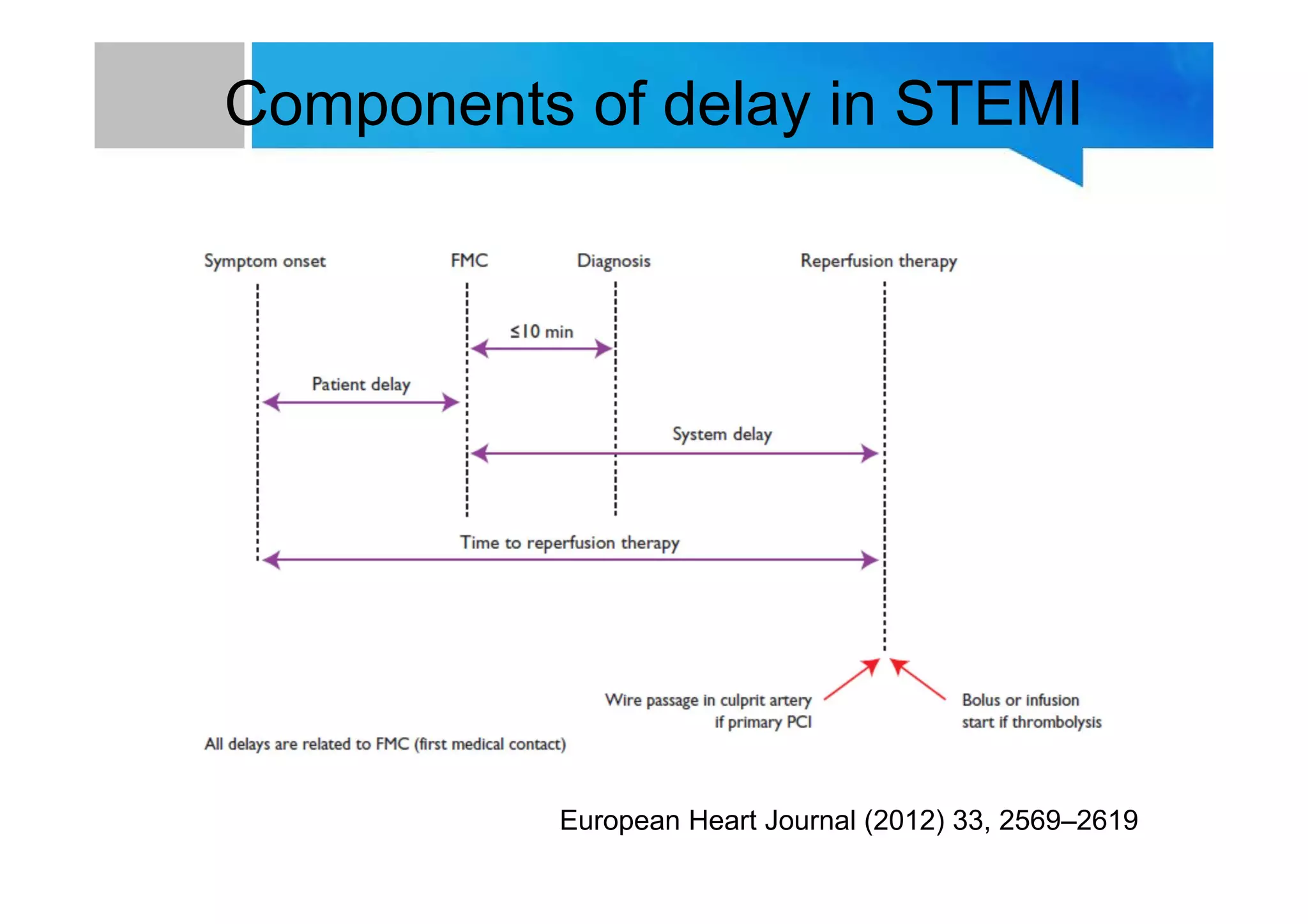
Components of delay in STEMI
European Heart Journal (2012) 33, 2569–2619
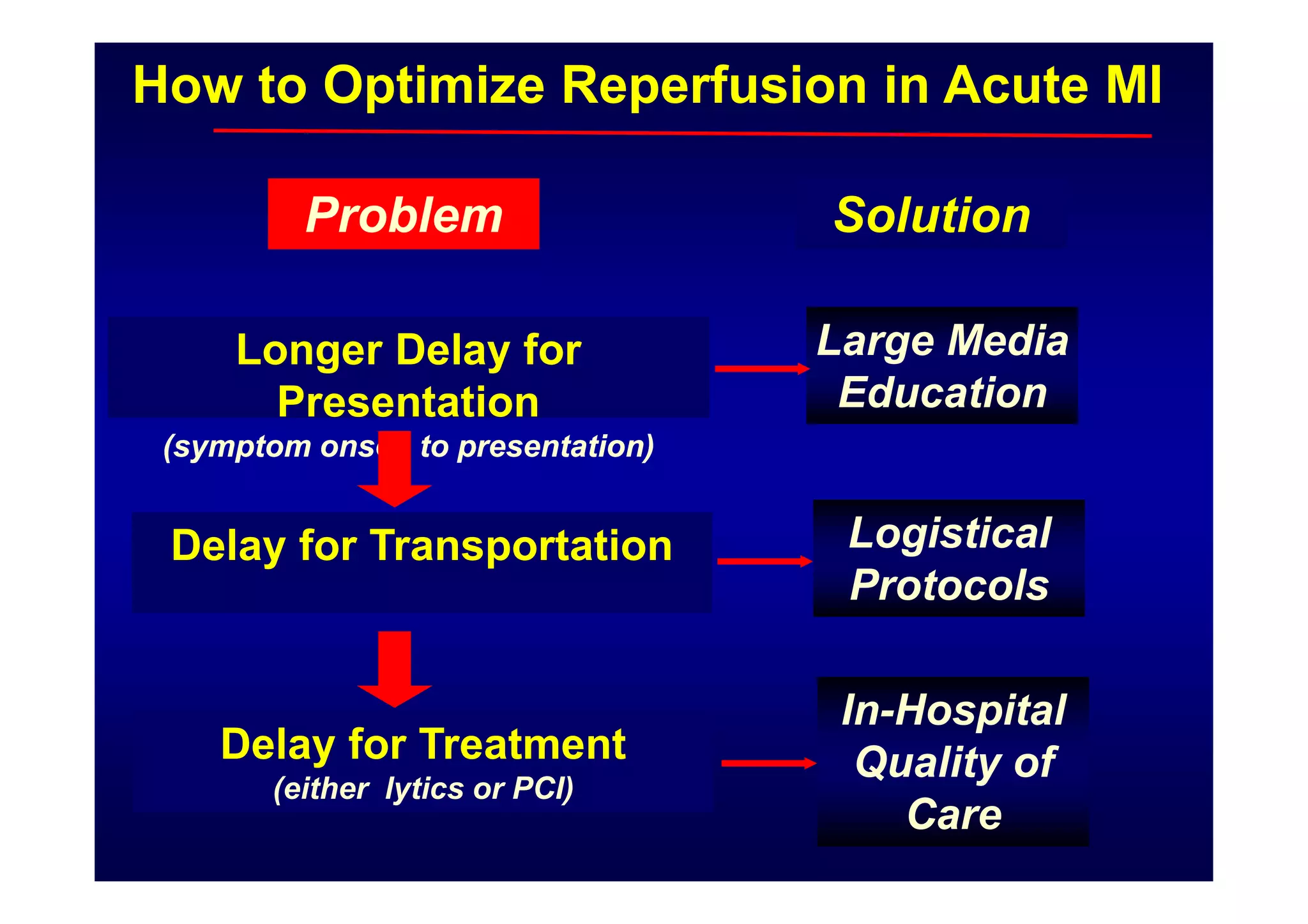
How to Optimize Reperfusion in Acute MI
ProblemProblem SolutionSolution
Longer Delay for
Presentation
(symptom onset to presentation)
Longer Delay for
Presentation
(symptom onset to presentation)
Large Media
Education
Large Media
Education
Delay for TransportationDelay for Transportation Logistical
Protocols
Logistical
Protocols
Delay for Treatment
(either lytics or PCI)
Delay for Treatment
(either lytics or PCI)
In-Hospital
Quality of
Care
In-Hospital
Quality of
Care
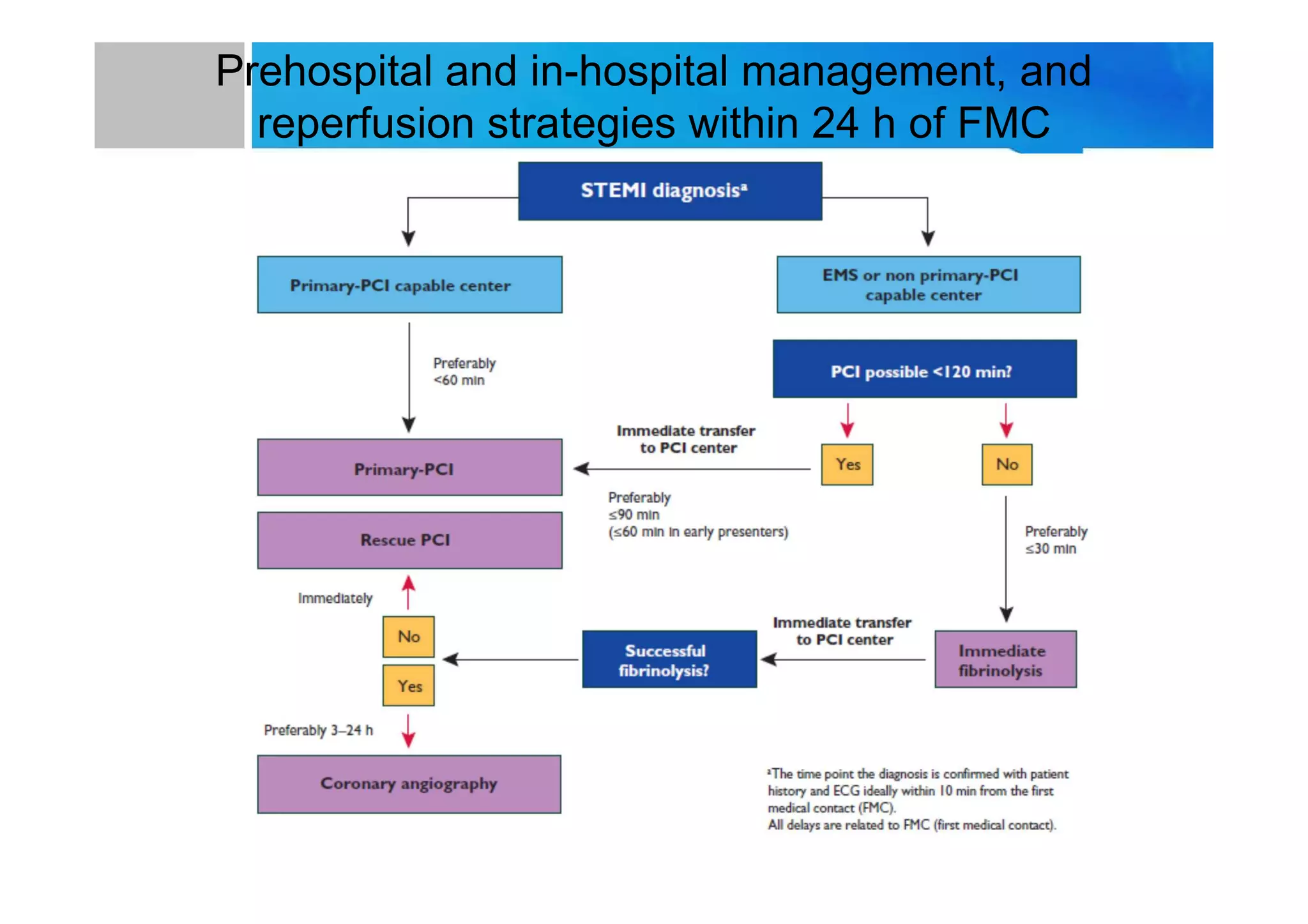
Prehospital and in-hospital management, and
reperfusion strategies within 24 h of FMC
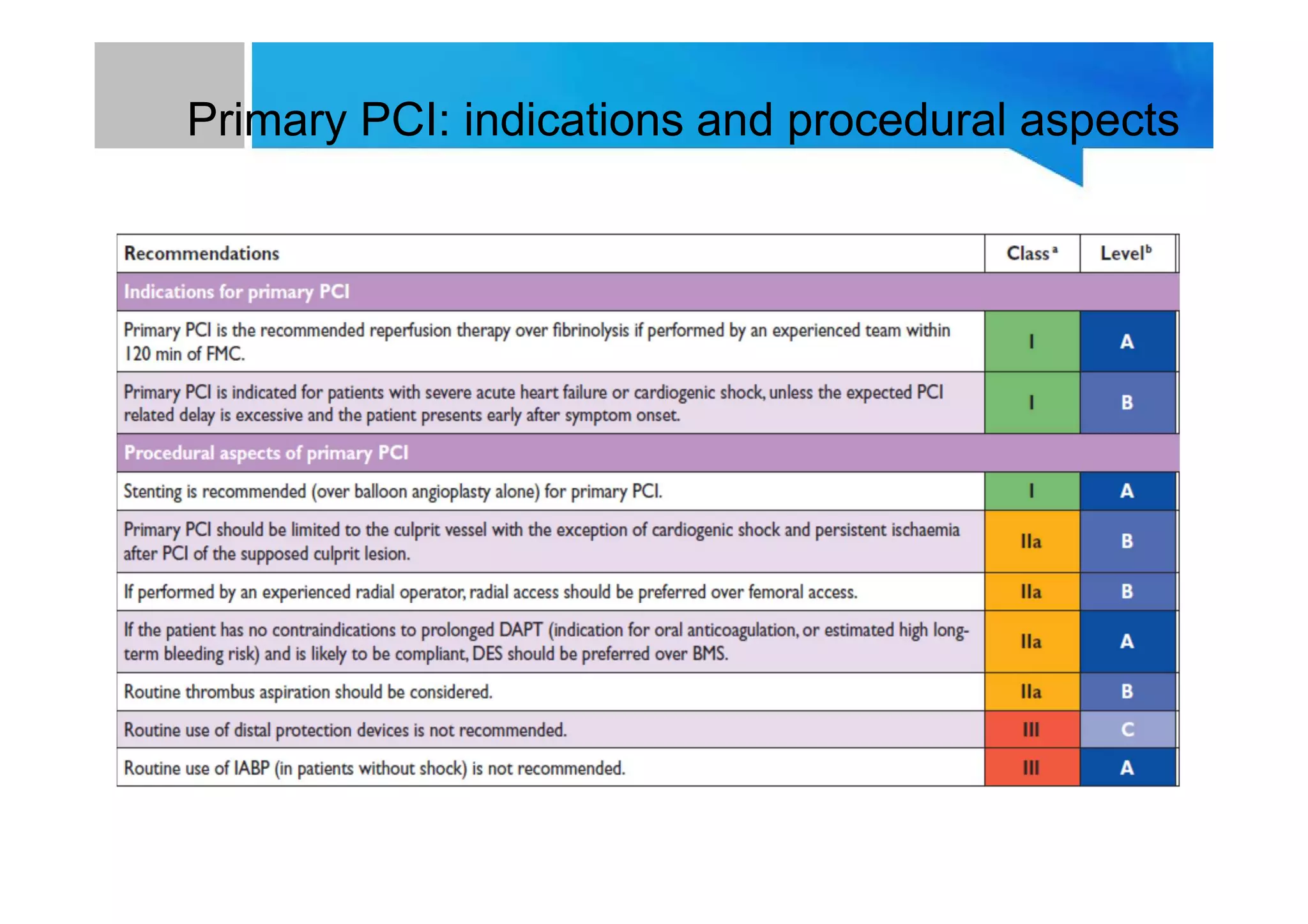
Primary PCI: indications and procedural aspects
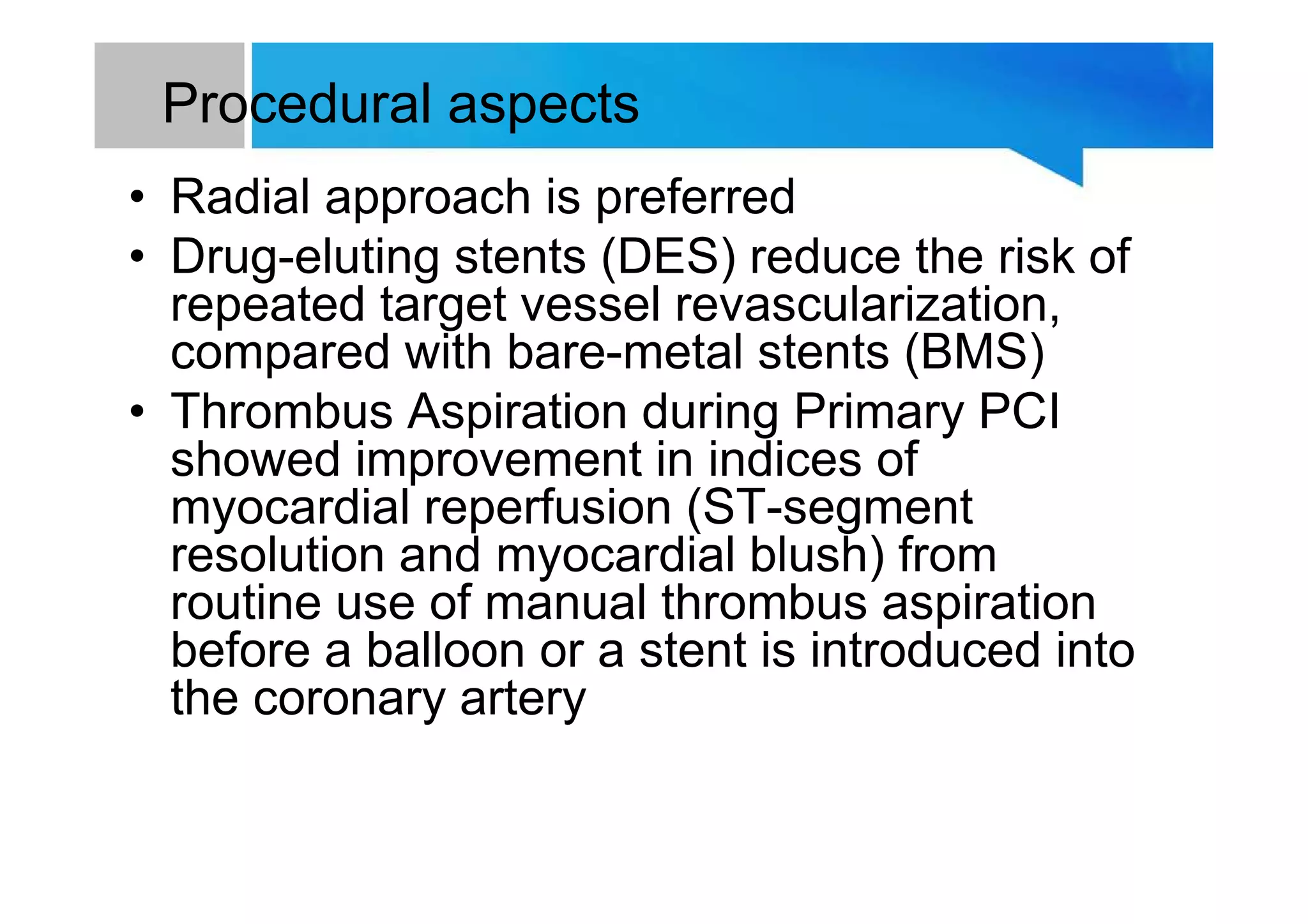
Procedural aspects
• Radial approach is preferred
• Drug-eluting stents (DES) reduce the risk of
repeated target vessel revascularization,
compared with bare-metal stents (BMS)
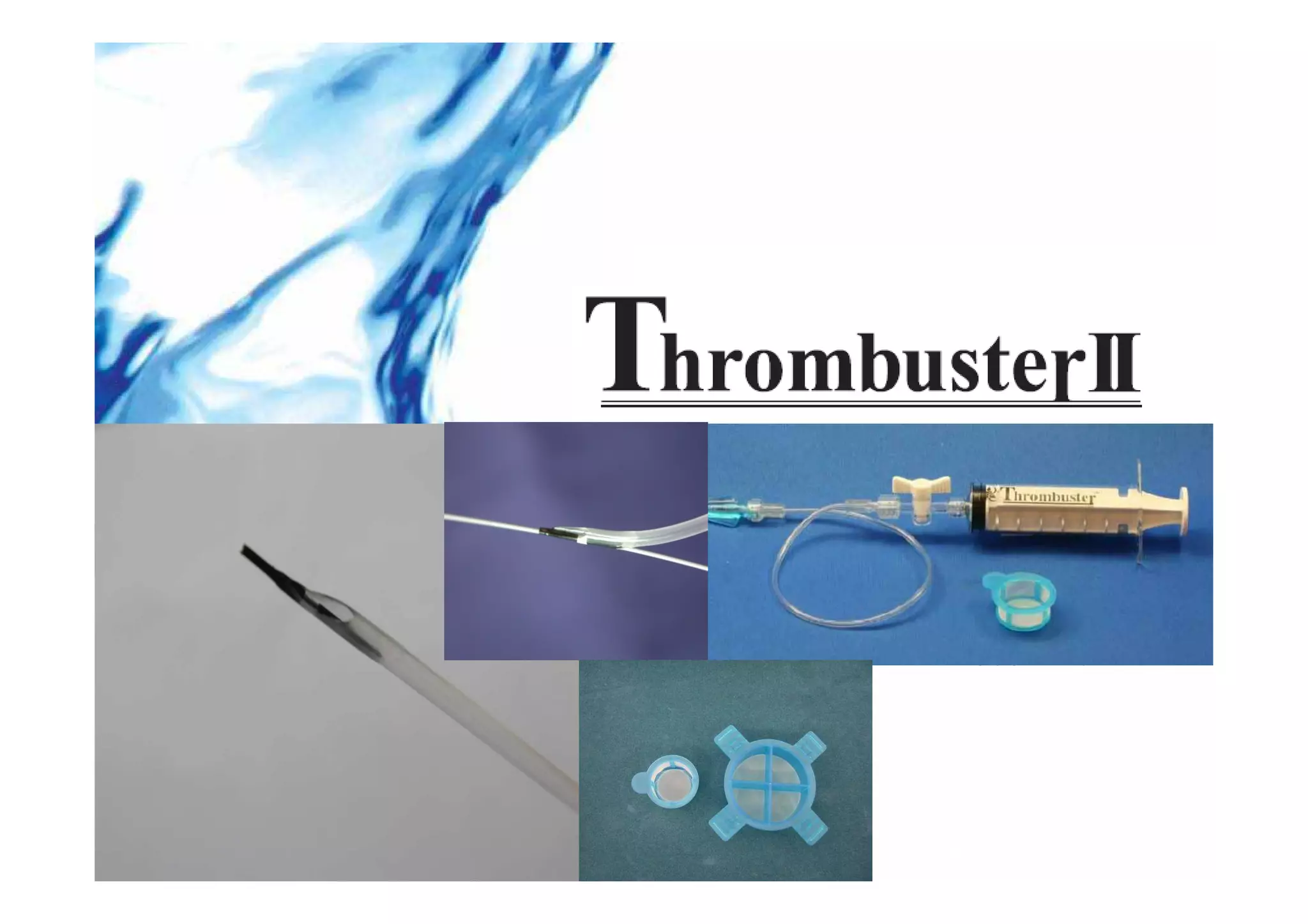
• Thrombus Aspiration during Primary PCI
showed improvement in indices of
myocardial reperfusion (ST-segment
resolution and myocardial blush) from
routine use of manual thrombus aspiration
before a balloon or a stent is introduced into
the coronary artery
Slender Club Japan
2009.12.04
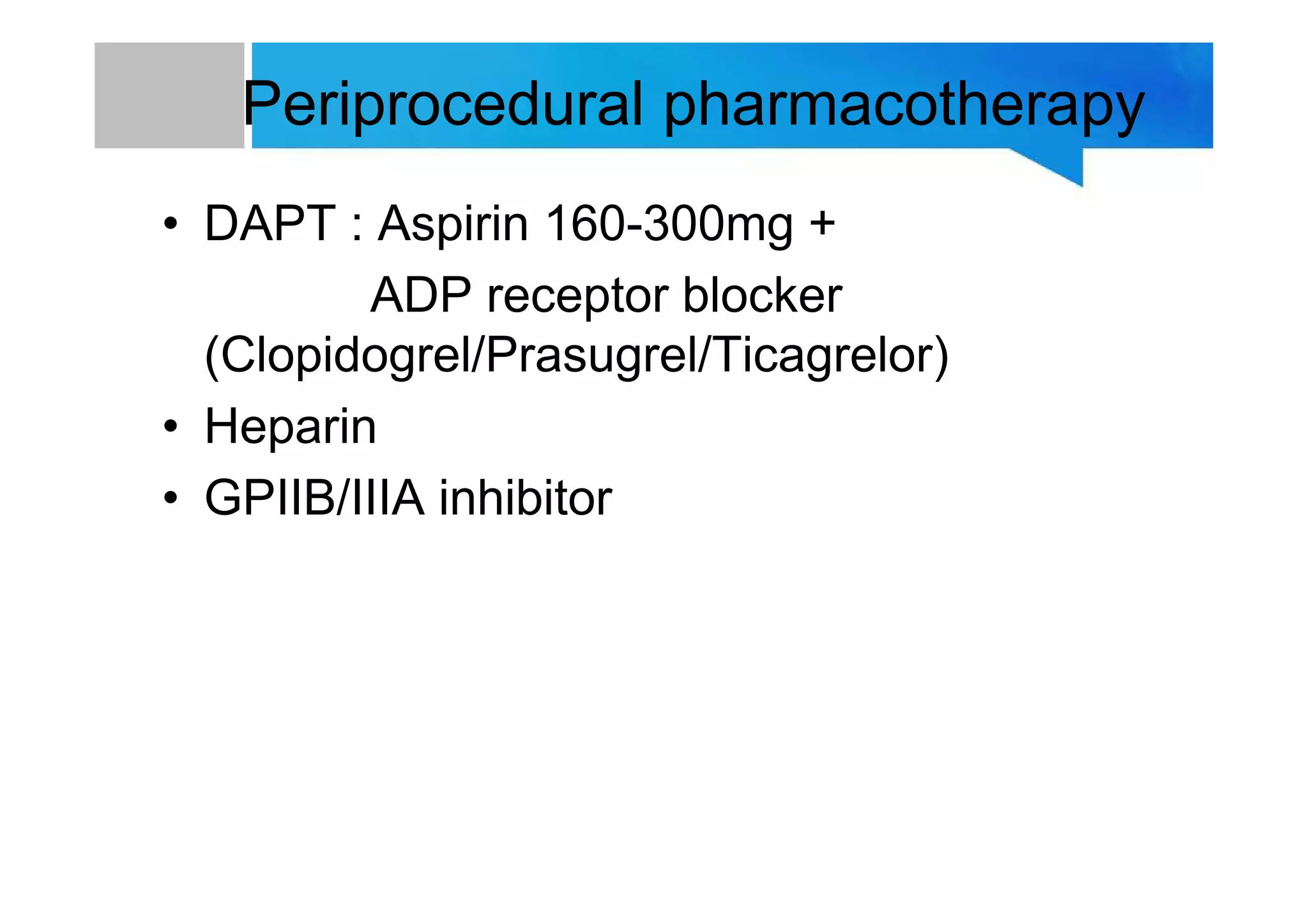
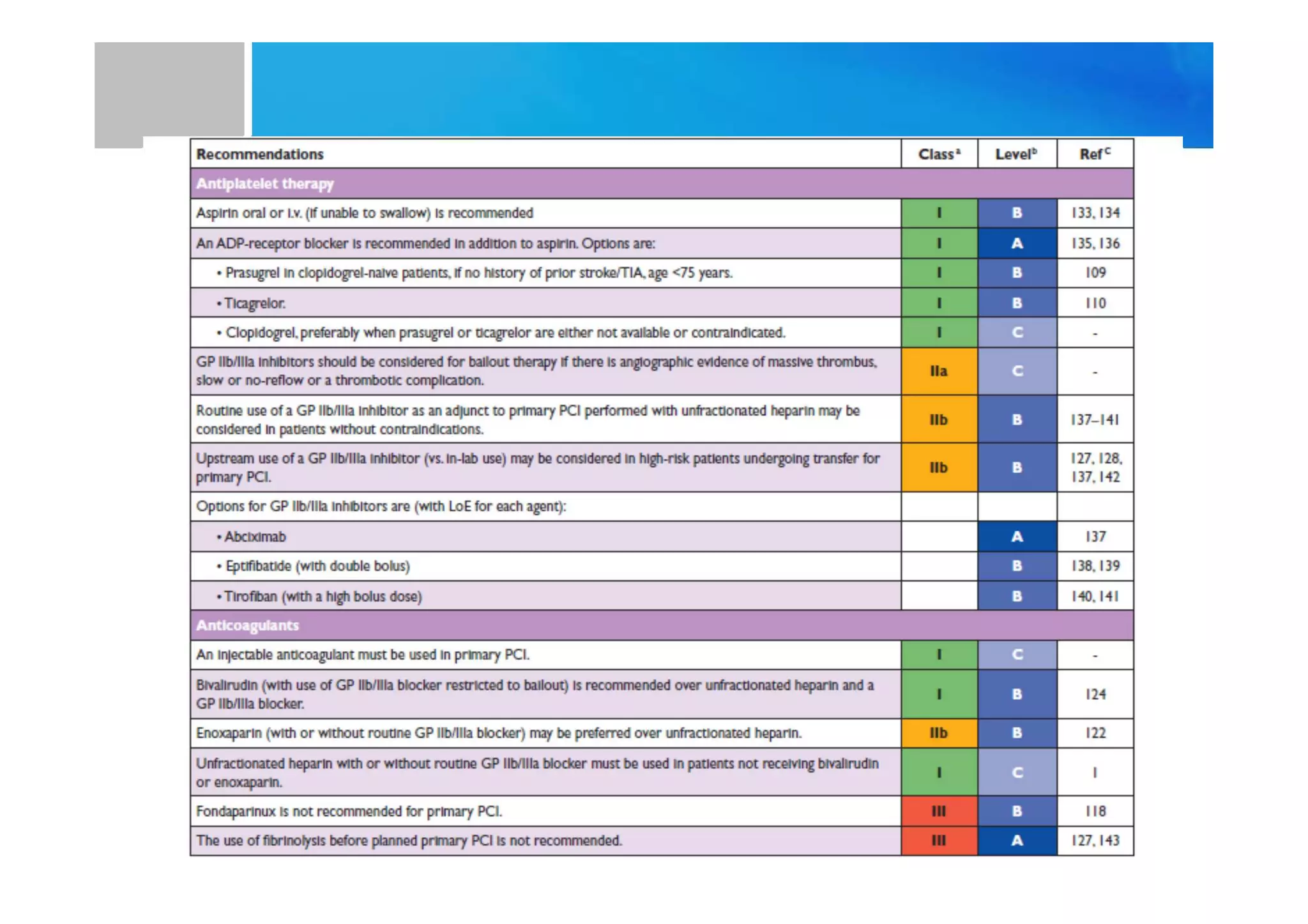
Periprocedural pharmacotherapy
• DAPT : Aspirin 160-300mg +
ADP receptor blocker
(Clopidogrel/Prasugrel/Ticagrelor)
• Heparin
• GPIIB/IIIA inhibitor
Revascularization strategy for STEMI
with multivessel disease
• Still debatable
• Conservative approach
• Stage revascularization approach
Contoh Kasus
• Tn.D, 71thn
• Sakit dada berat sejak 6 jam SMRS disertai
keringat dingin
• Fakto Risiko: DM, Dislipidemia, Hipertensi
• TD 140/70, HR 60x/m
• EKG: SR, ST elevasi II,III,aVF, V5-V9
• Diagnosis: Acute Inferoposterior MCI
Primary PCI
Primary PCI
Primary PCI

Primary PCI

  • 1.
    PRIMARY PCI (Percutaneous CoronaryIntervention) Amir Aziz AlkatiriAmir Aziz Alkatiri RS Awal Bros Pekanbaru
  • 2.
  • 3.
    Definition • Primary PCI: an emergent percutaneous catheter intervention in the setting of STEMI, without previous fibrinolytic treatment • is the preferred reperfusion strategy in patients with STEMI
  • 8.
    Primary PCI vsThrombolytic
  • 9.
    Primary PCI vsThrombolysis • Thrombolysis is effective in 40–60% of patients, while p-PCI is effective in > 90%. • Thus,comparing thrombolysis vs primary PCI is comparing a semi-effective therapy vs a fully effective therapy. • The mortality benefit derived from the primary PCI strategy is not related to the fact that the underlying stenosis is removed. • The mortality benefit of primary PCI is caused by the simple fact that primary PCI is twice as effective as thrombolysis in opening the artery. European Heart Journal (2010) 31, 634–636
  • 11.
    Components of delayin STEMI European Heart Journal (2012) 33, 2569–2619
  • 12.
    How to OptimizeReperfusion in Acute MI ProblemProblem SolutionSolution Longer Delay for Presentation (symptom onset to presentation) Longer Delay for Presentation (symptom onset to presentation) Large Media Education Large Media Education Delay for TransportationDelay for Transportation Logistical Protocols Logistical Protocols Delay for Treatment (either lytics or PCI) Delay for Treatment (either lytics or PCI) In-Hospital Quality of Care In-Hospital Quality of Care
  • 13.
    Prehospital and in-hospitalmanagement, and reperfusion strategies within 24 h of FMC
  • 14.
    Primary PCI: indicationsand procedural aspects
  • 15.
    Procedural aspects • Radialapproach is preferred • Drug-eluting stents (DES) reduce the risk of repeated target vessel revascularization, compared with bare-metal stents (BMS) • Thrombus Aspiration during Primary PCI showed improvement in indices of myocardial reperfusion (ST-segment resolution and myocardial blush) from routine use of manual thrombus aspiration before a balloon or a stent is introduced into the coronary artery
  • 16.
  • 17.
    Periprocedural pharmacotherapy • DAPT: Aspirin 160-300mg + ADP receptor blocker (Clopidogrel/Prasugrel/Ticagrelor) • Heparin • GPIIB/IIIA inhibitor
  • 19.
    Revascularization strategy forSTEMI with multivessel disease • Still debatable • Conservative approach • Stage revascularization approach
  • 20.
    Contoh Kasus • Tn.D,71thn • Sakit dada berat sejak 6 jam SMRS disertai keringat dingin • Fakto Risiko: DM, Dislipidemia, Hipertensi • TD 140/70, HR 60x/m • EKG: SR, ST elevasi II,III,aVF, V5-V9 • Diagnosis: Acute Inferoposterior MCI