Download as PDF, PPTX



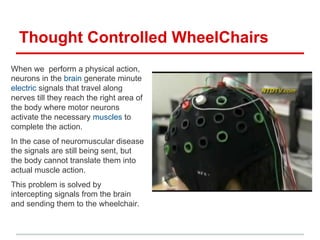
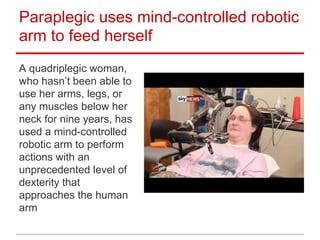
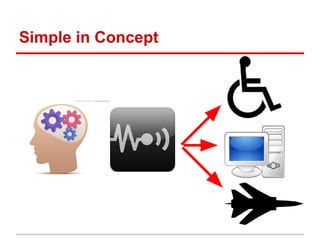
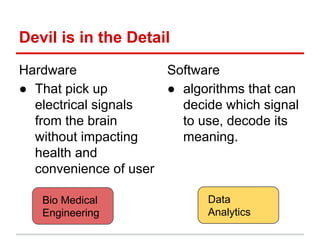
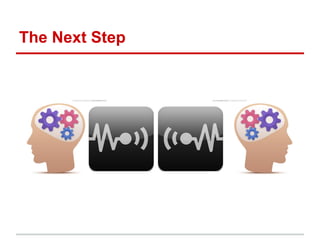
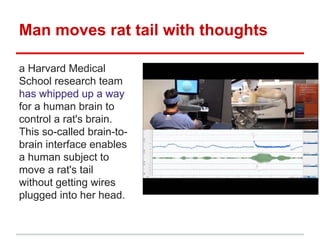
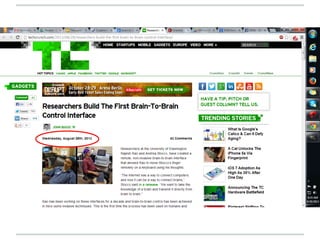
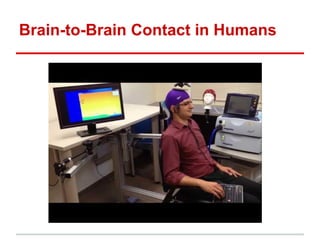
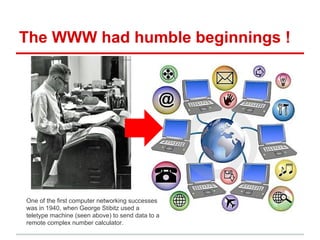



This document discusses emerging technologies in thought control and brain-computer interfaces. It begins by noting how imagination and accomplishment are becoming closely aligned due to advances in technology. Examples are then given of existing thought-controlled wheelchairs and a robotic arm that allows a paralyzed woman to feed herself. The document outlines challenges in developing more advanced brain-computer interfaces, such as creating smaller and more sensitive hardware to communicate with the brain and software to accurately decode electrical signals. Finally, the document speculates that in 50 years human minds may be as connected as computers are today through the internet, but raises ethical questions about thought control of other individuals.


